FLAVONOIDS
CONTENT
• Introduction
• Classification
• Chemical test
• Occurrence
• Orange peel – Flavonol, Flavanone
• Garcinia
• Soybean - Isoflavones
• Liquorice
• Cranberry
• Buckwheat
INTRODUCTION
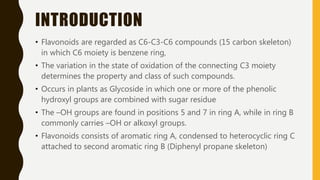
• Flavonoids are regarded as C6-C3-C6 compounds (15
carbon skeleton) in which C6 moiety is benzene ring,
• The variation in the state of oxidation of the
connecting C3 moiety determines the property and
class of such compounds.
• Occurs in plants as Glycoside in which one or more of
the phenolic hydroxyl groups are combined with
sugar residue.
• The –OH groups are found in positions 5 and 7 in
ring A, while in ring B commonly carries –OH or
alkoxyl groups.
• Flavonoids consists of aromatic ring A, condensed to
heterocyclic ring C attached to second aromatic ring
INTRODUCTION
• They are formed from 3 acetate units and a phenyl
propane unit.
• They are classified according to the state of
oxygenation of the C3 unit, i.e. C-2-,3,4.
• They have been used extensively as chemotaxonomic
marker and are abundant in the Polygonaceae,
Rutaceae, Leguminosae, Umbelliferae and
Compositae family
• They occur both in free state and as glycosides; most
are o-glycoside but a considerable number of
flavonoid C-glycoside are known. Dimeric
compounds with, e.g. 5’-8-carbon-carbon linkage are
also known (bioflavonoids)
OCCURRENCE IN NATURE
Type Compound Nature Occurrence
Flavone Luteolin Tetrahydroxy
5,7,3’,4’
Wild carrot
Flavonol Quercetin Pentahydroxy
3,5,7,3’,4’
Rutin
(Rhamnoglucoside
)
Kaempferol Tetrahydroxy
3,5,7,4’
Senna
Flavonone Liquiritigenin Dihydroxy 7,4’ Liquorice
Chalcone Unstable isomers
of flavonones
Family rutaceae
and Liquorice
Xanthone Gentisin 1,7-Dihyroxy-3-
methoxy
Gentiana &
Swertia spp.
Iso flavones Soyabeans
Bi flavones Garcinia
CLASSIFICATION
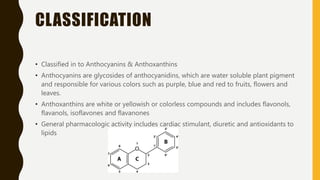
• Classified in to Anthocyanins & Anthoxanthins
• Anthocyanins are glycosides of anthocyanidins, which
are water soluble plant pigment and responsible for
various colors such as purple, blue and red to fruits,
flowers and leaves.
• Anthoxanthins are white or yellowish or colorless
compounds and includes flavonols, flavanols,
isoflavones and flavanones
• General pharmacologic activity includes cardiac
stimulant, diuretic and antioxidants to lipids
• Sugar free pigments are called as Anthocyanidins.
• Natural Anthocyanidines are classified into 3 groups:
Pelargonidin, Cyanidin and Delphinidin
• Factors like pH, complex forming metal, tannins
affect the colors of the anthocyanins.
CHEMICAL TEST
1. Shinoda test: drug solution + Mg turning + conc.
HCl drop wise, pink scarlet, crimson red or
occasionally green to blue color appears in few
minutes
2. Alkaline reagent test: drug solution + NaOH,
intense yellow color is formed which turns to
colorless on addition of few drops of dil. Acid
3. Zinc HCl test: drug solution + zinc dust + conc. HCl,
red color after few minutes
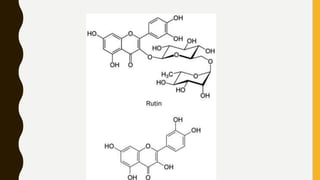
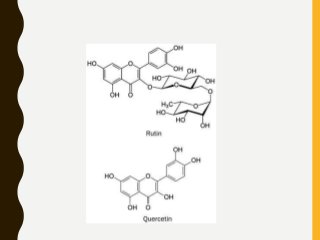
• Rutin: occurs as a yellow crystalline powder.
• Soluble in alkali but only slightly soluble in water
• On hydrolysis yield Quercetin, rhamnose and glucose
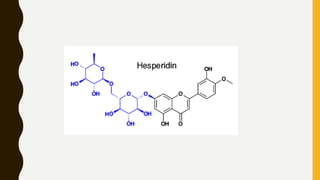
• Hesperidin:
• On hydrolysis yield hesperetin (or methyl eridictyol),
rhamnose and glucose
• It decrease capillary fragility ad are therefore
employed in cases of hypertension and radiation
injuries.
1. ORANGE PEEL
(HESPERIDIN)
• Source: peels of Citrus aurantium
• Family: Rutaceae
• Constituent: Flavonoid (Hesperidin)
• Colorless needle like crystals, closely related to
Vitamin P (Citrin), readily soluble in hot water,
sparingly soluble in alcohol and cold water and
practically insoluble in ether, benzene and
chloroform
• Use: prevention and management of capillary fragility
so used in hypertension, CVS disorders,
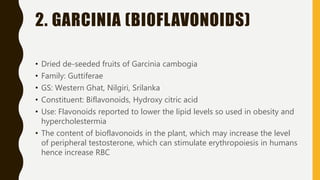
2. GARCINIA
(BI0FLAVONOIDS)
• Dried de-seeded fruits of Garcinia cambogia
• Family: Guttiferae
• GS: Western Ghat, Nilgiri, Srilanka
• Constituent: Biflavonoids, Hydroxy citric acid
• Use: Flavonoids reported to lower the lipid levels so
used in obesity and hypercholestermia
• The content of bioflavonoids in the plant, which may
increase the level of peripheral testosterone, which
can stimulate erythropoiesis in humans hence
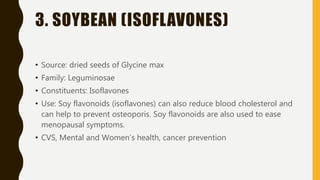
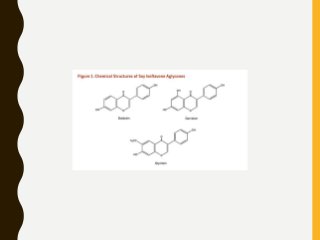
3. SOYBEAN (ISOFLAVONES)
• Source: dried seeds of Glycine max
• Family: Leguminosae
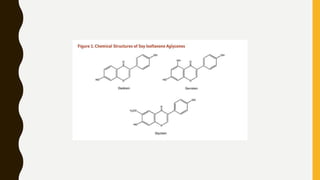
• Constituents: Isoflavones
• Use: Soy flavonoids (isoflavones) can also reduce
blood cholesterol and can help to prevent osteoporis.
Soy flavonoids are also used to ease menopausal
symptoms.
• CVS, Mental and Women’s health, cancer prevention
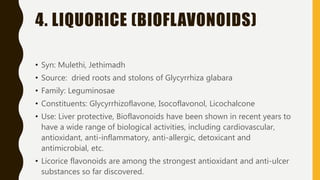
4. LIQUORICE
(BIOFLAVONOIDS)
• Syn: Mulethi, Jethimadh
• Source: dried roots and stolons of Glycyrrhiza
glabara
• Family: Leguminosae
• Constituents: Glycyrrhizoflavone, Isocoflavonol,
Licochalcone
• Use: Liver protective, Bioflavonoids have been shown
in recent years to have a wide range of biological
activities, including cardiovascular, antioxidant, anti-
inflammatory, anti-allergic, detoxicant and
antimicrobial, etc.
5. CRANBERRY (QUERCETIN)
• Source: berries of Vaccinium macrocarpon
• Family: Ericaceae
• GS: Canada, US
• Constituents: Proanthocyanidins, flavonols and
anthocyanins, Quercetin
• Use: Reduction in urinary tract infection,
Atherosclerosis, CVS disorders, Ovarian cancer
6. BUCK WHEAT (RUTIN)
• Source: powder of dried food grains of Fagopyrum
esculentum
• Family: Polygonaceae
• GS: food crop in US, Russia, Japan
• Constituents: 12% protein, 2% fat, mainly RUTIN
• Rutin is microcrystalline greenish yellow tasteless
powder, soluble in methanol-isopropyl alcohol-
pyridine-alkali hydroxides
• Use: capillary bleeding along with increased capillary
fragility so used in retinal haemorrhage

Flavonoids

  • 1.
  • 2.
    CONTENT • Introduction • Classification •Chemical test • Occurrence • Orange peel – Flavonol, Flavanone • Garcinia • Soybean - Isoflavones • Liquorice • Cranberry • Buckwheat
  • 3.
    INTRODUCTION • Flavonoids areregarded as C6-C3-C6 compounds (15 carbon skeleton) in which C6 moiety is benzene ring, • The variation in the state of oxidation of the connecting C3 moiety determines the property and class of such compounds. • Occurs in plants as Glycoside in which one or more of the phenolic hydroxyl groups are combined with sugar residue. • The –OH groups are found in positions 5 and 7 in ring A, while in ring B commonly carries –OH or alkoxyl groups. • Flavonoids consists of aromatic ring A, condensed to heterocyclic ring C attached to second aromatic ring
  • 4.
    INTRODUCTION • They areformed from 3 acetate units and a phenyl propane unit. • They are classified according to the state of oxygenation of the C3 unit, i.e. C-2-,3,4. • They have been used extensively as chemotaxonomic marker and are abundant in the Polygonaceae, Rutaceae, Leguminosae, Umbelliferae and Compositae family • They occur both in free state and as glycosides; most are o-glycoside but a considerable number of flavonoid C-glycoside are known. Dimeric compounds with, e.g. 5’-8-carbon-carbon linkage are also known (bioflavonoids)
  • 6.
    OCCURRENCE IN NATURE TypeCompound Nature Occurrence Flavone Luteolin Tetrahydroxy 5,7,3’,4’ Wild carrot Flavonol Quercetin Pentahydroxy 3,5,7,3’,4’ Rutin (Rhamnoglucoside ) Kaempferol Tetrahydroxy 3,5,7,4’ Senna Flavonone Liquiritigenin Dihydroxy 7,4’ Liquorice Chalcone Unstable isomers of flavonones Family rutaceae and Liquorice Xanthone Gentisin 1,7-Dihyroxy-3- methoxy Gentiana & Swertia spp. Iso flavones Soyabeans Bi flavones Garcinia
  • 8.
    CLASSIFICATION • Classified into Anthocyanins & Anthoxanthins • Anthocyanins are glycosides of anthocyanidins, which are water soluble plant pigment and responsible for various colors such as purple, blue and red to fruits, flowers and leaves. • Anthoxanthins are white or yellowish or colorless compounds and includes flavonols, flavanols, isoflavones and flavanones • General pharmacologic activity includes cardiac stimulant, diuretic and antioxidants to lipids
  • 9.
    • Sugar freepigments are called as Anthocyanidins. • Natural Anthocyanidines are classified into 3 groups: Pelargonidin, Cyanidin and Delphinidin • Factors like pH, complex forming metal, tannins affect the colors of the anthocyanins.
  • 10.
    CHEMICAL TEST 1. Shinodatest: drug solution + Mg turning + conc. HCl drop wise, pink scarlet, crimson red or occasionally green to blue color appears in few minutes 2. Alkaline reagent test: drug solution + NaOH, intense yellow color is formed which turns to colorless on addition of few drops of dil. Acid 3. Zinc HCl test: drug solution + zinc dust + conc. HCl, red color after few minutes
  • 11.
    • Rutin: occursas a yellow crystalline powder. • Soluble in alkali but only slightly soluble in water • On hydrolysis yield Quercetin, rhamnose and glucose • Hesperidin: • On hydrolysis yield hesperetin (or methyl eridictyol), rhamnose and glucose • It decrease capillary fragility ad are therefore employed in cases of hypertension and radiation injuries.
  • 12.
    1. ORANGE PEEL (HESPERIDIN) •Source: peels of Citrus aurantium • Family: Rutaceae • Constituent: Flavonoid (Hesperidin) • Colorless needle like crystals, closely related to Vitamin P (Citrin), readily soluble in hot water, sparingly soluble in alcohol and cold water and practically insoluble in ether, benzene and chloroform • Use: prevention and management of capillary fragility so used in hypertension, CVS disorders,
  • 14.
    2. GARCINIA (BI0FLAVONOIDS) • Driedde-seeded fruits of Garcinia cambogia • Family: Guttiferae • GS: Western Ghat, Nilgiri, Srilanka • Constituent: Biflavonoids, Hydroxy citric acid • Use: Flavonoids reported to lower the lipid levels so used in obesity and hypercholestermia • The content of bioflavonoids in the plant, which may increase the level of peripheral testosterone, which can stimulate erythropoiesis in humans hence
  • 15.
    3. SOYBEAN (ISOFLAVONES) •Source: dried seeds of Glycine max • Family: Leguminosae • Constituents: Isoflavones • Use: Soy flavonoids (isoflavones) can also reduce blood cholesterol and can help to prevent osteoporis. Soy flavonoids are also used to ease menopausal symptoms. • CVS, Mental and Women’s health, cancer prevention
  • 17.
    4. LIQUORICE (BIOFLAVONOIDS) • Syn:Mulethi, Jethimadh • Source: dried roots and stolons of Glycyrrhiza glabara • Family: Leguminosae • Constituents: Glycyrrhizoflavone, Isocoflavonol, Licochalcone • Use: Liver protective, Bioflavonoids have been shown in recent years to have a wide range of biological activities, including cardiovascular, antioxidant, anti- inflammatory, anti-allergic, detoxicant and antimicrobial, etc.
  • 18.
    5. CRANBERRY (QUERCETIN) •Source: berries of Vaccinium macrocarpon • Family: Ericaceae • GS: Canada, US • Constituents: Proanthocyanidins, flavonols and anthocyanins, Quercetin • Use: Reduction in urinary tract infection, Atherosclerosis, CVS disorders, Ovarian cancer
  • 20.
    6. BUCK WHEAT(RUTIN) • Source: powder of dried food grains of Fagopyrum esculentum • Family: Polygonaceae • GS: food crop in US, Russia, Japan • Constituents: 12% protein, 2% fat, mainly RUTIN • Rutin is microcrystalline greenish yellow tasteless powder, soluble in methanol-isopropyl alcohol- pyridine-alkali hydroxides • Use: capillary bleeding along with increased capillary fragility so used in retinal haemorrhage