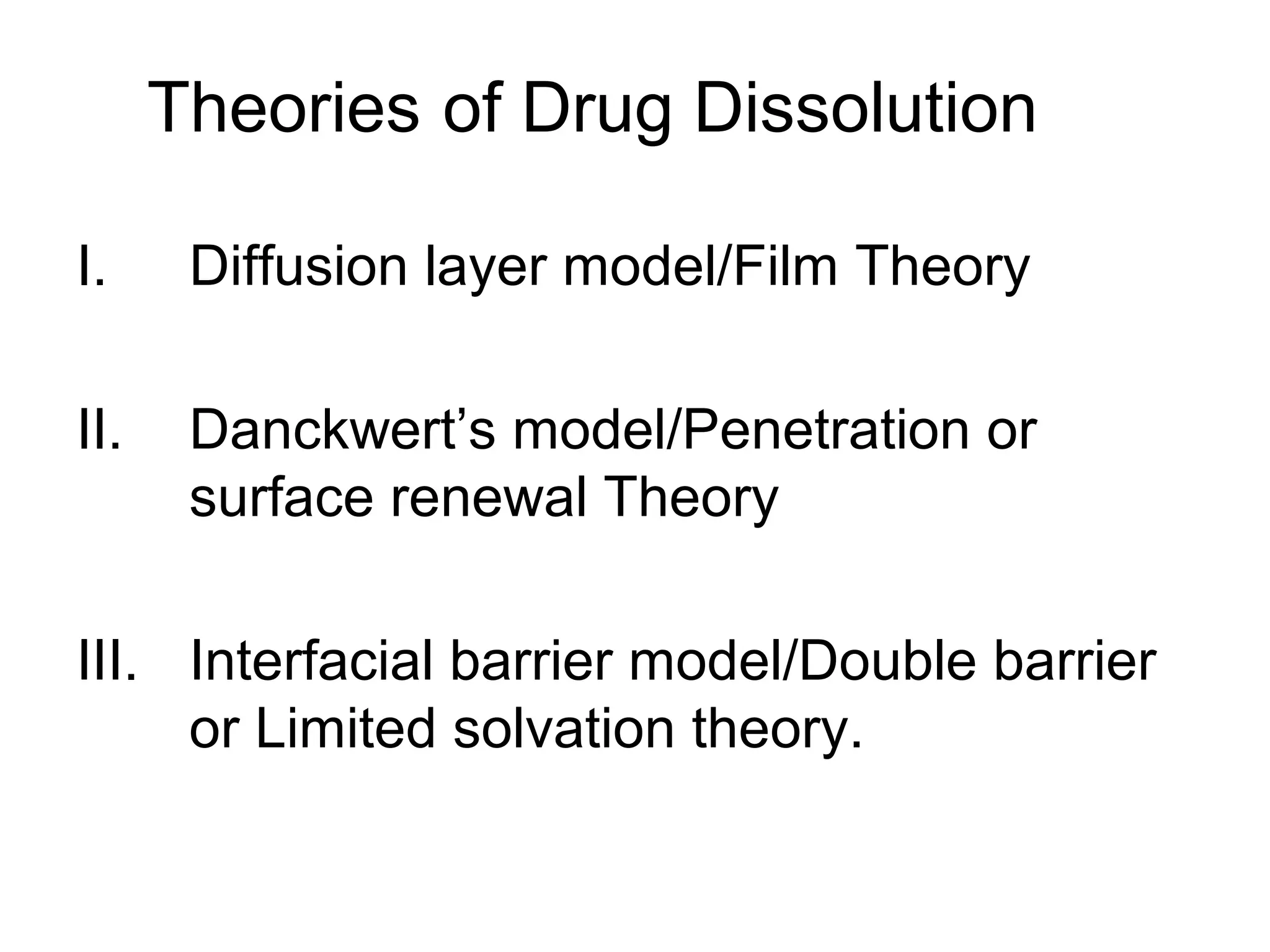
Theories of Drug Dissolution 
I. Diffusion layer model/Film Theory 
II. Danckwert’s model/Penetration or 
surface renewal Theory 
III. Interfacial barrier model/Double barrier 
or Limited solvation theory.
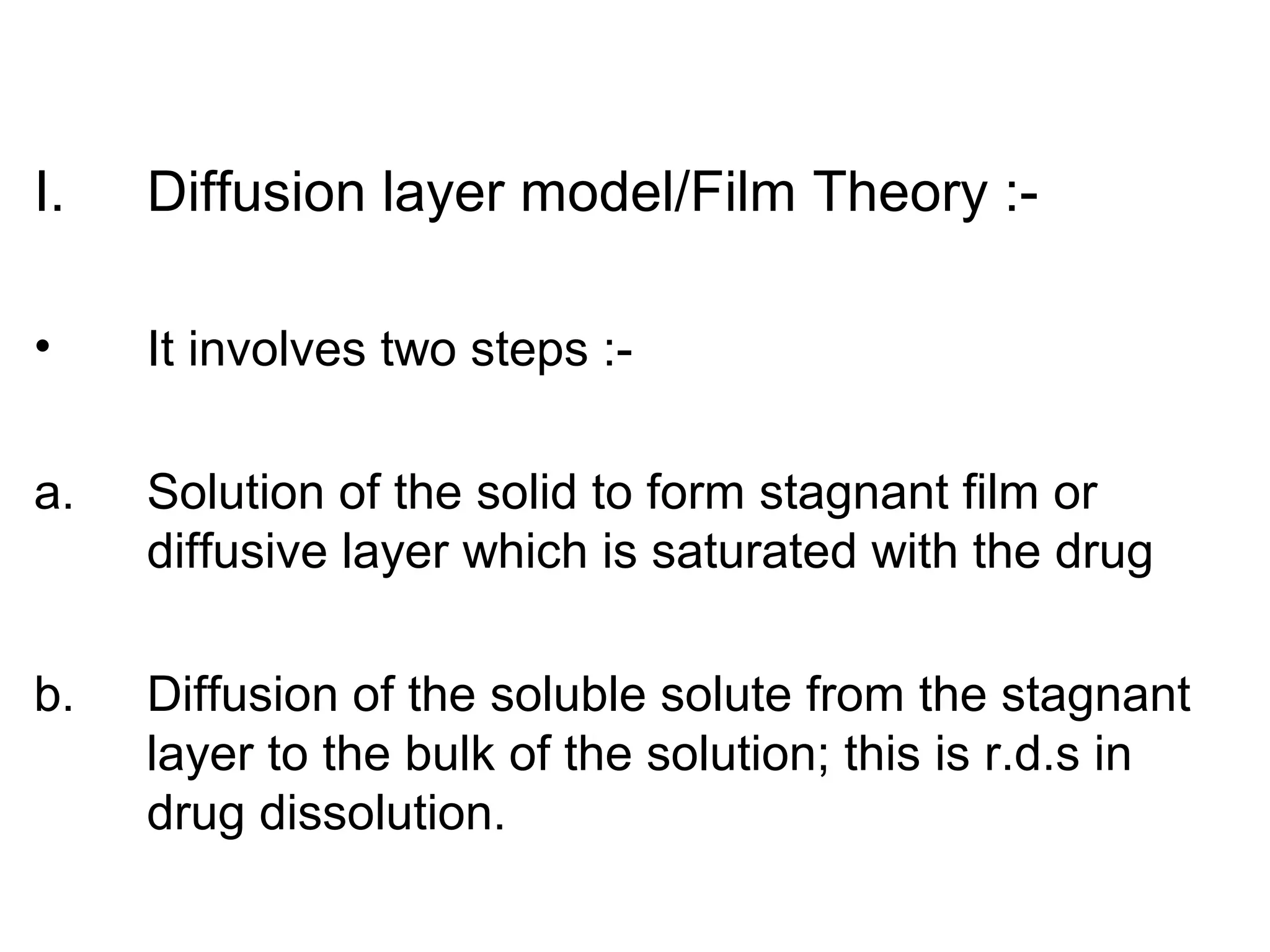
I. Diffusion layer model/Film Theory :- 
• It involves two steps :- 
a. Solution of the solid to form stagnant film or 
diffusive layer which is saturated with the drug 
b. Diffusion of the soluble solute from the stagnant 
layer to the bulk of the solution; this is r.d.s in 
drug dissolution.
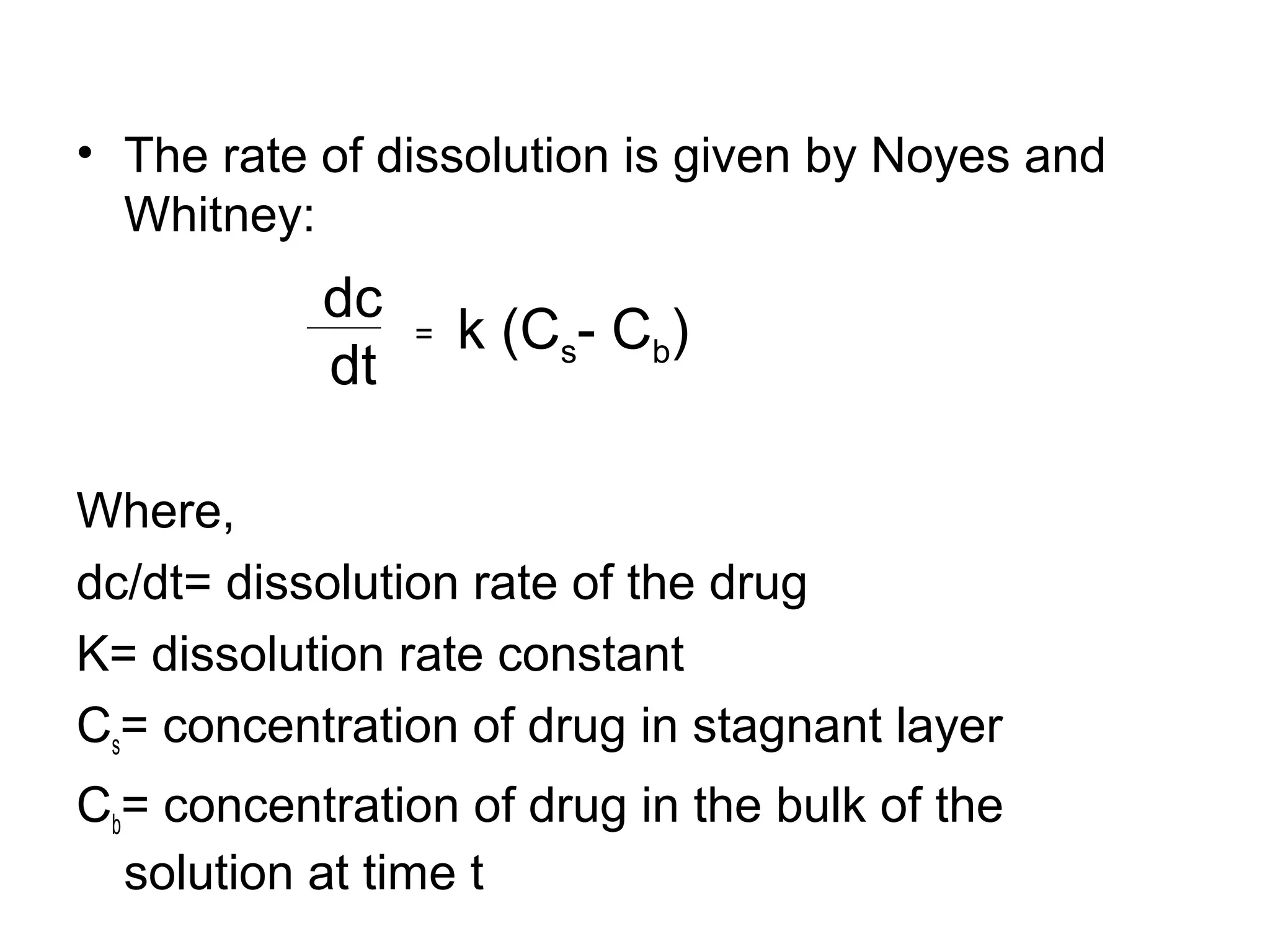
• The rate of dissolution is given by Noyes and 
Whitney: 
= k (Cs- Cb) dc 
dt 
Where, 
dc/dt= dissolution rate of the drug 
K= dissolution rate constant 
Cs= concentration of drug in stagnant layer 
Cb= concentration of drug in the bulk of the 
solution at time t
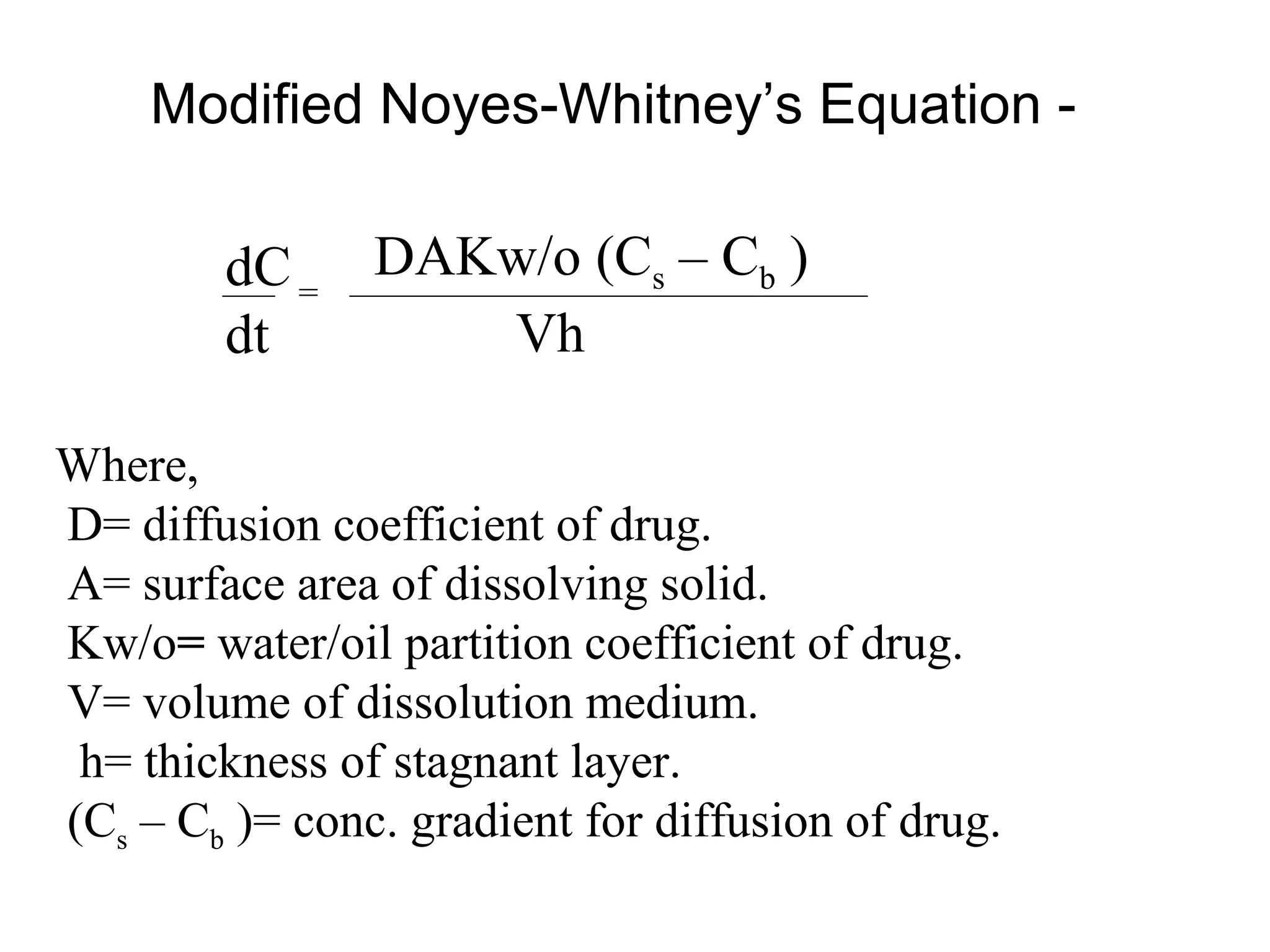
Modified Noyes-Whitney’s Equation - 
dC 
dt 
DAKw/o (Cs – Cb ) 
Vh 
= 
Where, 
D= diffusion coefficient of drug. 
A= surface area of dissolving solid. 
Kw/o= water/oil partition coefficient of drug. 
V= volume of dissolution medium. 
h= thickness of stagnant layer. 
(Cs – Cb )= conc. gradient for diffusion of drug.
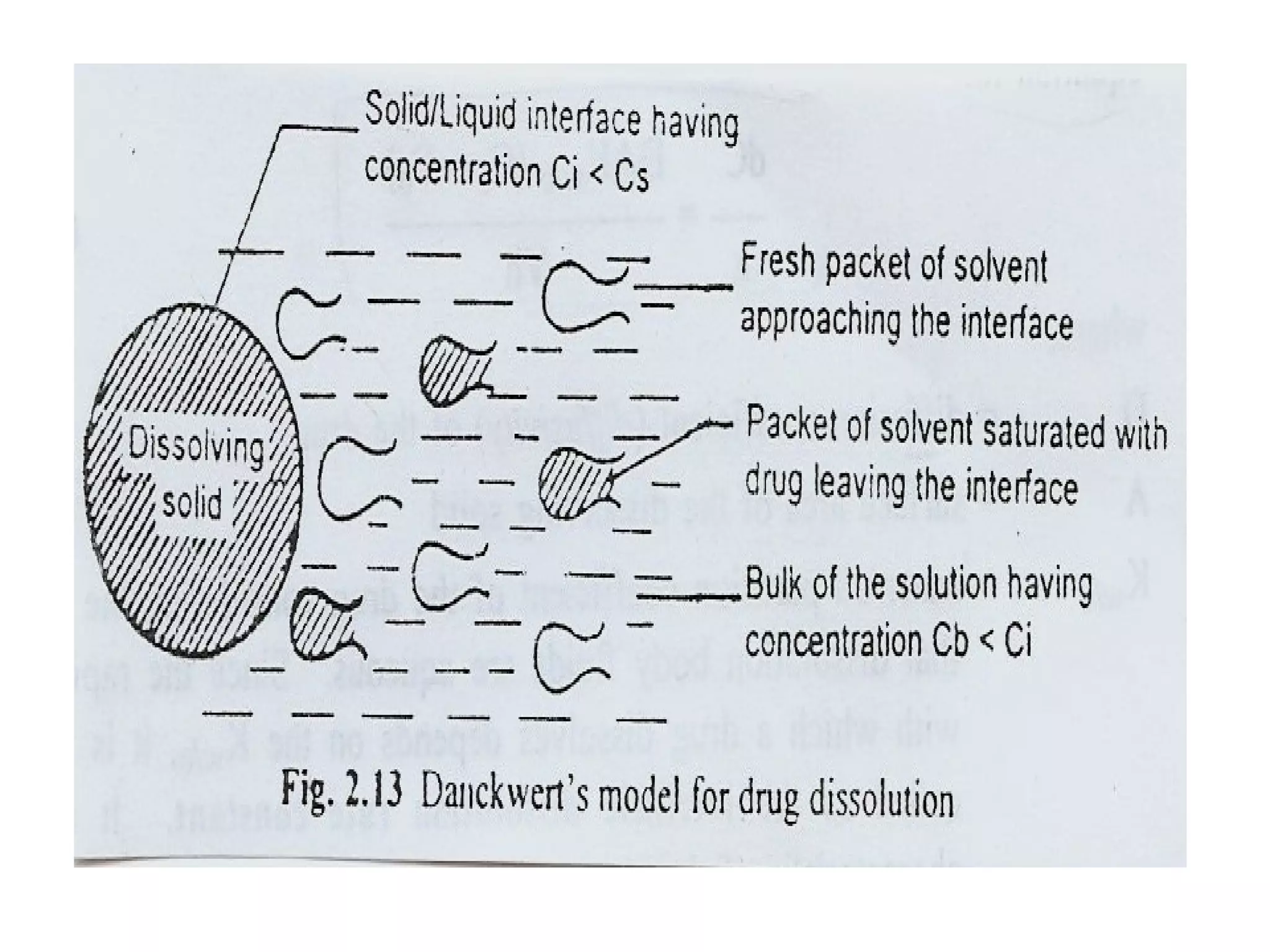
II. Danckwert’s model/Penetration or 
surface renewal Theory :- 
• Dankwert takes into account the eddies or 
packets that are present in the agitated fluid 
which reach the solid-liquid interface, absorb 
the solute by diffusion and carry it into the bulk 
of solution. 
• These packets get continuously replaced by 
new ones and expose to new solid surface 
each time, thus the theory is called as surface 
renewal theory.
• The Danckwert’s model is expressed by 
equation 
dC 
dt = dm 
V = A (Cs-Cb). γ D 
dt 
Where, 
m = mass of solid dissolved 
Gamma (γ) = rate of surface renewal
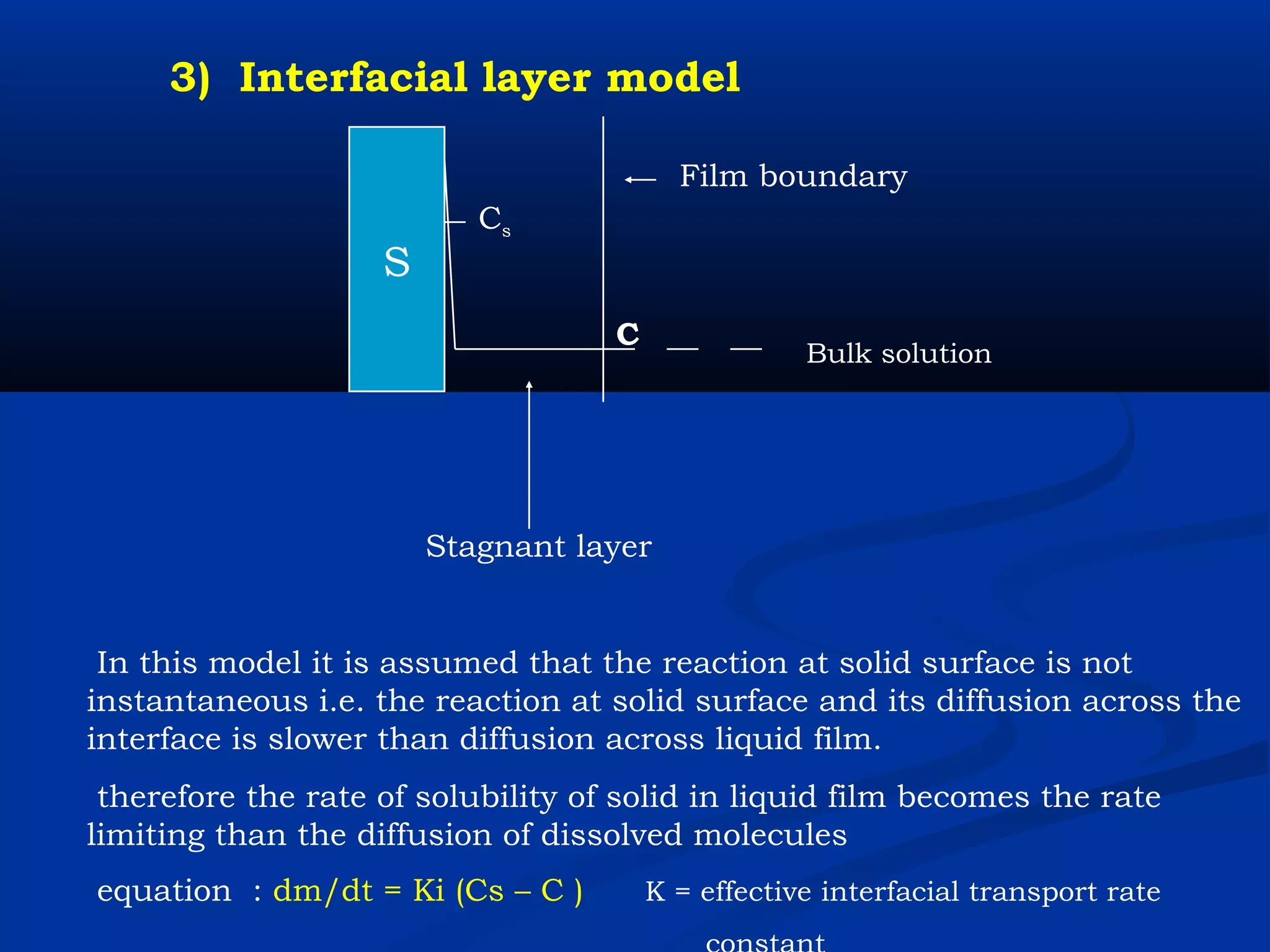
3) Interfacial layer model 
S 
Film boundary 
Bulk solution 
Cs 
C 
Stagnant layer 
In this model it is assumed that the reaction at solid surface is not 
instantaneous i.e. the reaction at solid surface and its diffusion across the 
interface is slower than diffusion across liquid film. 
therefore the rate of solubility of solid in liquid film becomes the rate 
limiting than the diffusion of dissolved molecules 
equation : dm/dt = Ki (Cs – C ) K = effective interfacial transport rate 
constant
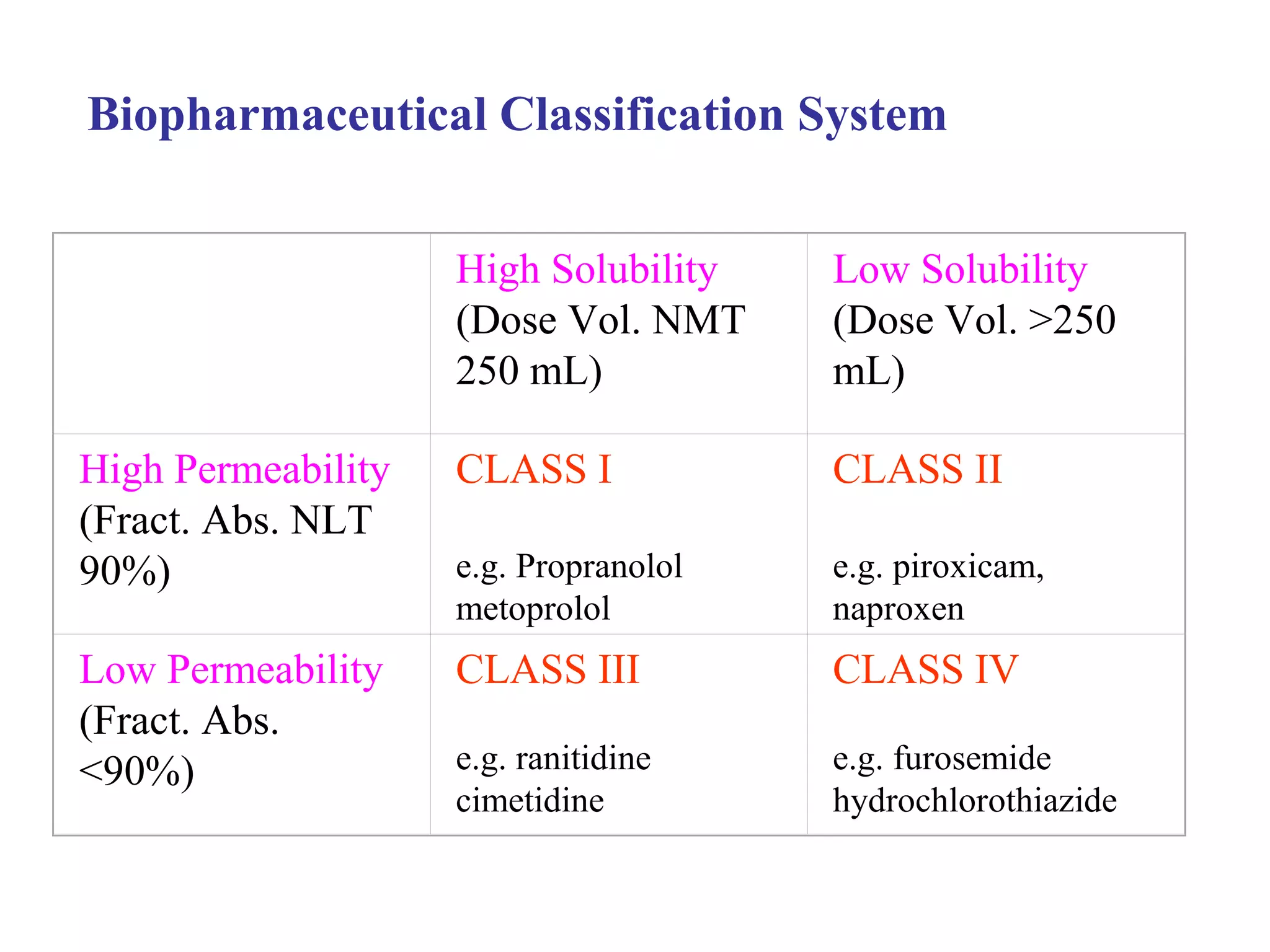
Biopharmaceutical Classification System 
High Solubility 
(Dose Vol. NMT 
250 mL) 
Low Solubility 
(Dose Vol. >250 
mL) 
High Permeability 
(Fract. Abs. NLT 
90%) 
CLASS І 
e.g. Propranolol 
metoprolol 
CLASS II 
e.g. piroxicam, 
naproxen 
Low Permeability 
(Fract. Abs. 
<90%) 
CLASS III 
e.g. ranitidine 
cimetidine 
CLASS IV 
e.g. furosemide 
hydrochlorothiazide

Theories of dissolution

  • 1.
    Theories of DrugDissolution I. Diffusion layer model/Film Theory II. Danckwert’s model/Penetration or surface renewal Theory III. Interfacial barrier model/Double barrier or Limited solvation theory.
  • 2.
    I. Diffusion layermodel/Film Theory :- • It involves two steps :- a. Solution of the solid to form stagnant film or diffusive layer which is saturated with the drug b. Diffusion of the soluble solute from the stagnant layer to the bulk of the solution; this is r.d.s in drug dissolution.
  • 4.
    • The rateof dissolution is given by Noyes and Whitney: = k (Cs- Cb) dc dt Where, dc/dt= dissolution rate of the drug K= dissolution rate constant Cs= concentration of drug in stagnant layer Cb= concentration of drug in the bulk of the solution at time t
  • 5.
    Modified Noyes-Whitney’s Equation- dC dt DAKw/o (Cs – Cb ) Vh = Where, D= diffusion coefficient of drug. A= surface area of dissolving solid. Kw/o= water/oil partition coefficient of drug. V= volume of dissolution medium. h= thickness of stagnant layer. (Cs – Cb )= conc. gradient for diffusion of drug.
  • 6.
    II. Danckwert’s model/Penetrationor surface renewal Theory :- • Dankwert takes into account the eddies or packets that are present in the agitated fluid which reach the solid-liquid interface, absorb the solute by diffusion and carry it into the bulk of solution. • These packets get continuously replaced by new ones and expose to new solid surface each time, thus the theory is called as surface renewal theory.
  • 8.
    • The Danckwert’smodel is expressed by equation dC dt = dm V = A (Cs-Cb). γ D dt Where, m = mass of solid dissolved Gamma (γ) = rate of surface renewal
  • 9.
    3) Interfacial layermodel S Film boundary Bulk solution Cs C Stagnant layer In this model it is assumed that the reaction at solid surface is not instantaneous i.e. the reaction at solid surface and its diffusion across the interface is slower than diffusion across liquid film. therefore the rate of solubility of solid in liquid film becomes the rate limiting than the diffusion of dissolved molecules equation : dm/dt = Ki (Cs – C ) K = effective interfacial transport rate constant
  • 10.
    Biopharmaceutical Classification System High Solubility (Dose Vol. NMT 250 mL) Low Solubility (Dose Vol. >250 mL) High Permeability (Fract. Abs. NLT 90%) CLASS І e.g. Propranolol metoprolol CLASS II e.g. piroxicam, naproxen Low Permeability (Fract. Abs. <90%) CLASS III e.g. ranitidine cimetidine CLASS IV e.g. furosemide hydrochlorothiazide