Downloaded 526 times

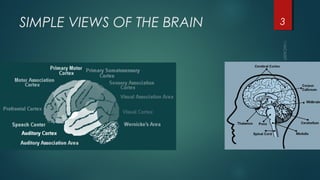
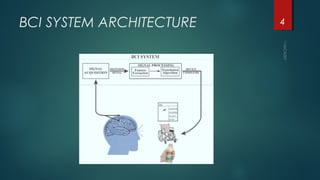
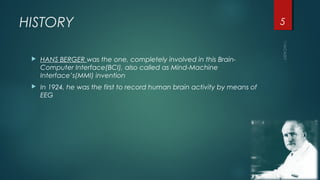

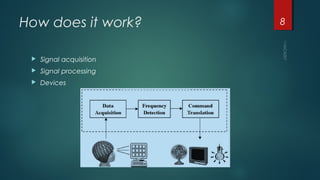
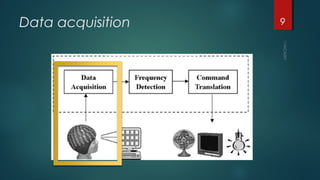













An adult human brain weighs about 1.5 kg on average and contains around 100 billion neurons. Hans Berger invented the brain-computer interface (BCI) in 1924 by recording human brain activity via EEG. A BCI establishes a direct communication pathway between the brain and an external device. It works by acquiring brain signals, processing those signals, and using the results to control devices. Different types of BCI acquisition methods include invasive, non-invasive, partially-invasive, and wireless techniques. Future applications of BCI include improving medical treatment and expanding its use beyond laboratories.


