Download to read offline
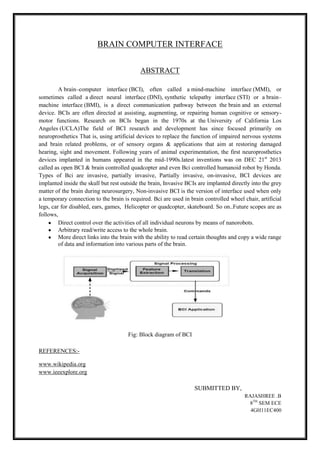
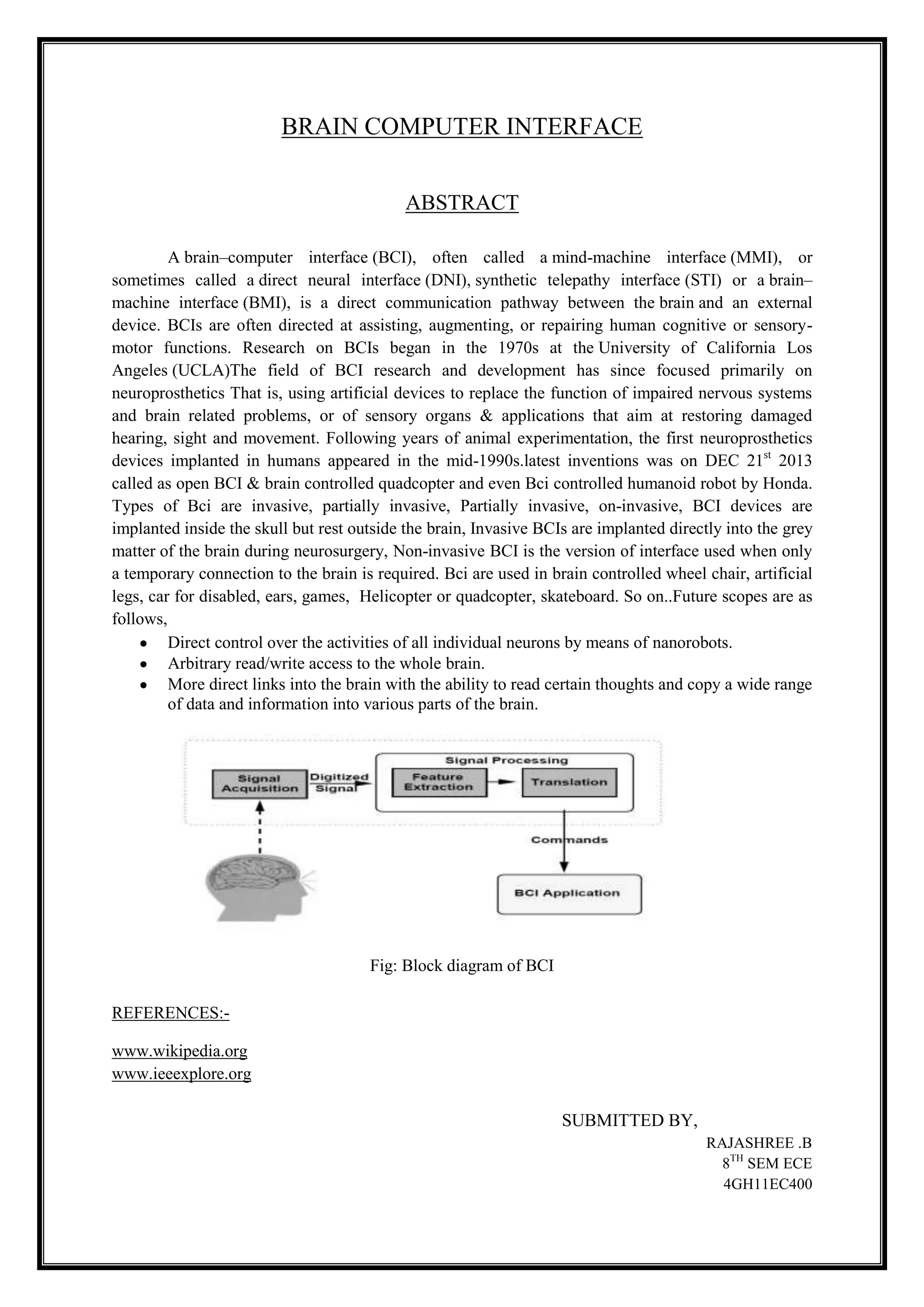


A brain-computer interface (BCI) allows direct communication between the brain and an external device. BCIs are used to assist, augment, or repair human cognitive and sensory-motor functions. Research on BCIs began in the 1970s and has focused on developing neuroprosthetics to replace impaired nervous systems or sensory organs. The first neuroprosthetics devices implanted in humans appeared in the 1990s. BCI devices can be invasive, implanted in the brain, or non-invasive, interacting externally with the brain. BCIs are currently used to control wheelchairs, prosthetic limbs, and other devices. Future applications may allow reading and writing of individual neuron activities and broader access to brain functions.


![Brain computer interface[by eng. Michael Bidollahkhany]](https://cdn.slidesharecdn.com/ss_thumbnails/brain-computerinterfacebyeng-171202084613-thumbnail.jpg?width=640&height=640&fit=bounds)


