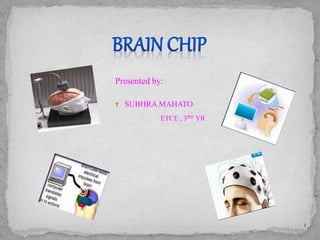
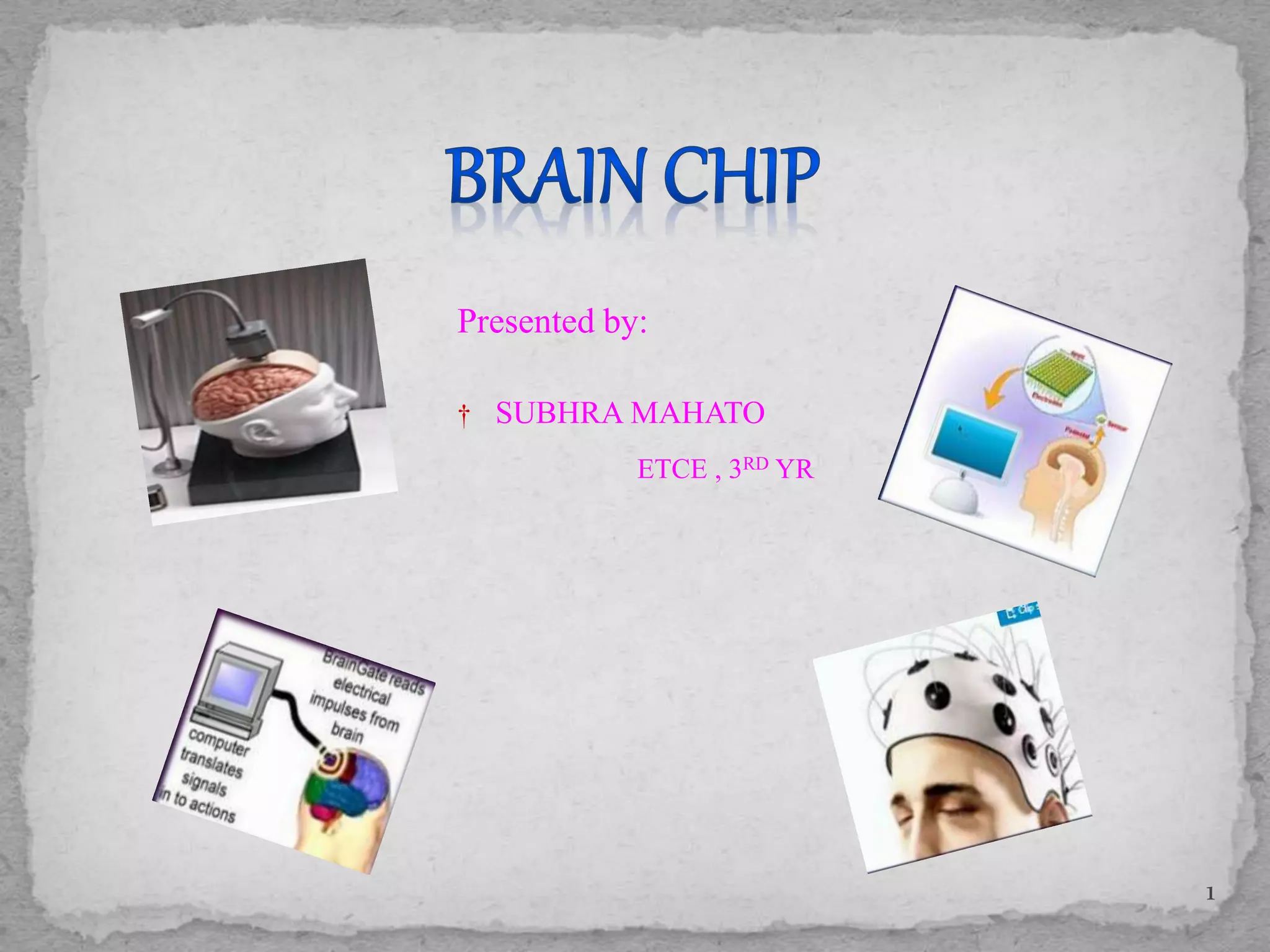
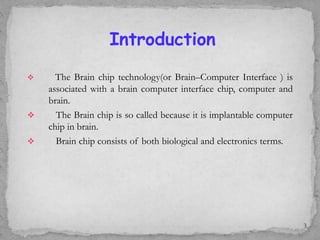
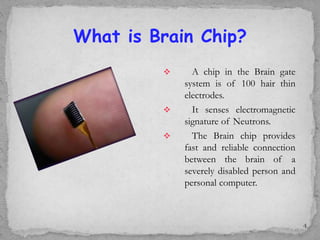
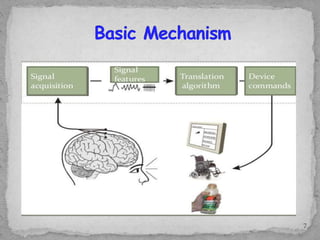
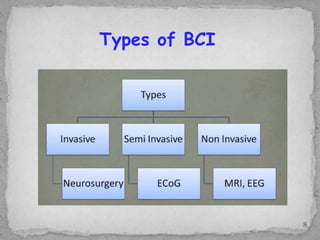
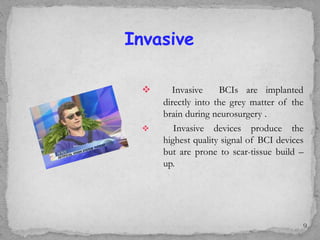
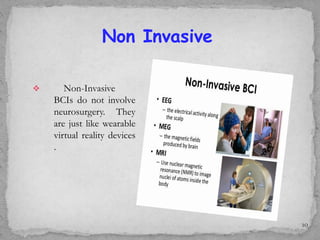
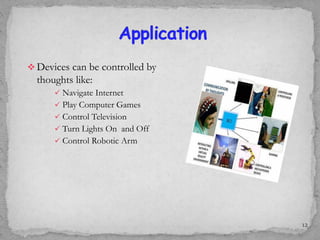
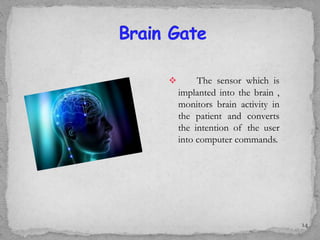
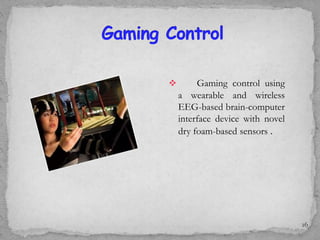
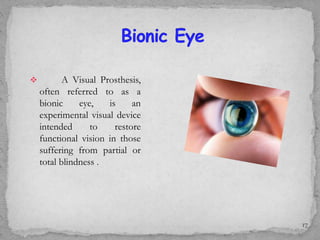
Brain chip technology, or brain-computer interfaces (BCIs), involves implantable chips that connect the brain to computers, enhancing capabilities for severely disabled individuals. BCIs can be invasive, non-invasive, or partially invasive, and have applications in controlling prosthetics, gaming, and restoring vision through devices like bionic eyes. While offering significant advantages, such as enabling direct interaction with computers and improved capabilities, the technology also faces challenges including developmental limitations and risks like scar tissue formation.