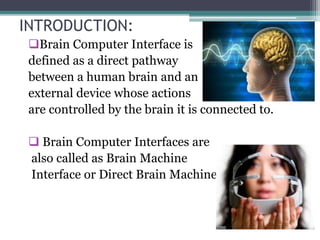
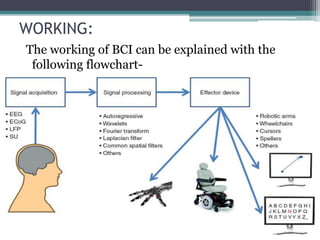
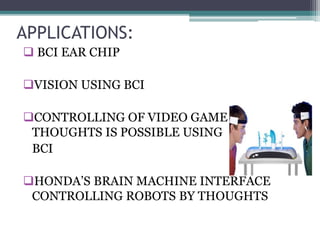
Brain-computer interfaces (BCI) allow direct communication pathways between the brain and external devices. Research on BCIs has occurred for over 20 years, with increasing experimentation in the mid-1990s using animal models like monkeys and rats. There are invasive, partially invasive, and non-invasive BCIs, where invasive devices are surgically implanted into the brain and non-invasive do not require surgery. BCI applications include ear chips, vision assistance, controlling video games and robots with thoughts. While BCI helps disabled individuals, it also has limitations like high expenses, low information transfer rates, and difficulty adapting. The future of BCI may include overcoming limitations to allow virtual reality control by thought.