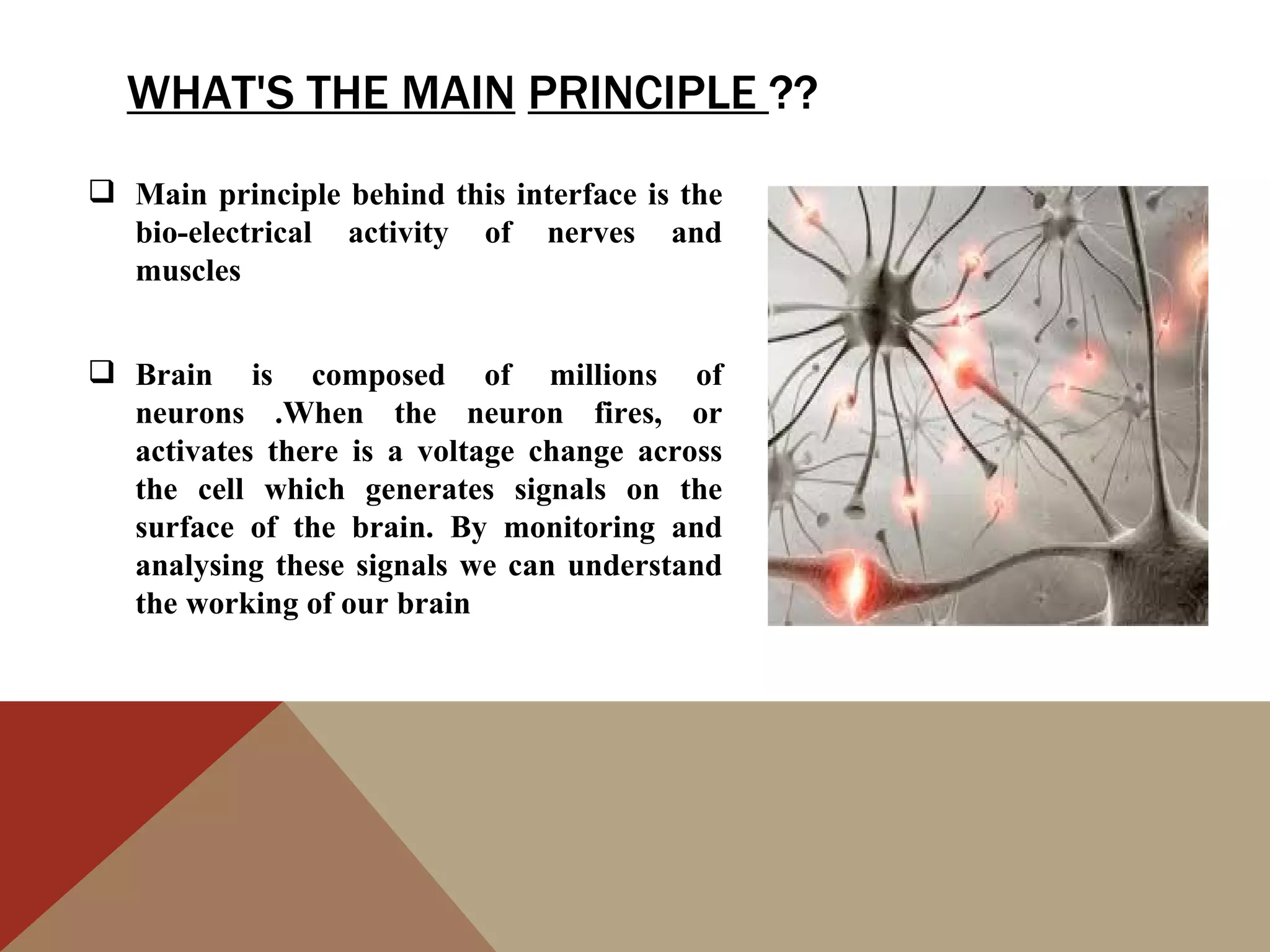
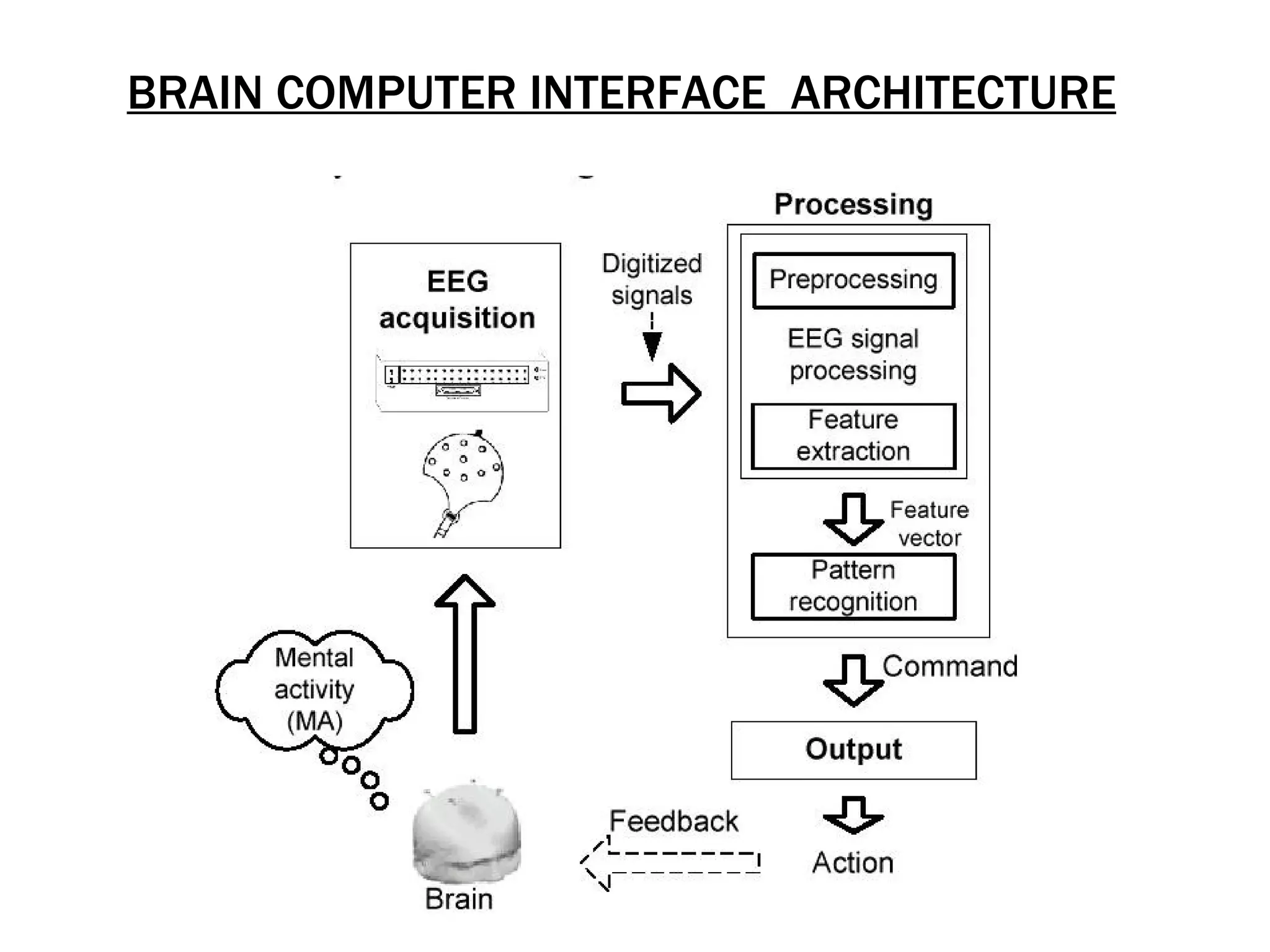



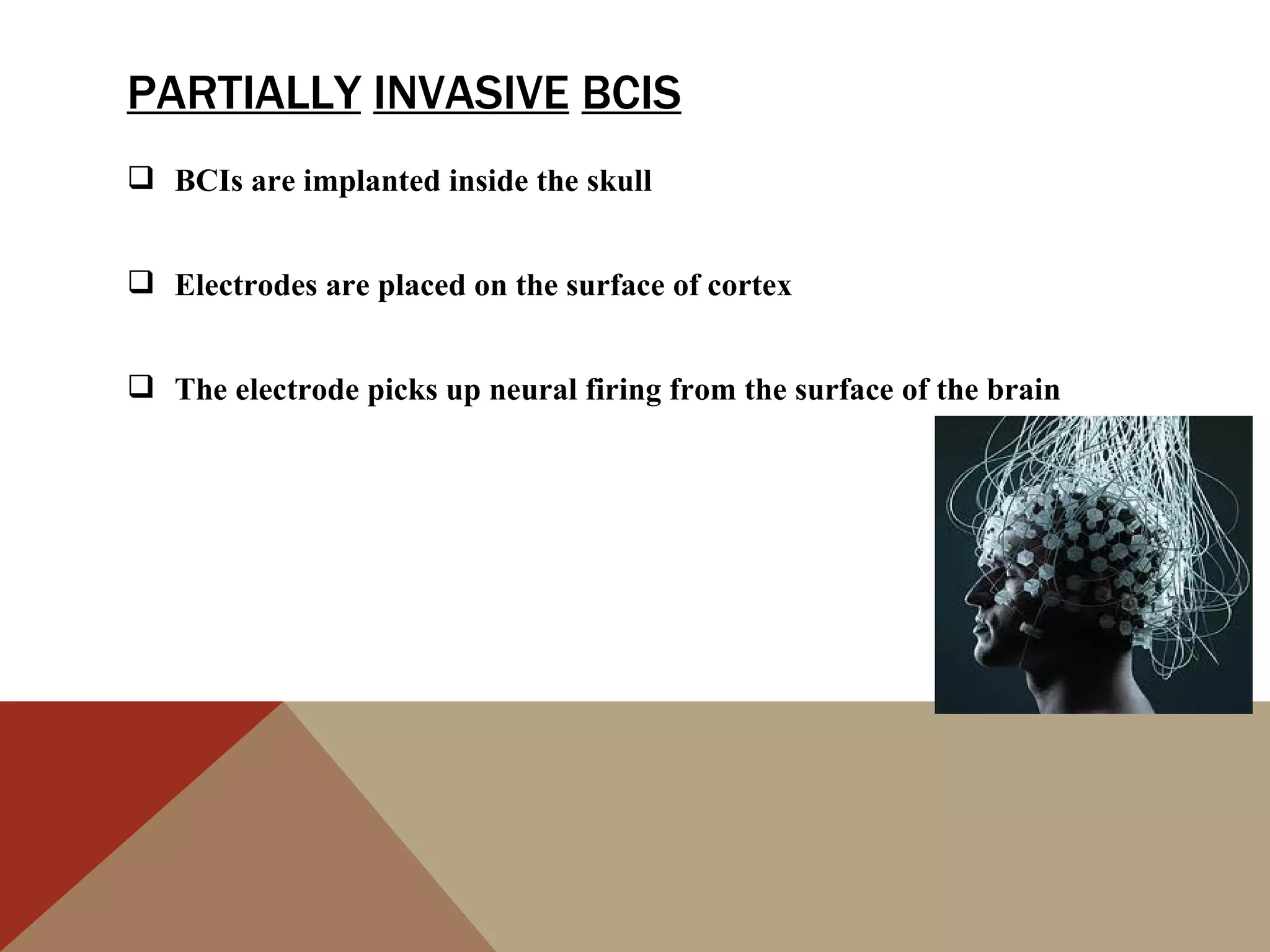
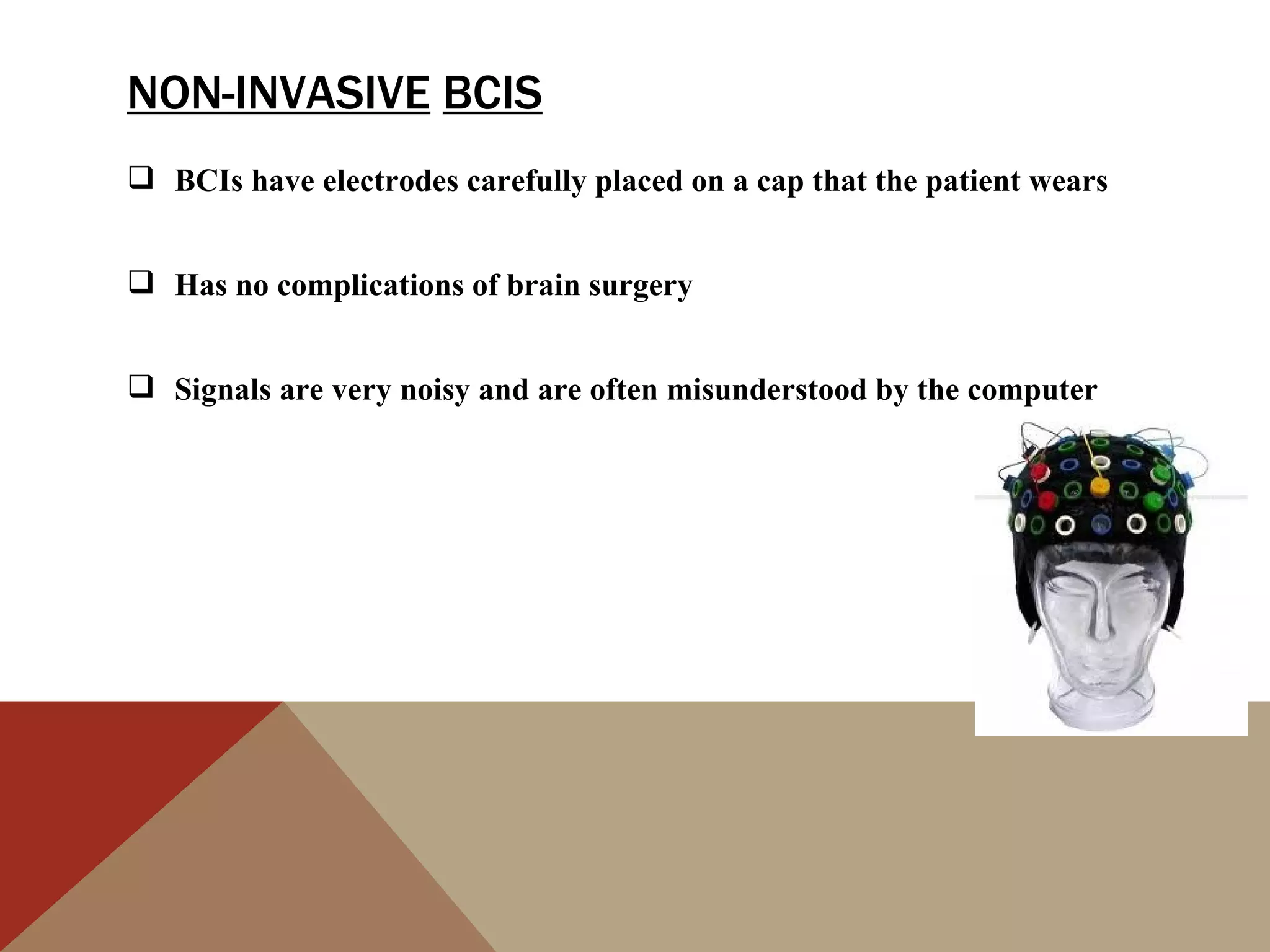



Brain computer interfaces allow direct communication between the human brain and external devices. BCIs detect brain signals through electrodes placed on the scalp or surgically implanted. These signals are analyzed to understand thoughts and intentions, then used to control devices. While promising to help those with disabilities, BCIs face challenges including weak signal detection, extensive training needs, and risks of surgery. Future applications could include wireless implants to control wheelchairs or communicate between brains.


