Algae
•Aitana
•Marta
•María
What are algae?
•Algae comprise several different groups of
living things which are similar to plants but are
not actually true plants.
•Algae are aquatic organisms that do not have
roots, leaves or stems.
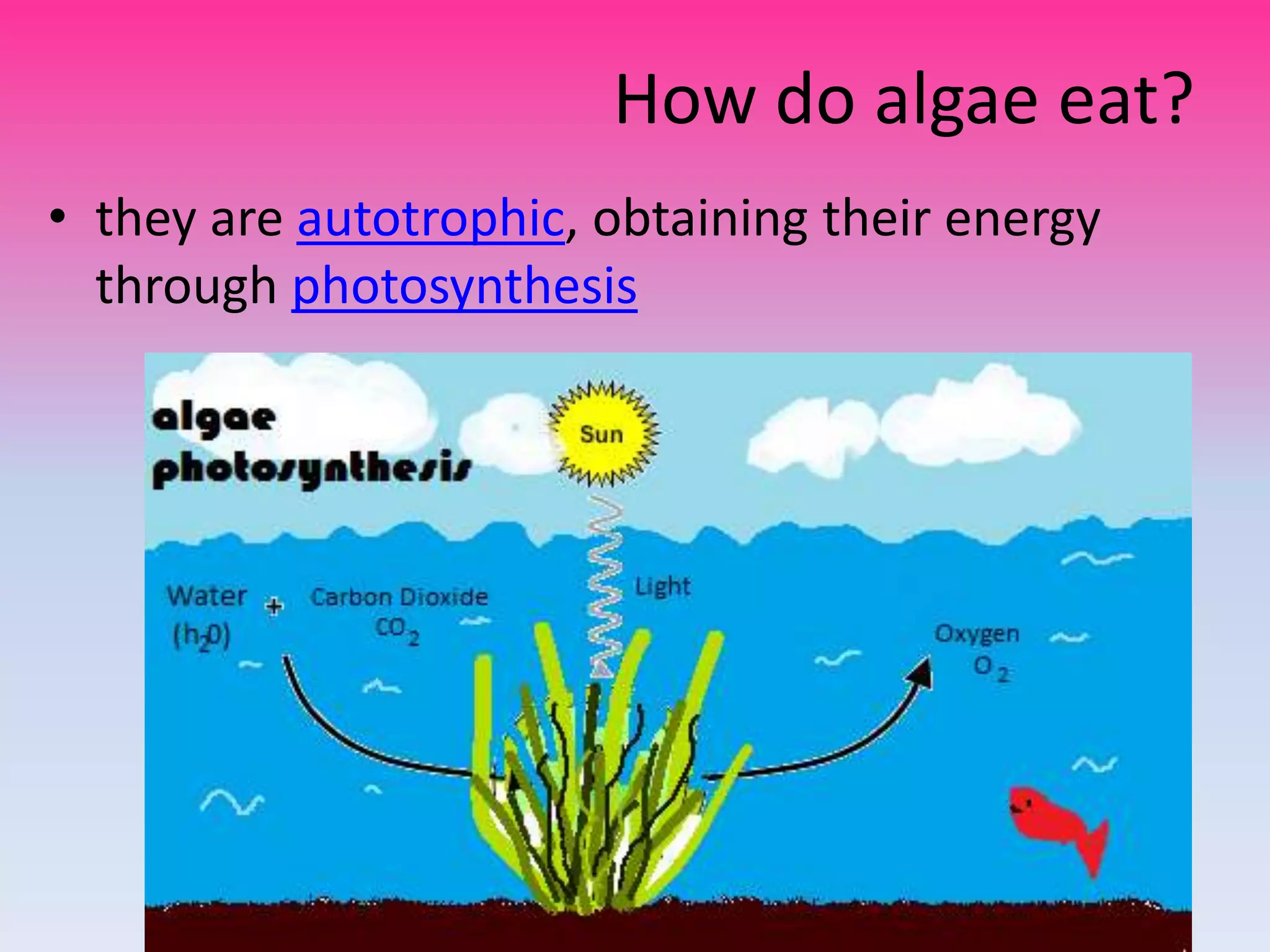
How do algae eat?
• they are autotrophic, obtaining their energy
  through photosynthesis
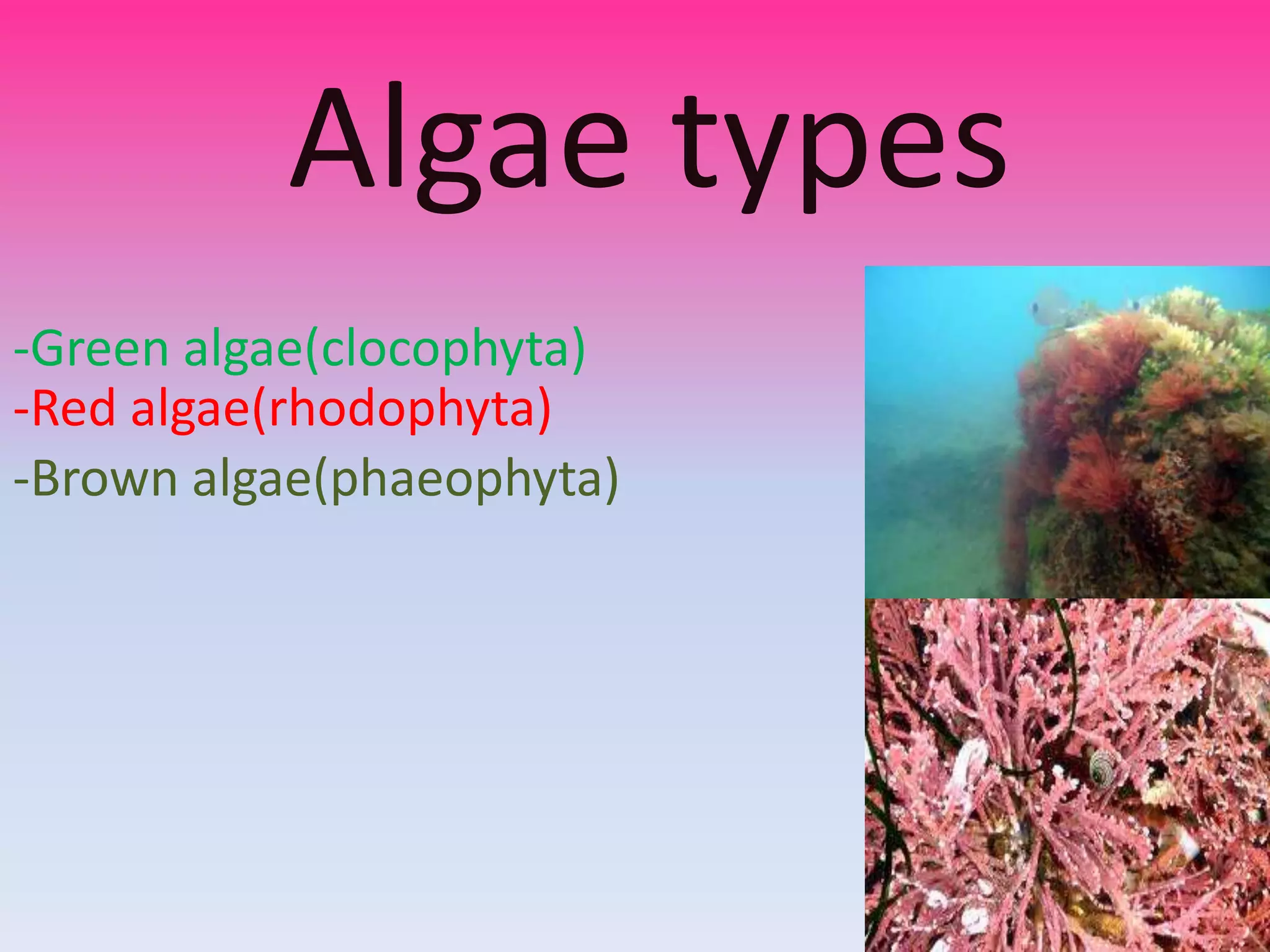
Algae types
-Green algae(clocophyta)
-Red algae(rhodophyta)
-Brown algae(phaeophyta)
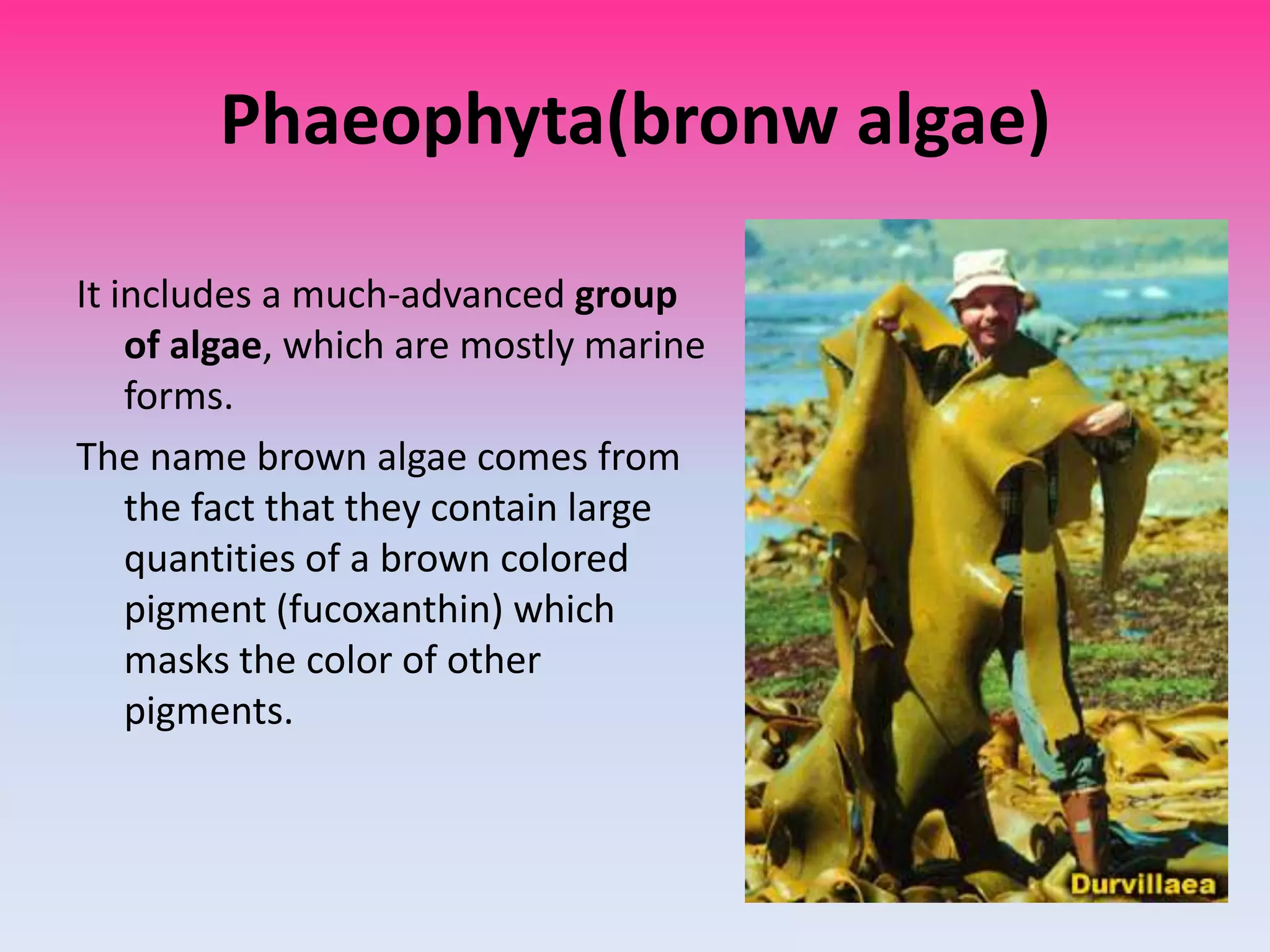
Phaeophyta(bronw algae)

It includes a much-advanced group
    of algae, which are mostly marine
    forms.
The name brown algae comes from
    the fact that they contain large
    quantities of a brown colored
    pigment (fucoxanthin) which
    masks the color of other
    pigments.
Rhodophyta(red algae)
• They are generally found attached to rocky stones.
• It is a group consisting of multicellular aquatic algae.

 •The members of this group are
 commonly called 'red algae' due
 to the presence of a
 characteristic red pigment
 called phycoerythrin
 (red), which masks the color of
 other pigments
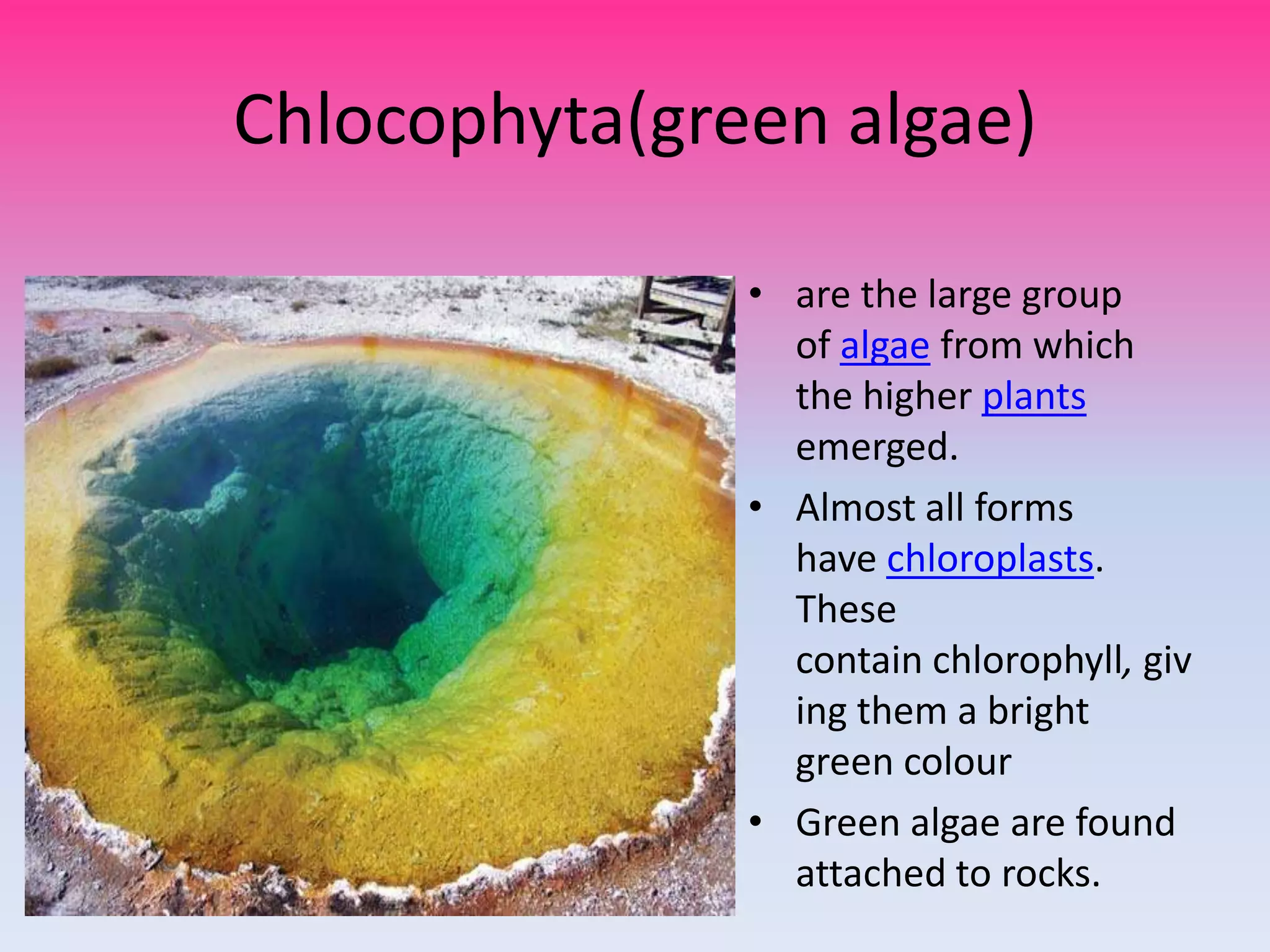
Chlocophyta(green algae)

               • are the large group
                 of algae from which
                 the higher plants
                 emerged.
               • Almost all forms
                 have chloroplasts.
                 These
                 contain chlorophyll, giv
                 ing them a bright
                 green colour
               • Green algae are found
                 attached to rocks.
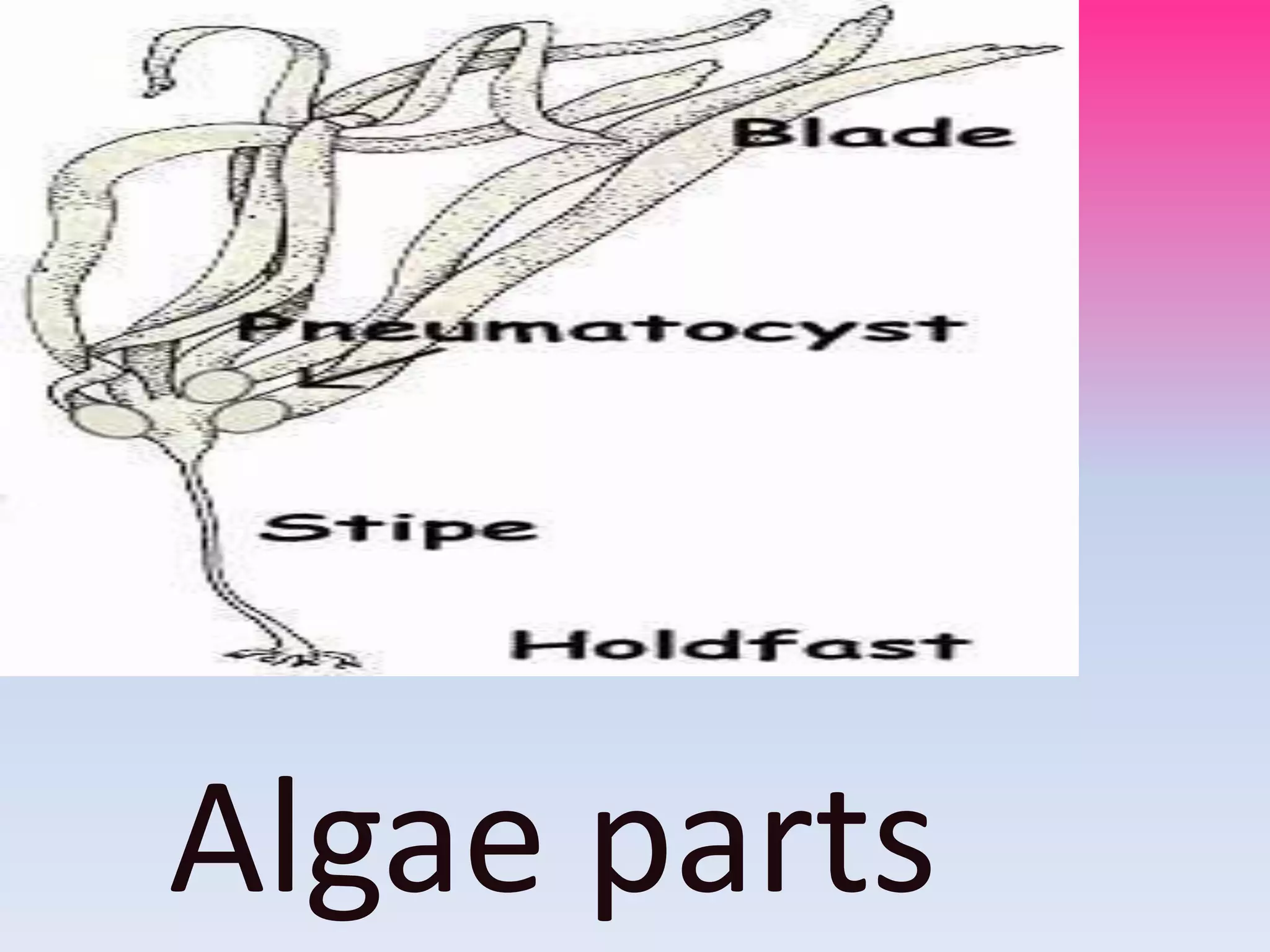
Algae parts
USES
• Despite of being an unknown
  group, algae offer a very big number
  of uses:

 -Nutritional (in food)
 -Agricultural (in farming)
 -Industrial (in industry)
 -Medical (in medicine)
Nutritional
• Probably the most known use for
  algae.
• In Spain, is not very popular but in
  other countries like Japan and China
  is used every day since more than 2600
  years ago.
• There are about 200 species used for
  human consume. The most used are:
The most used are:

• Saccharina Japonica
  (“kombu” is used in
  meat, fish and soup)
• Undaria Pinnatifida (
  “Wakame” or “Miyeok”)
• Porphyra (“Noi”)
Europe´s native species

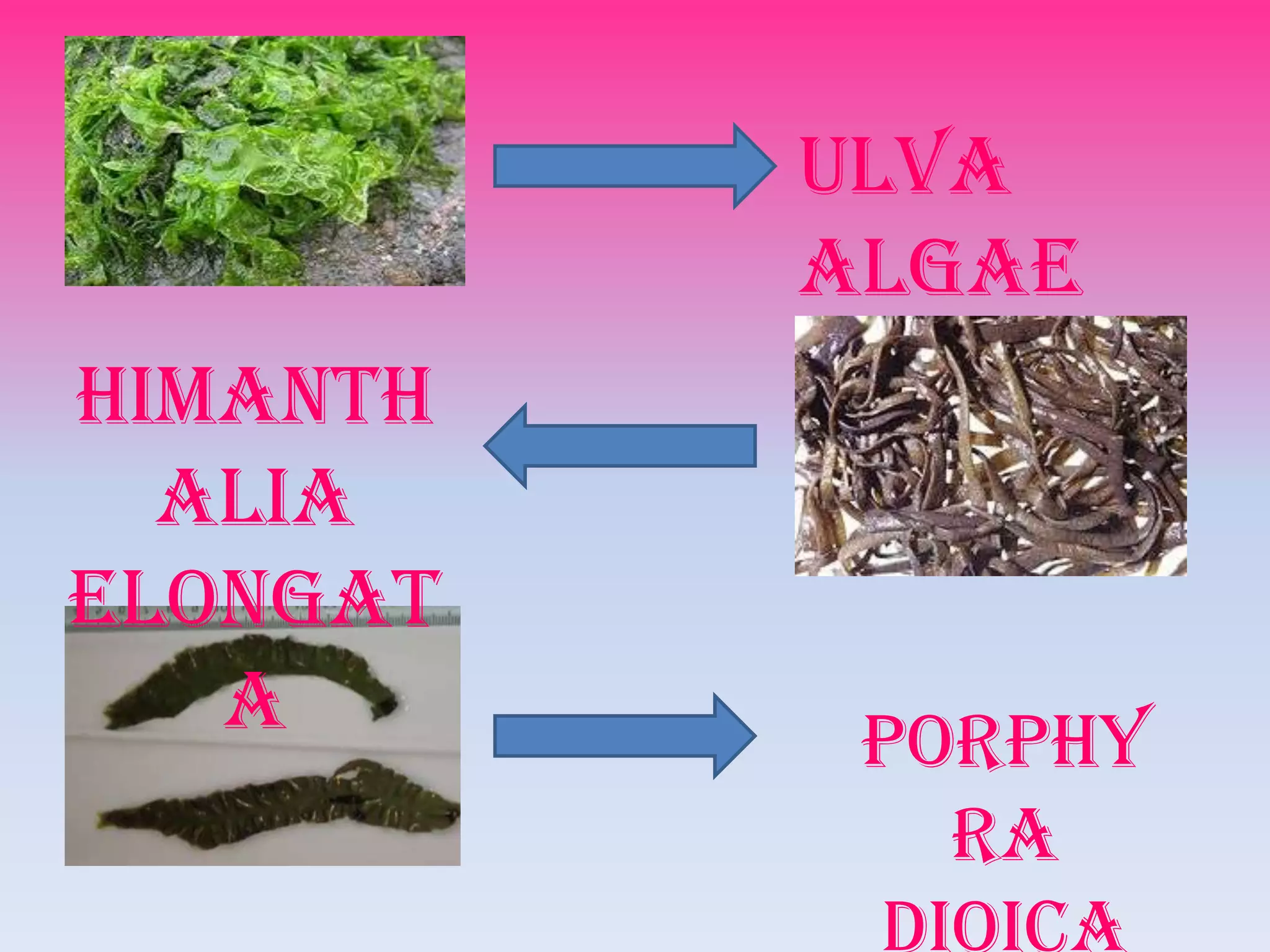
• Ulva
• Himanthalia elongata
• Porphyra dioica
Ulva
          algae
Himanth
  alia
elongat
   a       Porphy
             ra
Agricultural
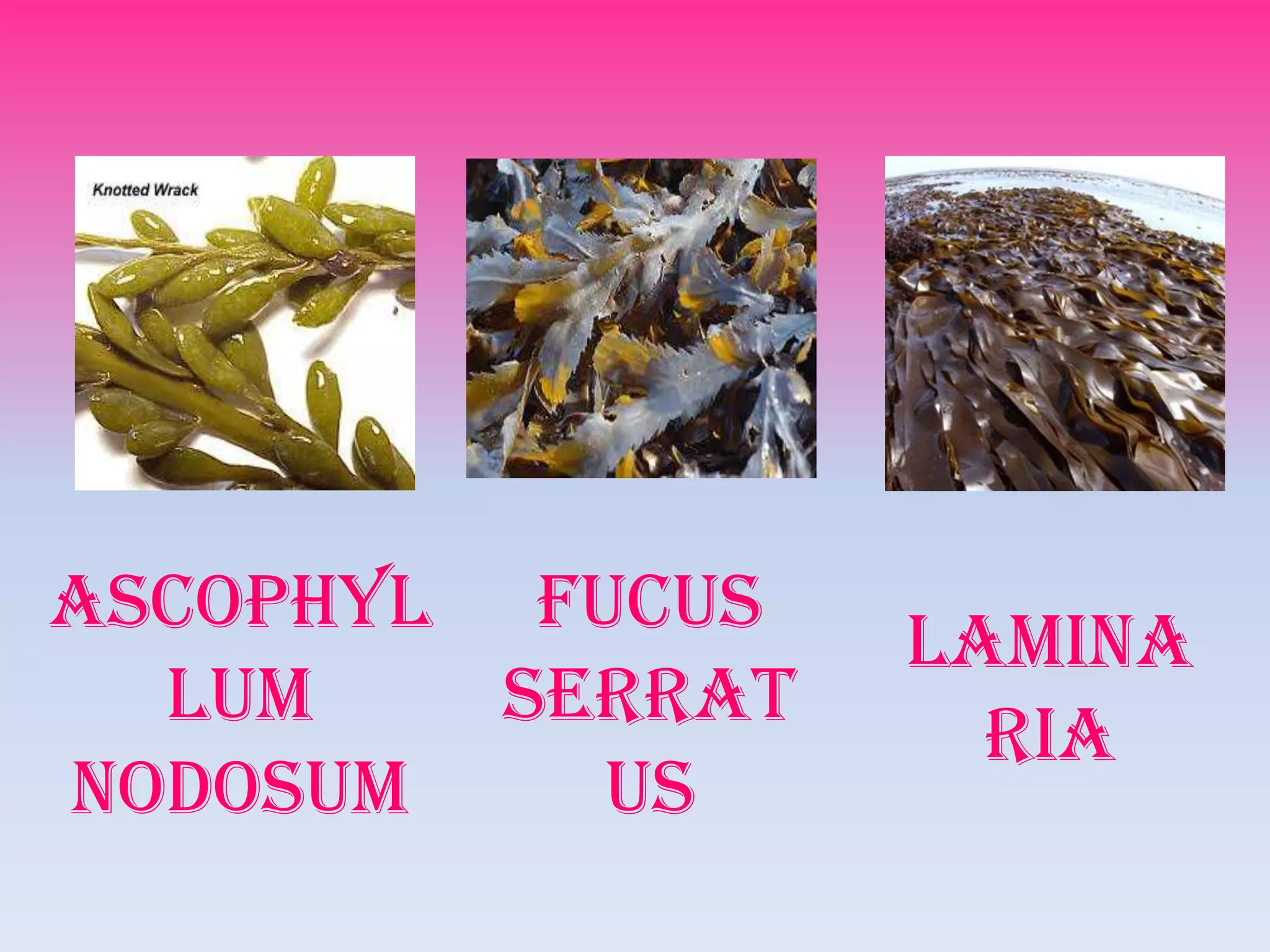
• Mostly used as fertilizer
• Most common are:
  -Ascophyllum nodosum
  -Fucus serratus
  -Laminaria
Ascophyl Fucus
                  Lamina
  lum    serrat
                    ria
nodosum    us
Industrial
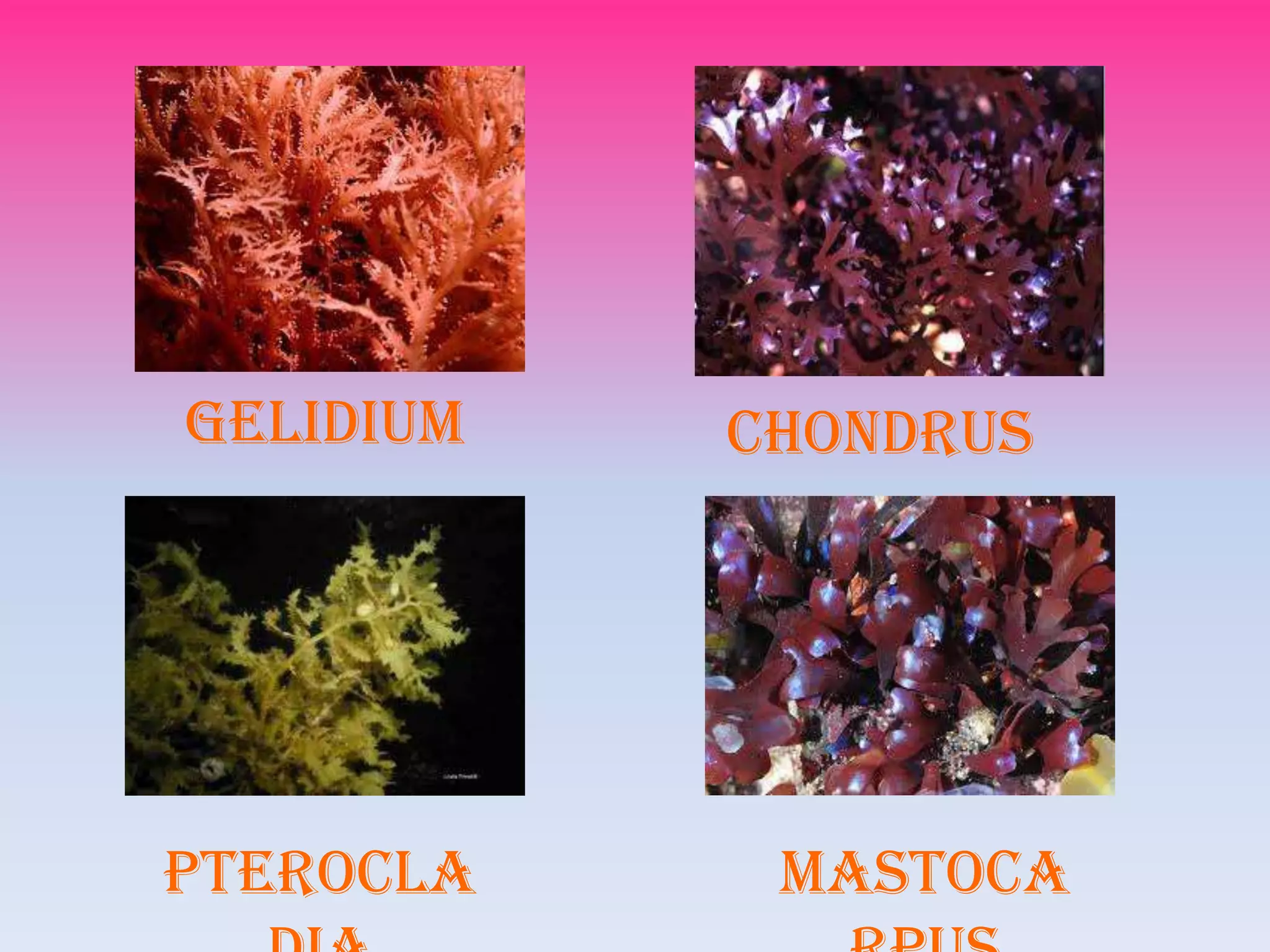
• Algae are used for cosmetics ,food
  and medicaments.
• Most common are:
  -Gelidium sesquipedale
  -Pterocladia capillalea
• Most common in Spain (used in milk
  products):
  -Chondrus Crispus
  -Mastocarpus Stellatus
Gelidium   Chondrus


Pterocla    Mastoca
Medical
• During a lot of time algae
  have been used to treat
  illness like tuberculosis, flu
  and fam. Also for herpes
  and cancer.(Sargassum and
  Corallina)
Sargassu
           m


Corallin
a
The end

Algae

  • 1.
  • 2.
    What are algae? •Algaecomprise several different groups of living things which are similar to plants but are not actually true plants. •Algae are aquatic organisms that do not have roots, leaves or stems.
  • 3.
    How do algaeeat? • they are autotrophic, obtaining their energy through photosynthesis
  • 4.
    Algae types -Green algae(clocophyta) -Redalgae(rhodophyta) -Brown algae(phaeophyta)
  • 5.
    Phaeophyta(bronw algae) It includesa much-advanced group of algae, which are mostly marine forms. The name brown algae comes from the fact that they contain large quantities of a brown colored pigment (fucoxanthin) which masks the color of other pigments.
  • 6.
    Rhodophyta(red algae) • Theyare generally found attached to rocky stones. • It is a group consisting of multicellular aquatic algae. •The members of this group are commonly called 'red algae' due to the presence of a characteristic red pigment called phycoerythrin (red), which masks the color of other pigments
  • 7.
    Chlocophyta(green algae) • are the large group of algae from which the higher plants emerged. • Almost all forms have chloroplasts. These contain chlorophyll, giv ing them a bright green colour • Green algae are found attached to rocks.
  • 8.
  • 9.
    USES • Despite ofbeing an unknown group, algae offer a very big number of uses: -Nutritional (in food) -Agricultural (in farming) -Industrial (in industry) -Medical (in medicine)
  • 10.
    Nutritional • Probably themost known use for algae. • In Spain, is not very popular but in other countries like Japan and China is used every day since more than 2600 years ago. • There are about 200 species used for human consume. The most used are:
  • 11.
    The most usedare: • Saccharina Japonica (“kombu” is used in meat, fish and soup) • Undaria Pinnatifida ( “Wakame” or “Miyeok”) • Porphyra (“Noi”)
  • 12.
    Europe´s native species •Ulva • Himanthalia elongata • Porphyra dioica
  • 13.
    Ulva algae Himanth alia elongat a Porphy ra
  • 14.
    Agricultural • Mostly usedas fertilizer • Most common are: -Ascophyllum nodosum -Fucus serratus -Laminaria
  • 15.
    Ascophyl Fucus Lamina lum serrat ria nodosum us
  • 16.
    Industrial • Algae areused for cosmetics ,food and medicaments. • Most common are: -Gelidium sesquipedale -Pterocladia capillalea • Most common in Spain (used in milk products): -Chondrus Crispus -Mastocarpus Stellatus
  • 17.
    Gelidium Chondrus Pterocla Mastoca
  • 18.
    Medical • During alot of time algae have been used to treat illness like tuberculosis, flu and fam. Also for herpes and cancer.(Sargassum and Corallina)
  • 19.
    Sargassu m Corallin a
  • 20.