Algae in Aquatic, Marine, and
     Terrestrial Systems
   General Biology, Systematics,
 Ecology, and Environmental Impact
Algae in Aquatic, Marine, and
       Terrestrial Systems
• Polyphyletic group: multiple genealogies
• Prokaryotic algae (cyanobacteria) and
  Eukaryotic algae (protistans; not true
  plants)
• Autotrophy
• Body form: unicellular, filamentous, and
  multicellular
• Diverse group: Over 26,900 eukaryotic
  algal species described.
Divisions (Phyla) of Algae
• Prokaryotic Algae
  – Division Cyanophyta (cyanobacteria or blue-green
    algae)
  – not the first photosynthetic organisms, but ancient (3.5
    billion years based on fossil record)
  – one organelle is present in the form of simple, flattened
    vesicles called thylakoids (2 photosystems present)
  – Chlorophyll a, phycobiliproteins; prochlorophytes are
    related species that possess chlorophyll a, b, and (c)
  – Carbohydrate Reserve: Starch
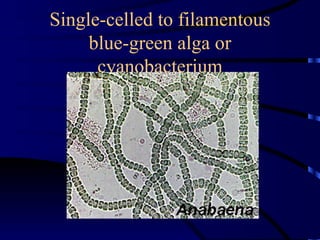
Single-celled to filamentous
     blue-green alga or
      cyanobacterium
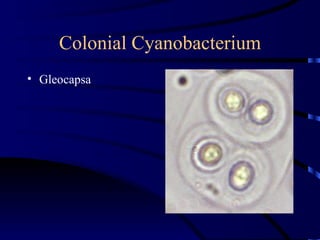
Colonial Cyanobacterium
• Gleocapsa
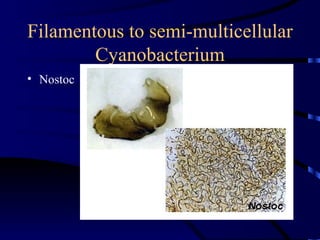
Filamentous to semi-multicellular
        Cyanobacterium
• Nostoc
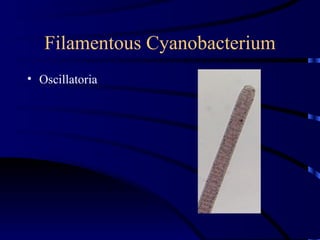
Filamentous Cyanobacterium
• Oscillatoria
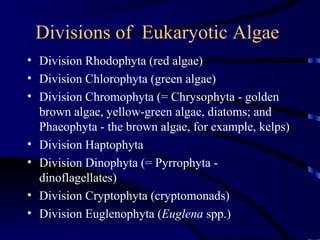
Divisions of Eukaryotic Algae
• Division Rhodophyta (red algae)
• Division Chlorophyta (green algae)
• Division Chromophyta (= Chrysophyta - golden
  brown algae, yellow-green algae, diatoms; and
  Phaeophyta - the brown algae, for example, kelps)
• Division Haptophyta
• Division Dinophyta (= Pyrrophyta -
  dinoflagellates)
• Division Cryptophyta (cryptomonads)
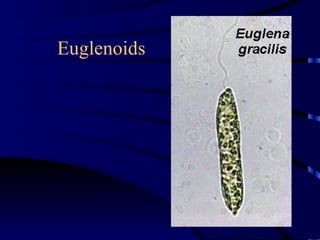
• Division Euglenophyta (Euglena spp.)
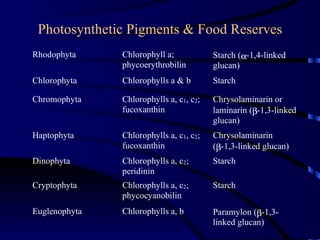
Photosynthetic Pigments & Food Reserves
Rhodophyta     Chlorophyll a;            Starch (α-1,4-linked
               phycoerythrobilin         glucan)
Chlorophyta    Chlorophylls a & b        Starch

Chromophyta    Chlorophylls a, c1, c2;   Chrysolaminarin or
               fucoxanthin               laminarin (β-1,3-linked
                                         glucan)
Haptophyta     Chlorophylls a, c1, c2;   Chrysolaminarin
               fucoxanthin               (β-1,3-linked glucan)
Dinophyta      Chlorophylls a, c2;       Starch
               peridinin
Cryptophyta    Chlorophylls a, c2;       Starch
               phycocyanobilin
Euglenophyta   Chlorophylls a, b         Paramylon (β-1,3-
                                         linked glucan)
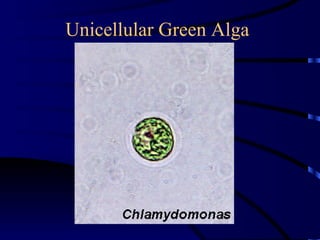
Unicellular Green Alga
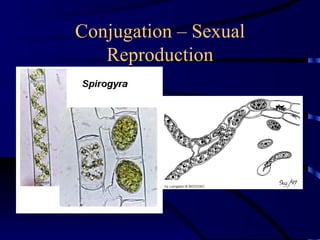
Conjugation – Sexual
   Reproduction
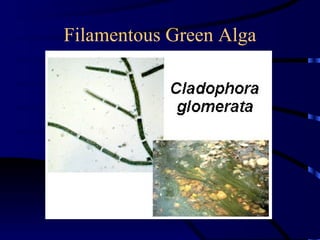
Filamentous Green Alga
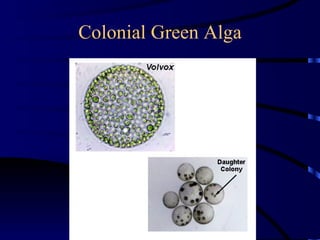
Colonial Green Alga
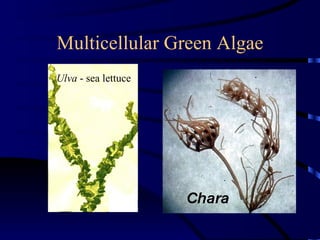
Multicellular Green Algae
Ulva - sea lettuce
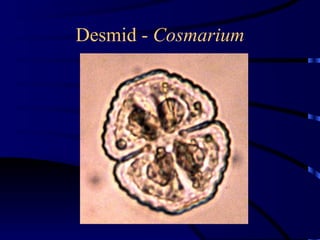
Desmid - Cosmarium
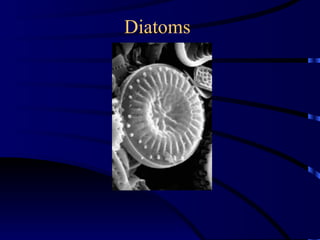
Diatoms
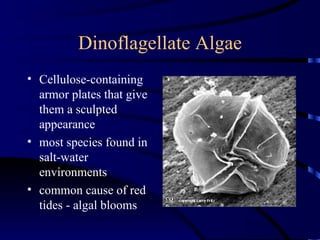
Dinoflagellate Algae
• Cellulose-containing
  armor plates that give
  them a sculpted
  appearance
• most species found in
  salt-water
  environments
• common cause of red
  tides - algal blooms
Euglenoids
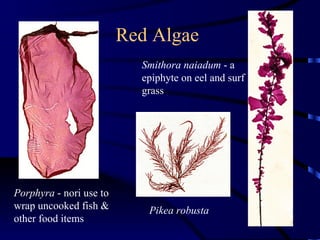
Red Algae
                           Smithora naiadum - a
                           epiphyte on eel and surf
                           grass


Porphyra - nori use to
wrap uncooked fish &        Pikea robusta
other food items
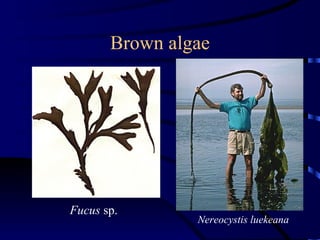
Brown algae


Fucus sp.
                Nereocystis luekeana
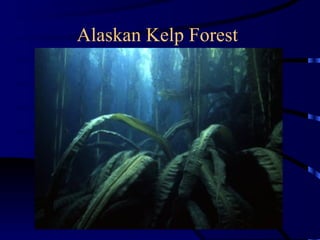
Alaskan Kelp Forest
Beneficial Aspects of Algae
• Food for humans
• Food for invertebrates and fishes in mariculture
• Animal feed
• Soil fertilizers and conditioners in agriculture
• Treatment of waste water
• Diatomaceous earth (= diatoms)
• Chalk deposits
• Phycocolloids (agar, carrageenan from red algae; alginates
  from brown algae)
• Drugs
• Model system for research
• Phycobiliproteins for fluorescence microscopy
Detrimental Aspects of Algae
• Blooms of freshwater algae
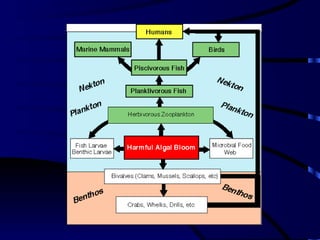
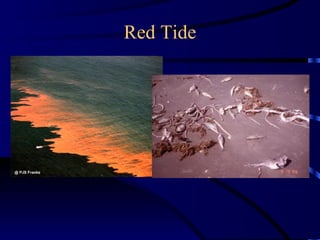
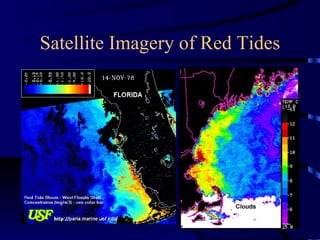
• Red tides and marine blooms
• Toxins accumulated in food chains
• Damage to cave paintings, frescoes, and other
  works of art
• Fouling of ships and other submerged surfaces
• Fouling of the shells of commercially important
  bivalves
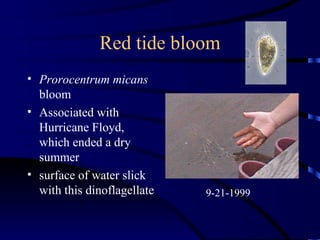
Red tide bloom
• Prorocentrum micans
  bloom
• Associated with
  Hurricane Floyd,
  which ended a dry
  summer
• surface of water slick
  with this dinoflagellate   9-21-1999
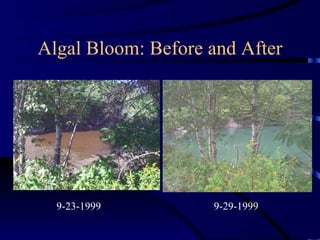
Algal Bloom: Before and After


  9-23-1999         9-29-1999
Red Tide
Satellite Imagery of Red Tides
Toxic Phytoplankton & Human poisoning

•   Paralytic shellfish poisoning - saxitoxin
•   Neurotxic shellfish poisoning - brevetoxin
•   Ciguatera fish poisoning - ciguatoxin and maitotoxin
•   Diarrhetic shellfish poisoning - okadaic acid
•   Amnesic shellfish poisoning - domoic acid
•   Cyanobacterial neurotoxins - anatoxins
•   Cyanobacterial hepatotoxins - microcystin, nodularin
•   Dermatitis - lyngbyatoxin, aplysiatoxin
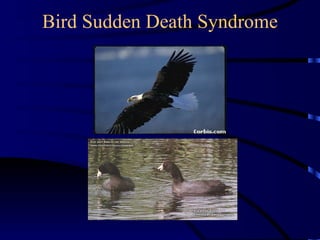
Bird Sudden Death Syndrome
•   DeGray Lake, Arkansas; Eagles migrate to area in October and stay
    through March
•   Eagles eat fish, the American coot, and other prey items
•   Winter 1994-1995, 29 eagles were found dead or died of a
    neurological malady
•   Winter 1996-1997, pattern repeated itself, leaving 26 bald eagles dead
•   Die-off of eagles has been reported in North Carolina and Georgia
•   Coots have been reported to suffer similar symptoms and mortality
    outbreaks
•   Why? No one knows? Algal toxins?

Algae[1]

  • 1.
    Algae in Aquatic,Marine, and Terrestrial Systems General Biology, Systematics, Ecology, and Environmental Impact
  • 2.
    Algae in Aquatic,Marine, and Terrestrial Systems • Polyphyletic group: multiple genealogies • Prokaryotic algae (cyanobacteria) and Eukaryotic algae (protistans; not true plants) • Autotrophy • Body form: unicellular, filamentous, and multicellular • Diverse group: Over 26,900 eukaryotic algal species described.
  • 3.
    Divisions (Phyla) ofAlgae • Prokaryotic Algae – Division Cyanophyta (cyanobacteria or blue-green algae) – not the first photosynthetic organisms, but ancient (3.5 billion years based on fossil record) – one organelle is present in the form of simple, flattened vesicles called thylakoids (2 photosystems present) – Chlorophyll a, phycobiliproteins; prochlorophytes are related species that possess chlorophyll a, b, and (c) – Carbohydrate Reserve: Starch
  • 4.
    Single-celled to filamentous blue-green alga or cyanobacterium
  • 5.
  • 6.
    Filamentous to semi-multicellular Cyanobacterium • Nostoc
  • 7.
  • 8.
    Divisions of EukaryoticAlgae • Division Rhodophyta (red algae) • Division Chlorophyta (green algae) • Division Chromophyta (= Chrysophyta - golden brown algae, yellow-green algae, diatoms; and Phaeophyta - the brown algae, for example, kelps) • Division Haptophyta • Division Dinophyta (= Pyrrophyta - dinoflagellates) • Division Cryptophyta (cryptomonads) • Division Euglenophyta (Euglena spp.)
  • 9.
    Photosynthetic Pigments &Food Reserves Rhodophyta Chlorophyll a; Starch (α-1,4-linked phycoerythrobilin glucan) Chlorophyta Chlorophylls a & b Starch Chromophyta Chlorophylls a, c1, c2; Chrysolaminarin or fucoxanthin laminarin (β-1,3-linked glucan) Haptophyta Chlorophylls a, c1, c2; Chrysolaminarin fucoxanthin (β-1,3-linked glucan) Dinophyta Chlorophylls a, c2; Starch peridinin Cryptophyta Chlorophylls a, c2; Starch phycocyanobilin Euglenophyta Chlorophylls a, b Paramylon (β-1,3- linked glucan)
  • 10.
  • 11.
  • 12.
  • 13.
  • 14.
  • 15.
  • 16.
  • 17.
    Dinoflagellate Algae • Cellulose-containing armor plates that give them a sculpted appearance • most species found in salt-water environments • common cause of red tides - algal blooms
  • 18.
  • 19.
    Red Algae Smithora naiadum - a epiphyte on eel and surf grass Porphyra - nori use to wrap uncooked fish & Pikea robusta other food items
  • 20.
    Brown algae Fucus sp. Nereocystis luekeana
  • 21.
  • 22.
    Beneficial Aspects ofAlgae • Food for humans • Food for invertebrates and fishes in mariculture • Animal feed • Soil fertilizers and conditioners in agriculture • Treatment of waste water • Diatomaceous earth (= diatoms) • Chalk deposits • Phycocolloids (agar, carrageenan from red algae; alginates from brown algae) • Drugs • Model system for research • Phycobiliproteins for fluorescence microscopy
  • 23.
    Detrimental Aspects ofAlgae • Blooms of freshwater algae • Red tides and marine blooms • Toxins accumulated in food chains • Damage to cave paintings, frescoes, and other works of art • Fouling of ships and other submerged surfaces • Fouling of the shells of commercially important bivalves
  • 24.
    Red tide bloom •Prorocentrum micans bloom • Associated with Hurricane Floyd, which ended a dry summer • surface of water slick with this dinoflagellate 9-21-1999
  • 25.
    Algal Bloom: Beforeand After 9-23-1999 9-29-1999
  • 27.
  • 28.
  • 29.
    Toxic Phytoplankton &Human poisoning • Paralytic shellfish poisoning - saxitoxin • Neurotxic shellfish poisoning - brevetoxin • Ciguatera fish poisoning - ciguatoxin and maitotoxin • Diarrhetic shellfish poisoning - okadaic acid • Amnesic shellfish poisoning - domoic acid • Cyanobacterial neurotoxins - anatoxins • Cyanobacterial hepatotoxins - microcystin, nodularin • Dermatitis - lyngbyatoxin, aplysiatoxin
  • 30.
  • 31.
    Bird Sudden DeathSyndrome • DeGray Lake, Arkansas; Eagles migrate to area in October and stay through March • Eagles eat fish, the American coot, and other prey items • Winter 1994-1995, 29 eagles were found dead or died of a neurological malady • Winter 1996-1997, pattern repeated itself, leaving 26 bald eagles dead • Die-off of eagles has been reported in North Carolina and Georgia • Coots have been reported to suffer similar symptoms and mortality outbreaks • Why? No one knows? Algal toxins?