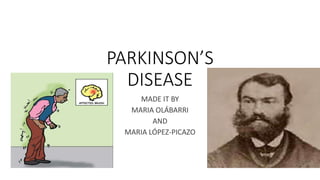
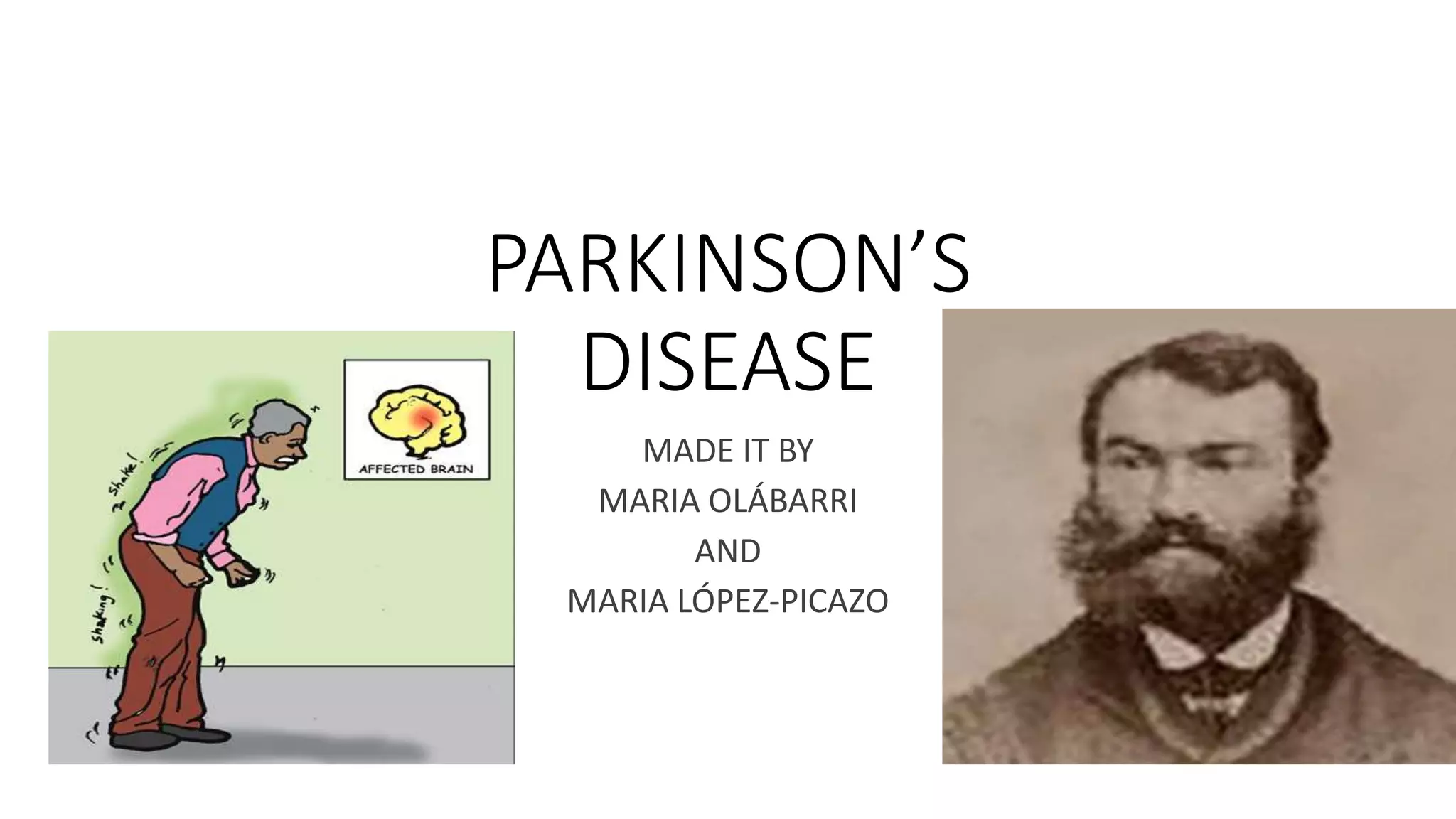
PARKINSON’S
DISEASE
MADE IT BY
MARIA OLÁBARRI
AND
MARIA LÓPEZ-PICAZO
WHAT IS IT ?
Parkinson´s disease is a disource of the central nervous system , which
includes the brain and the spinal cord, and controls everything you do,
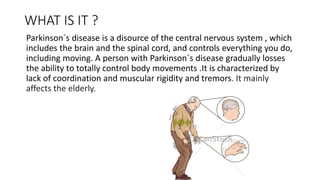
including moving. A person with Parkinson´s disease gradually losses
the ability to totally control body movements .It is characterized by
lack of coordination and muscular rigidity and tremors. It mainly
affects the elderly.
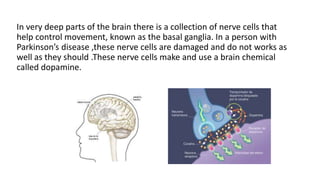
In very deep parts of the brain there is a collection of nerve cells that
help control movement, known as the basal ganglia. In a person with
Parkinson’s disease ,these nerve cells are damaged and do not works as
well as they should .These nerve cells make and use a brain chemical
called dopamine.
WHY DOES THIS HAPPEN?
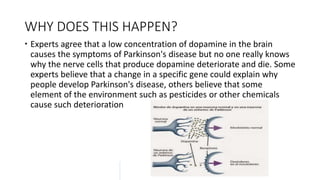
 Experts agree that a low concentration of dopamine in the brain
causes the symptoms of Parkinson's disease but no one really knows
why the nerve cells that produce dopamine deteriorate and die. Some
experts believe that a change in a specific gene could explain why
people develop Parkinson's disease, others believe that some
element of the environment such as pesticides or other chemicals
cause such deterioration
SYMPTOMS
Shaking,
Rigidity,
Slowness of movement
Difficulty with walking.
Thinking and behavioral problems may also occur.
Dementia becomes common in the advanced stages of the disease.
Depression and anxiety are also common occurring in more than a third
of people with PD.
Other symptoms include sensory, sleep, and emotional problems.
The main motor symptoms are collectively called "parkinsonism", or a
"parkinsonian syndrome".
QUESTIONS
1. What systems are afected by Parkinson´s disease ?
2. What hapens to a person who has Parkinson´s disease ?
3. What is the name of the nerve cells that control movement?
4. Why Parkinson´s disease appear?
5. What are the symptoms?
ANSWERS
1. Nervous and locomotor system
2. Gradually loses the ability to control body movements
3. Basal ganglia
4. Because of a low concentration of a low concentration of dopamine
5. Shaking, rigidity, slowness of movement, difficulty with walking,
thinking and behabioral problems, dementia, depression, sensory,
sleep and emotional problems,
MADE IT BY…
MARIA AND
MARIA
Parkinson' disease

Parkinson' disease

  • 1.
    PARKINSON’S DISEASE MADE IT BY MARIAOLÁBARRI AND MARIA LÓPEZ-PICAZO
  • 2.
    WHAT IS IT? Parkinson´s disease is a disource of the central nervous system , which includes the brain and the spinal cord, and controls everything you do, including moving. A person with Parkinson´s disease gradually losses the ability to totally control body movements .It is characterized by lack of coordination and muscular rigidity and tremors. It mainly affects the elderly.
  • 3.
    In very deepparts of the brain there is a collection of nerve cells that help control movement, known as the basal ganglia. In a person with Parkinson’s disease ,these nerve cells are damaged and do not works as well as they should .These nerve cells make and use a brain chemical called dopamine.
  • 4.
    WHY DOES THISHAPPEN?  Experts agree that a low concentration of dopamine in the brain causes the symptoms of Parkinson's disease but no one really knows why the nerve cells that produce dopamine deteriorate and die. Some experts believe that a change in a specific gene could explain why people develop Parkinson's disease, others believe that some element of the environment such as pesticides or other chemicals cause such deterioration
  • 5.
    SYMPTOMS Shaking, Rigidity, Slowness of movement Difficultywith walking. Thinking and behavioral problems may also occur. Dementia becomes common in the advanced stages of the disease. Depression and anxiety are also common occurring in more than a third of people with PD. Other symptoms include sensory, sleep, and emotional problems. The main motor symptoms are collectively called "parkinsonism", or a "parkinsonian syndrome".
  • 6.
    QUESTIONS 1. What systemsare afected by Parkinson´s disease ? 2. What hapens to a person who has Parkinson´s disease ? 3. What is the name of the nerve cells that control movement? 4. Why Parkinson´s disease appear? 5. What are the symptoms?
  • 7.
    ANSWERS 1. Nervous andlocomotor system 2. Gradually loses the ability to control body movements 3. Basal ganglia 4. Because of a low concentration of a low concentration of dopamine 5. Shaking, rigidity, slowness of movement, difficulty with walking, thinking and behabioral problems, dementia, depression, sensory, sleep and emotional problems,
  • 8.

Editor's Notes