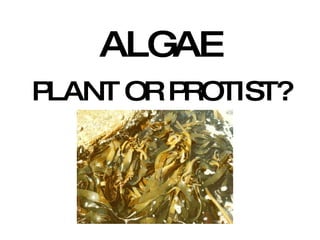
ALGAE PLANT OR PROTIST?
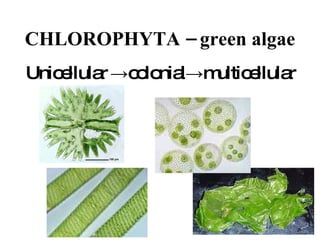
CHLOROPHYTA – green algae Unicellular  ->colonial->multicellular
 
General Characteristics of Algae Photosynthesize (chlorophyll a) Cell walls No specialized root/stem/leaf structures Non-vascular Must live in or near water
WHY must algae live in/near water? Don’t have an internal system of tubes to move water and materials from one part to another  NON VASCULAR SO WHAT ? ? Cells must be able to get oxygen, CO2, nutrients and get rid of wastes HOW ? ?
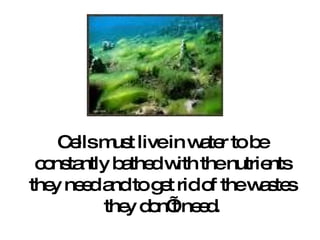
Cells must live in water to be constantly bathed with the nutrients they need and to get rid of the wastes they don’t need.
c
WHAT ADAPTIONS HAVE THEY MADE TO LIVE IN WATER? Won’t dry out, therefore many are very thin ex. ulva 2 cells thick Unlike desert plants - - - no cuticle or waxy covering No support structures Water supports them Simpler reproductive cycle Easier in water because the gametes can swim   Lack of light Evolve different chlorophylls and accessory pigments
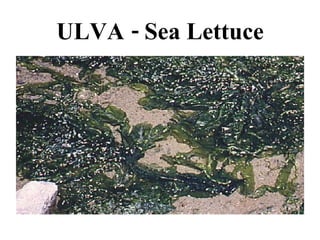
ULVA - Sea Lettuce


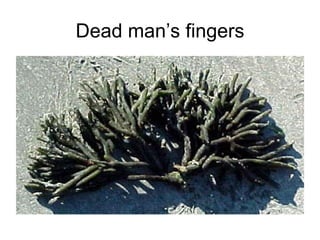
Dead man’s fingers
Wavelengths of light
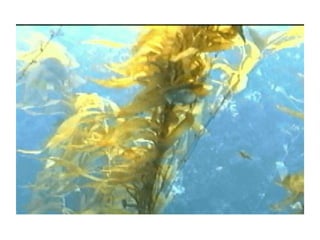
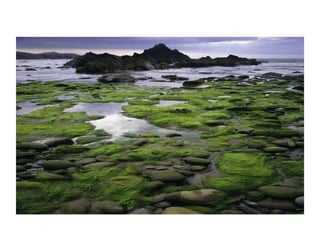
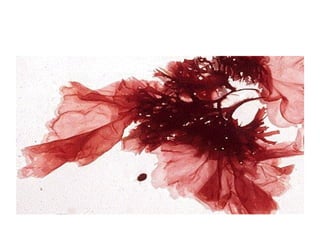
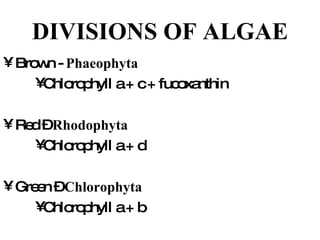
DIVISIONS OF ALGAE Brown -  Phaeophyta Chlorophyll a + c + fucoxanthin Red –  Rhodophyta Chlorophyll a + d Green –  Chlorophyta Chlorophyll a + b
 
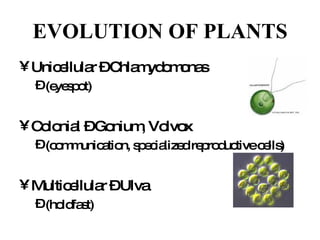
EVOLUTION OF PLANTS Unicellular – Chlamydomonas  (eyespot) Colonial – Gonium, Volvox  (communication, specialized reproductive cells) Multicellular – Ulva (holdfast)
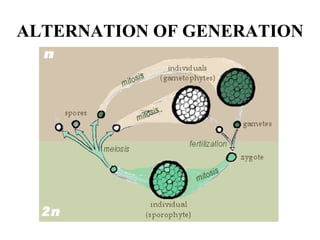
ALTERNATION OF GENERATION
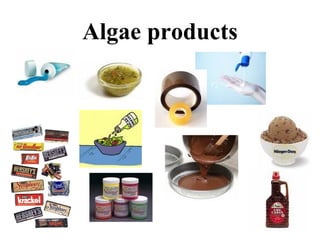
IMPORTANCE OF ALGAE Food source Home / shelter Oxygen Medicine – treat ulcers, high blood pressure Manufacturing of food Ice cream, candy bars, pickle relishes, salad dressing, chip dips, pancake syrups, egg nogs, canned chow mein, toothpaste, adhesive, hand lotion, finger paints, cake batter, pie fillers, doughnut glazes, agar
Algae products
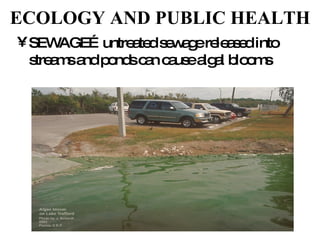
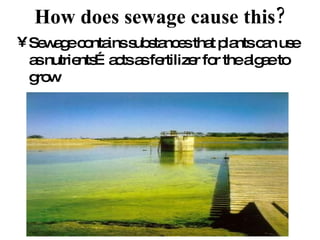
ECOLOGY AND PUBLIC HEALTH SEWAGE…untreated sewage released into streams and ponds can cause algal blooms
How does sewage cause this? Sewage contains substances that plants can use as nutrients…acts as fertilizer for the algae to grow
Challenge is to find ways to treat sewage that is safe for the water…

Algae notes

  • 1.
  • 2.
    CHLOROPHYTA – greenalgae Unicellular ->colonial->multicellular
  • 3.
  • 4.
    General Characteristics ofAlgae Photosynthesize (chlorophyll a) Cell walls No specialized root/stem/leaf structures Non-vascular Must live in or near water
  • 5.
    WHY must algaelive in/near water? Don’t have an internal system of tubes to move water and materials from one part to another NON VASCULAR SO WHAT ? ? Cells must be able to get oxygen, CO2, nutrients and get rid of wastes HOW ? ?
  • 6.
    Cells must livein water to be constantly bathed with the nutrients they need and to get rid of the wastes they don’t need.
  • 7.
  • 8.
    WHAT ADAPTIONS HAVETHEY MADE TO LIVE IN WATER? Won’t dry out, therefore many are very thin ex. ulva 2 cells thick Unlike desert plants - - - no cuticle or waxy covering No support structures Water supports them Simpler reproductive cycle Easier in water because the gametes can swim  Lack of light Evolve different chlorophylls and accessory pigments
  • 9.
    ULVA - SeaLettuce
  • 10.
  • 11.
  • 12.
  • 13.
  • 14.
  • 15.
    DIVISIONS OF ALGAEBrown - Phaeophyta Chlorophyll a + c + fucoxanthin Red – Rhodophyta Chlorophyll a + d Green – Chlorophyta Chlorophyll a + b
  • 16.
  • 17.
    EVOLUTION OF PLANTSUnicellular – Chlamydomonas (eyespot) Colonial – Gonium, Volvox (communication, specialized reproductive cells) Multicellular – Ulva (holdfast)
  • 18.
  • 19.
    IMPORTANCE OF ALGAEFood source Home / shelter Oxygen Medicine – treat ulcers, high blood pressure Manufacturing of food Ice cream, candy bars, pickle relishes, salad dressing, chip dips, pancake syrups, egg nogs, canned chow mein, toothpaste, adhesive, hand lotion, finger paints, cake batter, pie fillers, doughnut glazes, agar
  • 20.
  • 21.
    ECOLOGY AND PUBLICHEALTH SEWAGE…untreated sewage released into streams and ponds can cause algal blooms
  • 22.
    How does sewagecause this? Sewage contains substances that plants can use as nutrients…acts as fertilizer for the algae to grow
  • 23.
    Challenge is tofind ways to treat sewage that is safe for the water…