ALGAE
ALGAE
are photosynthetic organisms that
occur in most habitats. They vary
from small, single-celled forms to
complex multicellular forms, such as
the giant kelps that grow to 65
meters in length.
are very simple chlorophyll-
containing organisms.
CHARACTERISRICS
Unicellular or multicellular.
Cells are covered with rigid cellulose
cell wall.
Absence of conducting vessels and
mechanical tissues: entirely formed
with parenchyma cells.
Reproduction occurs by vegetative,
asexual and sexual reproduction
All algal cells are aquatic. They can
inhabit fresh or salt water, as well
as every salinity level in between.
They are THALLUS - they lack true
roots, stems, and leaves, fruits,
connecting tissue etc. and
photosynthesis occurs throughout
the plant, not just the leaves.
CHARACTERISRICS
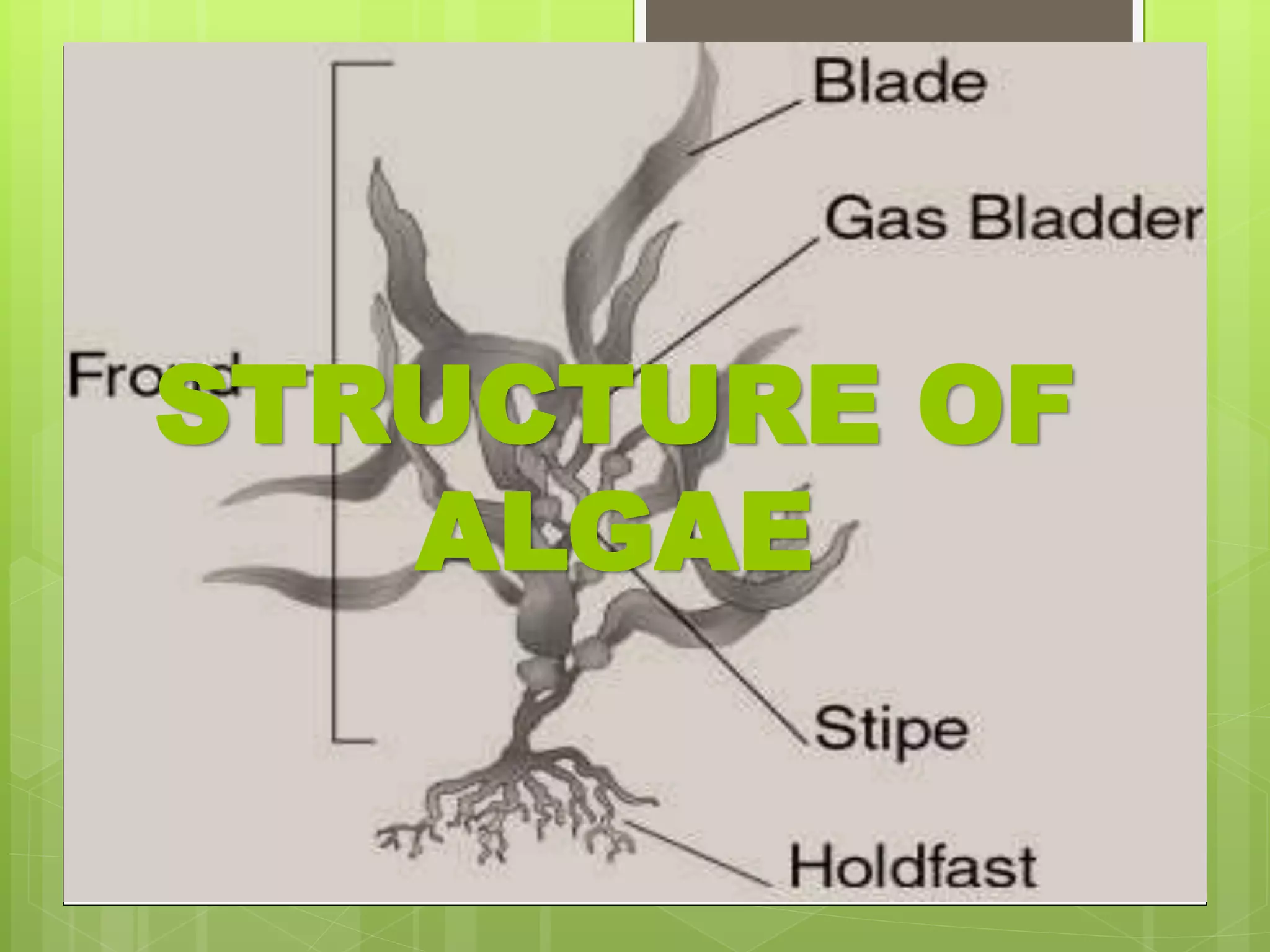
STRUCTURE OF
ALGAE
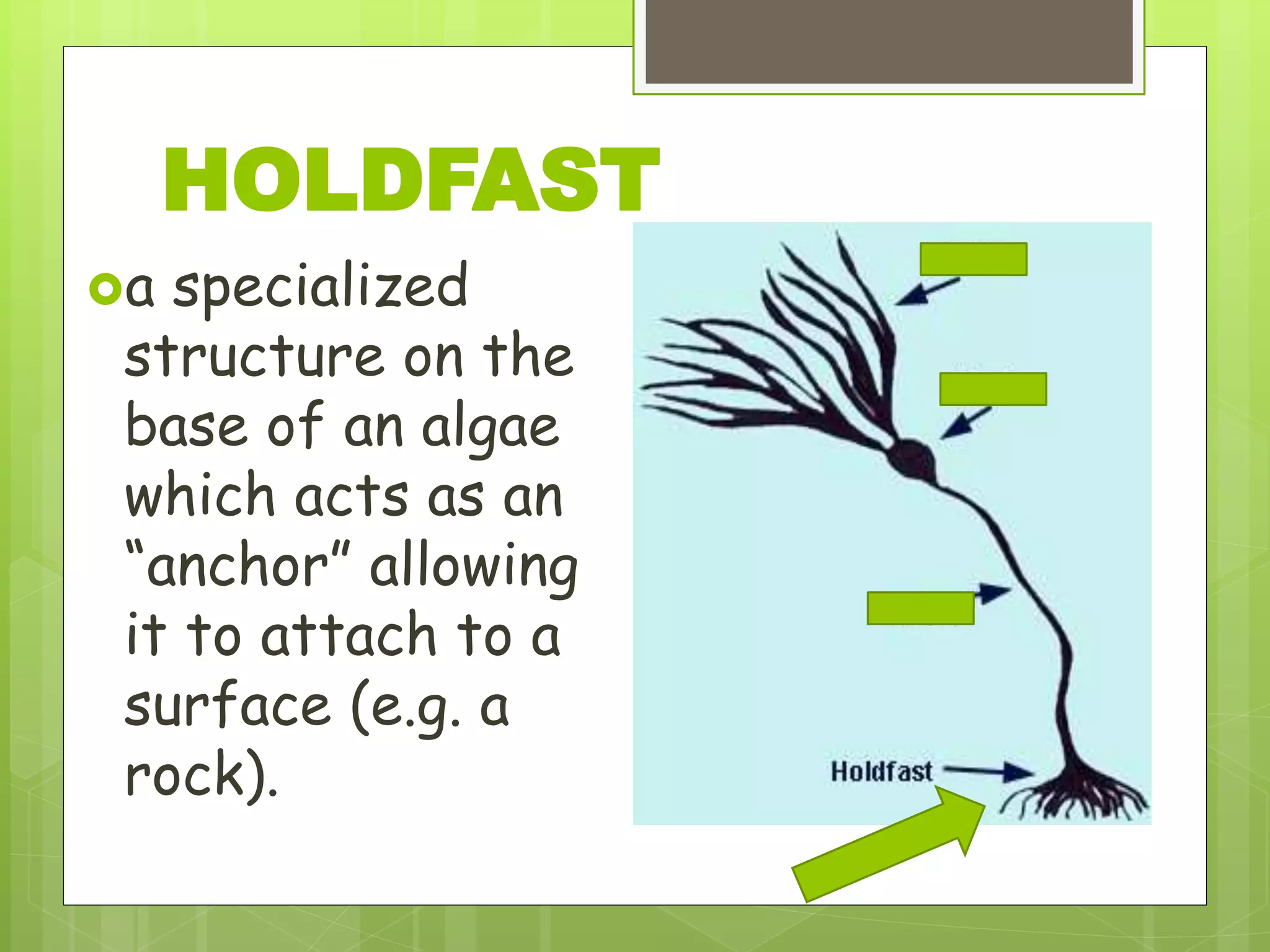
HOLDFAST
a specialized
structure on the
base of an algae
which acts as an
“anchor” allowing
it to attach to a
surface (e.g. a
rock).
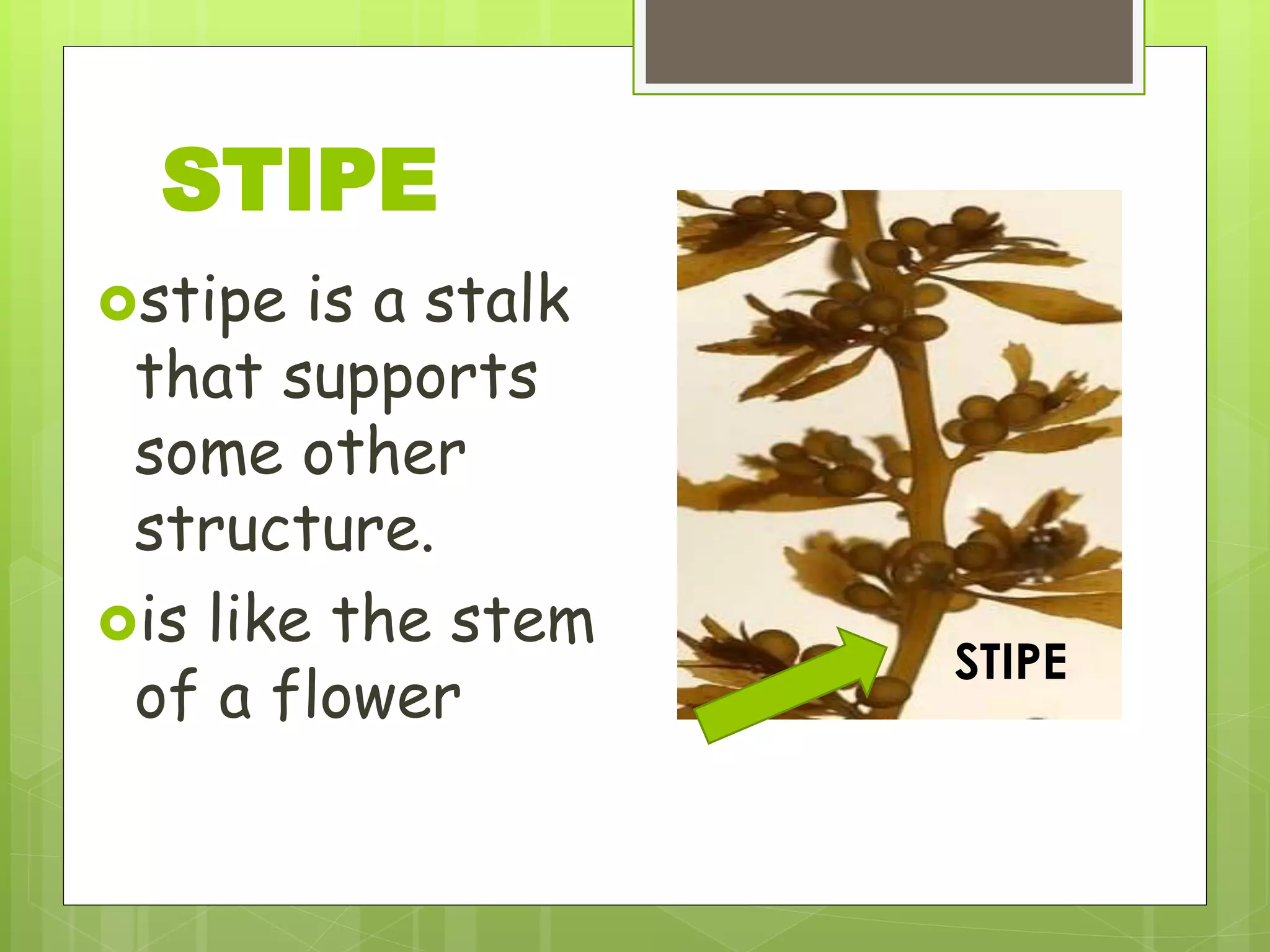
stipe is a stalk
that supports
some other
structure.
is like the stem
of a flower
STIPE
STIPE
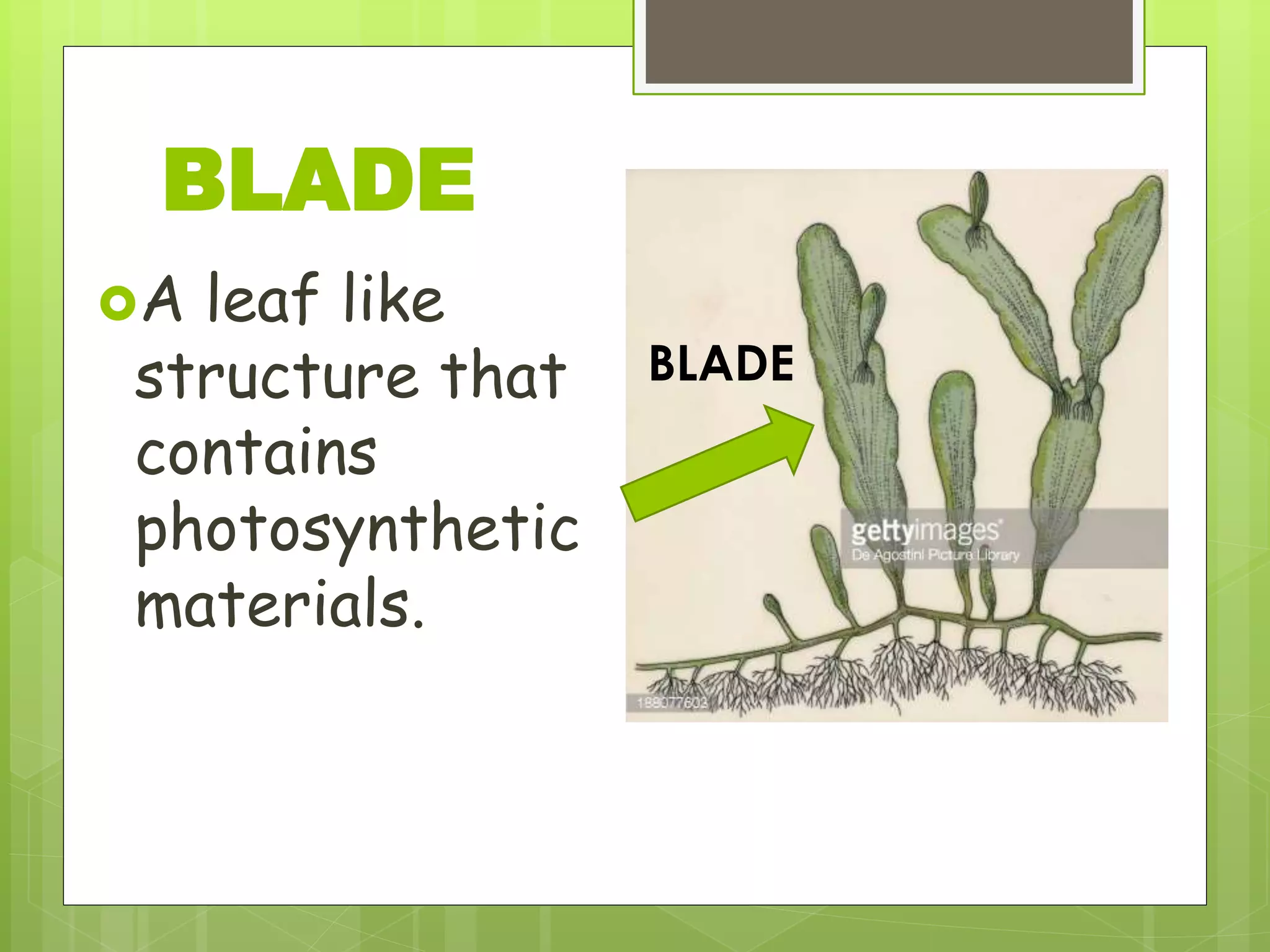
A leaf like
structure that
contains
photosynthetic
materials.
BLADE
BLADE
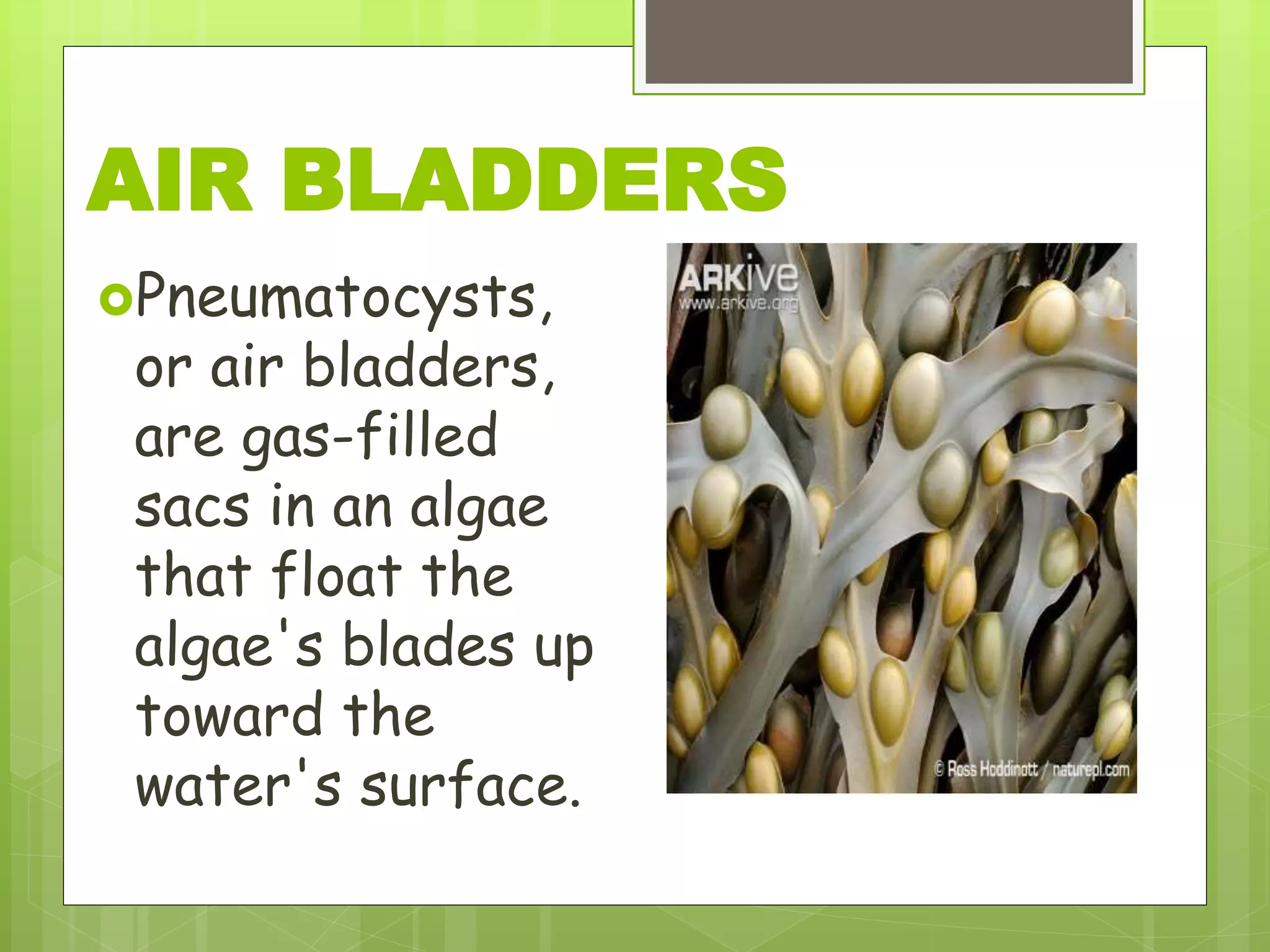
Pneumatocysts,
or air bladders,
are gas-filled
sacs in an algae
that float the
algae's blades up
toward the
water's surface.
AIR BLADDERS
GREEN ALGAE
This is the most diverse group of
algae, with over 7,000 species.
The organisms are largely aquatic
or marine.
Cells of the Chlorophyta contain
organelles called chloroplasts in
which photosynthesis occurs
CHLOROPHYTA
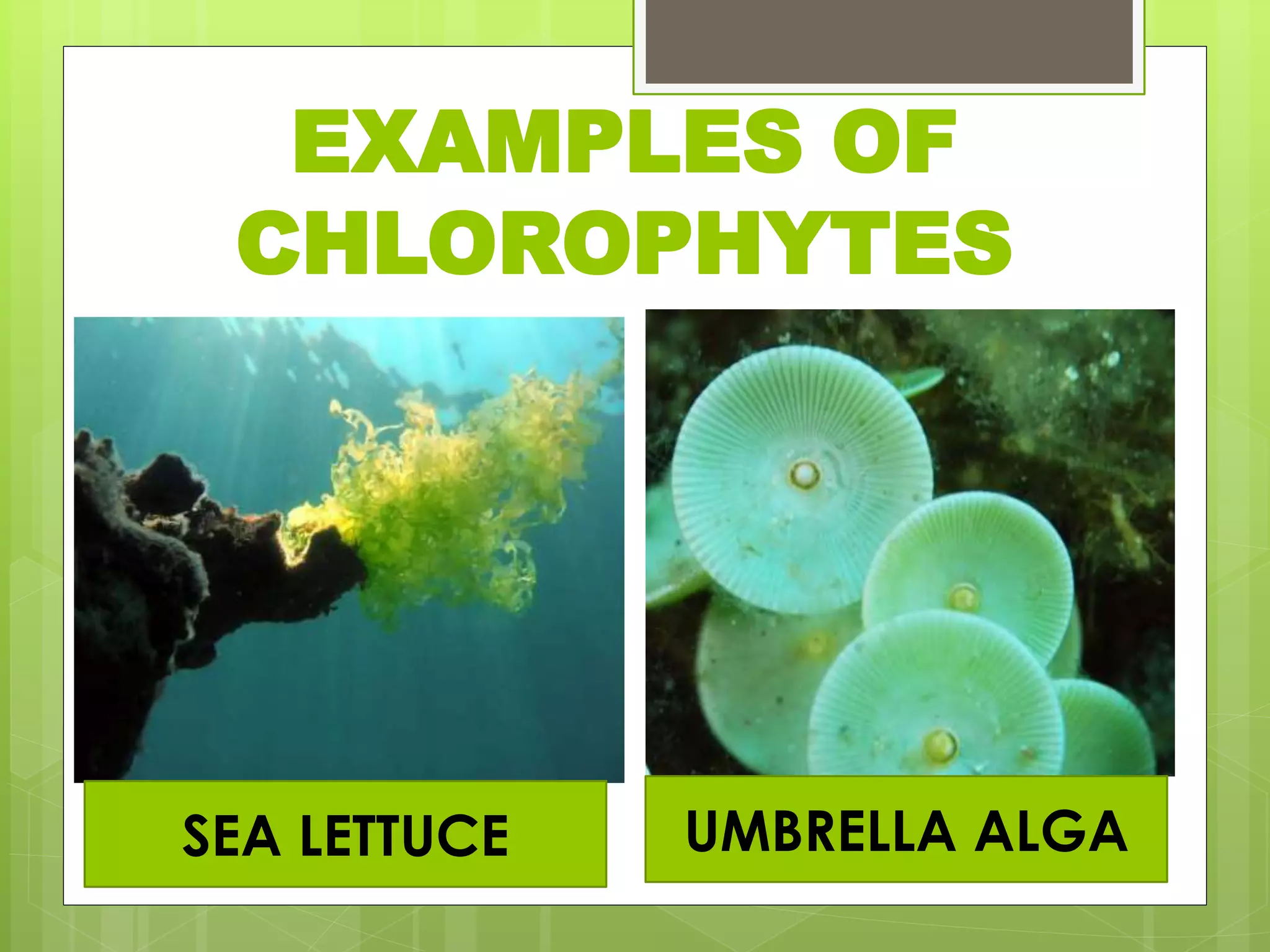
EXAMPLES OF
CHLOROPHYTES
SEA LETTUCE UMBRELLA ALGA
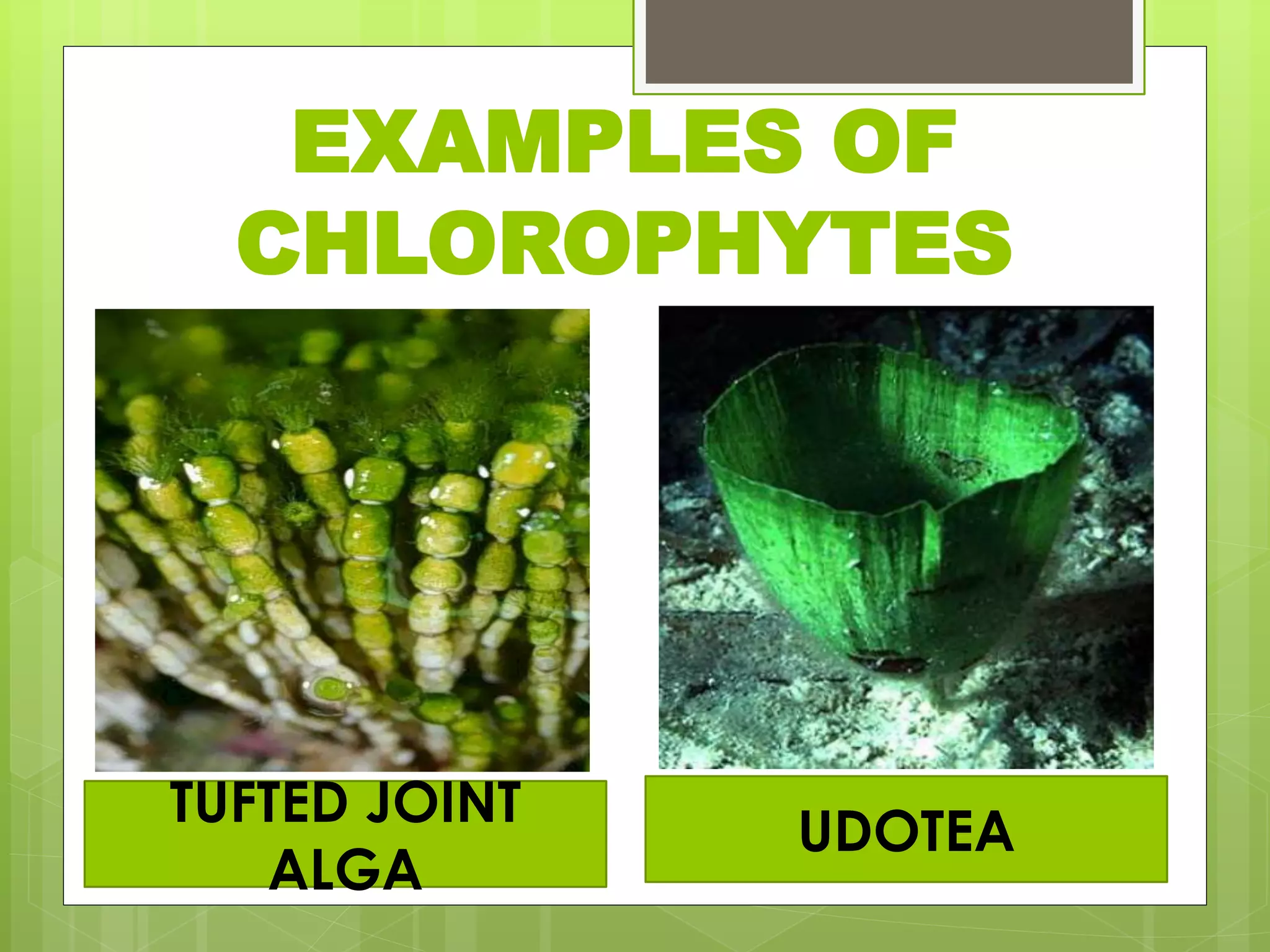
EXAMPLES OF
CHLOROPHYTES
TUFTED JOINT
ALGA
UDOTEA
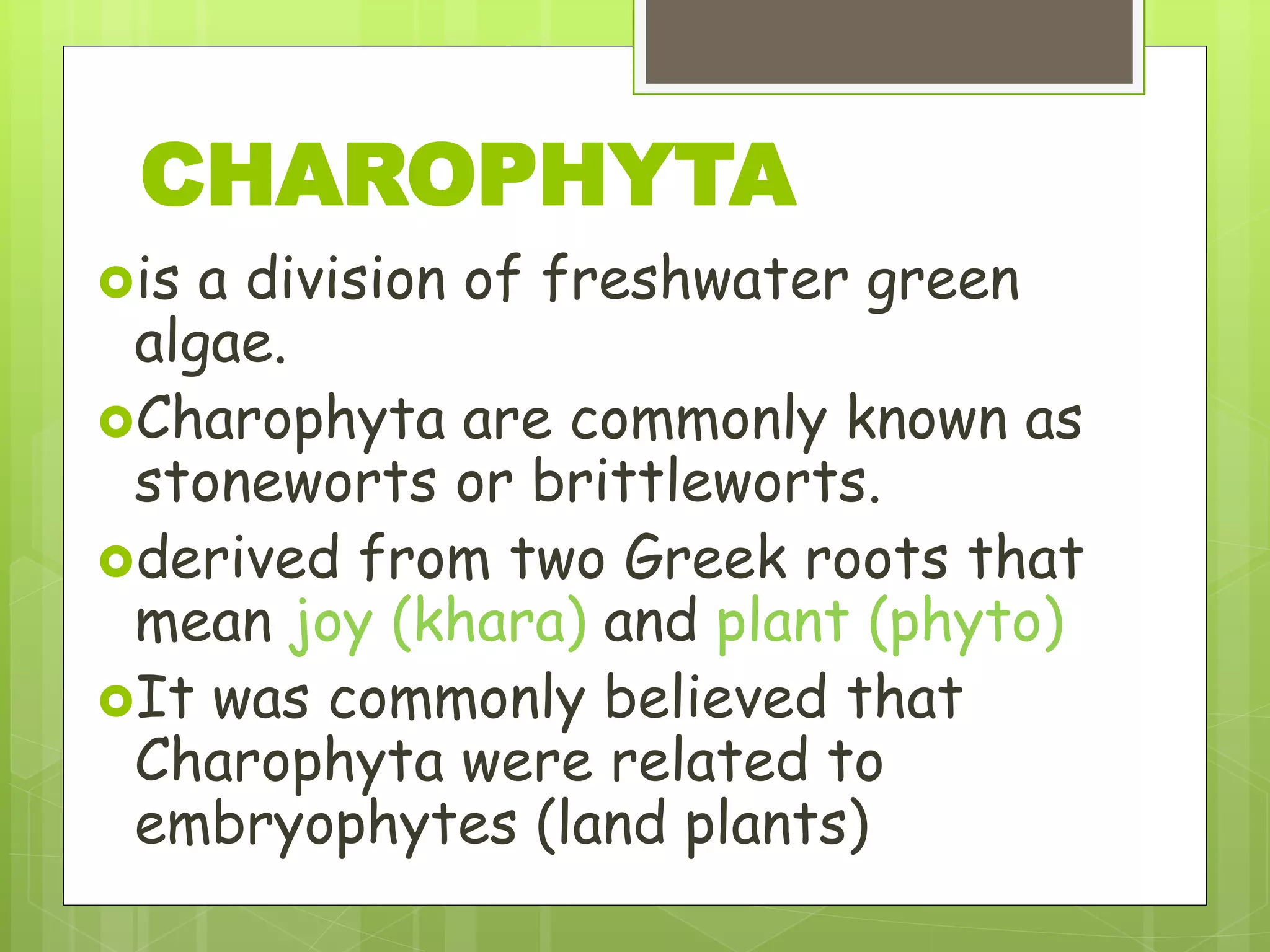
is a division of freshwater green
algae.
Charophyta are commonly known as
stoneworts or brittleworts.
derived from two Greek roots that
mean joy (khara) and plant (phyto)
It was commonly believed that
Charophyta were related to
embryophytes (land plants)
CHAROPHYTA
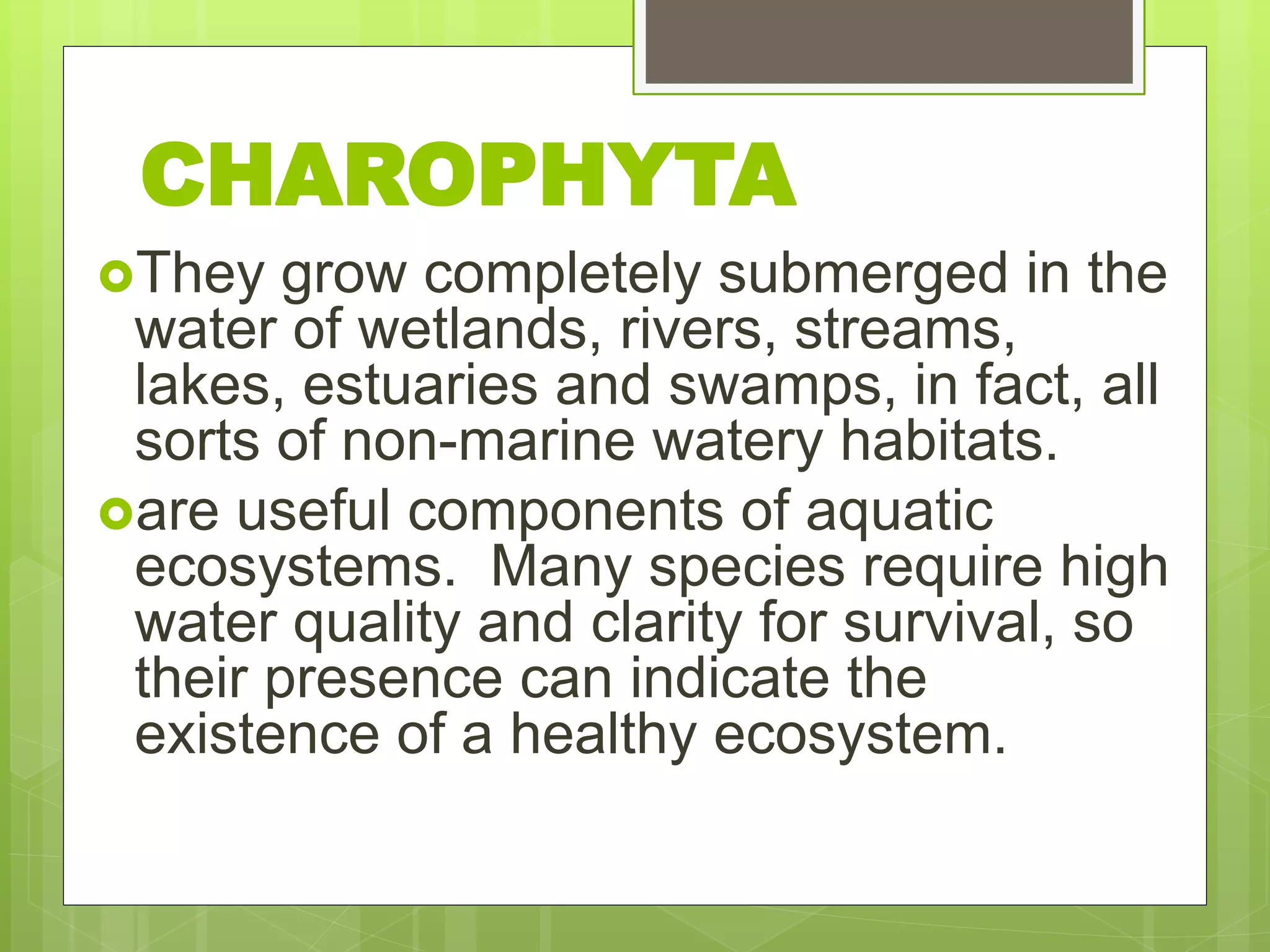
They grow completely submerged in the
water of wetlands, rivers, streams,
lakes, estuaries and swamps, in fact, all
sorts of non-marine watery habitats.
are useful components of aquatic
ecosystems. Many species require high
water quality and clarity for survival, so
their presence can indicate the
existence of a healthy ecosystem.
CHAROPHYTA
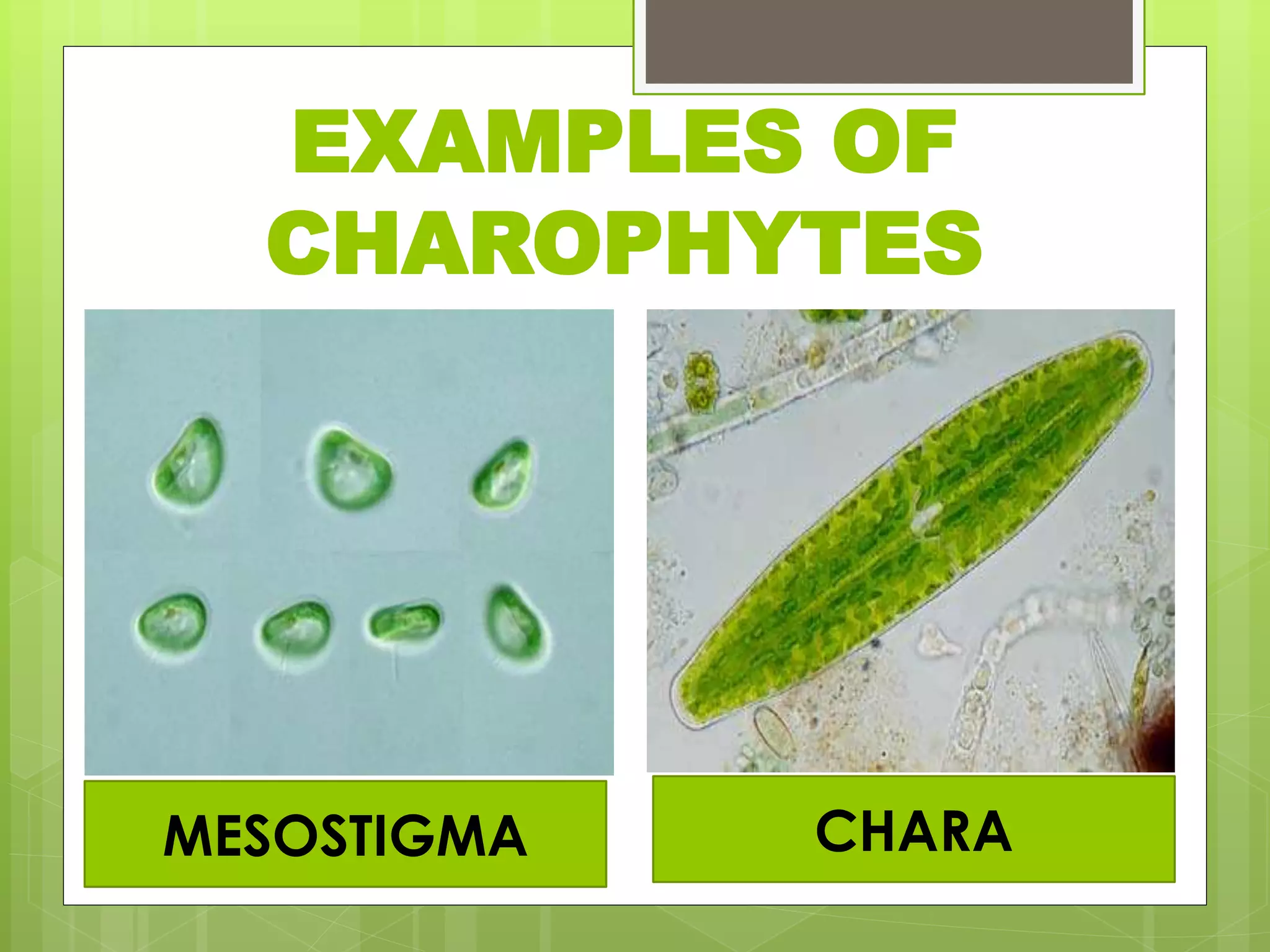
EXAMPLES OF
CHAROPHYTES
MESOSTIGMA CHARA
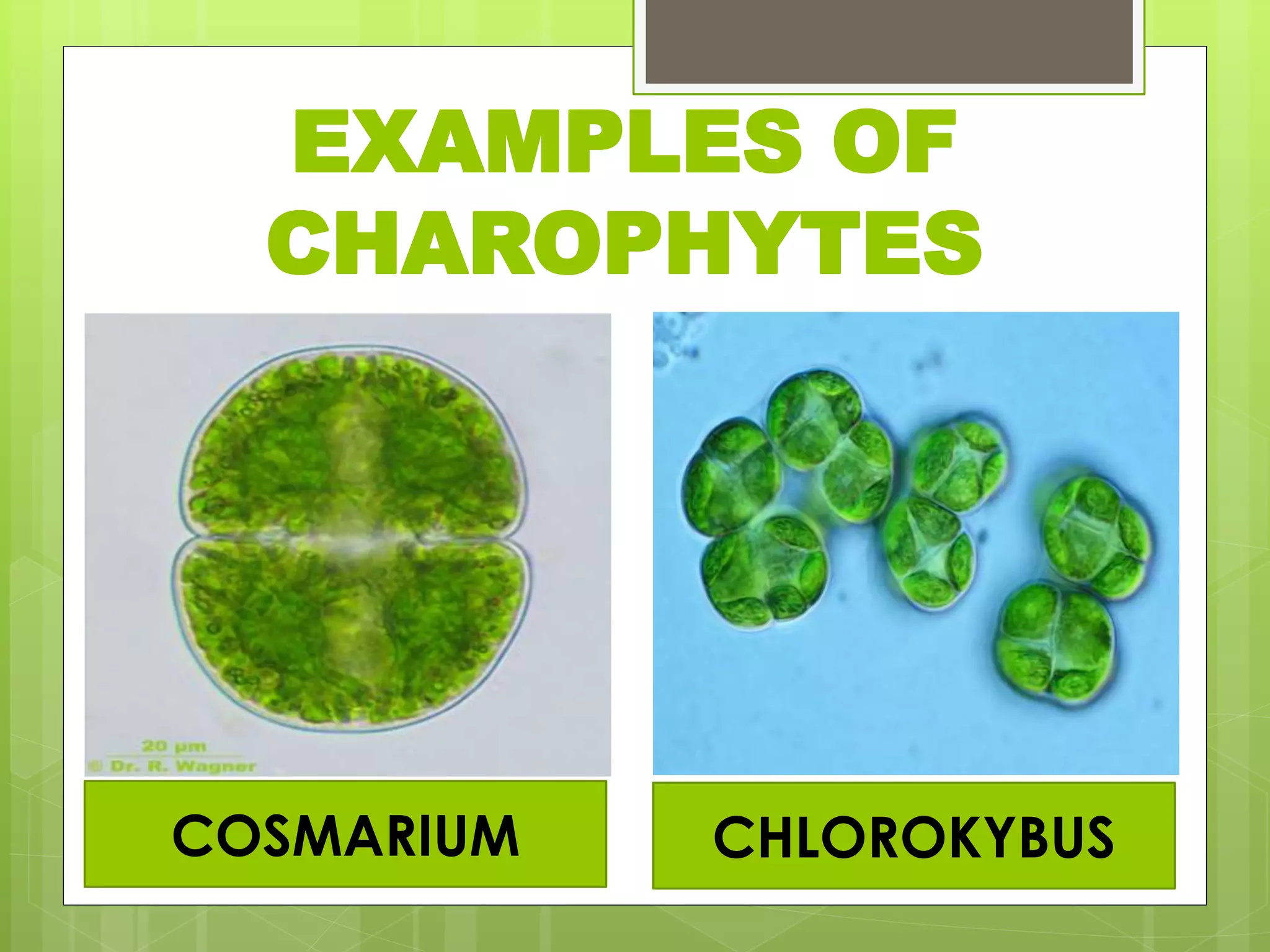
EXAMPLES OF
CHAROPHYTES
COSMARIUM CHLOROKYBUS
BROWN ALGAE
consisting of those organisms
commonly called brown algae.
almost entirely marine, frequently
dominating rocky shores in cold
and temperate waters throughout
the world.
PHAEOPHYTA
about 265 genera with about 2000
species.
Contains pigments Chlorophyll a
and c; and Fucoxanthin
PHAEOPHYTA
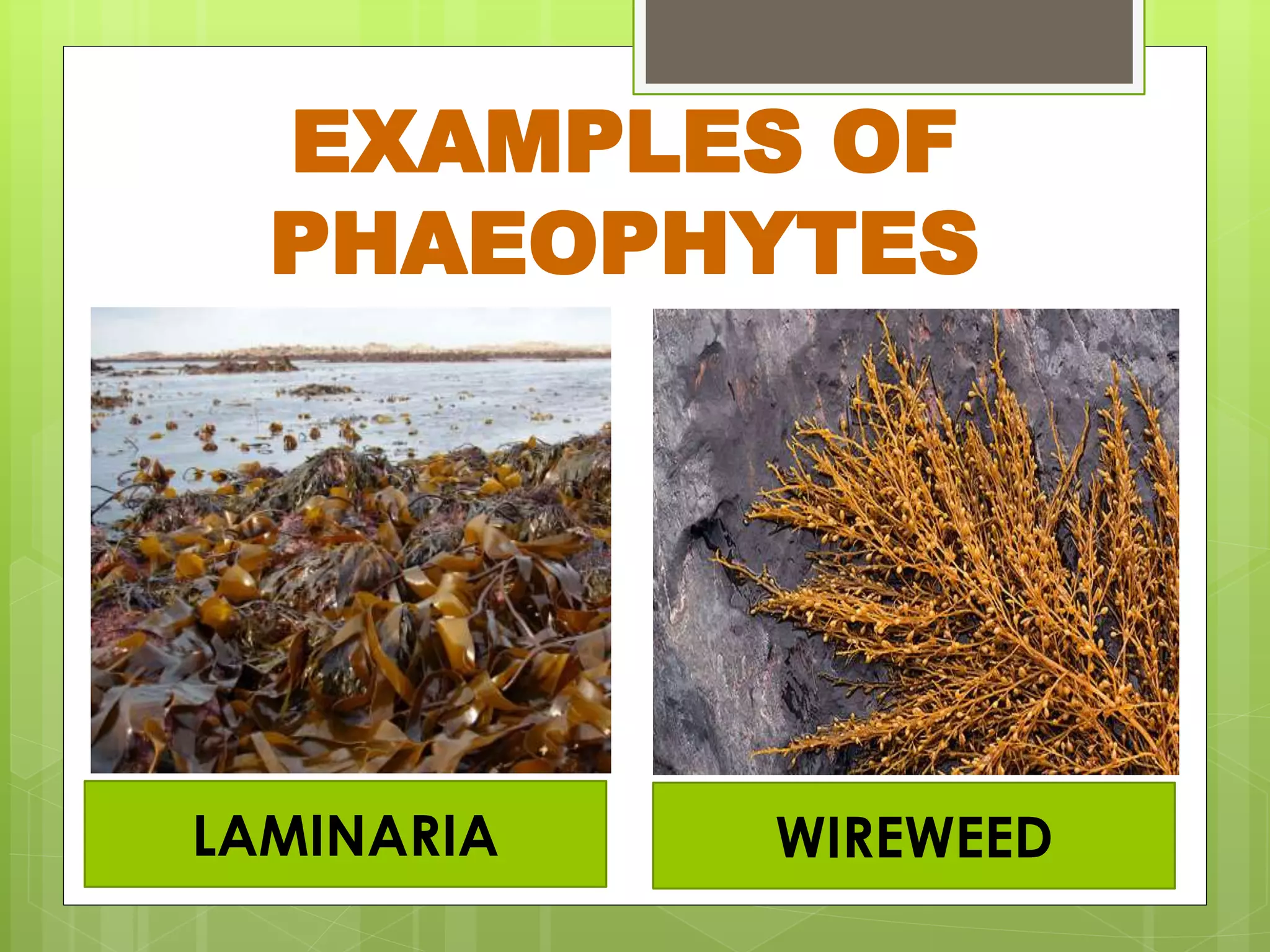
EXAMPLES OF
PHAEOPHYTES
LAMINARIA WIREWEED
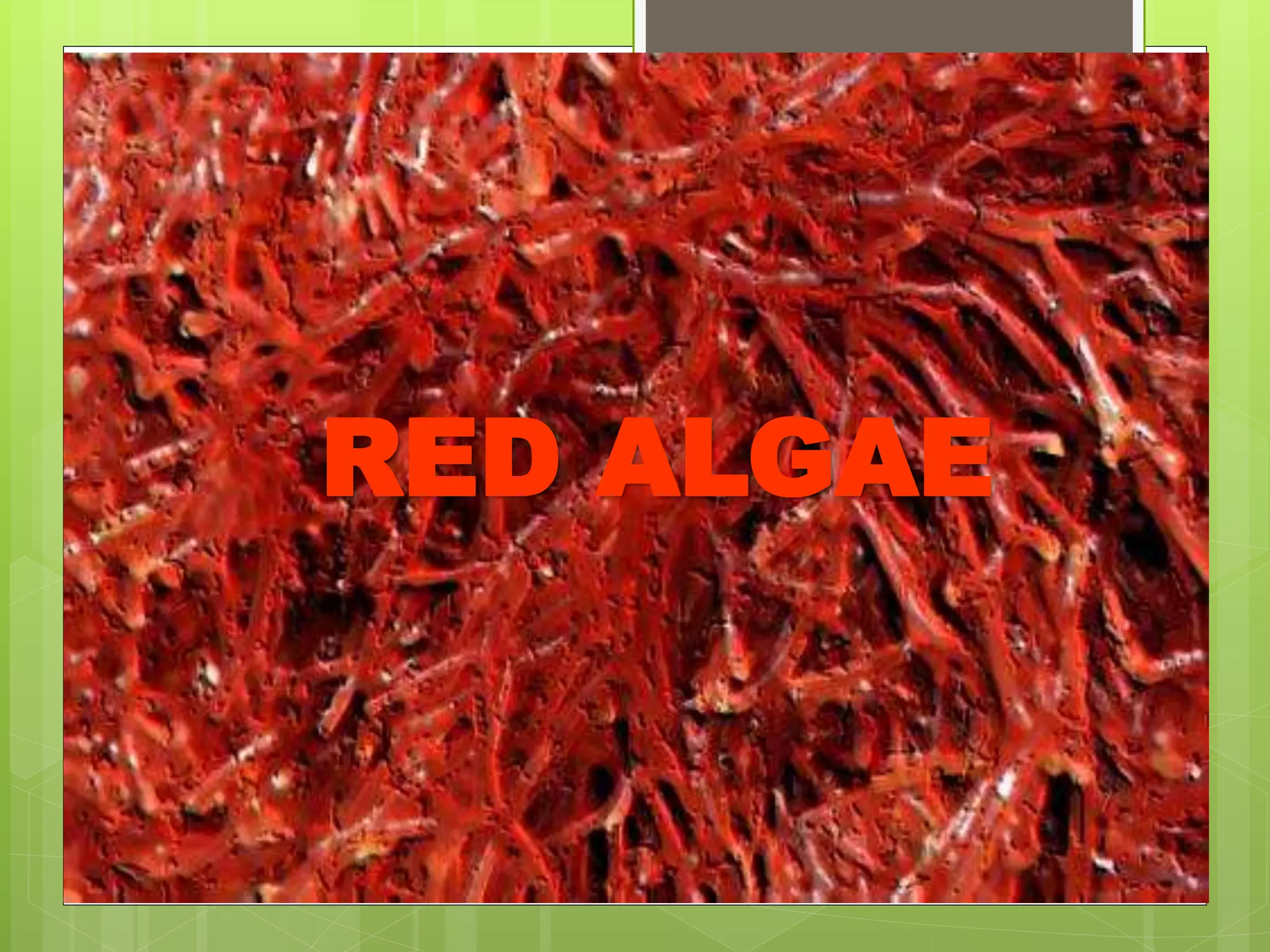
RED ALGAE
are a moderately diverse, but
extremely ancient, group of
marine organisms
About 500 genera, with about
5000 species
red because of the presence of
the pigment phycobilin.
RHODOPHYTA
Have high vitamin and protein
content .
Mostly marine organisms.
It is believed that Rhodophyta
were among the first multicellular
organisms.
RHODOPHYTA
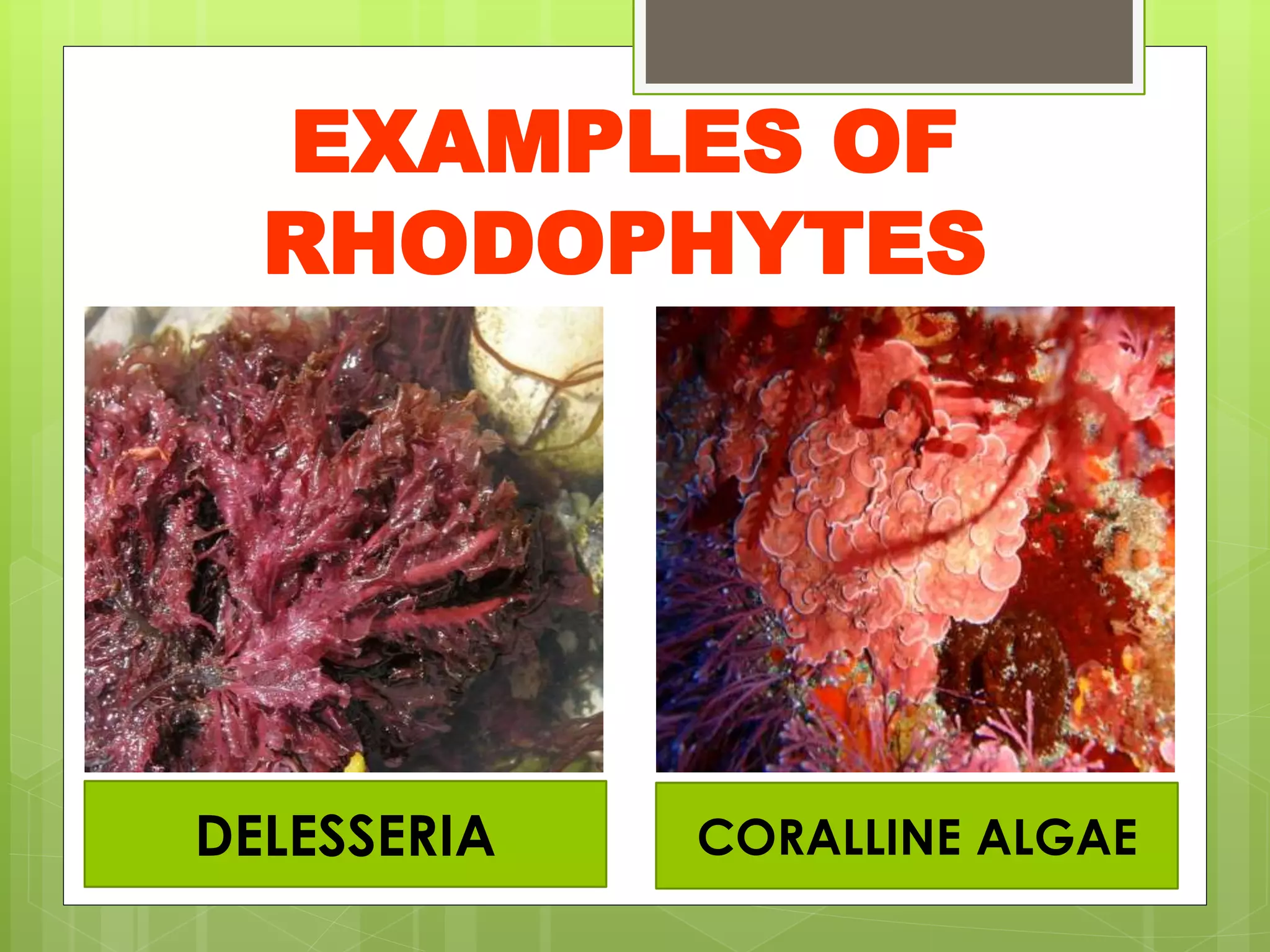
EXAMPLES OF
RHODOPHYTES
DELESSERIA CORALLINE ALGAE
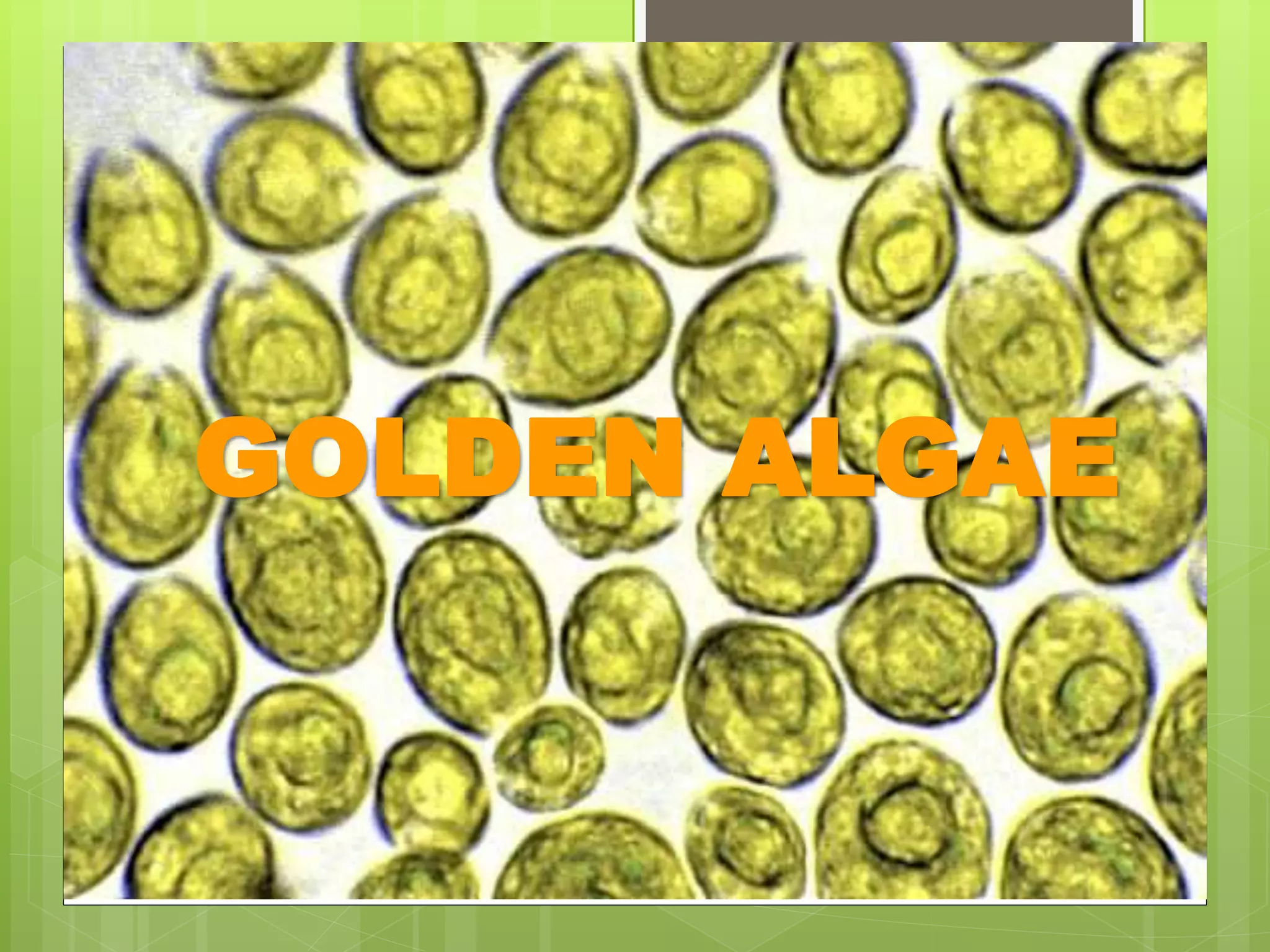
GOLDEN ALGAE
are common microscopic chromists
(colored organisms) in fresh water.
Some species are colorless, but
the vast majority are
photosynthetic.
contain chlorophylls a and c, which
are masked by the accessory
pigment fucoxanthin.
CHRYSOPHYTA
In many chrysophytes the cell
walls are composed of cellulose
with large quantities of silica.
Some have one or two flagella,
which can be similar or dissimilar.
A few species are amoeboid forms
with no cell walls.
CHRYSOPHYTA
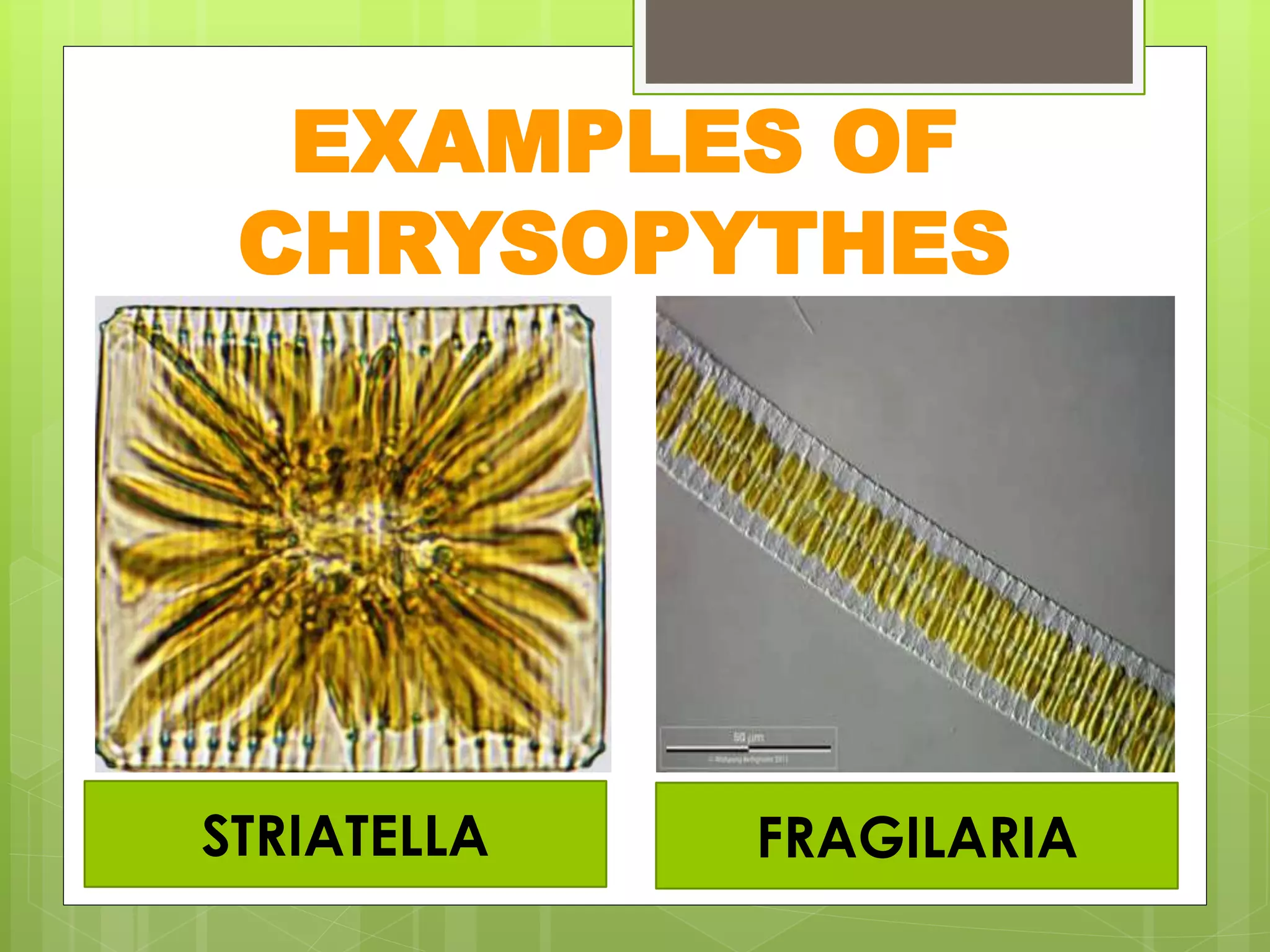
EXAMPLES OF
CHRYSOPYTHES
STRIATELLA FRAGILARIA
IMPORTANCE
Primary producers
- Algae are the main Oxygen
producers in aquatic areas. They
are also useful in decreasing water
pollution by releasing Oxygen.
GENERAL USES
Algae as food
They served as food for marine and
terrestrial animals as well as human.
GENERAL USES
Algae as fertilizers
Some algae contain significant
amount of P,K,N and other micro
and macro elements which are
essential for plant growth.
GENERAL USES
Iodine production
Iodine industry mainly depends on
algae
INDUSTRIAL USES
Alginates
as an excellent functionality as a
thickening agent, gelling agent,
emulsifier, stabilizer, texture-
improver (for noodles), to improve
the quality of food.
Alginate is used for the production
of welding rod, as a binder of flux.
INDUSTRIAL USES
Alginates
Alginate is used in cosmetics area
with several applications with its
functionality of thickener and
moisture retainer. Alginate helps
retaining the color of lipstick on lip
surface by forming gel-network.
INDUSTRIAL USES
Carrageenan
Used for textile, leather and tire
production
used in the food industry, for their
gelling, thickening, and stabilizing
properties.
INDUSTRIAL USES
Brown algae mainly used in
manufacture of various goiter
medicines due to their high
iodine content.
MEDICINAL USES
Some algae, like Gelidium are
used for treatment of kidney,
bladder and lung diseases while
Laminaria is used as surgical tool
in the opening of wound due to
its gentle swelling property.
MEDICINAL USES

Algae

  • 1.
  • 2.
    ALGAE are photosynthetic organismsthat occur in most habitats. They vary from small, single-celled forms to complex multicellular forms, such as the giant kelps that grow to 65 meters in length. are very simple chlorophyll- containing organisms.
  • 3.
    CHARACTERISRICS Unicellular or multicellular. Cellsare covered with rigid cellulose cell wall. Absence of conducting vessels and mechanical tissues: entirely formed with parenchyma cells. Reproduction occurs by vegetative, asexual and sexual reproduction
  • 4.
    All algal cellsare aquatic. They can inhabit fresh or salt water, as well as every salinity level in between. They are THALLUS - they lack true roots, stems, and leaves, fruits, connecting tissue etc. and photosynthesis occurs throughout the plant, not just the leaves. CHARACTERISRICS
  • 5.
  • 6.
    HOLDFAST a specialized structure onthe base of an algae which acts as an “anchor” allowing it to attach to a surface (e.g. a rock).
  • 7.
    stipe is astalk that supports some other structure. is like the stem of a flower STIPE STIPE
  • 8.
    A leaf like structurethat contains photosynthetic materials. BLADE BLADE
  • 9.
    Pneumatocysts, or air bladders, aregas-filled sacs in an algae that float the algae's blades up toward the water's surface. AIR BLADDERS
  • 10.
  • 11.
    This is themost diverse group of algae, with over 7,000 species. The organisms are largely aquatic or marine. Cells of the Chlorophyta contain organelles called chloroplasts in which photosynthesis occurs CHLOROPHYTA
  • 12.
  • 13.
  • 14.
    is a divisionof freshwater green algae. Charophyta are commonly known as stoneworts or brittleworts. derived from two Greek roots that mean joy (khara) and plant (phyto) It was commonly believed that Charophyta were related to embryophytes (land plants) CHAROPHYTA
  • 15.
    They grow completelysubmerged in the water of wetlands, rivers, streams, lakes, estuaries and swamps, in fact, all sorts of non-marine watery habitats. are useful components of aquatic ecosystems. Many species require high water quality and clarity for survival, so their presence can indicate the existence of a healthy ecosystem. CHAROPHYTA
  • 16.
  • 17.
  • 18.
  • 19.
    consisting of thoseorganisms commonly called brown algae. almost entirely marine, frequently dominating rocky shores in cold and temperate waters throughout the world. PHAEOPHYTA
  • 20.
    about 265 generawith about 2000 species. Contains pigments Chlorophyll a and c; and Fucoxanthin PHAEOPHYTA
  • 21.
  • 22.
  • 23.
    are a moderatelydiverse, but extremely ancient, group of marine organisms About 500 genera, with about 5000 species red because of the presence of the pigment phycobilin. RHODOPHYTA
  • 24.
    Have high vitaminand protein content . Mostly marine organisms. It is believed that Rhodophyta were among the first multicellular organisms. RHODOPHYTA
  • 25.
  • 26.
  • 27.
    are common microscopicchromists (colored organisms) in fresh water. Some species are colorless, but the vast majority are photosynthetic. contain chlorophylls a and c, which are masked by the accessory pigment fucoxanthin. CHRYSOPHYTA
  • 28.
    In many chrysophytesthe cell walls are composed of cellulose with large quantities of silica. Some have one or two flagella, which can be similar or dissimilar. A few species are amoeboid forms with no cell walls. CHRYSOPHYTA
  • 29.
  • 30.
  • 31.
    Primary producers - Algaeare the main Oxygen producers in aquatic areas. They are also useful in decreasing water pollution by releasing Oxygen. GENERAL USES
  • 32.
    Algae as food Theyserved as food for marine and terrestrial animals as well as human. GENERAL USES
  • 33.
    Algae as fertilizers Somealgae contain significant amount of P,K,N and other micro and macro elements which are essential for plant growth. GENERAL USES
  • 34.
    Iodine production Iodine industrymainly depends on algae INDUSTRIAL USES
  • 35.
    Alginates as an excellentfunctionality as a thickening agent, gelling agent, emulsifier, stabilizer, texture- improver (for noodles), to improve the quality of food. Alginate is used for the production of welding rod, as a binder of flux. INDUSTRIAL USES
  • 36.
    Alginates Alginate is usedin cosmetics area with several applications with its functionality of thickener and moisture retainer. Alginate helps retaining the color of lipstick on lip surface by forming gel-network. INDUSTRIAL USES
  • 37.
    Carrageenan Used for textile,leather and tire production used in the food industry, for their gelling, thickening, and stabilizing properties. INDUSTRIAL USES
  • 38.
    Brown algae mainlyused in manufacture of various goiter medicines due to their high iodine content. MEDICINAL USES
  • 39.
    Some algae, likeGelidium are used for treatment of kidney, bladder and lung diseases while Laminaria is used as surgical tool in the opening of wound due to its gentle swelling property. MEDICINAL USES