DWARFISM
Alicia
Sara
INDEX
• Definition. Types.
• Causes.
• Prevention.
• Treatment.
DEFINITION
• What is?: Is a condition of short stature.
• Types:
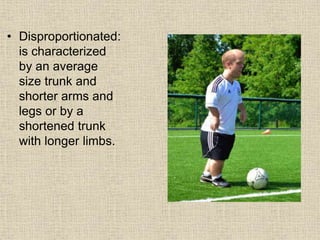
• Disproportionated:
is characterized
by an average
size trunk and
shorter arms and
legs or by a
shortened trunk
with longer limbs.
• Proportionated: The
body parts are in
proportion but shorter.
Causes
• It can be caused by of more than 200
genetical and medical conditions including
metabolic and hormonal disorders.
• Genetical conditions. Achrondoplasia
• Medical conditions. Lack of D vitamin or
nutrients or hormones.
Genetical conditions
• Achondroplasia. The
most common form of
dwarfism. They have
relatively long trunk
and shortened upper
parts of their arms
and legs. Normal
intelligence.
• Spondyloepiphis
eal dysplasias
(SED): They
have shortened
trunk.
Medical conditions.
• Bone dystrophies:
Hipothyroidism: Lack of thyroid
hormone.
Raquitism: Lack of vitamin D
Hipophyseal dwarfism: Lack of growth
factor.
Prevention
We can not prevent dwarfism but we can
reduce the impacts it has on persons life.
It is important to find the causes in childhood
to help people to maintain their physical
condition, to increase their mobility and
become more autonomous in their life.
Treatment.
• If the cause is proportionated, we can use
hormones (Growth hormone,…)
• If the cause is disproportionated we can
use surgery to make bones longer.
Questions
1. What is dwarfism?
2. Name the two types of dwarfism
3. If the dwarfism is disproportionated, what
treatment do they use?
4. And if is proportionated?
5. Is there prevention?

Dwarfism