Algae Analytics and Nutraceutical Applications for AlgaeRhykka Connellyr.connelly@cem.utexas.eduApril 27, 2011
Standard Measurement TechnologiesNile Red is the current measurement tool of choice in the algae industryHere’s what Nile red measures: lipophilic molecules Here’s an example of how Nile red measurements can mislead algae growers:Nile red measurements may indicate that both of these samples has 30% “oil”
UT/OpenAlgae TechnologiesEvaluating the intermediate products requires many analytical tools
UT/OpenAlgae Technologies – Thin Layer ChromatographySamples are taken before and after each processing step. Each sample is separated into a biomass pellet (P) and supernatant (S) fraction and analyzed by TLC against known standards.
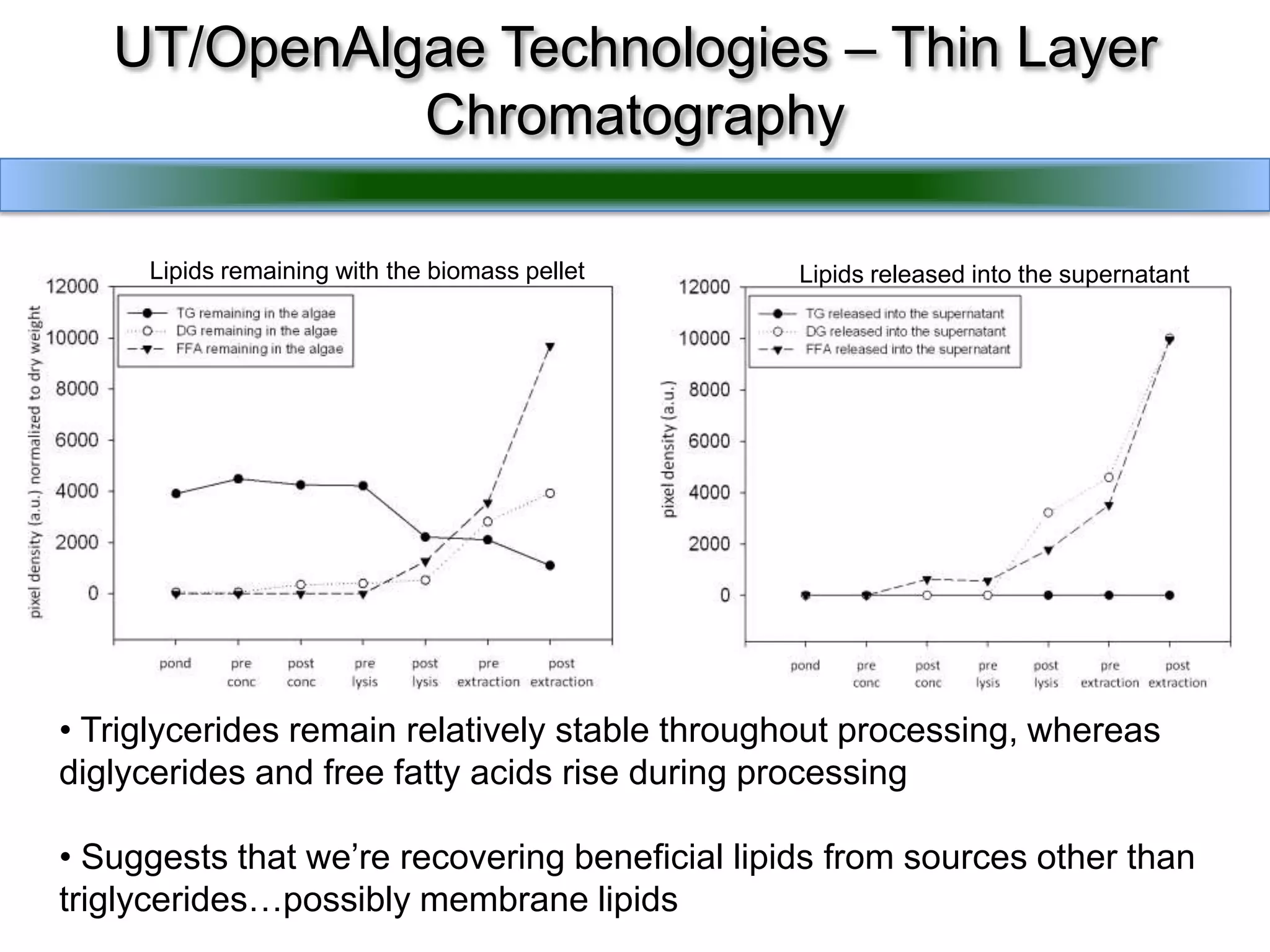
UT/OpenAlgae Technologies – Thin Layer ChromatographyLipids released into the supernatantLipids remaining with the biomass pellet Triglycerides remain relatively stable throughout processing, whereas diglycerides and free fatty acids rise during processing
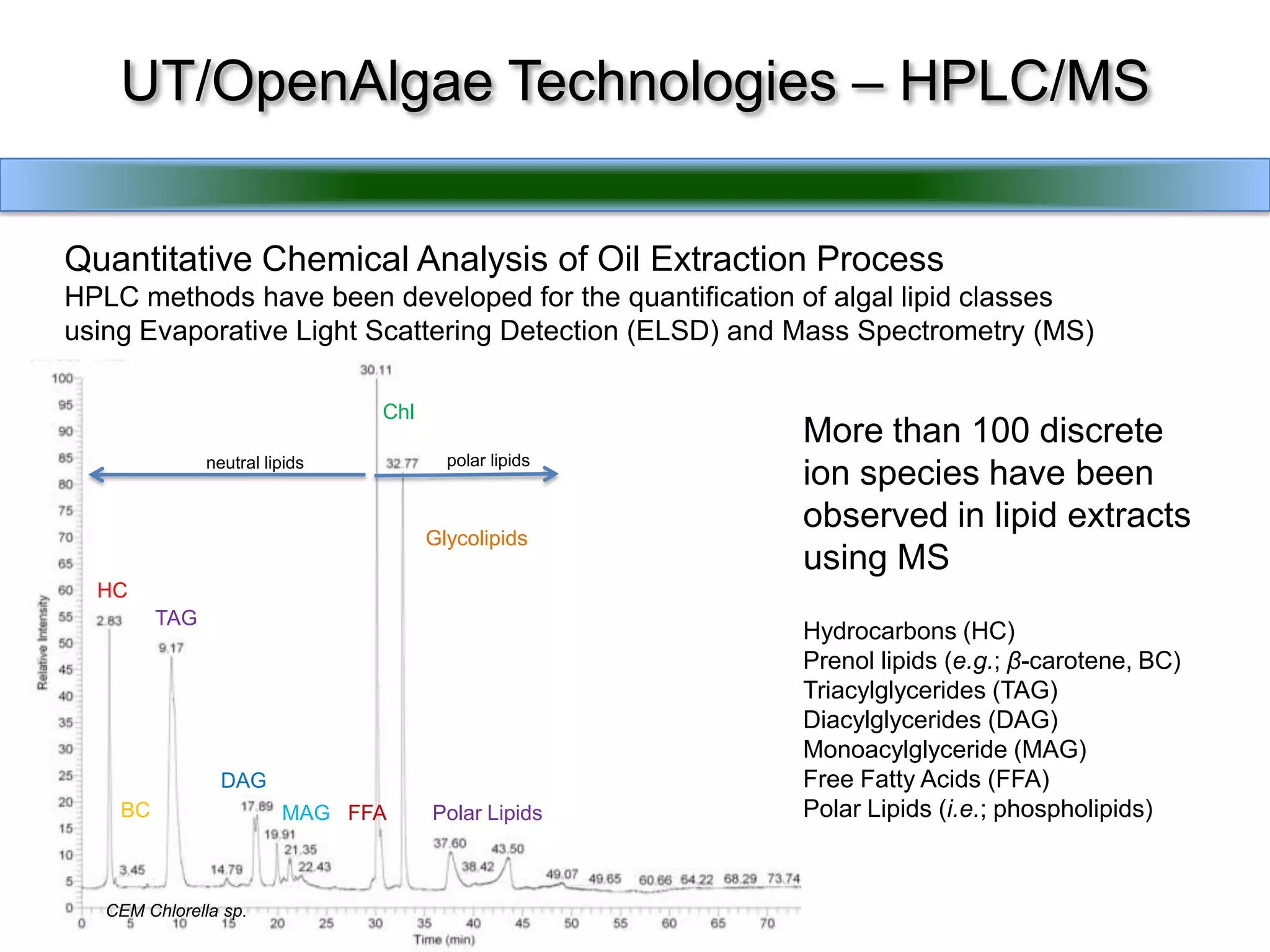
 Suggests that we’re recovering beneficial lipids from sources other than triglycerides…possibly membrane lipidsUT/OpenAlgae Technologies – HPLC/MSQuantitative Chemical Analysis of Oil Extraction ProcessHPLC methods have been developed for the quantification of algal lipid classes using Evaporative Light Scattering Detection (ELSD) and Mass Spectrometry (MS)ChlMore than 100 discrete ion species have been observed in lipid extracts using MSHydrocarbons (HC)Prenol lipids (e.g.; β-carotene, BC)Triacylglycerides (TAG)Diacylglycerides (DAG)Monoacylglyceride (MAG)Free Fatty Acids (FFA)Polar Lipids (i.e.; phospholipids)polar lipidsneutral lipidsHCGlycolipidsTAGDAGBCMAGFFAPolar LipidsCEM Chlorella sp.
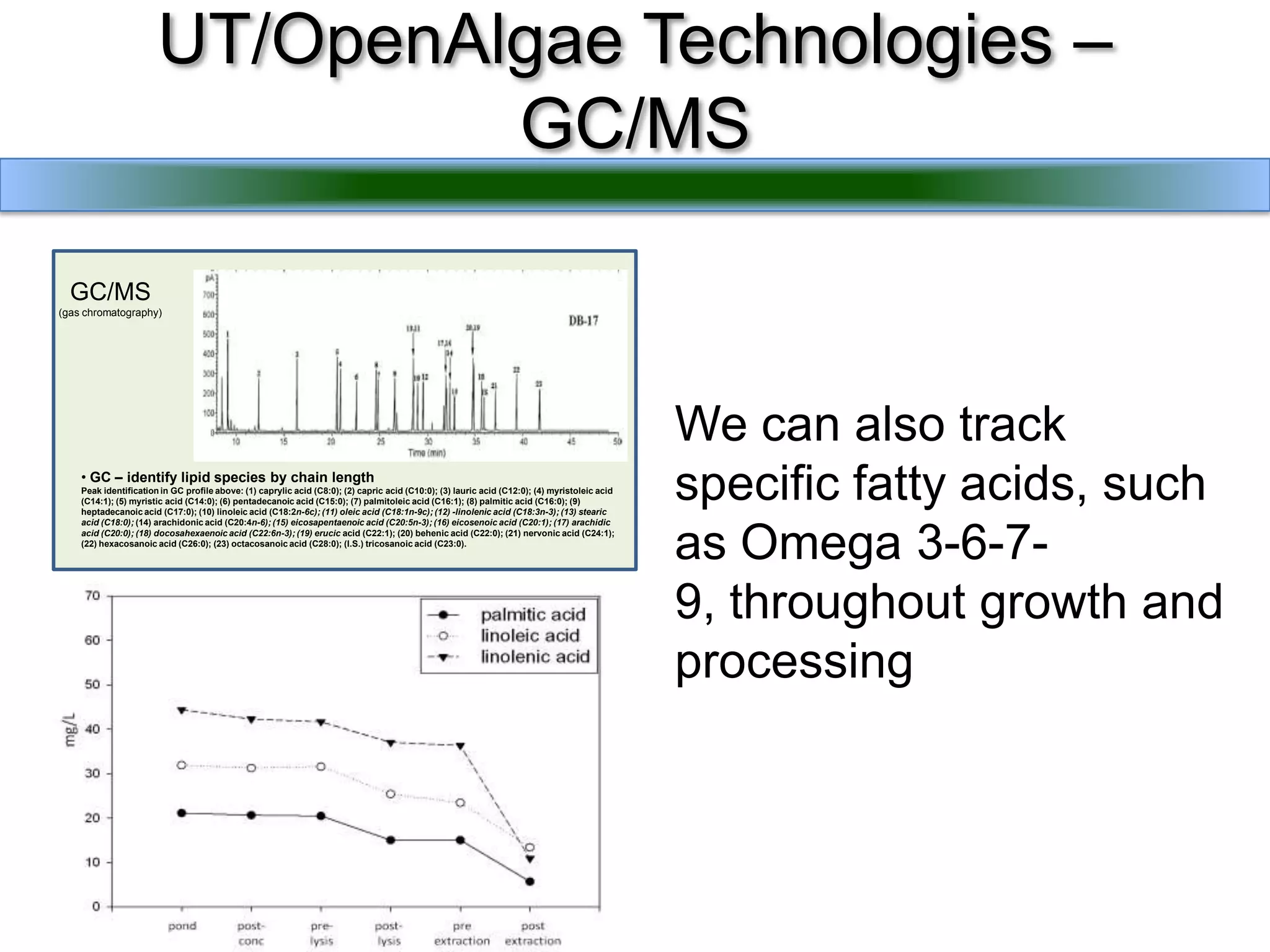
UT/OpenAlgae Technologies – GC/MSWe can also track specific fatty acids, such as Omega 3-6-7-9, throughout growth and processingGC/MS(gas chromatography) GC – identify lipid species by chain length Peak identification in GC profile above: (1) caprylic acid (C8:0); (2) capric acid (C10:0); (3) lauric acid (C12:0); (4) myristoleic acid (C14:1); (5) myristic acid (C14:0); (6) pentadecanoic acid (C15:0); (7) palmitoleicacid (C16:1); (8) palmitic acid (C16:0); (9) heptadecanoic acid (C17:0); (10) linoleic acid (C18:2n-6c); (11) oleic acid (C18:1n-9c); (12) -linolenic acid (C18:3n-3); (13) stearic acid (C18:0); (14) arachidonic acid (C20:4n-6); (15) eicosapentaenoic acid (C20:5n-3); (16) eicosenoic acid (C20:1); (17) arachidic acid (C20:0); (18) docosahexaenoic acid (C22:6n-3); (19) erucicacid (C22:1); (20) behenic acid (C22:0); (21) nervonic acid (C24:1); (22) hexacosanoic acid (C26:0); (23) octacosanoic acid (C28:0); (I.S.) tricosanoic acid (C23:0).
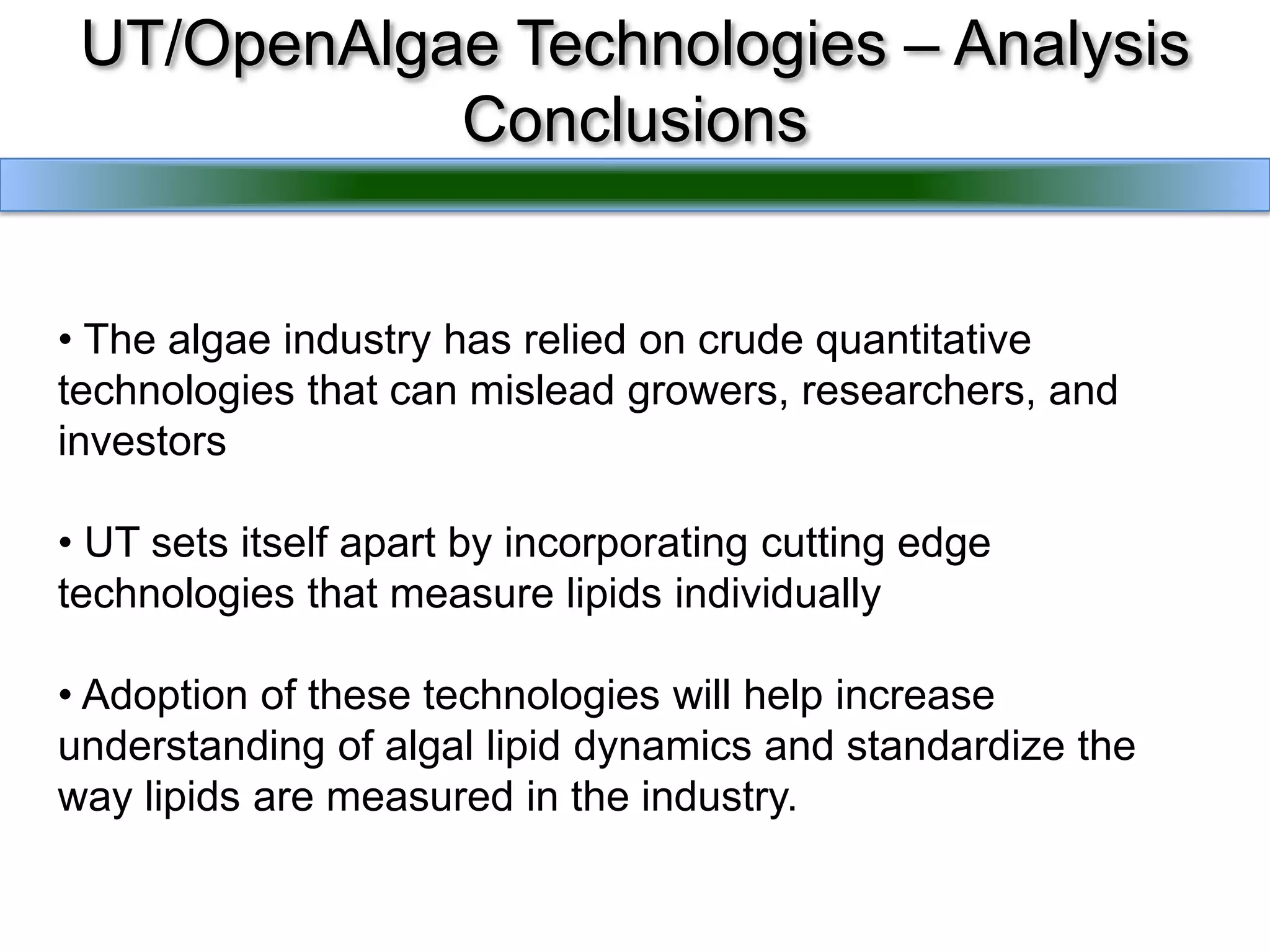
UT/OpenAlgae Technologies – Analysis Conclusions The algae industry has relied on crude quantitative technologies that can mislead growers, researchers, and investors
 UT sets itself apart by incorporating cutting edge technologies that measure lipids individually
 Adoption of these technologies will help increase understanding of algal lipid dynamics and standardize the way lipids are measured in the industry.The Diversity of Algae There are ~100,000 species of algae
 Certain kinds of algae make products that we’re interested in
 oil for fuel
 high in proteins and/or carbohydrates (animal or aquaculture feeds)
 agar (thickener)
carrageenan (stabilizer/emulsifier)
nutraceuticals (carotenoids, omega 3-6-7-9, anti-microbials, anti-fungals)Omega Oils – Omega 7A Possible Solution:  Omega-7The essential fatty acid palmitoleic acid (Omega-7) promotes the formation of new blood vessels and collagen deposition at the site of injury. Currently, Omega-7 is primarily derived from Sea Buckthorn, a cold weather plant that is harvested once a year.

2011 04 oa algae applications (web) connelly 2011

  • 1.
    Algae Analytics andNutraceutical Applications for AlgaeRhykka Connellyr.connelly@cem.utexas.eduApril 27, 2011
  • 2.
    Standard Measurement TechnologiesNileRed is the current measurement tool of choice in the algae industryHere’s what Nile red measures: lipophilic molecules Here’s an example of how Nile red measurements can mislead algae growers:Nile red measurements may indicate that both of these samples has 30% “oil”
  • 3.
    UT/OpenAlgae TechnologiesEvaluating theintermediate products requires many analytical tools
  • 4.
    UT/OpenAlgae Technologies –Thin Layer ChromatographySamples are taken before and after each processing step. Each sample is separated into a biomass pellet (P) and supernatant (S) fraction and analyzed by TLC against known standards.
  • 5.
    UT/OpenAlgae Technologies –Thin Layer ChromatographyLipids released into the supernatantLipids remaining with the biomass pellet Triglycerides remain relatively stable throughout processing, whereas diglycerides and free fatty acids rise during processing
  • 6.
    Suggests thatwe’re recovering beneficial lipids from sources other than triglycerides…possibly membrane lipidsUT/OpenAlgae Technologies – HPLC/MSQuantitative Chemical Analysis of Oil Extraction ProcessHPLC methods have been developed for the quantification of algal lipid classes using Evaporative Light Scattering Detection (ELSD) and Mass Spectrometry (MS)ChlMore than 100 discrete ion species have been observed in lipid extracts using MSHydrocarbons (HC)Prenol lipids (e.g.; β-carotene, BC)Triacylglycerides (TAG)Diacylglycerides (DAG)Monoacylglyceride (MAG)Free Fatty Acids (FFA)Polar Lipids (i.e.; phospholipids)polar lipidsneutral lipidsHCGlycolipidsTAGDAGBCMAGFFAPolar LipidsCEM Chlorella sp.
  • 7.
    UT/OpenAlgae Technologies –GC/MSWe can also track specific fatty acids, such as Omega 3-6-7-9, throughout growth and processingGC/MS(gas chromatography) GC – identify lipid species by chain length Peak identification in GC profile above: (1) caprylic acid (C8:0); (2) capric acid (C10:0); (3) lauric acid (C12:0); (4) myristoleic acid (C14:1); (5) myristic acid (C14:0); (6) pentadecanoic acid (C15:0); (7) palmitoleicacid (C16:1); (8) palmitic acid (C16:0); (9) heptadecanoic acid (C17:0); (10) linoleic acid (C18:2n-6c); (11) oleic acid (C18:1n-9c); (12) -linolenic acid (C18:3n-3); (13) stearic acid (C18:0); (14) arachidonic acid (C20:4n-6); (15) eicosapentaenoic acid (C20:5n-3); (16) eicosenoic acid (C20:1); (17) arachidic acid (C20:0); (18) docosahexaenoic acid (C22:6n-3); (19) erucicacid (C22:1); (20) behenic acid (C22:0); (21) nervonic acid (C24:1); (22) hexacosanoic acid (C26:0); (23) octacosanoic acid (C28:0); (I.S.) tricosanoic acid (C23:0).
  • 8.
    UT/OpenAlgae Technologies –Analysis Conclusions The algae industry has relied on crude quantitative technologies that can mislead growers, researchers, and investors
  • 9.
    UT setsitself apart by incorporating cutting edge technologies that measure lipids individually
  • 10.
    Adoption ofthese technologies will help increase understanding of algal lipid dynamics and standardize the way lipids are measured in the industry.The Diversity of Algae There are ~100,000 species of algae
  • 11.
    Certain kindsof algae make products that we’re interested in
  • 12.
  • 13.
    high inproteins and/or carbohydrates (animal or aquaculture feeds)
  • 14.
  • 15.
  • 16.
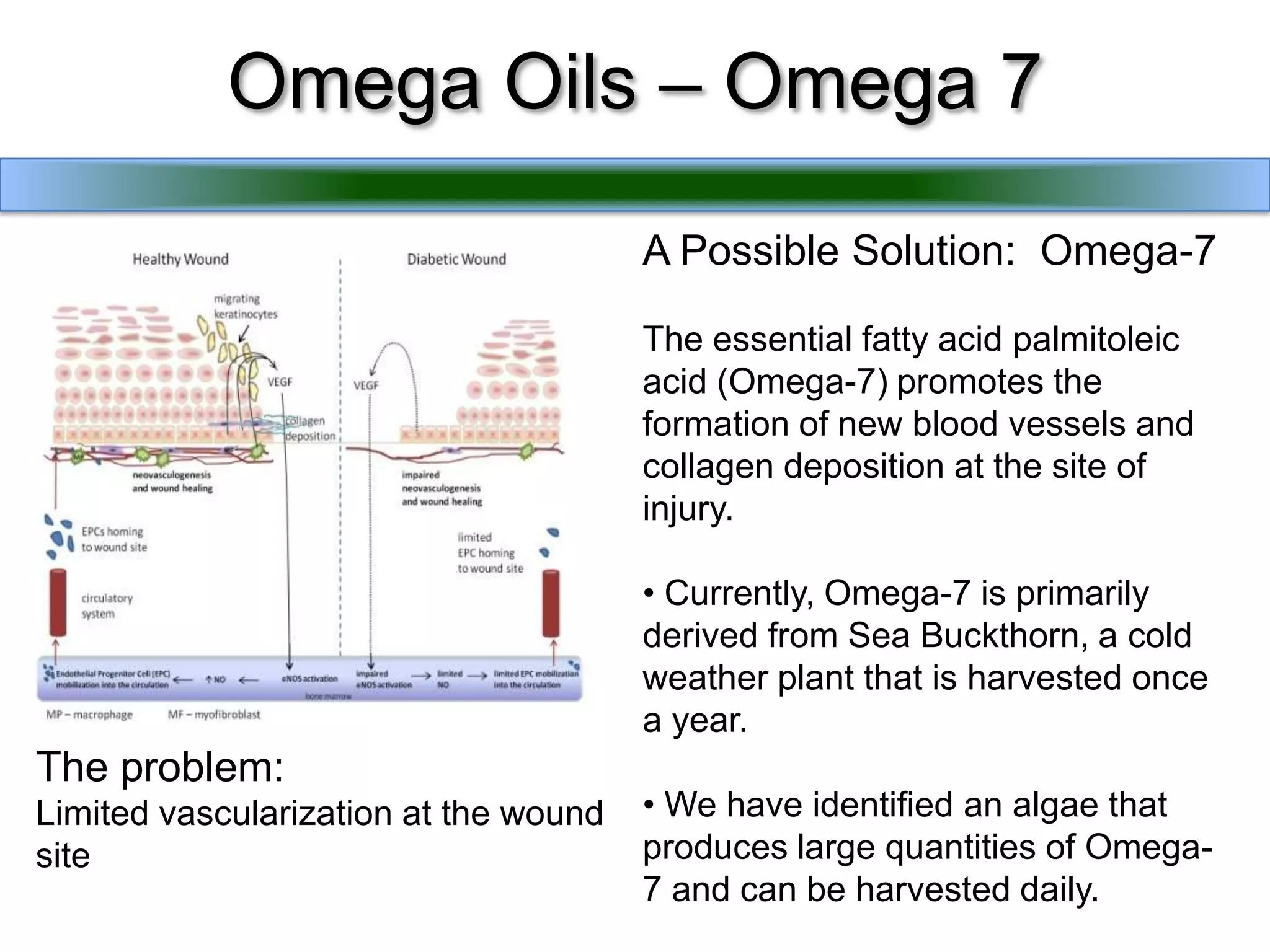
    nutraceuticals (carotenoids, omega3-6-7-9, anti-microbials, anti-fungals)Omega Oils – Omega 7A Possible Solution: Omega-7The essential fatty acid palmitoleic acid (Omega-7) promotes the formation of new blood vessels and collagen deposition at the site of injury. Currently, Omega-7 is primarily derived from Sea Buckthorn, a cold weather plant that is harvested once a year.
  • 17.
    We haveidentified an algae that produces large quantities of Omega-7 and can be harvested daily. The problem: Limited vascularization at the wound site
  • 18.
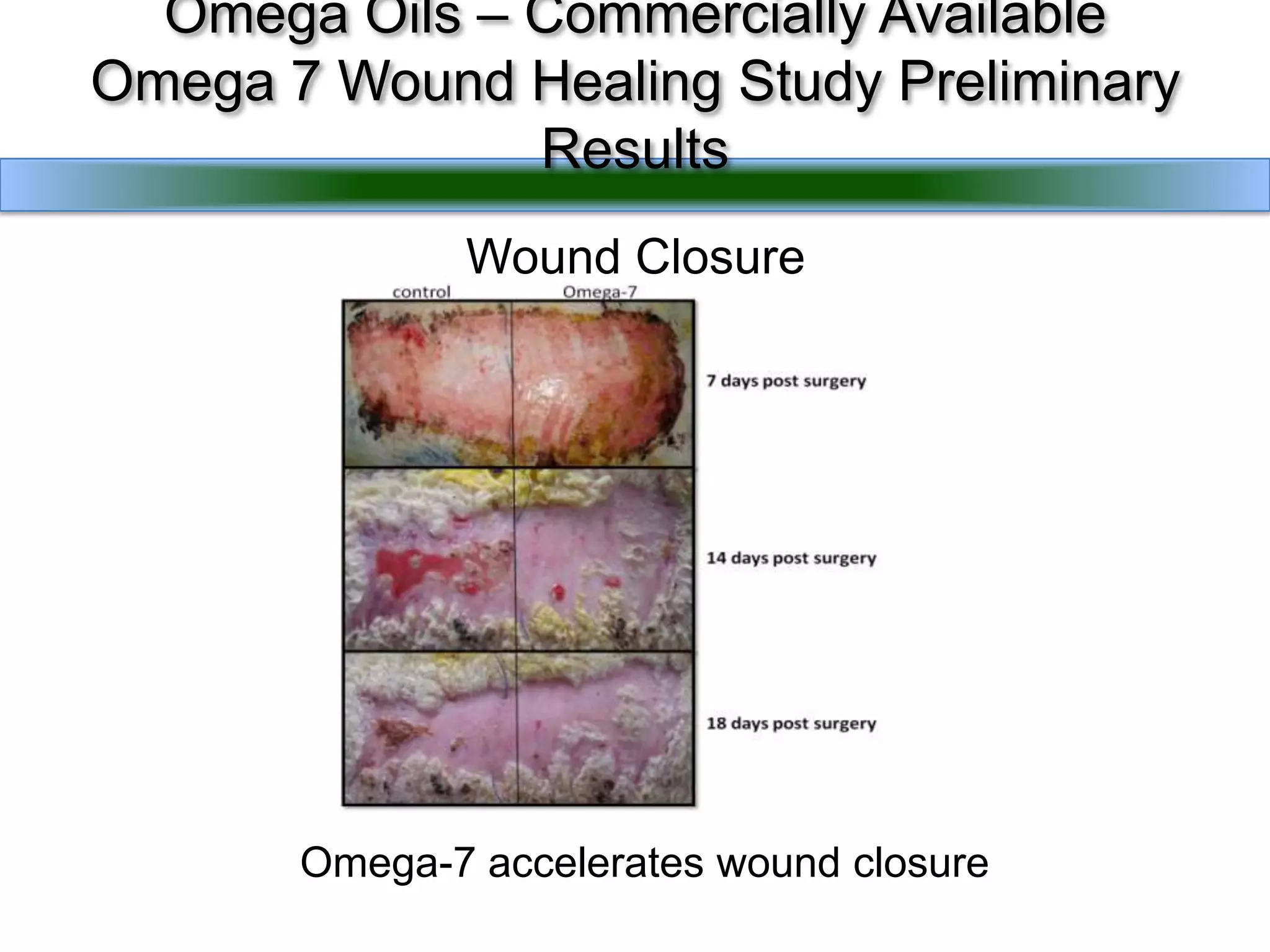
    Omega Oils –Commercially Available Omega 7 Wound Healing Study Preliminary ResultsWound ClosureOmega-7 accelerates wound closure
  • 19.
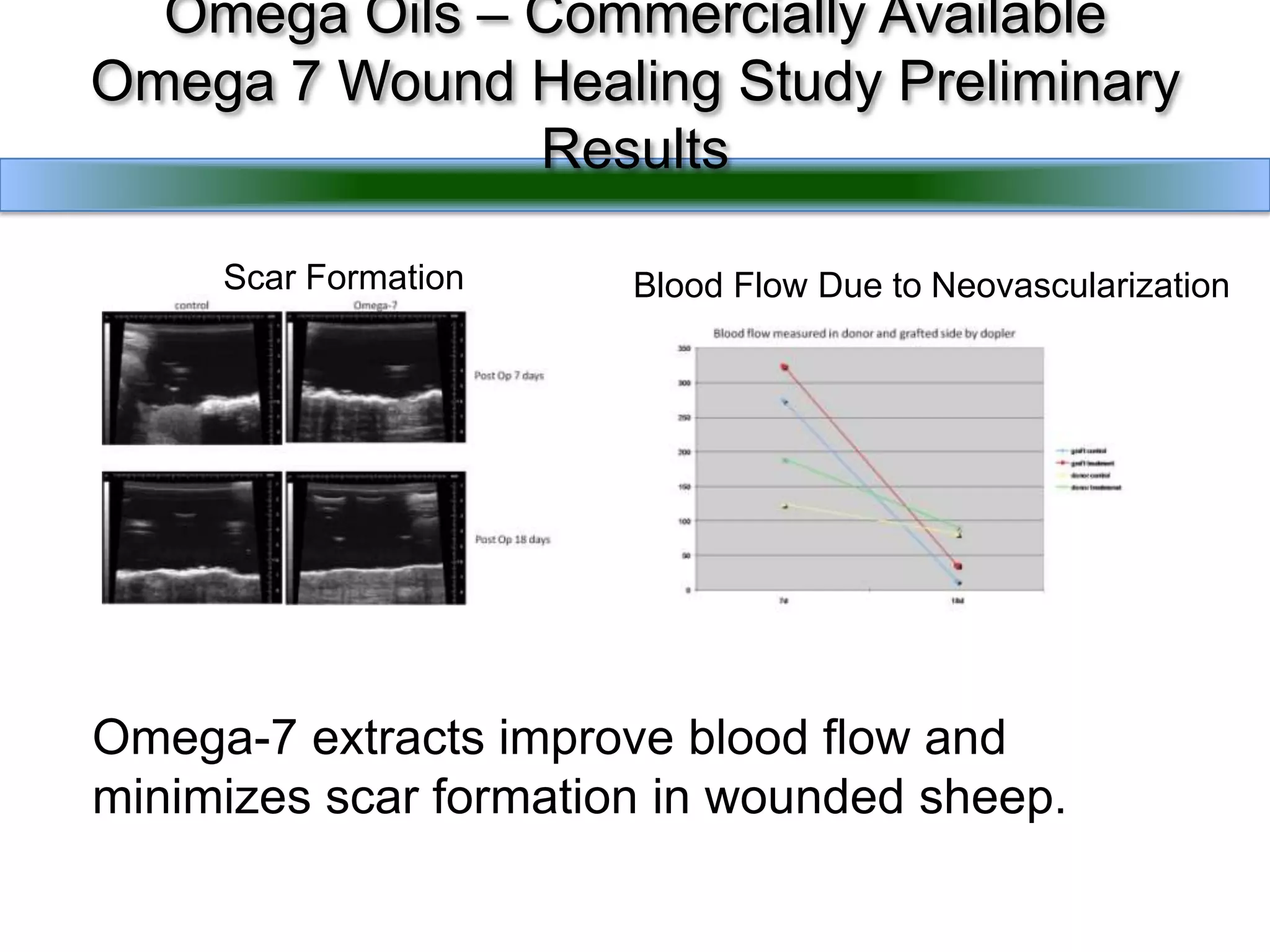
    Omega Oils –Commercially Available Omega 7 Wound Healing Study Preliminary ResultsBlood Flow Due to NeovascularizationScar FormationOmega-7 extracts improve blood flow and minimizes scar formation in wounded sheep.
  • 20.
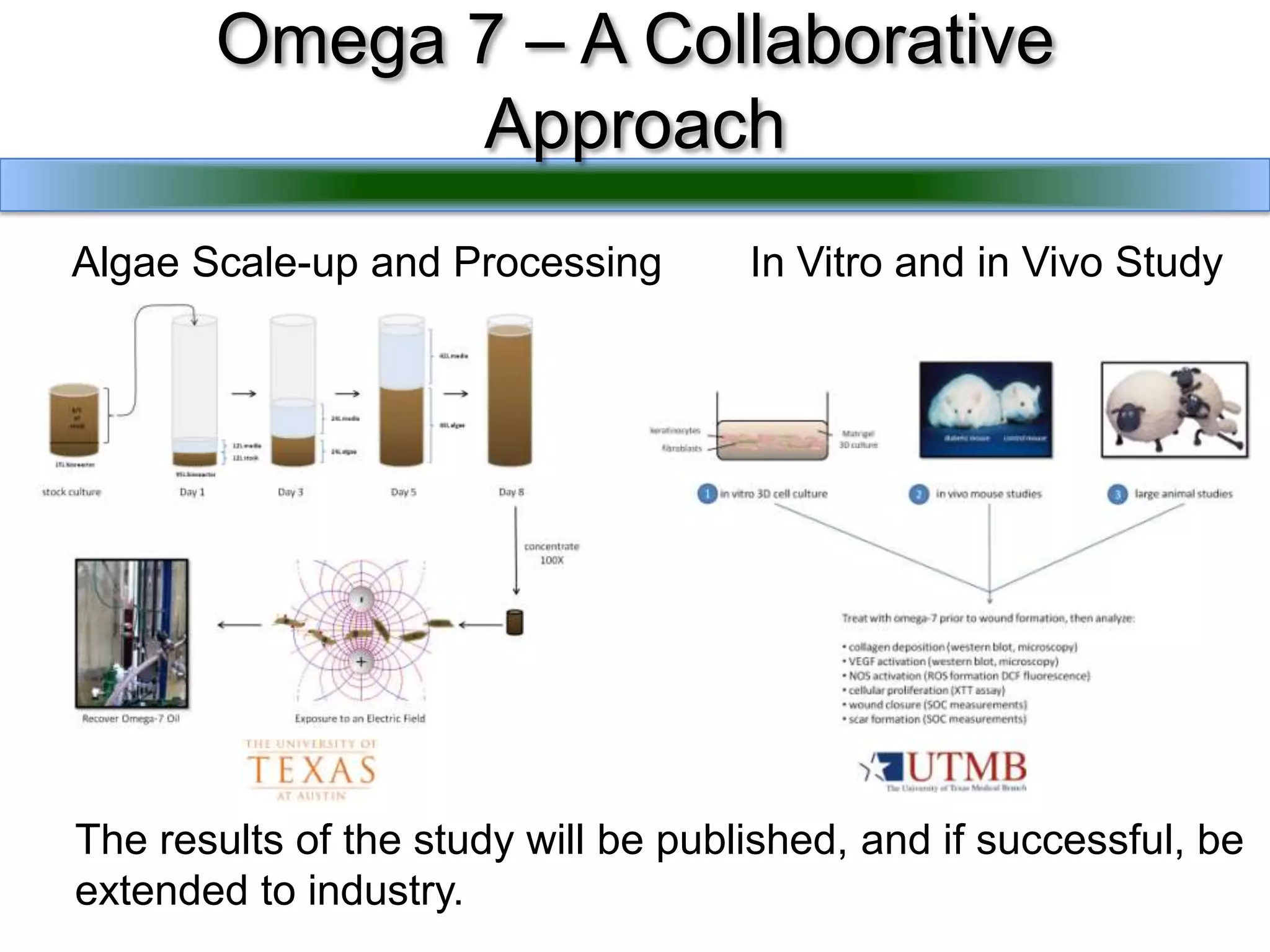
    Omega 7 –A Collaborative ApproachAlgae Scale-up and ProcessingIn Vitro and in Vivo StudyThe results of the study will be published, and if successful, be extended to industry.
  • 21.
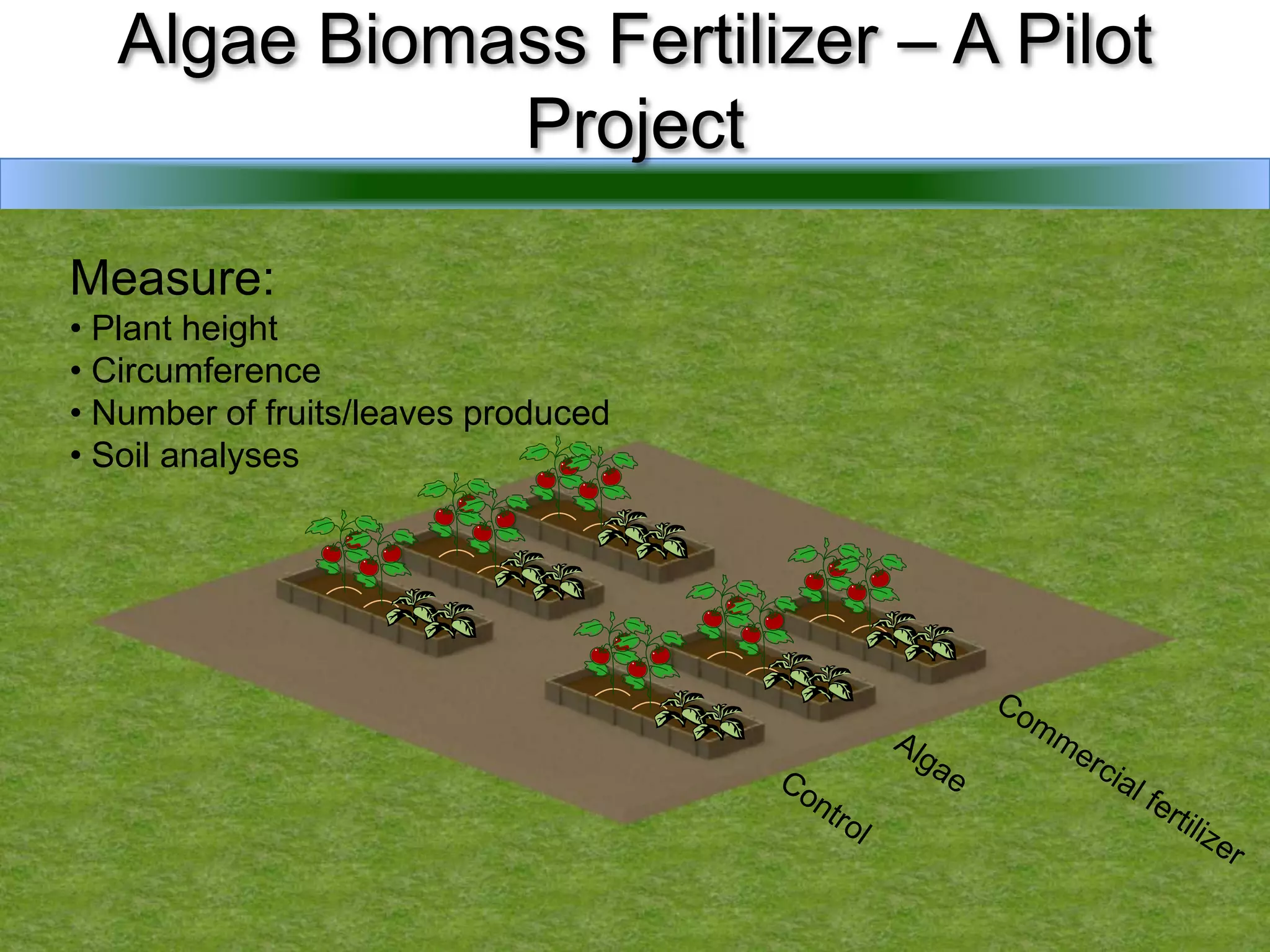
    Algae Biomass Fertilizer– A Pilot ProjectMeasure: Plant height
  • 22.
  • 23.
    Number offruits/leaves produced
  • 24.
  • 25.
    Other Algae Applications– Conclusions In addition to biofuel oils, algae produce many “high-value” products
  • 26.
    Some ofthe “high-value” products are billion dollar industries
  • 27.
    UT hasdeveloped technologies that can cost-effectively recover biofuel oils and high-value products
  • 28.
    Using CEM/OpenAlgae-developedtechnologies, we can collaborate with other research universities and private institutions to advance health applications
  • 29.
    The processedalgae biomass is useful too -- we have initiated an algae fertilizer pilot program on the UT campus
  • 30.
    We continueto develop technologies useful to UT and industryContact InformationDr. Rhykka ConnellyCenter for ElectromechanicsResearch Scientist(512) 232-1604r.connelly@cem.utexas.eduMr. Hoyt ThomasOpenAlgaePresident and CEO(713) 979-2600hhthomas@openalgae.comDr. Robert HebnerCenter for ElectromechanicsDirector(512) 232-1628r.hebner@cem.utexas.edu