Made by Ceci and Carlota
Allergy occurs when a person's
immune system reacts to
substances in the environment
that are harmless for most
people.
These substances are known as allergens and are
found in house dust mites, pets, pollen, insects,
moulds, foods and some medicines.
Allergies are among the most
common chronic conditions
worldwide.
Allergy symptoms range from
making you miserable to
putting you at risk for life-
threatening reactions.
Types of Allergies
Food Allergy
Are estimated to affect 4 to 6
percent of children and 4
percent of adults
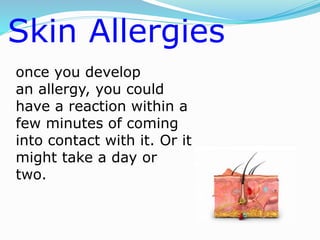
once you develop
an allergy, you could
have a reaction within a
few minutes of coming
into contact with it. Or it
might take a day or
two.
Skin Allergies
Dust Allergies
People who have dust allergies are
familiar with sneezing—but
sneezing isn’t the only
uncomfortable symptom.
Insect Sting
Allergy
Stings from five insects -
honeybees, hornets, wasps,
yellow jackets and fire ants - are
known to cause allergic reactions
to the venom injected into the
skin
Pet allergies
can contribute to constant allergy
symptoms, such as causing your
eyes to water, or causing you to
start sneezing.
.
Drug Allergies
If you develop a rash, hives or
difficulty breathing after taking
certain medications, you may have
a drug allergy.
True allergies to drugs (medicines) occur in only a small
number of people.
Pollen allergy
Pollen is one of the most common
triggers of seasonal allergies.
Many people know pollen allergy
as “seasonal allergic rhinitis.”
Latex Allergy
Allergic reactions to latex may be
serious and can very rarely be
fatal. If you have latex allergy
you should limit or avoid future
exposure to latex products.
Mold Allergy
Molds live everywhere—on logs
and on fallen leaves, and in moist
places like bathrooms and
kitchens.
Cockroach Allergy
Some people develop allergy
symptoms when they are around
cockroaches.
Allergy
Symptoms
 Itchy, watery eyes
 Itchy, runny nose
 Sneezing
 Runny nose
 Rashes
 Hives (a rash with raised red patches)
 Stomach cramps
 Vomiting
 Diarrhea
 Bloating Swelling
 Redness
 Pain
 Tongue swelling
 Cough
 Throat closing
 Wheezing (a whistling sound when you breathe)
 Chest tightness and losing your breath
 Feeling faint, light-headed or "blacking out"
 A sense of "impending doom"
Diagnosing Allergy
Diagnosing an allergy is more
complicated than administering a
skin prick test or taking a blood
sample
Allergy Treatments

Allergies

  • 1.
    Made by Ceciand Carlota
  • 2.
    Allergy occurs whena person's immune system reacts to substances in the environment that are harmless for most people. These substances are known as allergens and are found in house dust mites, pets, pollen, insects, moulds, foods and some medicines.
  • 3.
    Allergies are amongthe most common chronic conditions worldwide. Allergy symptoms range from making you miserable to putting you at risk for life- threatening reactions.
  • 4.
  • 5.
    Food Allergy Are estimatedto affect 4 to 6 percent of children and 4 percent of adults
  • 6.
    once you develop anallergy, you could have a reaction within a few minutes of coming into contact with it. Or it might take a day or two. Skin Allergies
  • 7.
    Dust Allergies People whohave dust allergies are familiar with sneezing—but sneezing isn’t the only uncomfortable symptom.
  • 8.
    Insect Sting Allergy Stings fromfive insects - honeybees, hornets, wasps, yellow jackets and fire ants - are known to cause allergic reactions to the venom injected into the skin
  • 9.
    Pet allergies can contributeto constant allergy symptoms, such as causing your eyes to water, or causing you to start sneezing. .
  • 10.
    Drug Allergies If youdevelop a rash, hives or difficulty breathing after taking certain medications, you may have a drug allergy. True allergies to drugs (medicines) occur in only a small number of people.
  • 11.
    Pollen allergy Pollen isone of the most common triggers of seasonal allergies. Many people know pollen allergy as “seasonal allergic rhinitis.”
  • 12.
    Latex Allergy Allergic reactionsto latex may be serious and can very rarely be fatal. If you have latex allergy you should limit or avoid future exposure to latex products.
  • 13.
    Mold Allergy Molds liveeverywhere—on logs and on fallen leaves, and in moist places like bathrooms and kitchens.
  • 14.
    Cockroach Allergy Some peopledevelop allergy symptoms when they are around cockroaches.
  • 15.
  • 16.
     Itchy, wateryeyes  Itchy, runny nose  Sneezing  Runny nose  Rashes  Hives (a rash with raised red patches)  Stomach cramps  Vomiting  Diarrhea  Bloating Swelling  Redness  Pain  Tongue swelling  Cough  Throat closing  Wheezing (a whistling sound when you breathe)  Chest tightness and losing your breath  Feeling faint, light-headed or "blacking out"  A sense of "impending doom"
  • 17.
    Diagnosing Allergy Diagnosing anallergy is more complicated than administering a skin prick test or taking a blood sample
  • 18.