Dr. P. Samuel
Assistant Professor of Biotechnology,
Ayya Nadar Janaki Ammal College (Autonomous),
Sivakasi
Source:
https://www.biotecharticles.com/Biotech-Research-Article/Algal-Biotechnology-Importance-and-Applications-623.html
7/10/2020 1Tutor sam@ANJAC
7/10/2020 2Tutor sam@ANJAC
What is an algae?
Singular: Alga ; Plural Algae
 Alga is a photosynthetic (use sunlight as energy
source)eukaryotic organism.
Present in freshwater and marine ecosystem.
An alga lacks structures like leaf, stem and fruits but it
has thallus.
Classification of algae is based upon the
photosynthetic pigment present in it.
Algae adapts simple asexual mode to complex sexual
mode of reproduction.
A typical algal cell contain all sub cellular entities (cell
organelles) which are covered by a definite cell
membrane and cell wall.
7/10/2020 Tutor sam@ANJAC 3
What is a Marine alga?
The study of algae is known as algology or phycology.
Marine alga is otherwise called as sea weeds.
So far there are more than 30,000 species were recorded.
Marine alga are macroscopic and can be seen with an unaided eye.
Some marine alga can grow up to 60 – 150 feet long, these are termed as
giant kelp.
Marine alga do not contain structures like xylem, phloem and stomata.
Marine alga belong to the kingdom “protista” but they are not plants.
Marine algae were the first recorded vegetables that exist.
Marine algae forms the base of the food chain in the marine ecosystem
for marine animals.
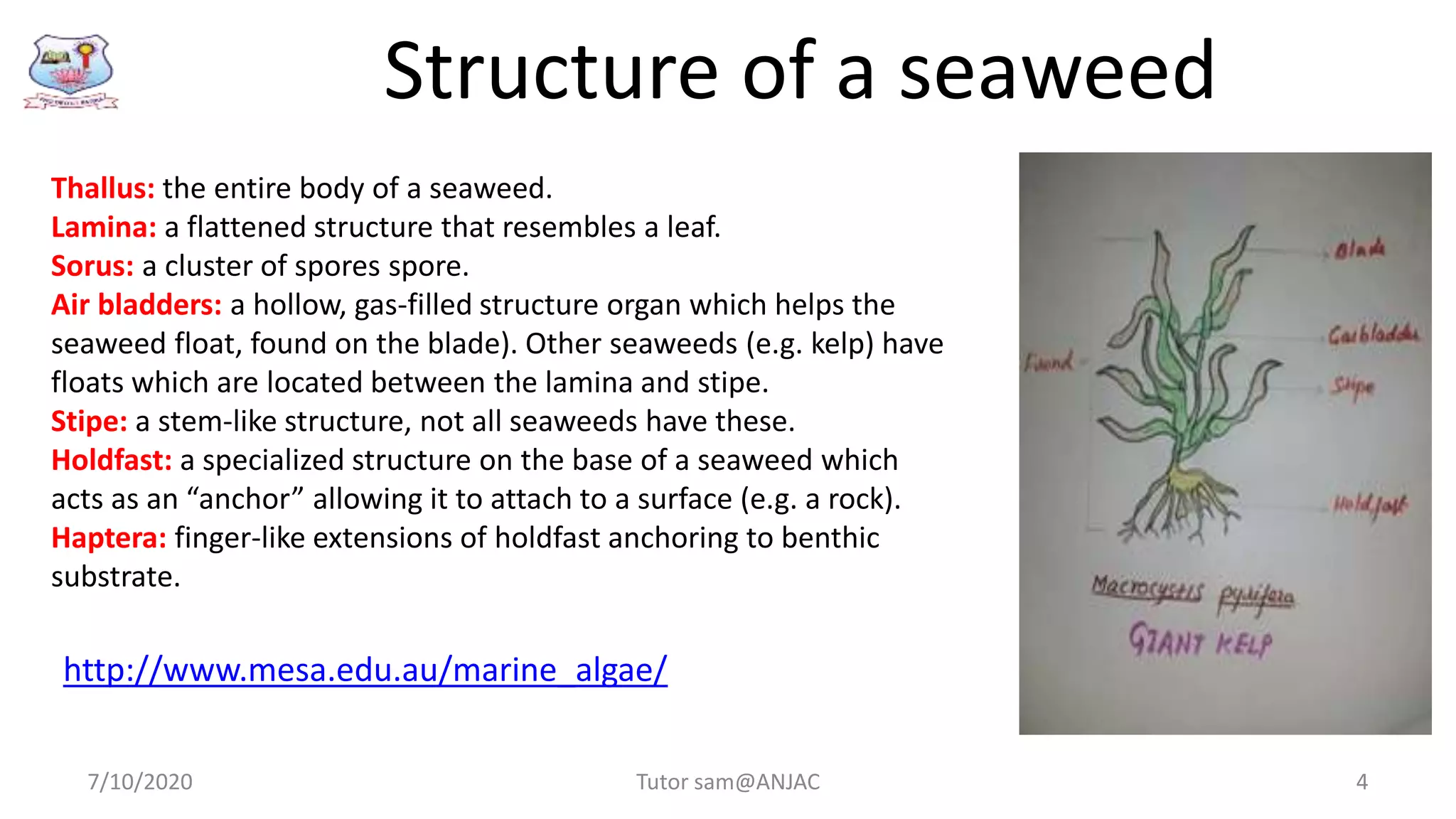
Structure of a seaweed
7/10/2020 Tutor sam@ANJAC 4
http://www.mesa.edu.au/marine_algae/
Thallus: the entire body of a seaweed.
Lamina: a flattened structure that resembles a leaf.
Sorus: a cluster of spores spore.
Air bladders: a hollow, gas-filled structure organ which helps the
seaweed float, found on the blade). Other seaweeds (e.g. kelp) have
floats which are located between the lamina and stipe.
Stipe: a stem-like structure, not all seaweeds have these.
Holdfast: a specialized structure on the base of a seaweed which
acts as an “anchor” allowing it to attach to a surface (e.g. a rock).
Haptera: finger-like extensions of holdfast anchoring to benthic
substrate.
7/10/2020 Tutor sam@ANJAC 5
Classification is based on the chief photosynthetic pigment present in the algae
https://www.thoughtco.com/types-of-marine-algae-2291975
Brown algae (Phaeophyta)
Red algae (Rhodophyta)
Green algae (Chlorophyta)
Brown algae (Phaeophyta)
7/10/2020 Tutor sam@ANJAC 6
The examples of brown algae are as follows: Ectocarpus. Punctaria. Holothrix.
Hormosira. Tilopteris. Dictyota. Padina. Cutleria.
Brown algae, from the phylum Phaeophyta (meaning "dusky plants").
It is the most prevalent type of seaweed.
Brown or yellow-brown in color, brown algae are found in the waters of both
temperate or arctic climates.
While not roots in the true sense, brown algae typically have root-like structures
called "holdfasts" that are used to anchor the algae to a surface.
There are about 30 kelp varieties.
One of them forms the giant kelp forests near the California coast, while another
makes up the floating kelp beds in the Sargasso Sea in the North Atlantic Ocean.
Brown algae (Phaeophyta)
7/10/2020 Tutor sam@ANJAC 7
One of the most widely consumed seaweeds, kelp contains many important
vitamins and minerals including
Vitamin K
Vitamin A
Vitamin C
Folate
Vitamin E
Vitamin B12
Vitamin B6
Thiamin, riboflavin, niacin, pantothenic acid, iodine, calcium, magnesium,
iron, sodium, phosphorus, as well as small amounts of zinc, copper,
manganese, and selenium.
Red algae (Rhodophyta)
7/10/2020 Tutor sam@ANJAC 8
It is estimated that, there are more than 6,000 species of red algae.
Red algae gain their billiant colors due to the pigment phycoerythrin.
The ability to absorb blue light allows red algae to live at greater depths
than either brown or green algae.
Coralline algae, a subgroup of red algae, is important in the formation
of coral reefs.
Several types of red algae are used in food additives, and some are regular
parts of Asian cuisine.
Examples of red algae include Irish moss, coralline (Corallinales), and
dulse (Palmaria palmata).
Green algae (Chlorophyta)
7/10/2020 Tutor sam@ANJAC 9
More than 4,000 species of green algae exist on the planet.
Green algae can be found in marine or freshwater habitats, and some
even thrive in moist soils.
These algae come in three forms: unicellular, colonial, or multicellular.
Sea lettuce (Ulva lactuca) is a type of green algae commonly found
in tidal pools.
Codium, another green algae variety, is the favored food of some sea
slugs, while the species Codium fragile is commonly referred to as "dead
man's fingers."
Benefits of Marine algae
7/10/2020 Tutor sam@ANJAC 10
Algae can be used as “biosorbent” agent
Rich source of metabolites from algae are used for the
production of drugs.
Pigments from algae can be used to produce biolipstiks
Algae are potential source of protein supplements
Algae can be used as biofertilizers
Algae are supplied in cuisines as food
Algae can also be used as feed.
7/10/2020 Tutor sam@ANJAC 11
Email: drsamuelponpandian@gmail.com
Mob: 8695959994

Marine biotechnology

  • 1.
    Dr. P. Samuel AssistantProfessor of Biotechnology, Ayya Nadar Janaki Ammal College (Autonomous), Sivakasi Source: https://www.biotecharticles.com/Biotech-Research-Article/Algal-Biotechnology-Importance-and-Applications-623.html 7/10/2020 1Tutor sam@ANJAC
  • 2.
    7/10/2020 2Tutor sam@ANJAC Whatis an algae? Singular: Alga ; Plural Algae  Alga is a photosynthetic (use sunlight as energy source)eukaryotic organism. Present in freshwater and marine ecosystem. An alga lacks structures like leaf, stem and fruits but it has thallus. Classification of algae is based upon the photosynthetic pigment present in it. Algae adapts simple asexual mode to complex sexual mode of reproduction. A typical algal cell contain all sub cellular entities (cell organelles) which are covered by a definite cell membrane and cell wall.
  • 3.
    7/10/2020 Tutor sam@ANJAC3 What is a Marine alga? The study of algae is known as algology or phycology. Marine alga is otherwise called as sea weeds. So far there are more than 30,000 species were recorded. Marine alga are macroscopic and can be seen with an unaided eye. Some marine alga can grow up to 60 – 150 feet long, these are termed as giant kelp. Marine alga do not contain structures like xylem, phloem and stomata. Marine alga belong to the kingdom “protista” but they are not plants. Marine algae were the first recorded vegetables that exist. Marine algae forms the base of the food chain in the marine ecosystem for marine animals.
  • 4.
    Structure of aseaweed 7/10/2020 Tutor sam@ANJAC 4 http://www.mesa.edu.au/marine_algae/ Thallus: the entire body of a seaweed. Lamina: a flattened structure that resembles a leaf. Sorus: a cluster of spores spore. Air bladders: a hollow, gas-filled structure organ which helps the seaweed float, found on the blade). Other seaweeds (e.g. kelp) have floats which are located between the lamina and stipe. Stipe: a stem-like structure, not all seaweeds have these. Holdfast: a specialized structure on the base of a seaweed which acts as an “anchor” allowing it to attach to a surface (e.g. a rock). Haptera: finger-like extensions of holdfast anchoring to benthic substrate.
  • 5.
    7/10/2020 Tutor sam@ANJAC5 Classification is based on the chief photosynthetic pigment present in the algae https://www.thoughtco.com/types-of-marine-algae-2291975 Brown algae (Phaeophyta) Red algae (Rhodophyta) Green algae (Chlorophyta)
  • 6.
    Brown algae (Phaeophyta) 7/10/2020Tutor sam@ANJAC 6 The examples of brown algae are as follows: Ectocarpus. Punctaria. Holothrix. Hormosira. Tilopteris. Dictyota. Padina. Cutleria. Brown algae, from the phylum Phaeophyta (meaning "dusky plants"). It is the most prevalent type of seaweed. Brown or yellow-brown in color, brown algae are found in the waters of both temperate or arctic climates. While not roots in the true sense, brown algae typically have root-like structures called "holdfasts" that are used to anchor the algae to a surface. There are about 30 kelp varieties. One of them forms the giant kelp forests near the California coast, while another makes up the floating kelp beds in the Sargasso Sea in the North Atlantic Ocean.
  • 7.
    Brown algae (Phaeophyta) 7/10/2020Tutor sam@ANJAC 7 One of the most widely consumed seaweeds, kelp contains many important vitamins and minerals including Vitamin K Vitamin A Vitamin C Folate Vitamin E Vitamin B12 Vitamin B6 Thiamin, riboflavin, niacin, pantothenic acid, iodine, calcium, magnesium, iron, sodium, phosphorus, as well as small amounts of zinc, copper, manganese, and selenium.
  • 8.
    Red algae (Rhodophyta) 7/10/2020Tutor sam@ANJAC 8 It is estimated that, there are more than 6,000 species of red algae. Red algae gain their billiant colors due to the pigment phycoerythrin. The ability to absorb blue light allows red algae to live at greater depths than either brown or green algae. Coralline algae, a subgroup of red algae, is important in the formation of coral reefs. Several types of red algae are used in food additives, and some are regular parts of Asian cuisine. Examples of red algae include Irish moss, coralline (Corallinales), and dulse (Palmaria palmata).
  • 9.
    Green algae (Chlorophyta) 7/10/2020Tutor sam@ANJAC 9 More than 4,000 species of green algae exist on the planet. Green algae can be found in marine or freshwater habitats, and some even thrive in moist soils. These algae come in three forms: unicellular, colonial, or multicellular. Sea lettuce (Ulva lactuca) is a type of green algae commonly found in tidal pools. Codium, another green algae variety, is the favored food of some sea slugs, while the species Codium fragile is commonly referred to as "dead man's fingers."
  • 10.
    Benefits of Marinealgae 7/10/2020 Tutor sam@ANJAC 10 Algae can be used as “biosorbent” agent Rich source of metabolites from algae are used for the production of drugs. Pigments from algae can be used to produce biolipstiks Algae are potential source of protein supplements Algae can be used as biofertilizers Algae are supplied in cuisines as food Algae can also be used as feed.
  • 11.
    7/10/2020 Tutor sam@ANJAC11 Email: drsamuelponpandian@gmail.com Mob: 8695959994