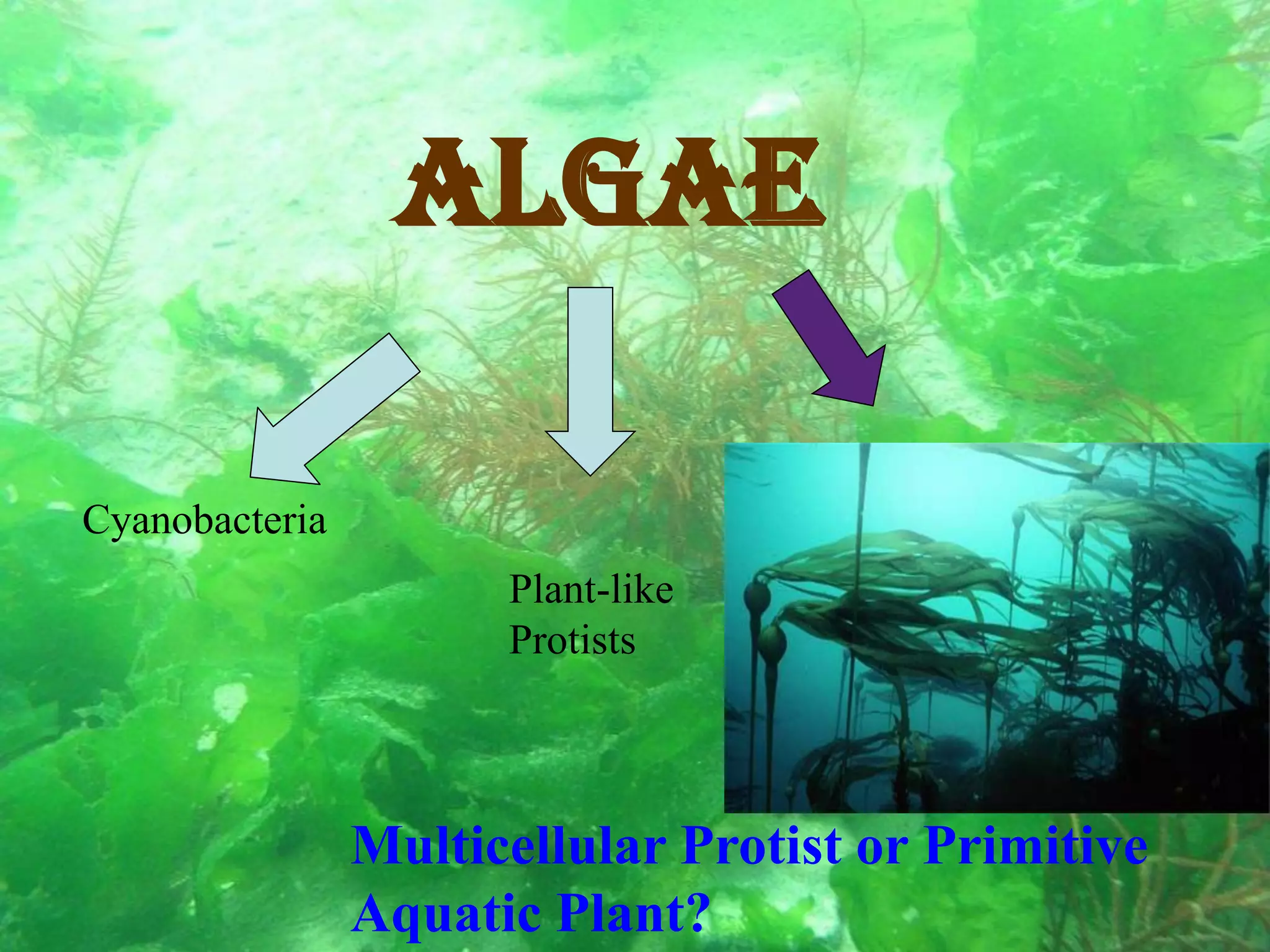
ALGAE
Multicellular Protist or Primitive
Aquatic Plant?
Cyanobacteria
Plant-like
Protists
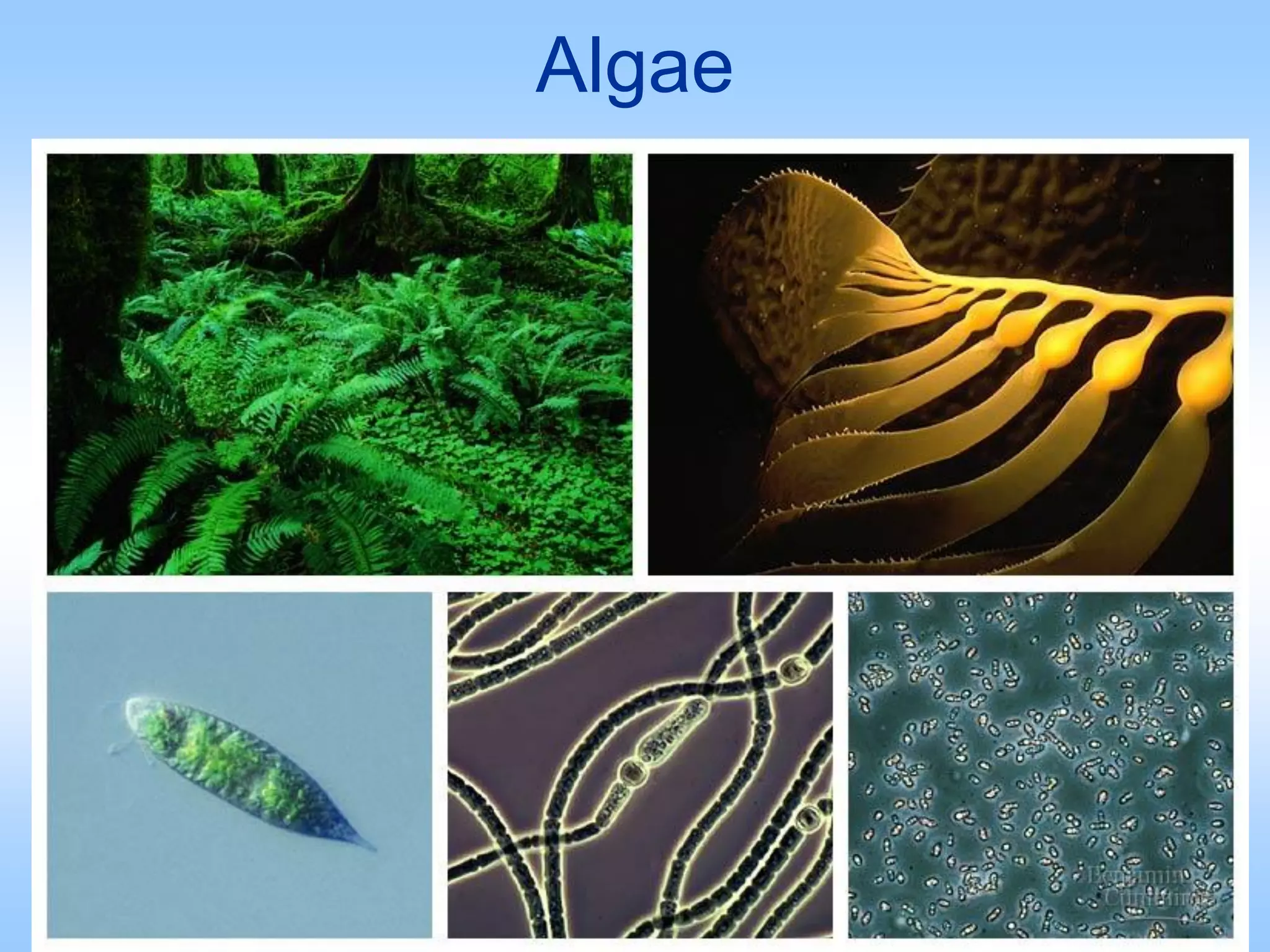
Algae
Algal Characteristics
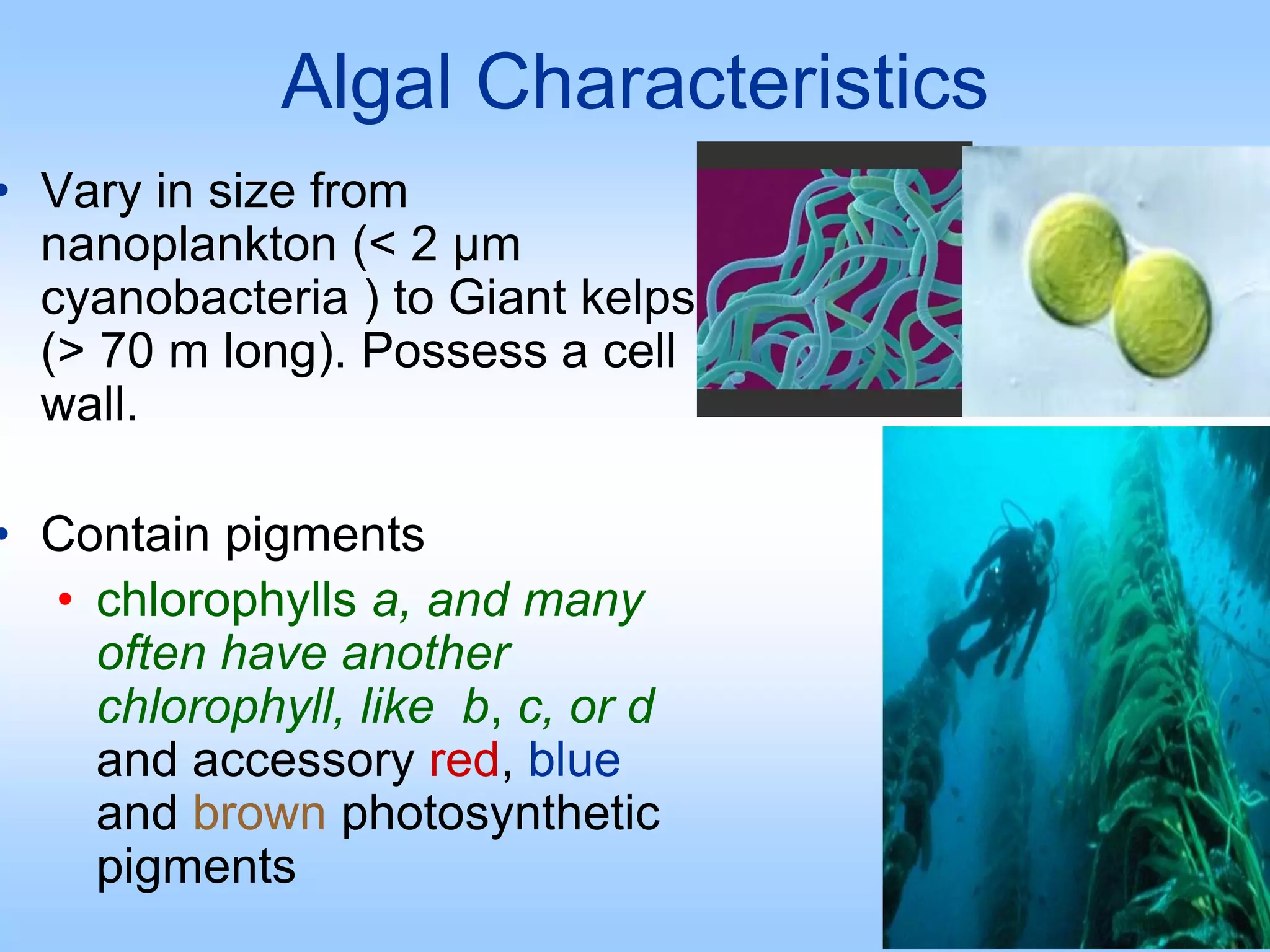
• Vary in size from
nanoplankton (< 2 µm
cyanobacteria ) to Giant kelps
(> 70 m long). Possess a cell
wall.
• Contain pigments
• chlorophylls a, and many
often have another
chlorophyll, like b, c, or d
and accessory red, blue
and brown photosynthetic
pigments
Algae - What are they?
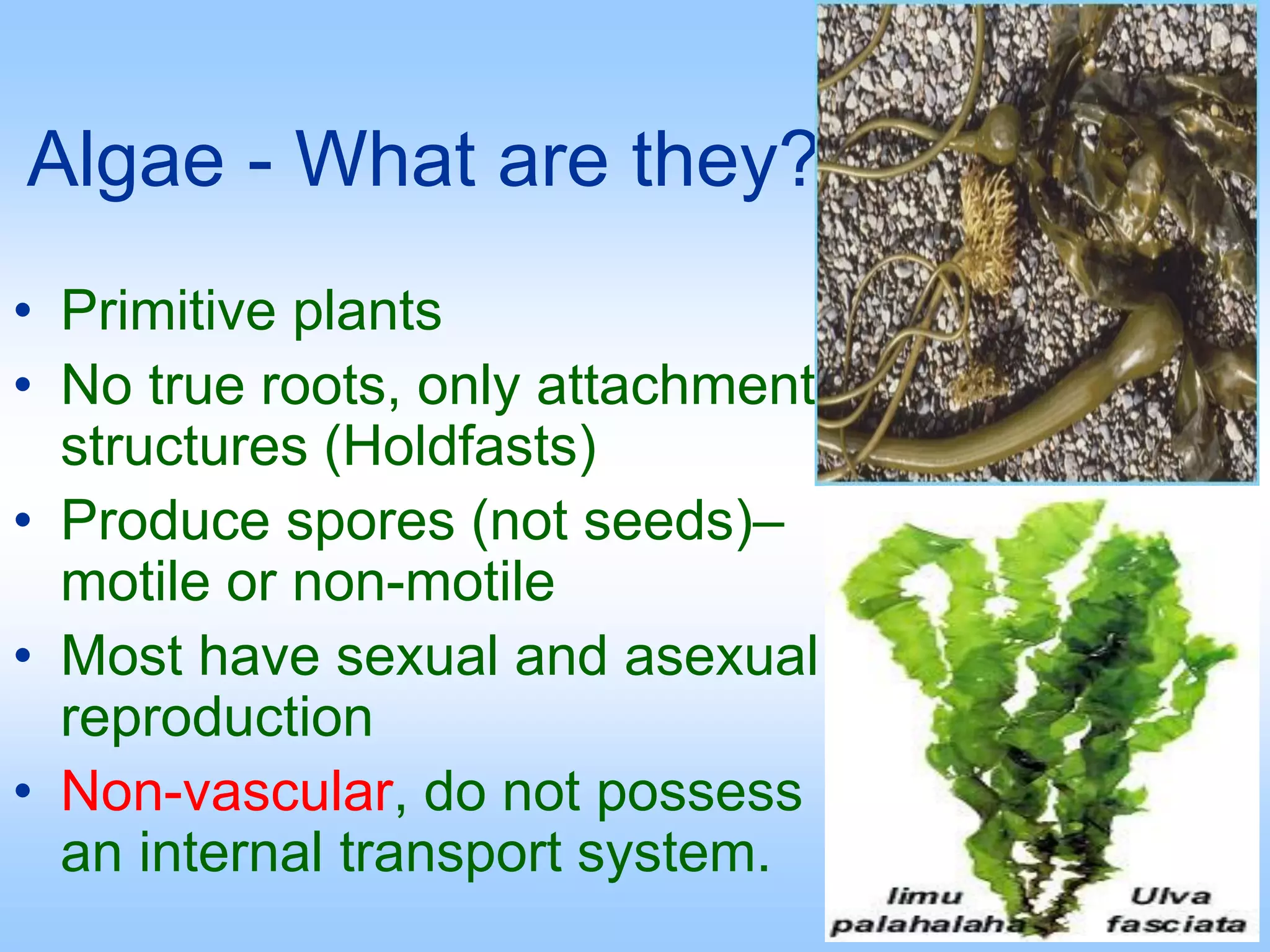
• Primitive plants
• No true roots, only attachment
structures (Holdfasts)
• Produce spores (not seeds)–
motile or non-motile
• Most have sexual and asexual
reproduction
• Non-vascular, do not possess
an internal transport system.
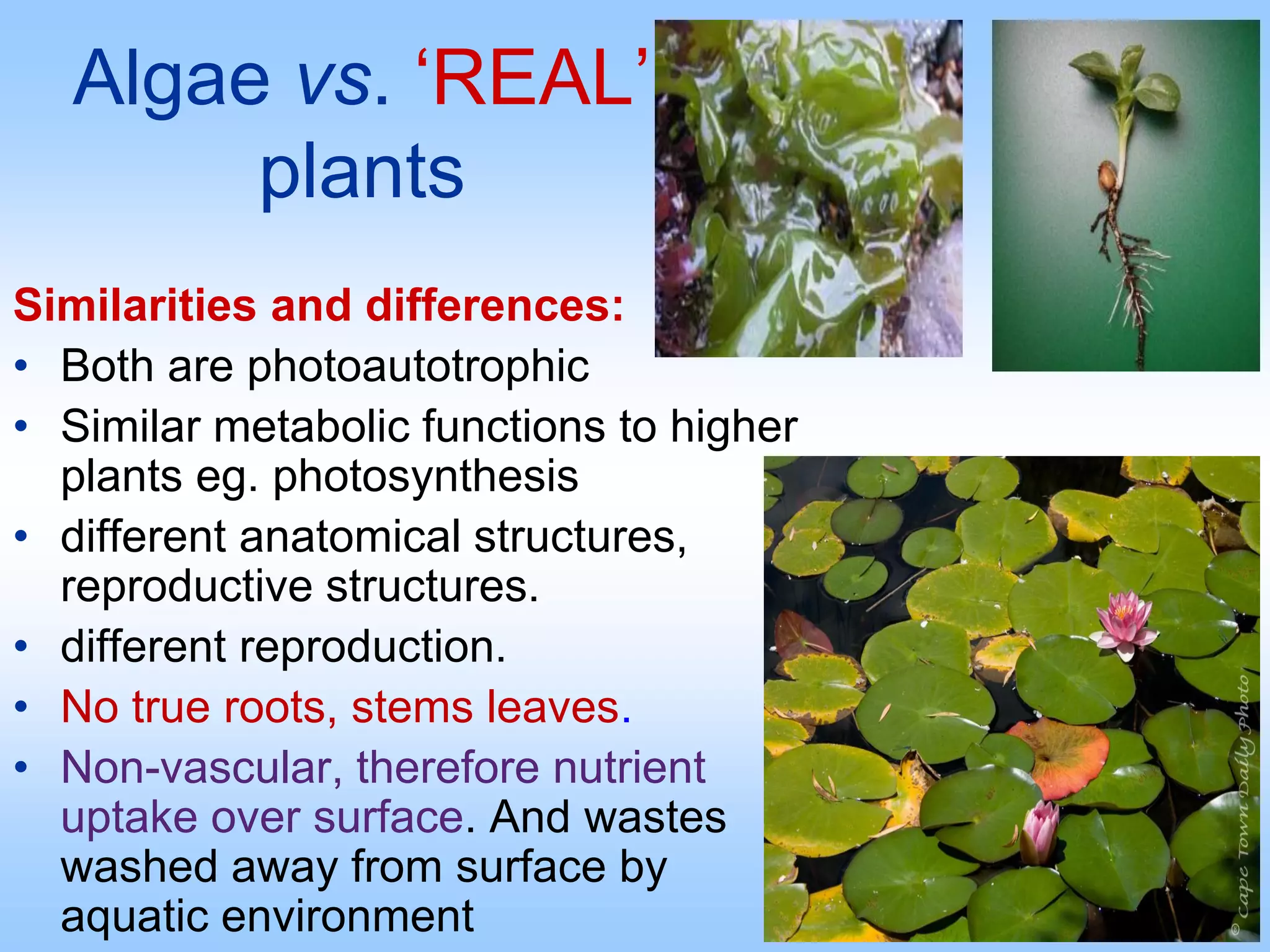
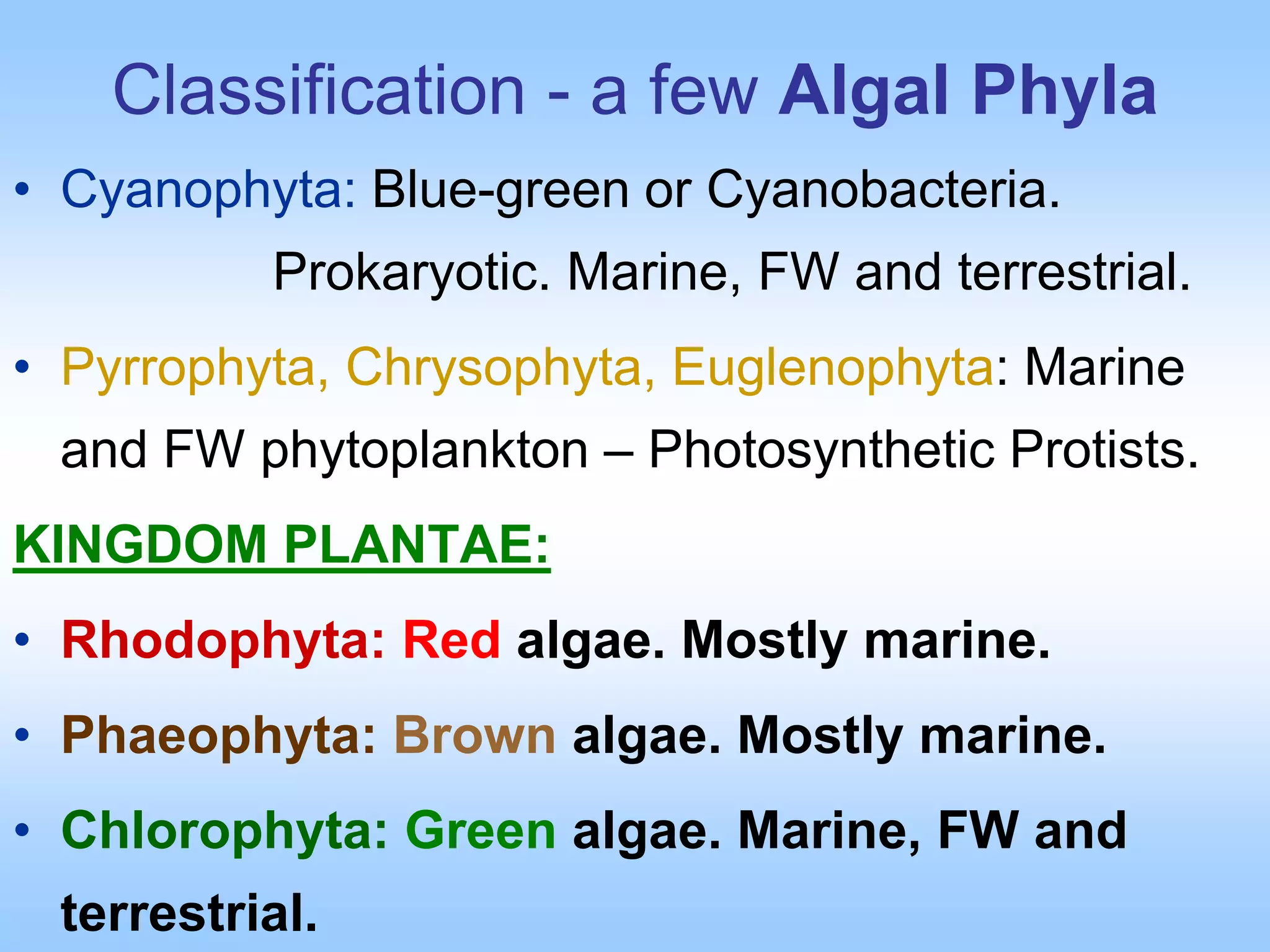
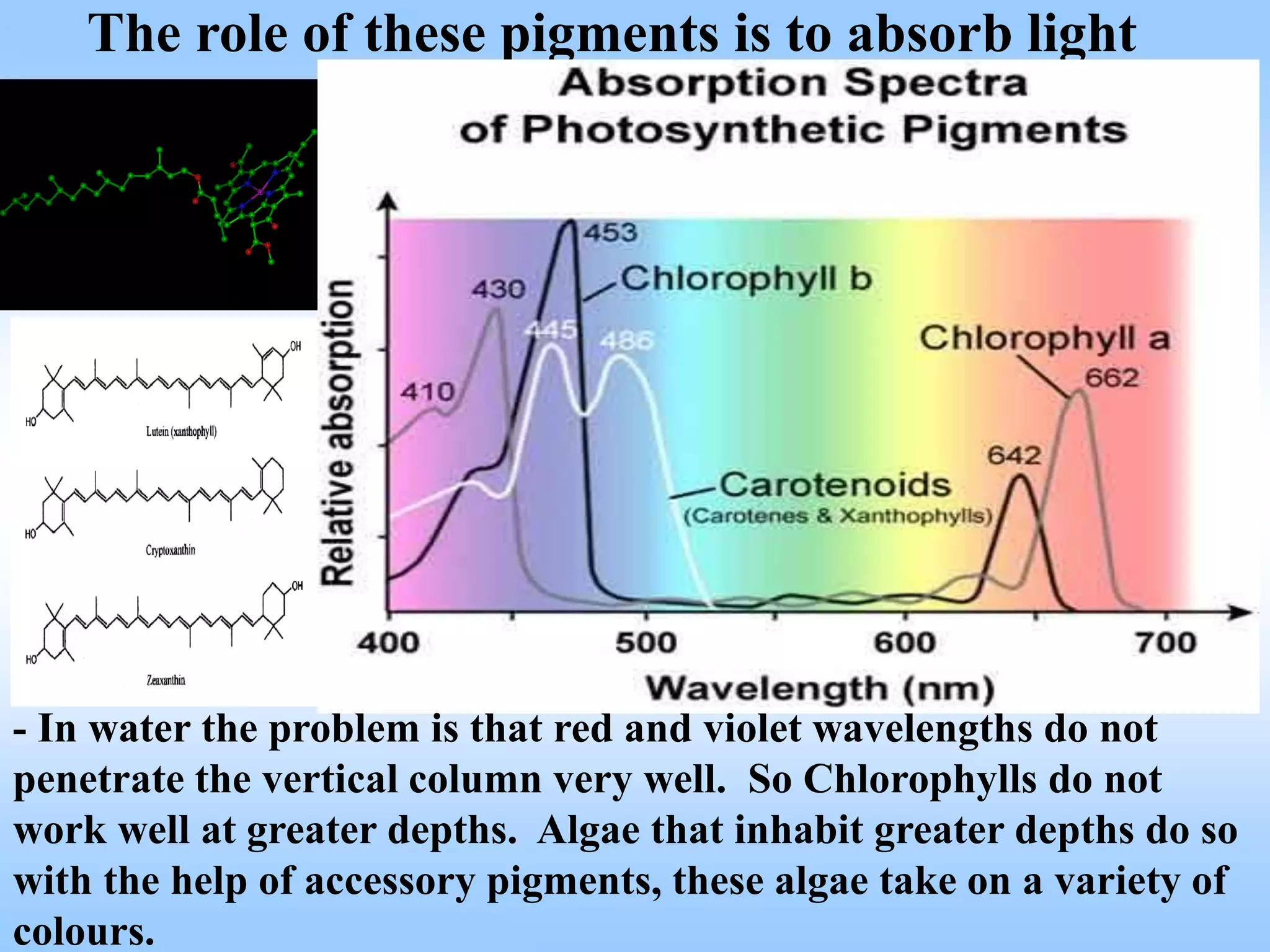
Algae vs. ‘REAL’
plants
Similarities and differences:
• Both are photoautotrophic
• Similar metabolic functions to higher
plants eg. photosynthesis
• different anatomical structures,
reproductive structures.
• different reproduction.
• No true roots, stems leaves.
• Non-vascular, therefore nutrient
uptake over surface. And wastes
washed away from surface by
aquatic environment
Classification - a few Algal Phyla
• Cyanophyta: Blue-green or Cyanobacteria.
Prokaryotic. Marine, FW and terrestrial.
• Pyrrophyta, Chrysophyta, Euglenophyta: Marine
and FW phytoplankton – Photosynthetic Protists.
KINGDOM PLANTAE:
• Rhodophyta: Red algae. Mostly marine.
• Phaeophyta: Brown algae. Mostly marine.
• Chlorophyta: Green algae. Marine, FW and
terrestrial.
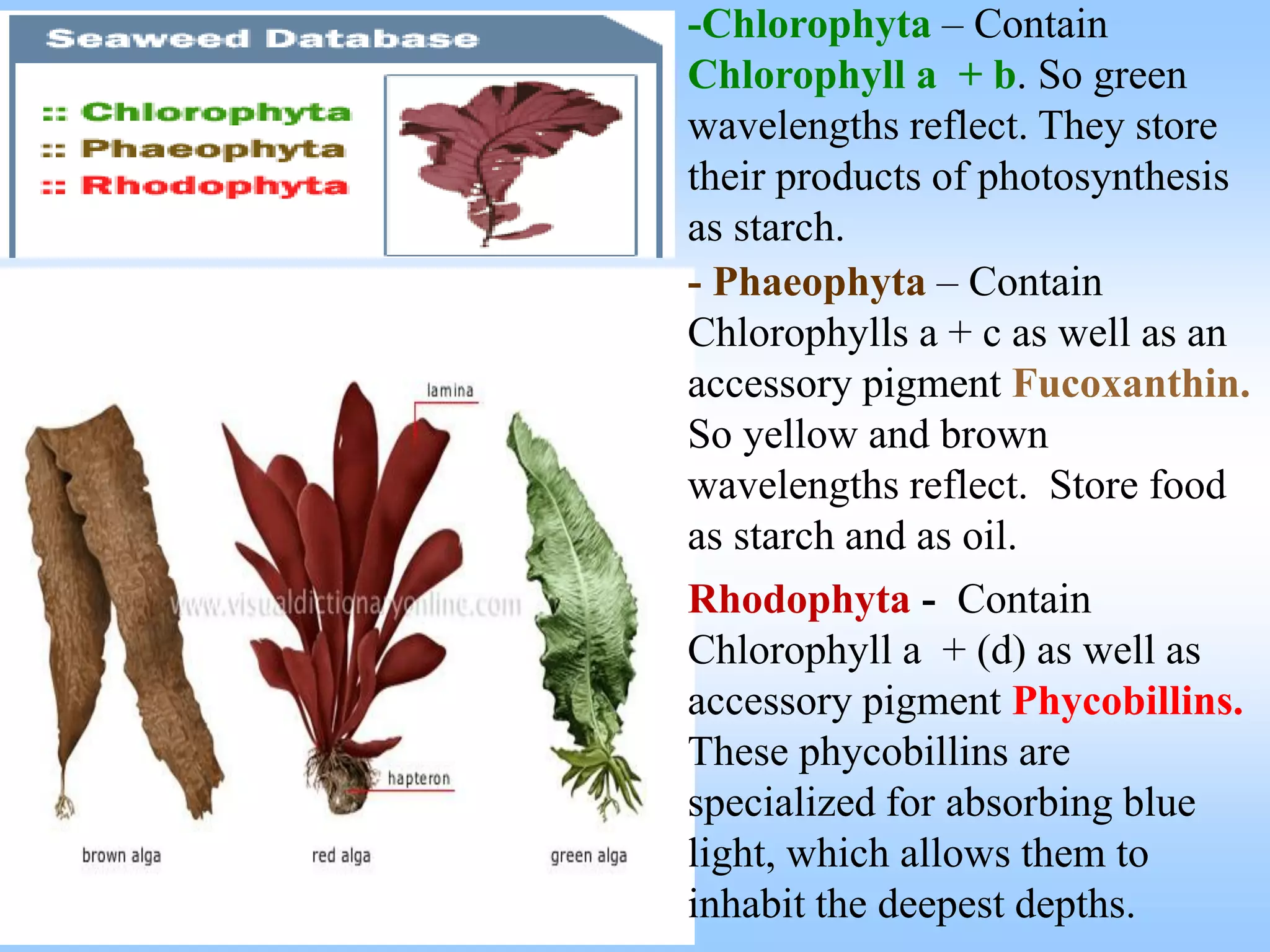
The role of these pigments is to absorb light
- In water the problem is that red and violet wavelengths do not
penetrate the vertical column very well. So Chlorophylls do not
work well at greater depths. Algae that inhabit greater depths do so
with the help of accessory pigments, these algae take on a variety of
colours.
-Chlorophyta – Contain
Chlorophyll a + b. So green
wavelengths reflect. They store
their products of photosynthesis
as starch.
- Phaeophyta – Contain
Chlorophylls a + c as well as an
accessory pigment Fucoxanthin.
So yellow and brown
wavelengths reflect. Store food
as starch and as oil.
Rhodophyta - Contain
Chlorophyll a + (d) as well as
accessory pigment Phycobillins.
These phycobillins are
specialized for absorbing blue
light, which allows them to
inhabit the deepest depths.
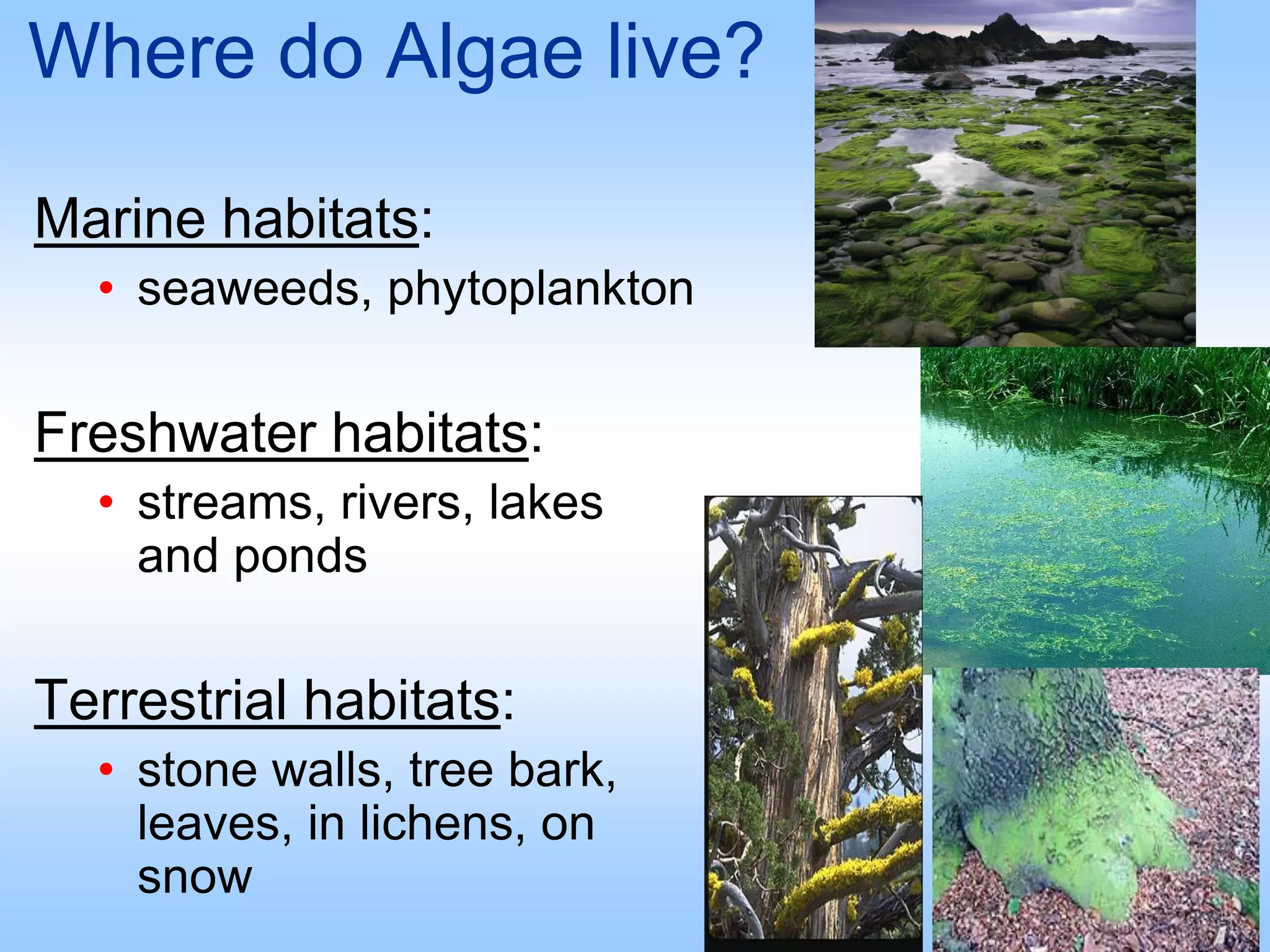
Where do Algae live?
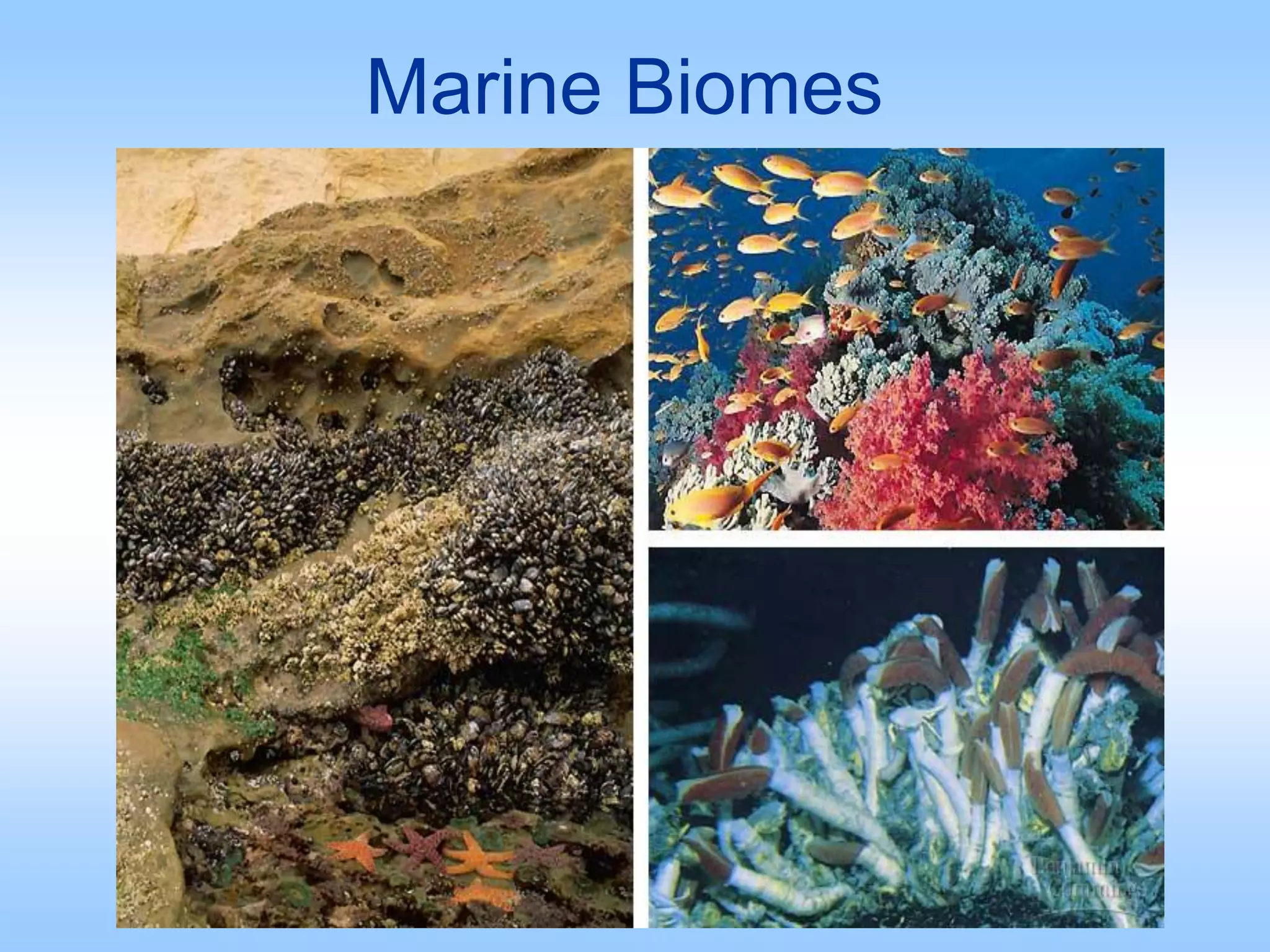
Marine habitats:
• seaweeds, phytoplankton
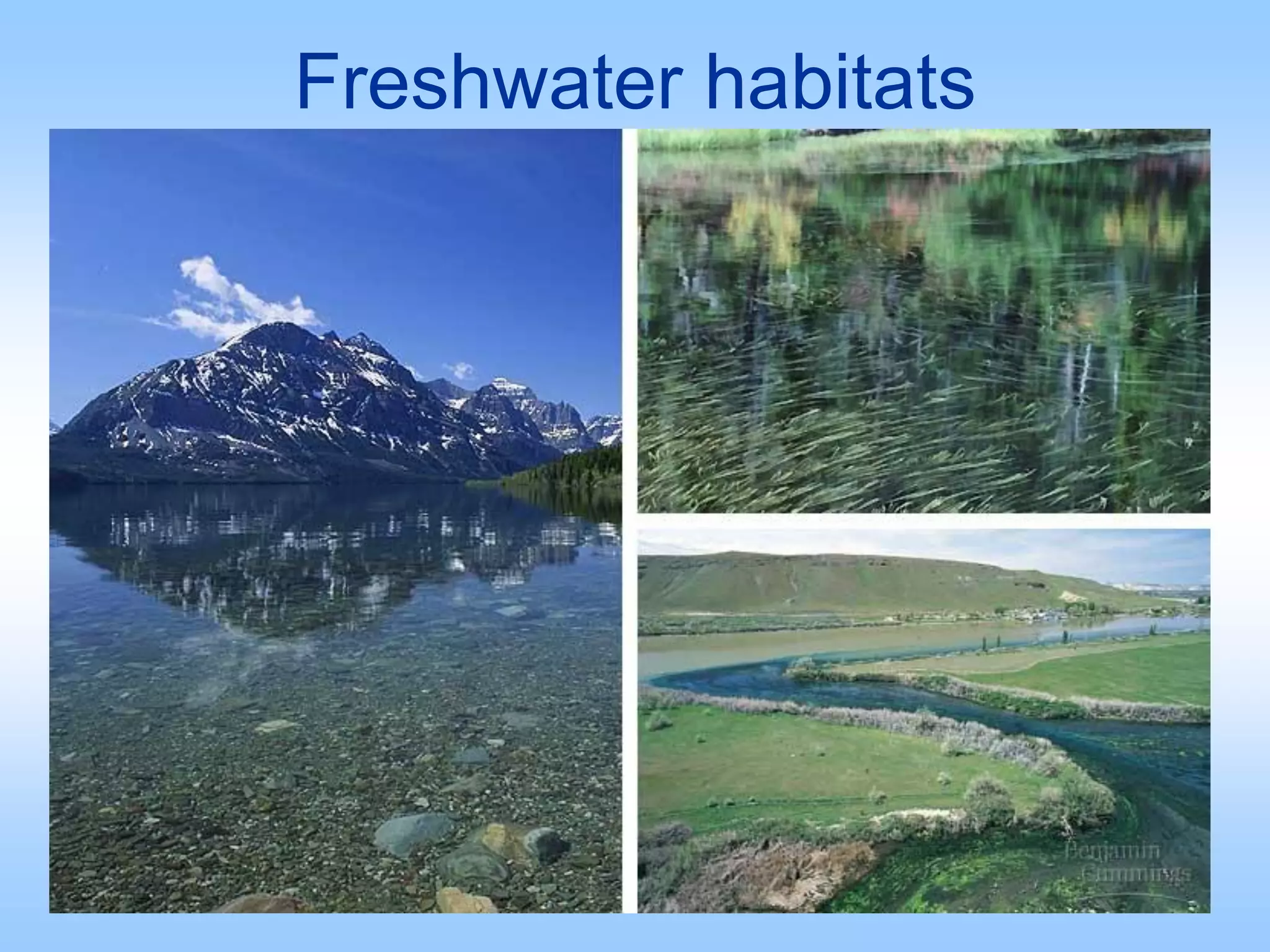
Freshwater habitats:
• streams, rivers, lakes
and ponds
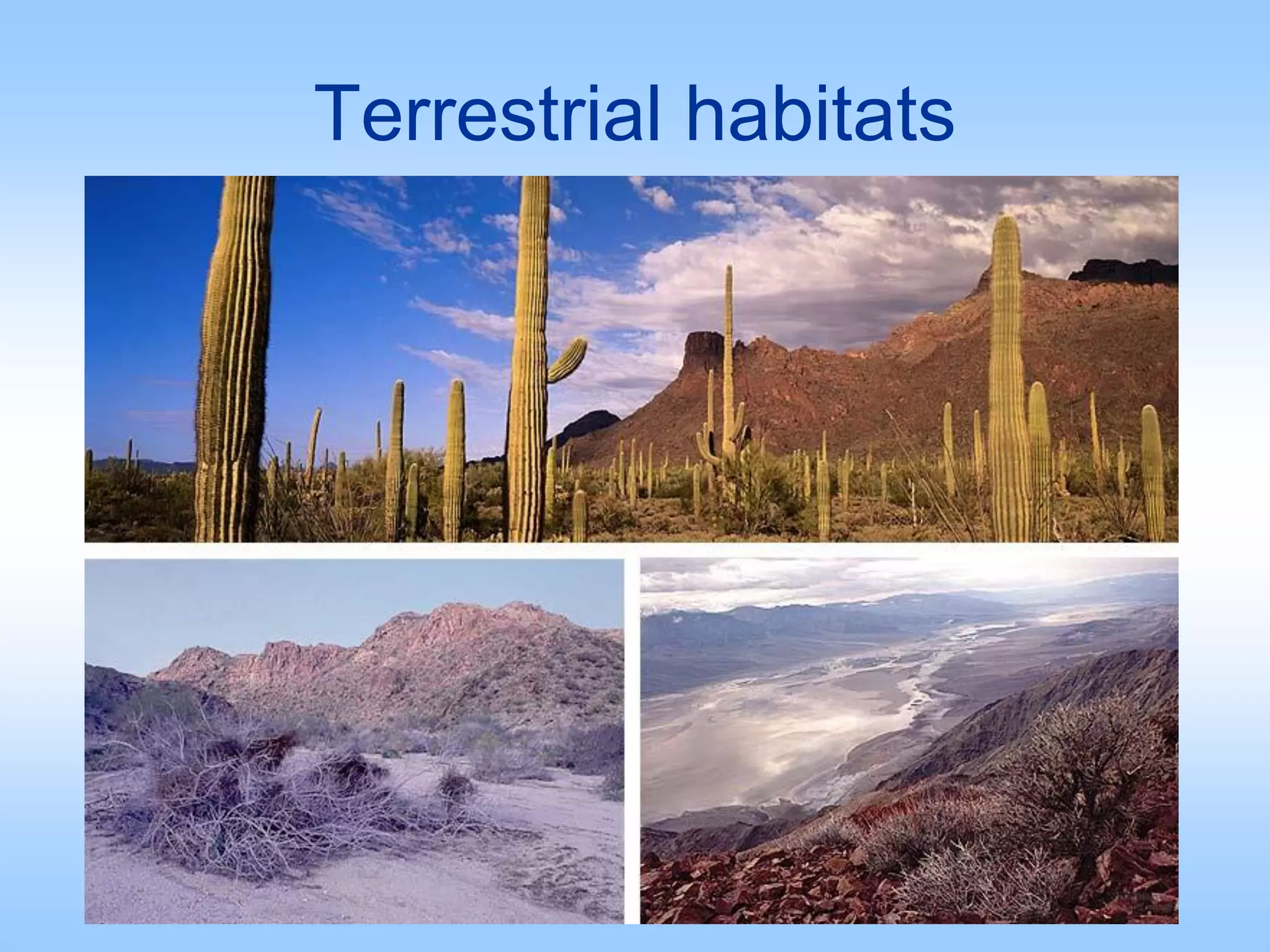
Terrestrial habitats:
• stone walls, tree bark,
leaves, in lichens, on
snow
Marine Biomes
Freshwater habitats
Terrestrial habitats
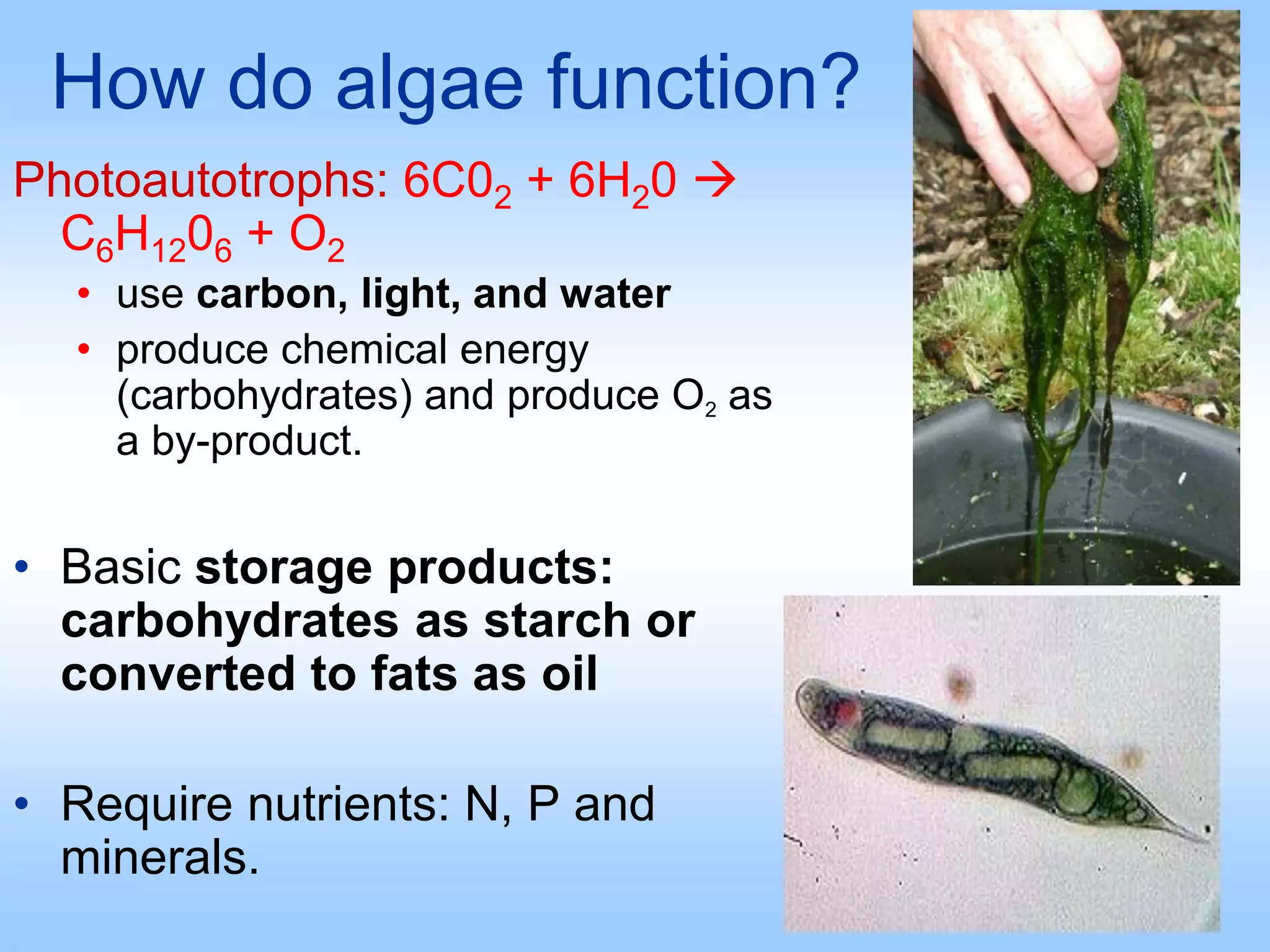
How do algae function?
Photoautotrophs: 6C02 + 6H20 
C6H1206 + O2
• use carbon, light, and water
• produce chemical energy
(carbohydrates) and produce O2 as
a by-product.
• Basic storage products:
carbohydrates as starch or
converted to fats as oil
• Require nutrients: N, P and
minerals.
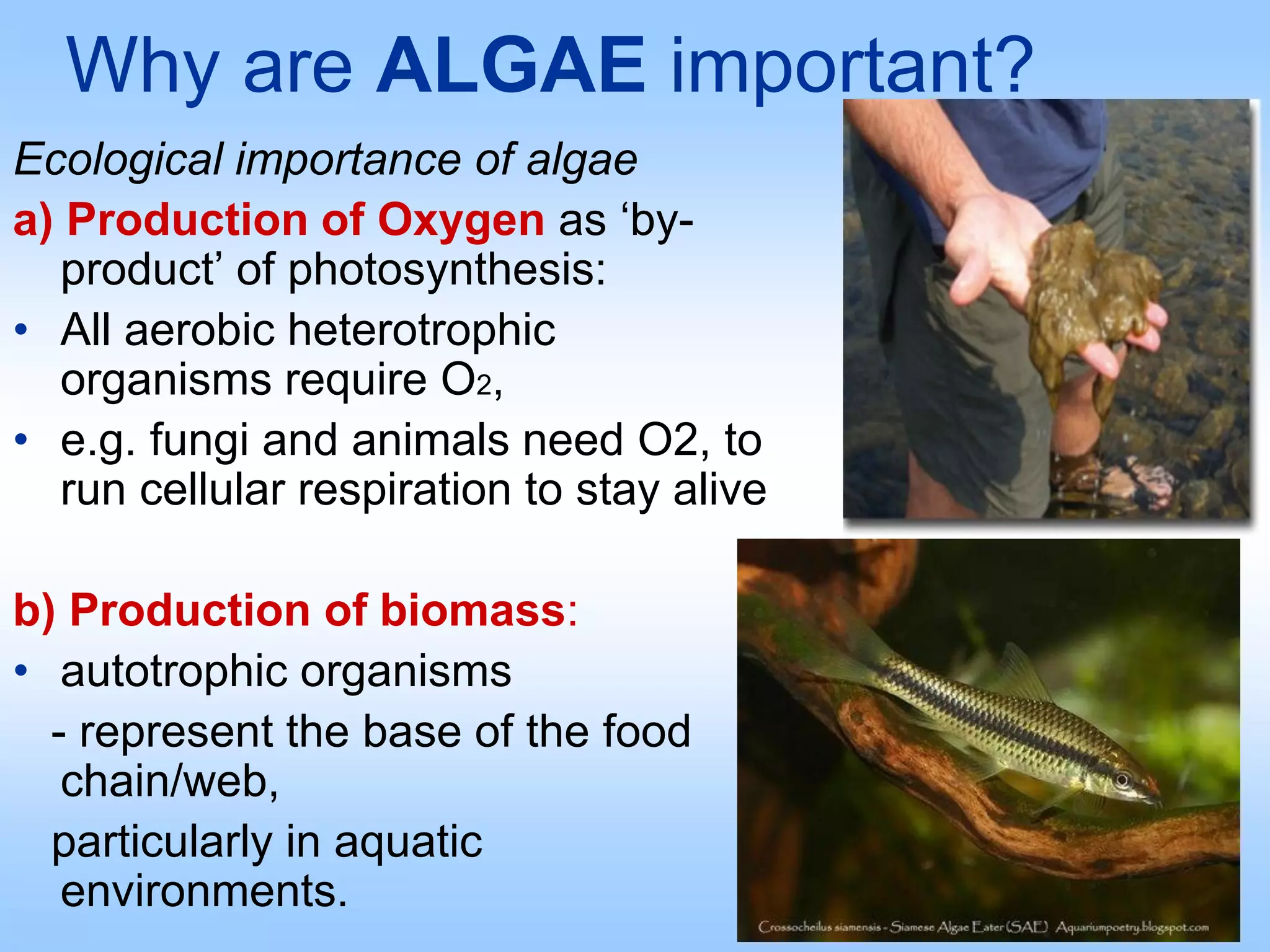
Why are ALGAE important?
Ecological importance of algae
a) Production of Oxygen as ‘by-
product’ of photosynthesis:
• All aerobic heterotrophic
organisms require O2,
• e.g. fungi and animals need O2, to
run cellular respiration to stay alive
b) Production of biomass:
• autotrophic organisms
- represent the base of the food
chain/web,
particularly in aquatic
environments.
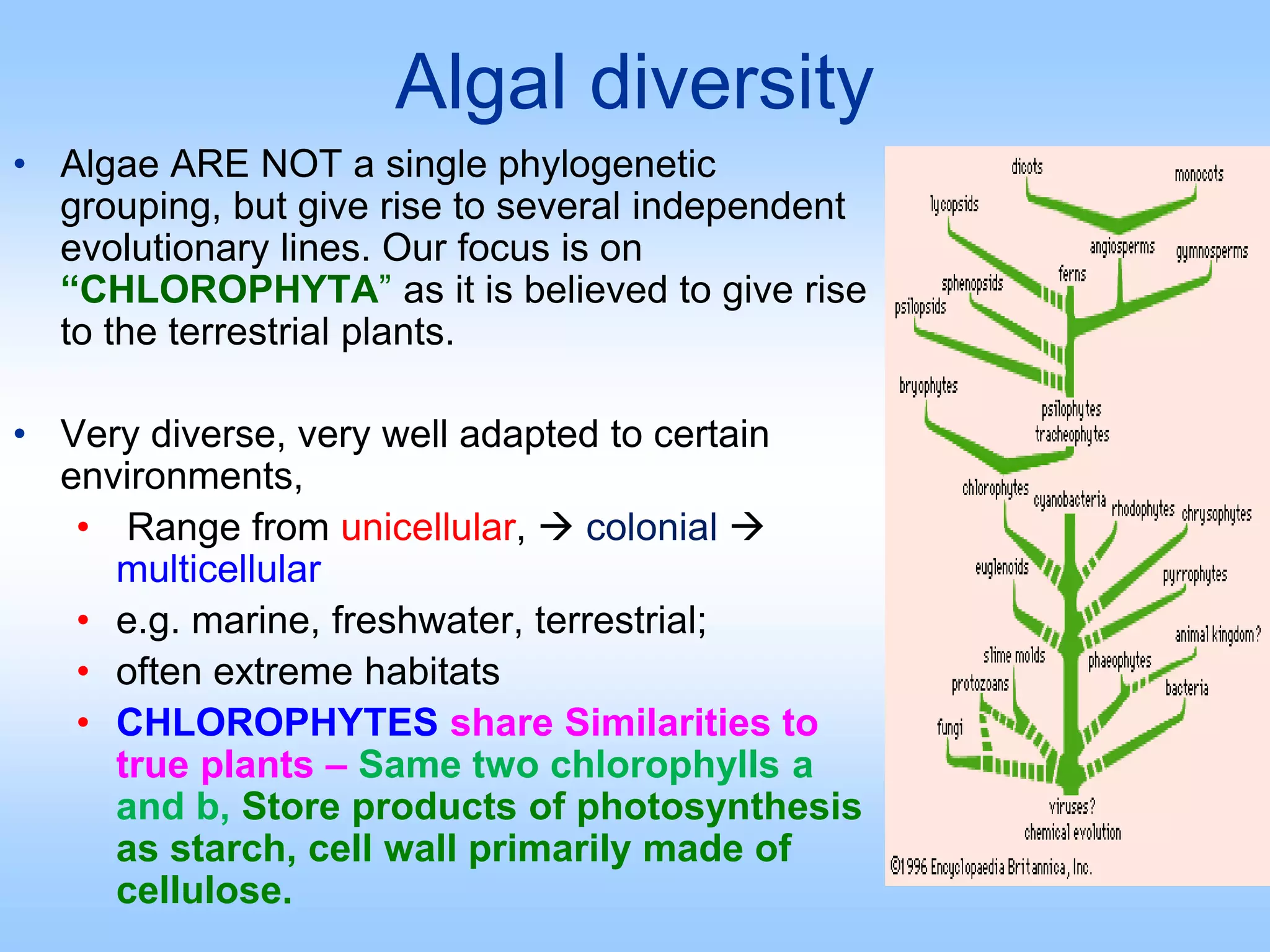
Algal diversity
• Algae ARE NOT a single phylogenetic
grouping, but give rise to several independent
evolutionary lines. Our focus is on
“CHLOROPHYTA” as it is believed to give rise
to the terrestrial plants.
• Very diverse, very well adapted to certain
environments,
• Range from unicellular,  colonial 
multicellular
• e.g. marine, freshwater, terrestrial;
• often extreme habitats
• CHLOROPHYTES share Similarities to
true plants – Same two chlorophylls a
and b, Store products of photosynthesis
as starch, cell wall primarily made of
cellulose.
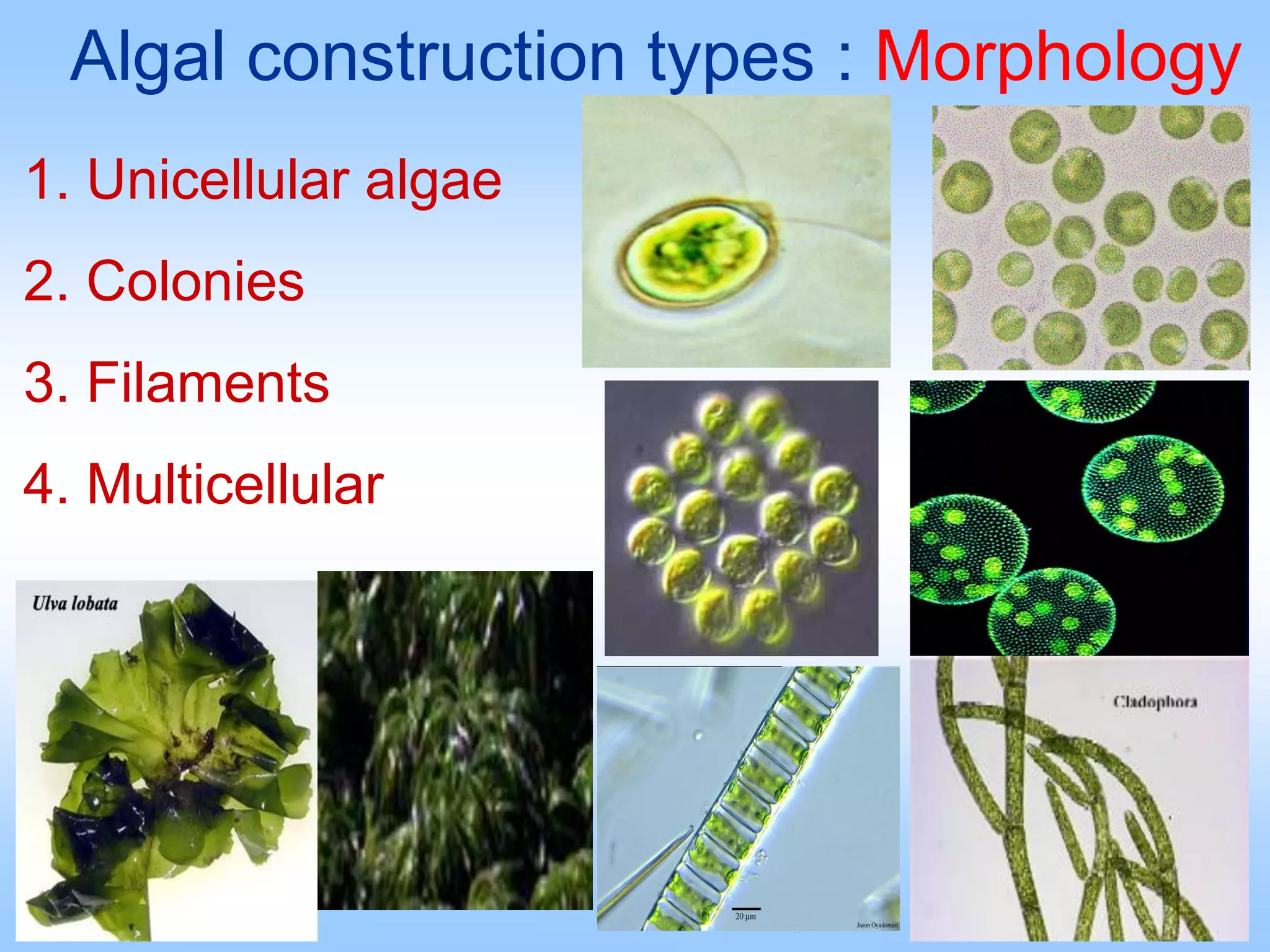
Algal construction types : Morphology
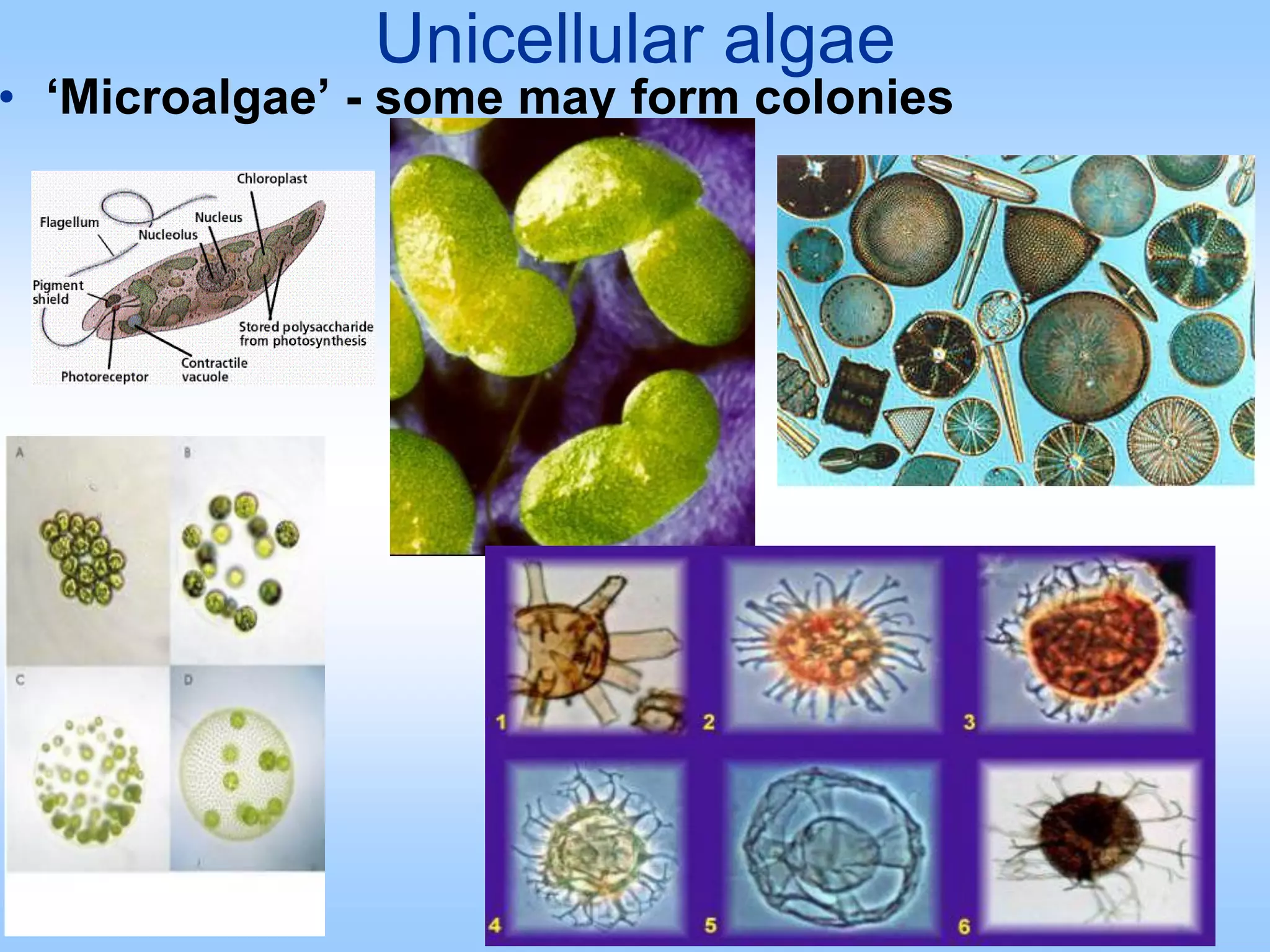
1. Unicellular algae
2. Colonies
3. Filaments
4. Multicellular
Unicellular algae
• ‘Microalgae’ - some may form colonies
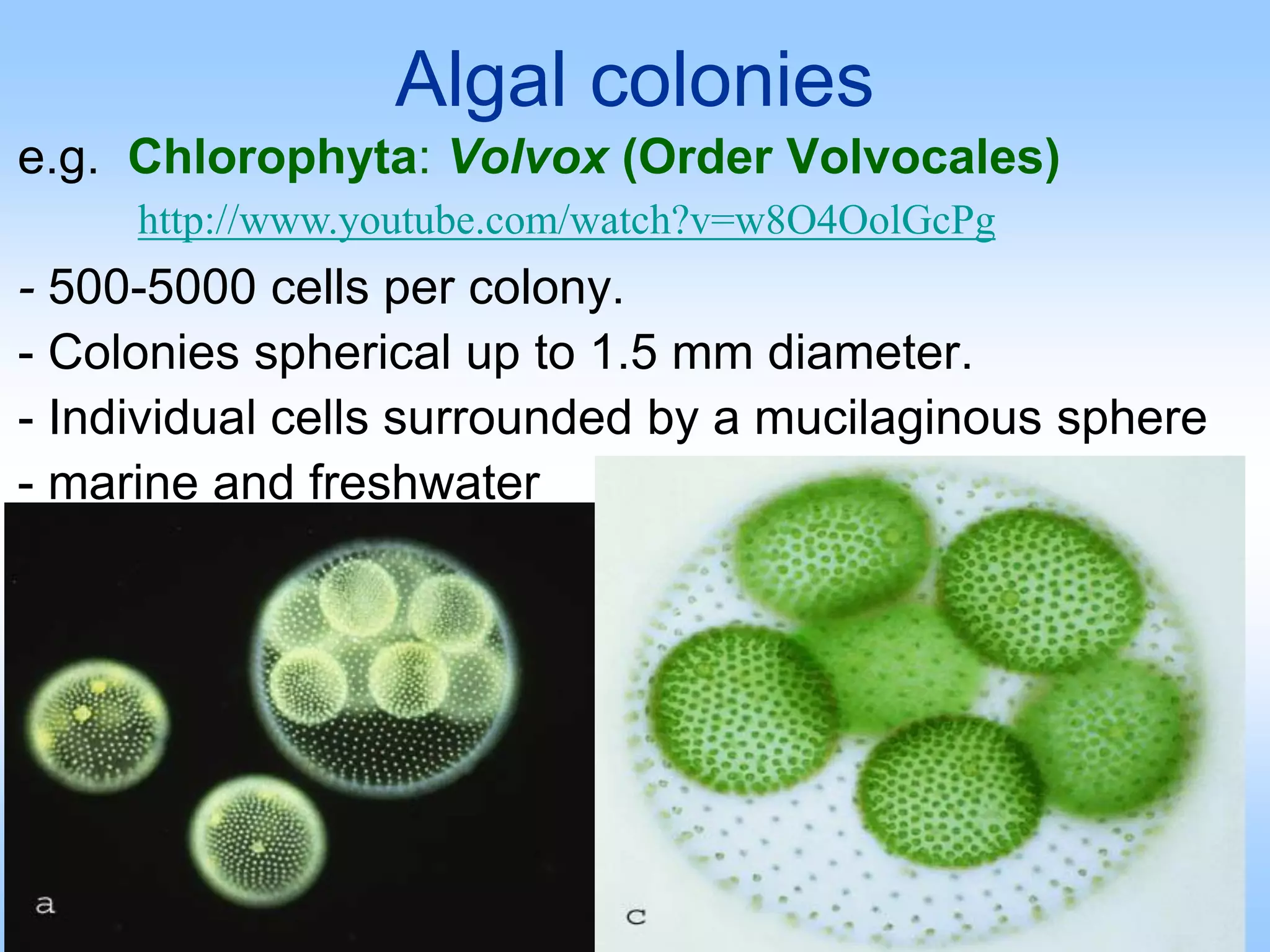
Algal colonies
e.g. Chlorophyta: Volvox (Order Volvocales)
- 500-5000 cells per colony.
- Colonies spherical up to 1.5 mm diameter.
- Individual cells surrounded by a mucilaginous sphere
- marine and freshwater
http://www.youtube.com/watch?v=w8O4OolGcPg
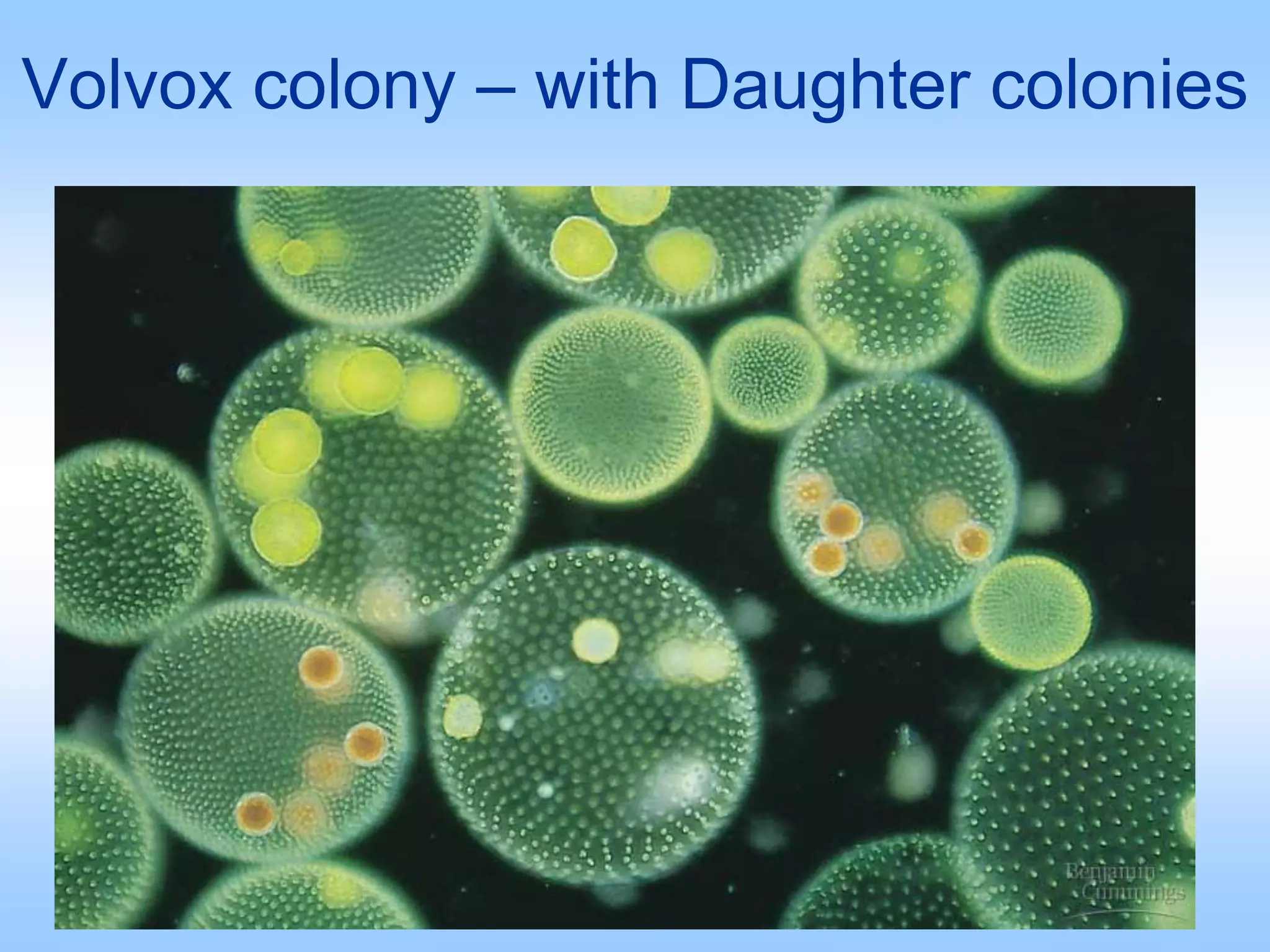
Volvox colony – with Daughter colonies
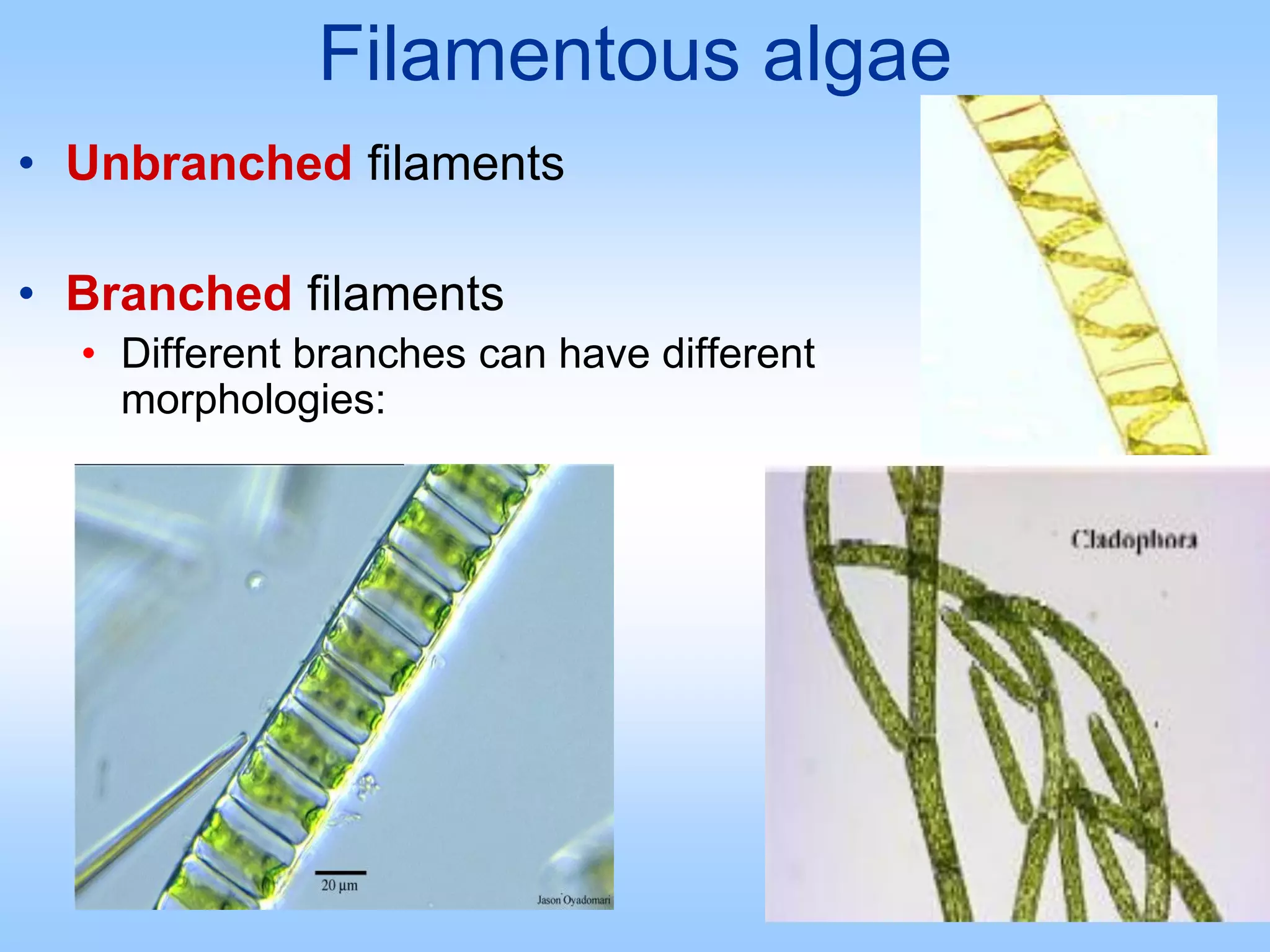
Filamentous algae
• Unbranched filaments
• Branched filaments
• Different branches can have different
morphologies:
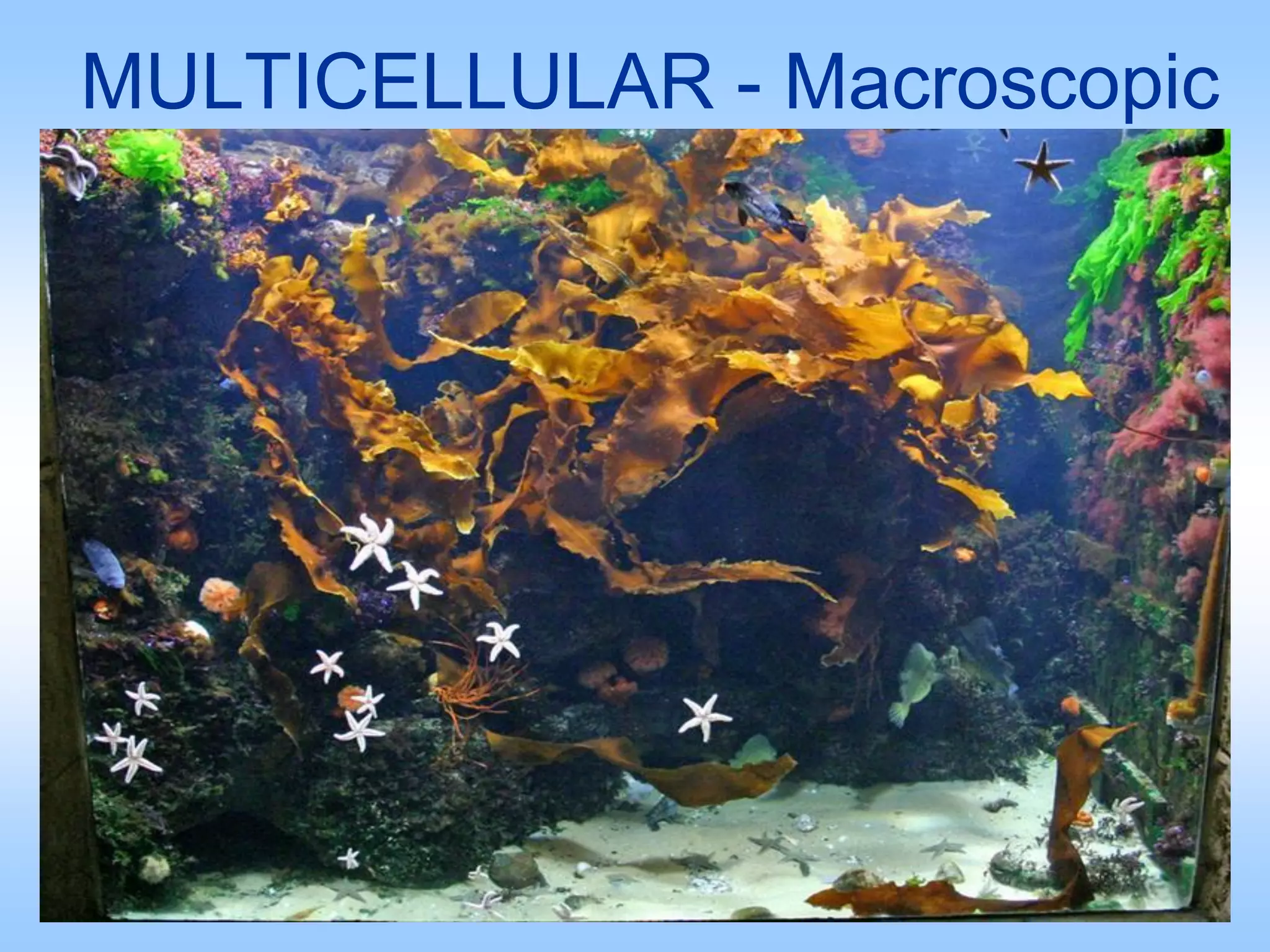
MULTICELLULAR - Macroscopic
Why are algae important?
• Primary producers, basis of food webs,
“FORESTS/GRASSES OF THE SEA”
• Pioneer Species: on rocky shores, mudflats,
hot springs, lichen communities, 'snow algae'
• O2 production and carbon fixation in aquatic
habitats.
• Rare autotrophic organisms in extreme
habitats.
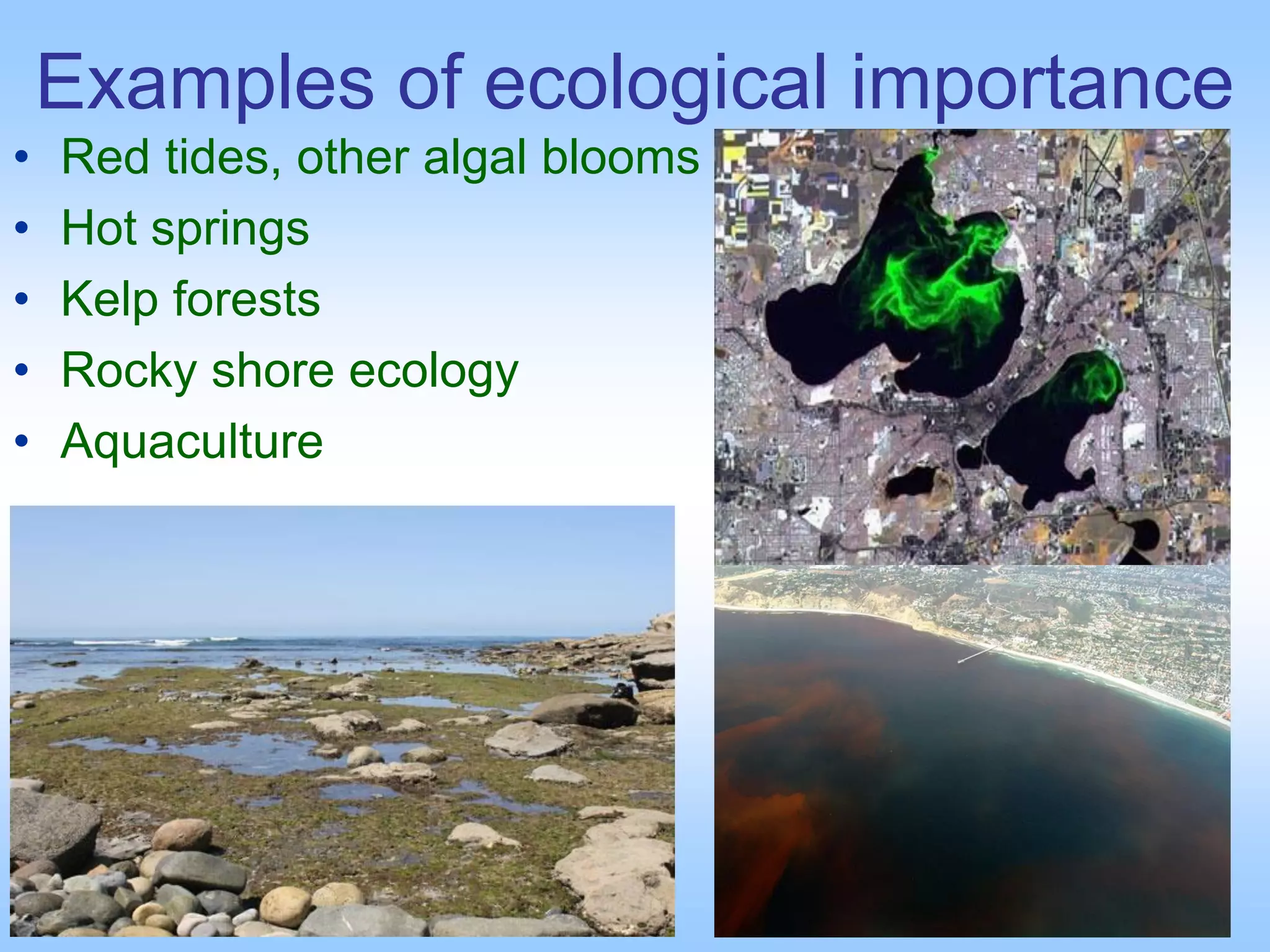
Examples of ecological importance
• Red tides, other algal blooms
• Hot springs
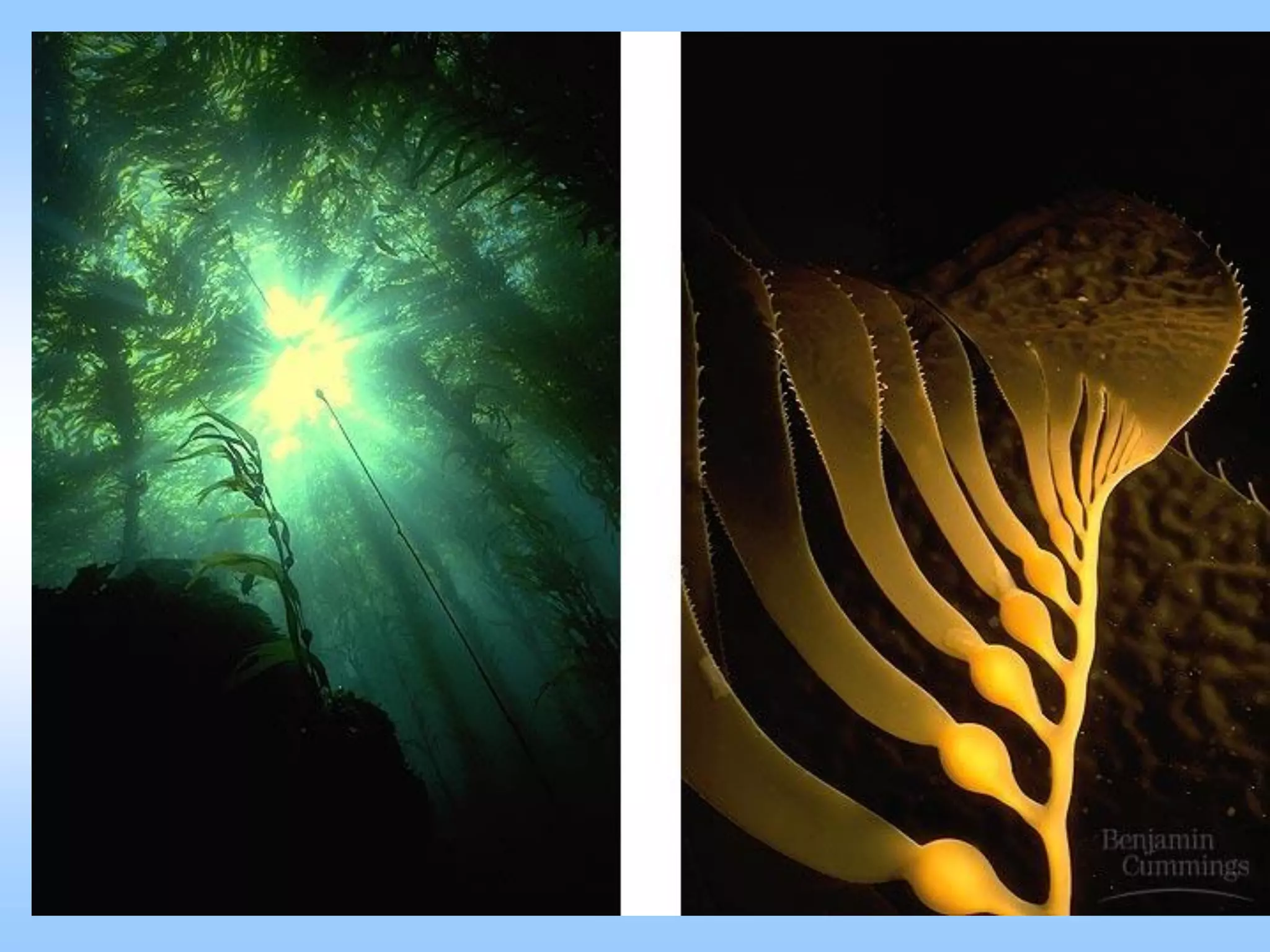
• Kelp forests
• Rocky shore ecology
• Aquaculture
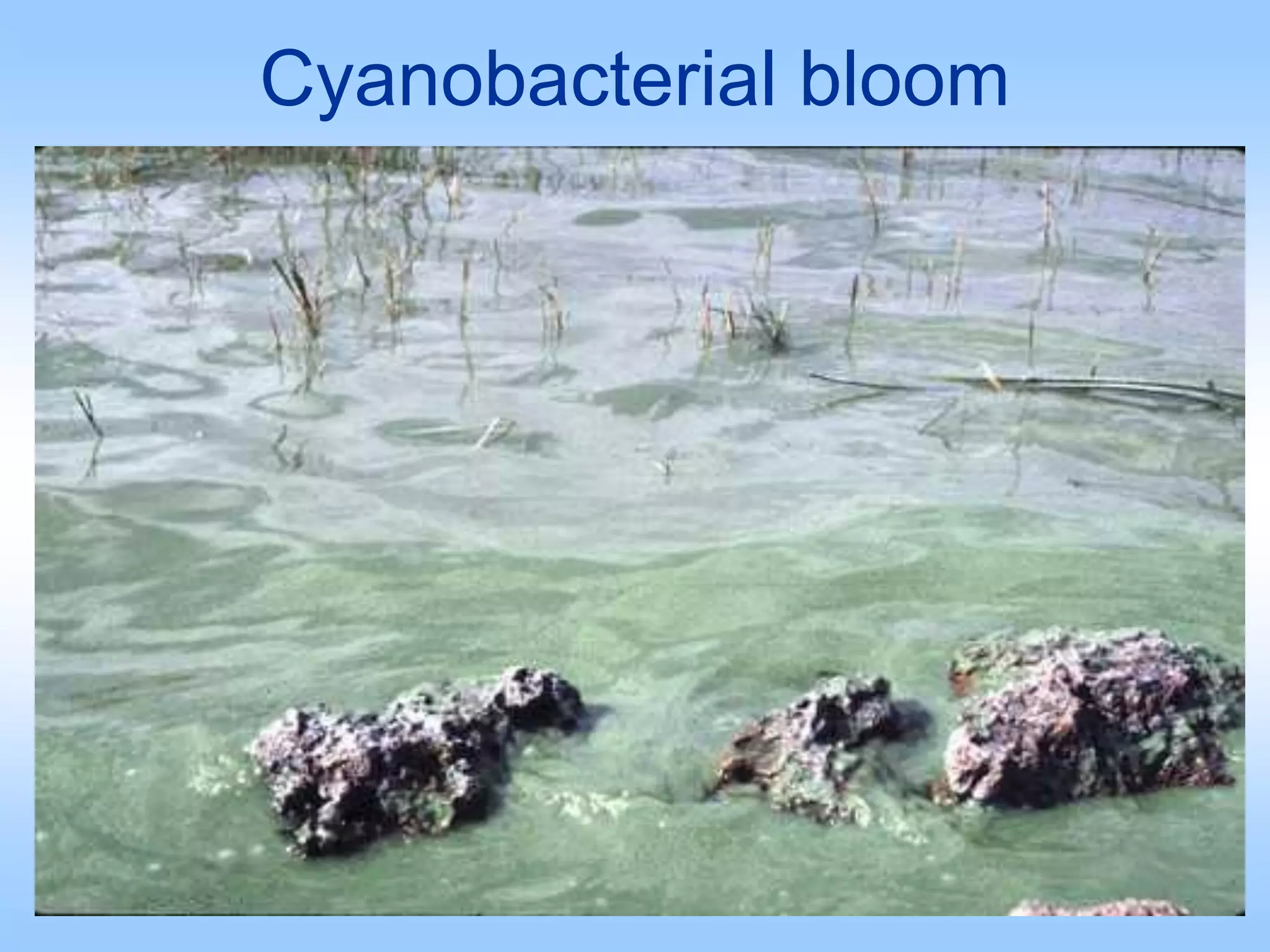
Cyanobacterial bloom
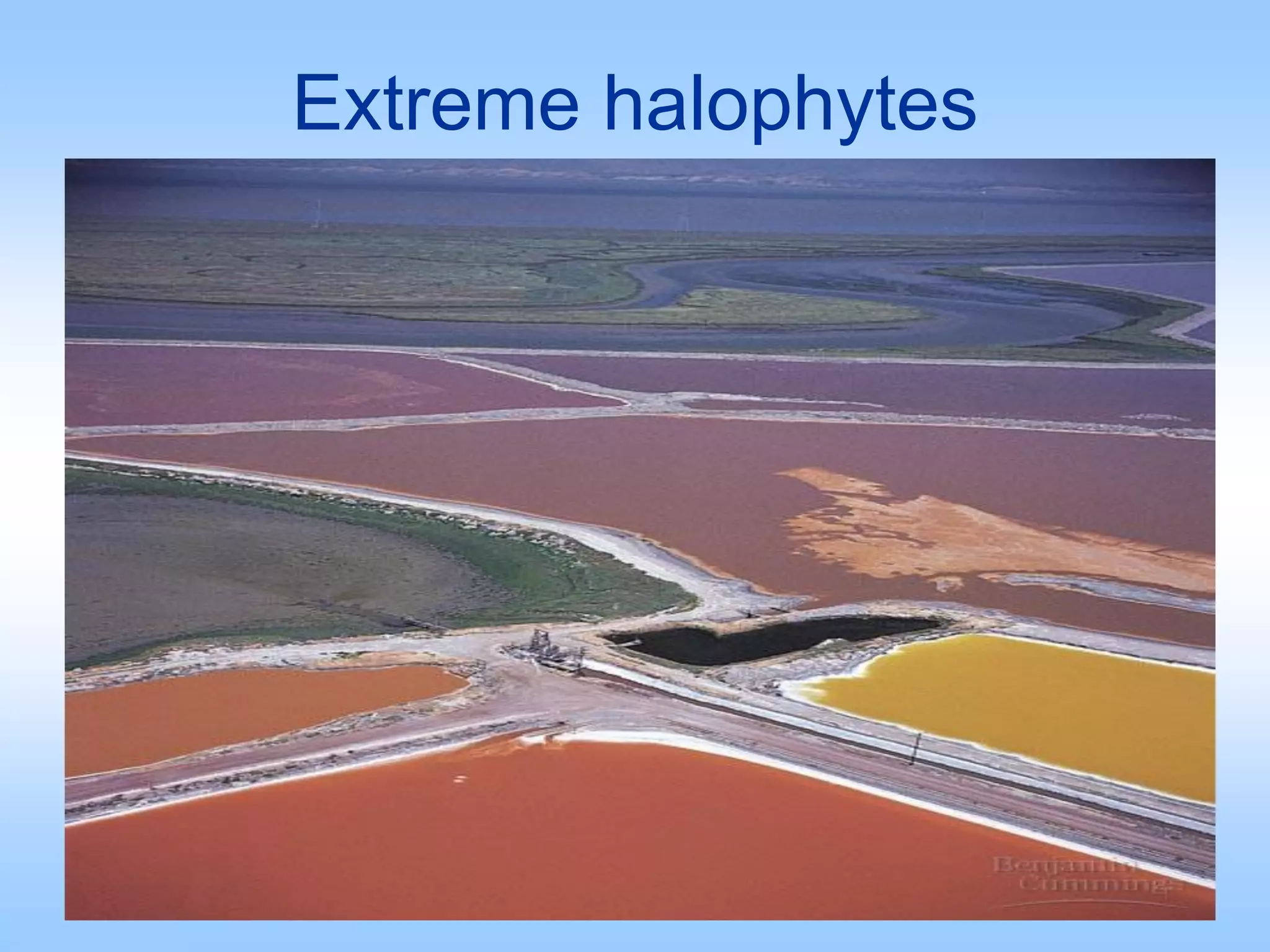
Extreme halophytes
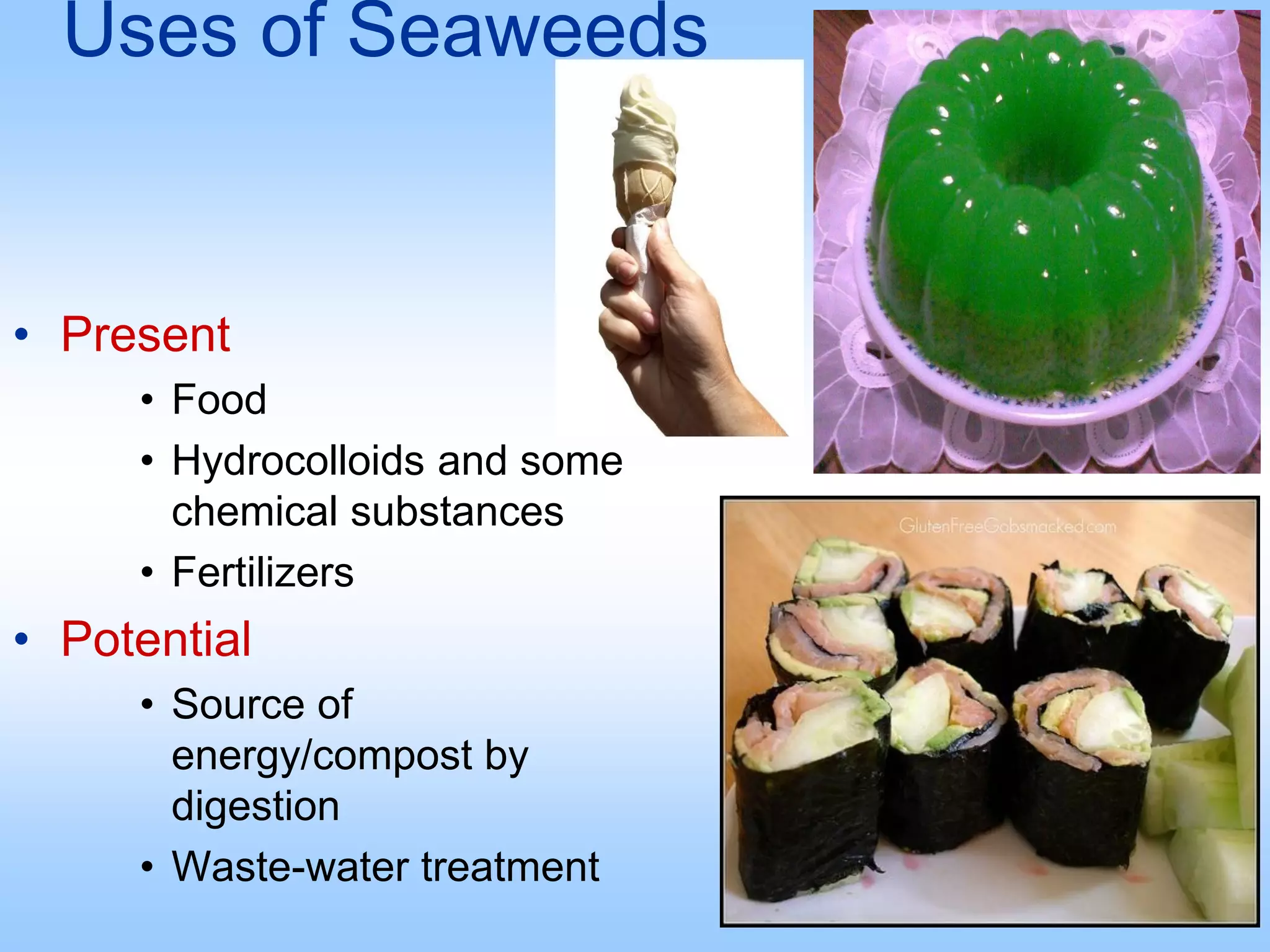
Uses of Seaweeds
• Present
• Food
• Hydrocolloids and some
chemical substances
• Fertilizers
• Potential
• Source of
energy/compost by
digestion
• Waste-water treatment
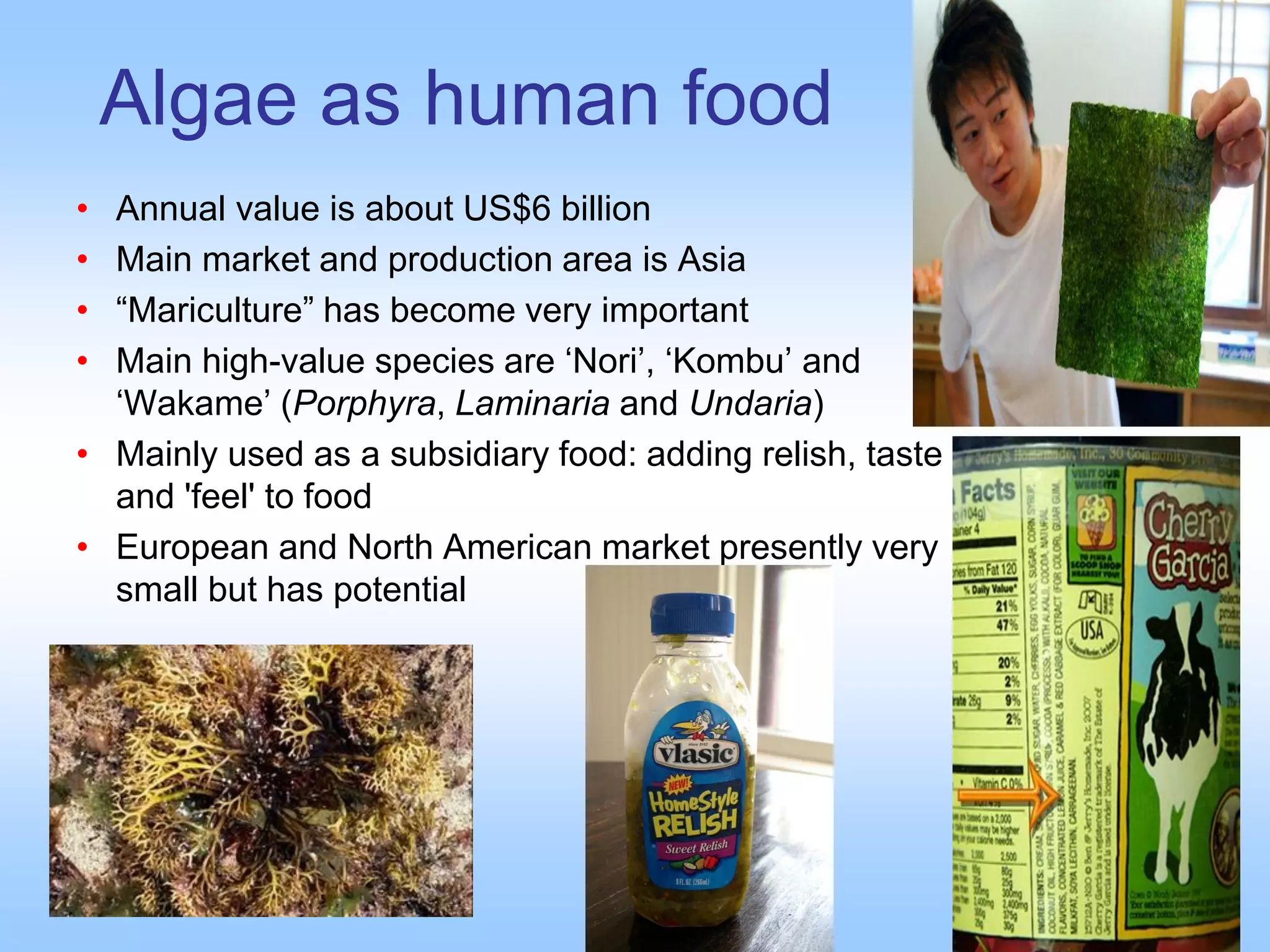
Algae as human food
• Annual value is about US$6 billion
• Main market and production area is Asia
• “Mariculture” has become very important
• Main high-value species are ‘Nori’, ‘Kombu’ and
‘Wakame’ (Porphyra, Laminaria and Undaria)
• Mainly used as a subsidiary food: adding relish, taste
and 'feel' to food
• European and North American market presently very
small but has potential
CLASSIFICATION OF ALGAE
• SEVEN PHYLUM BASED ON
• COLOR
• TYPE OF CHLOROPHYLL
• FOOD-STORAGE SUBSTANCE
• CELL WALL COMPOSITION
Phylum Chlorophyta
• Green algae
• 7000 diverse species
• Biologist reason that green algae give
rise to land plants.
• Both green algae and land plants have
chlorophyll a and B as well as
carotenoids and store food as starch
• Both have walls made of cellulose
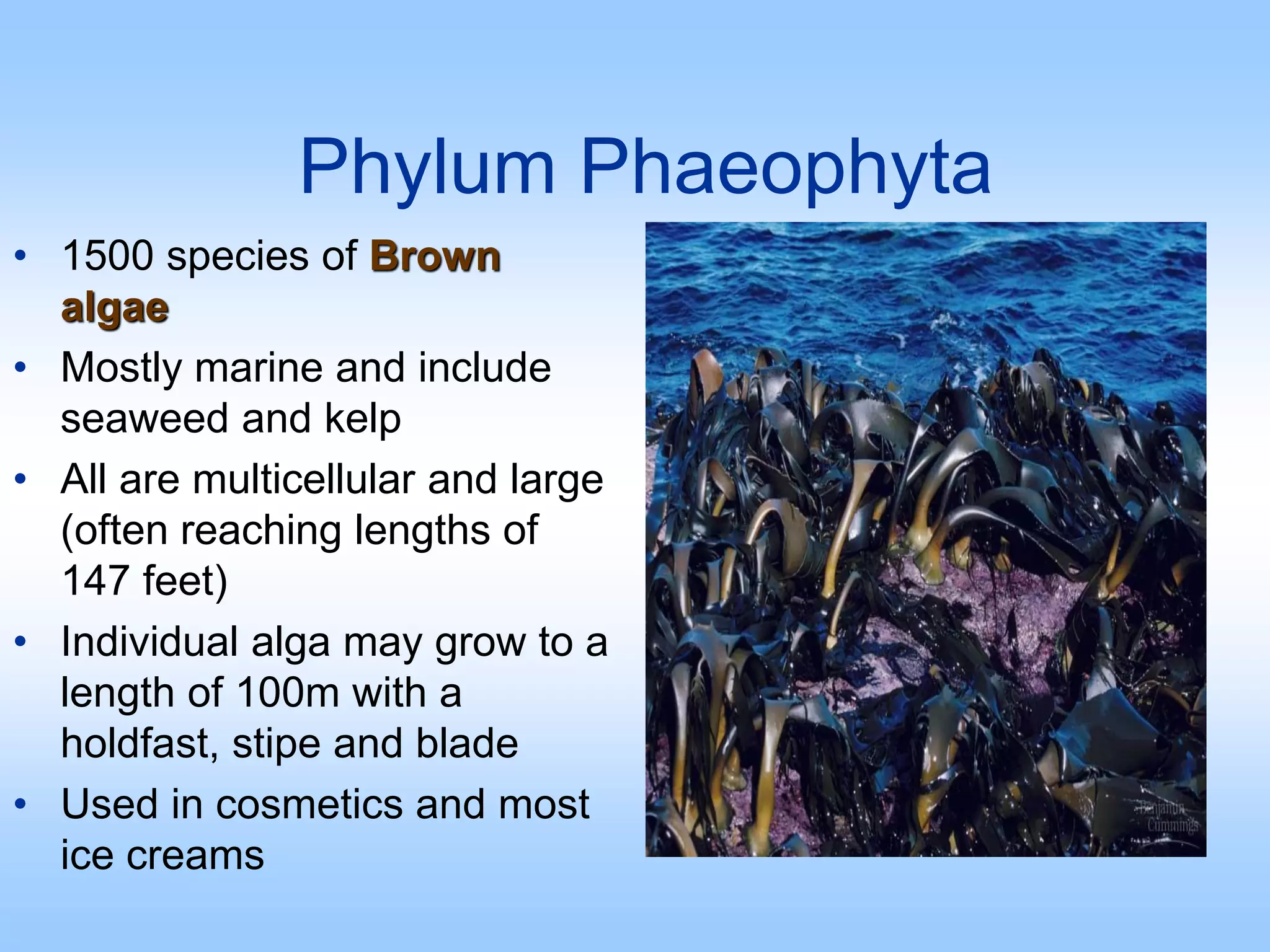
Phylum Phaeophyta
• 1500 species of Brown
algae
• Mostly marine and include
seaweed and kelp
• All are multicellular and large
(often reaching lengths of
147 feet)
• Individual alga may grow to a
length of 100m with a
holdfast, stipe and blade
• Used in cosmetics and most
ice creams
Phylum Rhodophyta
• 4000 species of RED Algae
• Most are marine
• Smaller than brown algae and are often
found at a depth of 200 meters.
• Contain chlorophyll a and C as well as
phycobilins which are important in
absorbing light that can penetrate deep
into the water
• Have cells coated in carageenan which is
used in cosmetics, gelatin capsules and
some cheeses
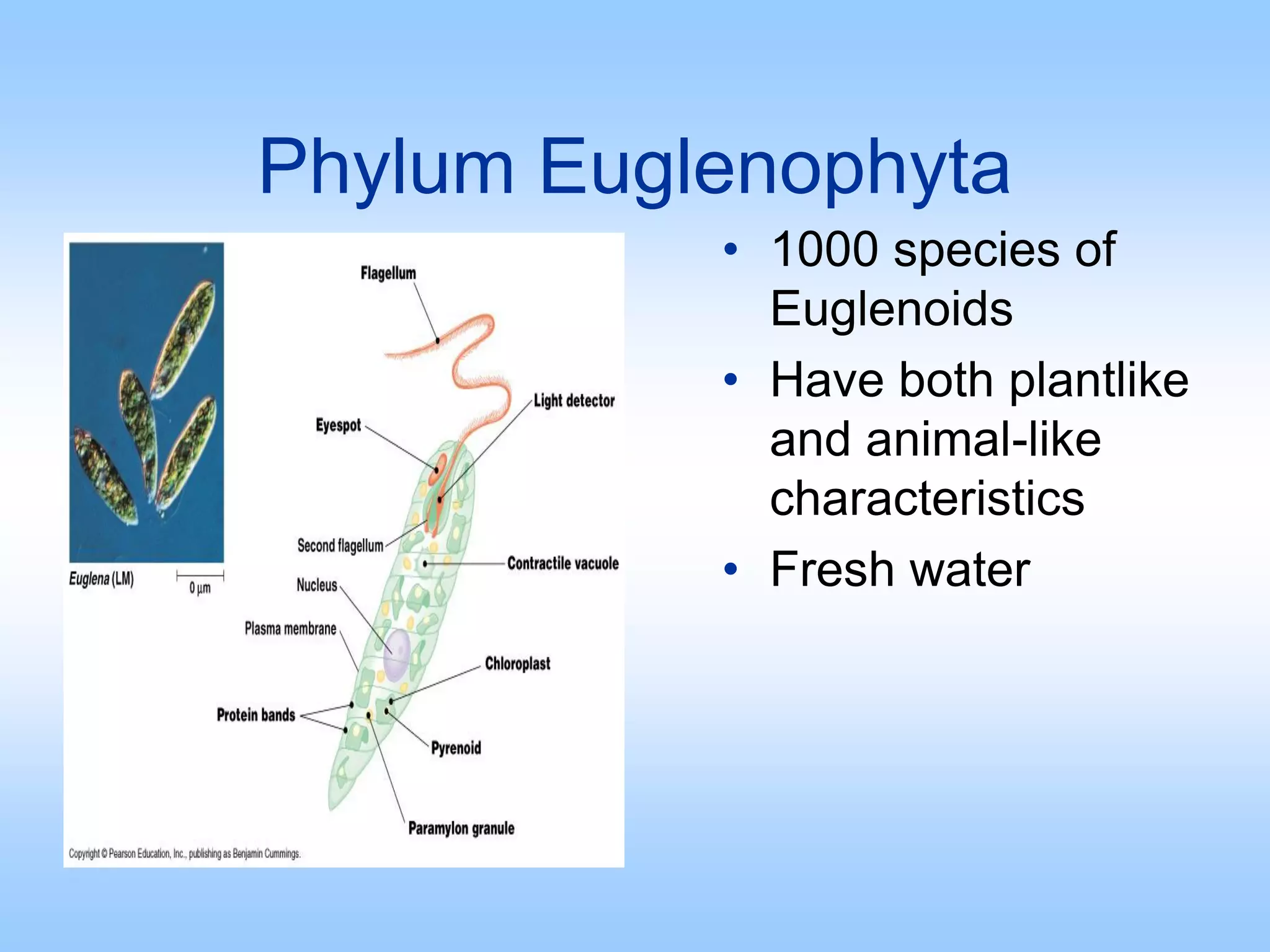
Phylum Euglenophyta
• 1000 species of
Euglenoids
• Have both plantlike
and animal-like
characteristics
• Fresh water
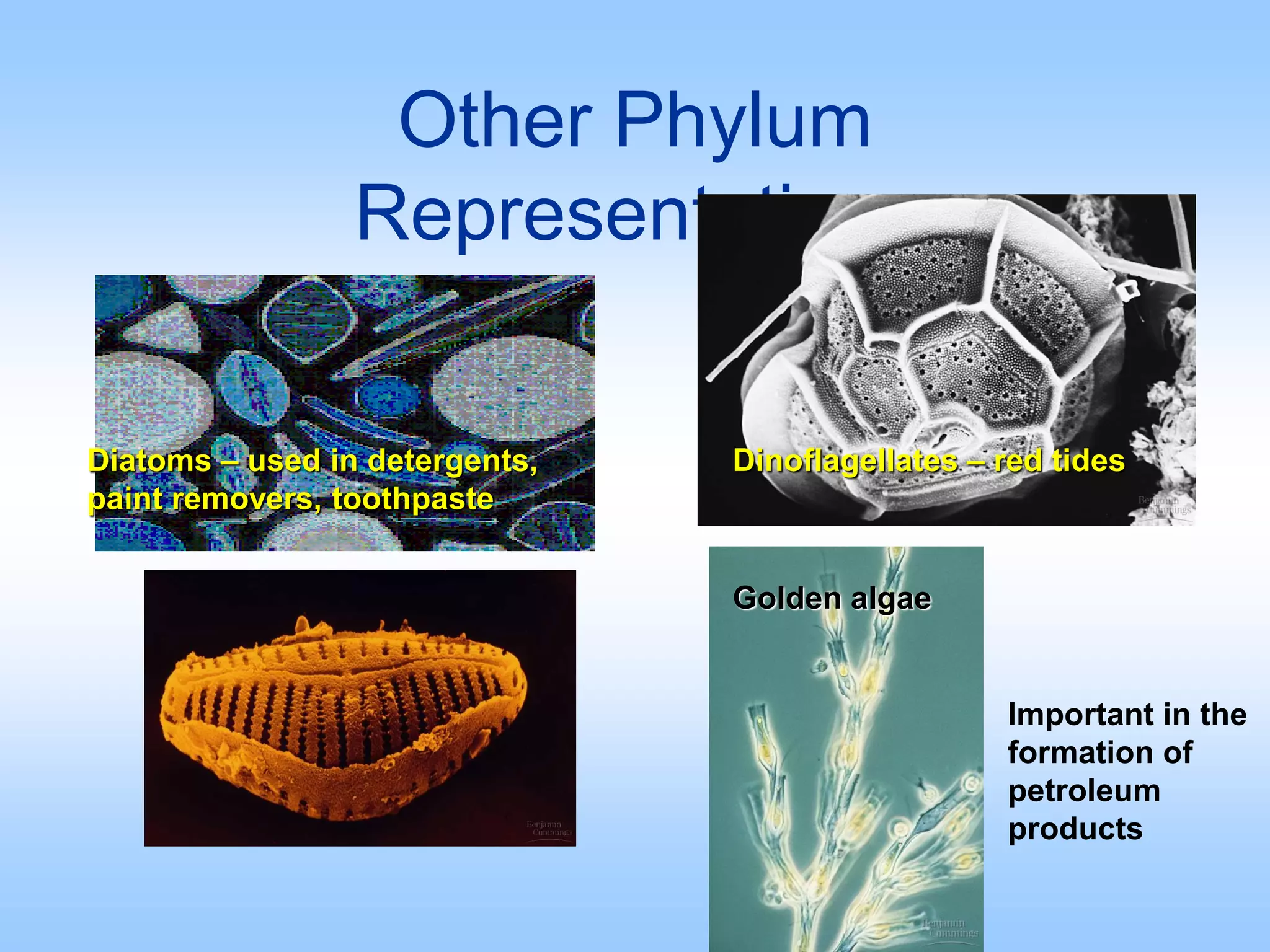
Other Phylum
Representatives
Diatoms – used in detergents,
paint removers, toothpaste
Dinoflagellates – red tides
Important in the
formation of
petroleum
products
Golden algae

Algae ii

  • 1.
    ALGAE Multicellular Protist orPrimitive Aquatic Plant? Cyanobacteria Plant-like Protists
  • 2.
  • 3.
    Algal Characteristics • Varyin size from nanoplankton (< 2 µm cyanobacteria ) to Giant kelps (> 70 m long). Possess a cell wall. • Contain pigments • chlorophylls a, and many often have another chlorophyll, like b, c, or d and accessory red, blue and brown photosynthetic pigments
  • 4.
    Algae - Whatare they? • Primitive plants • No true roots, only attachment structures (Holdfasts) • Produce spores (not seeds)– motile or non-motile • Most have sexual and asexual reproduction • Non-vascular, do not possess an internal transport system.
  • 5.
    Algae vs. ‘REAL’ plants Similaritiesand differences: • Both are photoautotrophic • Similar metabolic functions to higher plants eg. photosynthesis • different anatomical structures, reproductive structures. • different reproduction. • No true roots, stems leaves. • Non-vascular, therefore nutrient uptake over surface. And wastes washed away from surface by aquatic environment
  • 6.
    Classification - afew Algal Phyla • Cyanophyta: Blue-green or Cyanobacteria. Prokaryotic. Marine, FW and terrestrial. • Pyrrophyta, Chrysophyta, Euglenophyta: Marine and FW phytoplankton – Photosynthetic Protists. KINGDOM PLANTAE: • Rhodophyta: Red algae. Mostly marine. • Phaeophyta: Brown algae. Mostly marine. • Chlorophyta: Green algae. Marine, FW and terrestrial.
  • 7.
    The role ofthese pigments is to absorb light - In water the problem is that red and violet wavelengths do not penetrate the vertical column very well. So Chlorophylls do not work well at greater depths. Algae that inhabit greater depths do so with the help of accessory pigments, these algae take on a variety of colours.
  • 8.
    -Chlorophyta – Contain Chlorophylla + b. So green wavelengths reflect. They store their products of photosynthesis as starch. - Phaeophyta – Contain Chlorophylls a + c as well as an accessory pigment Fucoxanthin. So yellow and brown wavelengths reflect. Store food as starch and as oil. Rhodophyta - Contain Chlorophyll a + (d) as well as accessory pigment Phycobillins. These phycobillins are specialized for absorbing blue light, which allows them to inhabit the deepest depths.
  • 9.
    Where do Algaelive? Marine habitats: • seaweeds, phytoplankton Freshwater habitats: • streams, rivers, lakes and ponds Terrestrial habitats: • stone walls, tree bark, leaves, in lichens, on snow
  • 10.
  • 11.
  • 12.
  • 13.
    How do algaefunction? Photoautotrophs: 6C02 + 6H20  C6H1206 + O2 • use carbon, light, and water • produce chemical energy (carbohydrates) and produce O2 as a by-product. • Basic storage products: carbohydrates as starch or converted to fats as oil • Require nutrients: N, P and minerals.
  • 14.
    Why are ALGAEimportant? Ecological importance of algae a) Production of Oxygen as ‘by- product’ of photosynthesis: • All aerobic heterotrophic organisms require O2, • e.g. fungi and animals need O2, to run cellular respiration to stay alive b) Production of biomass: • autotrophic organisms - represent the base of the food chain/web, particularly in aquatic environments.
  • 15.
    Algal diversity • AlgaeARE NOT a single phylogenetic grouping, but give rise to several independent evolutionary lines. Our focus is on “CHLOROPHYTA” as it is believed to give rise to the terrestrial plants. • Very diverse, very well adapted to certain environments, • Range from unicellular,  colonial  multicellular • e.g. marine, freshwater, terrestrial; • often extreme habitats • CHLOROPHYTES share Similarities to true plants – Same two chlorophylls a and b, Store products of photosynthesis as starch, cell wall primarily made of cellulose.
  • 16.
    Algal construction types: Morphology 1. Unicellular algae 2. Colonies 3. Filaments 4. Multicellular
  • 17.
  • 18.
    Algal colonies e.g. Chlorophyta:Volvox (Order Volvocales) - 500-5000 cells per colony. - Colonies spherical up to 1.5 mm diameter. - Individual cells surrounded by a mucilaginous sphere - marine and freshwater http://www.youtube.com/watch?v=w8O4OolGcPg
  • 19.
    Volvox colony –with Daughter colonies
  • 20.
    Filamentous algae • Unbranchedfilaments • Branched filaments • Different branches can have different morphologies:
  • 21.
  • 22.
    Why are algaeimportant? • Primary producers, basis of food webs, “FORESTS/GRASSES OF THE SEA” • Pioneer Species: on rocky shores, mudflats, hot springs, lichen communities, 'snow algae' • O2 production and carbon fixation in aquatic habitats. • Rare autotrophic organisms in extreme habitats.
  • 23.
    Examples of ecologicalimportance • Red tides, other algal blooms • Hot springs • Kelp forests • Rocky shore ecology • Aquaculture
  • 25.
  • 26.
  • 27.
    Uses of Seaweeds •Present • Food • Hydrocolloids and some chemical substances • Fertilizers • Potential • Source of energy/compost by digestion • Waste-water treatment
  • 28.
    Algae as humanfood • Annual value is about US$6 billion • Main market and production area is Asia • “Mariculture” has become very important • Main high-value species are ‘Nori’, ‘Kombu’ and ‘Wakame’ (Porphyra, Laminaria and Undaria) • Mainly used as a subsidiary food: adding relish, taste and 'feel' to food • European and North American market presently very small but has potential
  • 29.
    CLASSIFICATION OF ALGAE •SEVEN PHYLUM BASED ON • COLOR • TYPE OF CHLOROPHYLL • FOOD-STORAGE SUBSTANCE • CELL WALL COMPOSITION
  • 30.
    Phylum Chlorophyta • Greenalgae • 7000 diverse species • Biologist reason that green algae give rise to land plants. • Both green algae and land plants have chlorophyll a and B as well as carotenoids and store food as starch • Both have walls made of cellulose
  • 31.
    Phylum Phaeophyta • 1500species of Brown algae • Mostly marine and include seaweed and kelp • All are multicellular and large (often reaching lengths of 147 feet) • Individual alga may grow to a length of 100m with a holdfast, stipe and blade • Used in cosmetics and most ice creams
  • 32.
    Phylum Rhodophyta • 4000species of RED Algae • Most are marine • Smaller than brown algae and are often found at a depth of 200 meters. • Contain chlorophyll a and C as well as phycobilins which are important in absorbing light that can penetrate deep into the water • Have cells coated in carageenan which is used in cosmetics, gelatin capsules and some cheeses
  • 33.
    Phylum Euglenophyta • 1000species of Euglenoids • Have both plantlike and animal-like characteristics • Fresh water
  • 34.
    Other Phylum Representatives Diatoms –used in detergents, paint removers, toothpaste Dinoflagellates – red tides Important in the formation of petroleum products Golden algae