5A: CELL CYCLE & 
• Ident i fy and descr ibe the main phases 
of the cel l cycle 
• Ident i fy what form DNA is in dur ing 
di f ferent stages of the cel l cycle 
• Descr ibe 3 key events dur ing interphase 
• Ident i fy and descr ibe 4 main phases of 
mi tosis 
• Compare cytokinesis in plant and 
animals cel ls 
5B: MITOSIS
THE CELL CYCLE 
 The l ife of a cel l is described as the cel l cycle. 
 Divided into three stages: 
 INTERPHASE: Cells carry out normal functions 
 MITOSIS: Duplication of genetic material and division of the nucleus 
 CYTOKINESIS: Cell with 2 nuclei splits to form two identical daughter cells.
INTERPHASE 
 Longest stage in the cel l cycle 
 During this phase DNA is in the form of chromatin 
 Divided into three par ts 
1. Growth and Preparation: Cell increases in size while performing its 
usual functions 
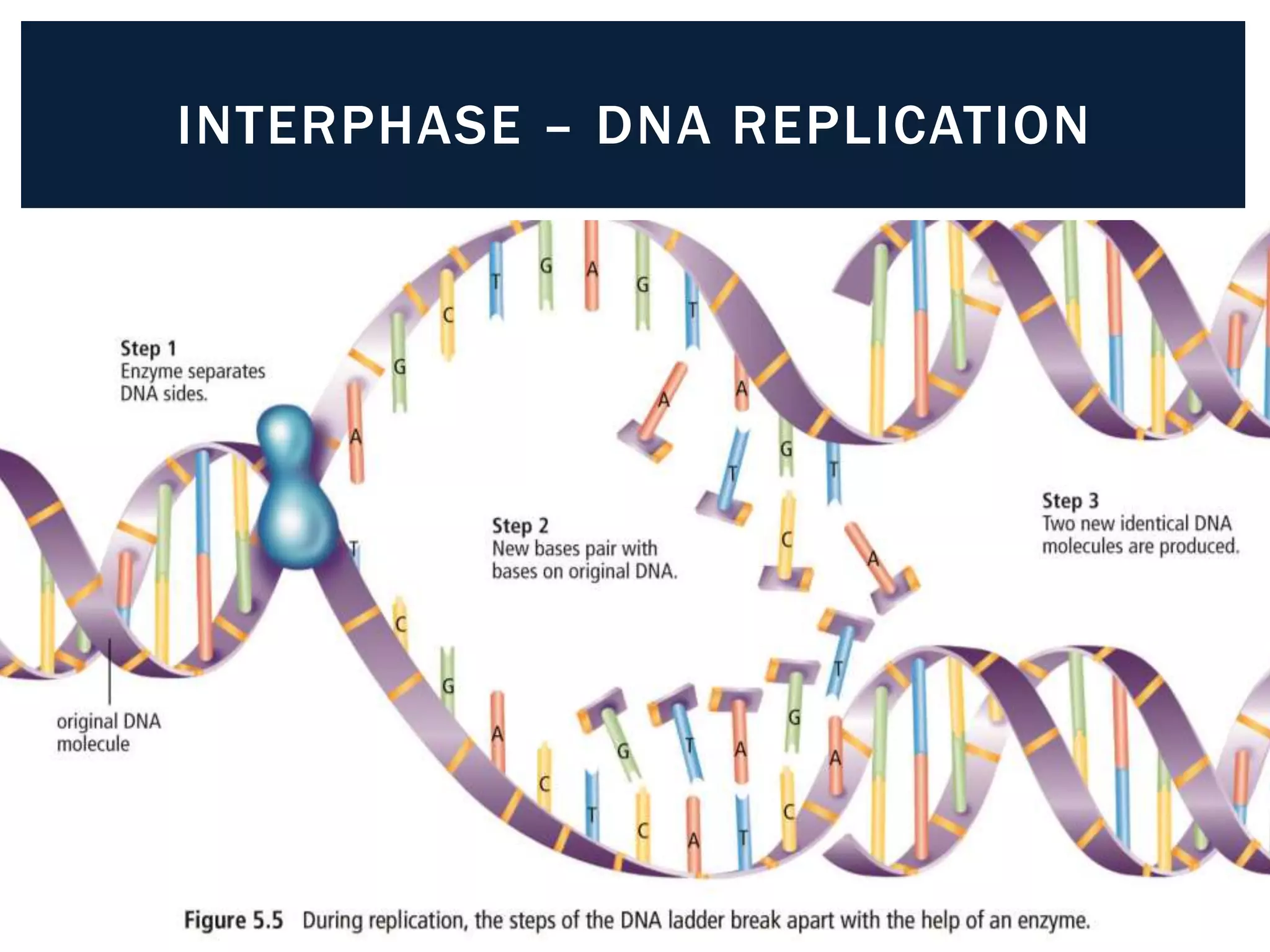
1. DNA Replication: DNA replicates making an exact copy of itself 
1. Continued Growth and Preparation: Cell continues to grow and 
makes copies of its organelles
INTERPHASE – DNA REPLICATION
MITOSIS 
 Shor test stage in the cel l cycle 
 Contents of the nucleus divide resulting in two daughter 
nuclei that are identical to the original parent cel l
 Impor tant structures: 
MITOSIS 
 Spindle Fibers: Protein structures that move chromosomes during 
mitosis 
 Centrioles (Animal cells only): Organelles that control the spindle 
fibers. *add label to animal cell diagram
 Mitosis is divided into 4 stages (PMAT) 
1. Prophase (early prophase & late prophase) 
2. Metaphase 
3. Anaphase 
4. Telophase 
MITOSIS
MITOSIS - PROPHASE 
Early Prophase 
 Dupl icated chromosomes 
condense into X-shape 
 Nucleolus disappears 
 Spindle fibers star t to form 
and spread across the cel l 
 Centrioles move to opposite 
ends of the cel l 
Late Prophase 
 Spindle fibers complete 
forming 
 Spindle fibers attach to 
chromosomes at the 
centromere 
 Nuclear membrane 
disappears
MITOSIS - METAPHASE 
 Spindle fibers pul l chromosomes into a l ine across the 
metaphase plate at the center of the cel l
MITOSIS - ANAPHASE 
 Spindle fibers contract and shor ten to separate sister 
chromatids and pul l to opposite ends of the cel l 
 Once separated, sister chromatids are now considered 
daughter chromosomes
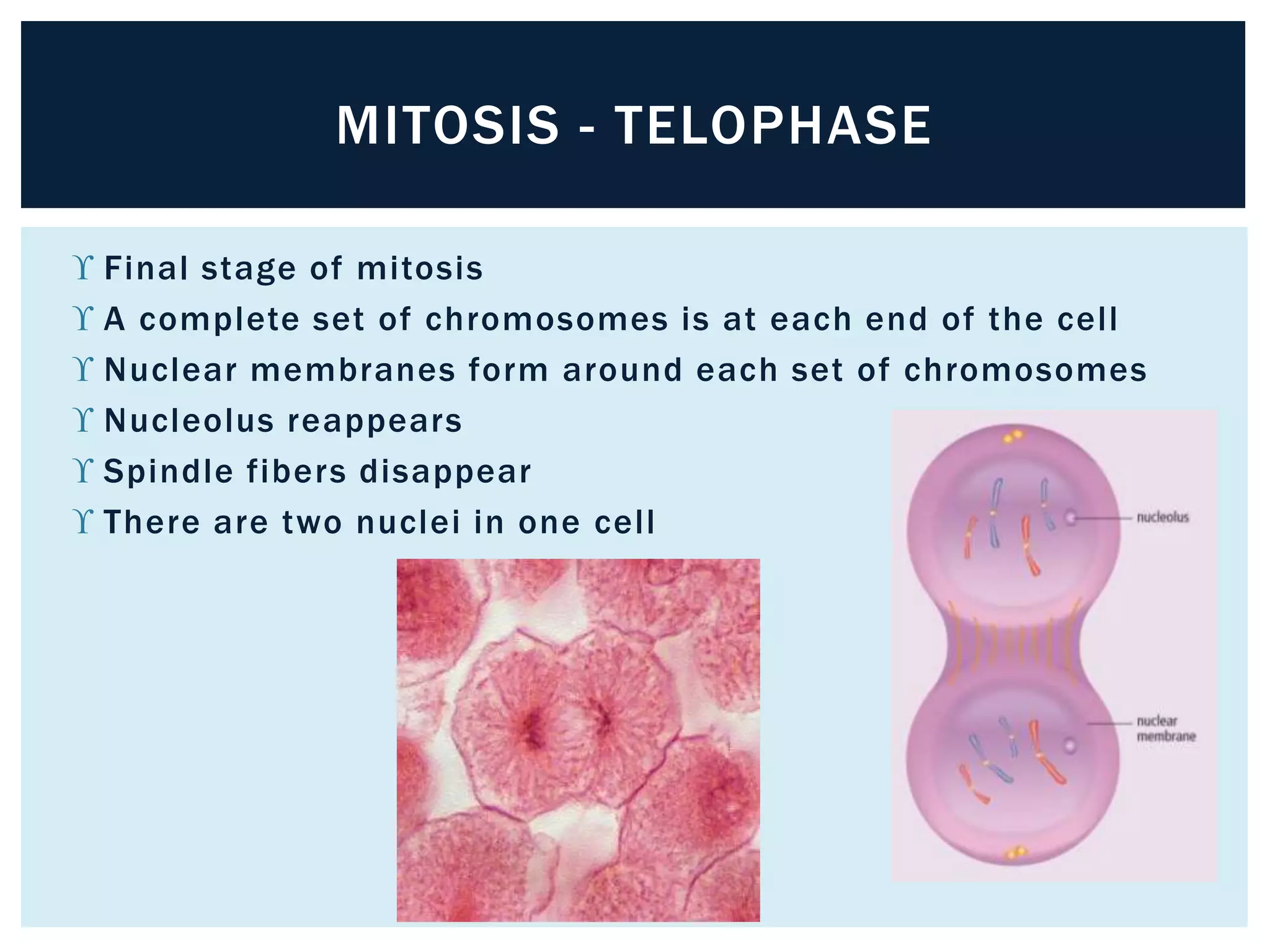
MITOSIS - TELOPHASE 
 Final stage of mitosis 
 A complete set of chromosomes is at each end of the cel l 
 Nuclear membranes form around each set of chromosomes 
 Nucleolus reappears 
 Spindle fibers disappear 
 There are two nuclei in one cel l
CYTOKINESIS 
 Final stage of the cel l cycle 
 Cel l with two nuclei spl its into two daughter cel ls 
 New cel ls are identical to each other and to the parent cel l 
 Cytokinesis is di f ferent in plant and animal cel ls due to the 
presence of a cel l wal l in plants. 
 Animal cell: Cell membrane pinches together to separate two halves 
 Plant cell: Cell plate forms along center of the cell
MITOSIS: http://youtu.be/aDAw2Zg4IgE

5ab cell cycle & mitosis

  • 1.
    5A: CELL CYCLE& • Ident i fy and descr ibe the main phases of the cel l cycle • Ident i fy what form DNA is in dur ing di f ferent stages of the cel l cycle • Descr ibe 3 key events dur ing interphase • Ident i fy and descr ibe 4 main phases of mi tosis • Compare cytokinesis in plant and animals cel ls 5B: MITOSIS
  • 2.
    THE CELL CYCLE  The l ife of a cel l is described as the cel l cycle.  Divided into three stages:  INTERPHASE: Cells carry out normal functions  MITOSIS: Duplication of genetic material and division of the nucleus  CYTOKINESIS: Cell with 2 nuclei splits to form two identical daughter cells.
  • 3.
    INTERPHASE  Longeststage in the cel l cycle  During this phase DNA is in the form of chromatin  Divided into three par ts 1. Growth and Preparation: Cell increases in size while performing its usual functions 1. DNA Replication: DNA replicates making an exact copy of itself 1. Continued Growth and Preparation: Cell continues to grow and makes copies of its organelles
  • 4.
    INTERPHASE – DNAREPLICATION
  • 5.
    MITOSIS  Shortest stage in the cel l cycle  Contents of the nucleus divide resulting in two daughter nuclei that are identical to the original parent cel l
  • 6.
     Impor tantstructures: MITOSIS  Spindle Fibers: Protein structures that move chromosomes during mitosis  Centrioles (Animal cells only): Organelles that control the spindle fibers. *add label to animal cell diagram
  • 7.
     Mitosis isdivided into 4 stages (PMAT) 1. Prophase (early prophase & late prophase) 2. Metaphase 3. Anaphase 4. Telophase MITOSIS
  • 8.
    MITOSIS - PROPHASE Early Prophase  Dupl icated chromosomes condense into X-shape  Nucleolus disappears  Spindle fibers star t to form and spread across the cel l  Centrioles move to opposite ends of the cel l Late Prophase  Spindle fibers complete forming  Spindle fibers attach to chromosomes at the centromere  Nuclear membrane disappears
  • 9.
    MITOSIS - METAPHASE  Spindle fibers pul l chromosomes into a l ine across the metaphase plate at the center of the cel l
  • 10.
    MITOSIS - ANAPHASE  Spindle fibers contract and shor ten to separate sister chromatids and pul l to opposite ends of the cel l  Once separated, sister chromatids are now considered daughter chromosomes
  • 11.
    MITOSIS - TELOPHASE  Final stage of mitosis  A complete set of chromosomes is at each end of the cel l  Nuclear membranes form around each set of chromosomes  Nucleolus reappears  Spindle fibers disappear  There are two nuclei in one cel l
  • 12.
    CYTOKINESIS  Finalstage of the cel l cycle  Cel l with two nuclei spl its into two daughter cel ls  New cel ls are identical to each other and to the parent cel l  Cytokinesis is di f ferent in plant and animal cel ls due to the presence of a cel l wal l in plants.  Animal cell: Cell membrane pinches together to separate two halves  Plant cell: Cell plate forms along center of the cell
  • 14.