CELL DIVISION
P.HARITHA
DEGREE LECTURER
TTWRDC B SANGAREDDY
INTRODUCTION:
 The growth and multiplication of cells bring about
the growth and development of an organism.
 The number of cells increase by the division of pre-
existing cells.
 The division of nucleate cells include two integral
activities.
 They are the division of the nucleus (karyokinesis)
and the division of the cytoplasm (cytokinesis).
 Usually, the karyokinesis is followed by the
cytokinesis.
Sometimes, cytokinesis does not follow the
karyokinesis, which results in the formation
of multinucleate cells.
The cell may divide by any one of the
following methods:
1. Amitosis or direct cell division.
2. Mitosis or Equational cell division.
3. Meiosis or reduction division.
AMITOSIS:
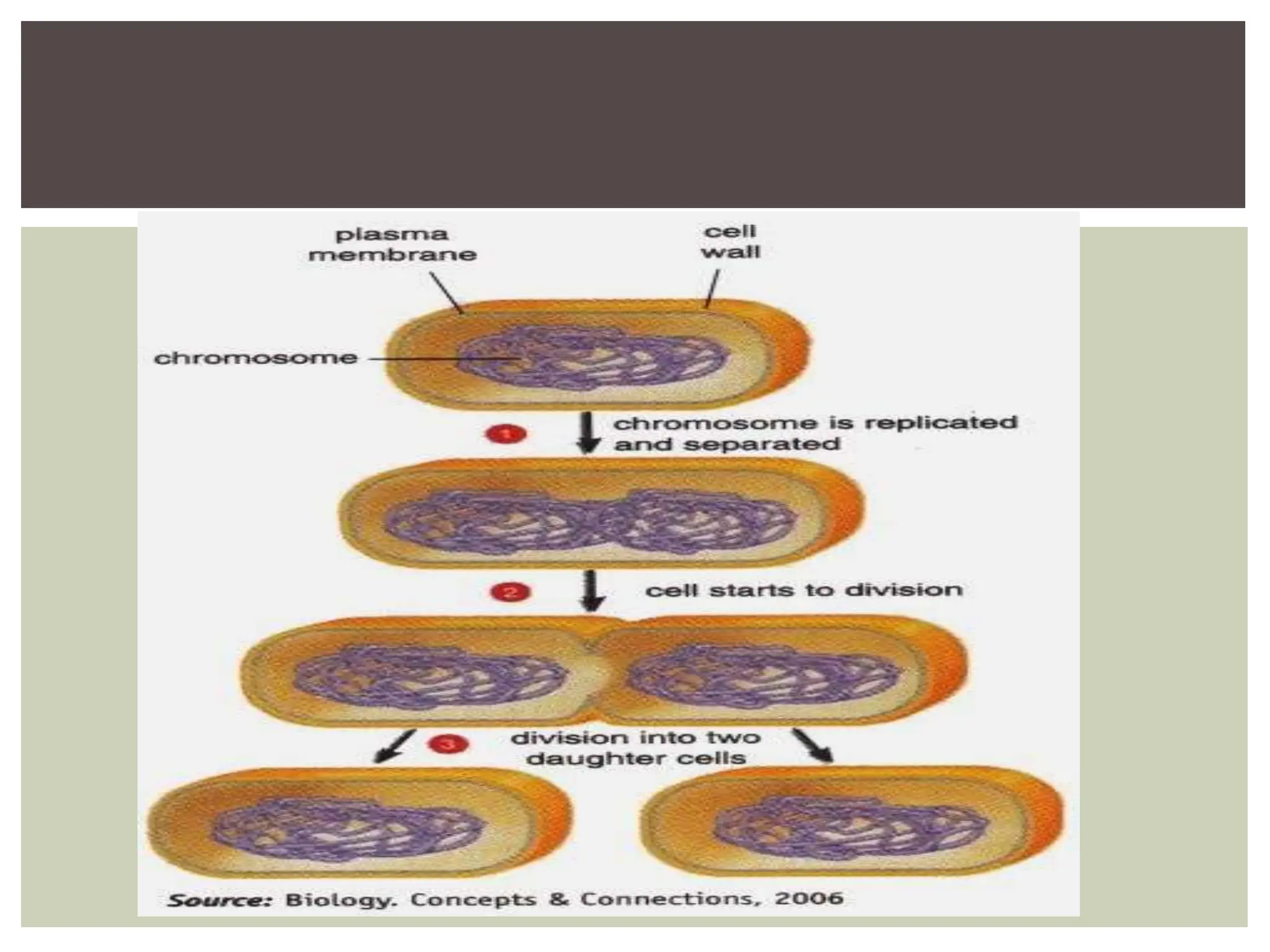
 It is the simplest mode of cell division and is the
means of asexual reproduction in unicellular
organisms like bacteria and protozoans.
 During amitosis, the nucleus elongates first and
then assumes dumb-bell shaped appearance.
 The depression or constriction increases in size and
ultimately divides the nucleus into two nuclei.
 The division of the nucleus is followed by the
constriction of cytoplasm which divides the cell into
two equal or approximately similar halves.
 Thus, in this process there is complete absence of
nuclear events.
MITOSIS:
Mitosis(Gr.mitos=thread) is the division of a
cell into two daughter cells which are identical
and contain the same number of chromosomes
and identical genes as found in parent cell.
Mitosis occurs in the somatic cells of the
growing regions of a plant.
Hence it is also called somatic cell division.
Mitosis is meant for the multiplication of cell
number during embryogenesis and
blastogenesis of plants and animals.
Fundamentally, mitosis is related with the
growth of an individual from zygote to adult
stage or with the replacement of damaged or
destroyed body cells.
Mitosis is part of the overall cell cycle that
includes replication of DNA(interphase)
division of the nucleus(karyokinesis) and
division of the cell itself(cytokinesis).
A. INTERPHASE:
 The resting phase between two mitotic
divisions is called inter mitotic phase or
interphase(Gr.inter=between,
phasis=appearance).
 In interphase, no division of chromosomes
or cytoplasm occurs but the nucleus and
cytoplasm remain metabolically active.
 Replication of DNA and synthesis of energy
rich compounds and proteins results in the
increase in volume of nuclear and
cytoplasmic substances.
The interphase is the longest phase of mitotic
cycle and includes the following three sub
phases:
1. G-1 phase
2. S phase
3. G-2 phase
G-1 phase(Gap 1 phase):
 The young daughter cell grows in size during
this phase.
 This phase is marked by the transcription of
rRNA, tRNA, mRNA and synthesis of different
types of proteins.
S phase(Synthesis phase):
During this phase, replication of
chromosomal DNA molecules takes place.
Thus, at the end of S phase, each
chromosome has two DNA molecules and a
duplicate set of genes.
G-2 phase(Gap 2 phase):
It is the post DNA synthesis phase during
which all the metabolic activities concerning
the growth of cytoplasm and its constituent
organelles and macro molecules are formed.
Thus, during interphase following events occur:
The nuclear envelope remains intact.
The chromosomes occur in the form of diffused,
long, coiled and indistinctly visible chromatin
fibres.
The DNA amount becomes doubled. Hence, each
chromosome possesses two chromatids.
Due to accumulation of ribosomal RNA(rRNA)
and ribosomal proteins in the nucleolus, the size
of the latter is greatly increased.
M phase or mitotic phase:
Actual cell division occurs during this phase and
includes karyokinesis and cytokinesis.
Karyokinesis consists of four sub stages or phase
viz., prophase, metaphase, anaphase and
telophase.
1. Prophase:
 The prophase(Gr. Pro-before; phasis-appearance)
is the actual first of the mitosis.
 The cell becomes spheroid, more refractive and
viscous.
 The chromatin material gradually condenses to
form distinct chromosomes.
Each prophase chromosome is composed of
two coiled filaments, the chromatids, which
are held together by a centromere.
During early prophase, the chromosomes are
evenly distributed in the nuclear cavity.
But as prophase progresses, the
chromosomes approach the nuclear
envelope, causing the central space of the
nucleus to become empty.
During this time, the fibres of nucleolus
usually disperse, so that discreet nucleoli
disappear from view.
The nuclear envelope begins to break up during
early prophase starting at the poles.
By the end of prophase, fragmentation of the
nuclear envelope is complete.
In the cytoplasm, the most conspicuous change
is the formation of spindle or mitotic apparatus.
Spindle fibres become organized by the
aggregation of microtubes.
2. Prometaphase:
The transition period between prophase and
metaphase is called prometaphase(Gr.pro-
before; meta-between; phasis- appearance).
This is a very short period in which the nuclear
envelope disintegrates completely and the
chromosomes are in apparent disorder.
3. Metaphase:
Metaphase is the period of chromosome alignment
and completion of the spindle apparatus.
The spindle fibres invade the nucleus and their
microtubules extend between the poles.
The chromosomes become attached to some of the
spindle fibres by their kinetochores.
The two sister chromatids by virtue of their
kinetochores and attached fibres are pulled
towards opposite poles.
Because of this, the chromosomes eventually align
in one plane in the middle of the cell.
This is known as equatorial plate or metaphasic
plate.
The smaller chromosomes usually remain situated
towards the interior, while the larger chromosomes
are normally found at the periphery.
The sister chromatids are held together only at
their common centromeric region, and their arms
hang freely in the cytoplasm.
The fibres of the spindle that connect to
chromosomes are called chromosomal fibres and
those that extend without interruption from one
pole to the other are called continuous fibres.
4. Anaphase:
The spindle fibres begin to contract causing
pressure on the centromeres.
As a result, the centromere of each chromosome
divides and thus, the two chromatids are separated.
The chromatids with their own centromeres are
called daughter chromosomes.
The spindle fibres pull the daughter chromosomes
to the poles(Gr.ana=back).
They eventually segregate at the opposite poles.
During the movement of chromosomes to the poles,
the centromeres lie ahead followed by arms.
The chromosomes appear in the shape of
V(metacentric), L(submetacentric),
J(acrocentric) or I(telocentric).
5. Telophase:
The changes occuring in telophase are almost
reverse to those which takes place in prophase.
The daughter chromosomes arrived at the poles
become thin, long and loose their visibility due to
despiralisation to form chromatin.
The nucleoli condense and reappear.
The spindle fibres disperse and the nuclear
envelope is assembled from elements of the
endoplasmic reticulum.
At the end of telophase, two independent daughter
nuclei are organized.
C. CYTOKINESIS:
The division of nucleus is generally followed by
the division of cytoplasm.
In plant cells, it is accomplished by the
formation of phragmoplast and cell plate.
At the end of telophase, soon after the formation
of daughter nuclei, the spindle filaments gather
at the equator region and form a barrel shaped
structure called phragmoplast.
The vacuoles of Golgi complex enter the
phragmoplast and release pectins into it.
Thus, a liquid form of cell plate is formed.
The cell plate grows centrifugally and gets
connected with the parent cell wall.
It gradually undergoes physical and chemical
changes to form the middle lamellum, thus
dividing the cytoplasm into two parts.
On both sides of the middle lamellum, the
primary wall materials like cellulose and
hemi-cellulose are deposited.
Finally, two daughter cells are formed.
SIGNIFICANCE OF MITOSIS:
Growth in organisms is caused by mitosis.
The daughter cells formed by mitosis are
identical with the mother cell in characters.
Hence, it is important in conserving the genetic
diversity of the organisms.
In unicellular organisms, mitosis helps in
reproduction.
The old decaying and dead cells of body are
replaced with the help of mitosis.
It is useful in the regeneration of lost parts and
for grafting in vegetative reproduction.
THANK YOU

mitosis. cell division occuring in vegetative cells

  • 1.
  • 2.
    INTRODUCTION:  The growthand multiplication of cells bring about the growth and development of an organism.  The number of cells increase by the division of pre- existing cells.  The division of nucleate cells include two integral activities.  They are the division of the nucleus (karyokinesis) and the division of the cytoplasm (cytokinesis).  Usually, the karyokinesis is followed by the cytokinesis.
  • 3.
    Sometimes, cytokinesis doesnot follow the karyokinesis, which results in the formation of multinucleate cells. The cell may divide by any one of the following methods: 1. Amitosis or direct cell division. 2. Mitosis or Equational cell division. 3. Meiosis or reduction division.
  • 4.
    AMITOSIS:  It isthe simplest mode of cell division and is the means of asexual reproduction in unicellular organisms like bacteria and protozoans.  During amitosis, the nucleus elongates first and then assumes dumb-bell shaped appearance.  The depression or constriction increases in size and ultimately divides the nucleus into two nuclei.  The division of the nucleus is followed by the constriction of cytoplasm which divides the cell into two equal or approximately similar halves.  Thus, in this process there is complete absence of nuclear events.
  • 6.
    MITOSIS: Mitosis(Gr.mitos=thread) is thedivision of a cell into two daughter cells which are identical and contain the same number of chromosomes and identical genes as found in parent cell. Mitosis occurs in the somatic cells of the growing regions of a plant. Hence it is also called somatic cell division. Mitosis is meant for the multiplication of cell number during embryogenesis and blastogenesis of plants and animals.
  • 8.
    Fundamentally, mitosis isrelated with the growth of an individual from zygote to adult stage or with the replacement of damaged or destroyed body cells. Mitosis is part of the overall cell cycle that includes replication of DNA(interphase) division of the nucleus(karyokinesis) and division of the cell itself(cytokinesis).
  • 9.
    A. INTERPHASE:  Theresting phase between two mitotic divisions is called inter mitotic phase or interphase(Gr.inter=between, phasis=appearance).  In interphase, no division of chromosomes or cytoplasm occurs but the nucleus and cytoplasm remain metabolically active.  Replication of DNA and synthesis of energy rich compounds and proteins results in the increase in volume of nuclear and cytoplasmic substances.
  • 11.
    The interphase isthe longest phase of mitotic cycle and includes the following three sub phases: 1. G-1 phase 2. S phase 3. G-2 phase G-1 phase(Gap 1 phase):  The young daughter cell grows in size during this phase.  This phase is marked by the transcription of rRNA, tRNA, mRNA and synthesis of different types of proteins.
  • 12.
    S phase(Synthesis phase): Duringthis phase, replication of chromosomal DNA molecules takes place. Thus, at the end of S phase, each chromosome has two DNA molecules and a duplicate set of genes. G-2 phase(Gap 2 phase): It is the post DNA synthesis phase during which all the metabolic activities concerning the growth of cytoplasm and its constituent organelles and macro molecules are formed.
  • 13.
    Thus, during interphasefollowing events occur: The nuclear envelope remains intact. The chromosomes occur in the form of diffused, long, coiled and indistinctly visible chromatin fibres. The DNA amount becomes doubled. Hence, each chromosome possesses two chromatids. Due to accumulation of ribosomal RNA(rRNA) and ribosomal proteins in the nucleolus, the size of the latter is greatly increased.
  • 14.
    M phase ormitotic phase: Actual cell division occurs during this phase and includes karyokinesis and cytokinesis. Karyokinesis consists of four sub stages or phase viz., prophase, metaphase, anaphase and telophase. 1. Prophase:  The prophase(Gr. Pro-before; phasis-appearance) is the actual first of the mitosis.  The cell becomes spheroid, more refractive and viscous.  The chromatin material gradually condenses to form distinct chromosomes.
  • 16.
    Each prophase chromosomeis composed of two coiled filaments, the chromatids, which are held together by a centromere. During early prophase, the chromosomes are evenly distributed in the nuclear cavity. But as prophase progresses, the chromosomes approach the nuclear envelope, causing the central space of the nucleus to become empty. During this time, the fibres of nucleolus usually disperse, so that discreet nucleoli disappear from view.
  • 18.
    The nuclear envelopebegins to break up during early prophase starting at the poles. By the end of prophase, fragmentation of the nuclear envelope is complete. In the cytoplasm, the most conspicuous change is the formation of spindle or mitotic apparatus. Spindle fibres become organized by the aggregation of microtubes. 2. Prometaphase: The transition period between prophase and metaphase is called prometaphase(Gr.pro- before; meta-between; phasis- appearance).
  • 20.
    This is avery short period in which the nuclear envelope disintegrates completely and the chromosomes are in apparent disorder. 3. Metaphase: Metaphase is the period of chromosome alignment and completion of the spindle apparatus. The spindle fibres invade the nucleus and their microtubules extend between the poles. The chromosomes become attached to some of the spindle fibres by their kinetochores. The two sister chromatids by virtue of their kinetochores and attached fibres are pulled towards opposite poles.
  • 23.
    Because of this,the chromosomes eventually align in one plane in the middle of the cell. This is known as equatorial plate or metaphasic plate. The smaller chromosomes usually remain situated towards the interior, while the larger chromosomes are normally found at the periphery. The sister chromatids are held together only at their common centromeric region, and their arms hang freely in the cytoplasm. The fibres of the spindle that connect to chromosomes are called chromosomal fibres and those that extend without interruption from one pole to the other are called continuous fibres.
  • 24.
    4. Anaphase: The spindlefibres begin to contract causing pressure on the centromeres. As a result, the centromere of each chromosome divides and thus, the two chromatids are separated. The chromatids with their own centromeres are called daughter chromosomes. The spindle fibres pull the daughter chromosomes to the poles(Gr.ana=back). They eventually segregate at the opposite poles. During the movement of chromosomes to the poles, the centromeres lie ahead followed by arms.
  • 25.
    The chromosomes appearin the shape of V(metacentric), L(submetacentric), J(acrocentric) or I(telocentric).
  • 27.
    5. Telophase: The changesoccuring in telophase are almost reverse to those which takes place in prophase. The daughter chromosomes arrived at the poles become thin, long and loose their visibility due to despiralisation to form chromatin. The nucleoli condense and reappear. The spindle fibres disperse and the nuclear envelope is assembled from elements of the endoplasmic reticulum. At the end of telophase, two independent daughter nuclei are organized.
  • 29.
    C. CYTOKINESIS: The divisionof nucleus is generally followed by the division of cytoplasm. In plant cells, it is accomplished by the formation of phragmoplast and cell plate. At the end of telophase, soon after the formation of daughter nuclei, the spindle filaments gather at the equator region and form a barrel shaped structure called phragmoplast. The vacuoles of Golgi complex enter the phragmoplast and release pectins into it. Thus, a liquid form of cell plate is formed.
  • 31.
    The cell plategrows centrifugally and gets connected with the parent cell wall. It gradually undergoes physical and chemical changes to form the middle lamellum, thus dividing the cytoplasm into two parts. On both sides of the middle lamellum, the primary wall materials like cellulose and hemi-cellulose are deposited. Finally, two daughter cells are formed.
  • 32.
    SIGNIFICANCE OF MITOSIS: Growthin organisms is caused by mitosis. The daughter cells formed by mitosis are identical with the mother cell in characters. Hence, it is important in conserving the genetic diversity of the organisms. In unicellular organisms, mitosis helps in reproduction. The old decaying and dead cells of body are replaced with the help of mitosis. It is useful in the regeneration of lost parts and for grafting in vegetative reproduction.
  • 33.