Mitosis
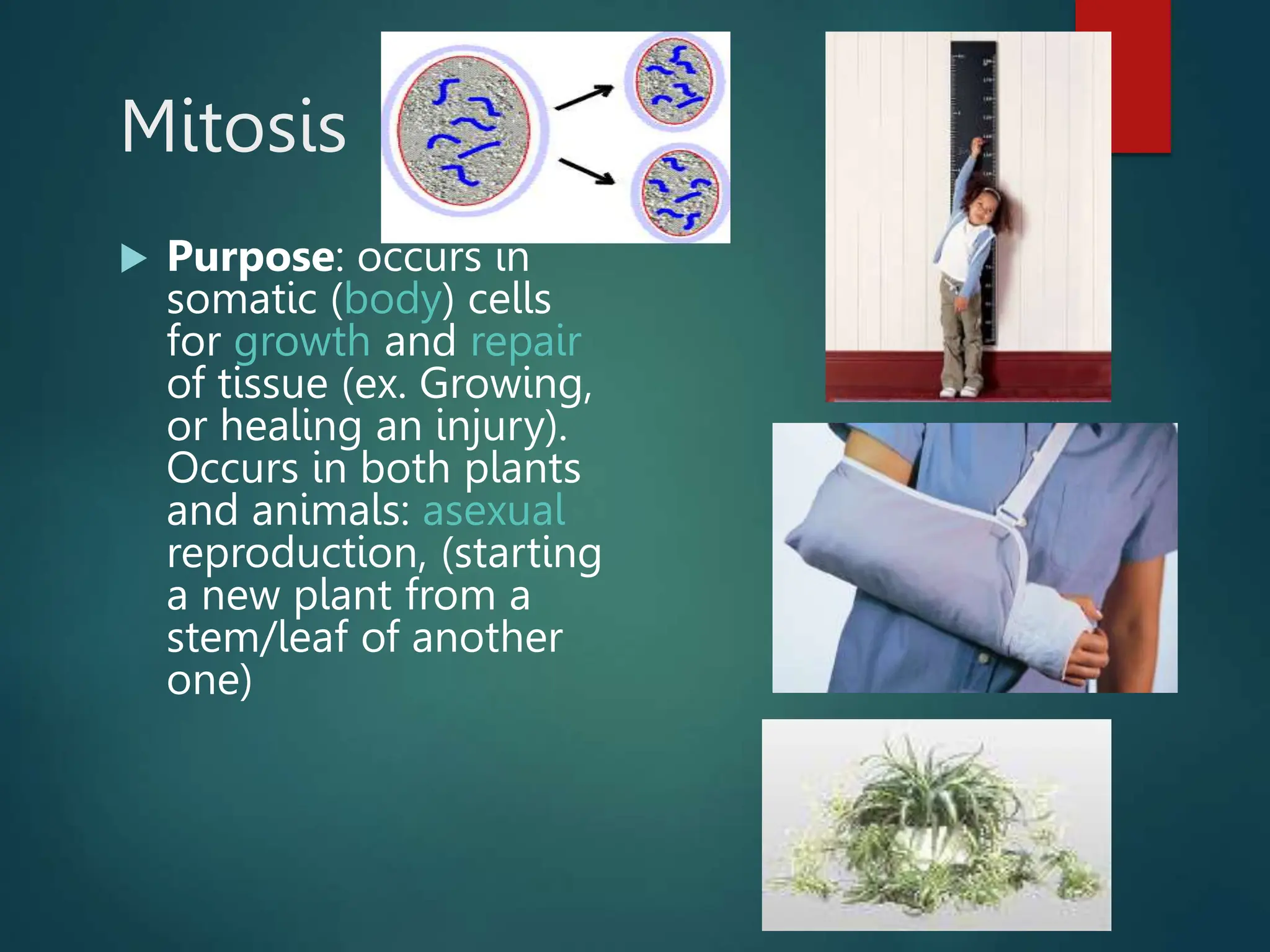
 Purpose: occurs in
somatic (body) cells
for growth and repair
of tissue (ex. Growing,
or healing an injury).
Occurs in both plants
and animals: asexual
reproduction, (starting
a new plant from a
stem/leaf of another
one)
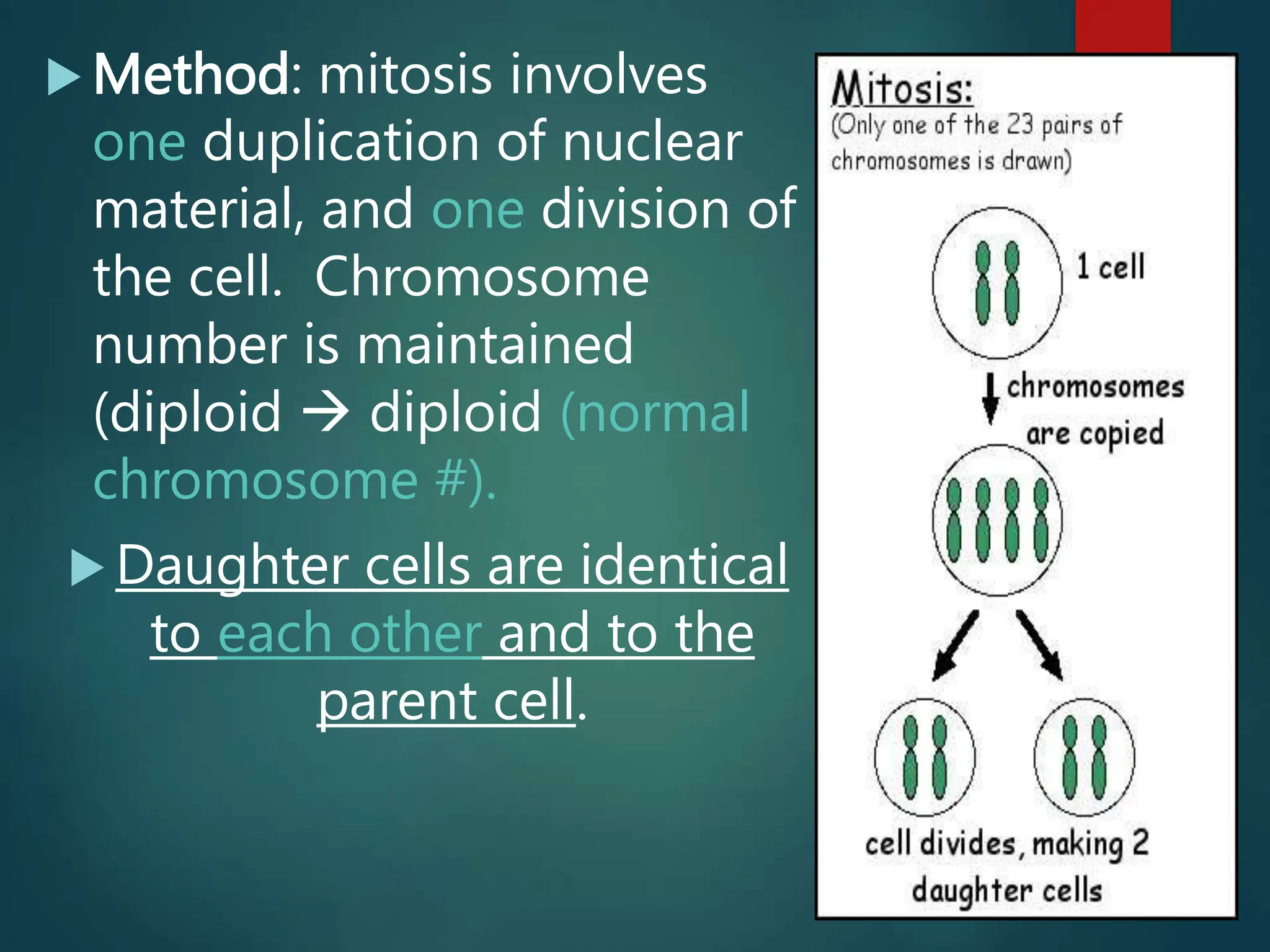
 Method: mitosis involves
one duplication of nuclear
material, and one division of
the cell. Chromosome
number is maintained
(diploid  diploid (normal
chromosome #).
 Daughter cells are identical
to each other and to the
parent cell.
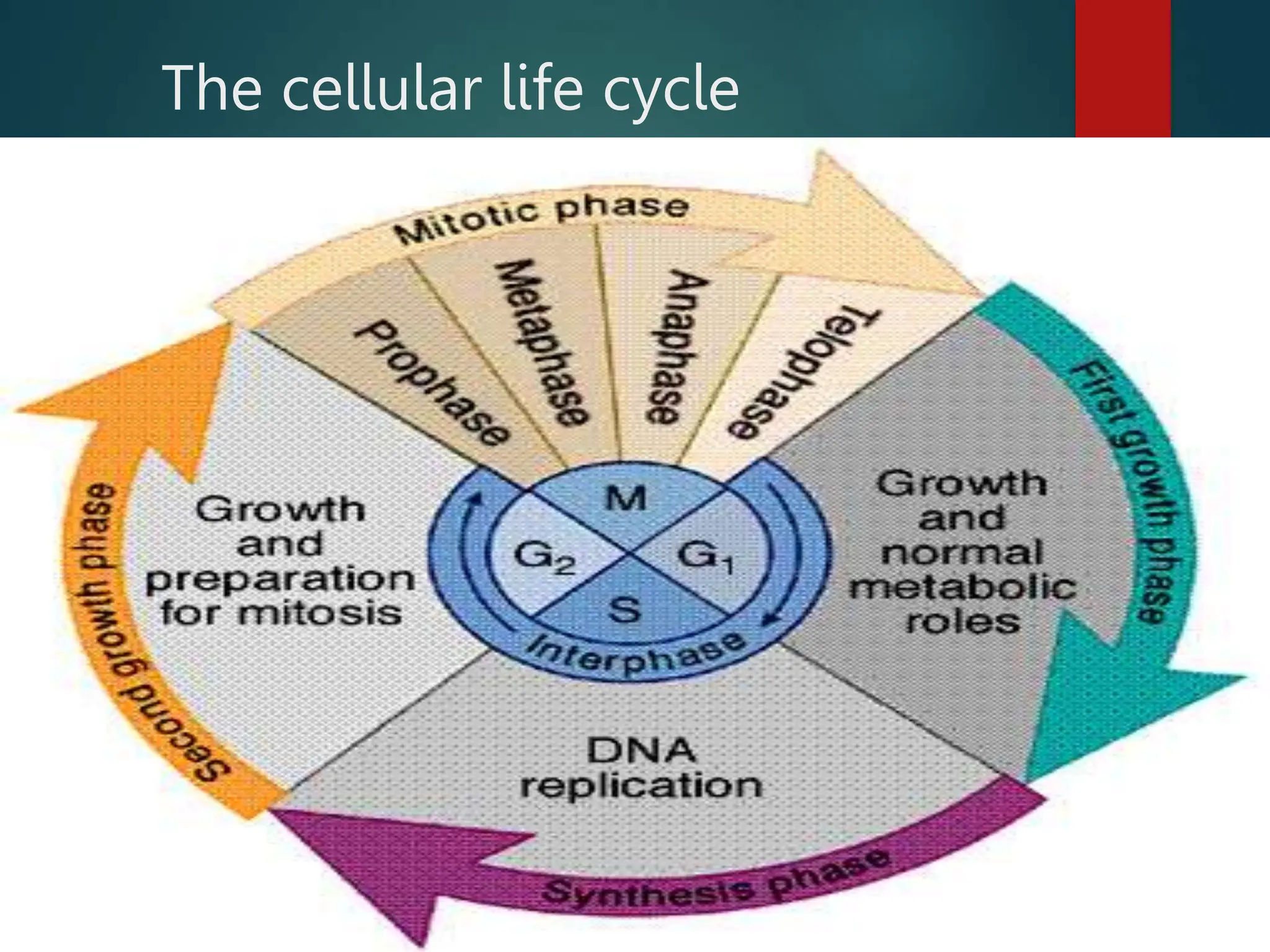
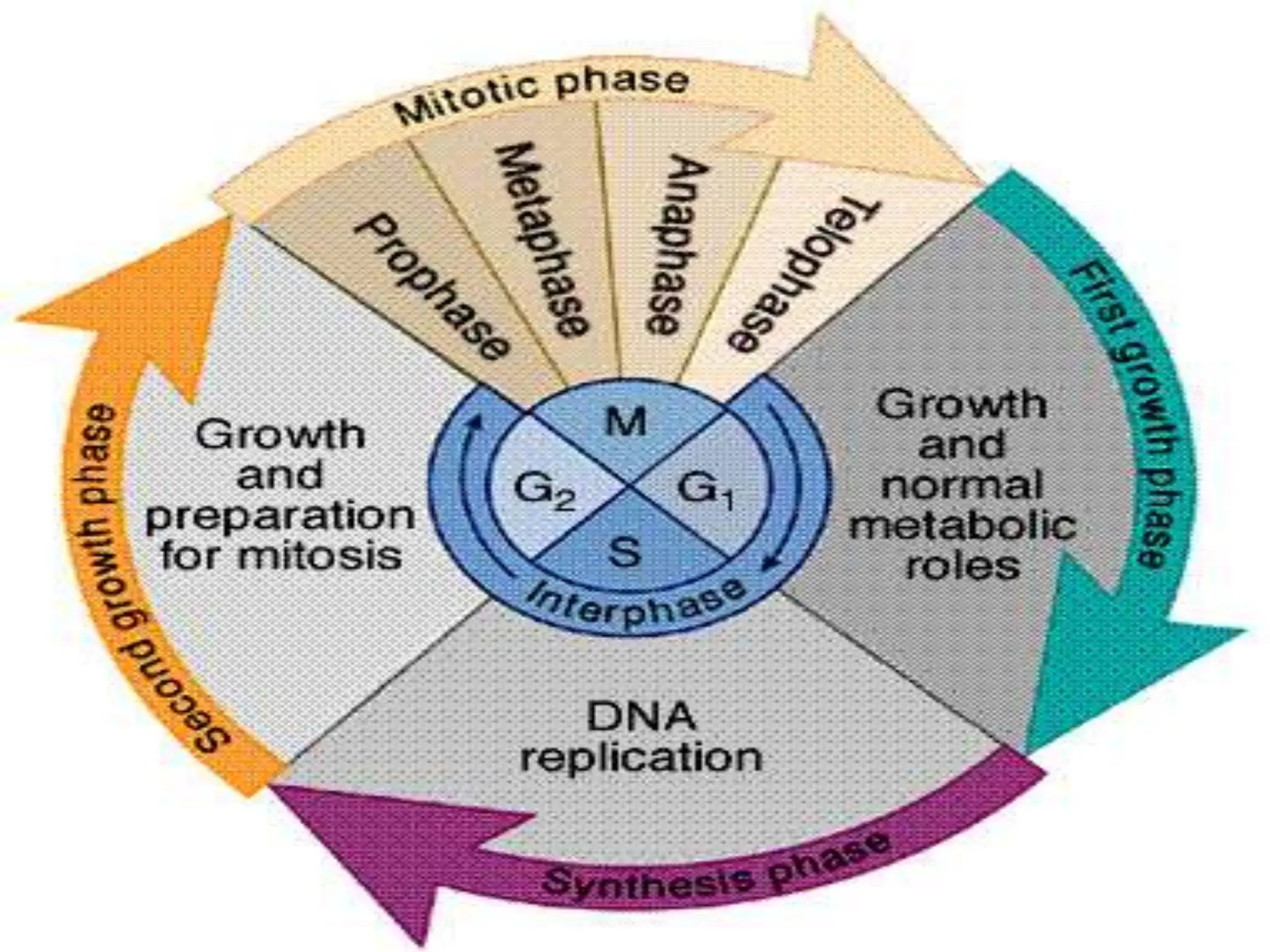
The cellular life cycle
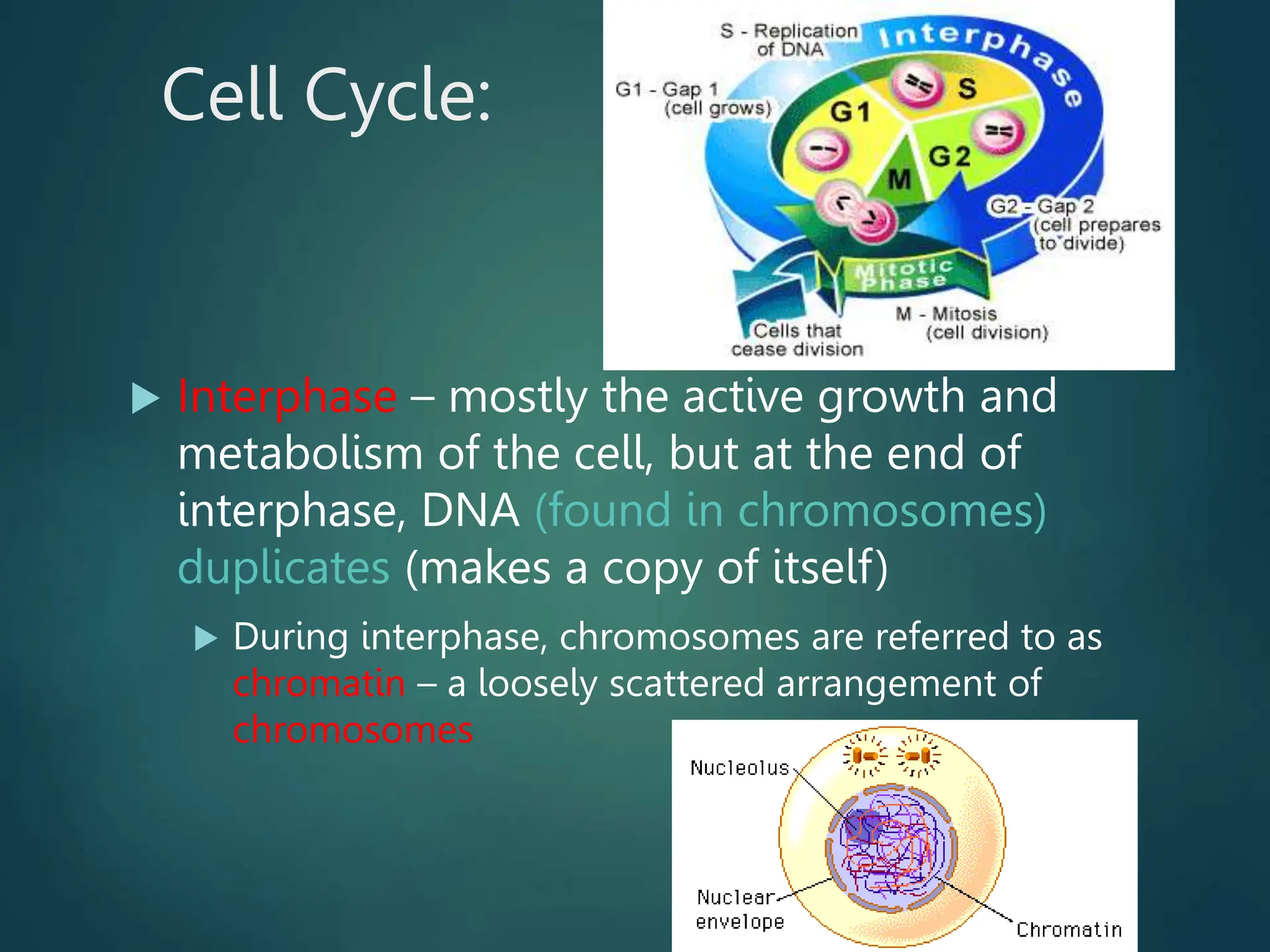
Cell Cycle:
 Interphase – mostly the active growth and
metabolism of the cell, but at the end of
interphase, DNA (found in chromosomes)
duplicates (makes a copy of itself)
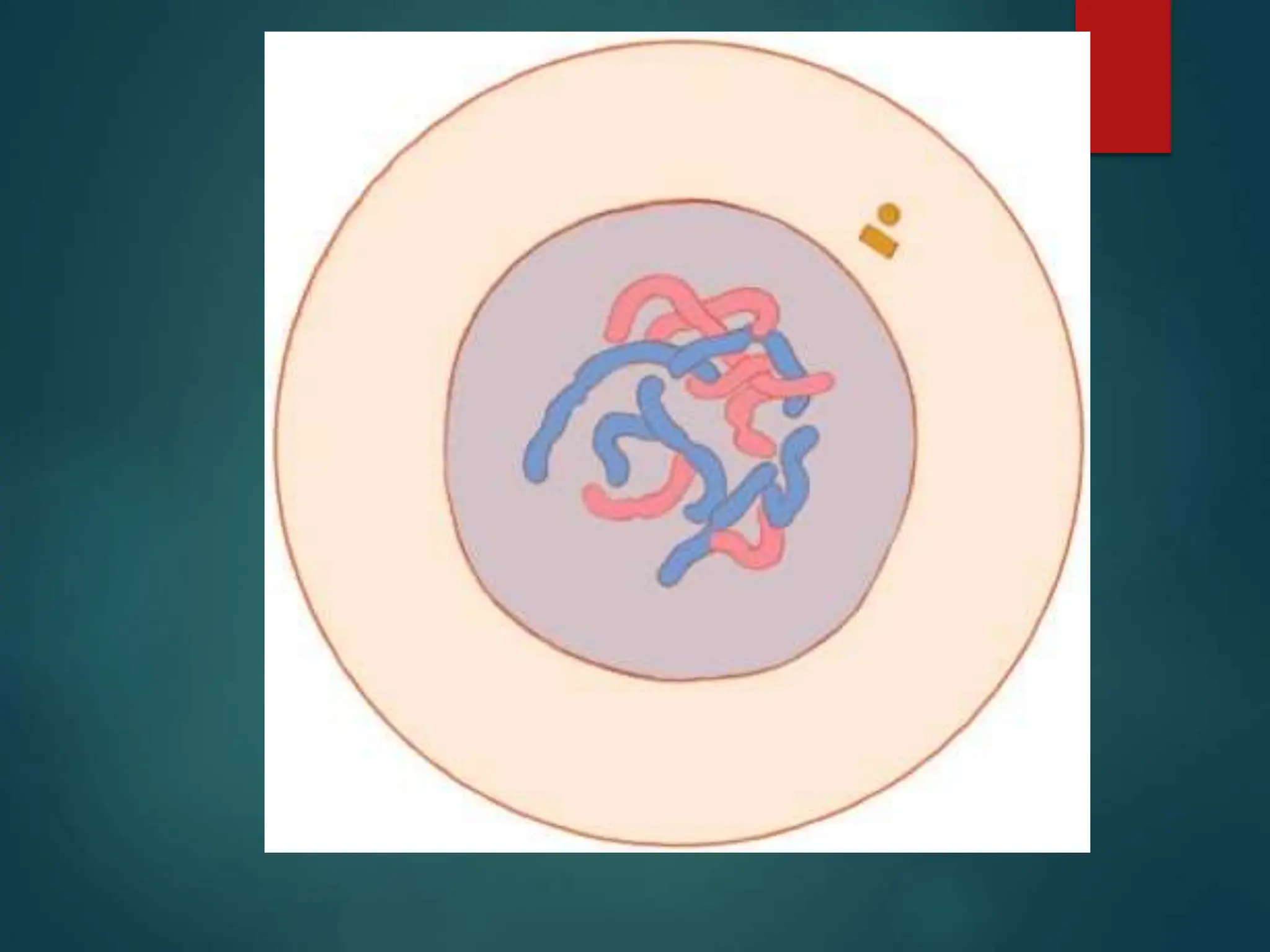
 During interphase, chromosomes are referred to as
chromatin – a loosely scattered arrangement of
chromosomes
Mitotic Phase
 Period of cell division
 Shortest stage in the cell
cycle
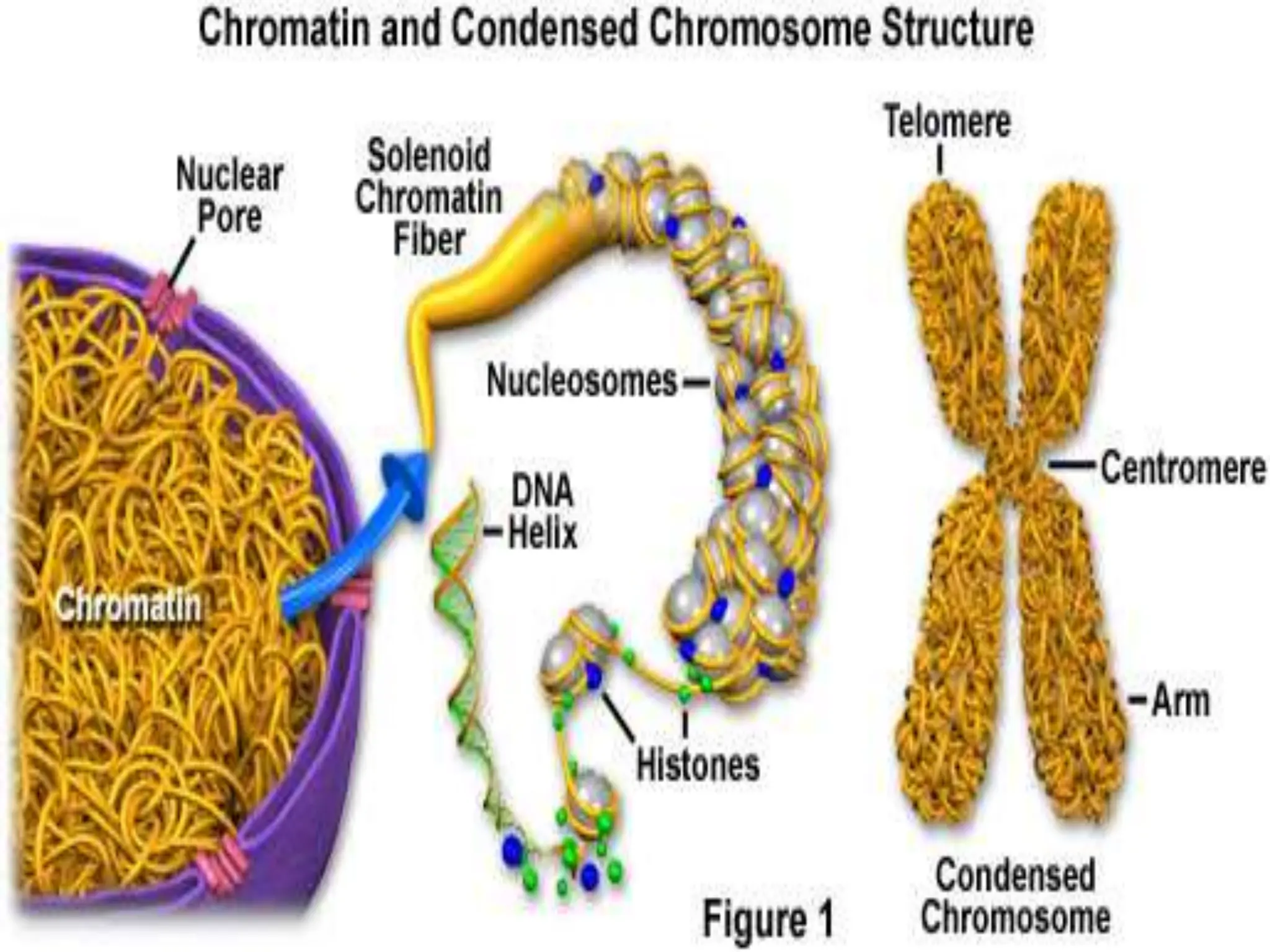
Chromosomes Vs. Chromatin
 DNA exists in Chromatin
form in the nucleus.
 The chromatin condenses
to form Chromosomes
during cell division
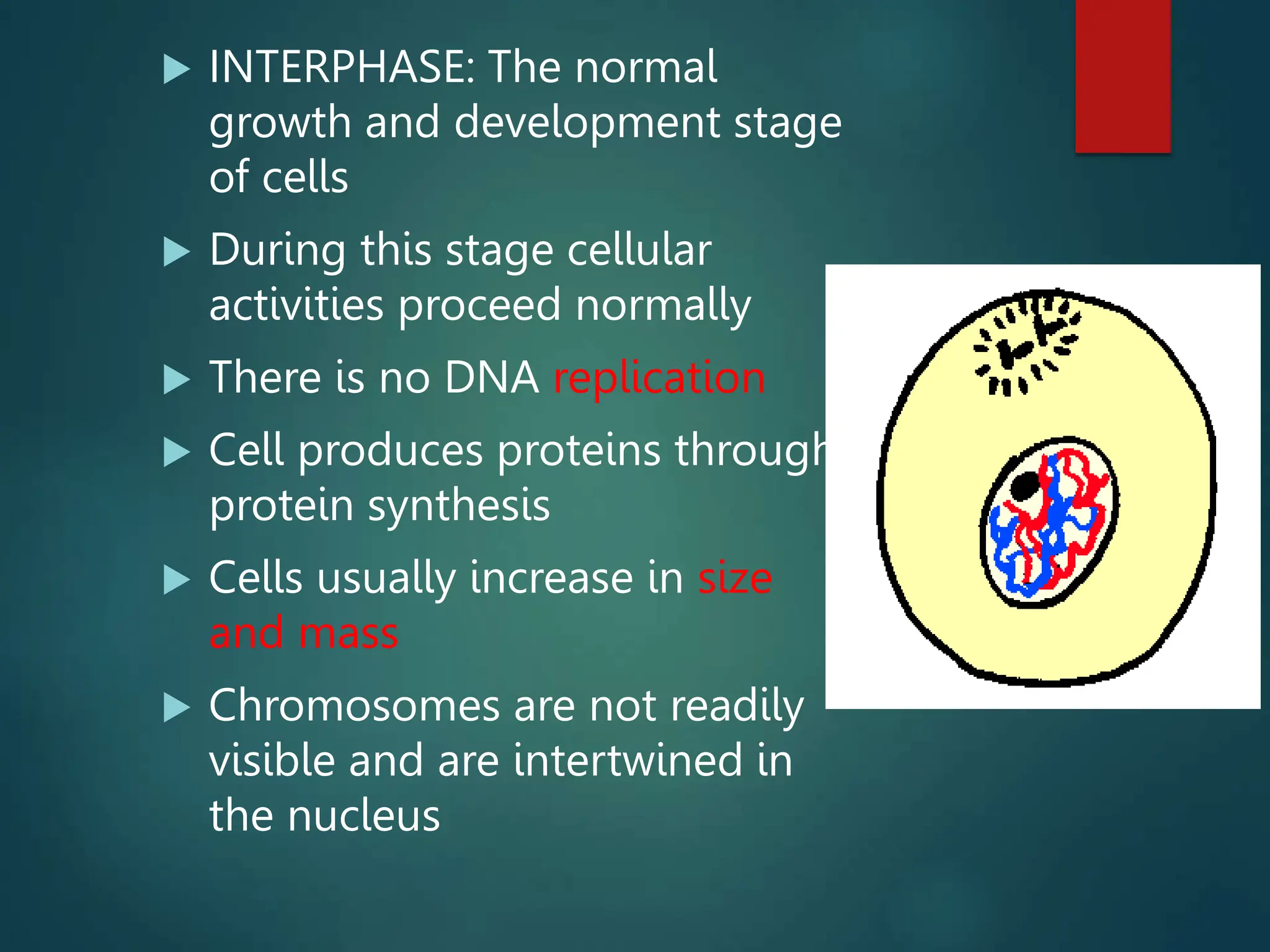
 INTERPHASE: The normal
growth and development stage
of cells
 During this stage cellular
activities proceed normally
 There is no DNA replication
 Cell produces proteins through
protein synthesis
 Cells usually increase in size
and mass
 Chromosomes are not readily
visible and are intertwined in
the nucleus
 This is known as the “G1 stage” of the cellular cycle. The cell
spends the majority of its life in this stage.
 The cell then enters the “S” or Synthesis stage. During this
stage of Interphase DNA replication occurs and the
chromosomes make identical copies of themselves.
 The “G2 stage” is a short period of growth and other
preparations necessary for mitosis.
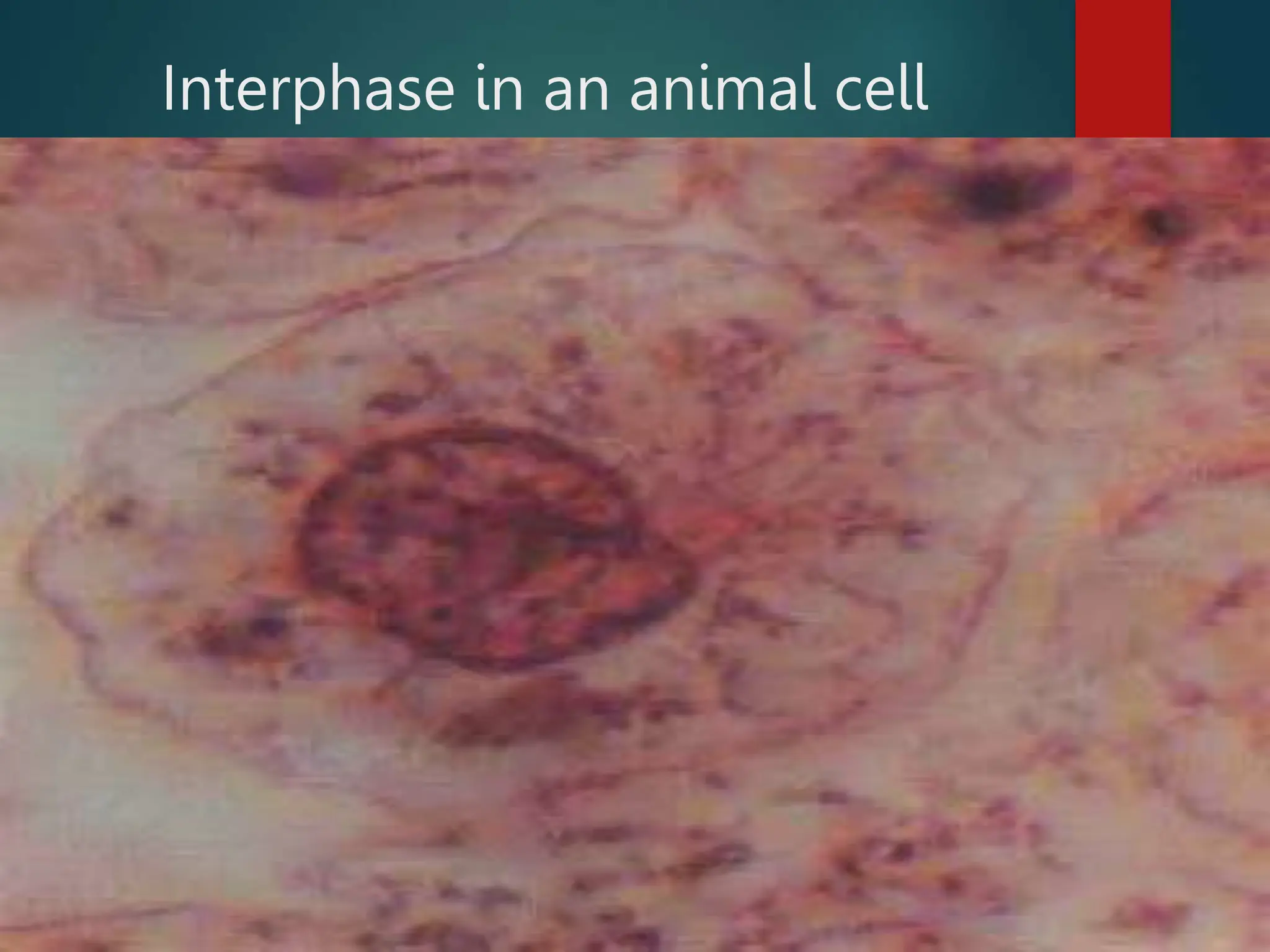
Interphase in an animal cell
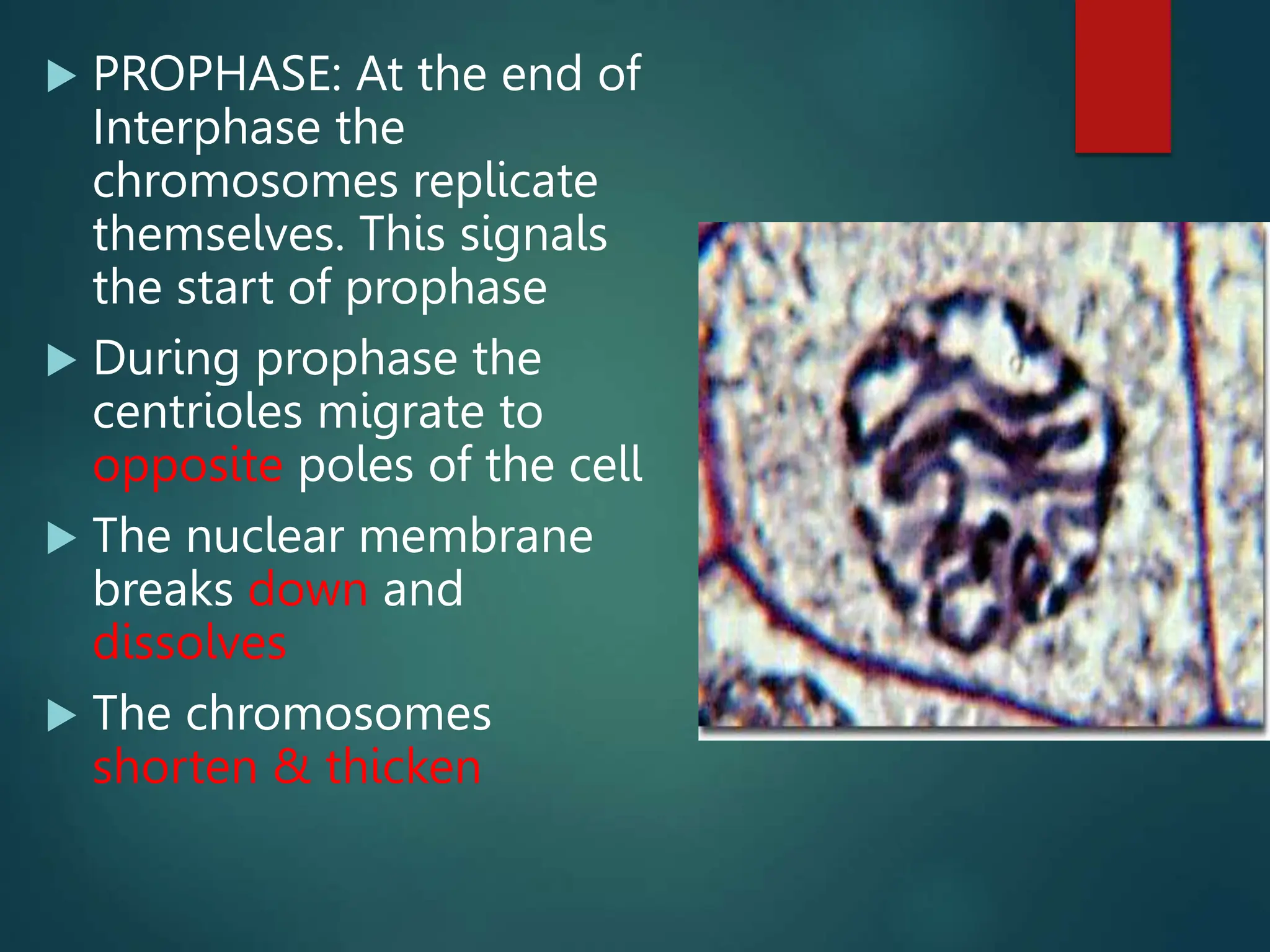
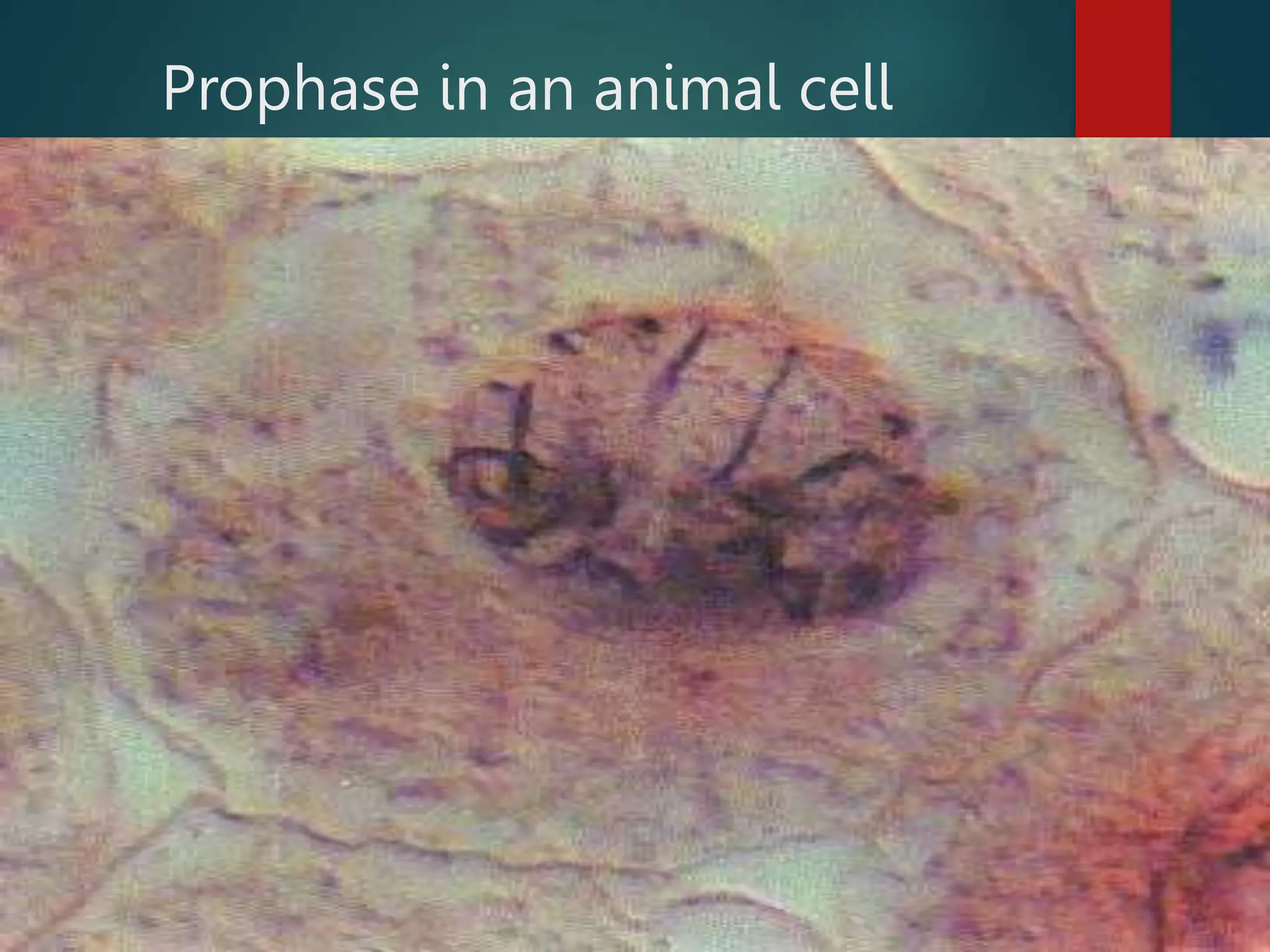
 PROPHASE: At the end of
Interphase the
chromosomes replicate
themselves. This signals
the start of prophase
 During prophase the
centrioles migrate to
opposite poles of the cell
 The nuclear membrane
breaks down and
dissolves
 The chromosomes
shorten & thicken
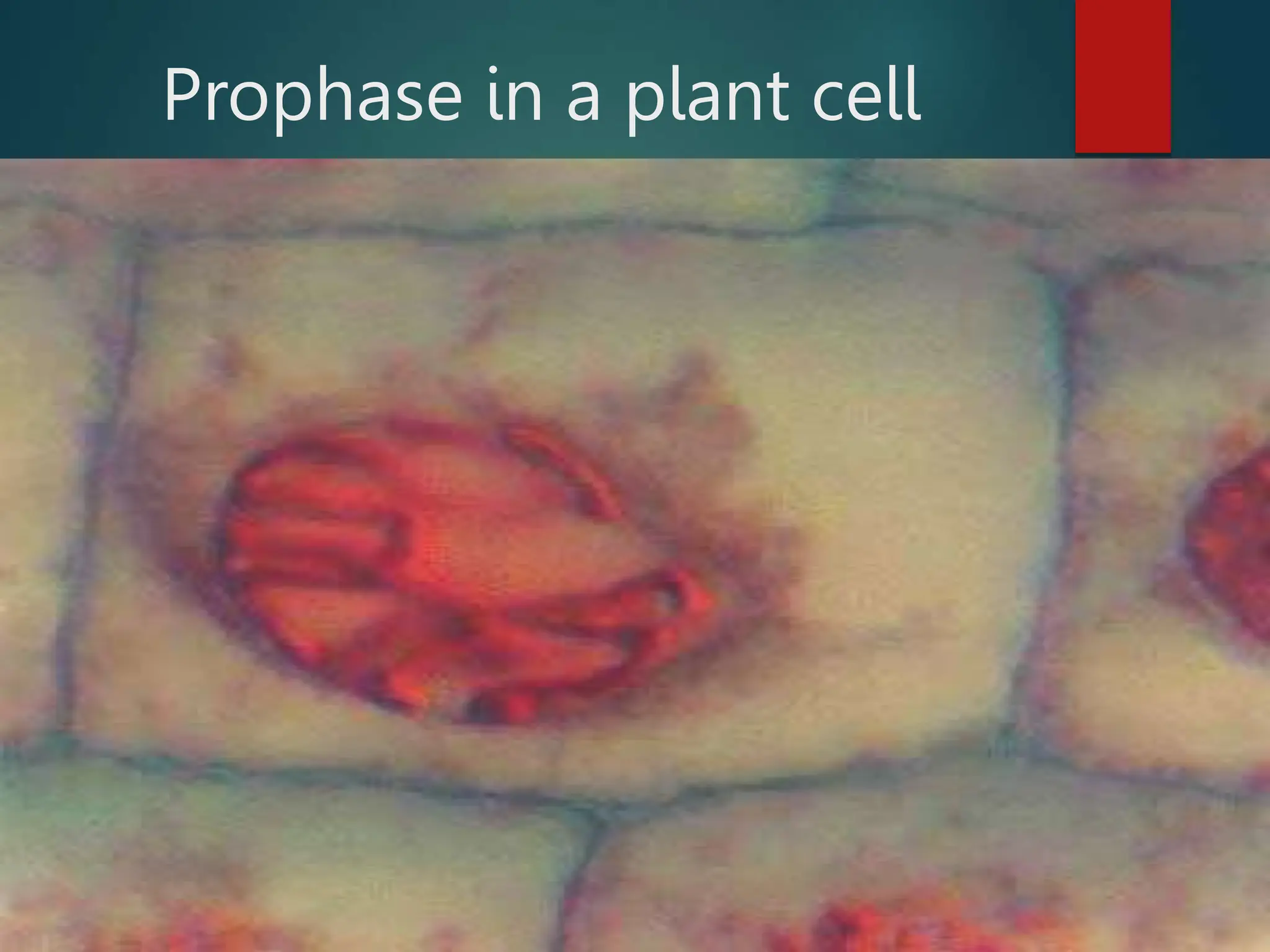
Prophase in a plant cell
Prophase in an animal cell
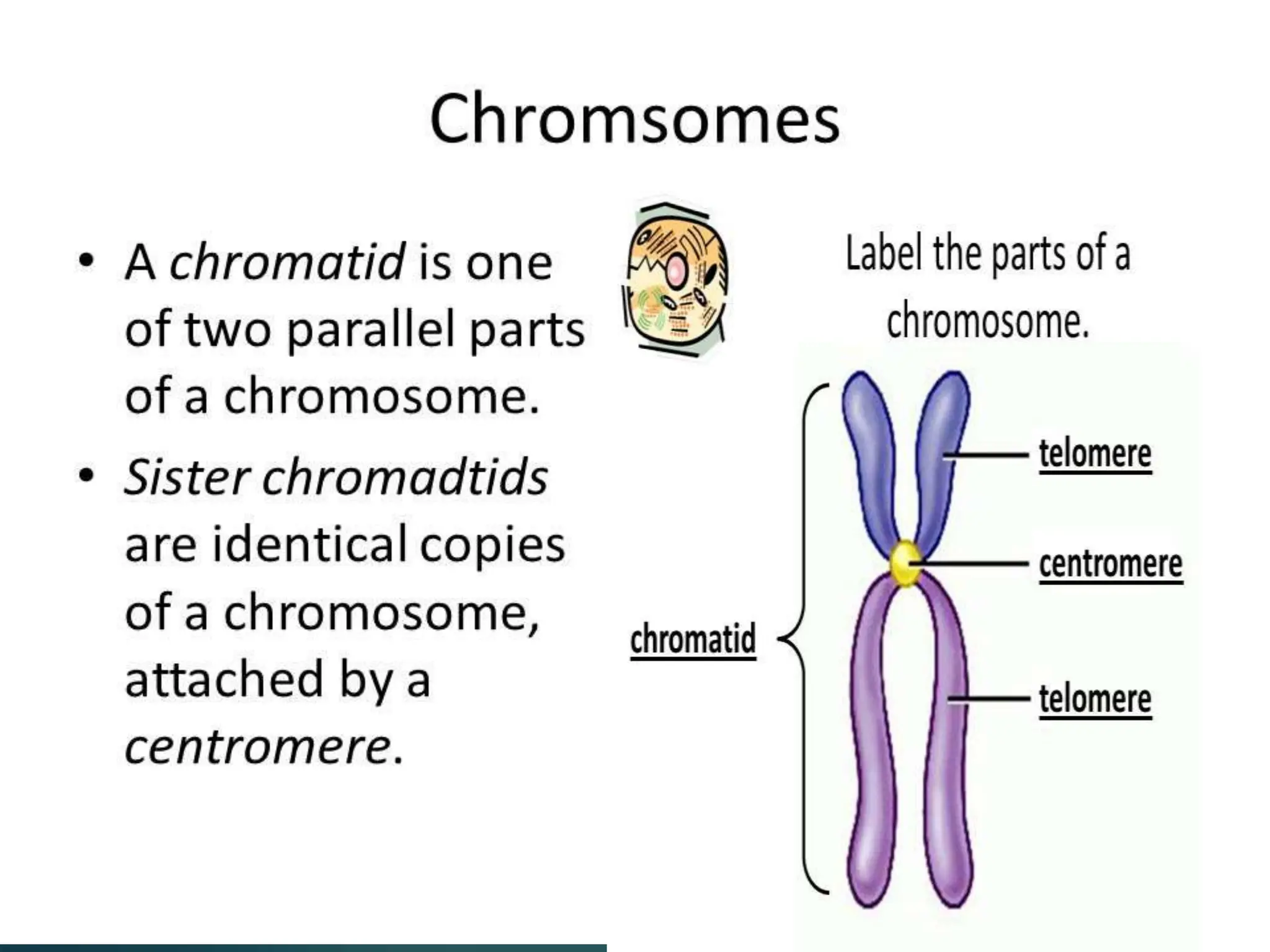
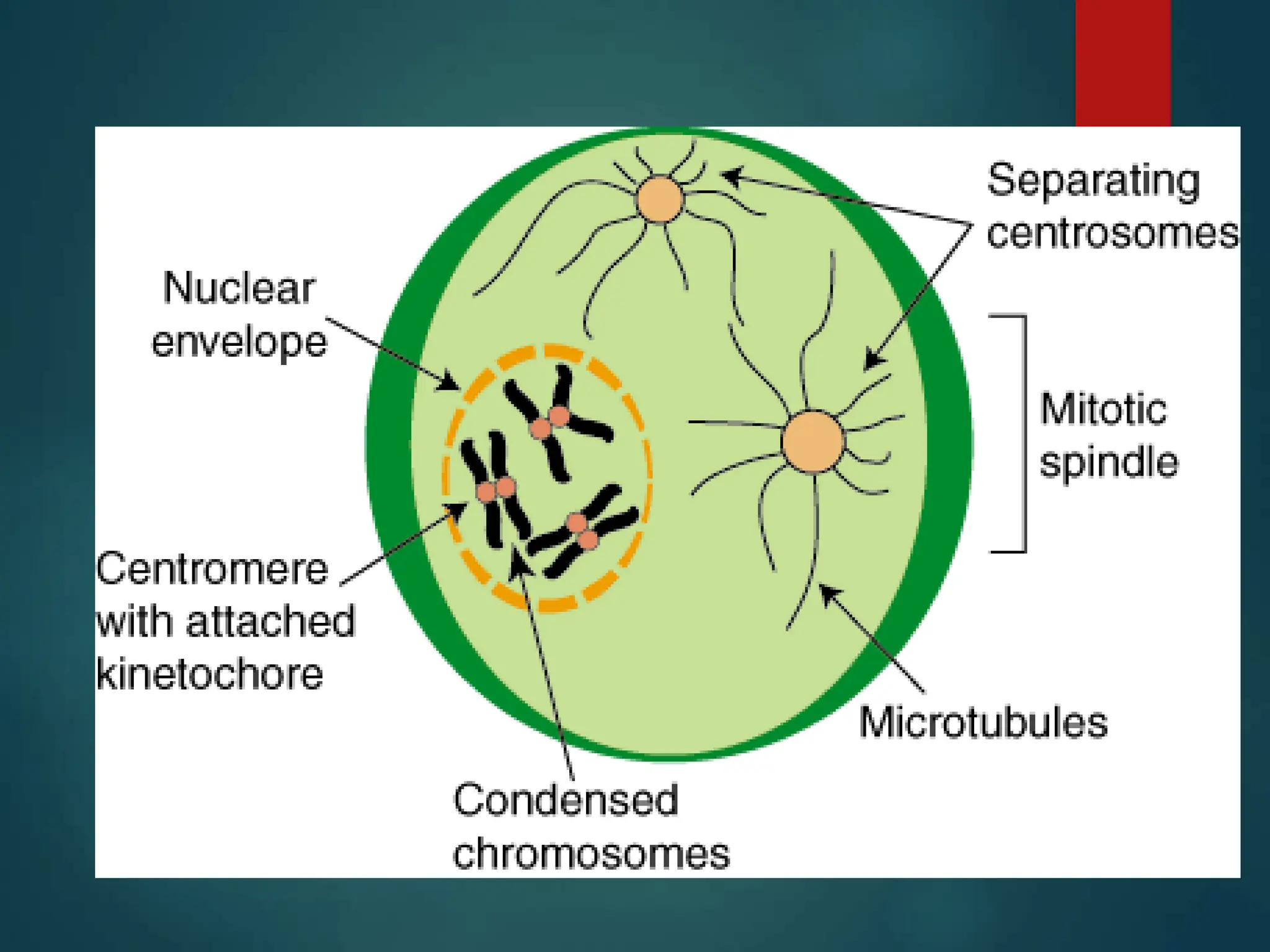
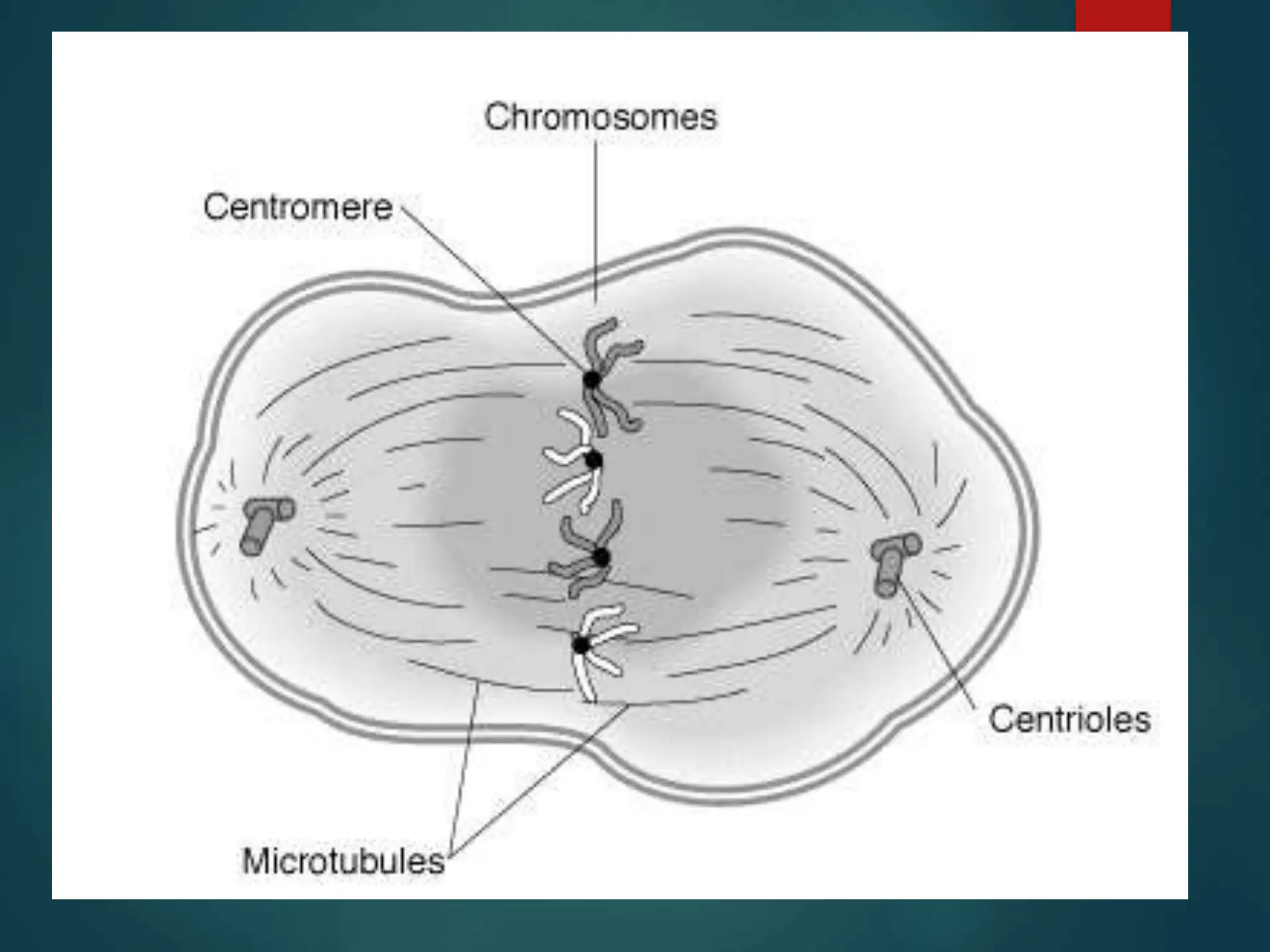
 At this point the two replicas of the parent chromosomes are called
chromatids
 The two chromatids are joined together in a region known as the
centromere
 As prophase continues some of the cells cytoskeleton (made up of
microfilaments) form the spindle fibers
 By the end of prophase an entire network of microfilaments has
formed and is attached to the chromatids at the centromere
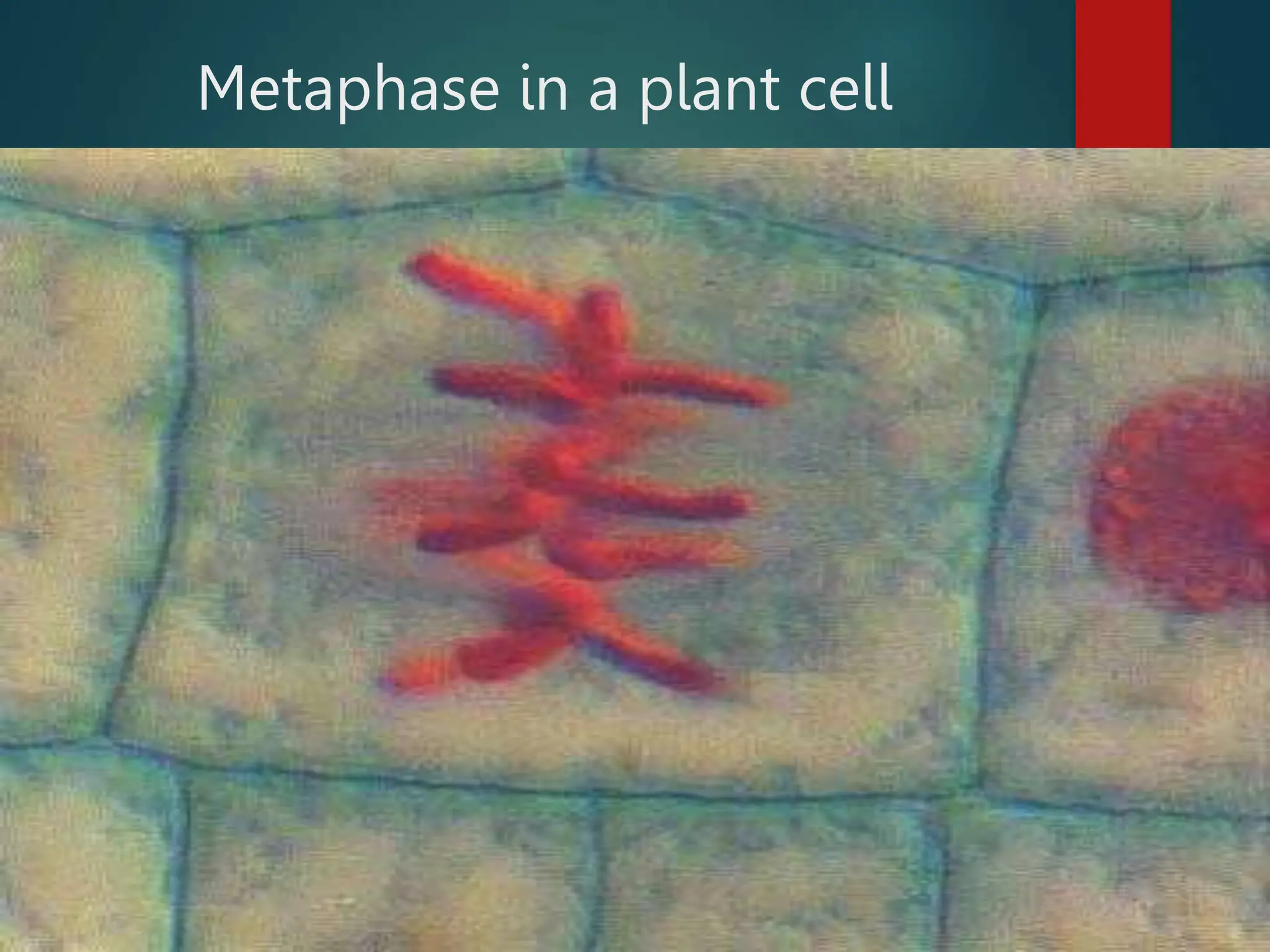
 The cell now enters METAPHASE
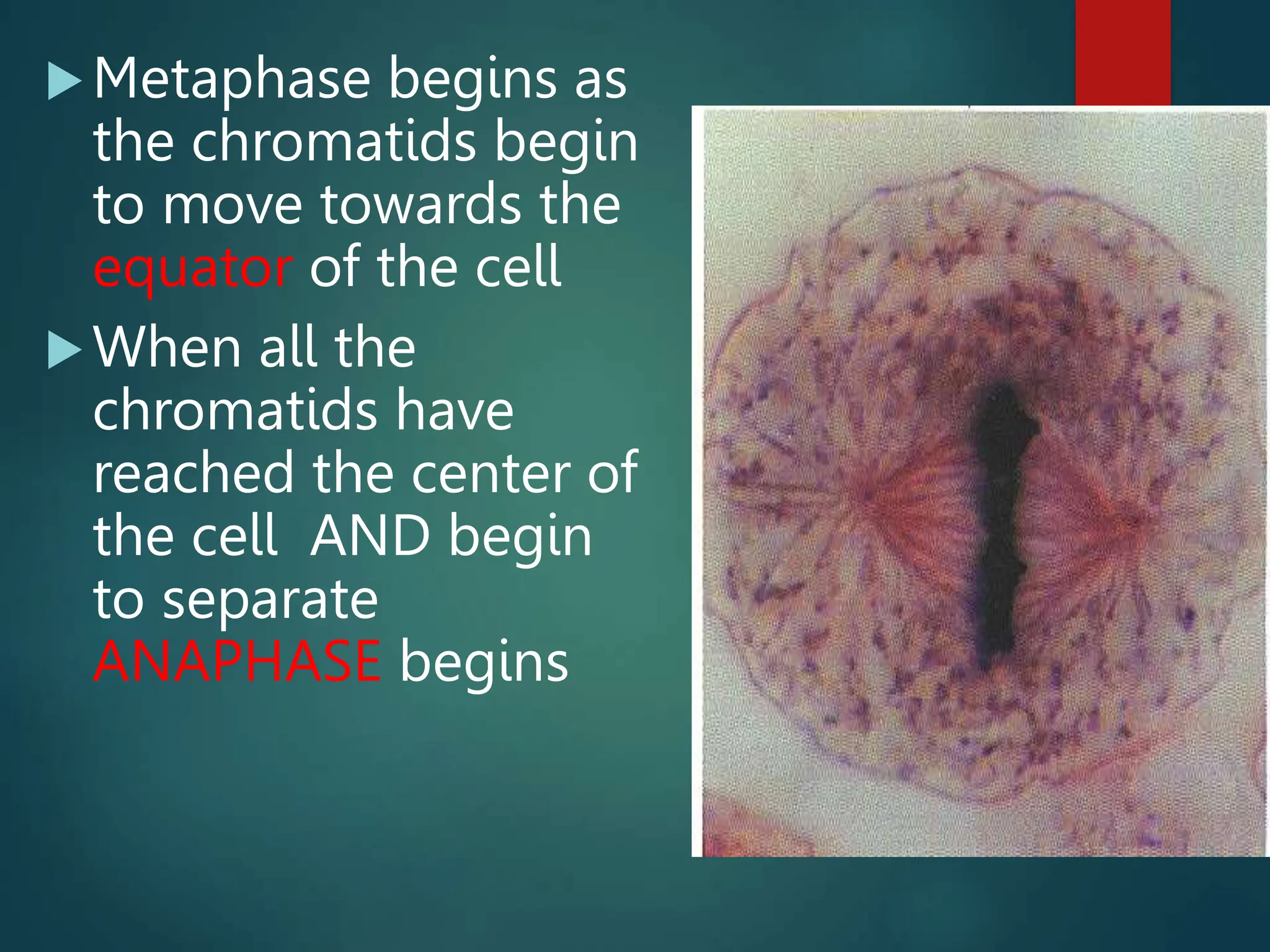
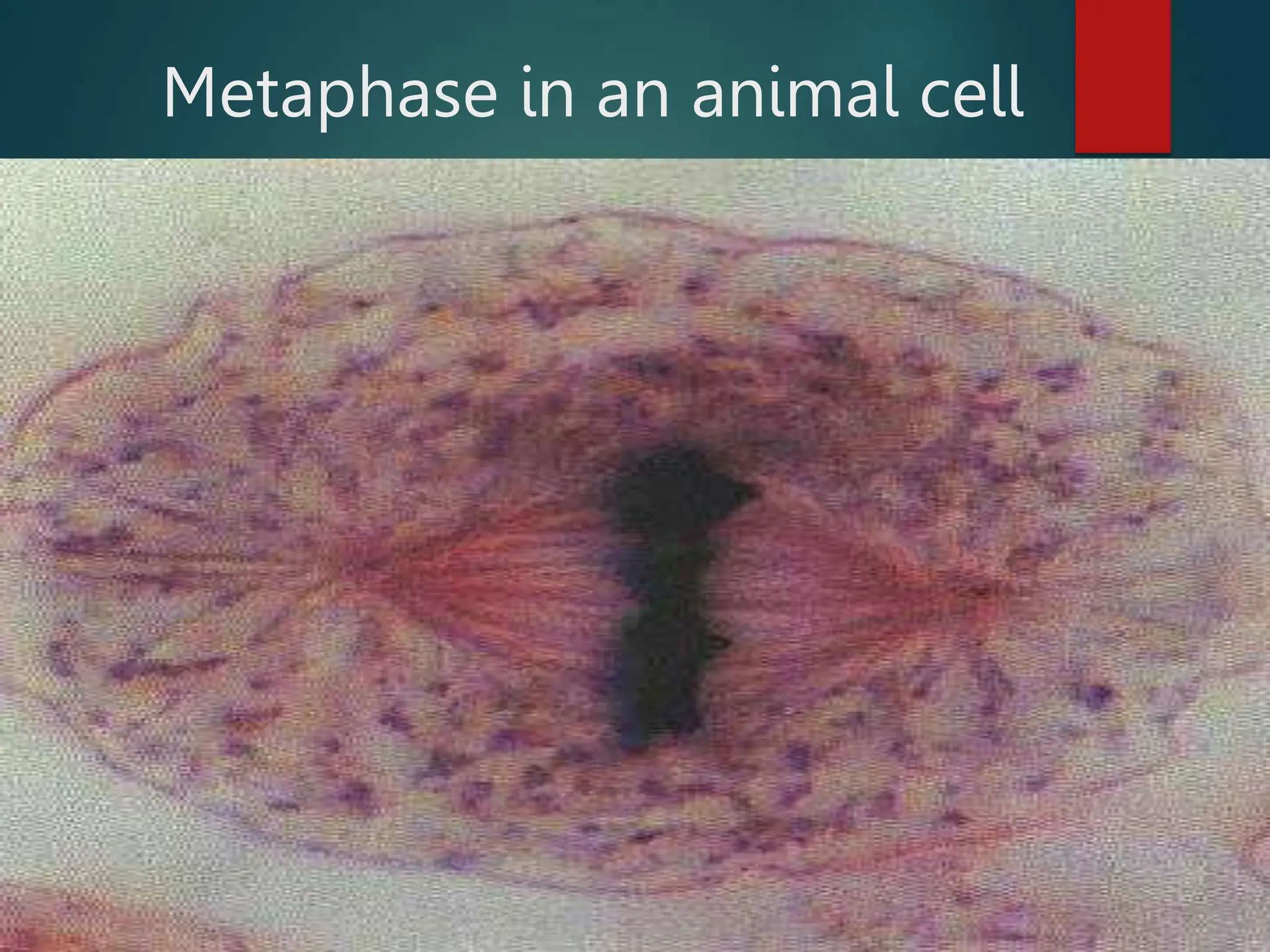
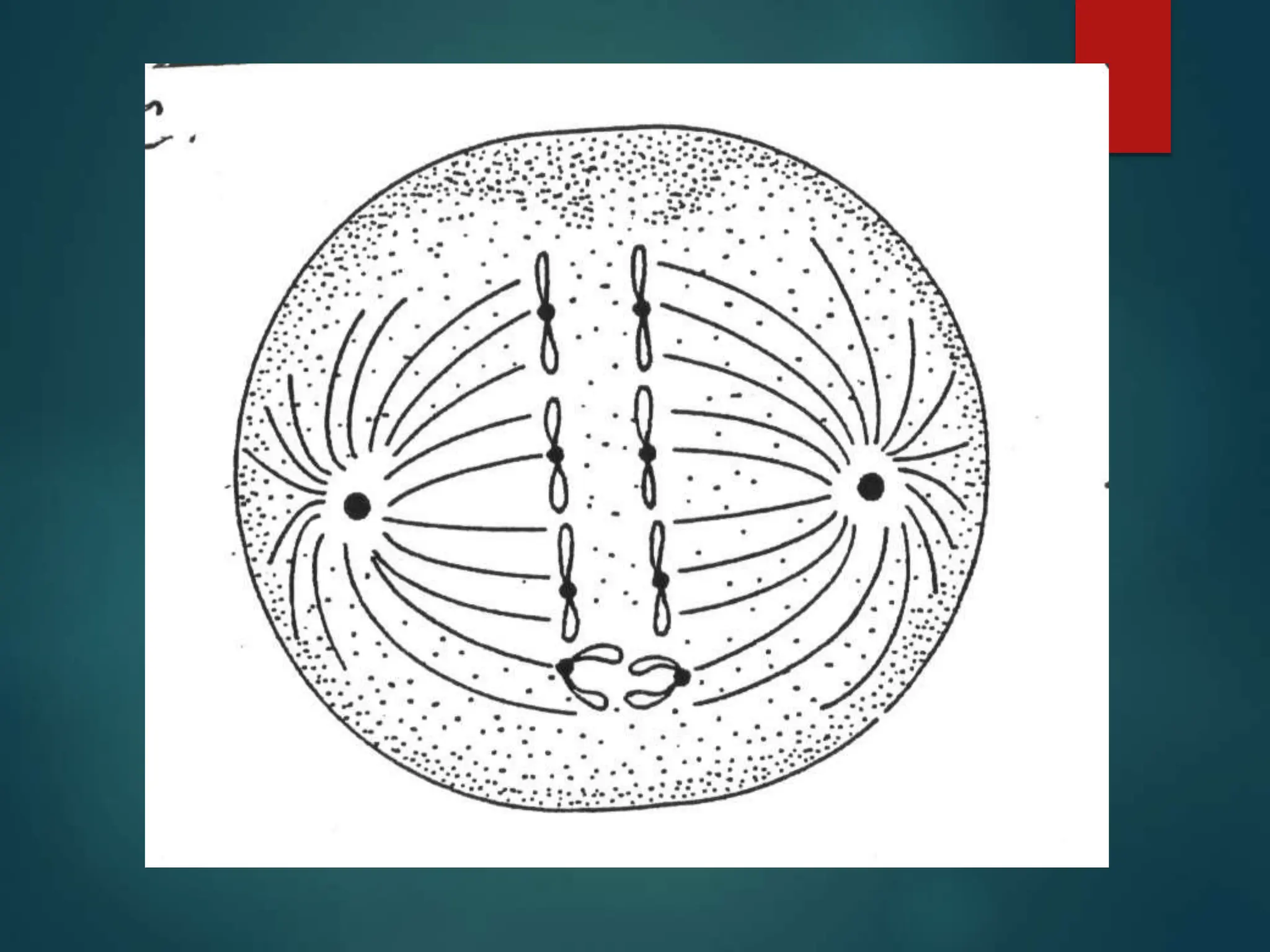
Metaphase begins as
the chromatids begin
to move towards the
equator of the cell
When all the
chromatids have
reached the center of
the cell AND begin
to separate
ANAPHASE begins
Metaphase in an animal cell
Metaphase in a plant cell
What differences can you describe
between the 1st Meiotic metaphase
and the metaphase in mitosis?
What differences can you describe
between the 2nd Meiotic
metaphase and the metaphase in
mitosis?
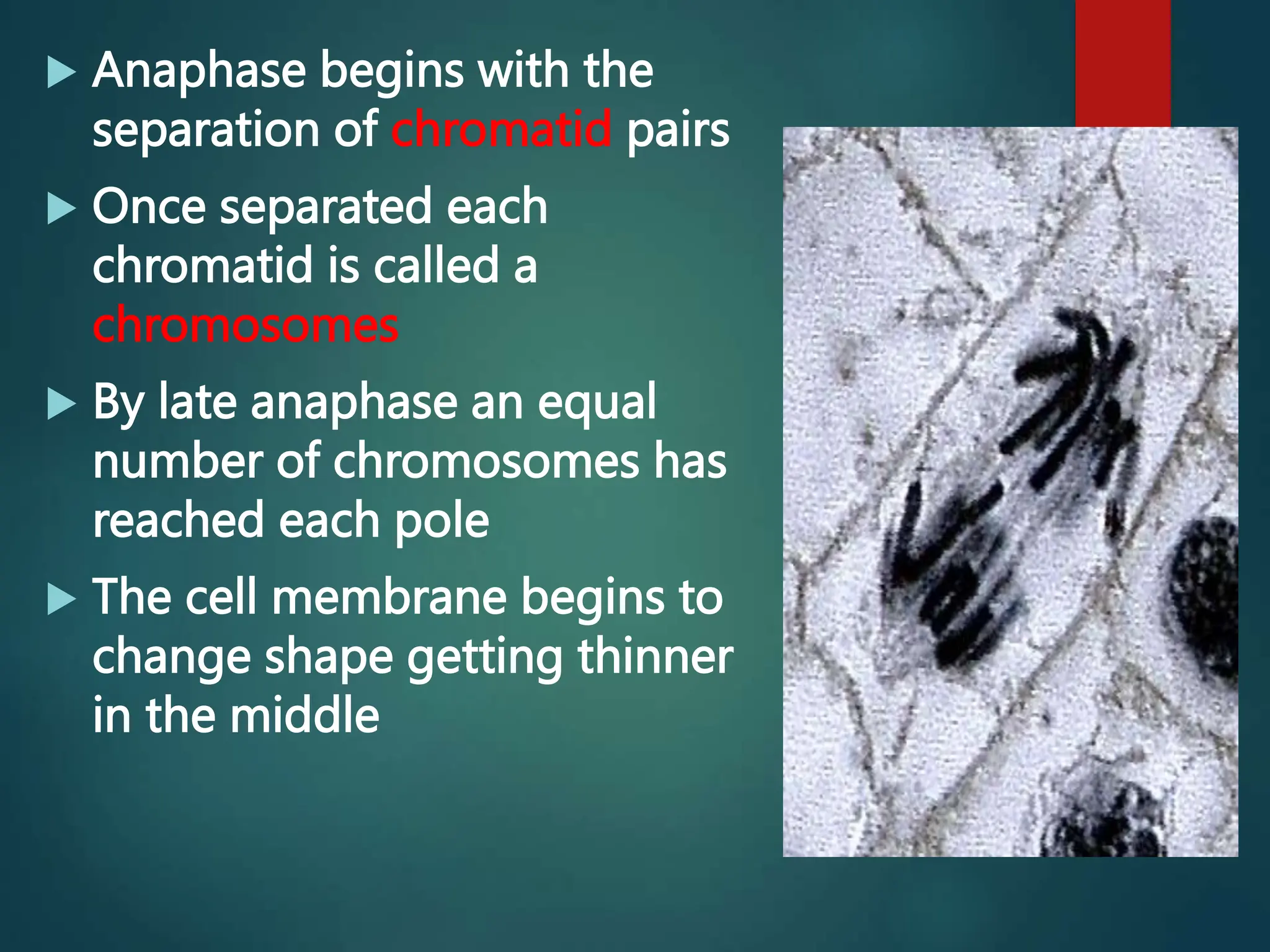
 Anaphase begins with the
separation of chromatid pairs
 Once separated each
chromatid is called a
chromosomes
 By late anaphase an equal
number of chromosomes has
reached each pole
 The cell membrane begins to
change shape getting thinner
in the middle
Anaphase in an animal cell
Anaphase in a plant cell
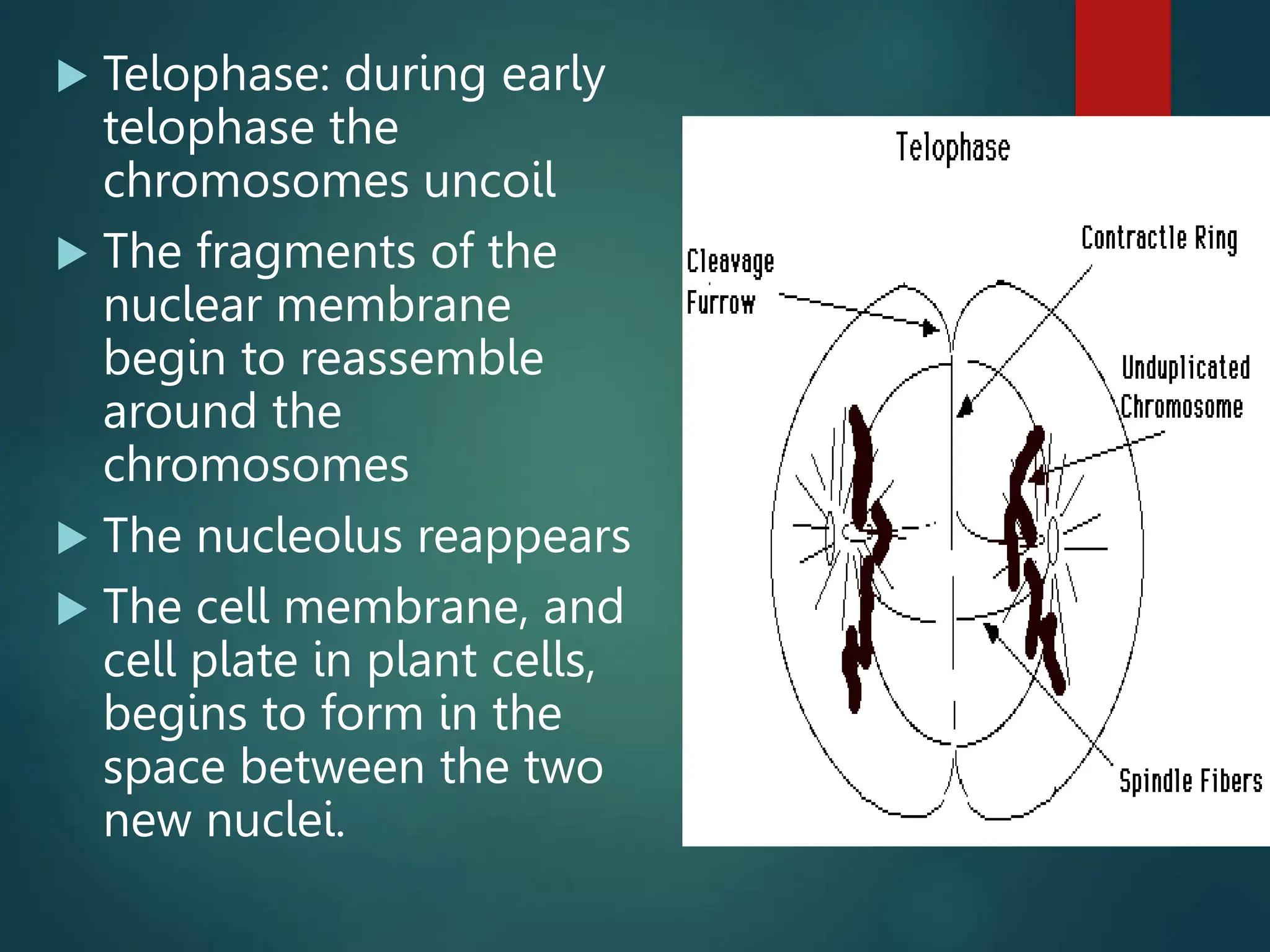
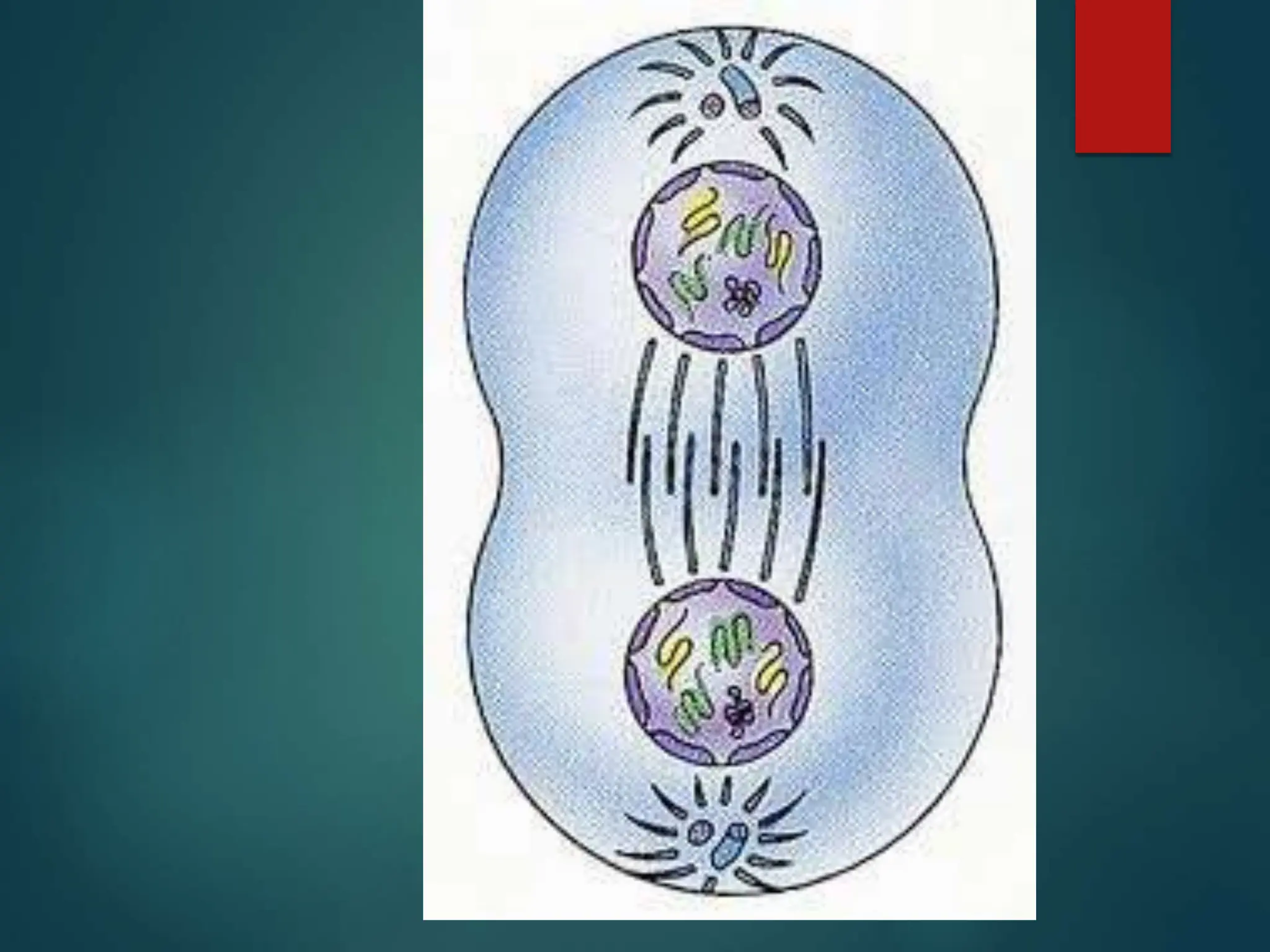
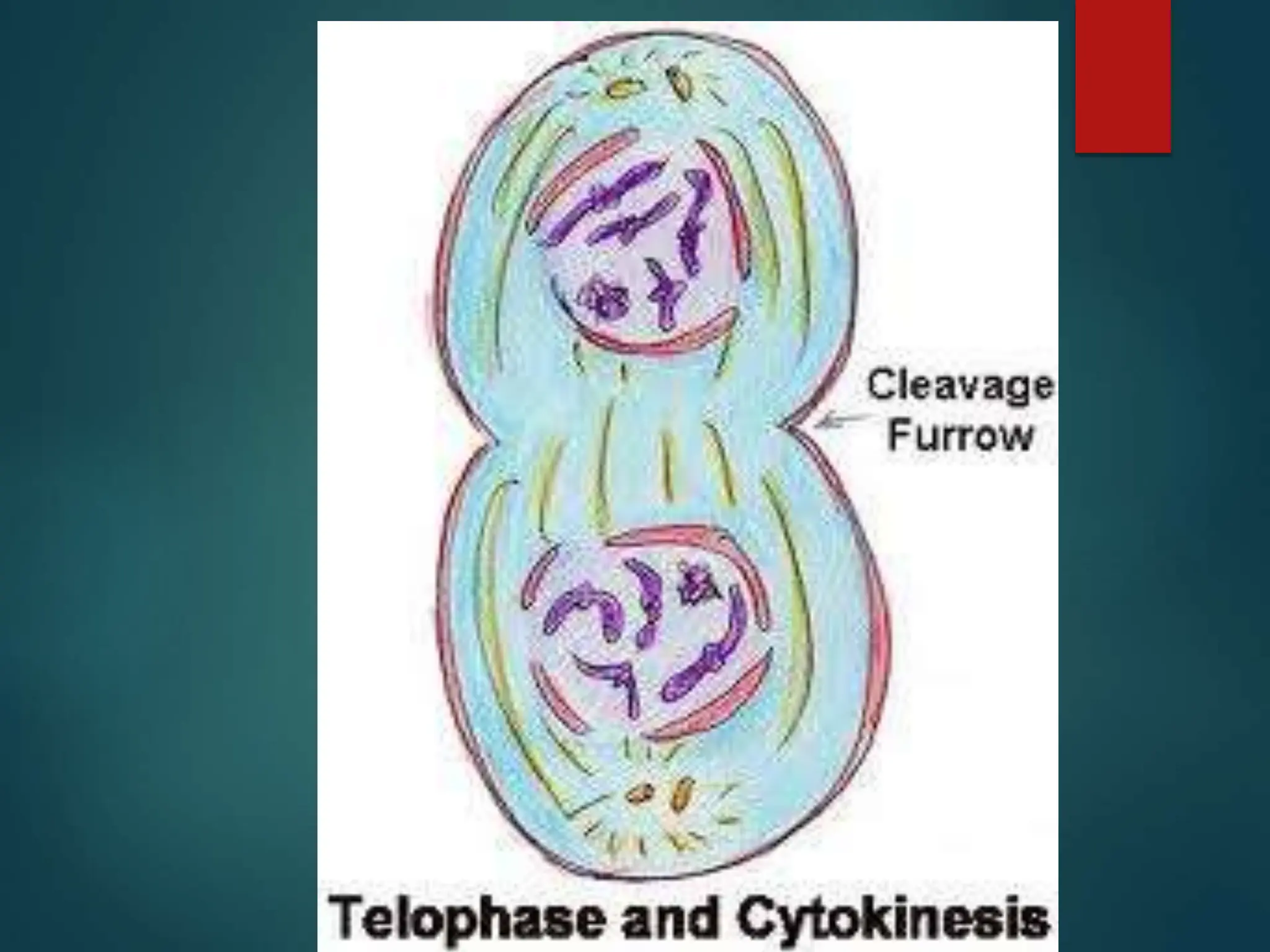
 Telophase: during early
telophase the
chromosomes uncoil
 The fragments of the
nuclear membrane
begin to reassemble
around the
chromosomes
 The nucleolus reappears
 The cell membrane, and
cell plate in plant cells,
begins to form in the
space between the two
new nuclei.
Telophase in an animal cell
Telophase in a plant cell
 The two daughter cells separate by
a process called cytokinesis
 The cell membrane returns to
normal and the new daughter cells
enter Interphase
 And the cycle continues…..
Vocab Words

mitosis roslyn in biotechnology Engineering.ppt

  • 1.
    Mitosis  Purpose: occursin somatic (body) cells for growth and repair of tissue (ex. Growing, or healing an injury). Occurs in both plants and animals: asexual reproduction, (starting a new plant from a stem/leaf of another one)
  • 2.
     Method: mitosisinvolves one duplication of nuclear material, and one division of the cell. Chromosome number is maintained (diploid  diploid (normal chromosome #).  Daughter cells are identical to each other and to the parent cell.
  • 3.
  • 4.
    Cell Cycle:  Interphase– mostly the active growth and metabolism of the cell, but at the end of interphase, DNA (found in chromosomes) duplicates (makes a copy of itself)  During interphase, chromosomes are referred to as chromatin – a loosely scattered arrangement of chromosomes
  • 5.
    Mitotic Phase  Periodof cell division  Shortest stage in the cell cycle
  • 7.
    Chromosomes Vs. Chromatin DNA exists in Chromatin form in the nucleus.  The chromatin condenses to form Chromosomes during cell division
  • 9.
     INTERPHASE: Thenormal growth and development stage of cells  During this stage cellular activities proceed normally  There is no DNA replication  Cell produces proteins through protein synthesis  Cells usually increase in size and mass  Chromosomes are not readily visible and are intertwined in the nucleus
  • 10.
     This isknown as the “G1 stage” of the cellular cycle. The cell spends the majority of its life in this stage.  The cell then enters the “S” or Synthesis stage. During this stage of Interphase DNA replication occurs and the chromosomes make identical copies of themselves.  The “G2 stage” is a short period of growth and other preparations necessary for mitosis.
  • 11.
    Interphase in ananimal cell
  • 15.
     PROPHASE: Atthe end of Interphase the chromosomes replicate themselves. This signals the start of prophase  During prophase the centrioles migrate to opposite poles of the cell  The nuclear membrane breaks down and dissolves  The chromosomes shorten & thicken
  • 17.
    Prophase in aplant cell
  • 18.
    Prophase in ananimal cell
  • 19.
     At thispoint the two replicas of the parent chromosomes are called chromatids  The two chromatids are joined together in a region known as the centromere  As prophase continues some of the cells cytoskeleton (made up of microfilaments) form the spindle fibers  By the end of prophase an entire network of microfilaments has formed and is attached to the chromatids at the centromere  The cell now enters METAPHASE
  • 20.
    Metaphase begins as thechromatids begin to move towards the equator of the cell When all the chromatids have reached the center of the cell AND begin to separate ANAPHASE begins
  • 23.
    Metaphase in ananimal cell
  • 24.
    Metaphase in aplant cell
  • 25.
    What differences canyou describe between the 1st Meiotic metaphase and the metaphase in mitosis? What differences can you describe between the 2nd Meiotic metaphase and the metaphase in mitosis?
  • 26.
     Anaphase beginswith the separation of chromatid pairs  Once separated each chromatid is called a chromosomes  By late anaphase an equal number of chromosomes has reached each pole  The cell membrane begins to change shape getting thinner in the middle
  • 28.
    Anaphase in ananimal cell
  • 29.
    Anaphase in aplant cell
  • 30.
     Telophase: duringearly telophase the chromosomes uncoil  The fragments of the nuclear membrane begin to reassemble around the chromosomes  The nucleolus reappears  The cell membrane, and cell plate in plant cells, begins to form in the space between the two new nuclei.
  • 33.
    Telophase in ananimal cell
  • 34.
    Telophase in aplant cell
  • 38.
     The twodaughter cells separate by a process called cytokinesis  The cell membrane returns to normal and the new daughter cells enter Interphase  And the cycle continues…..
  • 41.