Moss Project
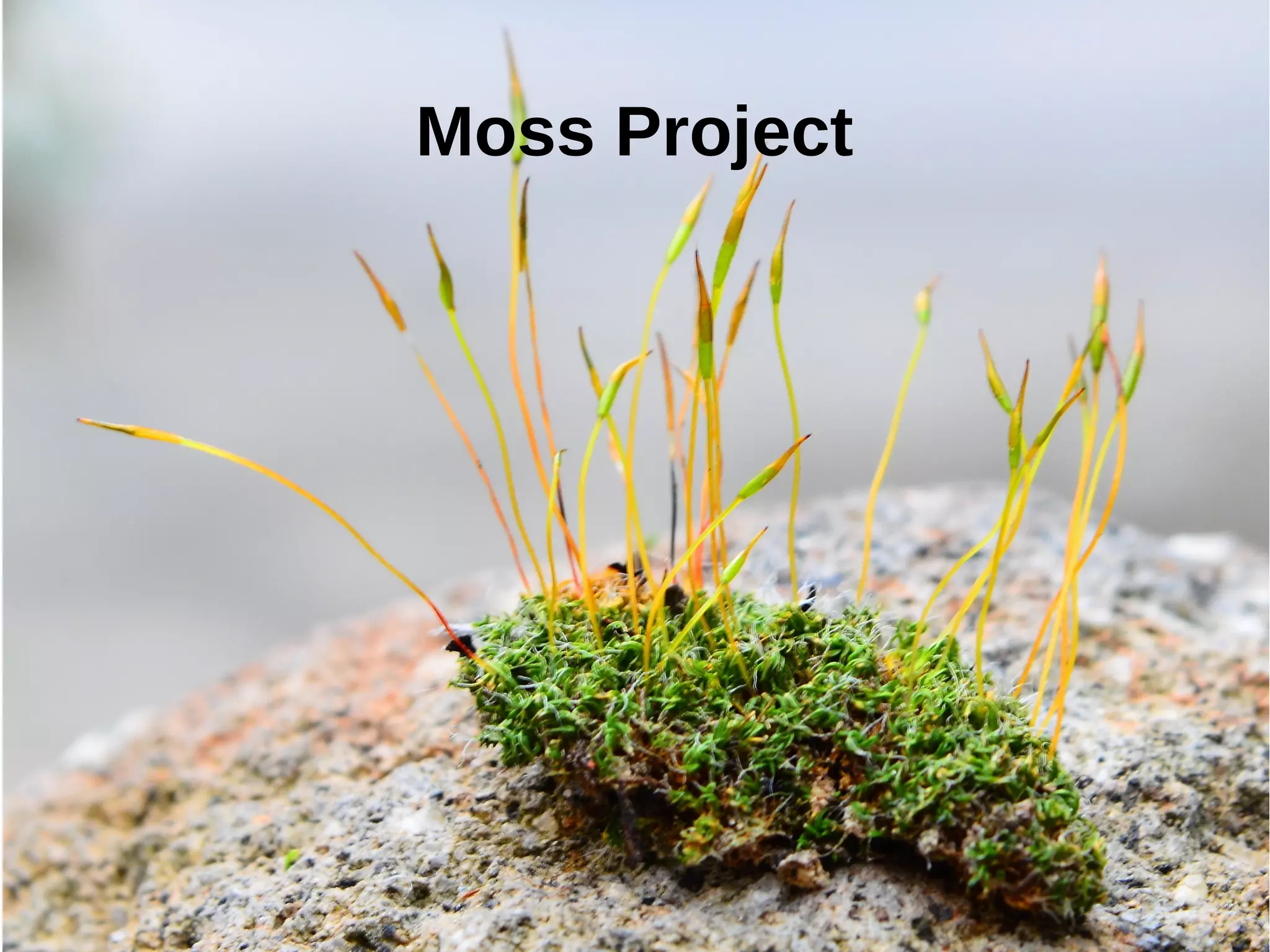
Moss Project
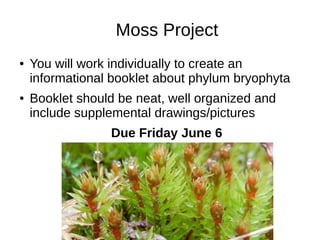
● You will work individually to create an
informational booklet about phylum bryophyta
● Booklet should be neat, well organized and
include supplemental drawings/pictures
Due Friday June 6
Page One - Information
● Use text and online resources to make point form
notes under each of the following headings:
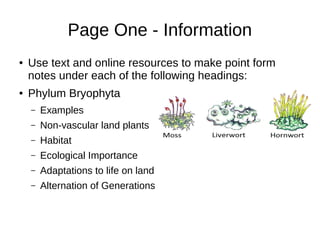
● Phylum Bryophyta
– Examples
– Non-vascular land plants
– Habitat
– Ecological Importance
– Adaptations to life on land
– Alternation of Generations
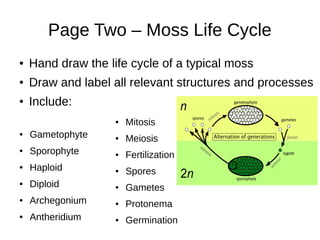
Page Two – Moss Life Cycle
● Hand draw the life cycle of a typical moss
● Draw and label all relevant structures and processes
● Include:
● Mitosis
● Meiosis
● Fertilization
● Spores
● Gametes
● Protonema
● Germination
● Gametophyte
● Sporophyte
● Haploid
● Diploid
● Archegonium
● Antheridium
Page Three – Moss Structures
● Observe three prepared slides:
– Protonema developing from spore
– Male gametophyte: Antheridium
– Female gametophyte: Archegonium
● Complete three simple biological drawings
(labels & observations, no calculations)
● Include in your observations the functions of
each structure and where/when it is found
Page Four – Live Sample
● Take a walk around school grounds to find some moss
or bring a sample from home
● Collect a SMALL sample including the sporophyte
– 3-4 Individual plants with sporangium & rhizoids attached
● Examine your sample under the dissecting microscope
and make 1-2 biological drawings
● You may dissect open the capsule to examine the
structures and spores
● Attach one whole plant with clear tape to your page
● BONUS – Identify the species of moss you found (inc.
references)
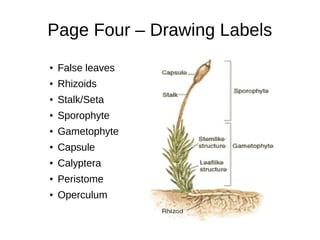
Page Four – Drawing Labels
● False leaves
● Rhizoids
● Stalk/Seta
● Sporophyte
● Gametophyte
● Capsule
● Calyptera
● Peristome
● Operculum
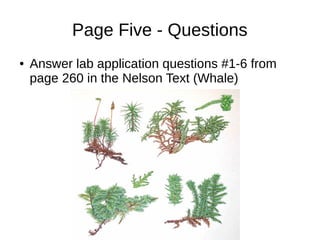
Page Five - Questions
● Answer lab application questions #1-6 from
page 260 in the Nelson Text (Whale)

Moss project

  • 1.
  • 2.
    Moss Project ● Youwill work individually to create an informational booklet about phylum bryophyta ● Booklet should be neat, well organized and include supplemental drawings/pictures Due Friday June 6
  • 3.
    Page One -Information ● Use text and online resources to make point form notes under each of the following headings: ● Phylum Bryophyta – Examples – Non-vascular land plants – Habitat – Ecological Importance – Adaptations to life on land – Alternation of Generations
  • 4.
    Page Two –Moss Life Cycle ● Hand draw the life cycle of a typical moss ● Draw and label all relevant structures and processes ● Include: ● Mitosis ● Meiosis ● Fertilization ● Spores ● Gametes ● Protonema ● Germination ● Gametophyte ● Sporophyte ● Haploid ● Diploid ● Archegonium ● Antheridium
  • 5.
    Page Three –Moss Structures ● Observe three prepared slides: – Protonema developing from spore – Male gametophyte: Antheridium – Female gametophyte: Archegonium ● Complete three simple biological drawings (labels & observations, no calculations) ● Include in your observations the functions of each structure and where/when it is found
  • 6.
    Page Four –Live Sample ● Take a walk around school grounds to find some moss or bring a sample from home ● Collect a SMALL sample including the sporophyte – 3-4 Individual plants with sporangium & rhizoids attached ● Examine your sample under the dissecting microscope and make 1-2 biological drawings ● You may dissect open the capsule to examine the structures and spores ● Attach one whole plant with clear tape to your page ● BONUS – Identify the species of moss you found (inc. references)
  • 7.
    Page Four –Drawing Labels ● False leaves ● Rhizoids ● Stalk/Seta ● Sporophyte ● Gametophyte ● Capsule ● Calyptera ● Peristome ● Operculum
  • 8.
    Page Five -Questions ● Answer lab application questions #1-6 from page 260 in the Nelson Text (Whale)