6a: Meiosis 
● Describe cells during the cell cycle as either 
haploid or diploid 
● Describe the stages of meiosis 
● Identify male and female gametes 
● Describe the process of crossing over and 
independent assortment as means of 
creating genetic diversity
Some background... 
● You are a multi cellular organism that 
started as a single cell... how? 
● How many chromosomes did your first cell 
have? 
● How was that first cell made? 
● How many cells must those cells have had? 
● What process made those cells?
Some background... 
● You are a multi cellular organism that started as a single 
cell... how? 
– Mitosis! 
● How many chromosomes did your first cell have? 
– 46 
● How was that first cell made? 
– Sperm fertilized an egg 
● How many cells must those cells have had? 
– Half of 46 = 23 
● What process made those cells? 
– Meiosis!
Vocabulary 
● Gamete: A sex cell (sperm for male & egg in 
females) 
● Fertilization: The process in which an egg 
cell fuses with a sperm cell and male and 
female genetic material combines 
● Zygote: A fertilized egg. Contains two sets of 
chromosomes and will divide by mitosis to 
develop into an embryo
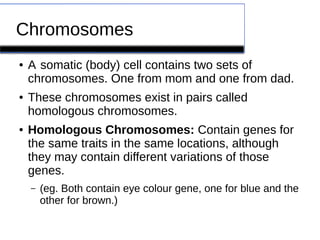
Chromosomes 
● A somatic (body) cell contains two sets of 
chromosomes. One from mom and one from dad. 
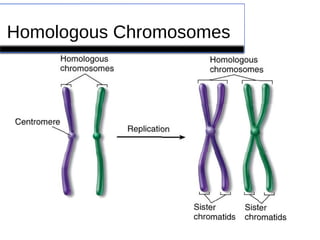
● These chromosomes exist in pairs called 
homologous chromosomes. 
● Homologous Chromosomes: Contain genes for 
the same traits in the same locations, although 
they may contain different variations of those 
genes. 
– (eg. Both contain eye colour gene, one for blue and the 
other for brown.)
Homologous Chromosomes
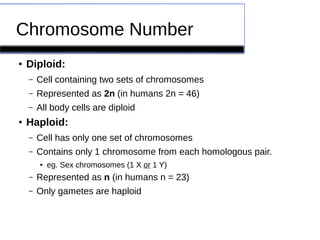
Chromosome Number 
● Diploid: 
– Cell containing two sets of chromosomes 
– Represented as 2n (in humans 2n = 46) 
– All body cells are diploid 
● Haploid: 
– Cell has only one set of chromosomes 
– Contains only 1 chromosome from each homologous pair. 
● eg. Sex chromosomes (1 X or 1 Y) 
– Represented as n (in humans n = 23) 
– Only gametes are haploid
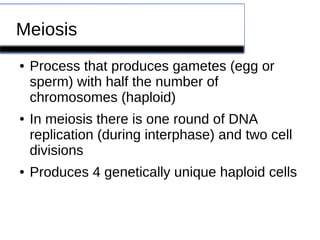
Meiosis 
● Process that produces gametes (egg or 
sperm) with half the number of 
chromosomes (haploid) 
● In meiosis there is one round of DNA 
replication (during interphase) and two cell 
divisions 
● Produces 4 genetically unique haploid cells
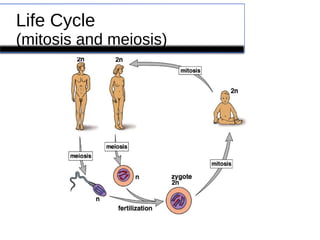
Life Cycle 
(mitosis and meiosis)
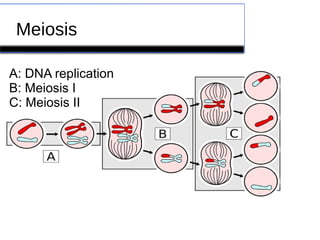
Meiosis 
A: DNA replication 
B: Meiosis I 
C: Meiosis II
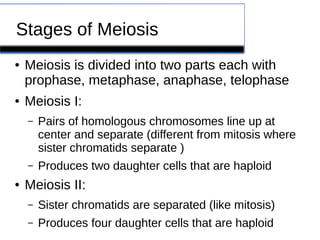
Stages of Meiosis 
● Meiosis is divided into two parts each with 
prophase, metaphase, anaphase, telophase 
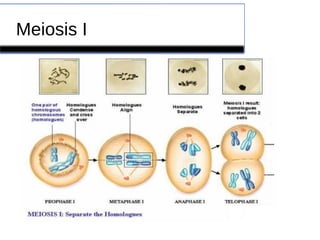
● Meiosis I: 
– Pairs of homologous chromosomes line up at 
center and separate (different from mitosis where 
sister chromatids separate ) 
– Produces two daughter cells that are haploid 
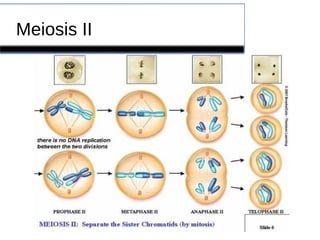
● Meiosis II: 
– Sister chromatids are separated (like mitosis) 
– Produces four daughter cells that are haploid
Meiosis I
Meiosis II
Result of Meiosis 
● Meiosis produces four genetically unique 
daughter cells 
● Each cell contains one chromatid (daughter 
chromosome) from each homologous pair 
● Cells are haploid (humans = 23 
chromosomes)
Genetic Variation in Meiosis 
● Every gamete is unique from all other 
gametes produced because of two 
processes that occur during meiosis I 
1. Crossing Over 
2. Independent Assortment
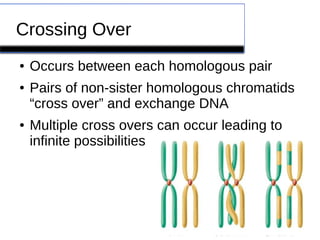
Crossing Over 
● Occurs between each homologous pair 
● Pairs of non-sister homologous chromatids 
“cross over” and exchange DNA 
● Multiple cross overs can occur leading to 
infinite possibilities
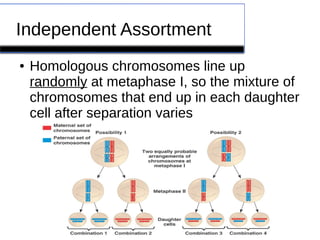
Independent Assortment 
● Homologous chromosomes line up 
randomly at metaphase I, so the mixture of 
chromosomes that end up in each daughter 
cell after separation varies
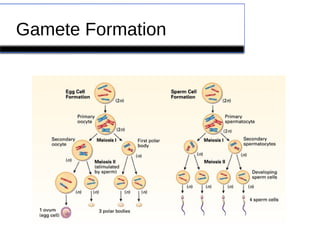
Gamete Formation 
● Meiosis is the same in male and females, after 
meiosis further development occur to specialize 
a cell as either egg or sperm 
● Male: Meiosis occurs in testes and produces 4 
sperm cells 
– Produced from puberty on (millions every day) 
● Female: Meiosis occurs in ovaries and produces 
1 egg and 3 smaller polar body cells 
– Produced before birth (about 1-2 million eggs 
present at birth)
Gamete Formation

6a: Meiosis

  • 1.
    6a: Meiosis ●Describe cells during the cell cycle as either haploid or diploid ● Describe the stages of meiosis ● Identify male and female gametes ● Describe the process of crossing over and independent assortment as means of creating genetic diversity
  • 2.
    Some background... ●You are a multi cellular organism that started as a single cell... how? ● How many chromosomes did your first cell have? ● How was that first cell made? ● How many cells must those cells have had? ● What process made those cells?
  • 3.
    Some background... ●You are a multi cellular organism that started as a single cell... how? – Mitosis! ● How many chromosomes did your first cell have? – 46 ● How was that first cell made? – Sperm fertilized an egg ● How many cells must those cells have had? – Half of 46 = 23 ● What process made those cells? – Meiosis!
  • 4.
    Vocabulary ● Gamete:A sex cell (sperm for male & egg in females) ● Fertilization: The process in which an egg cell fuses with a sperm cell and male and female genetic material combines ● Zygote: A fertilized egg. Contains two sets of chromosomes and will divide by mitosis to develop into an embryo
  • 5.
    Chromosomes ● Asomatic (body) cell contains two sets of chromosomes. One from mom and one from dad. ● These chromosomes exist in pairs called homologous chromosomes. ● Homologous Chromosomes: Contain genes for the same traits in the same locations, although they may contain different variations of those genes. – (eg. Both contain eye colour gene, one for blue and the other for brown.)
  • 6.
  • 7.
    Chromosome Number ●Diploid: – Cell containing two sets of chromosomes – Represented as 2n (in humans 2n = 46) – All body cells are diploid ● Haploid: – Cell has only one set of chromosomes – Contains only 1 chromosome from each homologous pair. ● eg. Sex chromosomes (1 X or 1 Y) – Represented as n (in humans n = 23) – Only gametes are haploid
  • 8.
    Meiosis ● Processthat produces gametes (egg or sperm) with half the number of chromosomes (haploid) ● In meiosis there is one round of DNA replication (during interphase) and two cell divisions ● Produces 4 genetically unique haploid cells
  • 9.
    Life Cycle (mitosisand meiosis)
  • 10.
    Meiosis A: DNAreplication B: Meiosis I C: Meiosis II
  • 11.
    Stages of Meiosis ● Meiosis is divided into two parts each with prophase, metaphase, anaphase, telophase ● Meiosis I: – Pairs of homologous chromosomes line up at center and separate (different from mitosis where sister chromatids separate ) – Produces two daughter cells that are haploid ● Meiosis II: – Sister chromatids are separated (like mitosis) – Produces four daughter cells that are haploid
  • 12.
  • 13.
  • 14.
    Result of Meiosis ● Meiosis produces four genetically unique daughter cells ● Each cell contains one chromatid (daughter chromosome) from each homologous pair ● Cells are haploid (humans = 23 chromosomes)
  • 15.
    Genetic Variation inMeiosis ● Every gamete is unique from all other gametes produced because of two processes that occur during meiosis I 1. Crossing Over 2. Independent Assortment
  • 16.
    Crossing Over ●Occurs between each homologous pair ● Pairs of non-sister homologous chromatids “cross over” and exchange DNA ● Multiple cross overs can occur leading to infinite possibilities
  • 17.
    Independent Assortment ●Homologous chromosomes line up randomly at metaphase I, so the mixture of chromosomes that end up in each daughter cell after separation varies
  • 18.
    Gamete Formation ●Meiosis is the same in male and females, after meiosis further development occur to specialize a cell as either egg or sperm ● Male: Meiosis occurs in testes and produces 4 sperm cells – Produced from puberty on (millions every day) ● Female: Meiosis occurs in ovaries and produces 1 egg and 3 smaller polar body cells – Produced before birth (about 1-2 million eggs present at birth)
  • 19.