Cell Structure and Function
Describe the functions of cell organelles
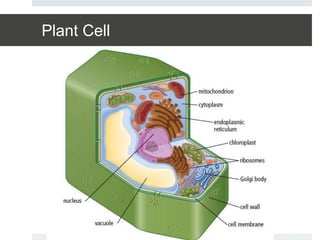
Identify organelles on a diagram
Compare and contrast plant and animal cells
Cells
 Cells are the basic building block of life. It is the smallest unit
at which life can exist.
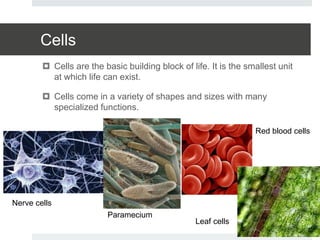
 Cells come in a variety of shapes and sizes with many
specialized functions.
Nerve cells
Paramecium
Red blood cells
Leaf cells
All (eukaryotic)cells have:
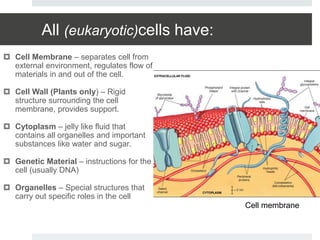
 Cell Membrane – separates cell from
external environment, regulates flow of
materials in and out of the cell.
 Cell Wall (Plants only) – Rigid
structure surrounding the cell
membrane, provides support.
 Cytoplasm – jelly like fluid that
contains all organelles and important
substances like water and sugar.
 Genetic Material – instructions for the
cell (usually DNA)
 Organelles – Special structures that
carry out specific roles in the cell
Cell membrane
Mitochondria
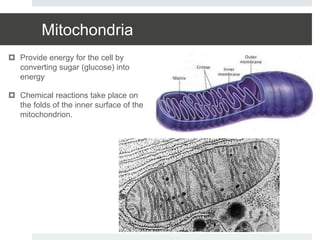
 Provide energy for the cell by
converting sugar (glucose) into
energy
 Chemical reactions take place on
the folds of the inner surface of the
mitochondrion.
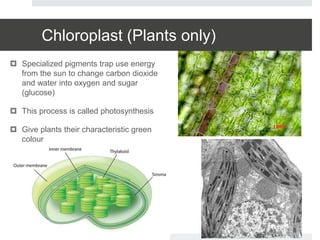
Chloroplast (Plants only)
 Specialized pigments trap use energy
from the sun to change carbon dioxide
and water into oxygen and sugar
(glucose)
 This process is called photosynthesis
 Give plants their characteristic green
colour
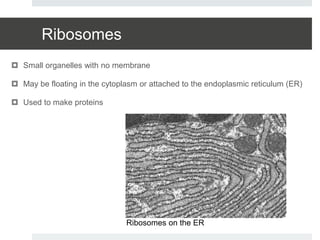
Ribosomes
 Small organelles with no membrane
 May be floating in the cytoplasm or attached to the endoplasmic reticulum (ER)
 Used to make proteins
Ribosomes on the ER
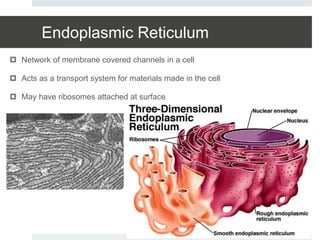
Endoplasmic Reticulum
 Network of membrane covered channels in a cell
 Acts as a transport system for materials made in the cell
 May have ribosomes attached at surface
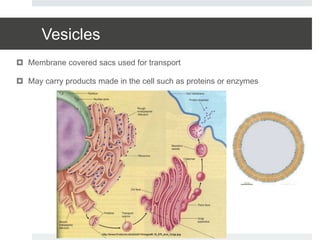
Vesicles
 Membrane covered sacs used for transport
 May carry products made in the cell such as proteins or enzymes
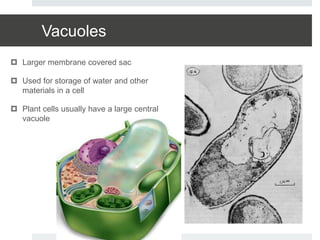
Vacuoles
 Larger membrane covered sac
 Used for storage of water and other
materials in a cell
 Plant cells usually have a large central
vacuole
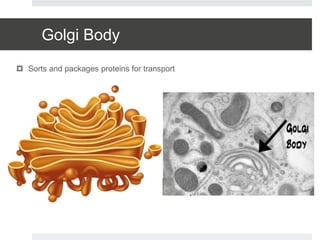
Golgi Body
 Sorts and packages proteins for transport
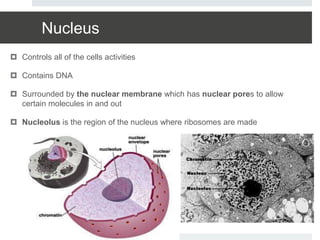
Nucleus
 Controls all of the cells activities
 Contains DNA
 Surrounded by the nuclear membrane which has nuclear pores to allow
certain molecules in and out
 Nucleolus is the region of the nucleus where ribosomes are made
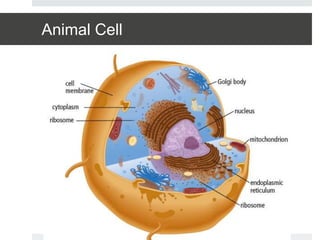
Animal Cell
Plant Cell
I’m a real “powerhouse.”
That’s plain to see.
I break down food
To release energy.
What am I?
I’m strong and stiff
Getting through me is tough.
I’m found only in plants,
But I guess that’s enough.
What am I?
I’m the “brain” of the cell
Or so they say.
I regulate activities
From day to day.
What am I?
Found only in plant cells,
I’m green as can be.
I make food for the plant
Using the sun’s energy.
What am I?
I’m a series of tubes,
Found throughout the cell.
I transport proteins
And other things as well.
What am I?
I’m full of holes,
Flexible, and thin.
I control what gets out
As well as what comes in.
What am I?
Proteins are made here
Even though I’m quite small.
You can find me in the
cytoplasm
Or attached to E.R.’s wall.
What am I?
I’ve been called a “storage tank”
By those with little taste.
I’m a sac filled with water,
Food, enzymes, or waste.
What am I?
Inner Life of a Cell
http://www.xvivo.net/animation/the-inner-life-of-the-cell/

Cell structure and function

  • 1.
    Cell Structure andFunction Describe the functions of cell organelles Identify organelles on a diagram Compare and contrast plant and animal cells
  • 2.
    Cells  Cells arethe basic building block of life. It is the smallest unit at which life can exist.  Cells come in a variety of shapes and sizes with many specialized functions. Nerve cells Paramecium Red blood cells Leaf cells
  • 3.
    All (eukaryotic)cells have: Cell Membrane – separates cell from external environment, regulates flow of materials in and out of the cell.  Cell Wall (Plants only) – Rigid structure surrounding the cell membrane, provides support.  Cytoplasm – jelly like fluid that contains all organelles and important substances like water and sugar.  Genetic Material – instructions for the cell (usually DNA)  Organelles – Special structures that carry out specific roles in the cell Cell membrane
  • 4.
    Mitochondria  Provide energyfor the cell by converting sugar (glucose) into energy  Chemical reactions take place on the folds of the inner surface of the mitochondrion.
  • 5.
    Chloroplast (Plants only) Specialized pigments trap use energy from the sun to change carbon dioxide and water into oxygen and sugar (glucose)  This process is called photosynthesis  Give plants their characteristic green colour
  • 6.
    Ribosomes  Small organelleswith no membrane  May be floating in the cytoplasm or attached to the endoplasmic reticulum (ER)  Used to make proteins Ribosomes on the ER
  • 7.
    Endoplasmic Reticulum  Networkof membrane covered channels in a cell  Acts as a transport system for materials made in the cell  May have ribosomes attached at surface
  • 8.
    Vesicles  Membrane coveredsacs used for transport  May carry products made in the cell such as proteins or enzymes
  • 9.
    Vacuoles  Larger membranecovered sac  Used for storage of water and other materials in a cell  Plant cells usually have a large central vacuole
  • 10.
    Golgi Body  Sortsand packages proteins for transport
  • 11.
    Nucleus  Controls allof the cells activities  Contains DNA  Surrounded by the nuclear membrane which has nuclear pores to allow certain molecules in and out  Nucleolus is the region of the nucleus where ribosomes are made
  • 12.
  • 13.
  • 14.
    I’m a real“powerhouse.” That’s plain to see. I break down food To release energy. What am I?
  • 15.
    I’m strong andstiff Getting through me is tough. I’m found only in plants, But I guess that’s enough. What am I?
  • 16.
    I’m the “brain”of the cell Or so they say. I regulate activities From day to day. What am I?
  • 17.
    Found only inplant cells, I’m green as can be. I make food for the plant Using the sun’s energy. What am I?
  • 18.
    I’m a seriesof tubes, Found throughout the cell. I transport proteins And other things as well. What am I?
  • 19.
    I’m full ofholes, Flexible, and thin. I control what gets out As well as what comes in. What am I?
  • 20.
    Proteins are madehere Even though I’m quite small. You can find me in the cytoplasm Or attached to E.R.’s wall. What am I?
  • 21.
    I’ve been calleda “storage tank” By those with little taste. I’m a sac filled with water, Food, enzymes, or waste. What am I?
  • 22.
    Inner Life ofa Cell http://www.xvivo.net/animation/the-inner-life-of-the-cell/