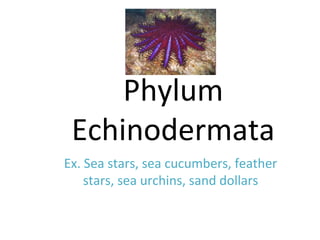
Phylum
Echinodermata
Ex. Sea stars, sea cucumbers, feather
stars, sea urchins, sand dollars
Phylum Echinodermata
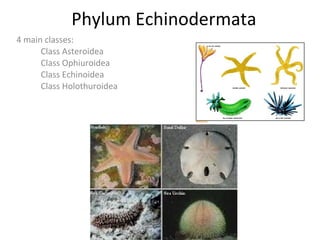
4 main classes:
Class Asteroidea
Class Ophiuroidea
Class Echinoidea
Class Holothuroidea
Echinoderms:
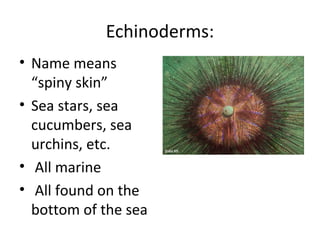
• Name means
“spiny skin”
• Sea stars, sea
cucumbers, sea
urchins, etc.
• All marine
• All found on the
bottom of the sea
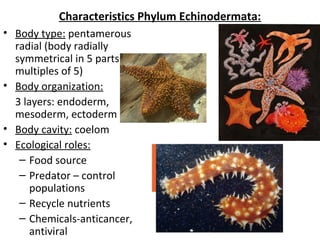
Characteristics Phylum Echinodermata:
• Body type: pentamerous
radial (body radially
symmetrical in 5 parts or
multiples of 5)
• Body organization:
3 layers: endoderm,
mesoderm, ectoderm
• Body cavity: coelom
• Ecological roles:
– Food source
– Predator – control
populations
– Recycle nutrients
– Chemicals-anticancer,
antiviral
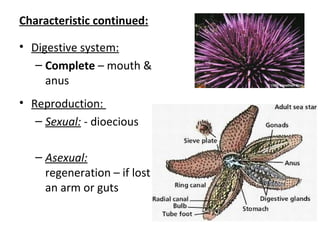
Characteristic continued:
• Digestive system:
– Complete – mouth &
anus
• Reproduction:
– Sexual: - dioecious
– Asexual:
regeneration – if lost
an arm or guts
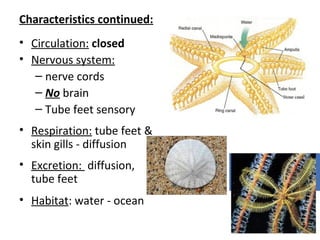
Characteristics continued:
• Circulation: closed
• Nervous system:
– nerve cords
– No brain
– Tube feet sensory
• Respiration: tube feet &
skin gills - diffusion
• Excretion: diffusion,
tube feet
• Habitat: water - ocean
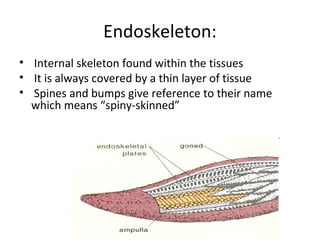
Endoskeleton:
• Internal skeleton found within the tissues
• It is always covered by a thin layer of tissue
• Spines and bumps give reference to their name
which means “spiny-skinned”
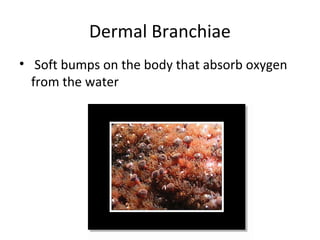
Dermal Branchiae
• Soft bumps on the body that absorb oxygen
from the water
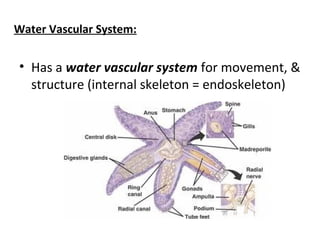
Water Vascular System:
• Has a water vascular system for movement, &
structure (internal skeleton = endoskeleton)
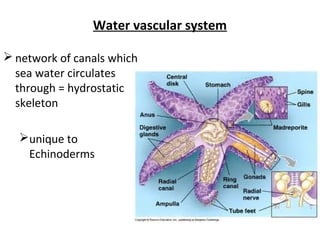
Water vascular system
 network of canals which
sea water circulates
through = hydrostatic
skeleton
unique to
Echinoderms
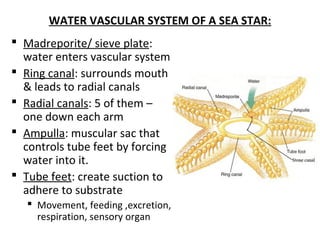
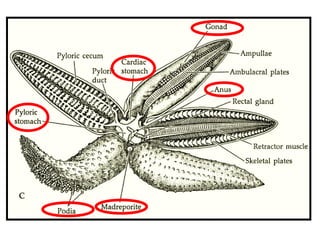
WATER VASCULAR SYSTEM OF A SEA STAR:
 Madreporite/ sieve plate:
water enters vascular system
 Ring canal: surrounds mouth
& leads to radial canals
 Radial canals: 5 of them –
one down each arm
 Ampulla: muscular sac that
controls tube feet by forcing
water into it.
 Tube feet: create suction to
adhere to substrate
 Movement, feeding ,excretion,
respiration, sensory organ
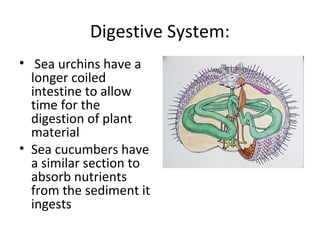
Digestive System:
• Sea urchins have a
longer coiled
intestine to allow
time for the
digestion of plant
material
• Sea cucumbers have
a similar section to
absorb nutrients
from the sediment it
ingests
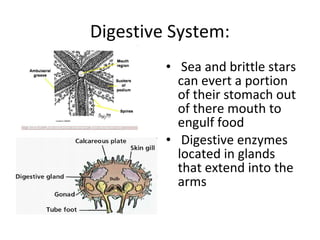
Digestive System:
• Sea and brittle stars
can evert a portion
of their stomach out
of there mouth to
engulf food
• Digestive enzymes
located in glands
that extend into the
arms
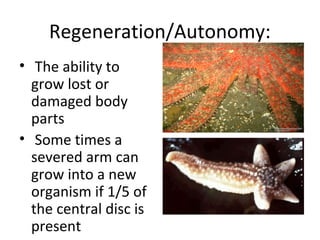
Regeneration/Autonomy:
• The ability to
grow lost or
damaged body
parts
• Some times a
severed arm can
grow into a new
organism if 1/5 of
the central disc is
present
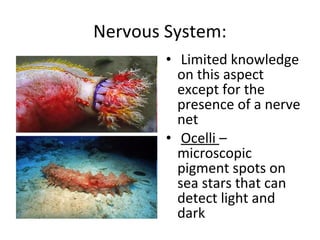
Nervous System:
• Limited knowledge
on this aspect
except for the
presence of a nerve
net
• Ocelli –
microscopic
pigment spots on
sea stars that can
detect light and
dark
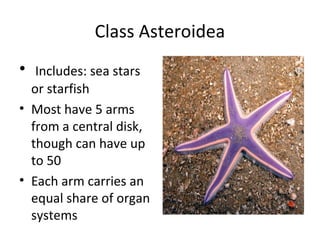
Class Asteroidea
• Includes: sea stars
or starfish
• Most have 5 arms
from a central disk,
though can have up
to 50
• Each arm carries an
equal share of organ
systems
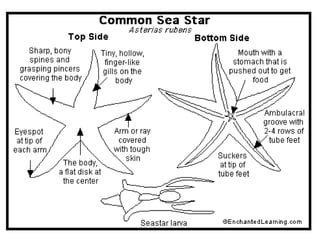
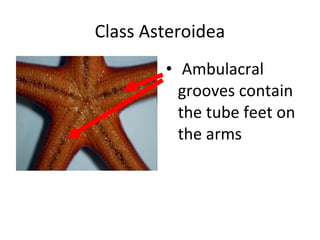
Class Asteroidea
• Ambulacral
grooves contain
the tube feet on
the arms
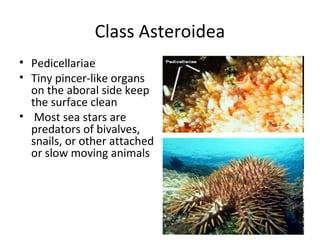
Class Asteroidea
• Pedicellariae
• Tiny pincer-like organs
on the aboral side keep
the surface clean
• Most sea stars are
predators of bivalves,
snails, or other attached
or slow moving animals
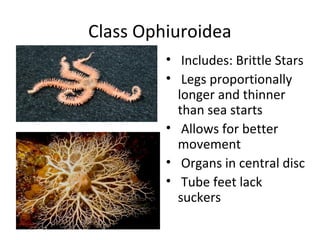
Class Ophiuroidea
• Includes: Brittle Stars
• Legs proportionally
longer and thinner
than sea starts
• Allows for better
movement
• Organs in central disc
• Tube feet lack
suckers
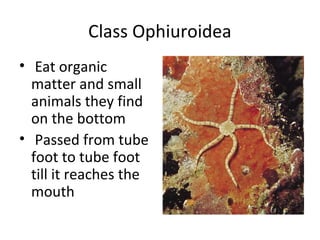
Class Ophiuroidea
• Eat organic
matter and small
animals they find
on the bottom
• Passed from tube
foot to tube foot
till it reaches the
mouth
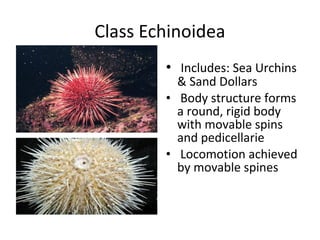
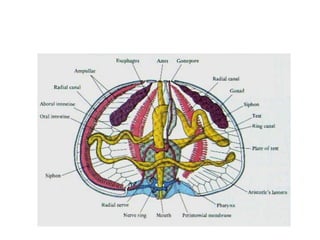
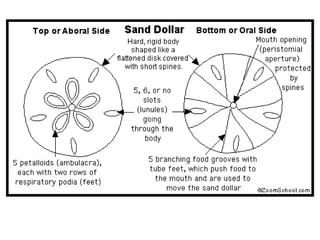
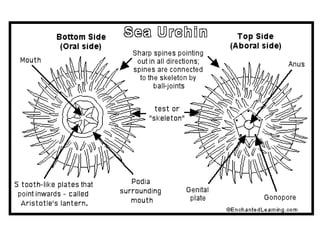
Class Echinoidea
• Includes: Sea Urchins
& Sand Dollars
• Body structure forms
a round, rigid body
with movable spins
and pedicellarie
• Locomotion achieved
by movable spines
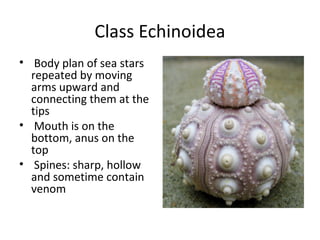
Class Echinoidea
• Body plan of sea stars
repeated by moving
arms upward and
connecting them at the
tips
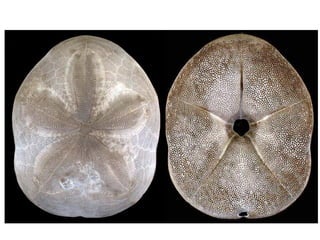
• Mouth is on the
bottom, anus on the
top
• Spines: sharp, hollow
and sometime contain
venom
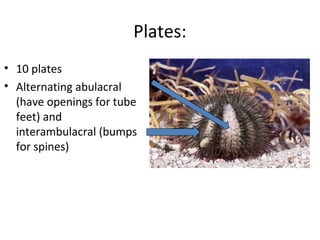
Plates:
• 10 plates
• Alternating abulacral
(have openings for tube
feet) and
interambulacral (bumps
for spines)
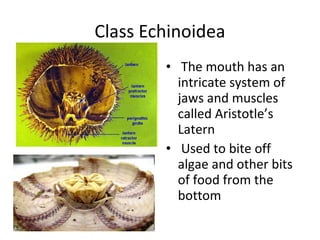
Class Echinoidea
• The mouth has an
intricate system of
jaws and muscles
called Aristotle’s
Latern
• Used to bite off
algae and other bits
of food from the
bottom
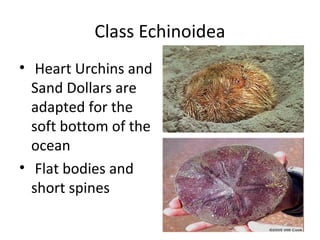
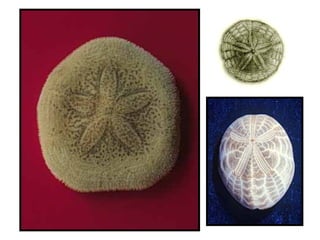
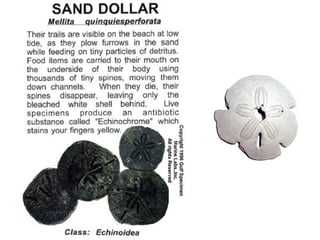
Class Echinoidea
• Heart Urchins and
Sand Dollars are
adapted for the
soft bottom of the
ocean
• Flat bodies and
short spines
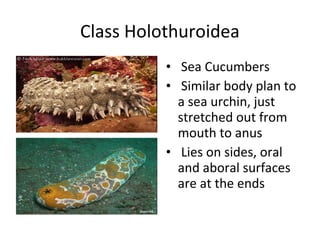
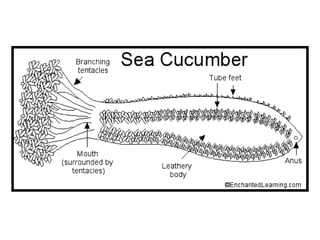
Class Holothuroidea
• Sea Cucumbers
• Similar body plan to
a sea urchin, just
stretched out from
mouth to anus
• Lies on sides, oral
and aboral surfaces
are at the ends
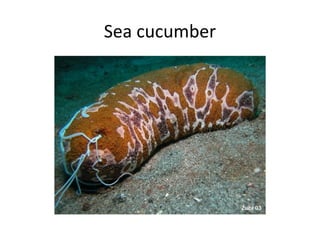
Sea cucumber
Good echino playlist
• https://www.youtube.com/playlist?list=PLQ5YDZy

Phylum echinodermata 2016

  • 1.
    Phylum Echinodermata Ex. Sea stars,sea cucumbers, feather stars, sea urchins, sand dollars
  • 2.
    Phylum Echinodermata 4 mainclasses: Class Asteroidea Class Ophiuroidea Class Echinoidea Class Holothuroidea
  • 3.
    Echinoderms: • Name means “spinyskin” • Sea stars, sea cucumbers, sea urchins, etc. • All marine • All found on the bottom of the sea
  • 4.
    Characteristics Phylum Echinodermata: •Body type: pentamerous radial (body radially symmetrical in 5 parts or multiples of 5) • Body organization: 3 layers: endoderm, mesoderm, ectoderm • Body cavity: coelom • Ecological roles: – Food source – Predator – control populations – Recycle nutrients – Chemicals-anticancer, antiviral
  • 5.
    Characteristic continued: • Digestivesystem: – Complete – mouth & anus • Reproduction: – Sexual: - dioecious – Asexual: regeneration – if lost an arm or guts
  • 6.
    Characteristics continued: • Circulation:closed • Nervous system: – nerve cords – No brain – Tube feet sensory • Respiration: tube feet & skin gills - diffusion • Excretion: diffusion, tube feet • Habitat: water - ocean
  • 7.
    Endoskeleton: • Internal skeletonfound within the tissues • It is always covered by a thin layer of tissue • Spines and bumps give reference to their name which means “spiny-skinned”
  • 8.
    Dermal Branchiae • Softbumps on the body that absorb oxygen from the water
  • 9.
    Water Vascular System: •Has a water vascular system for movement, & structure (internal skeleton = endoskeleton)
  • 10.
    Water vascular system network of canals which sea water circulates through = hydrostatic skeleton unique to Echinoderms
  • 11.
    WATER VASCULAR SYSTEMOF A SEA STAR:  Madreporite/ sieve plate: water enters vascular system  Ring canal: surrounds mouth & leads to radial canals  Radial canals: 5 of them – one down each arm  Ampulla: muscular sac that controls tube feet by forcing water into it.  Tube feet: create suction to adhere to substrate  Movement, feeding ,excretion, respiration, sensory organ
  • 12.
    Digestive System: • Seaurchins have a longer coiled intestine to allow time for the digestion of plant material • Sea cucumbers have a similar section to absorb nutrients from the sediment it ingests
  • 13.
    Digestive System: • Seaand brittle stars can evert a portion of their stomach out of there mouth to engulf food • Digestive enzymes located in glands that extend into the arms
  • 14.
    Regeneration/Autonomy: • The abilityto grow lost or damaged body parts • Some times a severed arm can grow into a new organism if 1/5 of the central disc is present
  • 15.
    Nervous System: • Limitedknowledge on this aspect except for the presence of a nerve net • Ocelli – microscopic pigment spots on sea stars that can detect light and dark
  • 18.
    Class Asteroidea • Includes:sea stars or starfish • Most have 5 arms from a central disk, though can have up to 50 • Each arm carries an equal share of organ systems
  • 19.
    Class Asteroidea • Ambulacral groovescontain the tube feet on the arms
  • 20.
    Class Asteroidea • Pedicellariae •Tiny pincer-like organs on the aboral side keep the surface clean • Most sea stars are predators of bivalves, snails, or other attached or slow moving animals
  • 21.
    Class Ophiuroidea • Includes:Brittle Stars • Legs proportionally longer and thinner than sea starts • Allows for better movement • Organs in central disc • Tube feet lack suckers
  • 22.
    Class Ophiuroidea • Eatorganic matter and small animals they find on the bottom • Passed from tube foot to tube foot till it reaches the mouth
  • 23.
    Class Echinoidea • Includes:Sea Urchins & Sand Dollars • Body structure forms a round, rigid body with movable spins and pedicellarie • Locomotion achieved by movable spines
  • 24.
    Class Echinoidea • Bodyplan of sea stars repeated by moving arms upward and connecting them at the tips • Mouth is on the bottom, anus on the top • Spines: sharp, hollow and sometime contain venom
  • 25.
    Plates: • 10 plates •Alternating abulacral (have openings for tube feet) and interambulacral (bumps for spines)
  • 26.
    Class Echinoidea • Themouth has an intricate system of jaws and muscles called Aristotle’s Latern • Used to bite off algae and other bits of food from the bottom
  • 27.
    Class Echinoidea • HeartUrchins and Sand Dollars are adapted for the soft bottom of the ocean • Flat bodies and short spines
  • 34.
    Class Holothuroidea • SeaCucumbers • Similar body plan to a sea urchin, just stretched out from mouth to anus • Lies on sides, oral and aboral surfaces are at the ends
  • 36.
  • 39.
    Good echino playlist •https://www.youtube.com/playlist?list=PLQ5YDZy

Editor's Notes

  • #3 Means spiny skinned
  • #5 Predator – feed on sponges & molluscs
  • #9 Closed – water vascular system No brain but have sensory organs including tube feet Excretion – diffusion, anus and tube feet
  • #12 Endoskeleton – on the inside
  • #13 Remember – water vascular system is echinoderm only
  • #14 Sensory organ – can tast the water and locate food
  • #38 Can reach up to 2 feet long! Used to make soup in the orient.
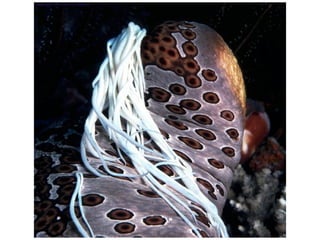
  • #40 This Eyed (or Leopard) sea cucumber was upset with the way I handled it-- and has ejected sticky, white thread-like Cuvierian tubules from its anus. Fortunately this does no permanent harm to the sea cucumber, but the sticky threads are highly irritating to the skin if touched.
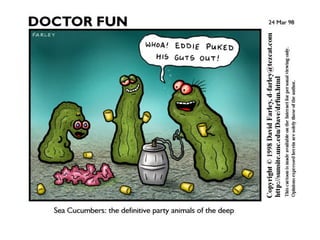
  • #41 The sea cucumber has an interesting and slightly disgusting way of defending itself. Through self-evisceration, a sea cucumber can expel (throw out) all of its internal organs! This either scares off or satisfies predators. The cucumber can then grow another set of internal organs.