5e: Asexual Reproduction & 
5f: Cloning 
• Describe the 5 types of asexual reproduction and give examples 
• List advantages and disadvantages of reproducing asexually 
• Describe the process of reproductive cloning 
• Describe the process of therapeutic cloning
Reproduction 
 Reproduction – the process of generating offspring 
 Sexual Reproduction – Methods of reproduction 
requiring genetic input from two parents. Produces 
genetically unique offspring 
 Asexual Reproduction – Methods of reproduction where 
a single parent produces offspring that are genetically 
identical to each other and the parent.
Asexual Reproduction 
Advantages 
 Able to produce large numbers 
of offspring quickly 
 Large colonies can outcompete 
other organisms and increase 
chances of species survival 
 No energy required to find a 
suitable mate 
Disadvantages 
 Offspring are identical so a 
single negative mutation can 
wipe out an entire population 
 No variation in population so 
entire colony can be killed by 
bad conditions 
 Many offspring close together 
may compete for 
food/resources
Types of Asexual Reproduction 
 Use text pages 168-174 to fill out the “Five Types of 
Asexual Reproduction” chart 
1. BINARY FISSION 
2. BUDDING 
3. FRAGMENTATION 
4. VEGETATIVE REPRODUCTION 
5. SPORE FORMATION
Cloning 
 A clone is an identical genetic copy of the parent 
organism 
 Human assisted cloning falls into two categories 
 Reproductive Cloning 
 Therapeutic Cloning
Reproductive Cloning 
 Making an entire organism that is genetically identical 
to the parent. 
 Purpose: Make a duplicate of an existing organism 
with desirable characteristics.
What have we cloned? 
 Tadpole – 1953 
 Fish - 1963 
 Mice -1986 
 Sheep -1995 
 Monkey -2000 
 Pig -2000 
 Guar -2001 
 Cow -2001 
 Cat -2001 
 Rat -2003 
 Mule -2003 
 Horse -2003 
 Dog -2005 
 Wolf -2005 
 Water buffalo -2009 
 Ibex -2009 (extinct) 
 Camel -2009 
 Goat -2012
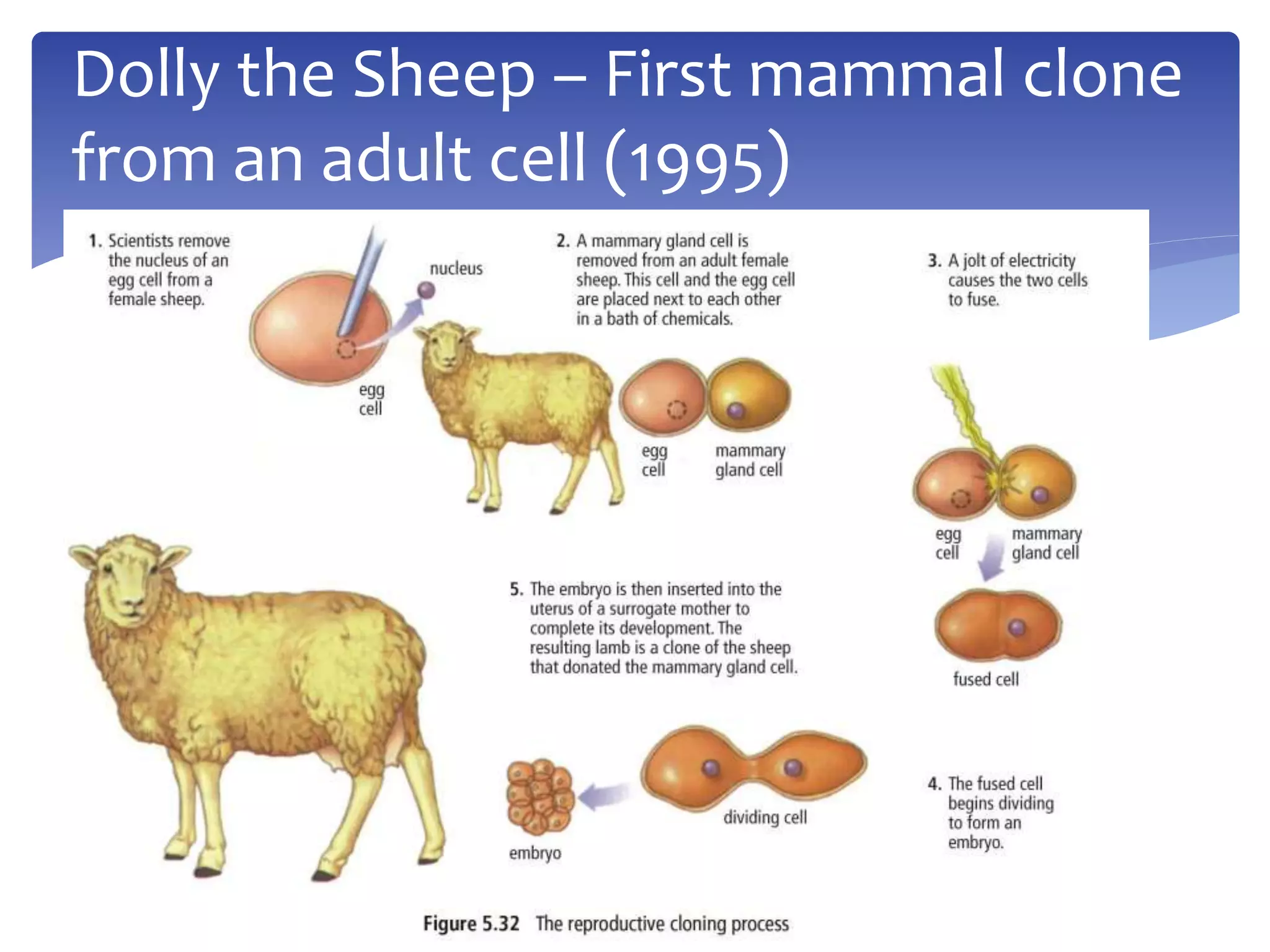
Reproductive Cloning Procedure 
 Requirements: 
 Somatic (body) cell from organism to be cloned 
 Donor egg cell with nucleus removed 
 Surrogate mother to carry and deliver the clone 
 Process: 
 Fuse somatic cell with the donor egg cell (nucleus removed) 
 Implant egg into surrogate mother 
 Clone develops in surrogate and is born 
http://learn.genetics.utah.edu/content/cloning/clickandclone/
Dolly the Sheep – First mammal clone 
from an adult cell (1995)
Why reproductive cloning? 
 Science – we clone because we can 
 Create animal models of disease – Purposefully create 
many animals with the same genetic mutations for 
testing possible treatments 
 Revive endangered or extinct species – Jurrasic park 
 Reproducing a pet – For $50,000 - $100,00 you can 
clone your pet when they die. 
 Cloning livestock with desirable traits – Fast, milky or 
meaty 
 Drug production – Genetically engineer drug or 
protein producing organisms then clone
Therapeutic Cloning 
 Using stem cells to replace damaged cells or grow 
new organs or tissues 
 Purpose: Correct health problems by producing 
specialized tissues and organs that are a perfect 
match for transplant. 
 Stem Cells: Undifferentiated cells that have the 
potential to become many different types of cells. 
Found in bone marrow and embryos
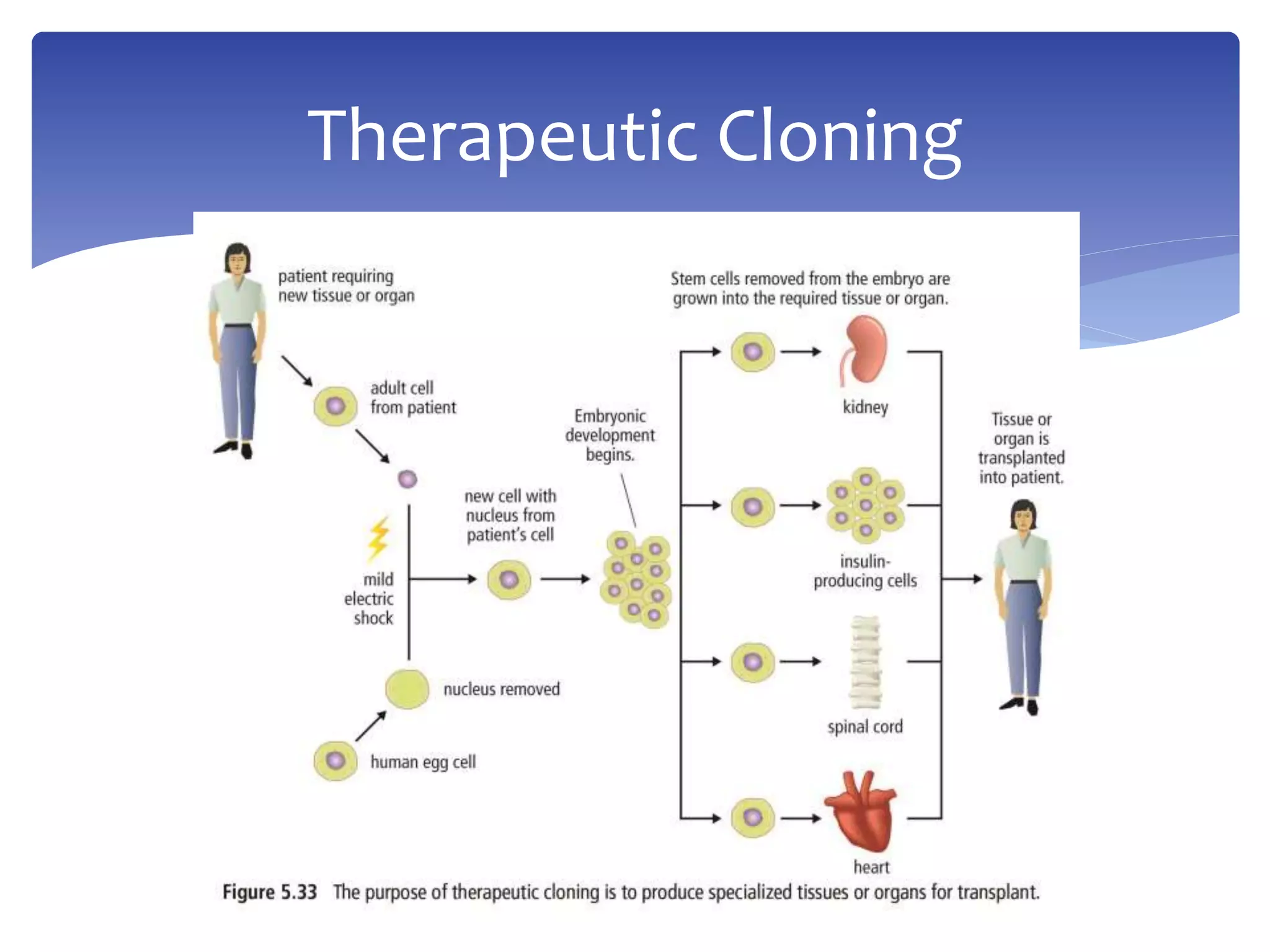
Therapeutic Cloning 
 Requirements: 
 Cell from patient 
 Donor egg cell with nucleus removed 
 Process 
 Nucleus from the patient is implanted into donor egg 
cell and an embryo begins to develop 
 Stem cells are removed from the embryo and are grown 
into the required tissue or organ 
 New tissue or organ is transplanted into the patient
Therapeutic Cloning

5ef asexual reproduction

  • 1.
    5e: Asexual Reproduction& 5f: Cloning • Describe the 5 types of asexual reproduction and give examples • List advantages and disadvantages of reproducing asexually • Describe the process of reproductive cloning • Describe the process of therapeutic cloning
  • 2.
    Reproduction  Reproduction– the process of generating offspring  Sexual Reproduction – Methods of reproduction requiring genetic input from two parents. Produces genetically unique offspring  Asexual Reproduction – Methods of reproduction where a single parent produces offspring that are genetically identical to each other and the parent.
  • 3.
    Asexual Reproduction Advantages  Able to produce large numbers of offspring quickly  Large colonies can outcompete other organisms and increase chances of species survival  No energy required to find a suitable mate Disadvantages  Offspring are identical so a single negative mutation can wipe out an entire population  No variation in population so entire colony can be killed by bad conditions  Many offspring close together may compete for food/resources
  • 4.
    Types of AsexualReproduction  Use text pages 168-174 to fill out the “Five Types of Asexual Reproduction” chart 1. BINARY FISSION 2. BUDDING 3. FRAGMENTATION 4. VEGETATIVE REPRODUCTION 5. SPORE FORMATION
  • 5.
    Cloning  Aclone is an identical genetic copy of the parent organism  Human assisted cloning falls into two categories  Reproductive Cloning  Therapeutic Cloning
  • 6.
    Reproductive Cloning Making an entire organism that is genetically identical to the parent.  Purpose: Make a duplicate of an existing organism with desirable characteristics.
  • 7.
    What have wecloned?  Tadpole – 1953  Fish - 1963  Mice -1986  Sheep -1995  Monkey -2000  Pig -2000  Guar -2001  Cow -2001  Cat -2001  Rat -2003  Mule -2003  Horse -2003  Dog -2005  Wolf -2005  Water buffalo -2009  Ibex -2009 (extinct)  Camel -2009  Goat -2012
  • 8.
    Reproductive Cloning Procedure  Requirements:  Somatic (body) cell from organism to be cloned  Donor egg cell with nucleus removed  Surrogate mother to carry and deliver the clone  Process:  Fuse somatic cell with the donor egg cell (nucleus removed)  Implant egg into surrogate mother  Clone develops in surrogate and is born http://learn.genetics.utah.edu/content/cloning/clickandclone/
  • 9.
    Dolly the Sheep– First mammal clone from an adult cell (1995)
  • 10.
    Why reproductive cloning?  Science – we clone because we can  Create animal models of disease – Purposefully create many animals with the same genetic mutations for testing possible treatments  Revive endangered or extinct species – Jurrasic park  Reproducing a pet – For $50,000 - $100,00 you can clone your pet when they die.  Cloning livestock with desirable traits – Fast, milky or meaty  Drug production – Genetically engineer drug or protein producing organisms then clone
  • 11.
    Therapeutic Cloning Using stem cells to replace damaged cells or grow new organs or tissues  Purpose: Correct health problems by producing specialized tissues and organs that are a perfect match for transplant.  Stem Cells: Undifferentiated cells that have the potential to become many different types of cells. Found in bone marrow and embryos
  • 12.
    Therapeutic Cloning Requirements:  Cell from patient  Donor egg cell with nucleus removed  Process  Nucleus from the patient is implanted into donor egg cell and an embryo begins to develop  Stem cells are removed from the embryo and are grown into the required tissue or organ  New tissue or organ is transplanted into the patient
  • 13.