SHRI SHIVAJI SCIENCE COLLEGE,
AMRAVATI
CLASS : XI ( 2020-2021)
SUBJECT : BIOLOGY
CHAPTER NO. 7 ( CELL DIVISION)
BY PROF. S. G. MANKAR
CONTENTS:
 INTRODUCTION
 CELL CYCLE
 INTERPHASE
 MITOSIS
 AMITOSIS
 MEOSIS
INTRODUCTION:
Life of all multicellular organisms starts from single cell i.e.
zygote. Growth of every living organism depends on cell
division. As stated in the cell theory, every cell arises from
the pre-existing cell.
REMEMBER IT?
What is cell division?
Where do new cells come from?
How a cell reproduces, makes a copy of itself?
How living things grow (Mitosis) and make sex cells
(Meiosis) ?
1.CELL CYCLE:
 Cell cycle, the ordered sequence of events that occur in a cell
in preparation for cell division
 The cell cycle is a four-stage process in which the cell
increases in size (gap 1, or G1, stage), copies its DNA
(synthesis, or S, stage), prepares to divide (gap 2, or G2,
stage), and divides (mitosis or M, stage).
PHASES OF CELL:
1.INTERPHASE:
G1 (pre-synthetic phase)
S (DNA synthesis)
G2 (pre-mitotic phase)
Interphase is the longest stage in the eukaryote cell cycle
During interphase, the cell acquires nutrients, creates and
uses proteins and other molecules, and starts the process of
cell division.
G1 PHASE:
G stands for gap. It is the first phase within the interphase.
It is also called the growth phase. This phase is the gap period
between a mitotic phase and the S phase of the cycle.
Cell is preparing for S phase.
This period starts immediately after division. The daughter cells
grow and increase in size during this phase.
S PHASE:
S stands for synthesis. During this phase DNA
synthesis occurs. The DNA molecule duplicates. All the
chromosomes have been replicated. This period lasts
for 35 to 40% of interphase.
G2 PHASE:
Pre-mitotic phase.
The G2 phase is the gap period between S-phase and
mitotic (M) phase of a cell cycle. It is the second growth
phase. It is a period of rapid cell growth and protein
synthesis which the cell ready itself for mitosis.
The nucleus increases in volume. Metabolic activities
essential for cell division, occur during this phase. mRNA,
tRNA and rRNA synthesis also occur. It is not a necessary
part of the cell cycle
This phase has double the number of chromosomes.
All the other cellular components are duplicated for the 2
daughter cells.
M PHASE: ( MITOTIC OR MEIOTIC PHASE)
•The mitotic phase is a multistep process during which the
duplicated chromosomes are aligned, separated, and move
into two new, identical daughter cells.
•The first portion of the mitotic phase is called karyokinesis,
or nuclear division. The second portion of the mitotic phase,
called cytokinesis, is the physical separation of the
cytoplasmic components into the two daughter cells.
•Karyokinesis, also known as mitosis, is divided into a
series of phases—prophase, prometaphase,
metaphase, anaphase, and telophase—that result in
the division of the cell nucleus
1. PROPHASE
In early prophase, the cell starts to break down some
structures and build others up, setting the stage for
division of the chromosomes.
The chromosomes start to condense.
The mitotic spindle begins to form. The spindle is a
structure made of microtubules, strong fibers that are
part of the cell’s “skeleton.”
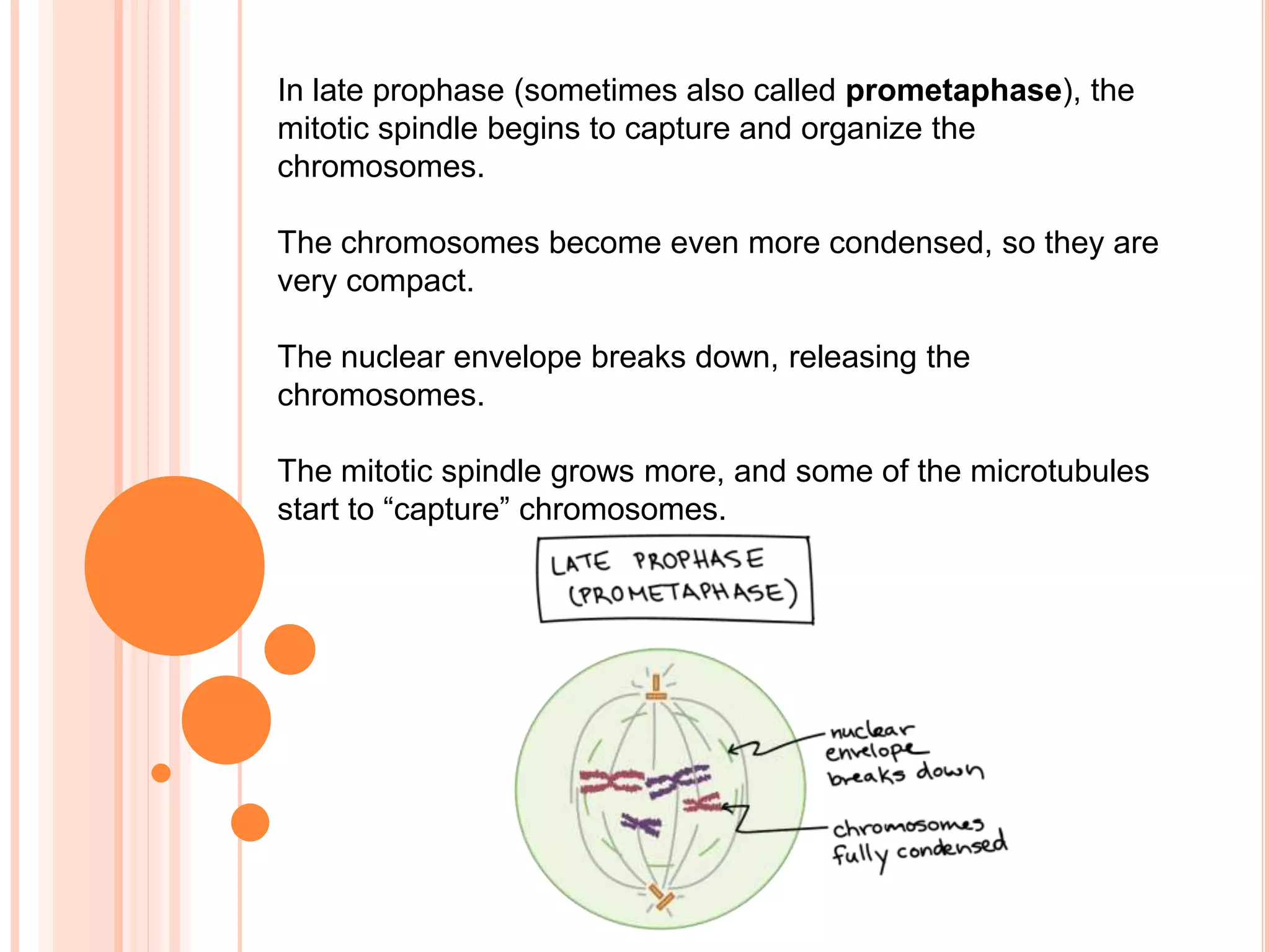
In late prophase (sometimes also called prometaphase), the
mitotic spindle begins to capture and organize the
chromosomes.
The chromosomes become even more condensed, so they are
very compact.
The nuclear envelope breaks down, releasing the
chromosomes.
The mitotic spindle grows more, and some of the microtubules
start to “capture” chromosomes.
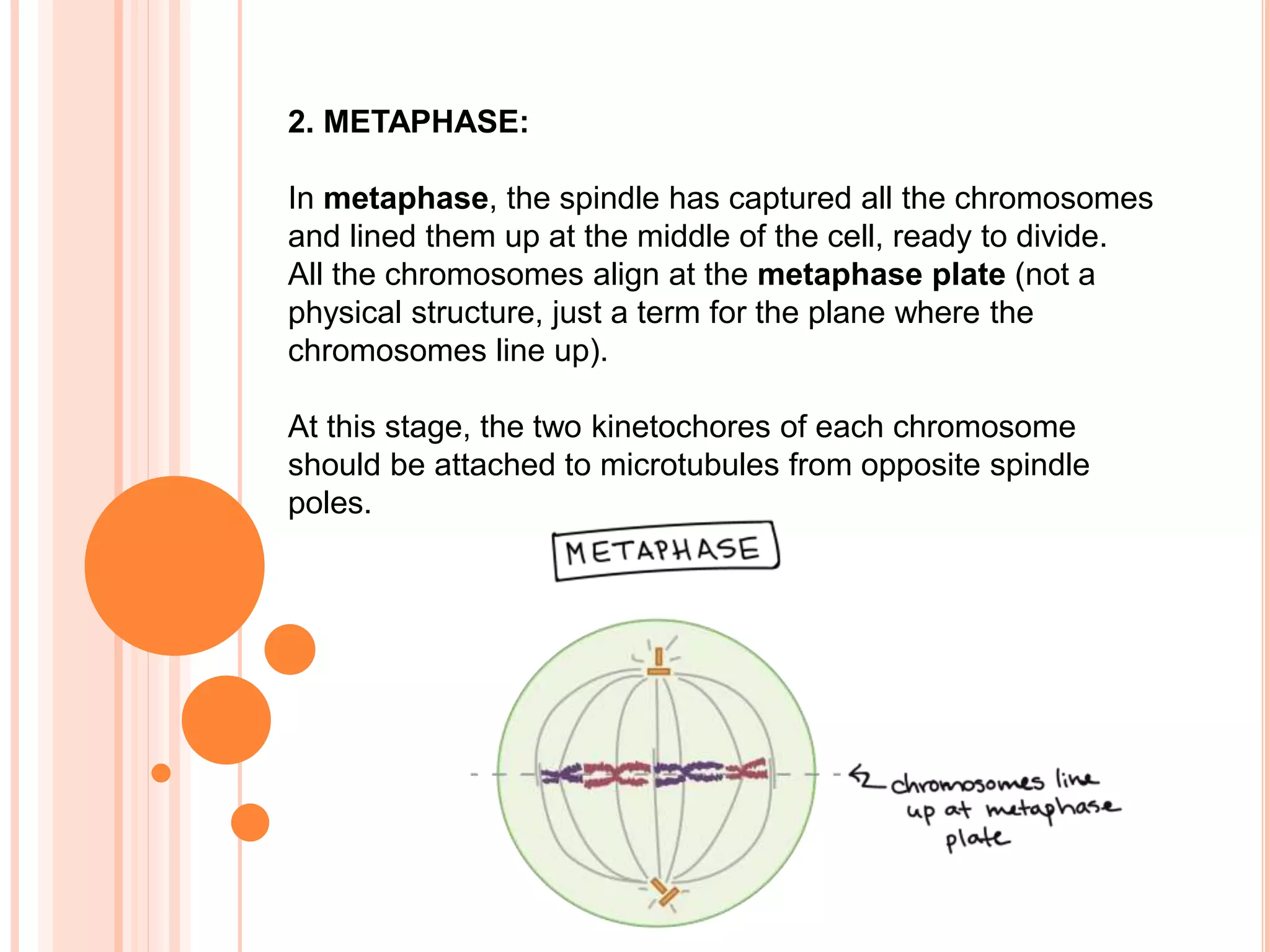
2. METAPHASE:
In metaphase, the spindle has captured all the chromosomes
and lined them up at the middle of the cell, ready to divide.
All the chromosomes align at the metaphase plate (not a
physical structure, just a term for the plane where the
chromosomes line up).
At this stage, the two kinetochores of each chromosome
should be attached to microtubules from opposite spindle
poles.
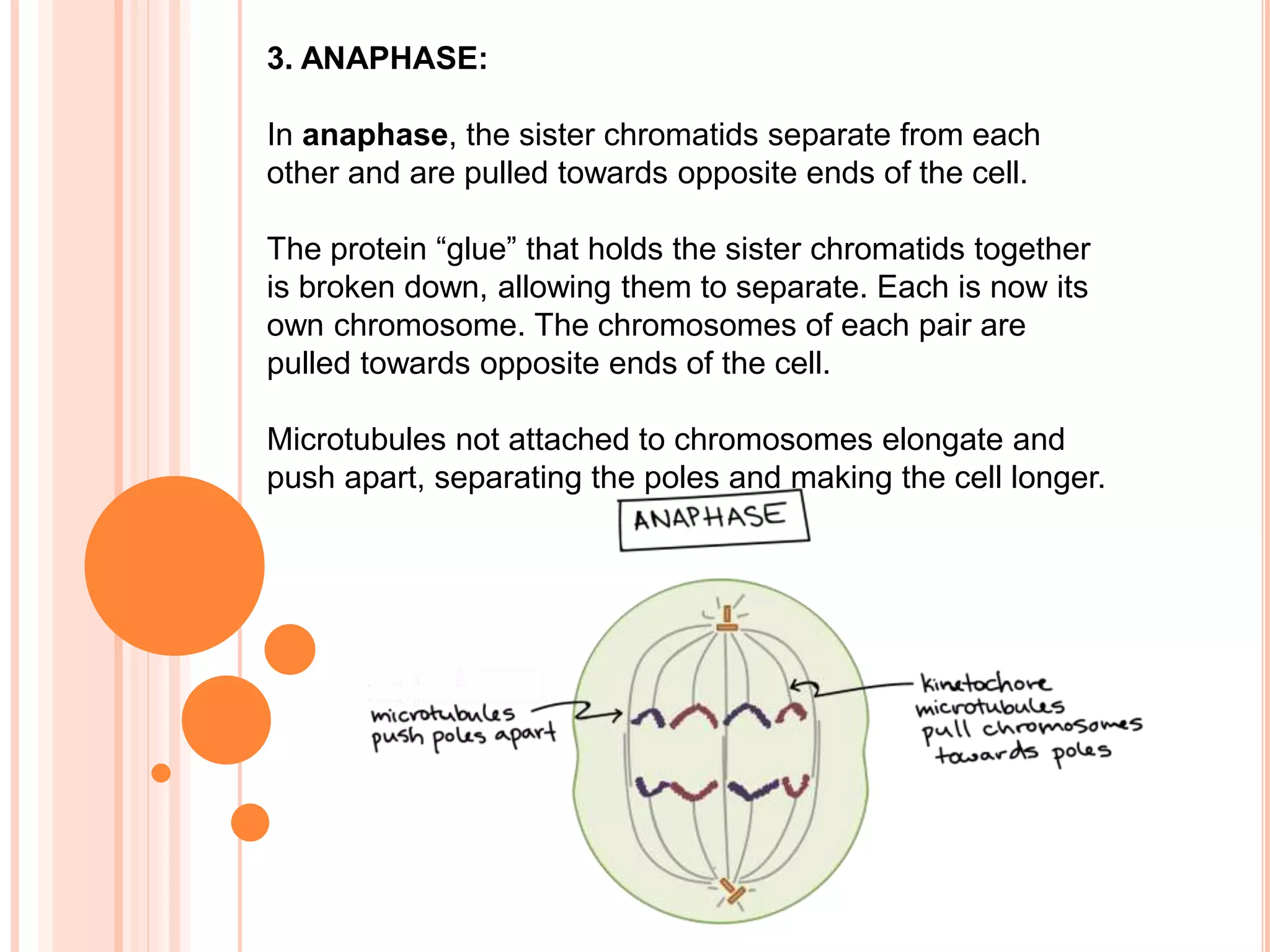
3. ANAPHASE:
In anaphase, the sister chromatids separate from each
other and are pulled towards opposite ends of the cell.
The protein “glue” that holds the sister chromatids together
is broken down, allowing them to separate. Each is now its
own chromosome. The chromosomes of each pair are
pulled towards opposite ends of the cell.
Microtubules not attached to chromosomes elongate and
push apart, separating the poles and making the cell longer.
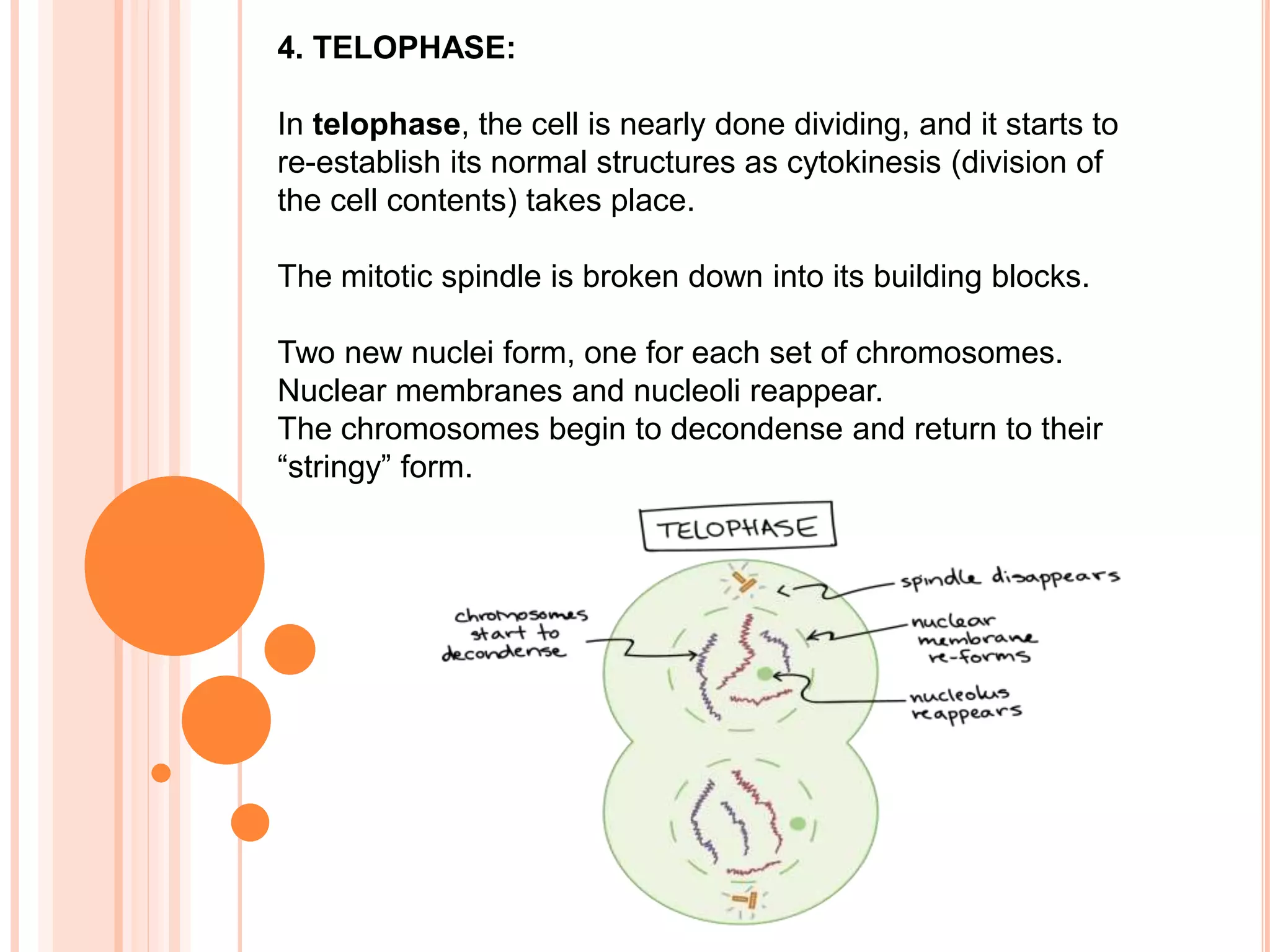
4. TELOPHASE:
In telophase, the cell is nearly done dividing, and it starts to
re-establish its normal structures as cytokinesis (division of
the cell contents) takes place.
The mitotic spindle is broken down into its building blocks.
Two new nuclei form, one for each set of chromosomes.
Nuclear membranes and nucleoli reappear.
The chromosomes begin to decondense and return to their
“stringy” form.
5. CYTOKINESIS:
Cytokinesis is the final stage of cell division in eukaryotes as
well as prokaryotes
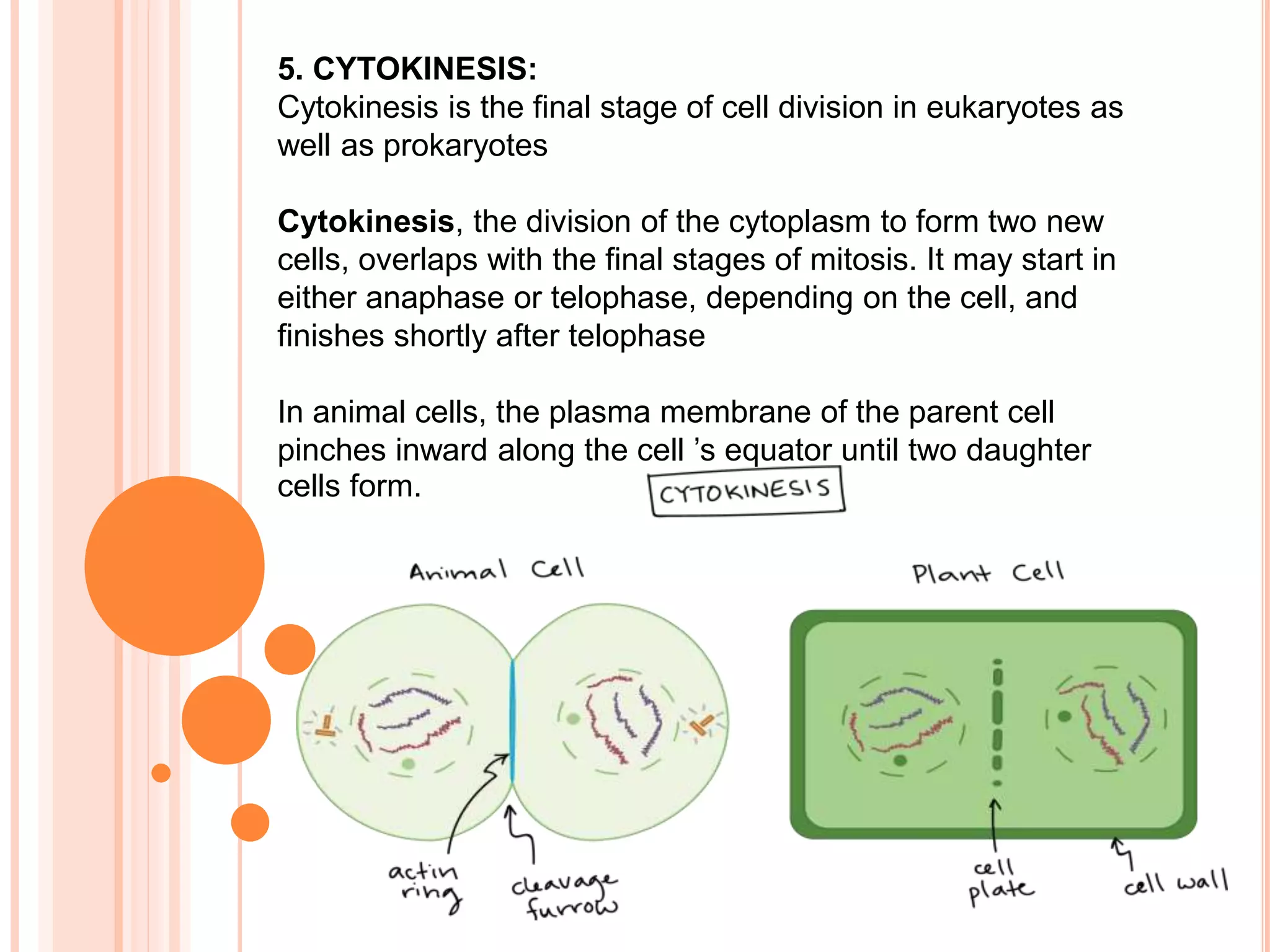
Cytokinesis, the division of the cytoplasm to form two new
cells, overlaps with the final stages of mitosis. It may start in
either anaphase or telophase, depending on the cell, and
finishes shortly after telophase
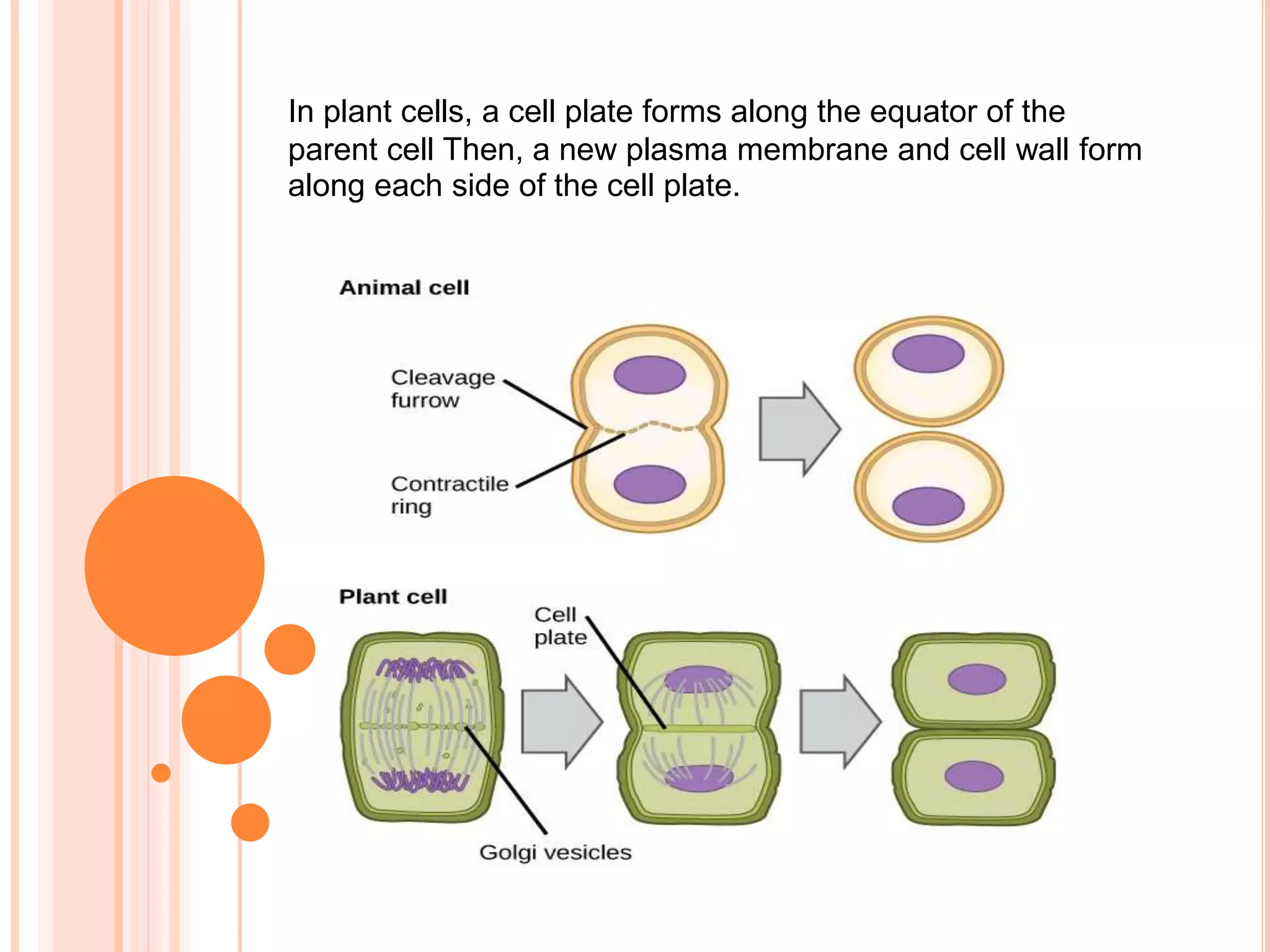
In animal cells, the plasma membrane of the parent cell
pinches inward along the cell ’s equator until two daughter
cells form.
In plant cells, a cell plate forms along the equator of the
parent cell Then, a new plasma membrane and cell wall form
along each side of the cell plate.
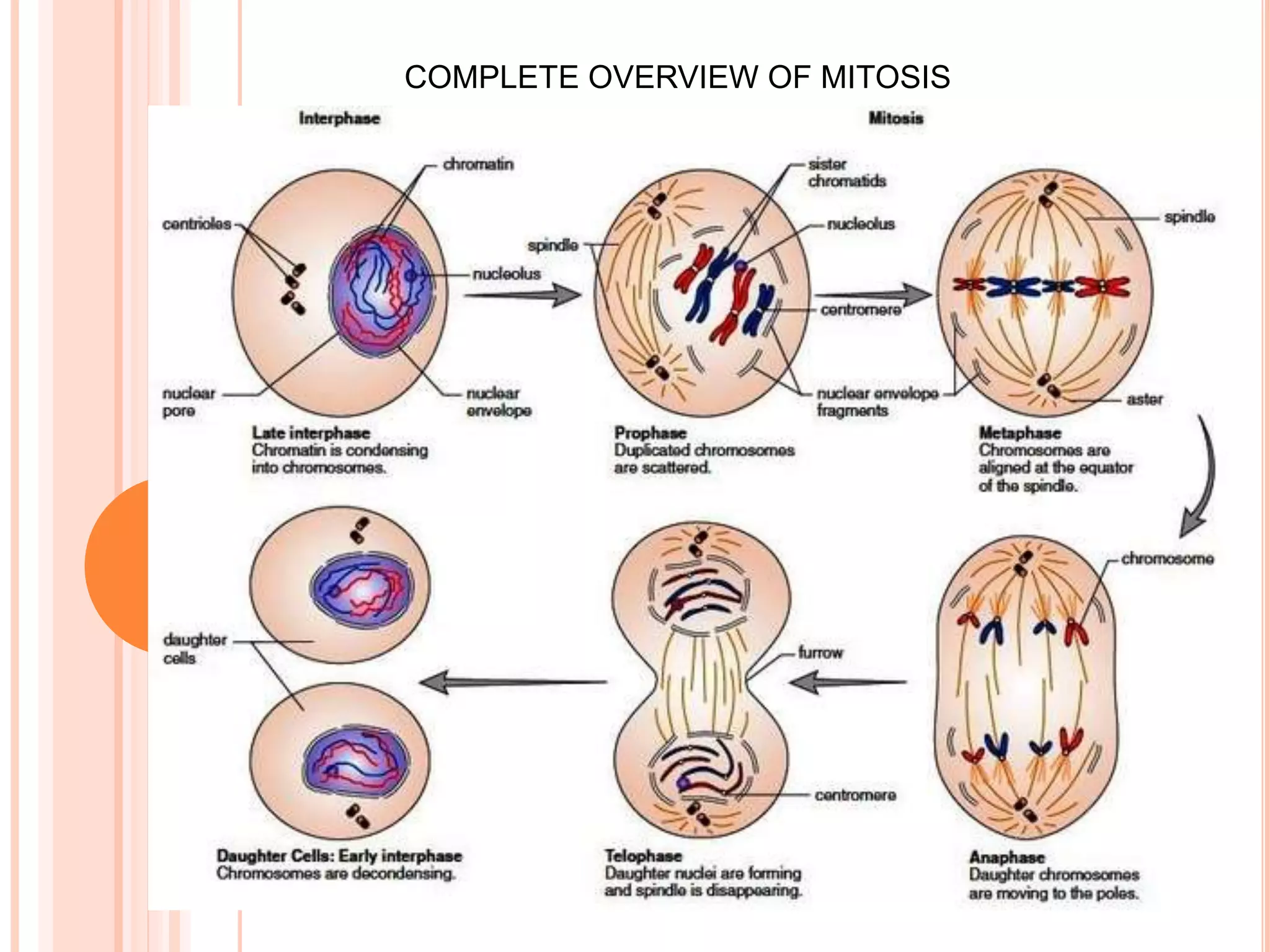
COMPLETE OVERVIEW OF MITOSIS
THANK YOU
ANY QUERISE TO ASK QUESTION ON COMMENT BOX

cell Division

  • 1.
    SHRI SHIVAJI SCIENCECOLLEGE, AMRAVATI CLASS : XI ( 2020-2021) SUBJECT : BIOLOGY CHAPTER NO. 7 ( CELL DIVISION) BY PROF. S. G. MANKAR
  • 2.
    CONTENTS:  INTRODUCTION  CELLCYCLE  INTERPHASE  MITOSIS  AMITOSIS  MEOSIS
  • 3.
    INTRODUCTION: Life of allmulticellular organisms starts from single cell i.e. zygote. Growth of every living organism depends on cell division. As stated in the cell theory, every cell arises from the pre-existing cell. REMEMBER IT? What is cell division? Where do new cells come from? How a cell reproduces, makes a copy of itself? How living things grow (Mitosis) and make sex cells (Meiosis) ?
  • 4.
    1.CELL CYCLE:  Cellcycle, the ordered sequence of events that occur in a cell in preparation for cell division  The cell cycle is a four-stage process in which the cell increases in size (gap 1, or G1, stage), copies its DNA (synthesis, or S, stage), prepares to divide (gap 2, or G2, stage), and divides (mitosis or M, stage).
  • 5.
    PHASES OF CELL: 1.INTERPHASE: G1(pre-synthetic phase) S (DNA synthesis) G2 (pre-mitotic phase)
  • 6.
    Interphase is thelongest stage in the eukaryote cell cycle During interphase, the cell acquires nutrients, creates and uses proteins and other molecules, and starts the process of cell division.
  • 7.
    G1 PHASE: G standsfor gap. It is the first phase within the interphase. It is also called the growth phase. This phase is the gap period between a mitotic phase and the S phase of the cycle. Cell is preparing for S phase. This period starts immediately after division. The daughter cells grow and increase in size during this phase. S PHASE: S stands for synthesis. During this phase DNA synthesis occurs. The DNA molecule duplicates. All the chromosomes have been replicated. This period lasts for 35 to 40% of interphase.
  • 8.
    G2 PHASE: Pre-mitotic phase. TheG2 phase is the gap period between S-phase and mitotic (M) phase of a cell cycle. It is the second growth phase. It is a period of rapid cell growth and protein synthesis which the cell ready itself for mitosis. The nucleus increases in volume. Metabolic activities essential for cell division, occur during this phase. mRNA, tRNA and rRNA synthesis also occur. It is not a necessary part of the cell cycle This phase has double the number of chromosomes. All the other cellular components are duplicated for the 2 daughter cells.
  • 9.
    M PHASE: (MITOTIC OR MEIOTIC PHASE) •The mitotic phase is a multistep process during which the duplicated chromosomes are aligned, separated, and move into two new, identical daughter cells. •The first portion of the mitotic phase is called karyokinesis, or nuclear division. The second portion of the mitotic phase, called cytokinesis, is the physical separation of the cytoplasmic components into the two daughter cells. •Karyokinesis, also known as mitosis, is divided into a series of phases—prophase, prometaphase, metaphase, anaphase, and telophase—that result in the division of the cell nucleus
  • 10.
    1. PROPHASE In earlyprophase, the cell starts to break down some structures and build others up, setting the stage for division of the chromosomes. The chromosomes start to condense. The mitotic spindle begins to form. The spindle is a structure made of microtubules, strong fibers that are part of the cell’s “skeleton.”
  • 11.
    In late prophase(sometimes also called prometaphase), the mitotic spindle begins to capture and organize the chromosomes. The chromosomes become even more condensed, so they are very compact. The nuclear envelope breaks down, releasing the chromosomes. The mitotic spindle grows more, and some of the microtubules start to “capture” chromosomes.
  • 12.
    2. METAPHASE: In metaphase,the spindle has captured all the chromosomes and lined them up at the middle of the cell, ready to divide. All the chromosomes align at the metaphase plate (not a physical structure, just a term for the plane where the chromosomes line up). At this stage, the two kinetochores of each chromosome should be attached to microtubules from opposite spindle poles.
  • 13.
    3. ANAPHASE: In anaphase,the sister chromatids separate from each other and are pulled towards opposite ends of the cell. The protein “glue” that holds the sister chromatids together is broken down, allowing them to separate. Each is now its own chromosome. The chromosomes of each pair are pulled towards opposite ends of the cell. Microtubules not attached to chromosomes elongate and push apart, separating the poles and making the cell longer.
  • 14.
    4. TELOPHASE: In telophase,the cell is nearly done dividing, and it starts to re-establish its normal structures as cytokinesis (division of the cell contents) takes place. The mitotic spindle is broken down into its building blocks. Two new nuclei form, one for each set of chromosomes. Nuclear membranes and nucleoli reappear. The chromosomes begin to decondense and return to their “stringy” form.
  • 15.
    5. CYTOKINESIS: Cytokinesis isthe final stage of cell division in eukaryotes as well as prokaryotes Cytokinesis, the division of the cytoplasm to form two new cells, overlaps with the final stages of mitosis. It may start in either anaphase or telophase, depending on the cell, and finishes shortly after telophase In animal cells, the plasma membrane of the parent cell pinches inward along the cell ’s equator until two daughter cells form.
  • 16.
    In plant cells,a cell plate forms along the equator of the parent cell Then, a new plasma membrane and cell wall form along each side of the cell plate.
  • 17.
  • 18.
    THANK YOU ANY QUERISETO ASK QUESTION ON COMMENT BOX