LABS &
MICROSCOPES
SCIENTIFIC
METHOD
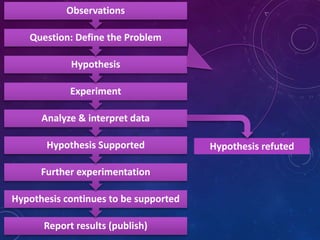
Report results (publish)
Hypothesis continues to be supported
Further experimentation
Hypothesis Supported
Analyze & interpret data
Experiment
Hypothesis
Question: Define the Problem
Observations
Hypothesis refuted
LAB SAFETY
• Read over the lab first and ask questions about things that are
unclear
• Follow the instructions given in class and on the lab sheet
• No drinking or eating during a lab
• Clear your work station of any unnecessary books. Just have
paper, pencil, lab sheet, etc. that you need to perform the lab
• Avoid horseplay. Even if it is fun, it can be dangerous. A
“harmless push” may cause that person to be burnt or cut by
someone else
• Broken glass should be cleaned up immediately into the
sharps container NOT in the garbage can
• Wear proper attire. Make sure that what you wear will not
interfere with the experiments (ie. footwear, clothing ,
jewelry)
• Keep aisles clear – tuck bags at back of class or under desks
• Notify me of all accidents or broken equipment immediately
• WASH YOUR HANDS after each lab
• LEAVE LAB TIDY – wipe down all tabletops with designated
spray, make sure things are cleaned and put back in their
proper spot
• Use common sense!
SAFETY EQUIPMENT
Look around the classroom and make note of the location of the
following items:
• Eyewash
• Fire extinguisher
• First aid kit
• Chemical shower
• Fire blanket
• Sharps container
• Fire alarm
When might each of these items be used?
COMPOUND LIGHT
MICROSCOPES
Body tube/ocular tube
Revolving nosepiece
Low power objective
Med. power objective
High power objective
Stage clips
Diaphragm
Light source
Ocular lens
Arm
Stage
Coarse adjustment
knob
Fine adjustment
knob
Base
Parts of the Microscope
https://www.youtube.com/watch?v=Swcz_TJMz0I&list=PLC8DA5F7B89FEEABD&in
dex=5

Lab safety & microscopes

  • 1.
  • 2.
  • 3.
    Report results (publish) Hypothesiscontinues to be supported Further experimentation Hypothesis Supported Analyze & interpret data Experiment Hypothesis Question: Define the Problem Observations Hypothesis refuted
  • 4.
    LAB SAFETY • Readover the lab first and ask questions about things that are unclear • Follow the instructions given in class and on the lab sheet • No drinking or eating during a lab • Clear your work station of any unnecessary books. Just have paper, pencil, lab sheet, etc. that you need to perform the lab • Avoid horseplay. Even if it is fun, it can be dangerous. A “harmless push” may cause that person to be burnt or cut by someone else
  • 5.
    • Broken glassshould be cleaned up immediately into the sharps container NOT in the garbage can • Wear proper attire. Make sure that what you wear will not interfere with the experiments (ie. footwear, clothing , jewelry) • Keep aisles clear – tuck bags at back of class or under desks • Notify me of all accidents or broken equipment immediately • WASH YOUR HANDS after each lab • LEAVE LAB TIDY – wipe down all tabletops with designated spray, make sure things are cleaned and put back in their proper spot • Use common sense!
  • 6.
    SAFETY EQUIPMENT Look aroundthe classroom and make note of the location of the following items: • Eyewash • Fire extinguisher • First aid kit • Chemical shower • Fire blanket • Sharps container • Fire alarm When might each of these items be used?
  • 7.
  • 8.
    Body tube/ocular tube Revolvingnosepiece Low power objective Med. power objective High power objective Stage clips Diaphragm Light source Ocular lens Arm Stage Coarse adjustment knob Fine adjustment knob Base
  • 12.
    Parts of theMicroscope https://www.youtube.com/watch?v=Swcz_TJMz0I&list=PLC8DA5F7B89FEEABD&in dex=5