• Cell division:- DNA replication & Cell
  growth
• They takes place in a coordinated way
  to ensure correct division & formation
  of progeny cells which contains intact
  genomes.
• Cell cycle- the events by which a cell
  duplicates its genome ,synthesises the
  constituents of the cell divides into
  daughter cells.
• Cell growth is a continuous process but
  DNA synthesis takes only once in this
  stage.
• DNA              Daughter nuclei
  (complex series of event – cell division).
• DNA processes are under genetic
  control.
• Eukaryotic cell – divide once in approx. every
  24 hrs.
• This varies from organism – organism & cell –
  cell type.
• E.g. Yeast – the cell cycle of yeast progress in
  90 minutes.
 There are 2 basic phases:-
1) M Phase(mitosis phase) – the actual cell
   division/mitosis occurs.
2) Interphase - phase between 2 successive M
   phases.
 Duration of Interphase is 24 hrs in a cell
   cycle.
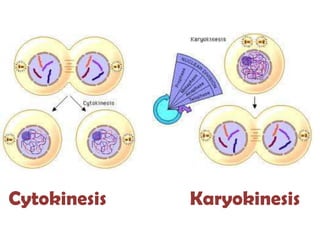
 Karyokinesis – (nuclear division) separation of
   daughter chromosomes.
 Cytokinesis – division of cytoplasm.
Cytokinesis   Karyokinesis
The Interphase is divided into 3 phases:-
a) G1 Phase (Gap 1)
Interval Between mitosis & initiation of DNA
   replication.
It is also known as growth phase & the cell is
   metabolically active.
b) S Phase (Synthesis)
DNA synthesis & replication takes place
c) G2 Phase (Gap 2)
Proteins are synthesized in preparation for mitosis
   while cell growth continues.
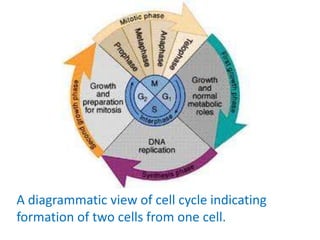
A diagrammatic view of cell cycle indicating
formation of two cells from one cell.
• Some cells do not divide further exit G1 Phase
  to enter an interactive stage – Quiescent stage
  (G0).


M phase(mitosis) involve reorganization of
virtually all components of the cell.
Mitosis is divided into four stages
a) Prophase
b) Metaphase
c) Anaphase
d) Telophase
Equational Division
 The number of chromosomes in the parent
and progeny cells is the same.

                46


      23                   23
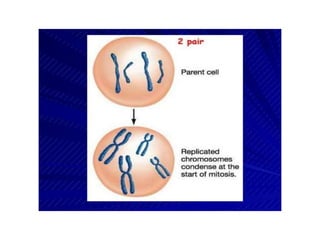
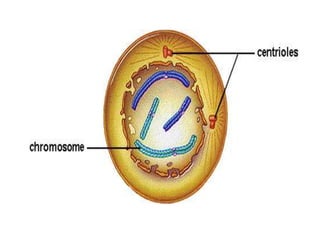
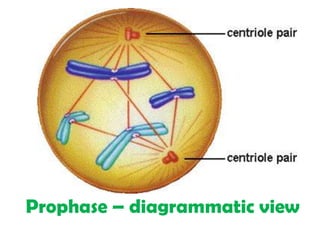
• It is marked by the initiation of condensation of
  chromosomal material.
• Chromosomal material               mitotic
  chromosomes.
• Spindle fiber – a set of thread like structures made by
  an organelle called centriole.
• The centriole moves towards the opposite poles of the
  cell.
• Two (sister) chromatids attach together at the
  centromere.
Prophase – diagrammatic view
• Disintegration(breakup) of the nuclear envelope
  marks the start of metaphase.
• In this phase the chromosomes are made of
  sister chromatids held together by the
  centromere.
• Kinetochores (site of attachment of spindle
  fibers)– small disc shaped structures at the
  surface of the centromere.
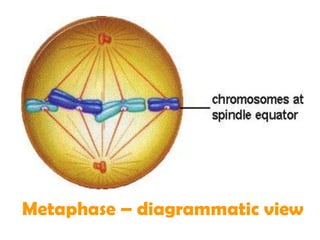
• Chromosomes moves to the centre of the
  cell(spindle equator).
• One chromatid of each chromosome connected n
  kinetochore to spindle fibers from one pole
• Sister chromatids connected in the opposite
  poles by the kinetochores.
• Metaphase Plate – plane of alignment of the
  chromosomes at the metaphase.
Metaphase – diagrammatic view

Cell cycle & cell division

  • 2.
    • Cell division:-DNA replication & Cell growth • They takes place in a coordinated way to ensure correct division & formation of progeny cells which contains intact genomes. • Cell cycle- the events by which a cell duplicates its genome ,synthesises the constituents of the cell divides into daughter cells.
  • 3.
    • Cell growthis a continuous process but DNA synthesis takes only once in this stage. • DNA Daughter nuclei (complex series of event – cell division). • DNA processes are under genetic control.
  • 4.
    • Eukaryotic cell– divide once in approx. every 24 hrs. • This varies from organism – organism & cell – cell type. • E.g. Yeast – the cell cycle of yeast progress in 90 minutes.
  • 5.
     There are2 basic phases:- 1) M Phase(mitosis phase) – the actual cell division/mitosis occurs. 2) Interphase - phase between 2 successive M phases.  Duration of Interphase is 24 hrs in a cell cycle.  Karyokinesis – (nuclear division) separation of daughter chromosomes.  Cytokinesis – division of cytoplasm.
  • 6.
    Cytokinesis Karyokinesis
  • 7.
    The Interphase isdivided into 3 phases:- a) G1 Phase (Gap 1) Interval Between mitosis & initiation of DNA replication. It is also known as growth phase & the cell is metabolically active. b) S Phase (Synthesis) DNA synthesis & replication takes place c) G2 Phase (Gap 2) Proteins are synthesized in preparation for mitosis while cell growth continues.
  • 8.
    A diagrammatic viewof cell cycle indicating formation of two cells from one cell.
  • 9.
    • Some cellsdo not divide further exit G1 Phase to enter an interactive stage – Quiescent stage (G0). M phase(mitosis) involve reorganization of virtually all components of the cell. Mitosis is divided into four stages a) Prophase b) Metaphase c) Anaphase d) Telophase
  • 10.
    Equational Division Thenumber of chromosomes in the parent and progeny cells is the same. 46 23 23
  • 11.
    • It ismarked by the initiation of condensation of chromosomal material. • Chromosomal material mitotic chromosomes. • Spindle fiber – a set of thread like structures made by an organelle called centriole. • The centriole moves towards the opposite poles of the cell. • Two (sister) chromatids attach together at the centromere.
  • 14.
  • 15.
    • Disintegration(breakup) ofthe nuclear envelope marks the start of metaphase. • In this phase the chromosomes are made of sister chromatids held together by the centromere. • Kinetochores (site of attachment of spindle fibers)– small disc shaped structures at the surface of the centromere.
  • 16.
    • Chromosomes movesto the centre of the cell(spindle equator). • One chromatid of each chromosome connected n kinetochore to spindle fibers from one pole • Sister chromatids connected in the opposite poles by the kinetochores. • Metaphase Plate – plane of alignment of the chromosomes at the metaphase.
  • 17.