FUNDAMENTALS OF
MVS
Page  2
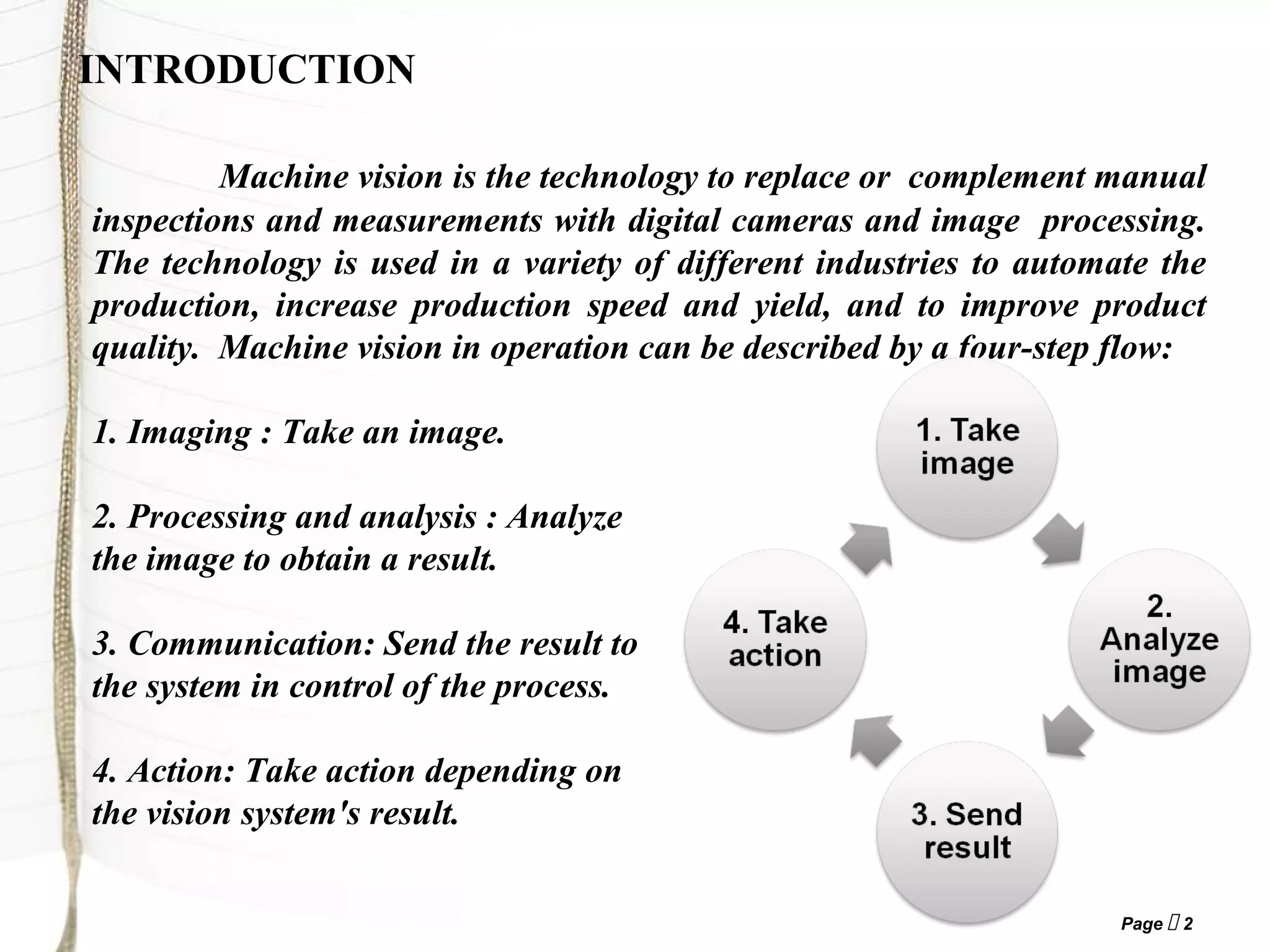
Machine vision is the technology to replace or complement manual
inspections and measurements with digital cameras and image processing.
The technology is used in a variety of different industries to automate the
production, increase production speed and yield, and to improve product
quality. Machine vision in operation can be described by a four-step flow:
1. Imaging : Take an image.
2. Processing and analysis : Analyze
the image to obtain a result.
3. Communication: Send the result to
the system in control of the process.
4. Action: Take action depending on
the vision system's result.
INTRODUCTION
Page  3
COMPONENTS OF MVS
Page  4
CAMERA
Cameras used for machine vision are categorized into vision
sensors, smart cameras, and PC-based systems. All camera types are
digital, as opposed to analog cameras in traditional photography.
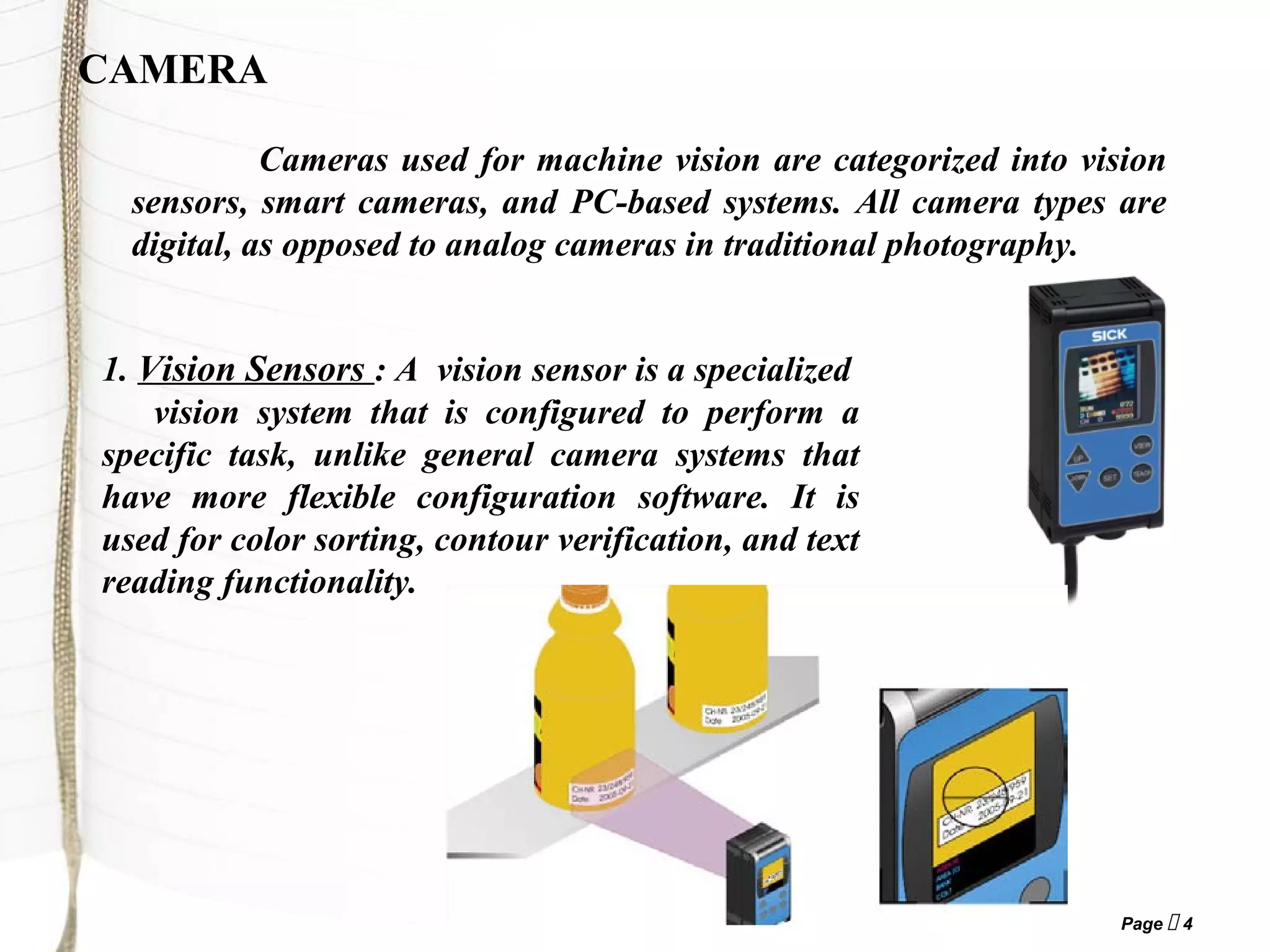
1. Vision Sensors : A vision sensor is a specialized
vision system that is configured to perform a
specific task, unlike general camera systems that
have more flexible configuration software. It is
used for color sorting, contour verification, and text
reading functionality.
Page  5
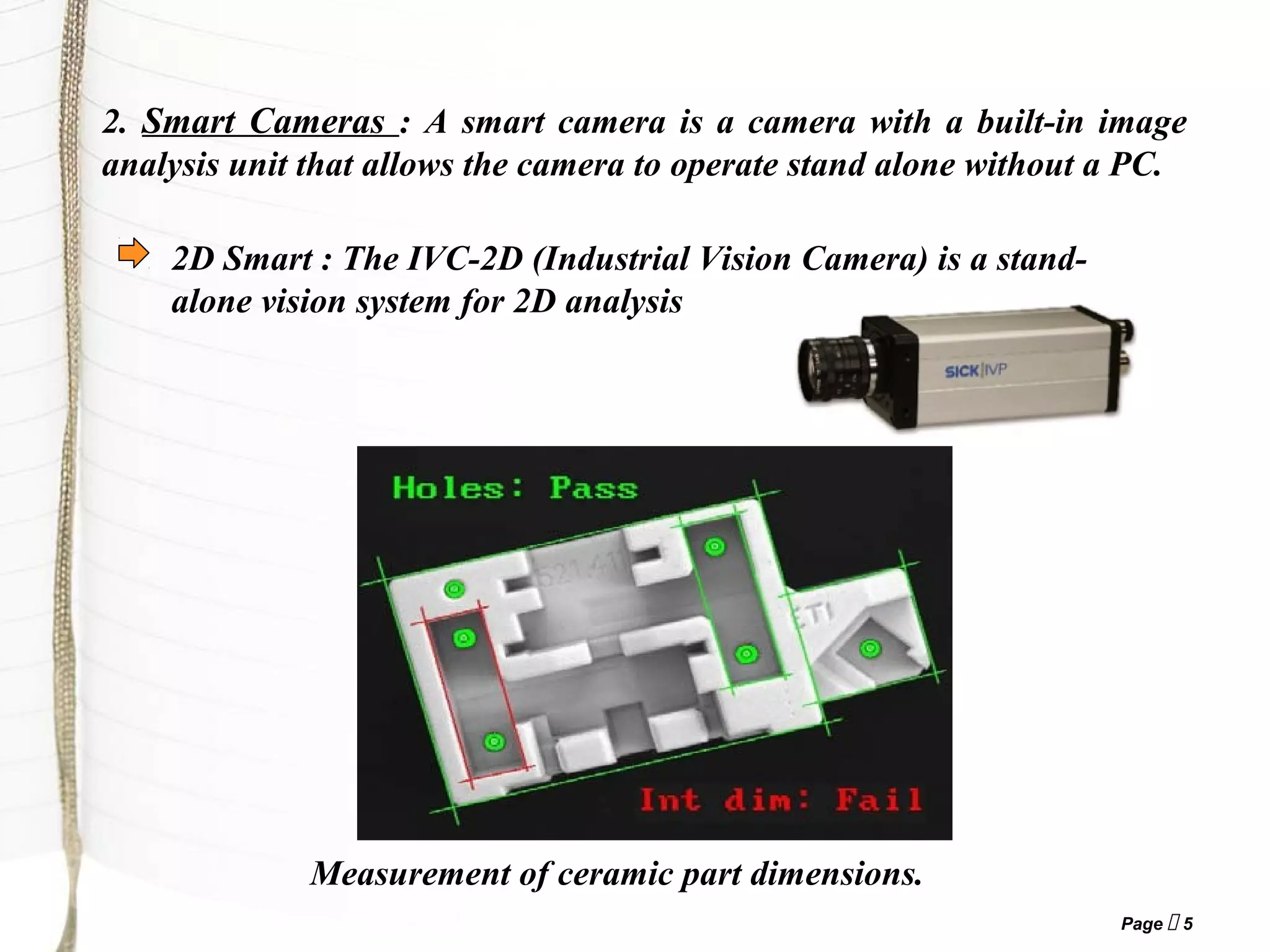
2. Smart Cameras : A smart camera is a camera with a built-in image
analysis unit that allows the camera to operate stand alone without a PC.
2D Smart : The IVC-2D (Industrial Vision Camera) is a stand-
alone vision system for 2D analysis
Measurement of ceramic part dimensions.
Page  6
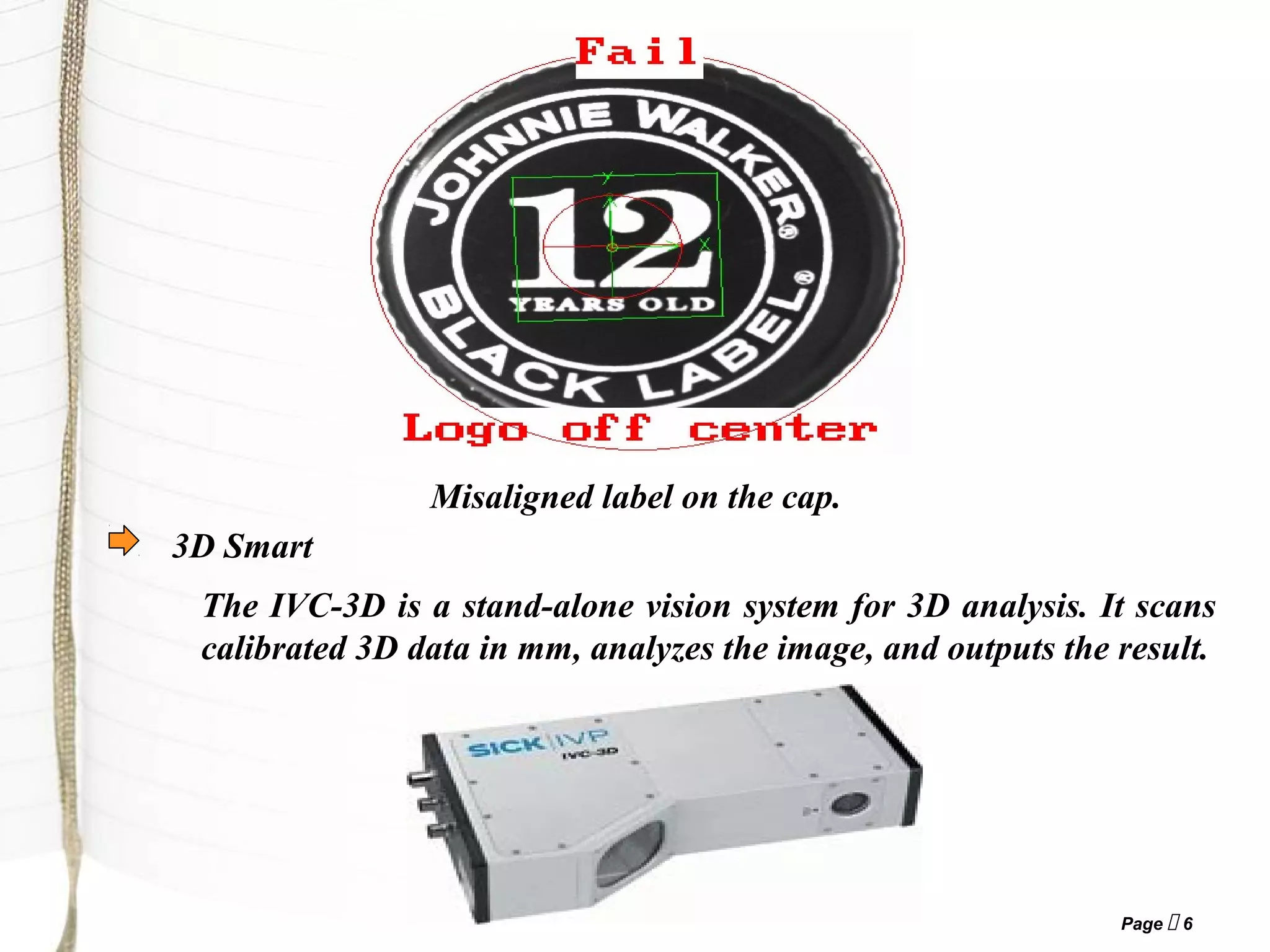
Misaligned label on the cap.
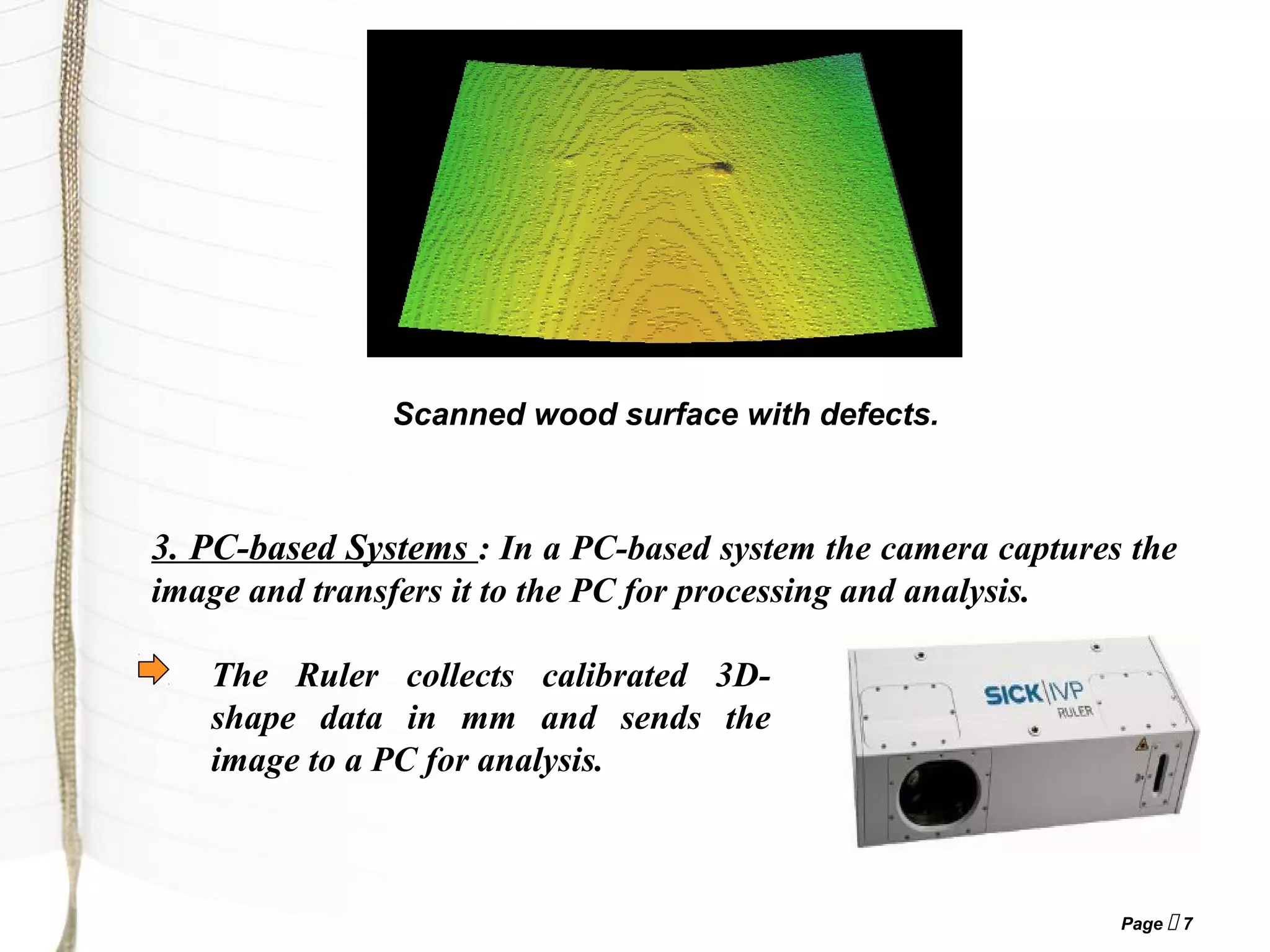
The IVC-3D is a stand-alone vision system for 3D analysis. It scans
calibrated 3D data in mm, analyzes the image, and outputs the result.
3D Smart
Page  7
3. PC-based Systems : In a PC-based system the camera captures the
image and transfers it to the PC for processing and analysis.
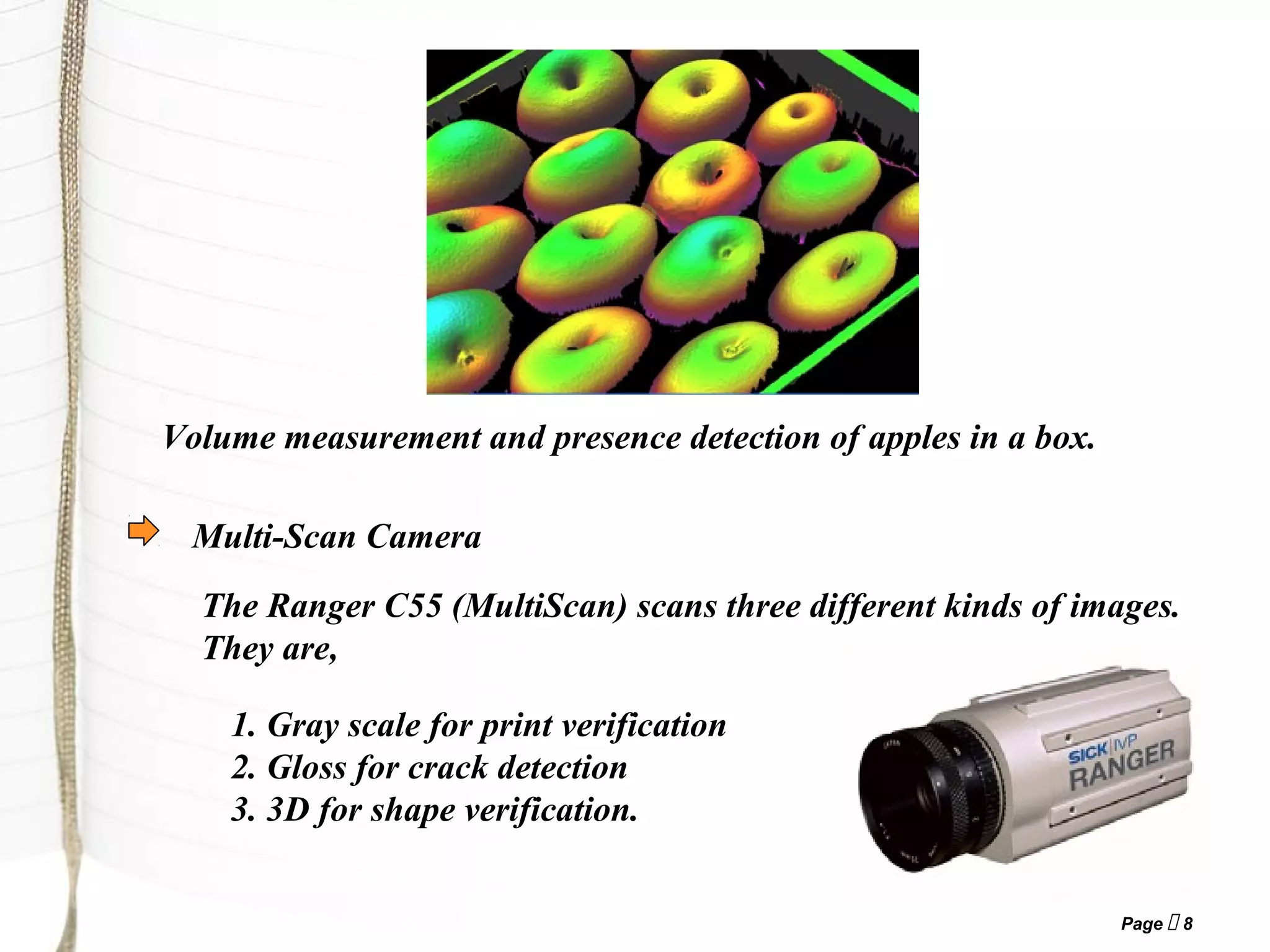
Scanned wood surface with defects.
The Ruler collects calibrated 3D-
shape data in mm and sends the
image to a PC for analysis.
Page  8
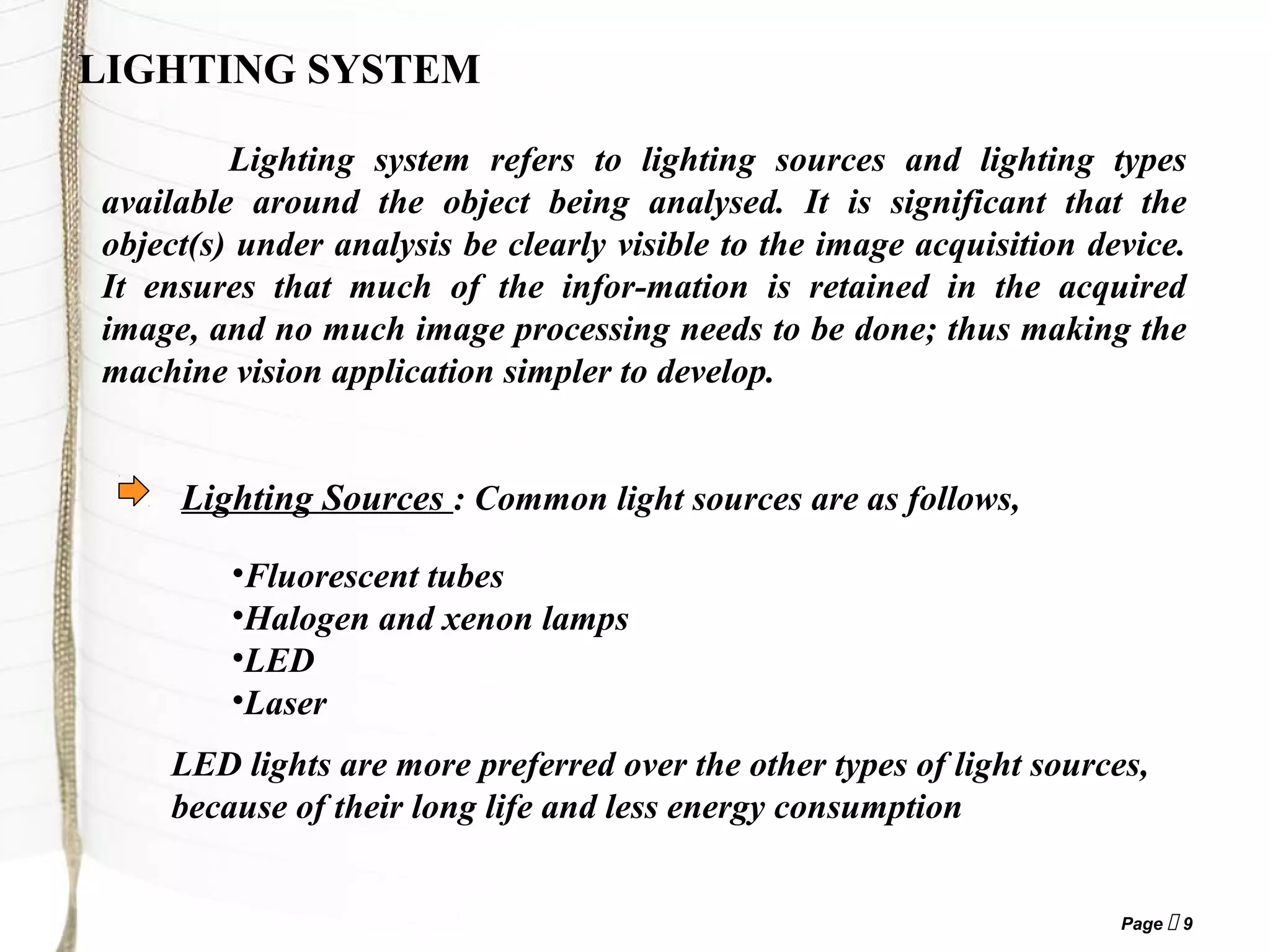
Volume measurement and presence detection of apples in a box.
Multi-Scan Camera
The Ranger C55 (MultiScan) scans three different kinds of images.
They are,
1. Gray scale for print verification
2. Gloss for crack detection
3. 3D for shape verification.
Page  9
LIGHTING SYSTEM
Lighting system refers to lighting sources and lighting types
available around the object being analysed. It is significant that the
object(s) under analysis be clearly visible to the image acquisition device.
It ensures that much of the infor-mation is retained in the acquired
image, and no much image processing needs to be done; thus making the
machine vision application simpler to develop.
Lighting Sources : Common light sources are as follows,
•Fluorescent tubes
•Halogen and xenon lamps
•LED
•Laser
LED lights are more preferred over the other types of light sources,
because of their long life and less energy consumption
Page  10
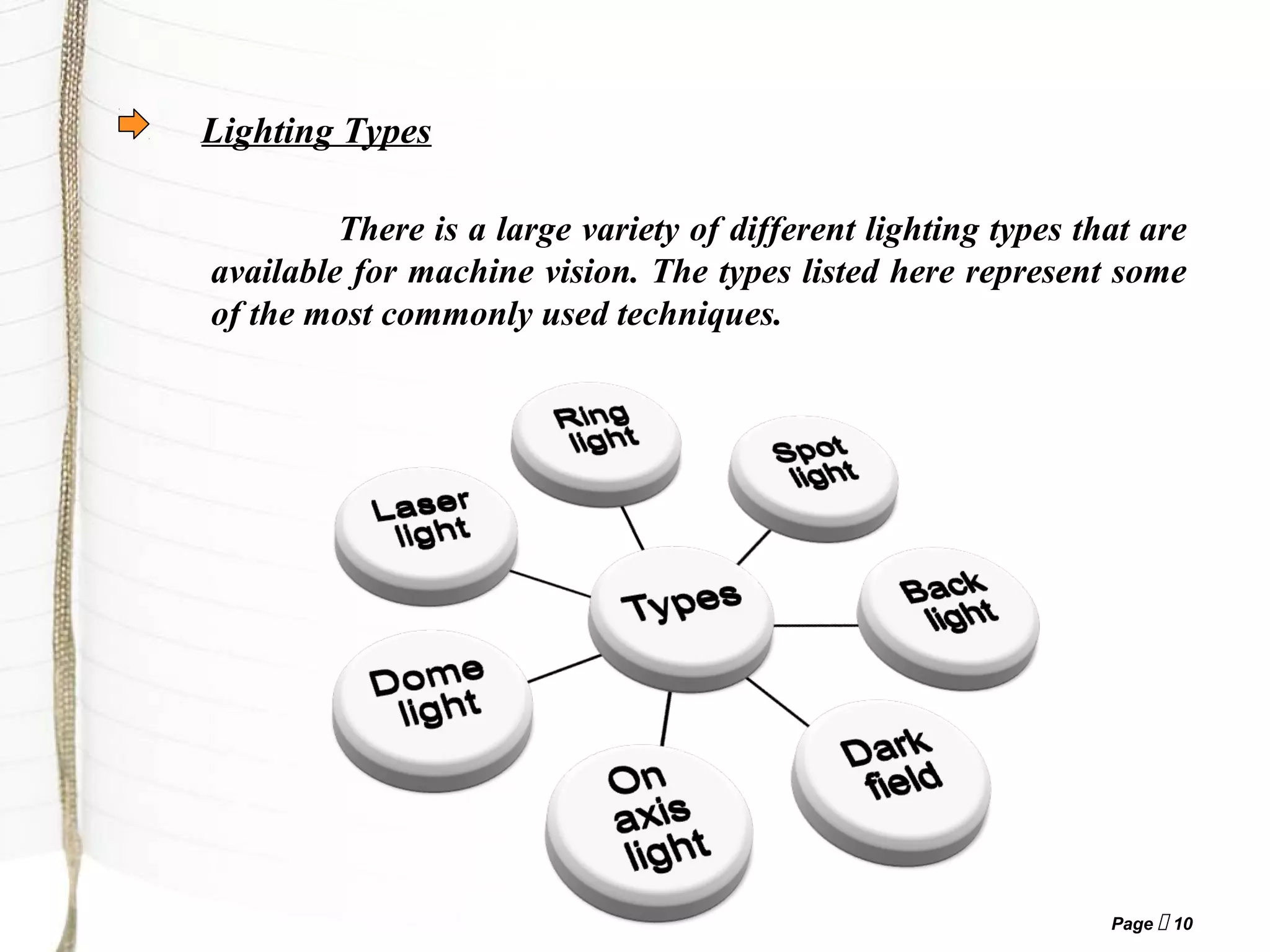
Lighting Types
There is a large variety of different lighting types that are
available for machine vision. The types listed here represent some
of the most commonly used techniques.
Page  11
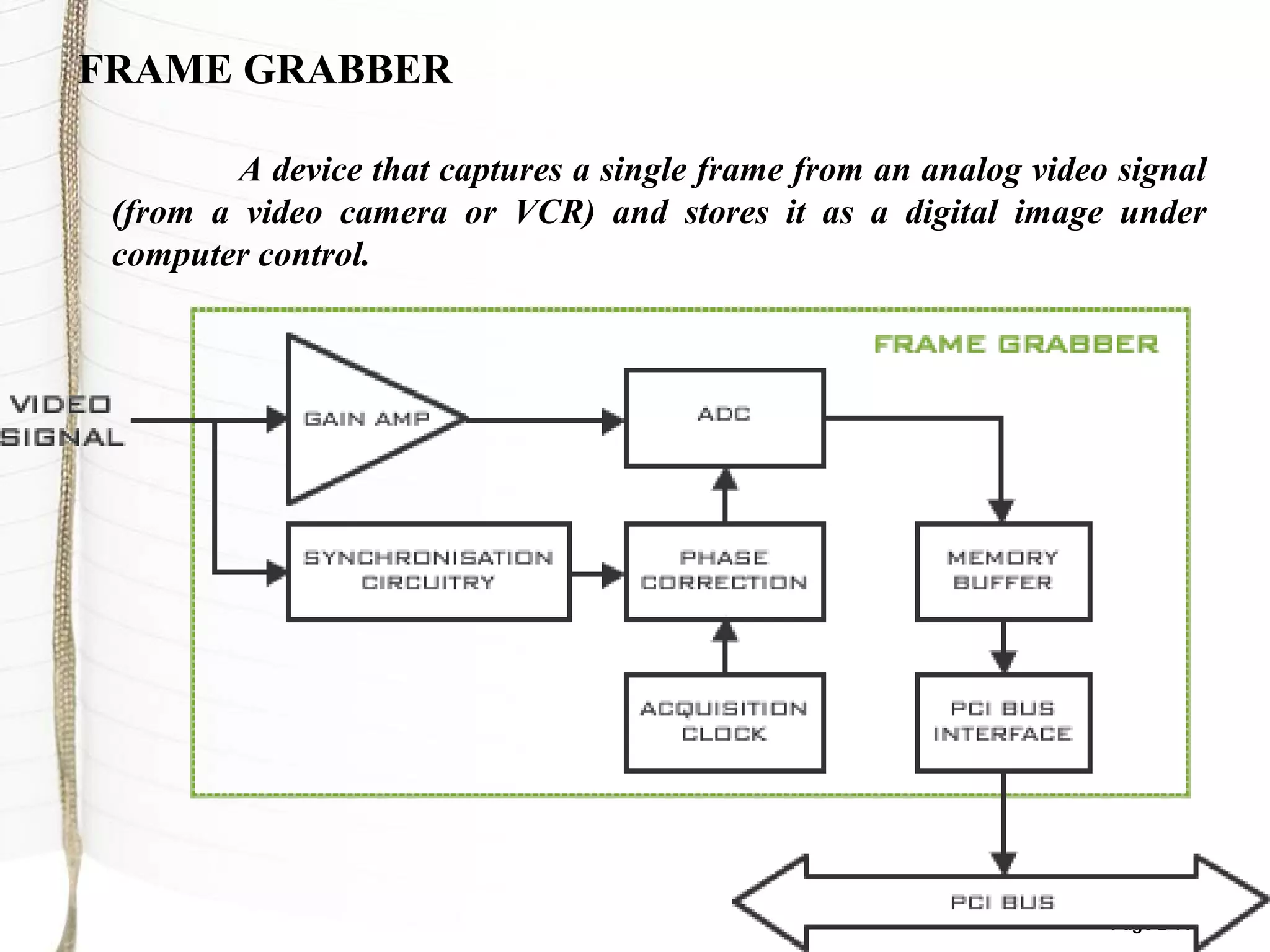
FRAME GRABBER
A device that captures a single frame from an analog video signal
(from a video camera or VCR) and stores it as a digital image under
computer control.
Page  12
COMPUTER & SOFTWARE
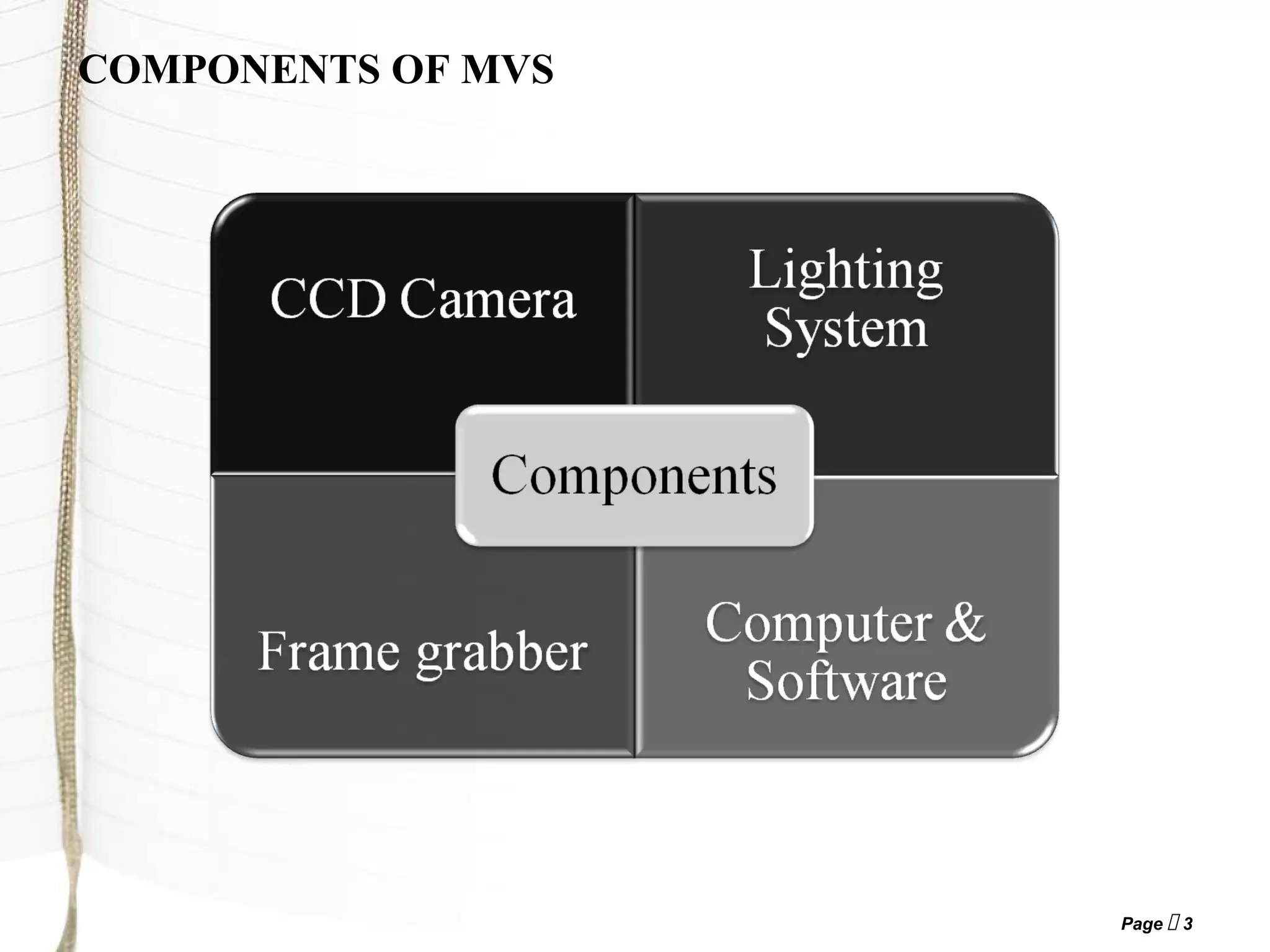
•The camera's image is captured by the frame grabber.
•A frame grabber is a computer card that converts the output of the
camera to digital format and places the image in computer memory so
that it may be processed by the machine vision software.
•The software will typically take several steps to process an image. Often
the image is first manipulated to reduce noise or to convert many shades
of gray to a simple combination of black and white.
•Following the initial simplification, the software will count, measure,
and/or identify objects in the image. As a final step, the software passes
or fails the part according to programmed criteria.
13
Thank You !!!

fundamentals of machine vision system

  • 1.
  • 2.
    Page  2 Machinevision is the technology to replace or complement manual inspections and measurements with digital cameras and image processing. The technology is used in a variety of different industries to automate the production, increase production speed and yield, and to improve product quality. Machine vision in operation can be described by a four-step flow: 1. Imaging : Take an image. 2. Processing and analysis : Analyze the image to obtain a result. 3. Communication: Send the result to the system in control of the process. 4. Action: Take action depending on the vision system's result. INTRODUCTION
  • 3.
  • 4.
    Page  4 CAMERA Camerasused for machine vision are categorized into vision sensors, smart cameras, and PC-based systems. All camera types are digital, as opposed to analog cameras in traditional photography. 1. Vision Sensors : A vision sensor is a specialized vision system that is configured to perform a specific task, unlike general camera systems that have more flexible configuration software. It is used for color sorting, contour verification, and text reading functionality.
  • 5.
    Page  5 2.Smart Cameras : A smart camera is a camera with a built-in image analysis unit that allows the camera to operate stand alone without a PC. 2D Smart : The IVC-2D (Industrial Vision Camera) is a stand- alone vision system for 2D analysis Measurement of ceramic part dimensions.
  • 6.
    Page  6 Misalignedlabel on the cap. The IVC-3D is a stand-alone vision system for 3D analysis. It scans calibrated 3D data in mm, analyzes the image, and outputs the result. 3D Smart
  • 7.
    Page  7 3.PC-based Systems : In a PC-based system the camera captures the image and transfers it to the PC for processing and analysis. Scanned wood surface with defects. The Ruler collects calibrated 3D- shape data in mm and sends the image to a PC for analysis.
  • 8.
    Page  8 Volumemeasurement and presence detection of apples in a box. Multi-Scan Camera The Ranger C55 (MultiScan) scans three different kinds of images. They are, 1. Gray scale for print verification 2. Gloss for crack detection 3. 3D for shape verification.
  • 9.
    Page  9 LIGHTINGSYSTEM Lighting system refers to lighting sources and lighting types available around the object being analysed. It is significant that the object(s) under analysis be clearly visible to the image acquisition device. It ensures that much of the infor-mation is retained in the acquired image, and no much image processing needs to be done; thus making the machine vision application simpler to develop. Lighting Sources : Common light sources are as follows, •Fluorescent tubes •Halogen and xenon lamps •LED •Laser LED lights are more preferred over the other types of light sources, because of their long life and less energy consumption
  • 10.
    Page  10 LightingTypes There is a large variety of different lighting types that are available for machine vision. The types listed here represent some of the most commonly used techniques.
  • 11.
    Page  11 FRAMEGRABBER A device that captures a single frame from an analog video signal (from a video camera or VCR) and stores it as a digital image under computer control.
  • 12.
    Page  12 COMPUTER& SOFTWARE •The camera's image is captured by the frame grabber. •A frame grabber is a computer card that converts the output of the camera to digital format and places the image in computer memory so that it may be processed by the machine vision software. •The software will typically take several steps to process an image. Often the image is first manipulated to reduce noise or to convert many shades of gray to a simple combination of black and white. •Following the initial simplification, the software will count, measure, and/or identify objects in the image. As a final step, the software passes or fails the part according to programmed criteria.
  • 13.