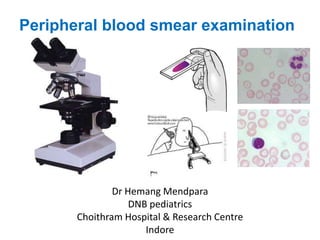
Peripheral blood smear examination
Dr Hemang Mendpara
DNB pediatrics
Choithram Hospital & Research Centre
Indore
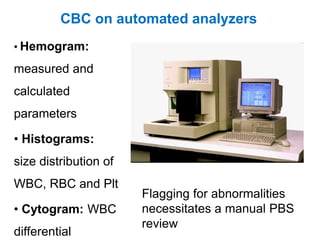
• Hemogram:
measured and
calculated
parameters
• Histograms:
size distribution of
WBC, RBC and Plt
• Cytogram: WBC
differential
CBC on automated analyzers
Flagging for abnormalities
necessitates a manual PBS
review
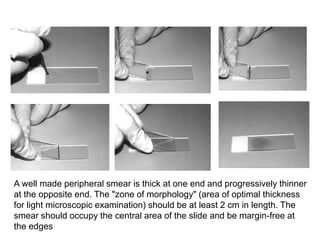
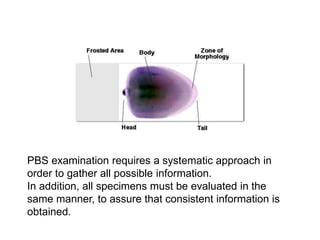
A well made peripheral smear is thick at one end and progressively thinner
at the opposite end. The "zone of morphology" (area of optimal thickness
for light microscopic examination) should be at least 2 cm in length. The
smear should occupy the central area of the slide and be margin-free at
the edges
Slide fixation and staining
1. Romanowsky staining
Leishman's stain : a polychromatic stain
•Methanol : fixes cells to slide
•methylene blue stains RNA,DNA
blue-grey color
•Eosin stains hemoglobin, eosin granules
orange-red color
•pH value of phosphate buffer is very important
PBS examination requires a systematic approach in
order to gather all possible information.
In addition, all specimens must be evaluated in the
same manner, to assure that consistent information is
obtained.
• 1. Macroscopic view : quality of the smear
• 2.The microscopic analysis
• begins on lower power (10x),
• to assess cellular distribution, staining quality,
and to select an area where the RBCs are barely
touching each other.
•On hi-dry (40x), to obtain a WBC estimate. All of the
detailed analysis of the cellular elements using high power
or oil immersion.
PBS examination - preliminary
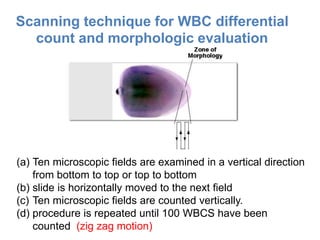
(a) Ten microscopic fields are examined in a vertical direction
from bottom to top or top to bottom
(b) slide is horizontally moved to the next field
(c) Ten microscopic fields are counted vertically.
(d) procedure is repeated until 100 WBCS have been
counted (zig zag motion)
Scanning technique for WBC differential
count and morphologic evaluation
1. RBC
• Size
• Shape
• Color
• Arrangement
• Inclusions
• Young RBCs
2. WBC
• Total counts
• Differential counts
• I:T ratio
• Abnormal WBC
3. Platelets
• Counts
• Abnormality
4. Parasites
Evaluation of PBS
•A fairly accurate estimate of the WBC count (cells/mL)
can be obtained by counting the total number of
leukocytes in ten 40X microscopic fields, dividing the
total by 10, and multiplying by 3000. These estimates
should approximate that obtained by the cell analyzer.
WBC estimation on peripheral smear
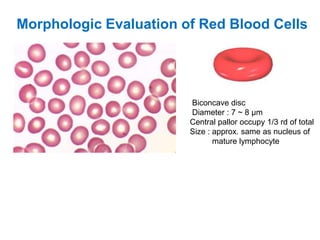
Morphologic Evaluation of Red Blood Cells
Biconcave disc
Diameter : 7 ~ 8 μm
Central pallor occupy 1/3 rd of total
Size : approx. same as nucleus of
mature lymphocyte
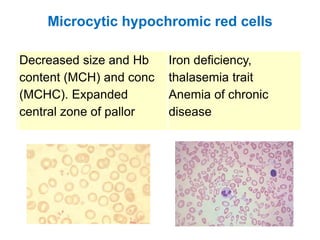
Microcytic hypochromic red cells
Decreased size and Hb
content (MCH) and conc
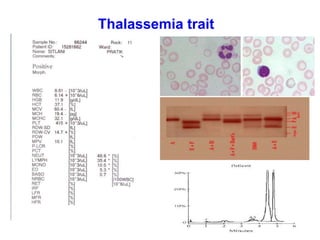
(MCHC). Expanded
central zone of pallor
Iron deficiency,
thalasemia trait
Anemia of chronic
disease
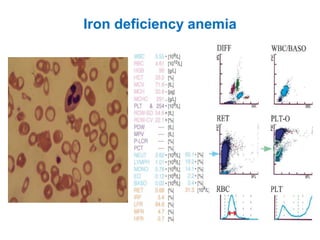
Iron deficiency anemia
Thalassemia trait
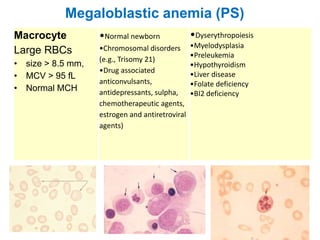
Megaloblastic anemia (PS)
Macrocyte
Large RBCs
• size > 8.5 mm,
• MCV > 95 fL
• Normal MCH
•Normal newborn
•Chromosomal disorders
(e.g., Trisomy 21)
•Drug associated
anticonvulsants,
antidepressants, sulpha,
chemotherapeutic agents,
estrogen and antiretroviral
agents)
•Dyserythropoiesis
•Myelodysplasia
•Preleukemia
•Hypothyroidism
•Liver disease
•Folate deficiency
•BI2 deficiency
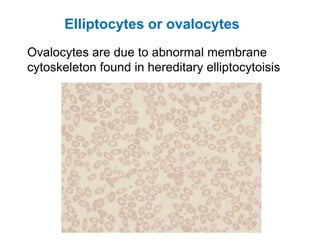
Elliptocytes or ovalocytes
Ovalocytes are due to abnormal membrane
cytoskeleton found in hereditary elliptocytoisis
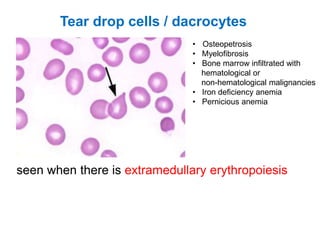
seen when there is extramedullary erythropoiesis
Tear drop cells / dacrocytes
• Osteopetrosis
• Myelofibrosis
• Bone marrow infiltrated with
hematological or
non-hematological malignancies
• Iron deficiency anemia
• Pernicious anemia
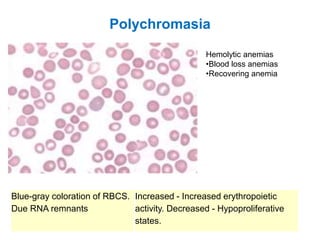
Polychromasia
Blue-gray coloration of RBCS.
Due RNA remnants
Increased - Increased erythropoietic
activity. Decreased - Hypoproliferative
states.
Hemolytic anemias
•Blood loss anemias
•Recovering anemia
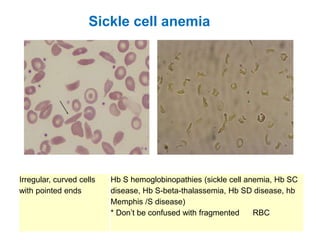
Sickle cell anemia
Irregular, curved cells
with pointed ends
Hb S hemoglobinopathies (sickle cell anemia, Hb SC
disease, Hb S-beta-thalassemia, Hb SD disease, hb
Memphis /S disease)
* Don’t be confused with fragmented RBC
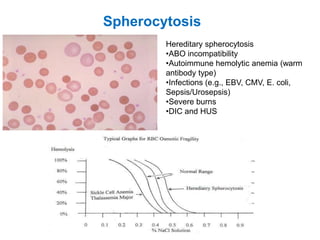
Spherocytosis
Hereditary spherocytosis
•ABO incompatibility
•Autoimmune hemolytic anemia (warm
antibody type)
•Infections (e.g., EBV, CMV, E. coli,
Sepsis/Urosepsis)
•Severe burns
•DIC and HUS
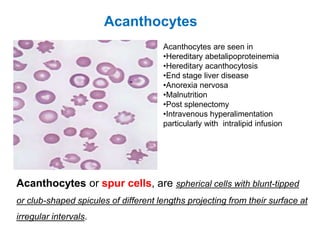
Acanthocytes or spur cells, are spherical cells with blunt-tipped
or club-shaped spicules of different lengths projecting from their surface at
irregular intervals.
Acanthocytes
Acanthocytes are seen in
•Hereditary abetalipoproteinemia
•Hereditary acanthocytosis
•End stage liver disease
•Anorexia nervosa
•Malnutrition
•Post splenectomy
•Intravenous hyperalimentation
particularly with intralipid infusion
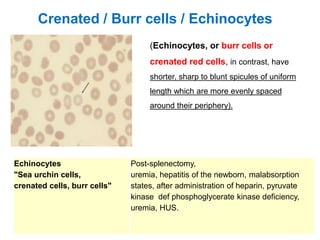
Echinocytes
"Sea urchin cells,
crenated cells, burr cells"
Post-splenectomy,
uremia, hepatitis of the newborn, malabsorption
states, after administration of heparin, pyruvate
kinase def phosphoglycerate kinase deficiency,
uremia, HUS.
Crenated / Burr cells / Echinocytes
(Echinocytes, or burr cells or
crenated red cells, in contrast, have
shorter, sharp to blunt spicules of uniform
length which are more evenly spaced
around their periphery).
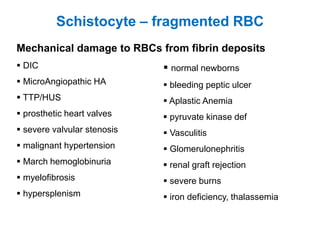
Mechanical damage to RBCs from fibrin deposits
 DIC
 MicroAngiopathic HA
 TTP/HUS
 prosthetic heart valves
 severe valvular stenosis
 malignant hypertension
 March hemoglobinuria
 myelofibrosis
 hypersplenism
Schistocyte – fragmented RBC
 normal newborns
 bleeding peptic ulcer
 Aplastic Anemia
 pyruvate kinase def
 Vasculitis
 Glomerulonephritis
 renal graft rejection
 severe burns
 iron deficiency, thalassemia
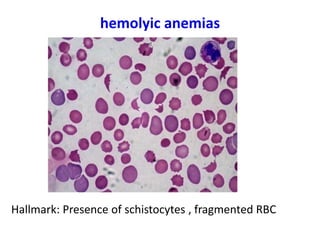
hemolyic anemias
Hallmark: Presence of schistocytes , fragmented RBC
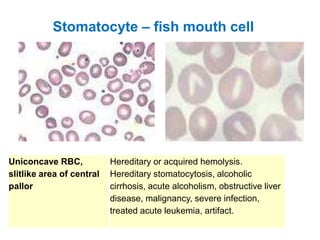
Uniconcave RBC,
slitlike area of central
pallor
Hereditary or acquired hemolysis.
Hereditary stomatocytosis, alcoholic
cirrhosis, acute alcoholism, obstructive liver
disease, malignancy, severe infection,
treated acute leukemia, artifact.
Stomatocyte – fish mouth cell
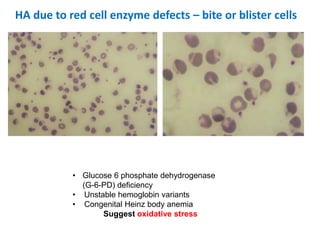
HA due to red cell enzyme defects – bite or blister cells
• Glucose 6 phosphate dehydrogenase
(G-6-PD) deficiency
• Unstable hemoglobin variants
• Congenital Heinz body anemia
Suggest oxidative stress
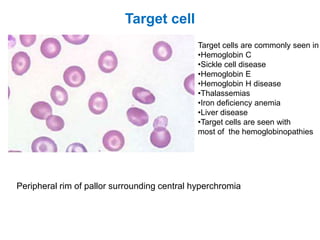
Target cell
Peripheral rim of pallor surrounding central hyperchromia
Target cells are commonly seen in
•Hemoglobin C
•Sickle cell disease
•Hemoglobin E
•Hemoglobin H disease
•Thalassemias
•Iron deficiency anemia
•Liver disease
•Target cells are seen with
most of the hemoglobinopathies
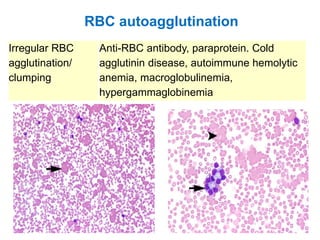
Irregular RBC
agglutination/
clumping
Anti-RBC antibody, paraprotein. Cold
agglutinin disease, autoimmune hemolytic
anemia, macroglobulinemia,
hypergammaglobinemia
RBC autoagglutination
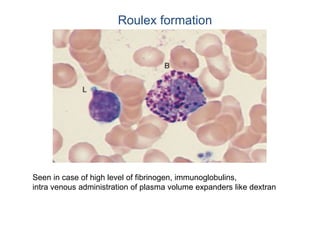
Roulex formation
Seen in case of high level of fibrinogen, immunoglobulins,
intra venous administration of plasma volume expanders like dextran
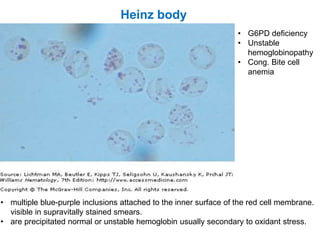
• multiple blue-purple inclusions attached to the inner surface of the red cell membrane.
visible in supravitally stained smears.
• are precipitated normal or unstable hemoglobin usually secondary to oxidant stress.
• G6PD deficiency
• Unstable
hemoglobinopathy
• Cong. Bite cell
anemia
Heinz body
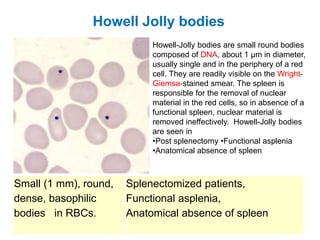
Small (1 mm), round,
dense, basophilic
bodies in RBCs.
Splenectomized patients,
Functional asplenia,
Anatomical absence of spleen
Howell Jolly bodies
Howell-Jolly bodies are small round bodies
composed of DNA, about 1 µm in diameter,
usually single and in the periphery of a red
cell. They are readily visible on the Wright-
Giemsa-stained smear. The spleen is
responsible for the removal of nuclear
material in the red cells, so in absence of a
functional spleen, nuclear material is
removed ineffectively. Howell-Jolly bodies
are seen in
•Post splenectomy •Functional asplenia
•Anatomical absence of spleen
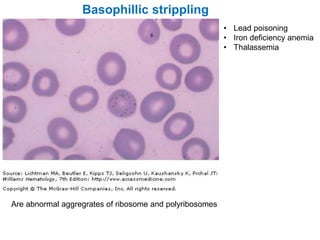
Basophillic strippling
• Lead poisoning
• Iron deficiency anemia
• Thalassemia
Are abnormal aggregrates of ribosome and polyribosomes
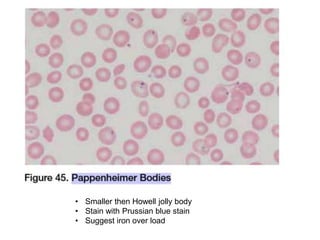
• Smaller then Howell jolly body
• Stain with Prussian blue stain
• Suggest iron over load
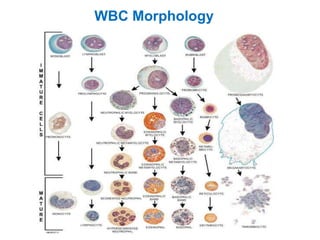
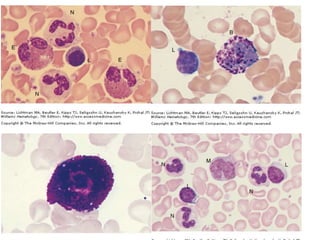
WBC Morphology
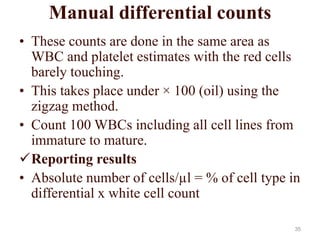
Manual differential counts
• These counts are done in the same area as
WBC and platelet estimates with the red cells
barely touching.
• This takes place under × 100 (oil) using the
zigzag method.
• Count 100 WBCs including all cell lines from
immature to mature.
Reporting results
• Absolute number of cells/µl = % of cell type in
differential x white cell count
35
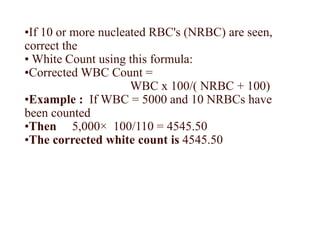
•If 10 or more nucleated RBC's (NRBC) are seen,
correct the
• White Count using this formula:
•Corrected WBC Count =
WBC x 100/( NRBC + 100)
•Example : If WBC = 5000 and 10 NRBCs have
been counted
•Then 5,000× 100/110 = 4545.50
•The corrected white count is 4545.50
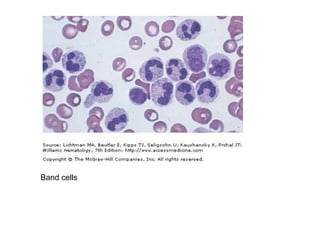
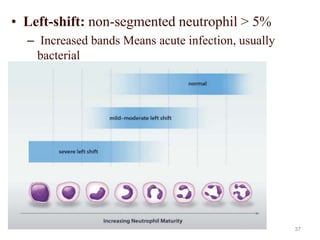
• Left-shift: non-segmented neutrophil > 5%
– Increased bands Means acute infection, usually
bacterial
37
• Basophils are increased in the blood in
– Myeloproliferative disorders (e.g., chronic myelogenous leukemia)
– Hypersensitivity reactions
– Mastocytosis
– Xeroderma pigmentosa
– Hypothyroidism
• Morphologically abnormal eosinophils are seen in
– Myelodysplastic syndrome
– Megaloblastic anemias
• Eosinophils are increased in the following conditions:
 Allergies
 Parasitic infestations
 Infections
 Acute leukemia
 Myeloproliferative diseases
 Hypereosinophilic syndrome
 Drug-associated
Band cells
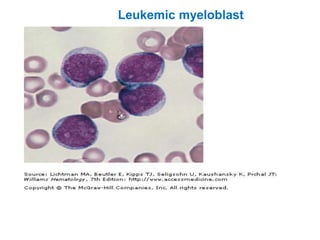
Leukemic myeloblast
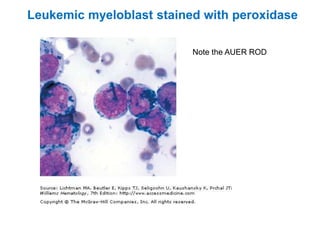
Leukemic myeloblast stained with peroxidase
Note the AUER ROD
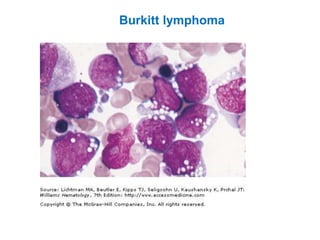
Burkitt lymphoma
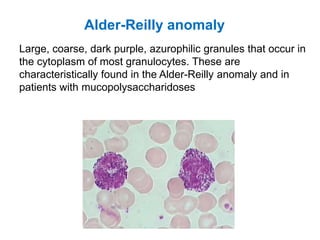
Large, coarse, dark purple, azurophilic granules that occur in
the cytoplasm of most granulocytes. These are
characteristically found in the Alder-Reilly anomaly and in
patients with mucopolysaccharidoses
Alder-Reilly anomaly
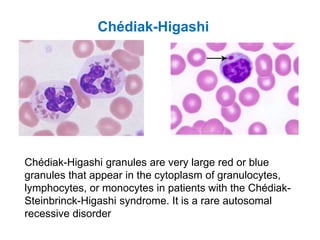
Chédiak-Higashi granules are very large red or blue
granules that appear in the cytoplasm of granulocytes,
lymphocytes, or monocytes in patients with the Chédiak-
Steinbrinck-Higashi syndrome. It is a rare autosomal
recessive disorder
Chédiak-Higashi
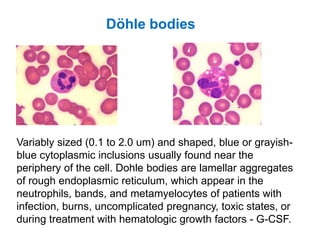
Variably sized (0.1 to 2.0 um) and shaped, blue or grayish-
blue cytoplasmic inclusions usually found near the
periphery of the cell. Dohle bodies are lamellar aggregates
of rough endoplasmic reticulum, which appear in the
neutrophils, bands, and metamyelocytes of patients with
infection, burns, uncomplicated pregnancy, toxic states, or
during treatment with hematologic growth factors - G-CSF.
Döhle bodies
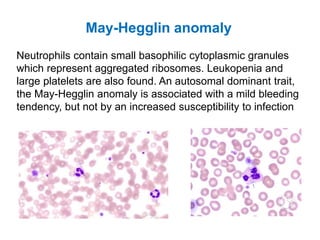
May-Hegglin anomaly
Neutrophils contain small basophilic cytoplasmic granules
which represent aggregated ribosomes. Leukopenia and
large platelets are also found. An autosomal dominant trait,
the May-Hegglin anomaly is associated with a mild bleeding
tendency, but not by an increased susceptibility to infection
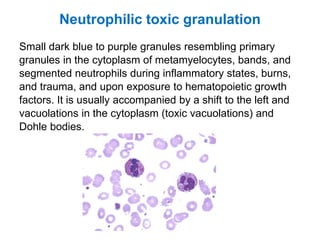
Neutrophilic toxic granulation
Small dark blue to purple granules resembling primary
granules in the cytoplasm of metamyelocytes, bands, and
segmented neutrophils during inflammatory states, burns,
and trauma, and upon exposure to hematopoietic growth
factors. It is usually accompanied by a shift to the left and
vacuolations in the cytoplasm (toxic vacuolations) and
Dohle bodies.
Platelets
Neubars chamber : count platelets in 64 small
squares
Counts * 250 = total platelets
Normal counts 4.5 to 5.5 lakh
Common Causes of Thrombocytopenia
•Decreased production
−Aplastic anemia
−Acute leukemia
−Viral infections *Parvovirus *CMV
−Amegakaryocytic thrombocytopenia (AMT)
•Increased destruction
−Immune thrombocytopenia
*Idiopathic thrombocytopenic purpura (ITP)
*Neonatal alloimmune thrombocytopenia
(NAITP)
−Disseminated intravascular coagulation (DIC)
−Hypersplenism
Thrombocytosis
• Reactive thrombocytosis
 Post infection
 Inflammation
 Juvenile rheumatoid arthritis
 Collagen vasvular disease
• Essential thrombocythemia
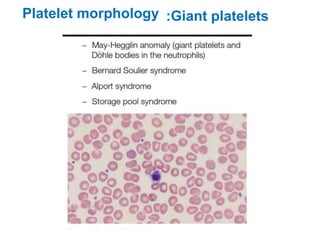
:Giant plateletsPlatelet morphology
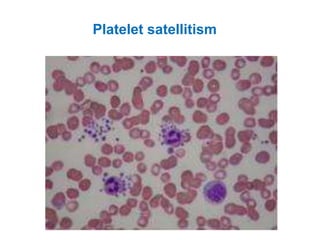
Platelet satellitism
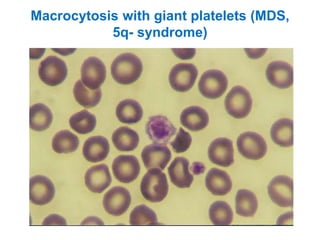
Macrocytosis with giant platelets (MDS,
5q- syndrome)
Disadvantages of the Peripheral Blood Smear
Provides information that cannot be obtained from automated
cell counting. However, some limitations are:
• Experience is required to make technically adequate smears.
• There is a non-uniform distribution of white blood cells over
the smear, with larger leukocytes concentrated near the edges
and lymphocytes scattered throughout.
• There is a non-uniform distribution of RBCs over the smear,
with small crowded red blood cells at the thick edge and large
flat red blood cells without central pallor at the feathered edge
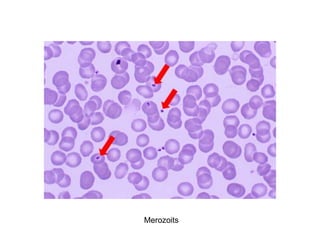
Merozoits
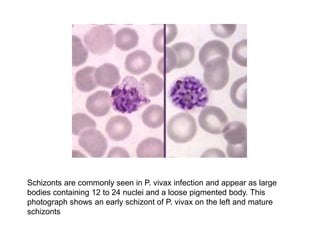
Schizonts are commonly seen in P. vivax infection and appear as large
bodies containing 12 to 24 nuclei and a loose pigmented body. This
photograph shows an early schizont of P. vivax on the left and mature
schizonts
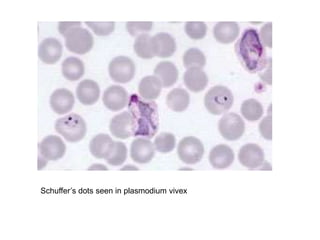
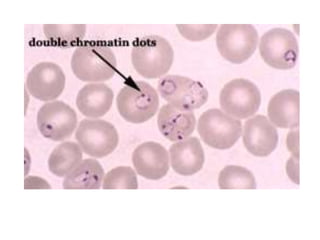
Schuffer’s dots seen in plasmodium vivex
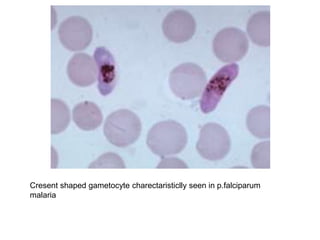
Cresent shaped gametocyte charectaristiclly seen in p.falciparum
malaria
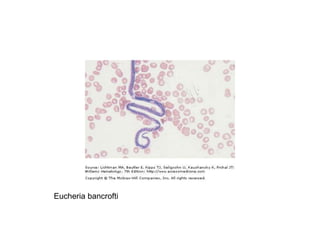
Eucheria bancrofti
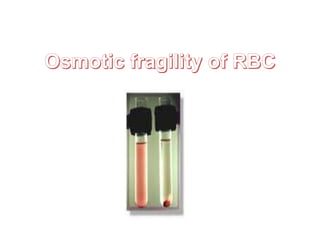
OSMOTIC FRAGILITY
TEST
• Defination:
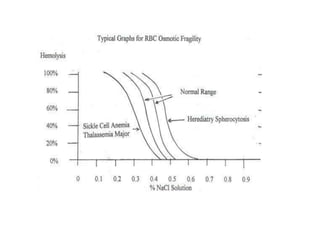
• it is a test that measures the resistance to
hemolysis of red blood cells (RBC) by
osmotic stress created by hypotonic
solutions
• RBC are exposed to a series of saline
(NaCl) solutions with increasing dilution
• The sooner hemolysis occurs, the greater is
osmotic fragility of RBC
• Isotonic (physiological) solution – 0.9 %
NaCl
• RBC burst in hypotonic (< 0.9 % NaCl),
and shrink (crenate) in hypertonic
solutions (> 0.9 % NaCl)
• Red cells are suspended in a series of
tubes containing hypotonic solutions from
0.9 to 0 % NaCl. Degree of hemolysis
measured for each NaCl concentration.
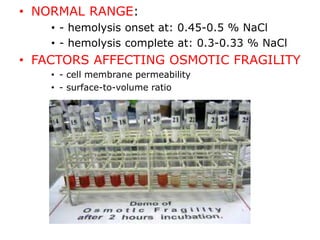
• NORMAL RANGE:
• - hemolysis onset at: 0.45-0.5 % NaCl
• - hemolysis complete at: 0.3-0.33 % NaCl
• FACTORS AFFECTING OSMOTIC FRAGILITY
• - cell membrane permeability
• - surface-to-volume ratio
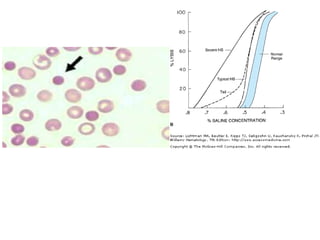
- Hereditary spherocytosis
- Acquired spherocytosis
- Hemolytic anemia (HDN)
- Malaria
- Severe pyruvate kinase deficiency
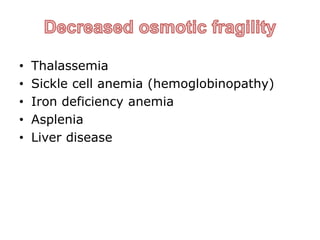
• Thalassemia
• Sickle cell anemia (hemoglobinopathy)
• Iron deficiency anemia
• Asplenia
• Liver disease
introduction
Principle of test
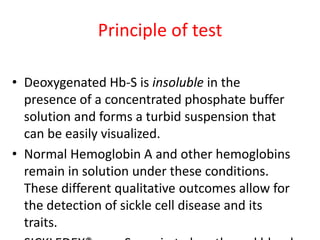
• Deoxygenated Hb-S is insoluble in the
presence of a concentrated phosphate buffer
solution and forms a turbid suspension that
can be easily visualized.
• Normal Hemoglobin A and other hemoglobins
remain in solution under these conditions.
These different qualitative outcomes allow for
the detection of sickle cell disease and its
traits.
Procedure
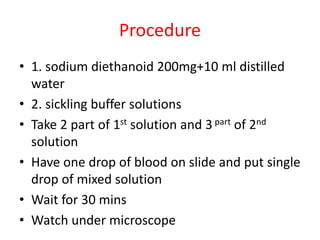
• 1. sodium diethanoid 200mg+10 ml distilled
water
• 2. sickling buffer solutions
• Take 2 part of 1st solution and 3 part of 2nd
solution
• Have one drop of blood on slide and put single
drop of mixed solution
• Wait for 30 mins
• Watch under microscope
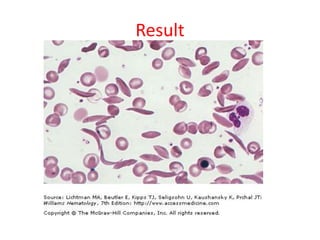
Result
“ Thank you !

05 peripheral blood smear examination

  • 1.
    Peripheral blood smearexamination Dr Hemang Mendpara DNB pediatrics Choithram Hospital & Research Centre Indore
  • 2.
    • Hemogram: measured and calculated parameters •Histograms: size distribution of WBC, RBC and Plt • Cytogram: WBC differential CBC on automated analyzers Flagging for abnormalities necessitates a manual PBS review
  • 3.
    A well madeperipheral smear is thick at one end and progressively thinner at the opposite end. The "zone of morphology" (area of optimal thickness for light microscopic examination) should be at least 2 cm in length. The smear should occupy the central area of the slide and be margin-free at the edges
  • 4.
    Slide fixation andstaining 1. Romanowsky staining Leishman's stain : a polychromatic stain •Methanol : fixes cells to slide •methylene blue stains RNA,DNA blue-grey color •Eosin stains hemoglobin, eosin granules orange-red color •pH value of phosphate buffer is very important
  • 5.
    PBS examination requiresa systematic approach in order to gather all possible information. In addition, all specimens must be evaluated in the same manner, to assure that consistent information is obtained.
  • 6.
    • 1. Macroscopicview : quality of the smear • 2.The microscopic analysis • begins on lower power (10x), • to assess cellular distribution, staining quality, and to select an area where the RBCs are barely touching each other. •On hi-dry (40x), to obtain a WBC estimate. All of the detailed analysis of the cellular elements using high power or oil immersion. PBS examination - preliminary
  • 7.
    (a) Ten microscopicfields are examined in a vertical direction from bottom to top or top to bottom (b) slide is horizontally moved to the next field (c) Ten microscopic fields are counted vertically. (d) procedure is repeated until 100 WBCS have been counted (zig zag motion) Scanning technique for WBC differential count and morphologic evaluation
  • 8.
    1. RBC • Size •Shape • Color • Arrangement • Inclusions • Young RBCs 2. WBC • Total counts • Differential counts • I:T ratio • Abnormal WBC 3. Platelets • Counts • Abnormality 4. Parasites Evaluation of PBS
  • 9.
    •A fairly accurateestimate of the WBC count (cells/mL) can be obtained by counting the total number of leukocytes in ten 40X microscopic fields, dividing the total by 10, and multiplying by 3000. These estimates should approximate that obtained by the cell analyzer. WBC estimation on peripheral smear
  • 10.
    Morphologic Evaluation ofRed Blood Cells Biconcave disc Diameter : 7 ~ 8 μm Central pallor occupy 1/3 rd of total Size : approx. same as nucleus of mature lymphocyte
  • 11.
    Microcytic hypochromic redcells Decreased size and Hb content (MCH) and conc (MCHC). Expanded central zone of pallor Iron deficiency, thalasemia trait Anemia of chronic disease
  • 12.
  • 13.
  • 14.
    Megaloblastic anemia (PS) Macrocyte LargeRBCs • size > 8.5 mm, • MCV > 95 fL • Normal MCH •Normal newborn •Chromosomal disorders (e.g., Trisomy 21) •Drug associated anticonvulsants, antidepressants, sulpha, chemotherapeutic agents, estrogen and antiretroviral agents) •Dyserythropoiesis •Myelodysplasia •Preleukemia •Hypothyroidism •Liver disease •Folate deficiency •BI2 deficiency
  • 15.
    Elliptocytes or ovalocytes Ovalocytesare due to abnormal membrane cytoskeleton found in hereditary elliptocytoisis
  • 16.
    seen when thereis extramedullary erythropoiesis Tear drop cells / dacrocytes • Osteopetrosis • Myelofibrosis • Bone marrow infiltrated with hematological or non-hematological malignancies • Iron deficiency anemia • Pernicious anemia
  • 17.
    Polychromasia Blue-gray coloration ofRBCS. Due RNA remnants Increased - Increased erythropoietic activity. Decreased - Hypoproliferative states. Hemolytic anemias •Blood loss anemias •Recovering anemia
  • 18.
    Sickle cell anemia Irregular,curved cells with pointed ends Hb S hemoglobinopathies (sickle cell anemia, Hb SC disease, Hb S-beta-thalassemia, Hb SD disease, hb Memphis /S disease) * Don’t be confused with fragmented RBC
  • 19.
    Spherocytosis Hereditary spherocytosis •ABO incompatibility •Autoimmunehemolytic anemia (warm antibody type) •Infections (e.g., EBV, CMV, E. coli, Sepsis/Urosepsis) •Severe burns •DIC and HUS
  • 20.
    Acanthocytes or spurcells, are spherical cells with blunt-tipped or club-shaped spicules of different lengths projecting from their surface at irregular intervals. Acanthocytes Acanthocytes are seen in •Hereditary abetalipoproteinemia •Hereditary acanthocytosis •End stage liver disease •Anorexia nervosa •Malnutrition •Post splenectomy •Intravenous hyperalimentation particularly with intralipid infusion
  • 21.
    Echinocytes "Sea urchin cells, crenatedcells, burr cells" Post-splenectomy, uremia, hepatitis of the newborn, malabsorption states, after administration of heparin, pyruvate kinase def phosphoglycerate kinase deficiency, uremia, HUS. Crenated / Burr cells / Echinocytes (Echinocytes, or burr cells or crenated red cells, in contrast, have shorter, sharp to blunt spicules of uniform length which are more evenly spaced around their periphery).
  • 22.
    Mechanical damage toRBCs from fibrin deposits  DIC  MicroAngiopathic HA  TTP/HUS  prosthetic heart valves  severe valvular stenosis  malignant hypertension  March hemoglobinuria  myelofibrosis  hypersplenism Schistocyte – fragmented RBC  normal newborns  bleeding peptic ulcer  Aplastic Anemia  pyruvate kinase def  Vasculitis  Glomerulonephritis  renal graft rejection  severe burns  iron deficiency, thalassemia
  • 23.
    hemolyic anemias Hallmark: Presenceof schistocytes , fragmented RBC
  • 24.
    Uniconcave RBC, slitlike areaof central pallor Hereditary or acquired hemolysis. Hereditary stomatocytosis, alcoholic cirrhosis, acute alcoholism, obstructive liver disease, malignancy, severe infection, treated acute leukemia, artifact. Stomatocyte – fish mouth cell
  • 25.
    HA due tored cell enzyme defects – bite or blister cells • Glucose 6 phosphate dehydrogenase (G-6-PD) deficiency • Unstable hemoglobin variants • Congenital Heinz body anemia Suggest oxidative stress
  • 26.
    Target cell Peripheral rimof pallor surrounding central hyperchromia Target cells are commonly seen in •Hemoglobin C •Sickle cell disease •Hemoglobin E •Hemoglobin H disease •Thalassemias •Iron deficiency anemia •Liver disease •Target cells are seen with most of the hemoglobinopathies
  • 27.
    Irregular RBC agglutination/ clumping Anti-RBC antibody,paraprotein. Cold agglutinin disease, autoimmune hemolytic anemia, macroglobulinemia, hypergammaglobinemia RBC autoagglutination
  • 28.
    Roulex formation Seen incase of high level of fibrinogen, immunoglobulins, intra venous administration of plasma volume expanders like dextran
  • 29.
    • multiple blue-purpleinclusions attached to the inner surface of the red cell membrane. visible in supravitally stained smears. • are precipitated normal or unstable hemoglobin usually secondary to oxidant stress. • G6PD deficiency • Unstable hemoglobinopathy • Cong. Bite cell anemia Heinz body
  • 30.
    Small (1 mm),round, dense, basophilic bodies in RBCs. Splenectomized patients, Functional asplenia, Anatomical absence of spleen Howell Jolly bodies Howell-Jolly bodies are small round bodies composed of DNA, about 1 µm in diameter, usually single and in the periphery of a red cell. They are readily visible on the Wright- Giemsa-stained smear. The spleen is responsible for the removal of nuclear material in the red cells, so in absence of a functional spleen, nuclear material is removed ineffectively. Howell-Jolly bodies are seen in •Post splenectomy •Functional asplenia •Anatomical absence of spleen
  • 31.
    Basophillic strippling • Leadpoisoning • Iron deficiency anemia • Thalassemia Are abnormal aggregrates of ribosome and polyribosomes
  • 32.
    • Smaller thenHowell jolly body • Stain with Prussian blue stain • Suggest iron over load
  • 33.
  • 35.
    Manual differential counts •These counts are done in the same area as WBC and platelet estimates with the red cells barely touching. • This takes place under × 100 (oil) using the zigzag method. • Count 100 WBCs including all cell lines from immature to mature. Reporting results • Absolute number of cells/µl = % of cell type in differential x white cell count 35
  • 36.
    •If 10 ormore nucleated RBC's (NRBC) are seen, correct the • White Count using this formula: •Corrected WBC Count = WBC x 100/( NRBC + 100) •Example : If WBC = 5000 and 10 NRBCs have been counted •Then 5,000× 100/110 = 4545.50 •The corrected white count is 4545.50
  • 37.
    • Left-shift: non-segmentedneutrophil > 5% – Increased bands Means acute infection, usually bacterial 37
  • 38.
    • Basophils areincreased in the blood in – Myeloproliferative disorders (e.g., chronic myelogenous leukemia) – Hypersensitivity reactions – Mastocytosis – Xeroderma pigmentosa – Hypothyroidism
  • 39.
    • Morphologically abnormaleosinophils are seen in – Myelodysplastic syndrome – Megaloblastic anemias • Eosinophils are increased in the following conditions:  Allergies  Parasitic infestations  Infections  Acute leukemia  Myeloproliferative diseases  Hypereosinophilic syndrome  Drug-associated
  • 40.
  • 41.
  • 42.
    Leukemic myeloblast stainedwith peroxidase Note the AUER ROD
  • 43.
  • 44.
    Large, coarse, darkpurple, azurophilic granules that occur in the cytoplasm of most granulocytes. These are characteristically found in the Alder-Reilly anomaly and in patients with mucopolysaccharidoses Alder-Reilly anomaly
  • 45.
    Chédiak-Higashi granules arevery large red or blue granules that appear in the cytoplasm of granulocytes, lymphocytes, or monocytes in patients with the Chédiak- Steinbrinck-Higashi syndrome. It is a rare autosomal recessive disorder Chédiak-Higashi
  • 46.
    Variably sized (0.1to 2.0 um) and shaped, blue or grayish- blue cytoplasmic inclusions usually found near the periphery of the cell. Dohle bodies are lamellar aggregates of rough endoplasmic reticulum, which appear in the neutrophils, bands, and metamyelocytes of patients with infection, burns, uncomplicated pregnancy, toxic states, or during treatment with hematologic growth factors - G-CSF. Döhle bodies
  • 47.
    May-Hegglin anomaly Neutrophils containsmall basophilic cytoplasmic granules which represent aggregated ribosomes. Leukopenia and large platelets are also found. An autosomal dominant trait, the May-Hegglin anomaly is associated with a mild bleeding tendency, but not by an increased susceptibility to infection
  • 48.
    Neutrophilic toxic granulation Smalldark blue to purple granules resembling primary granules in the cytoplasm of metamyelocytes, bands, and segmented neutrophils during inflammatory states, burns, and trauma, and upon exposure to hematopoietic growth factors. It is usually accompanied by a shift to the left and vacuolations in the cytoplasm (toxic vacuolations) and Dohle bodies.
  • 49.
    Platelets Neubars chamber :count platelets in 64 small squares Counts * 250 = total platelets Normal counts 4.5 to 5.5 lakh Common Causes of Thrombocytopenia •Decreased production −Aplastic anemia −Acute leukemia −Viral infections *Parvovirus *CMV −Amegakaryocytic thrombocytopenia (AMT) •Increased destruction −Immune thrombocytopenia *Idiopathic thrombocytopenic purpura (ITP) *Neonatal alloimmune thrombocytopenia (NAITP) −Disseminated intravascular coagulation (DIC) −Hypersplenism Thrombocytosis • Reactive thrombocytosis  Post infection  Inflammation  Juvenile rheumatoid arthritis  Collagen vasvular disease • Essential thrombocythemia
  • 51.
  • 52.
  • 53.
    Macrocytosis with giantplatelets (MDS, 5q- syndrome)
  • 54.
    Disadvantages of thePeripheral Blood Smear Provides information that cannot be obtained from automated cell counting. However, some limitations are: • Experience is required to make technically adequate smears. • There is a non-uniform distribution of white blood cells over the smear, with larger leukocytes concentrated near the edges and lymphocytes scattered throughout. • There is a non-uniform distribution of RBCs over the smear, with small crowded red blood cells at the thick edge and large flat red blood cells without central pallor at the feathered edge
  • 55.
  • 56.
    Schizonts are commonlyseen in P. vivax infection and appear as large bodies containing 12 to 24 nuclei and a loose pigmented body. This photograph shows an early schizont of P. vivax on the left and mature schizonts
  • 57.
    Schuffer’s dots seenin plasmodium vivex
  • 58.
    Cresent shaped gametocytecharectaristiclly seen in p.falciparum malaria
  • 61.
  • 64.
    OSMOTIC FRAGILITY TEST • Defination: •it is a test that measures the resistance to hemolysis of red blood cells (RBC) by osmotic stress created by hypotonic solutions • RBC are exposed to a series of saline (NaCl) solutions with increasing dilution • The sooner hemolysis occurs, the greater is osmotic fragility of RBC
  • 65.
    • Isotonic (physiological)solution – 0.9 % NaCl • RBC burst in hypotonic (< 0.9 % NaCl), and shrink (crenate) in hypertonic solutions (> 0.9 % NaCl) • Red cells are suspended in a series of tubes containing hypotonic solutions from 0.9 to 0 % NaCl. Degree of hemolysis measured for each NaCl concentration.
  • 66.
    • NORMAL RANGE: •- hemolysis onset at: 0.45-0.5 % NaCl • - hemolysis complete at: 0.3-0.33 % NaCl • FACTORS AFFECTING OSMOTIC FRAGILITY • - cell membrane permeability • - surface-to-volume ratio
  • 67.
    - Hereditary spherocytosis -Acquired spherocytosis - Hemolytic anemia (HDN) - Malaria - Severe pyruvate kinase deficiency
  • 69.
    • Thalassemia • Sicklecell anemia (hemoglobinopathy) • Iron deficiency anemia • Asplenia • Liver disease
  • 72.
  • 73.
    Principle of test •Deoxygenated Hb-S is insoluble in the presence of a concentrated phosphate buffer solution and forms a turbid suspension that can be easily visualized. • Normal Hemoglobin A and other hemoglobins remain in solution under these conditions. These different qualitative outcomes allow for the detection of sickle cell disease and its traits.
  • 74.
    Procedure • 1. sodiumdiethanoid 200mg+10 ml distilled water • 2. sickling buffer solutions • Take 2 part of 1st solution and 3 part of 2nd solution • Have one drop of blood on slide and put single drop of mixed solution • Wait for 30 mins • Watch under microscope
  • 75.
  • 76.