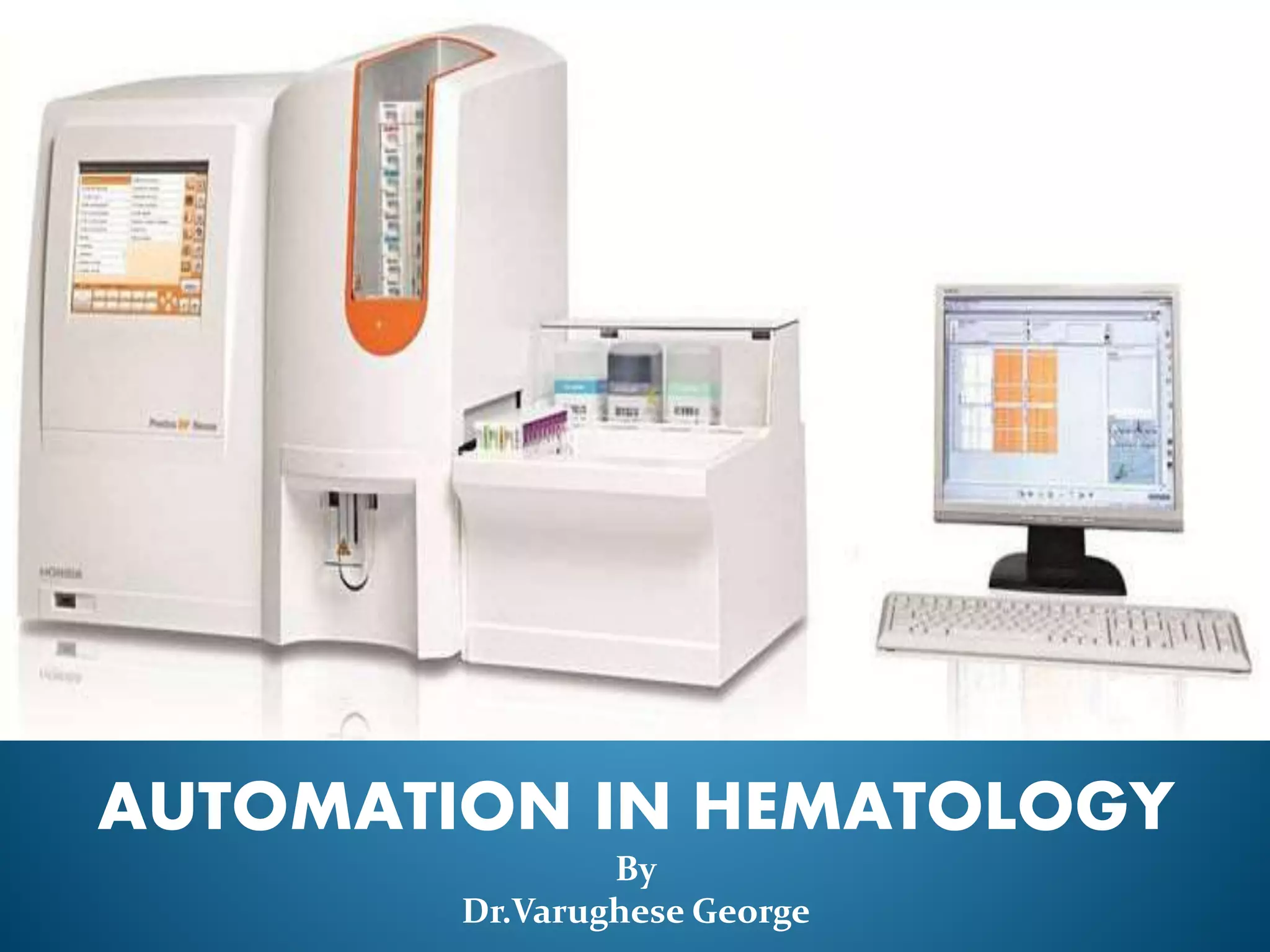
AUTOMATION IN HEMATOLOGY
By
Dr.Varughese George
PART 1
I N D E X
PART 1
I. Necessity for Automation.
II. Advantages & Disadvantages of Automation.
III. Types of Automated Hematology Analyzers.
IV. Principles involved in Automation.
V. Pentra ES 60 Haematology Analyzer.
VI. Pentra DF Nexus Haematology Analyzer.
PART 2
I. Histograms.
II. Flags
III. Quality Control
Necessity for Automation
 Cell counts
 Dx of Hemoglobinopathies
 Immunophenotyping
 Dx of Leukemias & Lymphomas
 Coagulation Abnormalities.
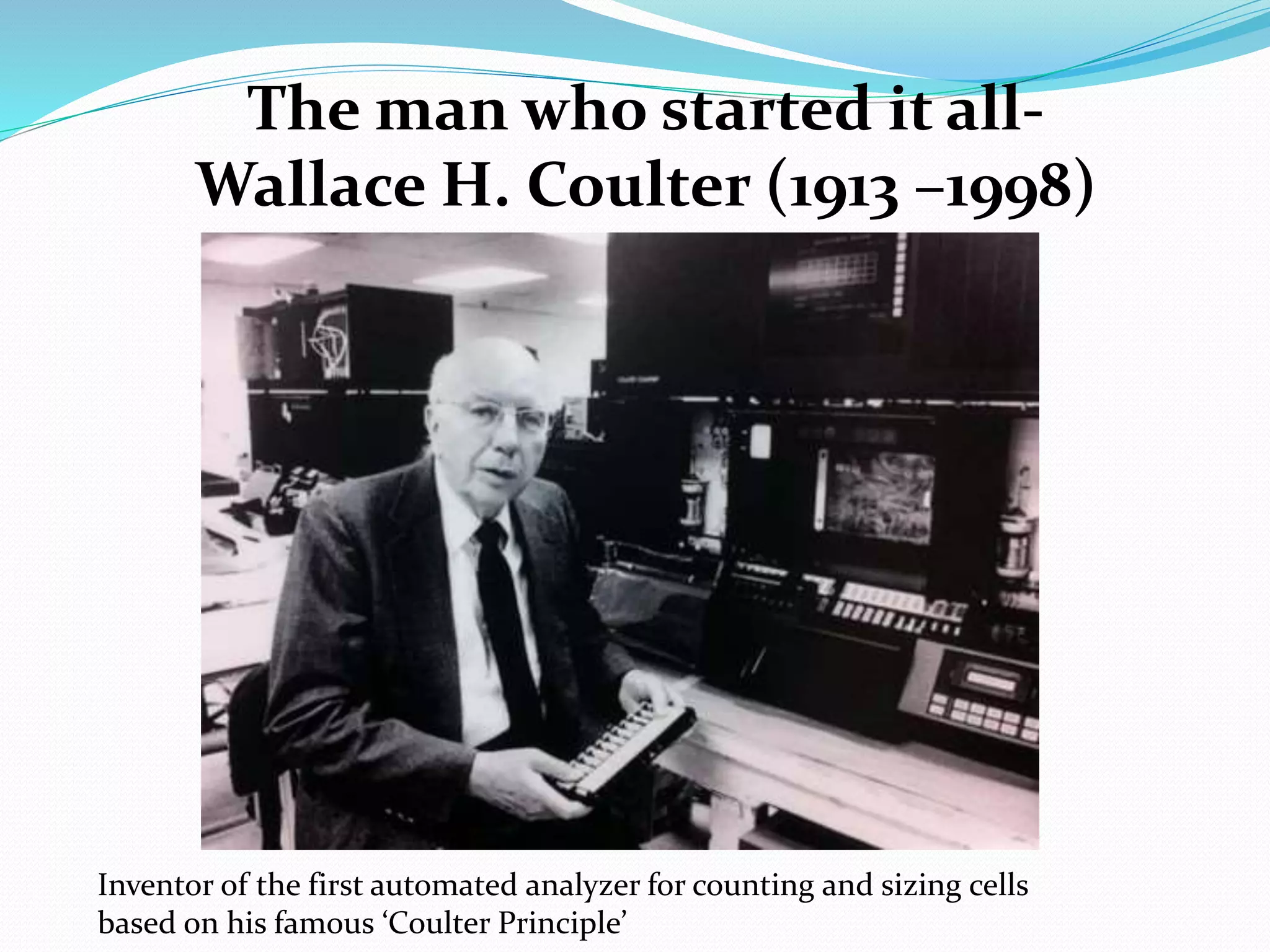
Inventor of the first automated analyzer for counting and sizing cells
based on his famous ‘Coulter Principle’
The man who started it all-
Wallace H. Coulter (1913 –1998)
I N D E X
PART 1
I. Necessity for Automation.
II. Advantages & Disadvantages of Automation.
III. Types of Automated Hematology Analyzers.
IV. Principles involved in Automation.
V. Pentra ES 60 Haematology Analyzer.
VI. Pentra DF Nexus Haematology Analyzer.
PART 2
I. Histograms.
II. Flags
III. Quality Control
Automation
Advantages Disadvantages
 Speed & Efficient Handling
 Accuracy & Precision
 Multiple Tests on Single Platform
 Significant Reduction of labor.
 Flagging
 RBC Morphology
 Erroneous results
 Expensive
I N D E X
PART 1
I. Necessity for Automation.
II. Advantages & Disadvantages of Automation.
III. Types of Automated Hematology Analyzers.
IV. Principles involved in Automation.
V. Pentra ES 60 Haematology Analyzer.
VI. Pentra DF Nexus Haematology Analyzer.
PART 2
I. Histograms.
II. Flags
III. Quality Control
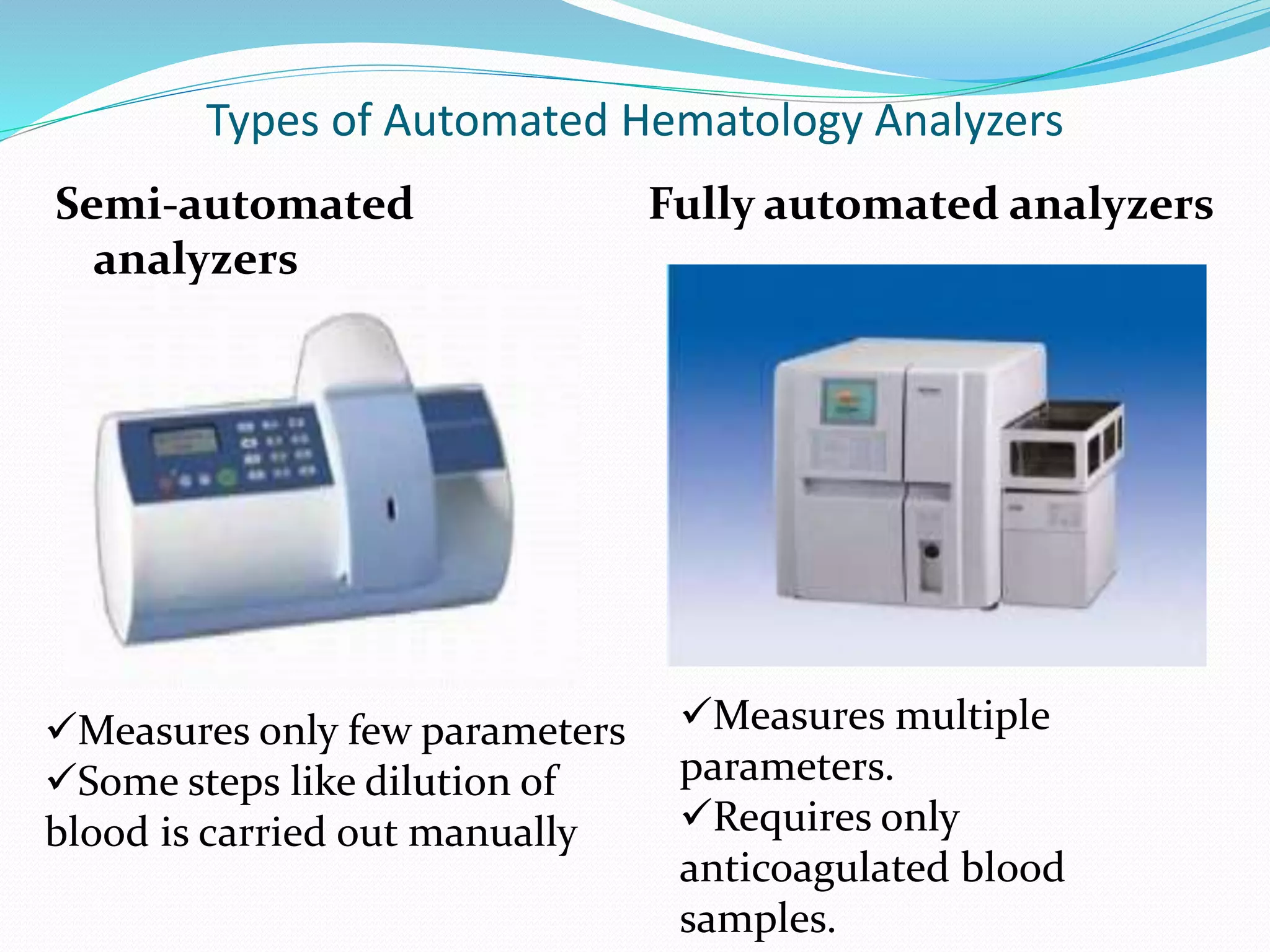
Types of Automated Hematology Analyzers
Semi-automated
analyzers
Fully automated analyzers
Measures only few parameters
Some steps like dilution of
blood is carried out manually
Measures multiple
parameters.
Requires only
anticoagulated blood
samples.
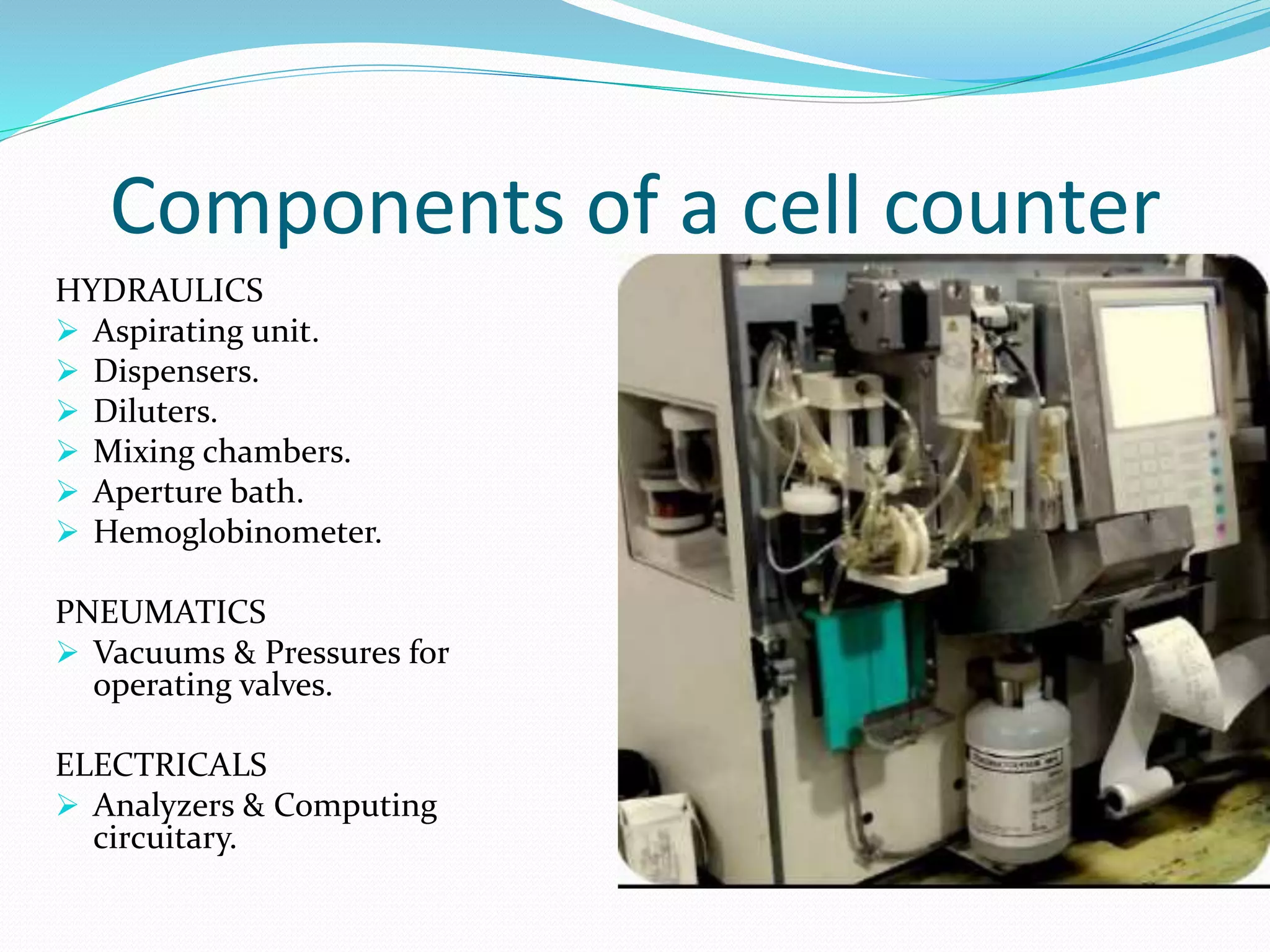
Components of a cell counter
HYDRAULICS
 Aspirating unit.
 Dispensers.
 Diluters.
 Mixing chambers.
 Aperture bath.
 Hemoglobinometer.
PNEUMATICS
 Vacuums & Pressures for
operating valves.
ELECTRICALS
 Analyzers & Computing
circuitary.
I N D E X
PART 1
I. Necessity for Automation.
II. Advantages & Disadvantages of Automation.
III. Types of Automated Hematology Analyzers.
IV. Principles involved in Automation.
V. Pentra ES 60 Haematology Analyzer.
VI. Pentra DF Nexus Haematology Analyzer.
PART 2
I. Histograms.
II. Flags
III. Quality Control
Principles of working of an automated blood analyzer
 Electrical Impedance.
 Light Scatter.
 Fluorescence.
 Light Absorption.
 Electrical Conductivity.
Electrical impedance
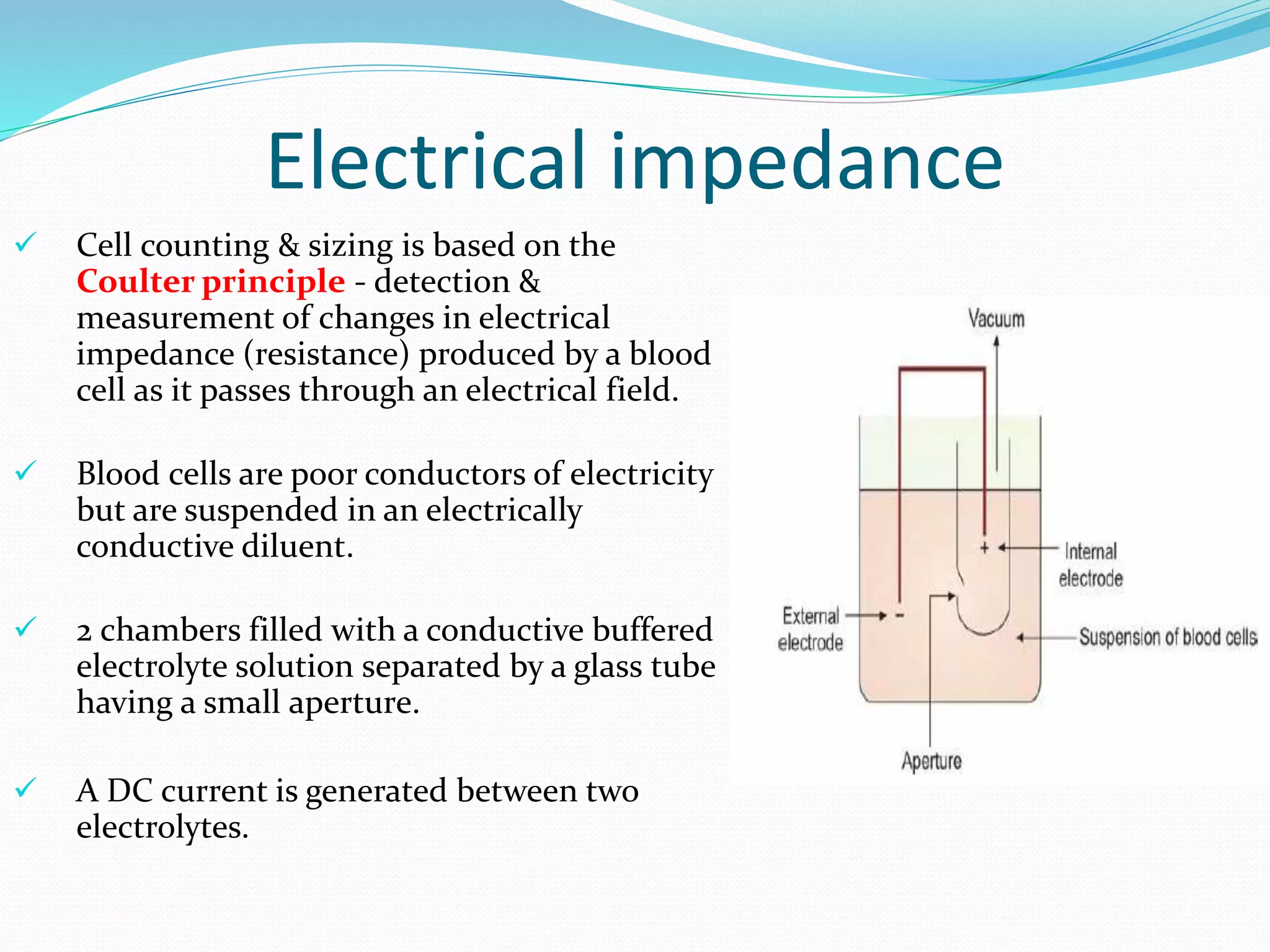
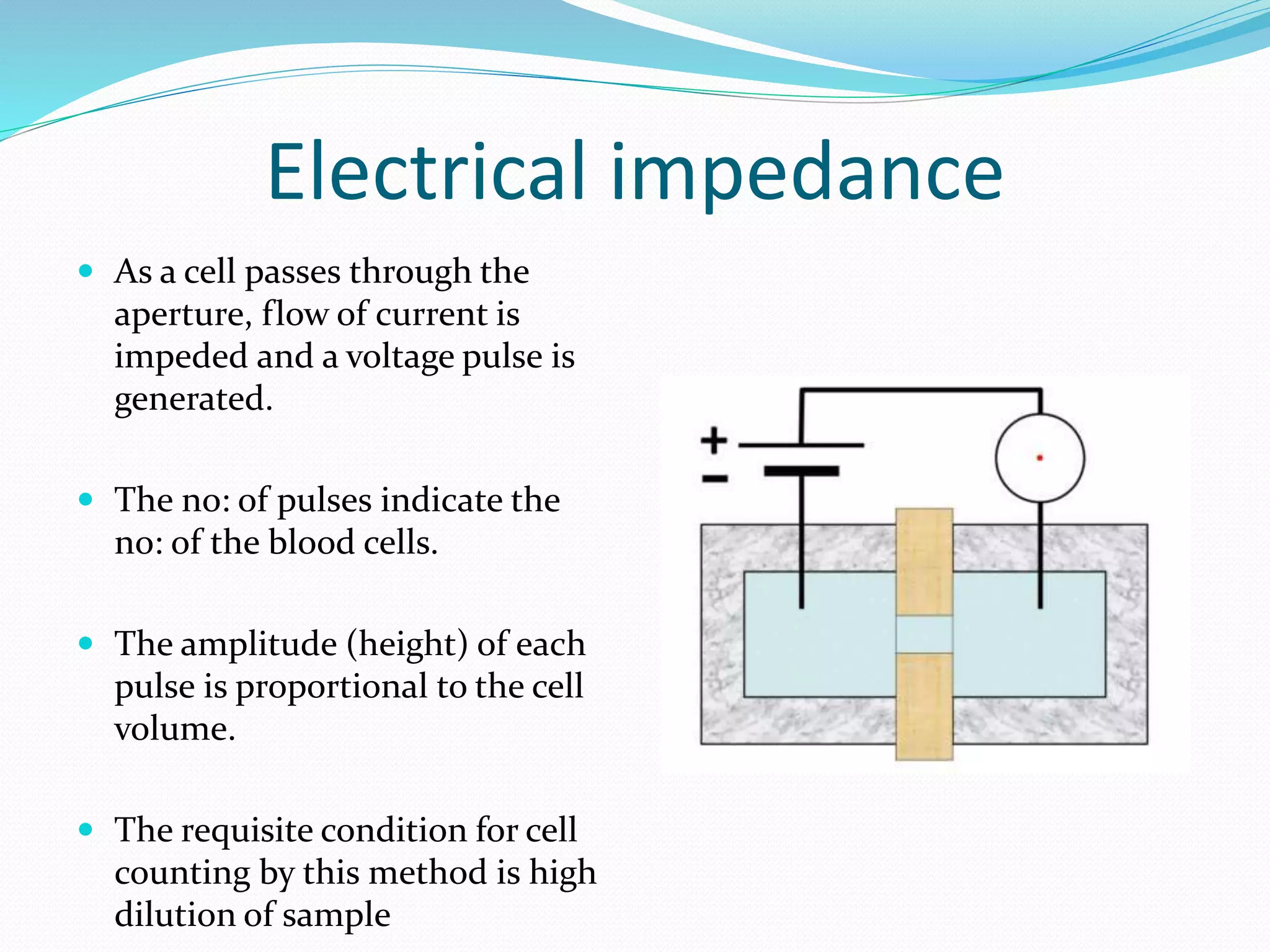
 Cell counting & sizing is based on the
Coulter principle - detection &
measurement of changes in electrical
impedance (resistance) produced by a blood
cell as it passes through an electrical field.
 Blood cells are poor conductors of electricity
but are suspended in an electrically
conductive diluent.
 2 chambers filled with a conductive buffered
electrolyte solution separated by a glass tube
having a small aperture.
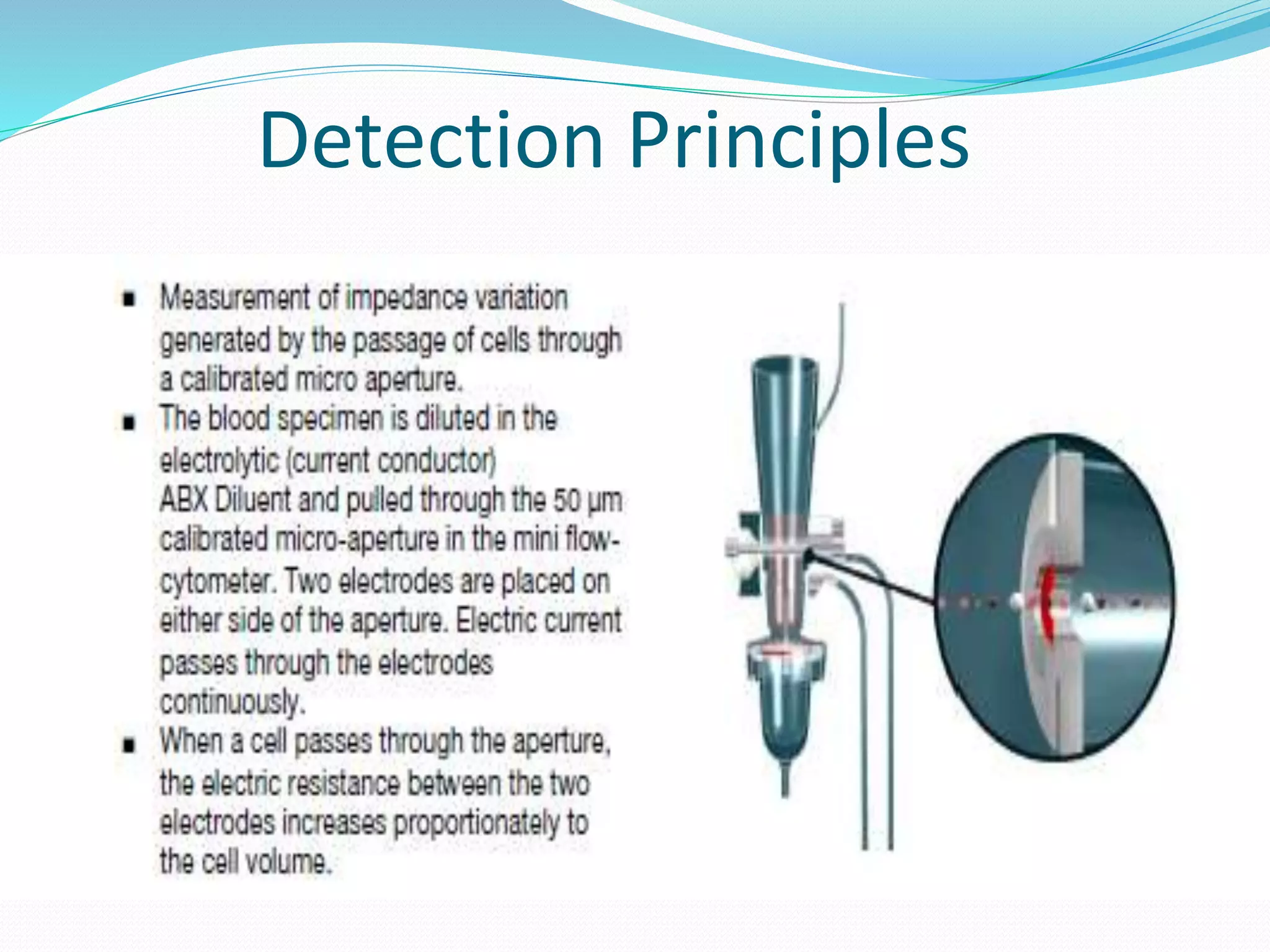
 A DC current is generated between two
electrolytes.
Electrical impedance
 As a cell passes through the
aperture, flow of current is
impeded and a voltage pulse is
generated.
 The no: of pulses indicate the
no: of the blood cells.
 The amplitude (height) of each
pulse is proportional to the cell
volume.
 The requisite condition for cell
counting by this method is high
dilution of sample
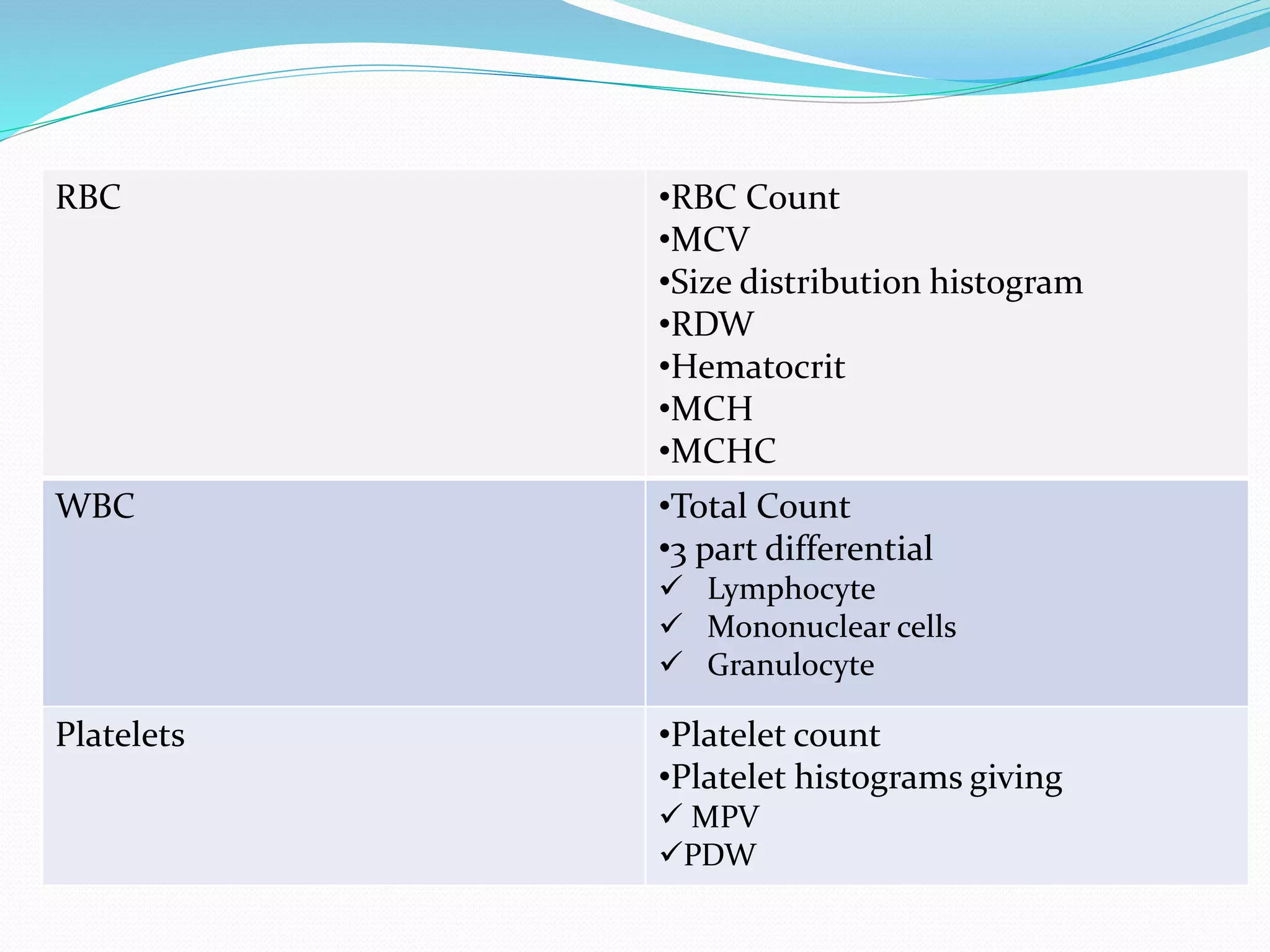
Variables measured by using electrical impedance
RBC ‱RBC Count
‱MCV
‱Size distribution histogram
‱RDW
‱Hematocrit
‱MCH
‱MCHC
WBC ‱Total Count
‱3 part differential
 Lymphocyte
 Mononuclear cells
 Granulocyte
Platelets ‱Platelet count
‱Platelet histograms giving
 MPV
PDW
Optical light scatter
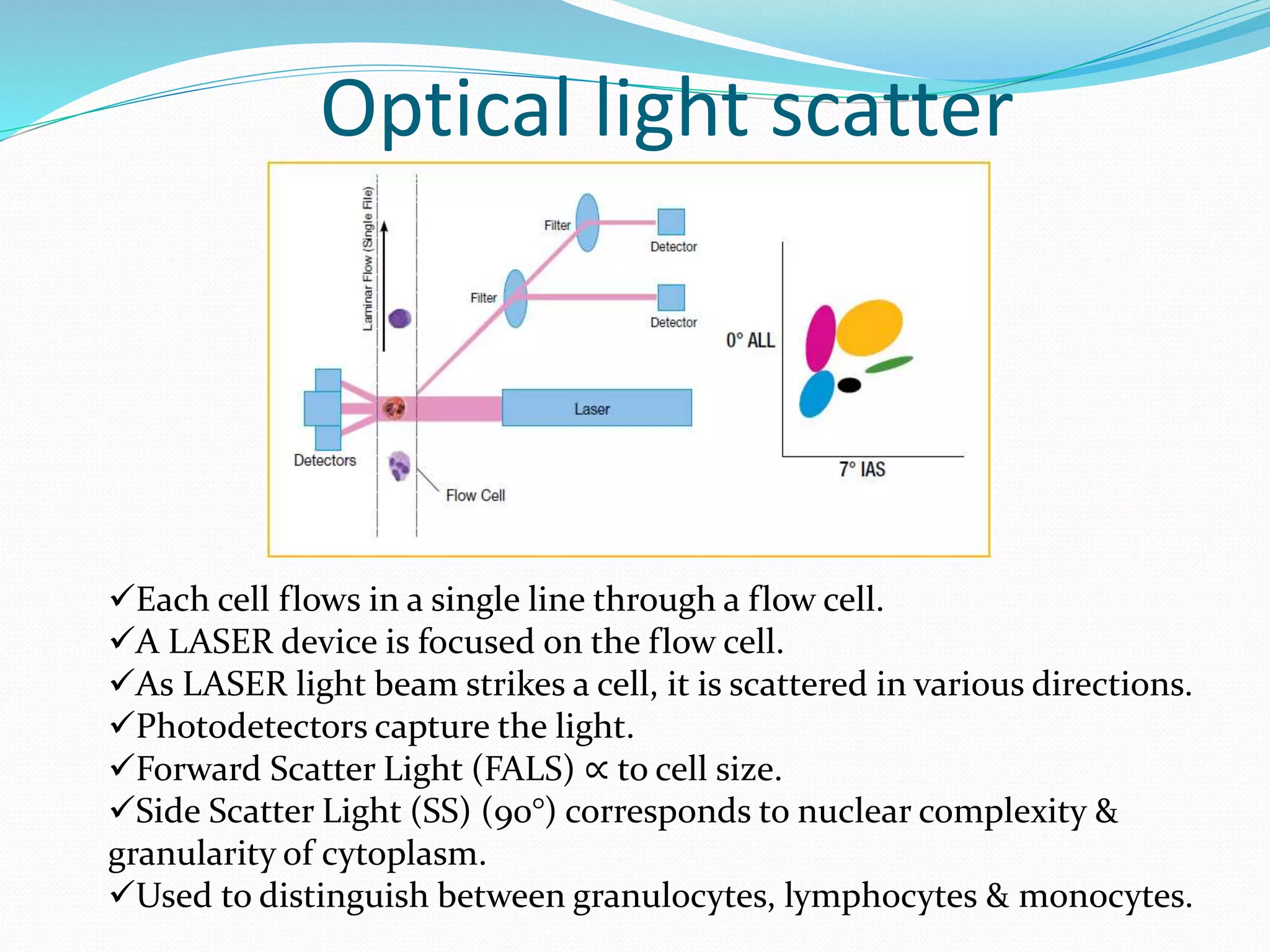
Each cell flows in a single line through a flow cell.
A LASER device is focused on the flow cell.
As LASER light beam strikes a cell, it is scattered in various directions.
Photodetectors capture the light.
Forward Scatter Light (FALS) ∝ to cell size.
Side Scatter Light (SS) (90°) corresponds to nuclear complexity &
granularity of cytoplasm.
Used to distinguish between granulocytes, lymphocytes & monocytes.
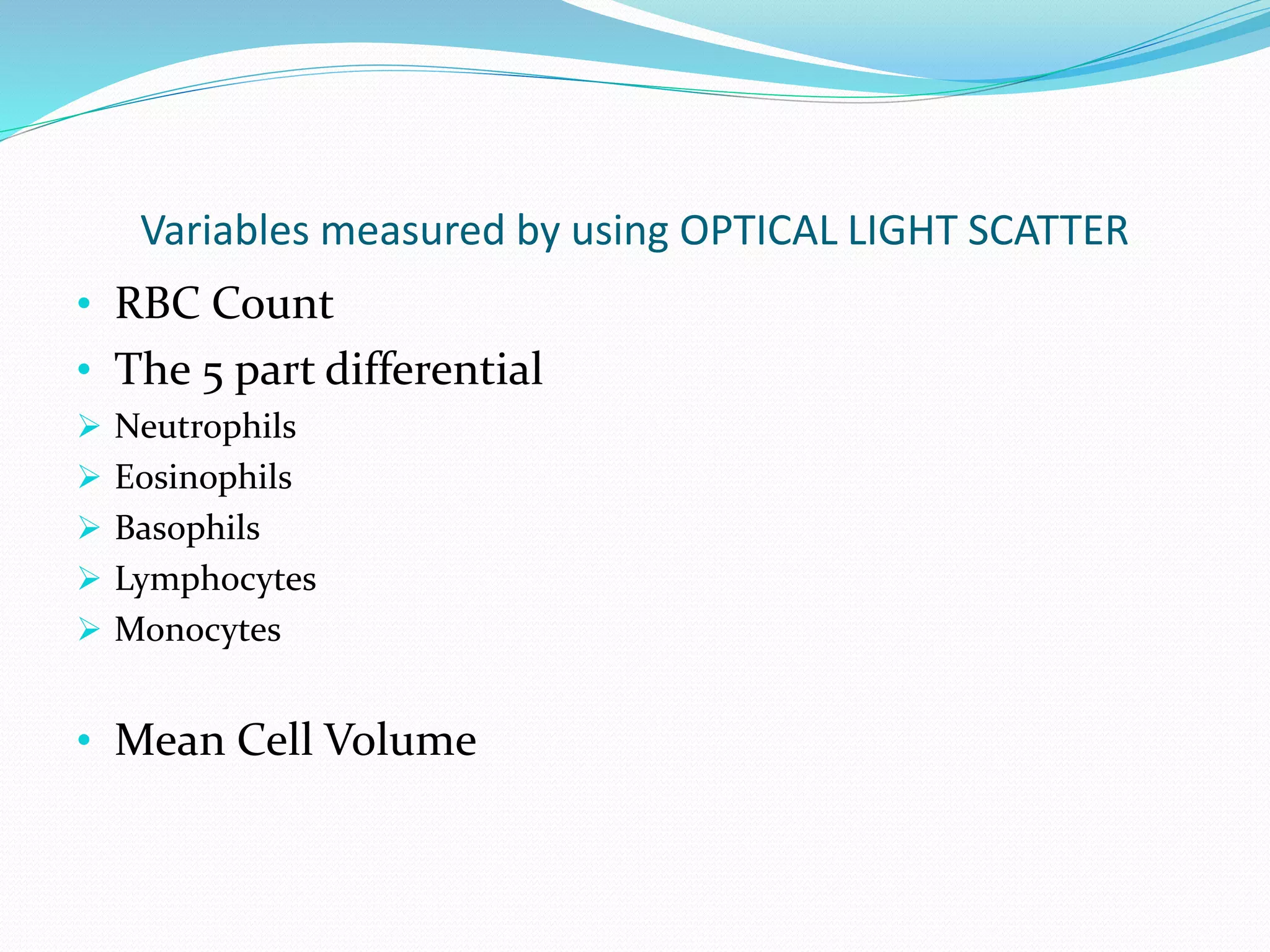
Variables measured by using OPTICAL LIGHT SCATTER
‱ RBC Count
‱ The 5 part differential
 Neutrophils
 Eosinophils
 Basophils
 Lymphocytes
 Monocytes
‱ Mean Cell Volume
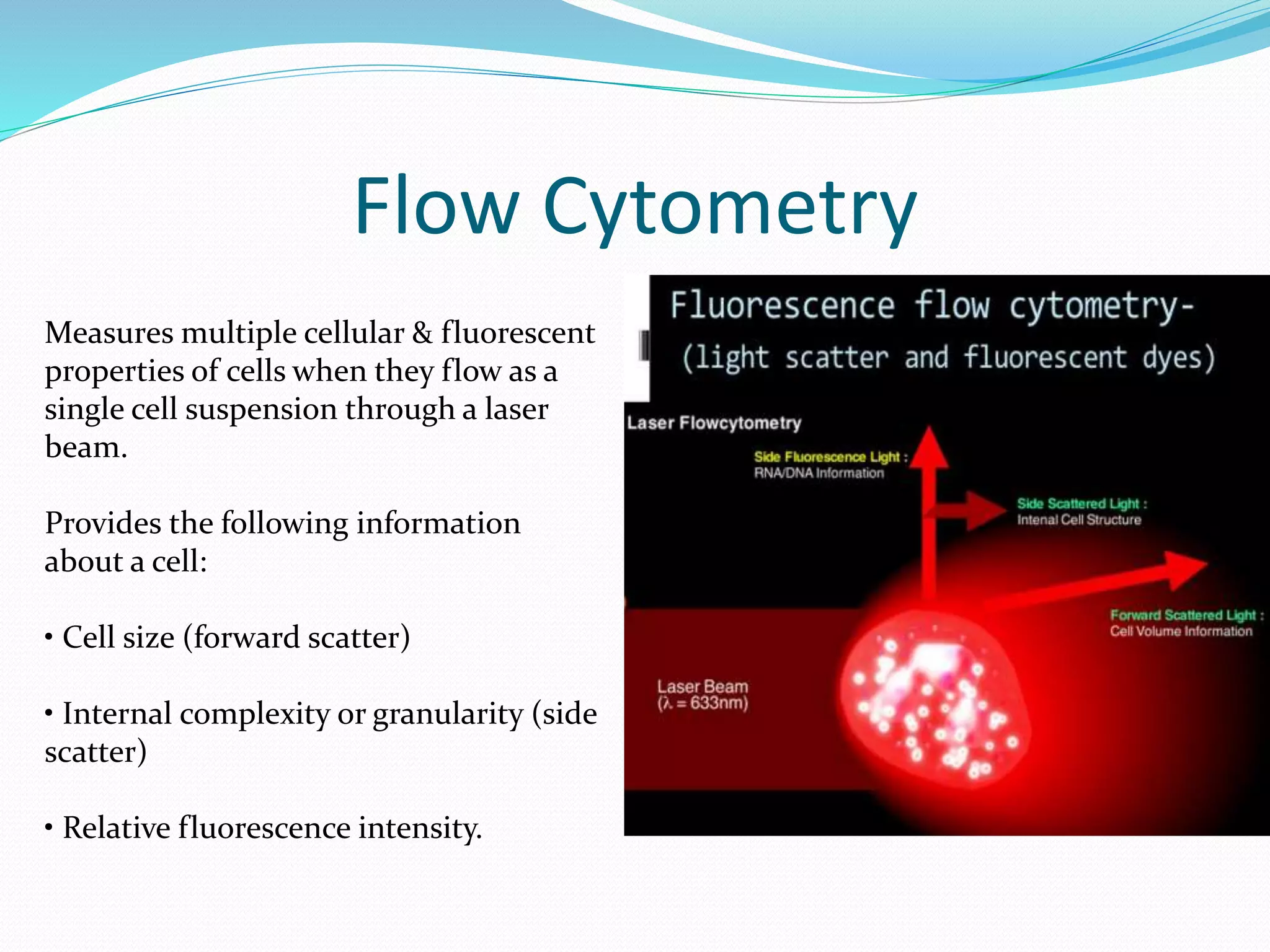
Flow Cytometry
Measures multiple cellular & fluorescent
properties of cells when they flow as a
single cell suspension through a laser
beam.
Provides the following information
about a cell:
‱ Cell size (forward scatter)
‱ Internal complexity or granularity (side
scatter)
‱ Relative fluorescence intensity.
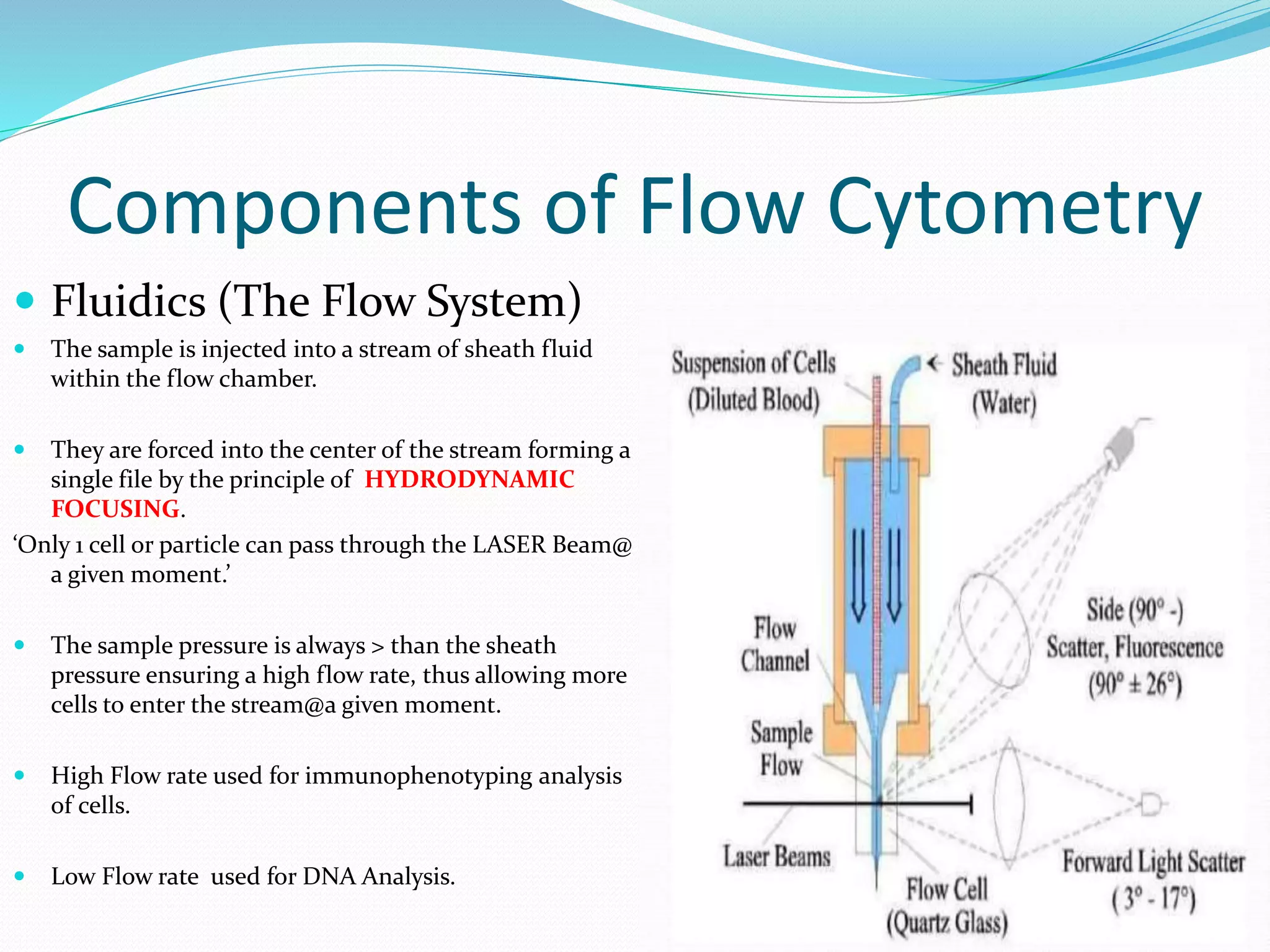
Components of Flow Cytometry
 Fluidics (The Flow System)
 The sample is injected into a stream of sheath fluid
within the flow chamber.
 They are forced into the center of the stream forming a
single file by the principle of HYDRODYNAMIC
FOCUSING.
‘Only 1 cell or particle can pass through the LASER Beam@
a given moment.’
 The sample pressure is always > than the sheath
pressure ensuring a high flow rate, thus allowing more
cells to enter the stream@a given moment.
 High Flow rate used for immunophenotyping analysis
of cells.
 Low Flow rate used for DNA Analysis.
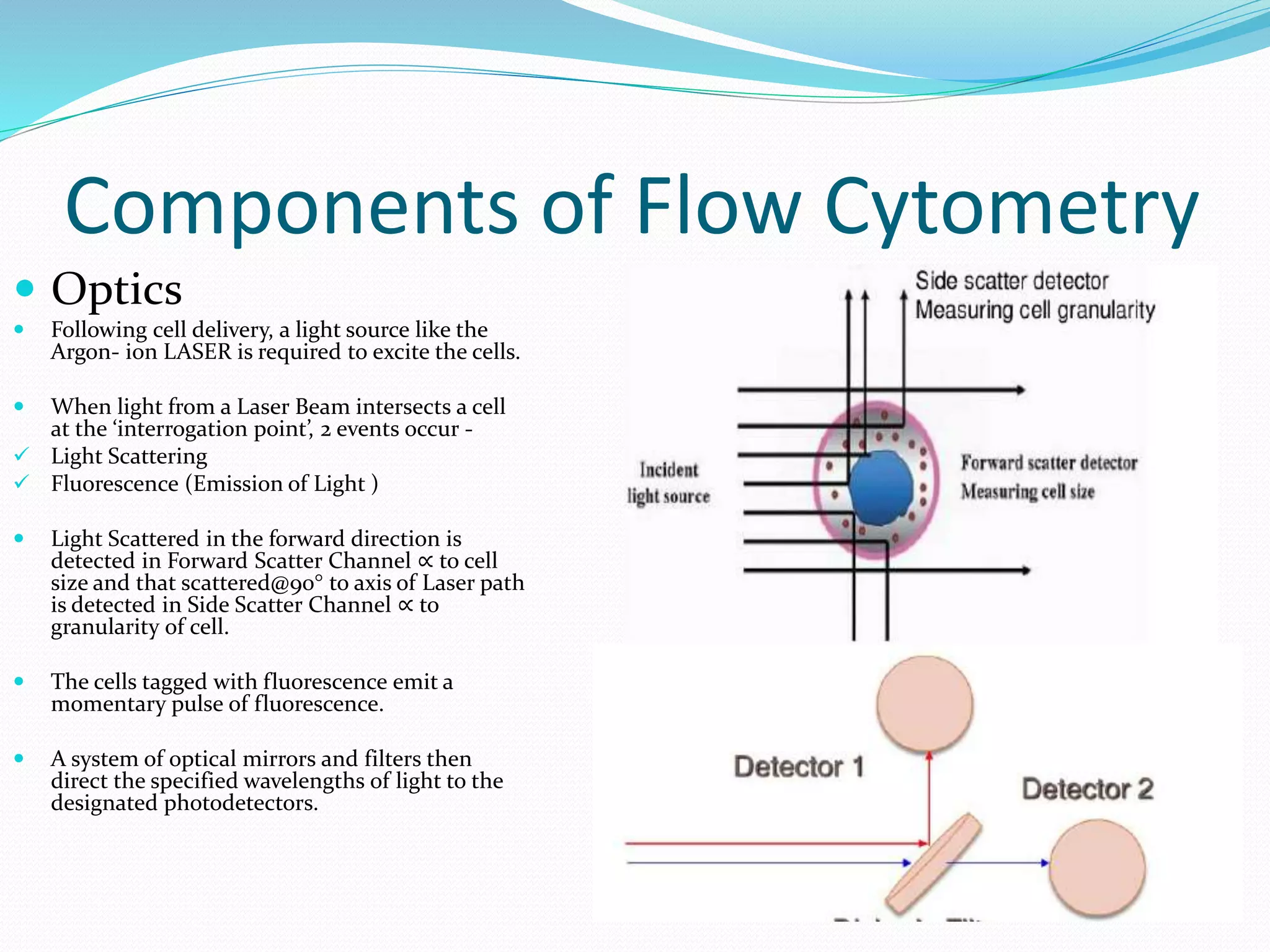
Components of Flow Cytometry
 Optics
 Following cell delivery, a light source like the
Argon- ion LASER is required to excite the cells.
 When light from a Laser Beam intersects a cell
at the ‘interrogation point’, 2 events occur -
 Light Scattering
 Fluorescence (Emission of Light )
 Light Scattered in the forward direction is
detected in Forward Scatter Channel ∝ to cell
size and that scattered@90° to axis of Laser path
is detected in Side Scatter Channel ∝ to
granularity of cell.
 The cells tagged with fluorescence emit a
momentary pulse of fluorescence.
 A system of optical mirrors and filters then
direct the specified wavelengths of light to the
designated photodetectors.
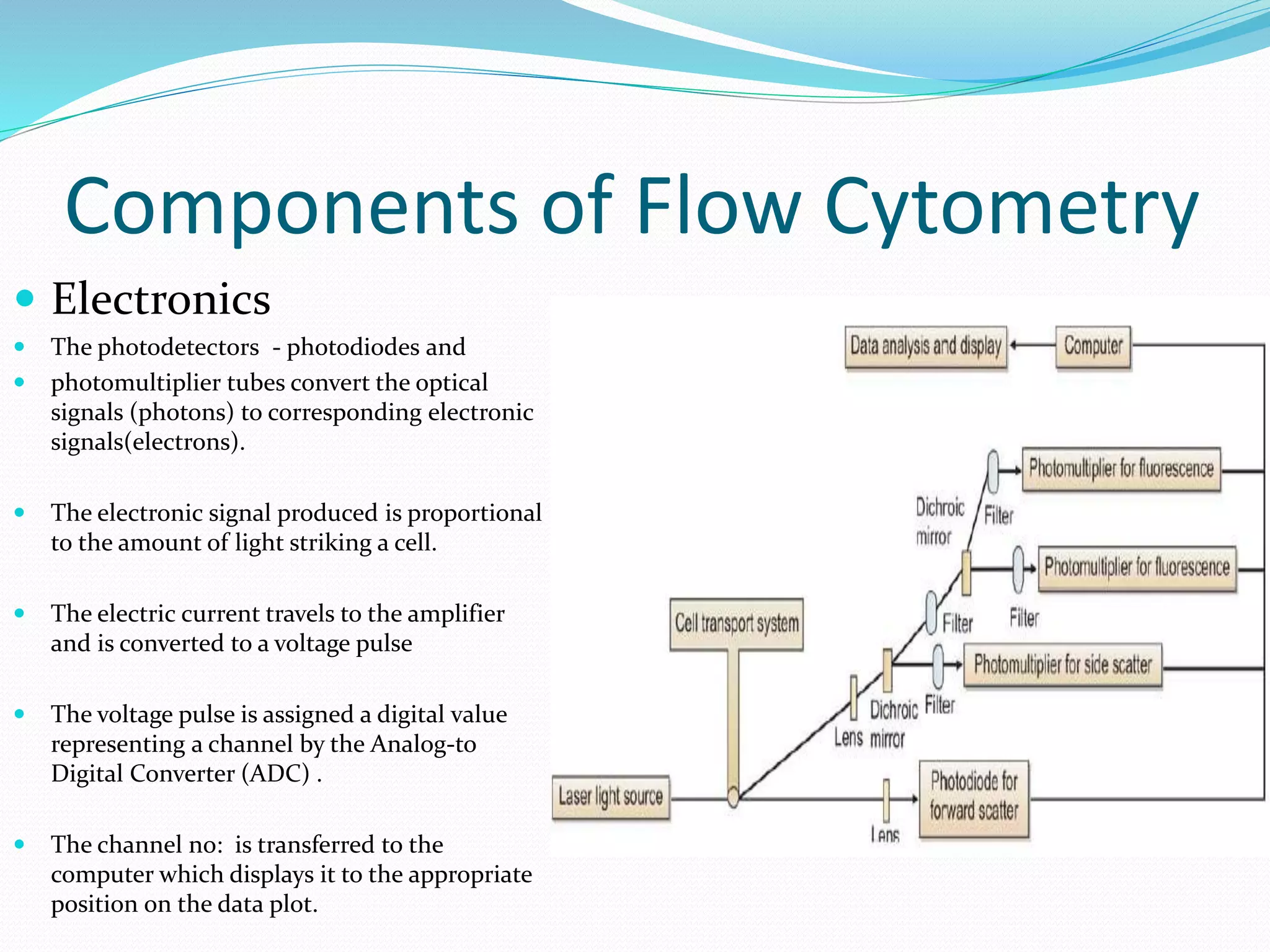
Components of Flow Cytometry
 Electronics
 The photodetectors - photodiodes and
 photomultiplier tubes convert the optical
signals (photons) to corresponding electronic
signals(electrons).
 The electronic signal produced is proportional
to the amount of light striking a cell.
 The electric current travels to the amplifier
and is converted to a voltage pulse
 The voltage pulse is assigned a digital value
representing a channel by the Analog-to
Digital Converter (ADC) .
 The channel no: is transferred to the
computer which displays it to the appropriate
position on the data plot.
Data Analysis
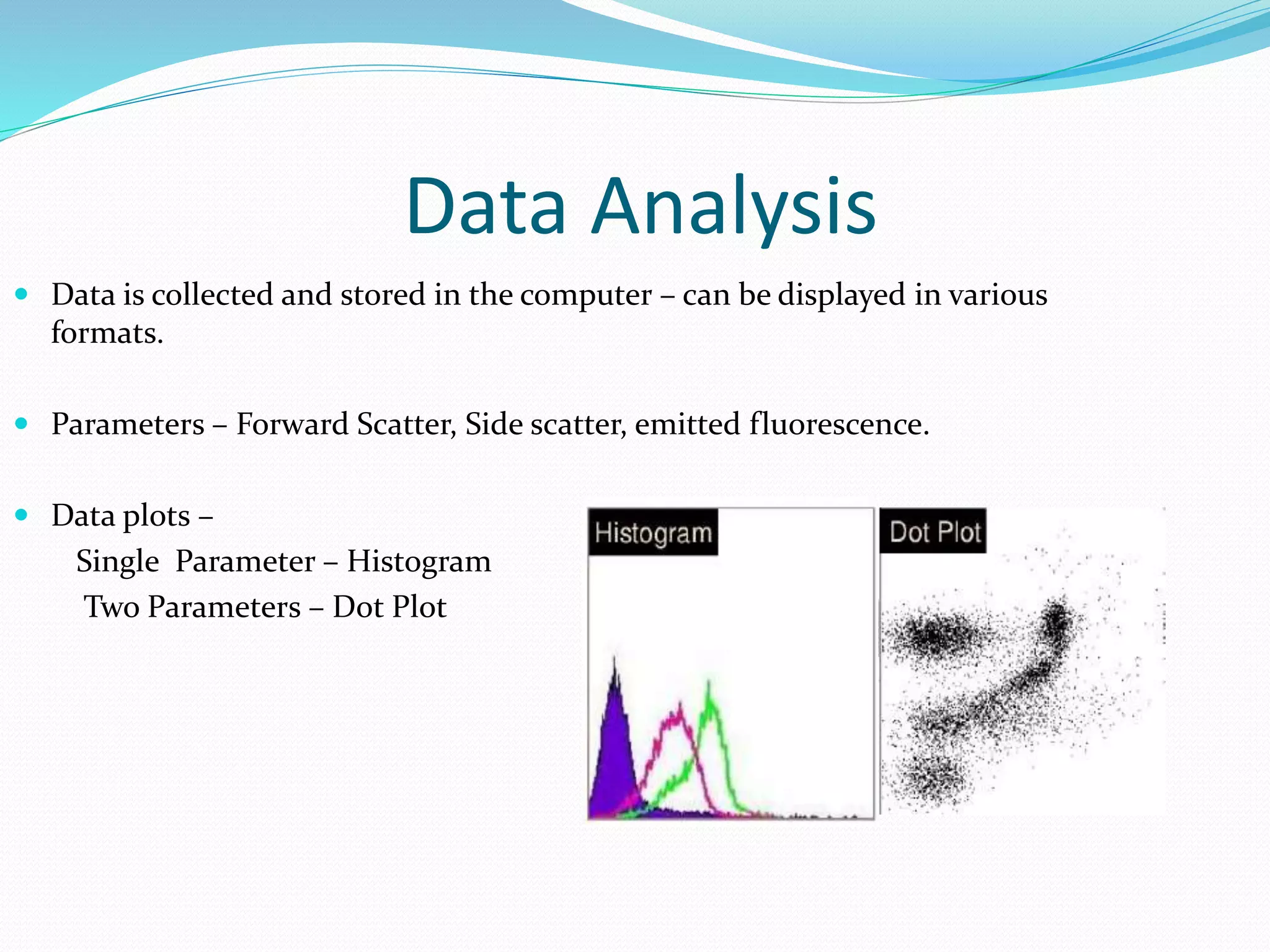
 Data is collected and stored in the computer – can be displayed in various
formats.
 Parameters – Forward Scatter, Side scatter, emitted fluorescence.
 Data plots –
Single Parameter – Histogram
Two Parameters – Dot Plot
Gating
A boundary that can be set to restrict the analysis to a specific population within
the sample.
Could be
Inclusive – Selection of events that fall within the boundary.
Exclusive - Selection of events that fall outside the boundary.
Data selected by the gate is then displayed in subsequent plots.
Sorting
Consists of collecting cells of interest
(defined through criteria of size and fluorescence)
for
further analysis
(microscopy /functional/ chemical analysis)
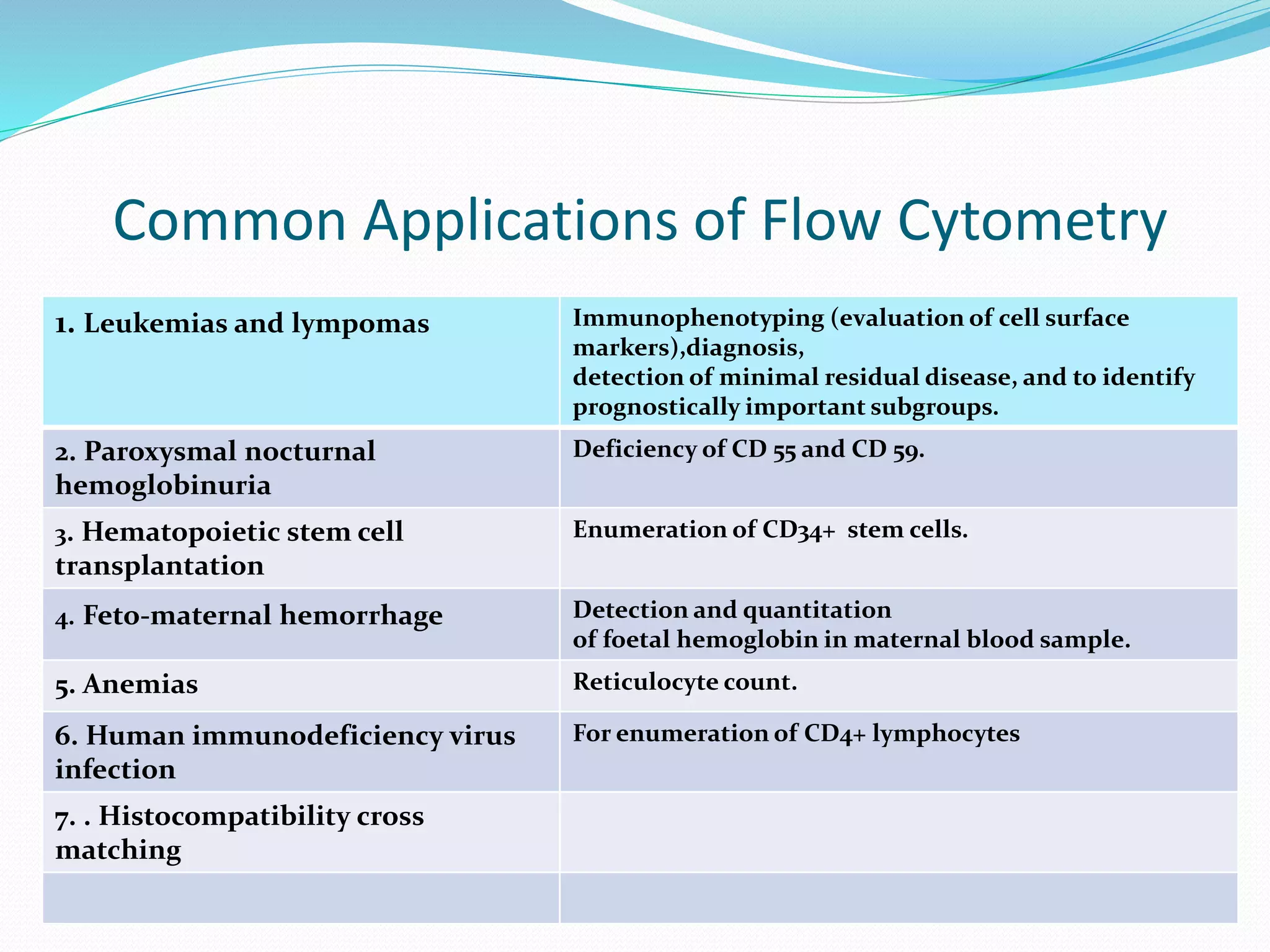
Common Applications of Flow Cytometry
1. Leukemias and lympomas Immunophenotyping (evaluation of cell surface
markers),diagnosis,
detection of minimal residual disease, and to identify
prognostically important subgroups.
2. Paroxysmal nocturnal
hemoglobinuria
Deficiency of CD 55 and CD 59.
3. Hematopoietic stem cell
transplantation
Enumeration of CD34+ stem cells.
4. Feto-maternal hemorrhage Detection and quantitation
of foetal hemoglobin in maternal blood sample.
5. Anemias Reticulocyte count.
6. Human immunodeficiency virus
infection
For enumeration of CD4+ lymphocytes
7. . Histocompatibility cross
matching
Estimation of Reticulocyte Count
 Estimation based upon uptake of various dyes and fluorochromes by the RNA of
reticulocytes.
 The flourescent cells are enumerated using a flow cytometer.
 Various dyes used are –
 Auramine O
 Thiazole Orange
 CD4K 530
 Oxazine 750
 New Methylene Blue.
 Flow cytometry allows classification of reticulocytes into 3 maturation stages –
 Low Fluorescence Reticulocytes (LFR).
 Middle Fluorescence Reticulocytes (MFR).
 High Fluorescence Reticulocytes (HFR).
Estimation of reticulocyte count – Reticulocyte parameters
 Immature Reticulocyte Fraction ( IRF) / Reticulocyte Maturation
Index.
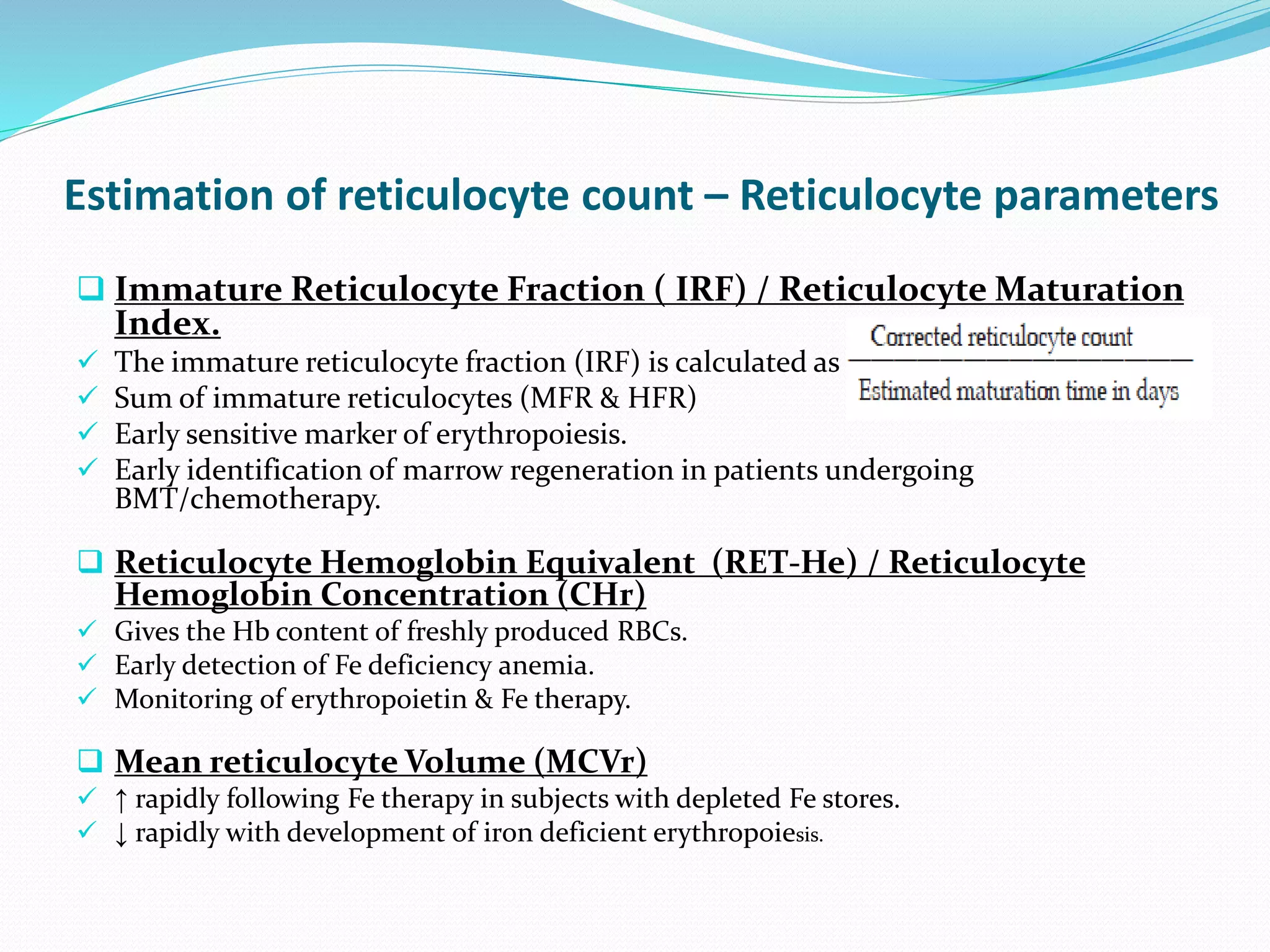
 The immature reticulocyte fraction (IRF) is calculated as
 Sum of immature reticulocytes (MFR & HFR)
 Early sensitive marker of erythropoiesis.
 Early identification of marrow regeneration in patients undergoing
BMT/chemotherapy.
 Reticulocyte Hemoglobin Equivalent (RET-He) / Reticulocyte
Hemoglobin Concentration (CHr)
 Gives the Hb content of freshly produced RBCs.
 Early detection of Fe deficiency anemia.
 Monitoring of erythropoietin & Fe therapy.
 Mean reticulocyte Volume (MCVr)
 ↑ rapidly following Fe therapy in subjects with depleted Fe stores.
 ↓ rapidly with development of iron deficient erythropoiesis.
Other Methods
 PEROXIDASE based cell counts.
 Myeloperoxidase is used to count neutrophils.
 Lymphocytes are not stained.
 FLUORESCENCE based cell counts.
 For reticulocyte and platelet count.
 Best for detecting immature platelets.
 IMMUNOLOGICAL based cell counts.
 Accurate platelet count using CD41/CD61 Abs
I N D E X
PART 1
I. Necessity for Automation.
II. Advantages & Disadvantages of Automation.
III. Types of Automated Hematology Analyzers.
IV. Principles involved in Automation.
V. Pentra ES 60 Haematology Analyzer.
VI. Pentra DF Nexus Haematology Analyzer.
PART 2
I. Histograms.
II. Flags
III. Quality Control
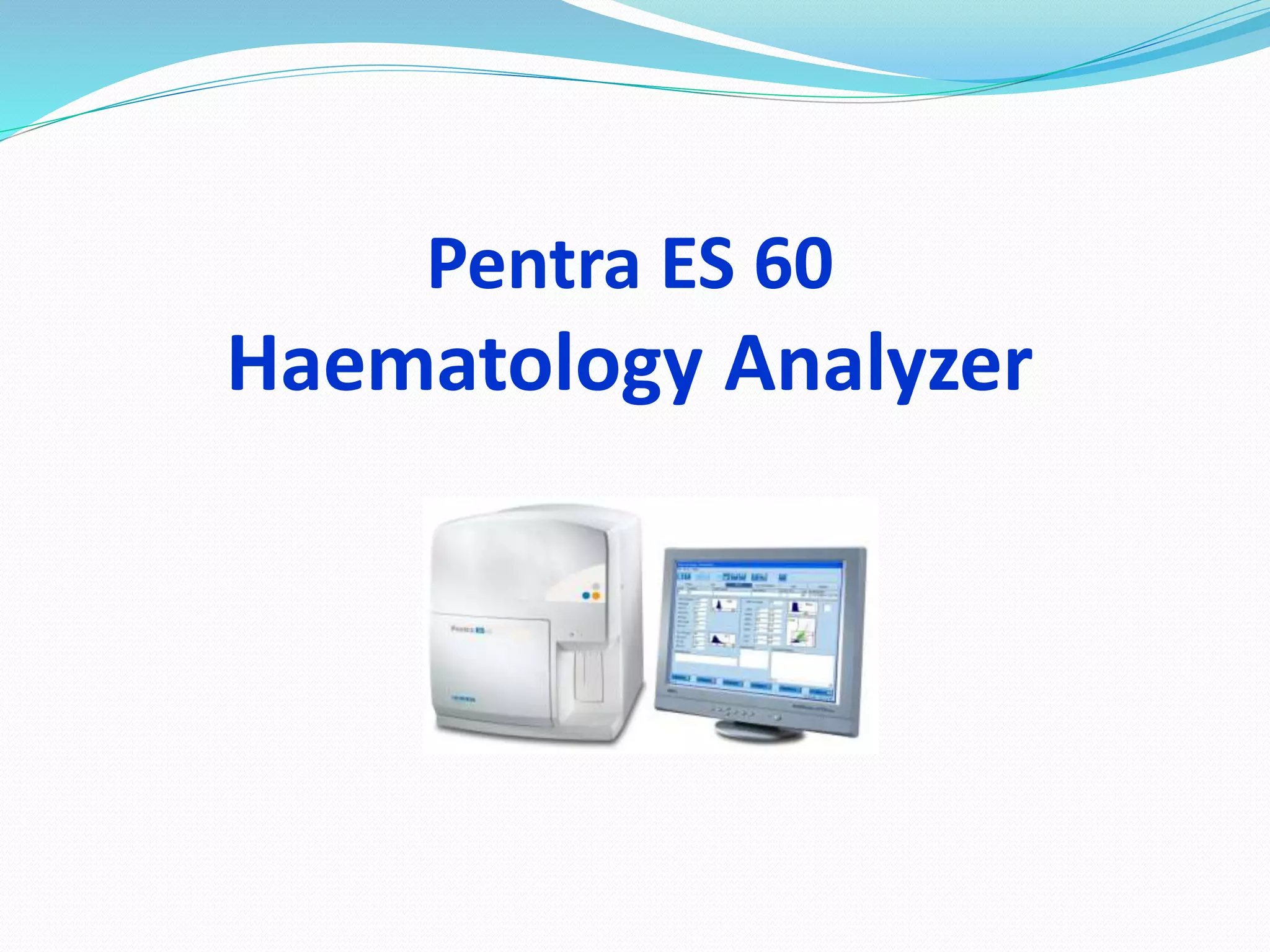
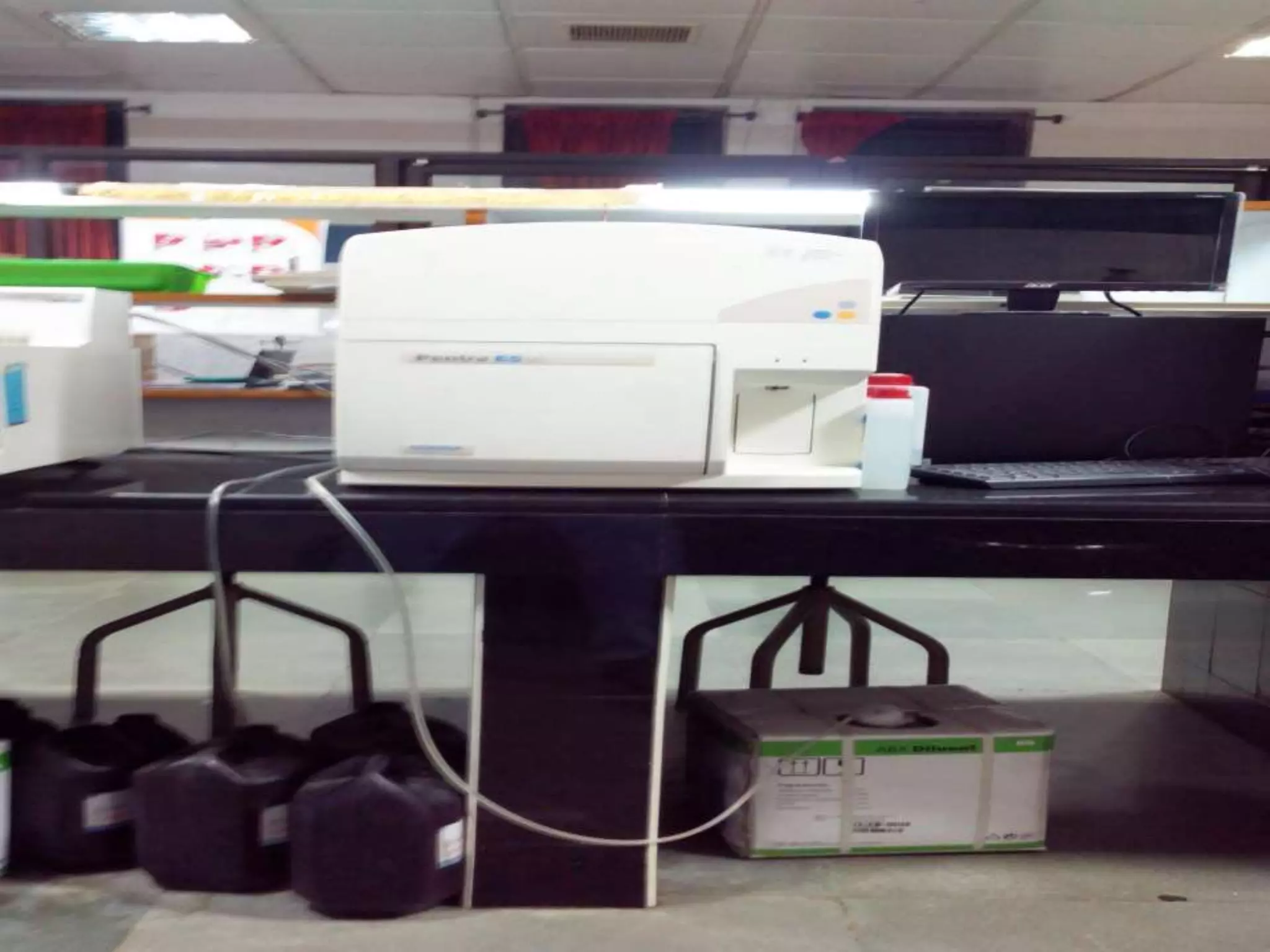
Pentra ES 60
Haematology Analyzer
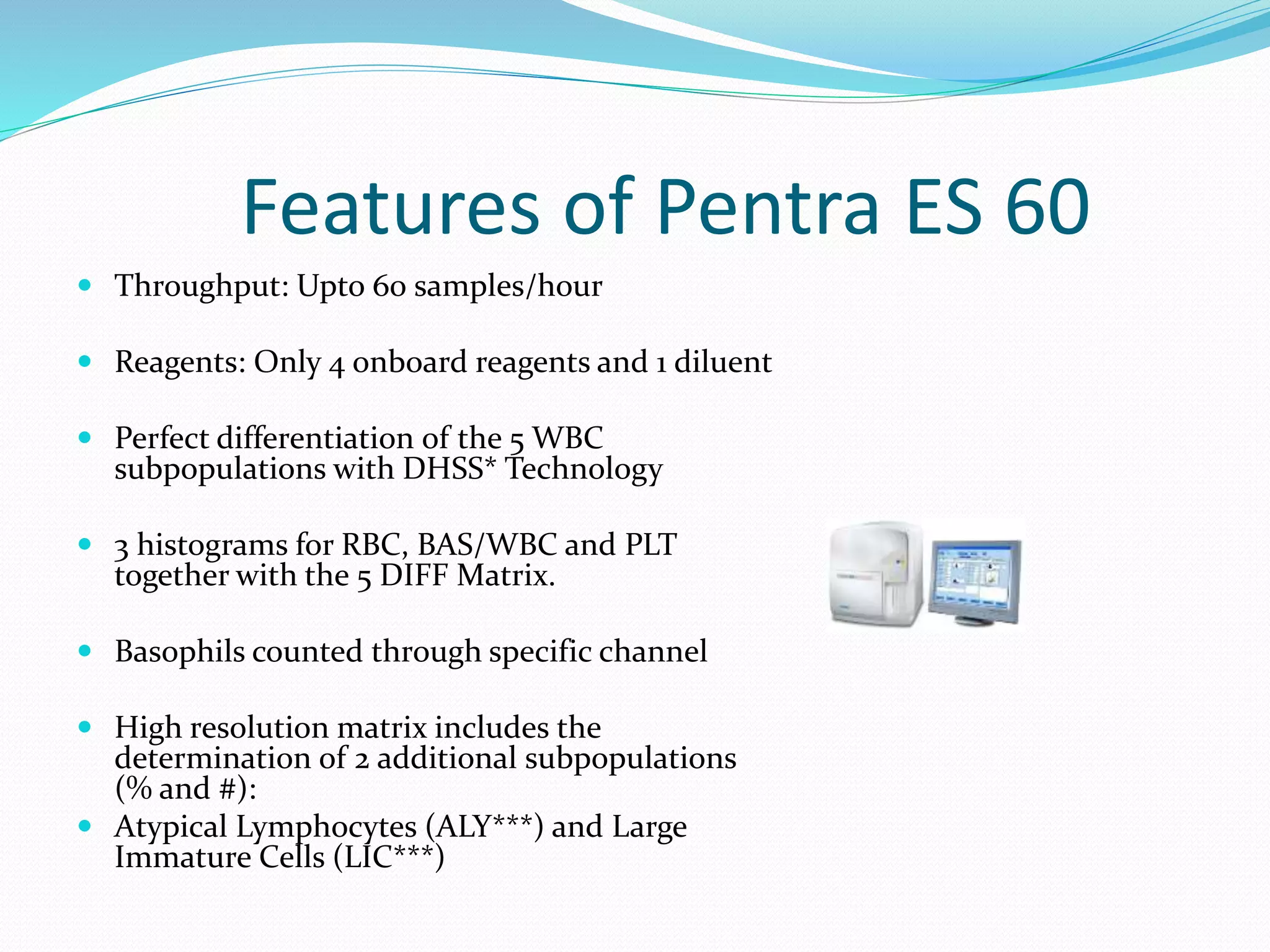
Features of Pentra ES 60
 Throughput: Upto 60 samples/hour
 Reagents: Only 4 onboard reagents and 1 diluent
 Perfect differentiation of the 5 WBC
subpopulations with DHSS* Technology
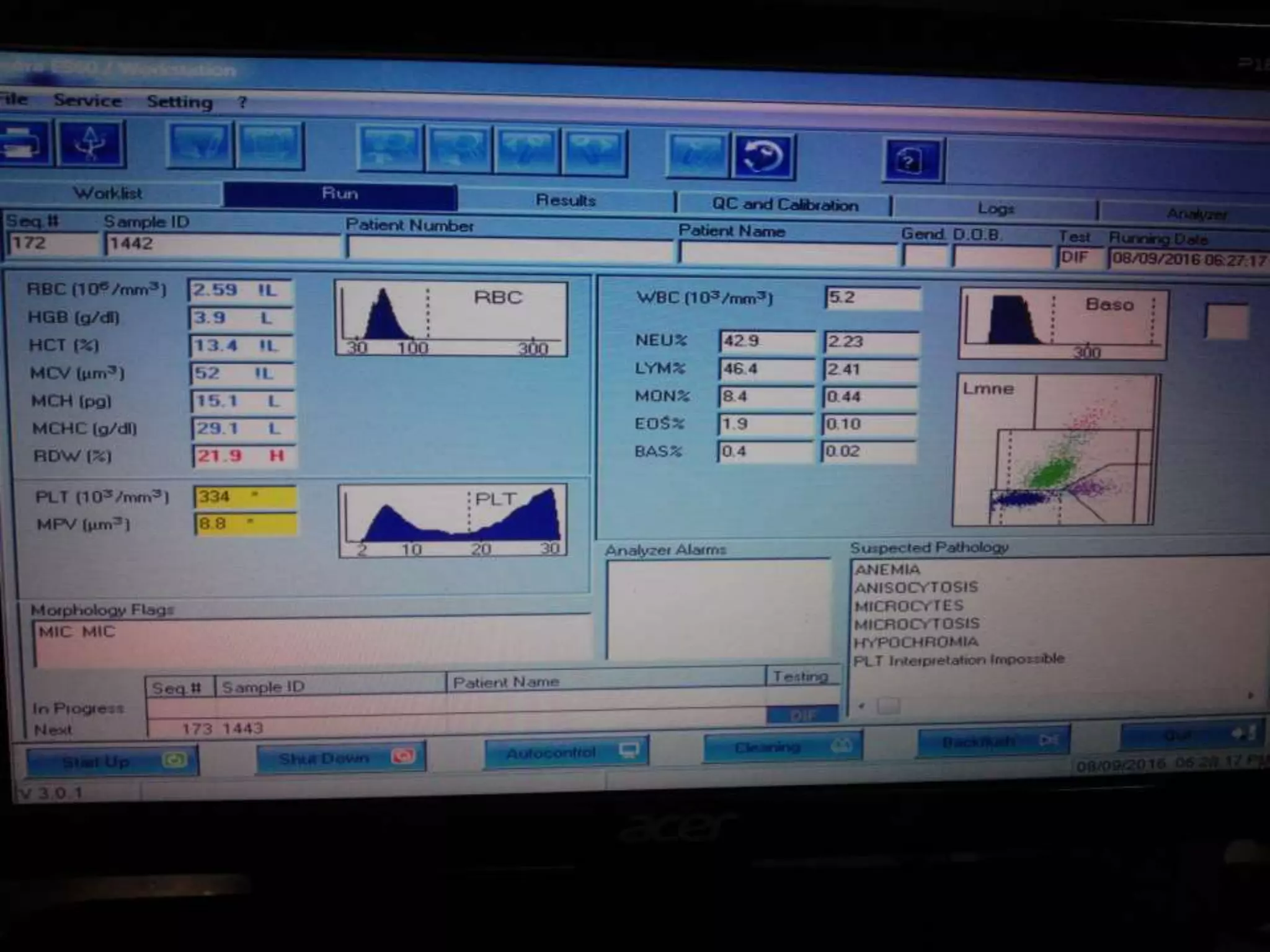
 3 histograms for RBC, BAS/WBC and PLT
together with the 5 DIFF Matrix.
 Basophils counted through specific channel
 High resolution matrix includes the
determination of 2 additional subpopulations
(% and #):
 Atypical Lymphocytes (ALY***) and Large
Immature Cells (LIC***)
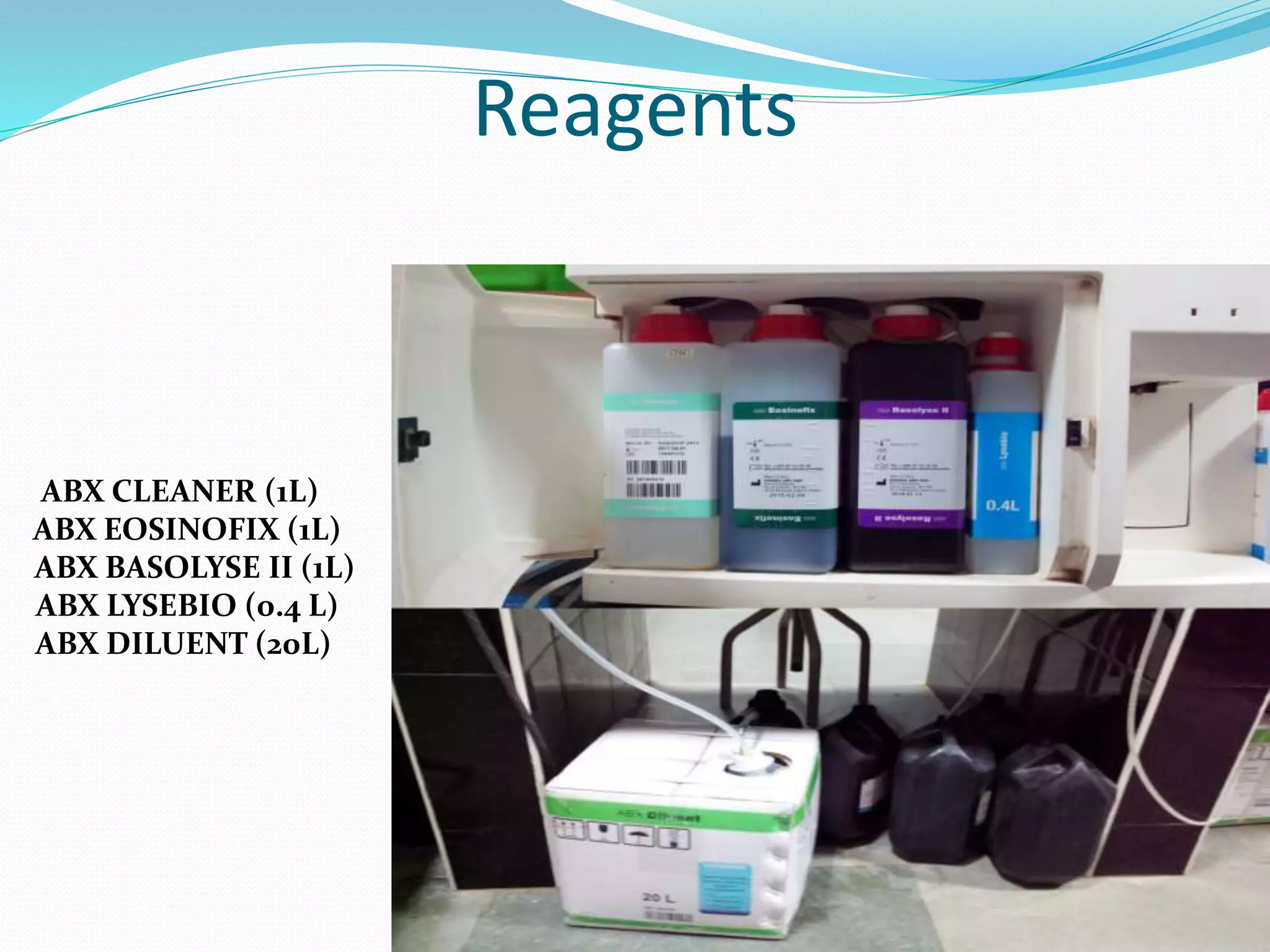
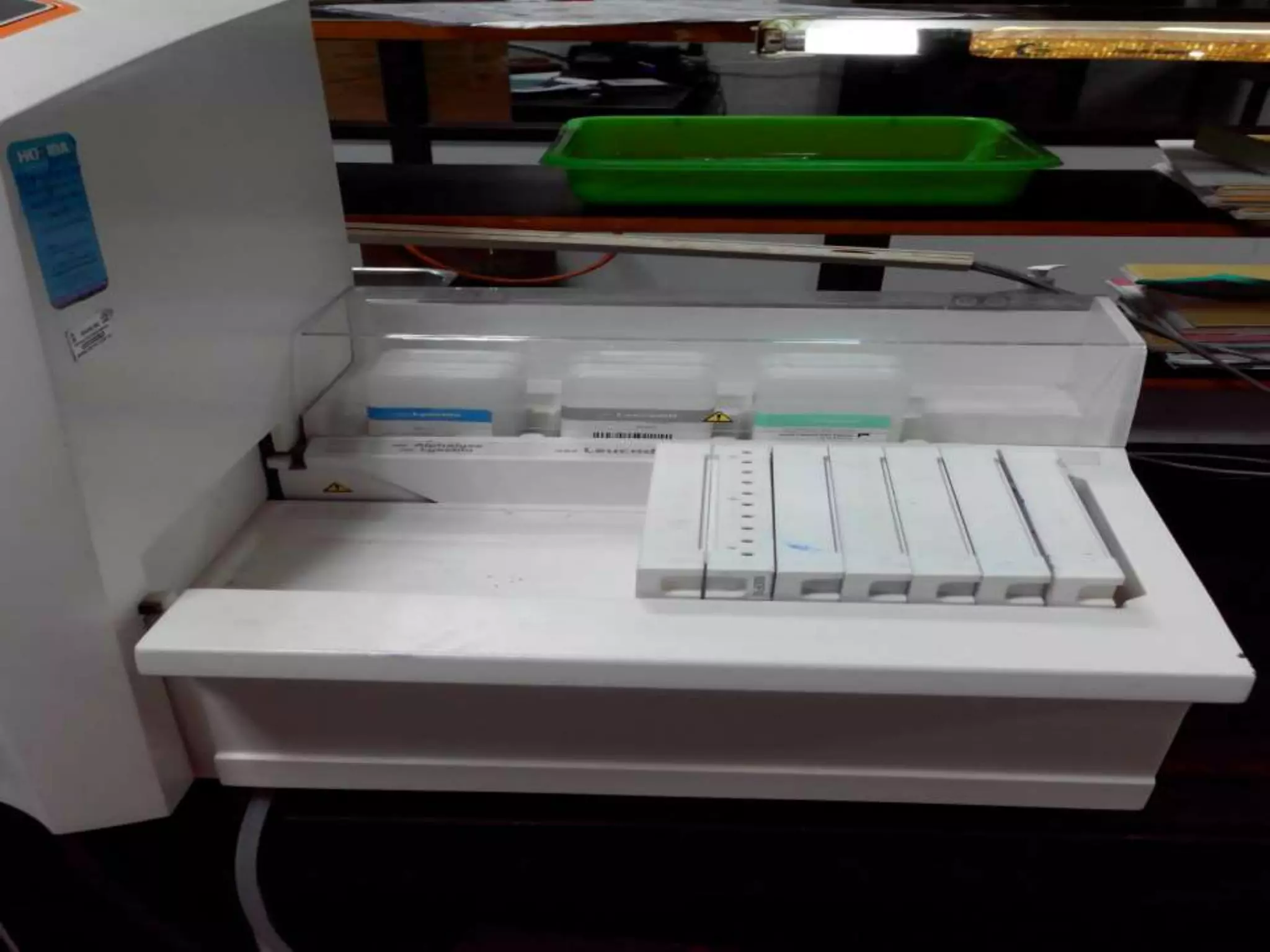
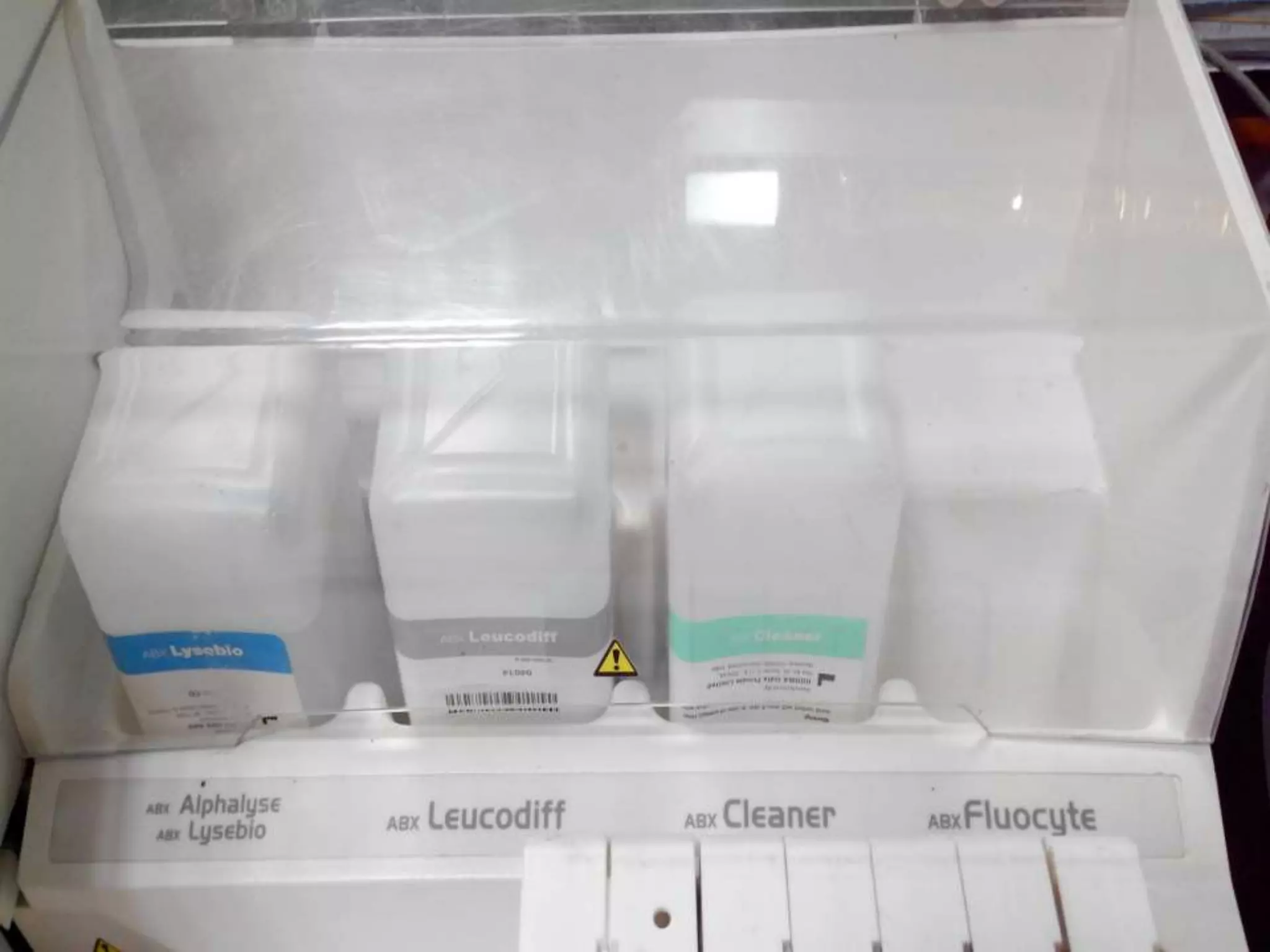
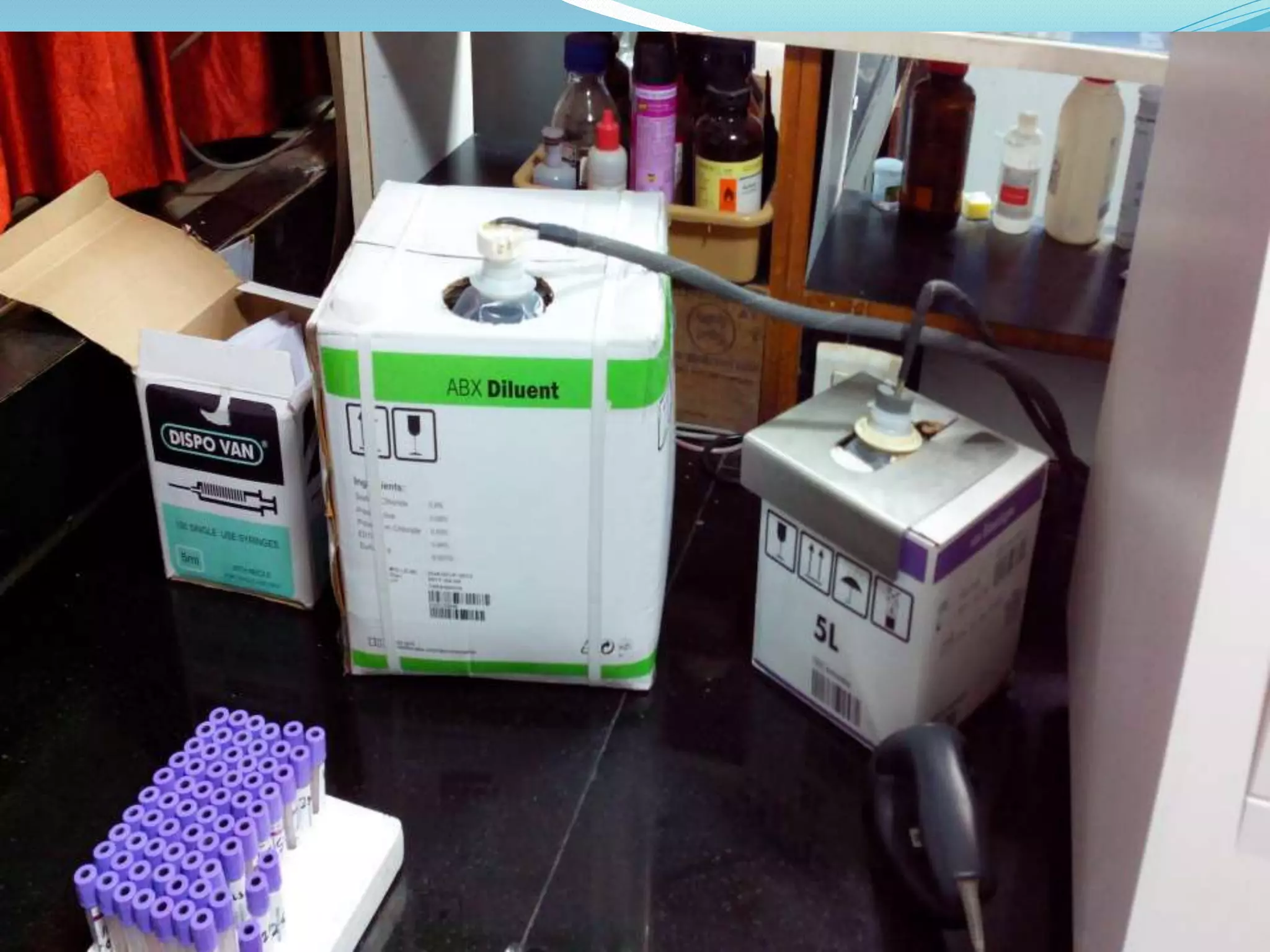
Reagents
ABX CLEANER (1L)
ABX EOSINOFIX (1L)
ABX BASOLYSE II (1L)
ABX LYSEBIO (0.4 L)
ABX DILUENT (20L)
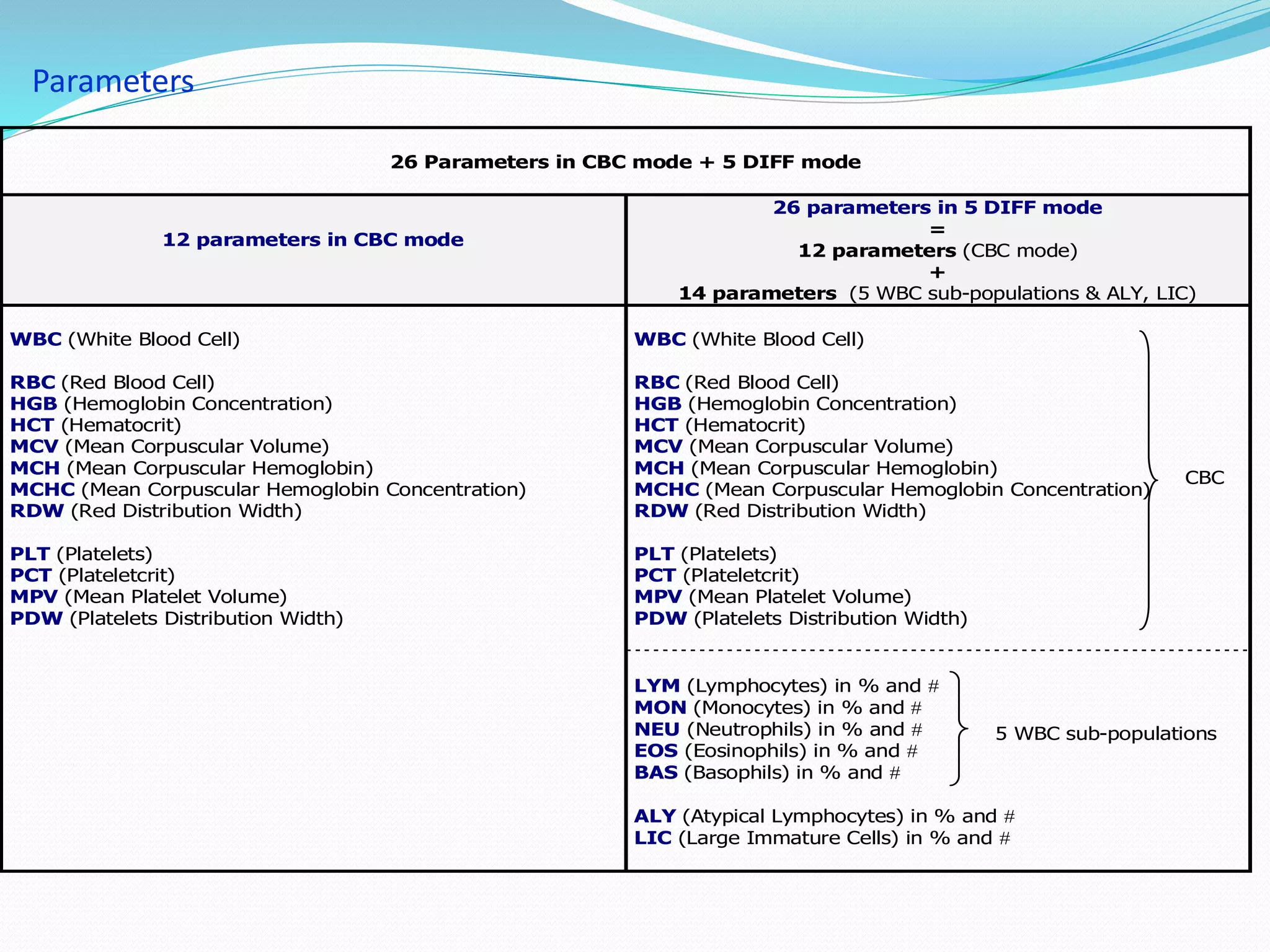
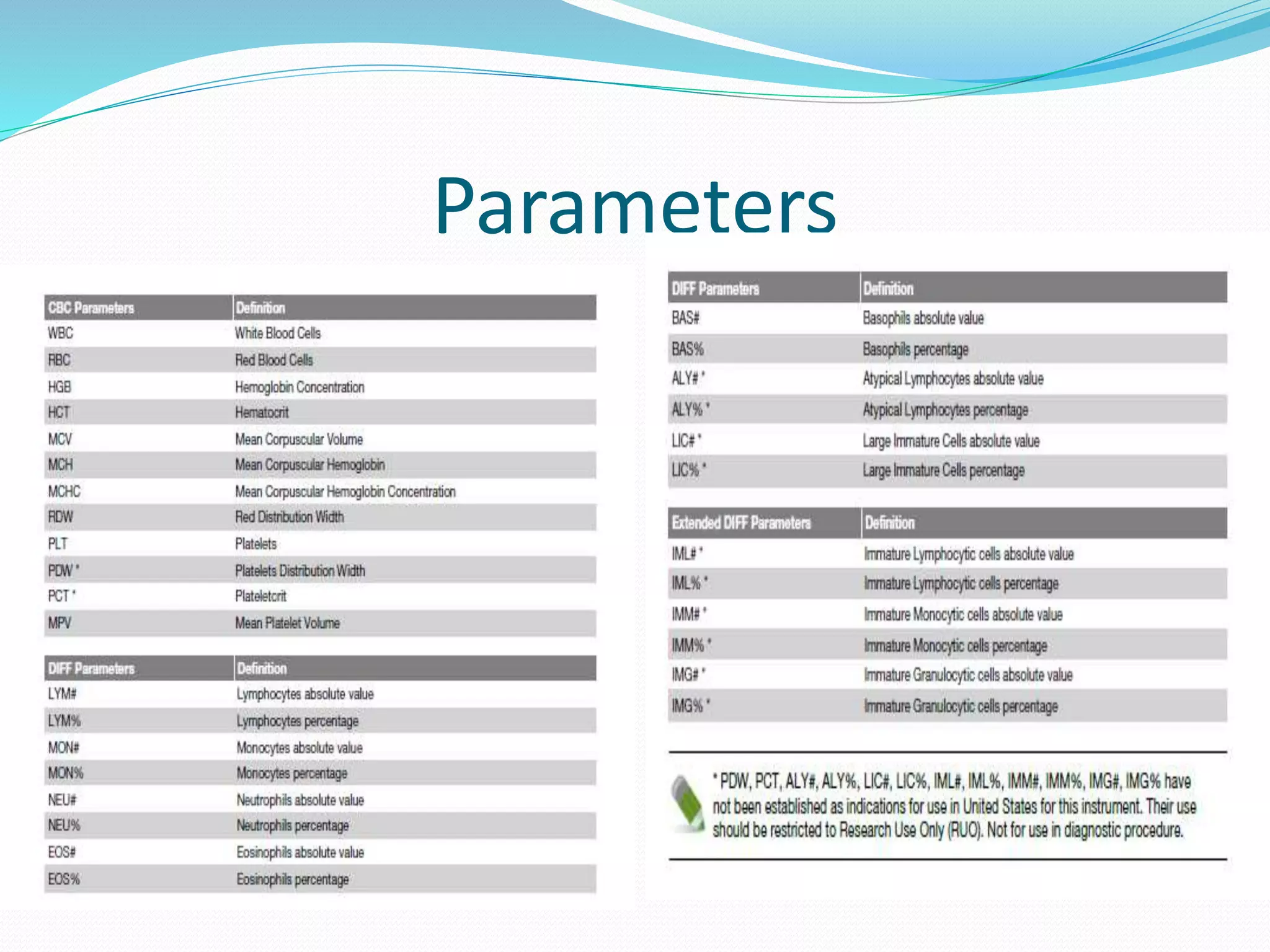
Parameters
26 Parameters in CBC mode + 5 DIFF mode
12 parameters in CBC mode
26 parameters in 5 DIFF mode
=
12 parameters (CBC mode)
+
14 parameters (5 WBC sub-populations & ALY, LIC)
WBC (White Blood Cell)
RBC (Red Blood Cell)
HGB (Hemoglobin Concentration)
HCT (Hematocrit)
MCV (Mean Corpuscular Volume)
MCH (Mean Corpuscular Hemoglobin)
MCHC (Mean Corpuscular Hemoglobin Concentration)
RDW (Red Distribution Width)
PLT (Platelets)
PCT (Plateletcrit)
MPV (Mean Platelet Volume)
PDW (Platelets Distribution Width)
WBC (White Blood Cell)
RBC (Red Blood Cell)
HGB (Hemoglobin Concentration)
HCT (Hematocrit)
MCV (Mean Corpuscular Volume)
MCH (Mean Corpuscular Hemoglobin)
MCHC (Mean Corpuscular Hemoglobin Concentration)
RDW (Red Distribution Width)
PLT (Platelets)
PCT (Plateletcrit)
MPV (Mean Platelet Volume)
PDW (Platelets Distribution Width)
LYM (Lymphocytes) in % and ï€Ł
MON (Monocytes) in % and ï€Ł
NEU (Neutrophils) in % and ï€Ł
EOS (Eosinophils) in % and ï€Ł
BAS (Basophils) in % and ï€Ł
ALY (Atypical Lymphocytes) in % and ï€Ł
LIC (Large Immature Cells) in % and ï€Ł
5 WBC sub-populations
CBC
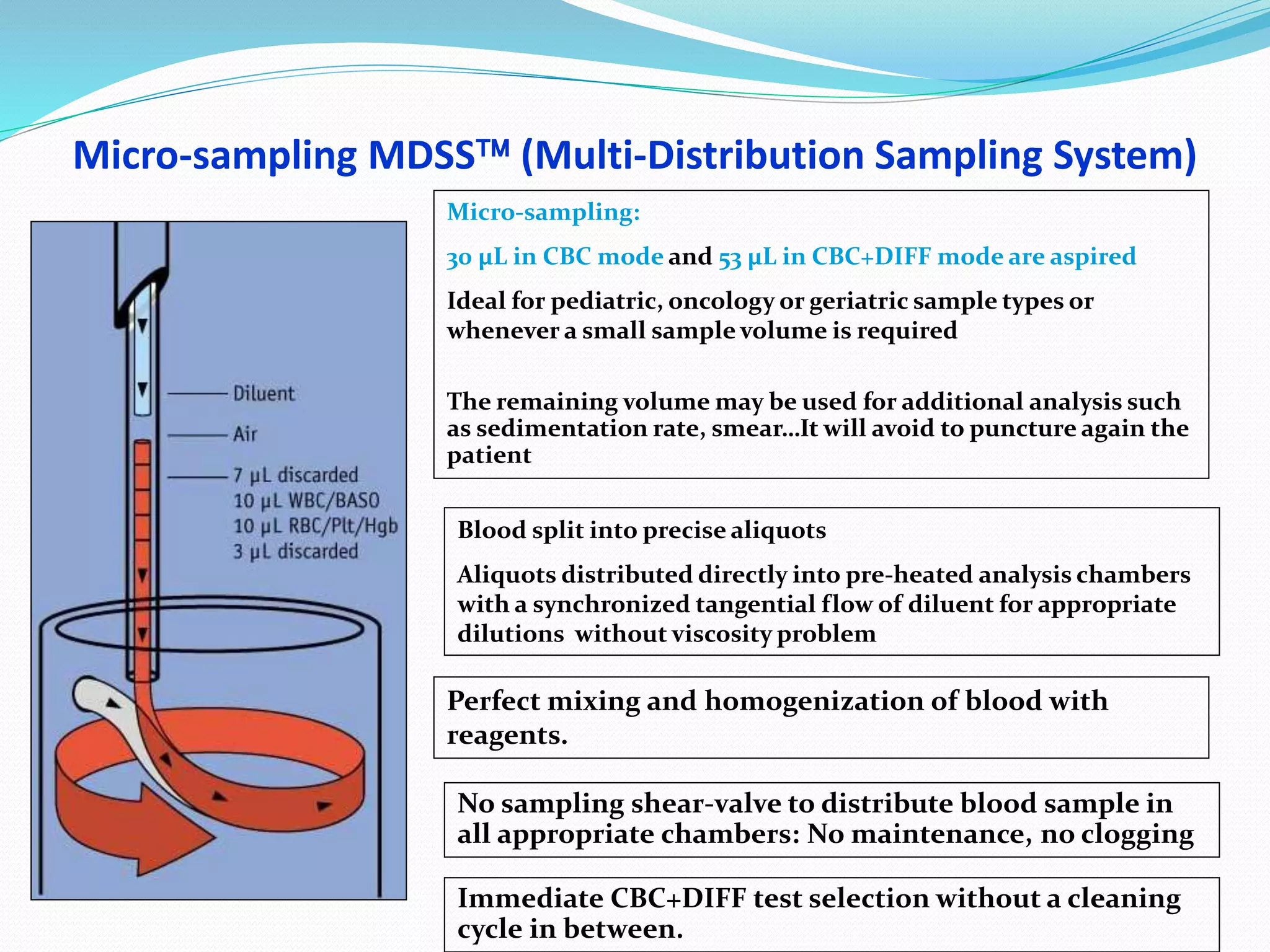
Micro-sampling MDSS (Multi-Distribution Sampling System)
Micro-sampling:
30 ÎŒL in CBC mode and 53 ÎŒL in CBC+DIFF mode are aspired
Ideal for pediatric, oncology or geriatric sample types or
whenever a small sample volume is required
The remaining volume may be used for additional analysis such
as sedimentation rate, smear
It will avoid to puncture again the
patient
Blood split into precise aliquots
Aliquots distributed directly into pre-heated analysis chambers
with a synchronized tangential flow of diluent for appropriate
dilutions without viscosity problem
Perfect mixing and homogenization of blood with
reagents.
No sampling shear-valve to distribute blood sample in
all appropriate chambers: No maintenance, no clogging
Immediate CBC+DIFF test selection without a cleaning
cycle in between.
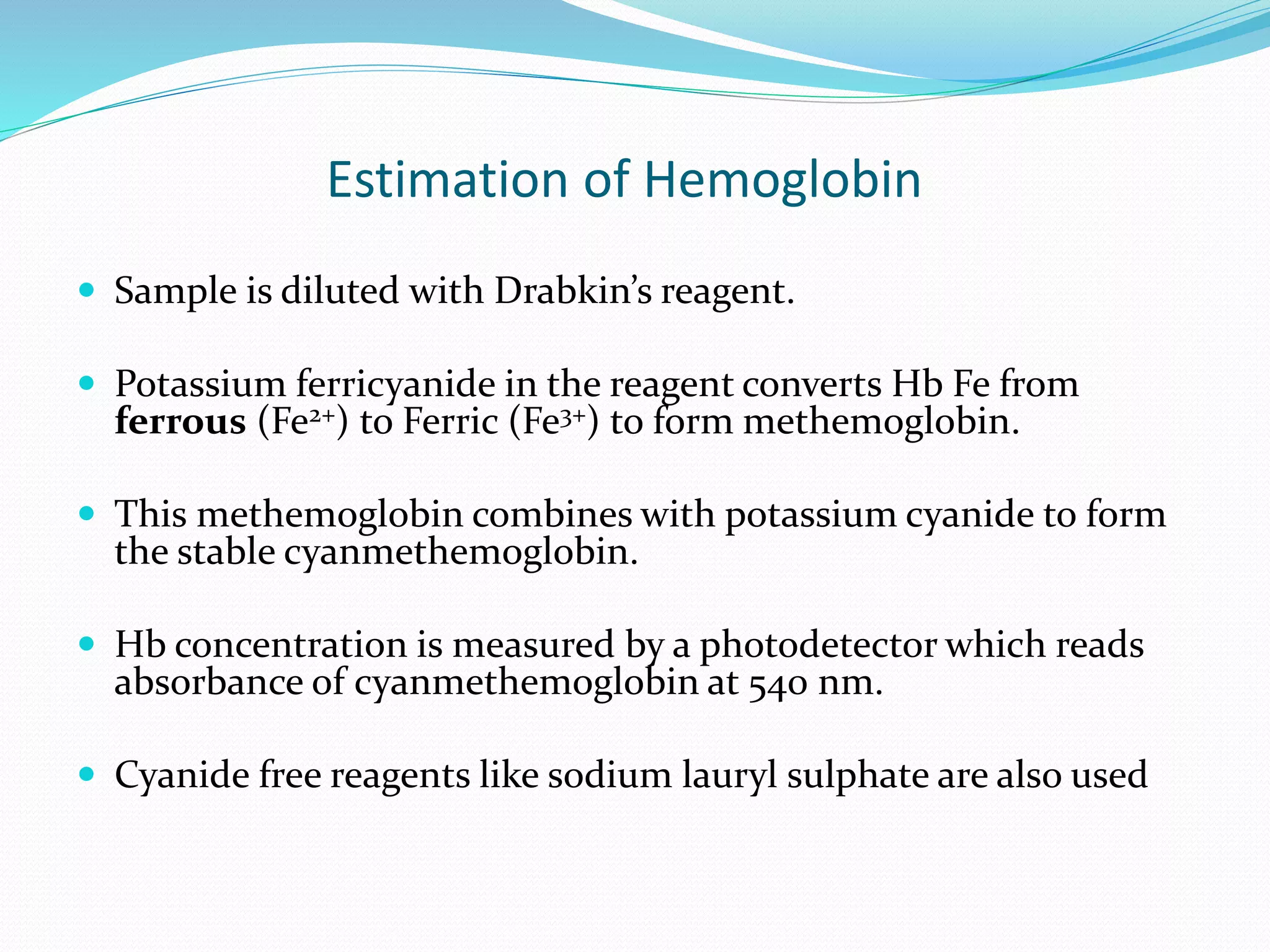
Estimation of Hemoglobin
 Sample is diluted with Drabkin’s reagent.
 Potassium ferricyanide in the reagent converts Hb Fe from
ferrous (Fe2+) to Ferric (Fe3+) to form methemoglobin.
 This methemoglobin combines with potassium cyanide to form
the stable cyanmethemoglobin.
 Hb concentration is measured by a photodetector which reads
absorbance of cyanmethemoglobin at 540 nm.
 Cyanide free reagents like sodium lauryl sulphate are also used
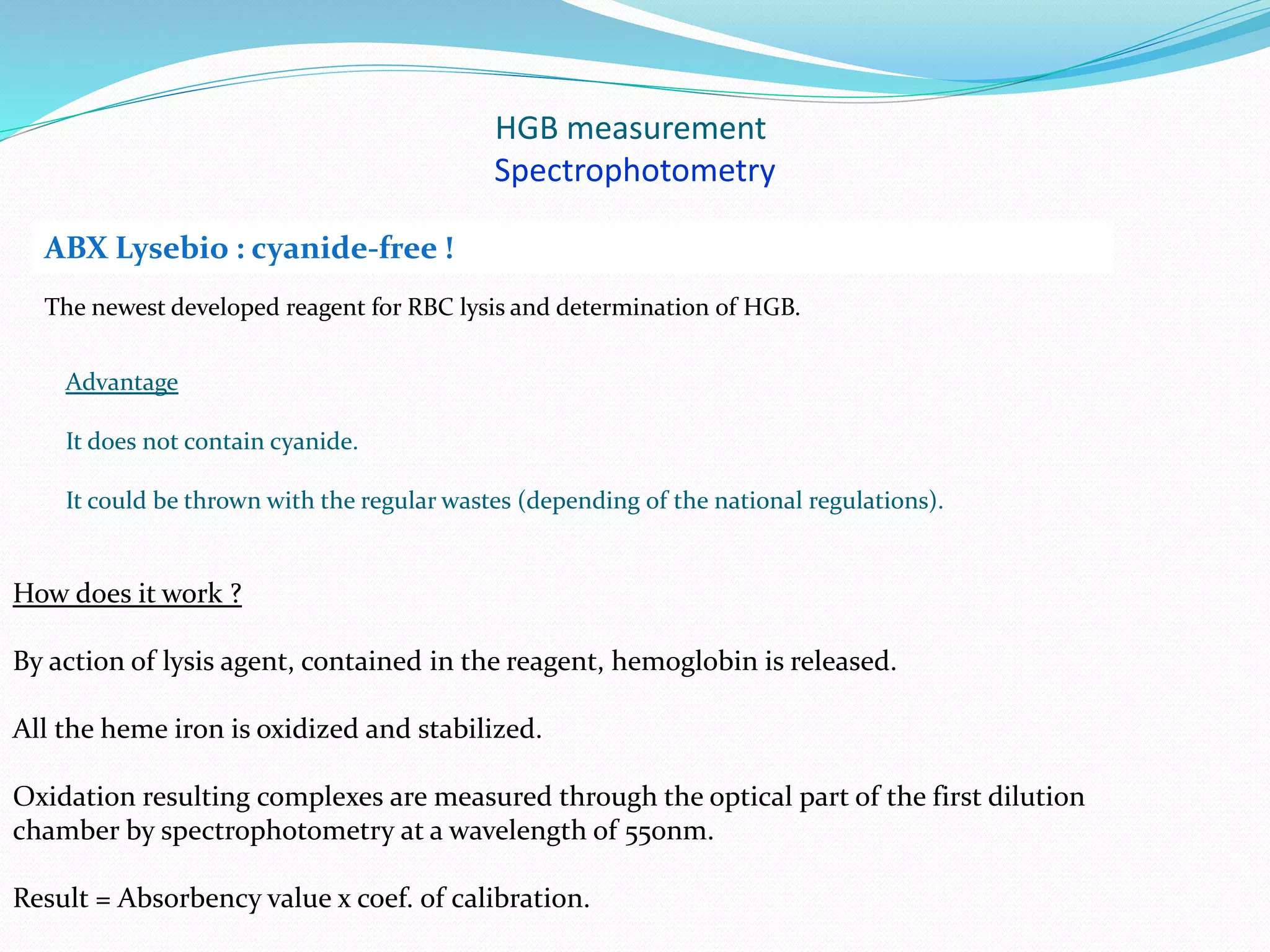
HGB measurement
Spectrophotometry
The newest developed reagent for RBC lysis and determination of HGB.
ABX Lysebio : cyanide-free !
How does it work ?
By action of lysis agent, contained in the reagent, hemoglobin is released.
All the heme iron is oxidized and stabilized.
Oxidation resulting complexes are measured through the optical part of the first dilution
chamber by spectrophotometry at a wavelength of 550nm.
Result = Absorbency value x coef. of calibration.
Advantage
It does not contain cyanide.
It could be thrown with the regular wastes (depending of the national regulations).
WBC and DIFFERENTIAL count
WBC/BAS count
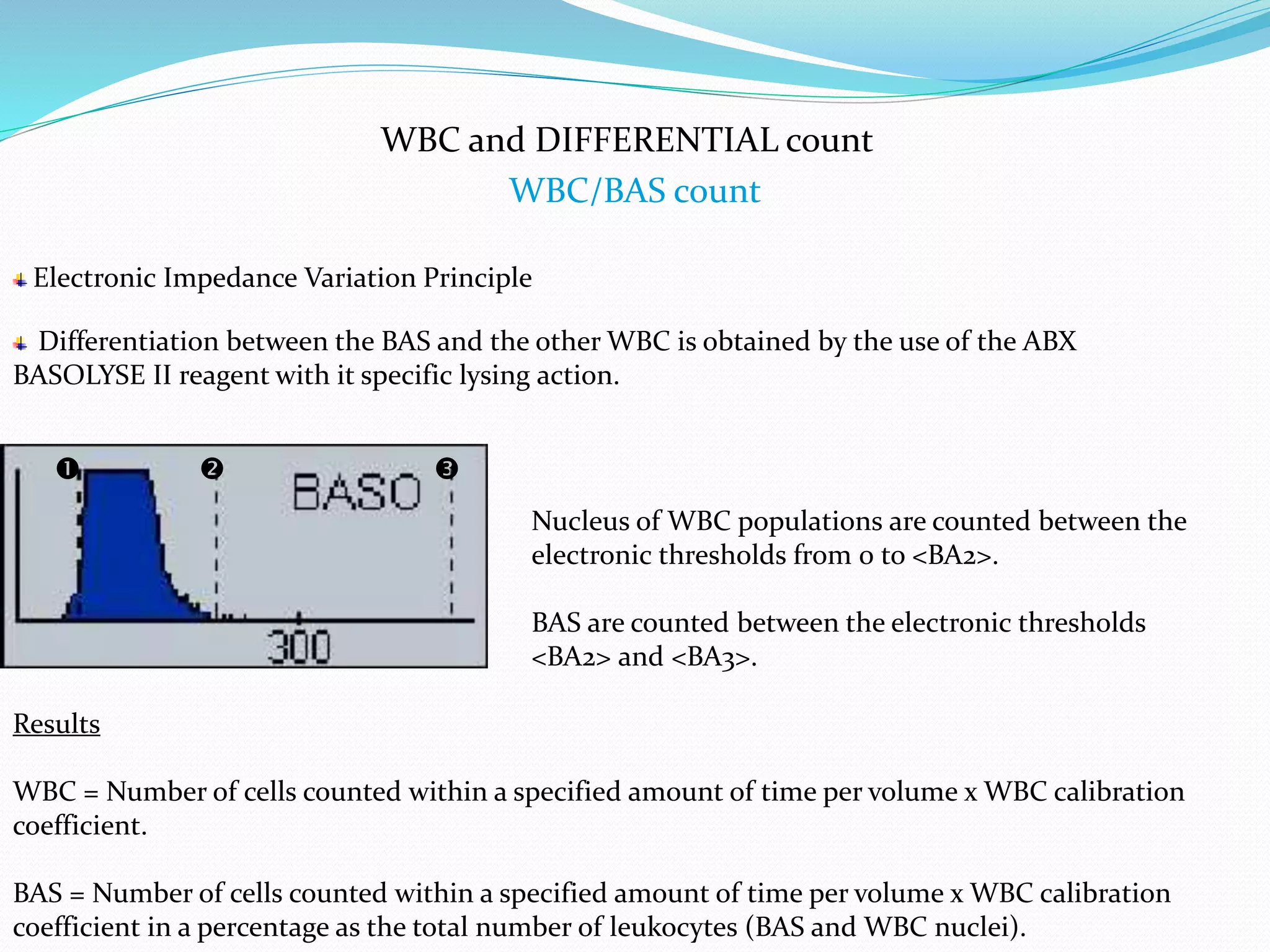
Electronic Impedance Variation Principle
 
Differentiation between the BAS and the other WBC is obtained by the use of the ABX
BASOLYSE II reagent with it specific lysing action.
Nucleus of WBC populations are counted between the
electronic thresholds from 0 to <BA2>.
BAS are counted between the electronic thresholds
<BA2> and <BA3>.
Results
WBC = Number of cells counted within a specified amount of time per volume x WBC calibration
coefficient.
BAS = Number of cells counted within a specified amount of time per volume x WBC calibration
coefficient in a percentage as the total number of leukocytes (BAS and WBC nuclei).
WBC and DIFFERENTIAL count
LMNE count
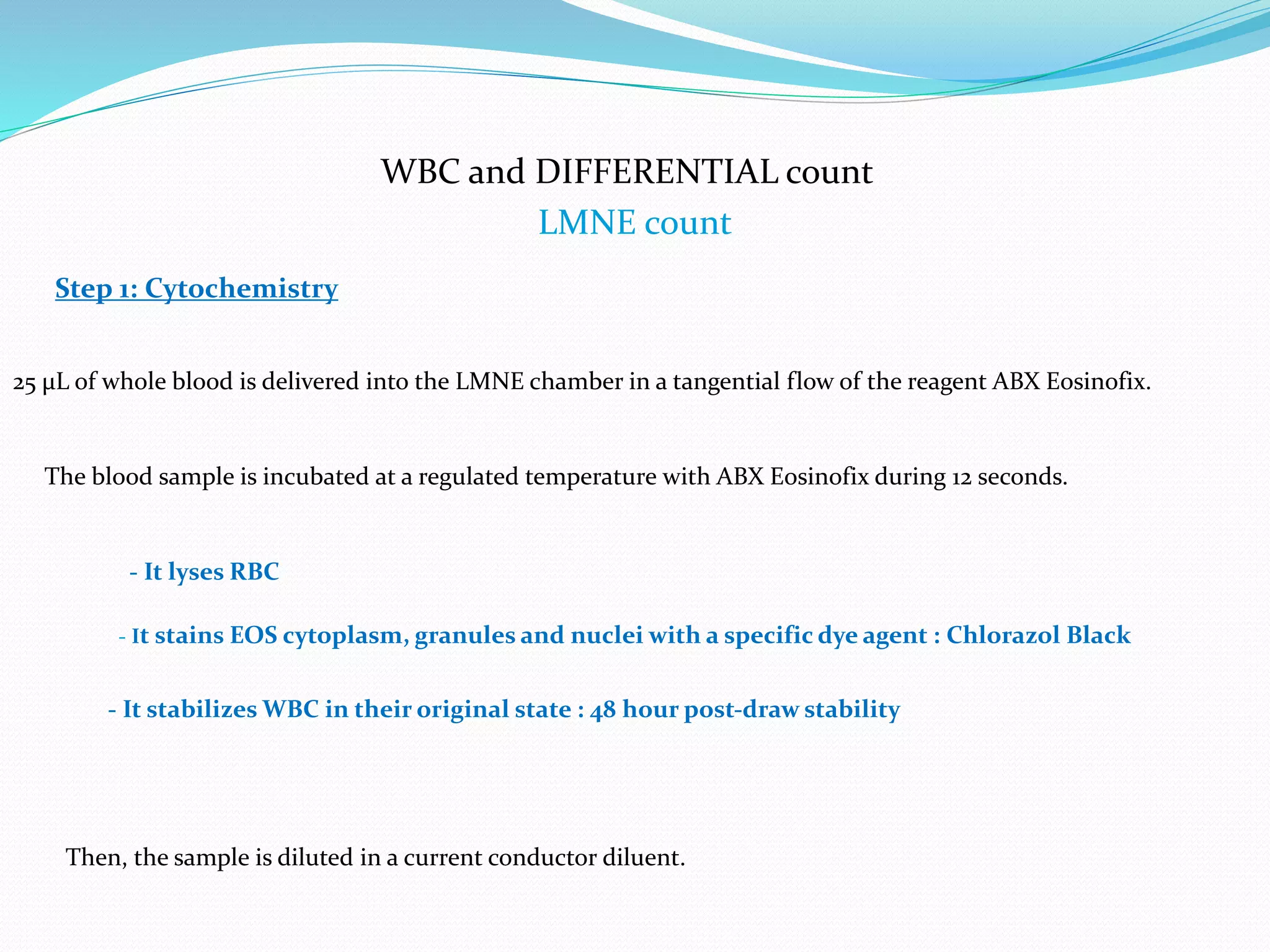
- It stabilizes WBC in their original state : 48 hour post-draw stability
Step 1: Cytochemistry
25 ÎŒL of whole blood is delivered into the LMNE chamber in a tangential flow of the reagent ABX Eosinofix.
The blood sample is incubated at a regulated temperature with ABX Eosinofix during 12 seconds.
- It lyses RBC
- It stains EOS cytoplasm, granules and nuclei with a specific dye agent : Chlorazol Black
Then, the sample is diluted in a current conductor diluent.
WBC and DIFFERENTIAL count
LMNE count
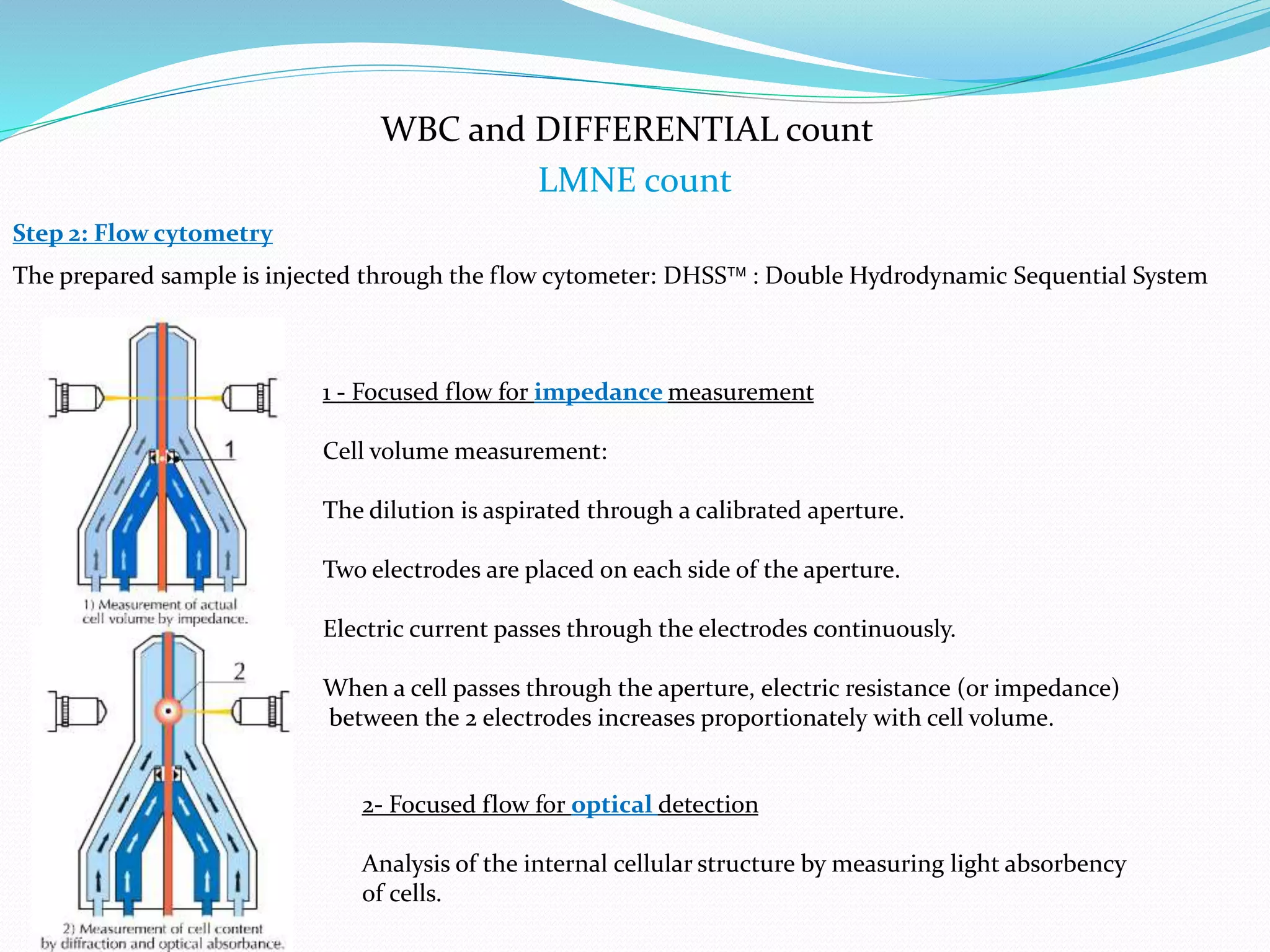
Step 2: Flow cytometry
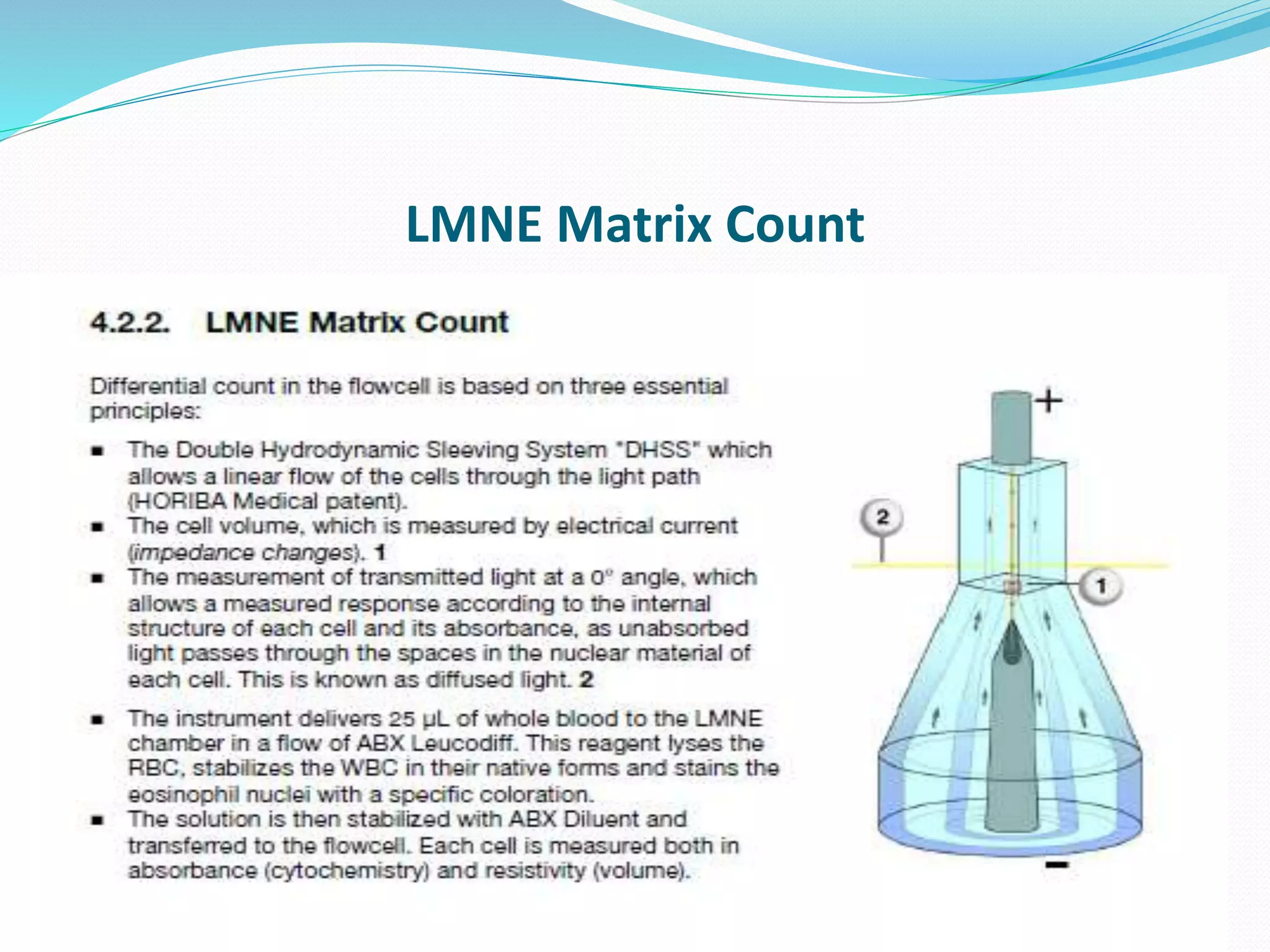
The prepared sample is injected through the flow cytometer: DHSS : Double Hydrodynamic Sequential System
1 - Focused flow for impedance measurement
Cell volume measurement:
The dilution is aspirated through a calibrated aperture.
Two electrodes are placed on each side of the aperture.
Electric current passes through the electrodes continuously.
When a cell passes through the aperture, electric resistance (or impedance)
between the 2 electrodes increases proportionately with cell volume.
2- Focused flow for optical detection
Analysis of the internal cellular structure by measuring light absorbency
of cells.
WBC and DIFFERENTIAL count
LMNE count
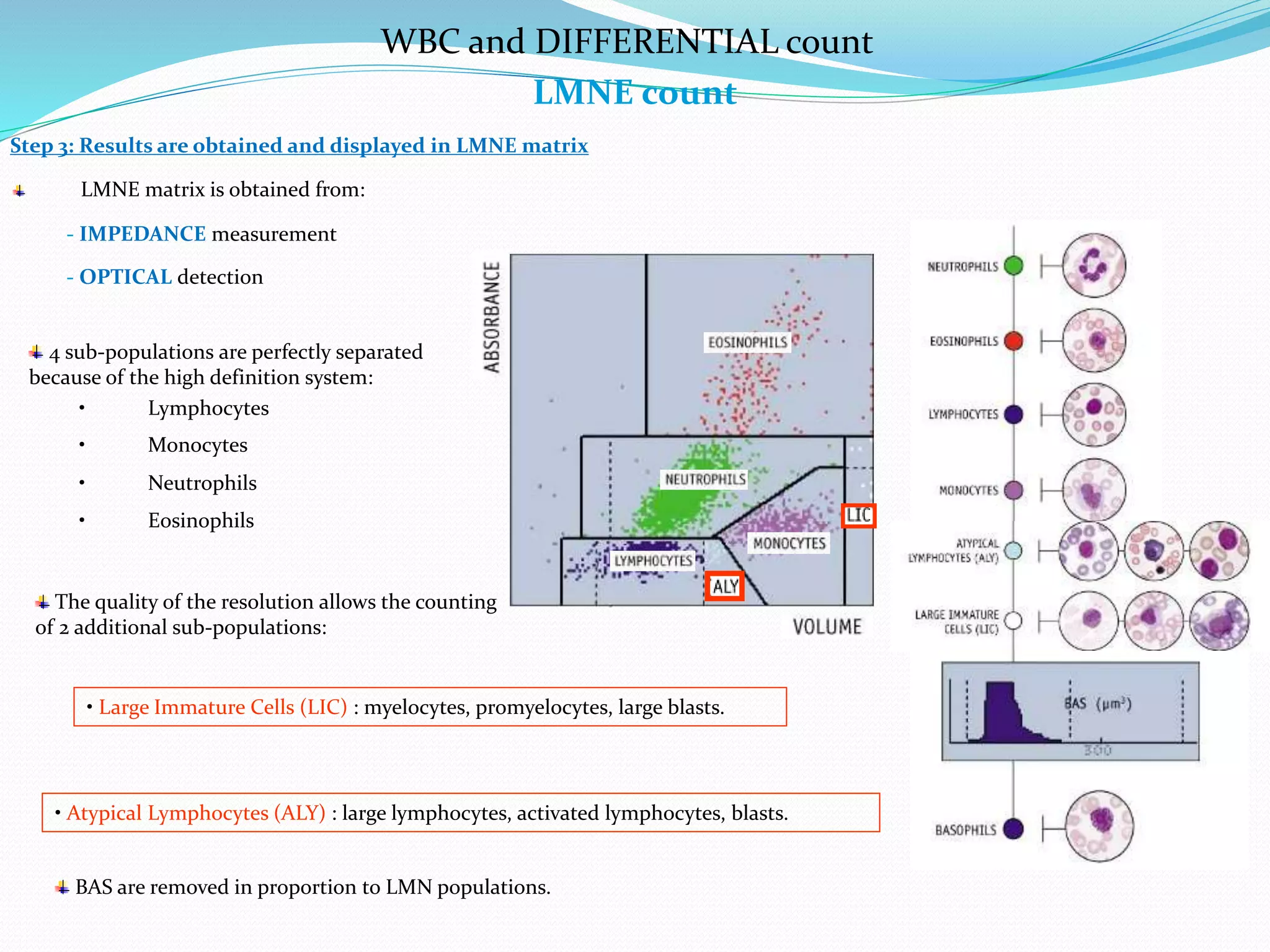
Step 3: Results are obtained and displayed in LMNE matrix
LMNE matrix is obtained from:
‱ Monocytes
‱ Lymphocytes
‱ Neutrophils
‱ Eosinophils
- IMPEDANCE measurement
- OPTICAL detection
4 sub-populations are perfectly separated
because of the high definition system:
The quality of the resolution allows the counting
of 2 additional sub-populations:
‱ Large Immature Cells (LIC) : myelocytes, promyelocytes, large blasts.
‱ Atypical Lymphocytes (ALY) : large lymphocytes, activated lymphocytes, blasts.
BAS are removed in proportion to LMN populations.
I N D E X
PART 1
I. Necessity for Automation.
II. Advantages & Disadvantages of Automation.
III. Types of Automated Hematology Analyzers.
IV. Principles involved in Automation.
V. Pentra ES 60 Haematology Analyzer.
VI. Pentra DF Nexus Haematology Analyzer.
PART 2
I. Histograms.
II. Flags
III. Quality Control
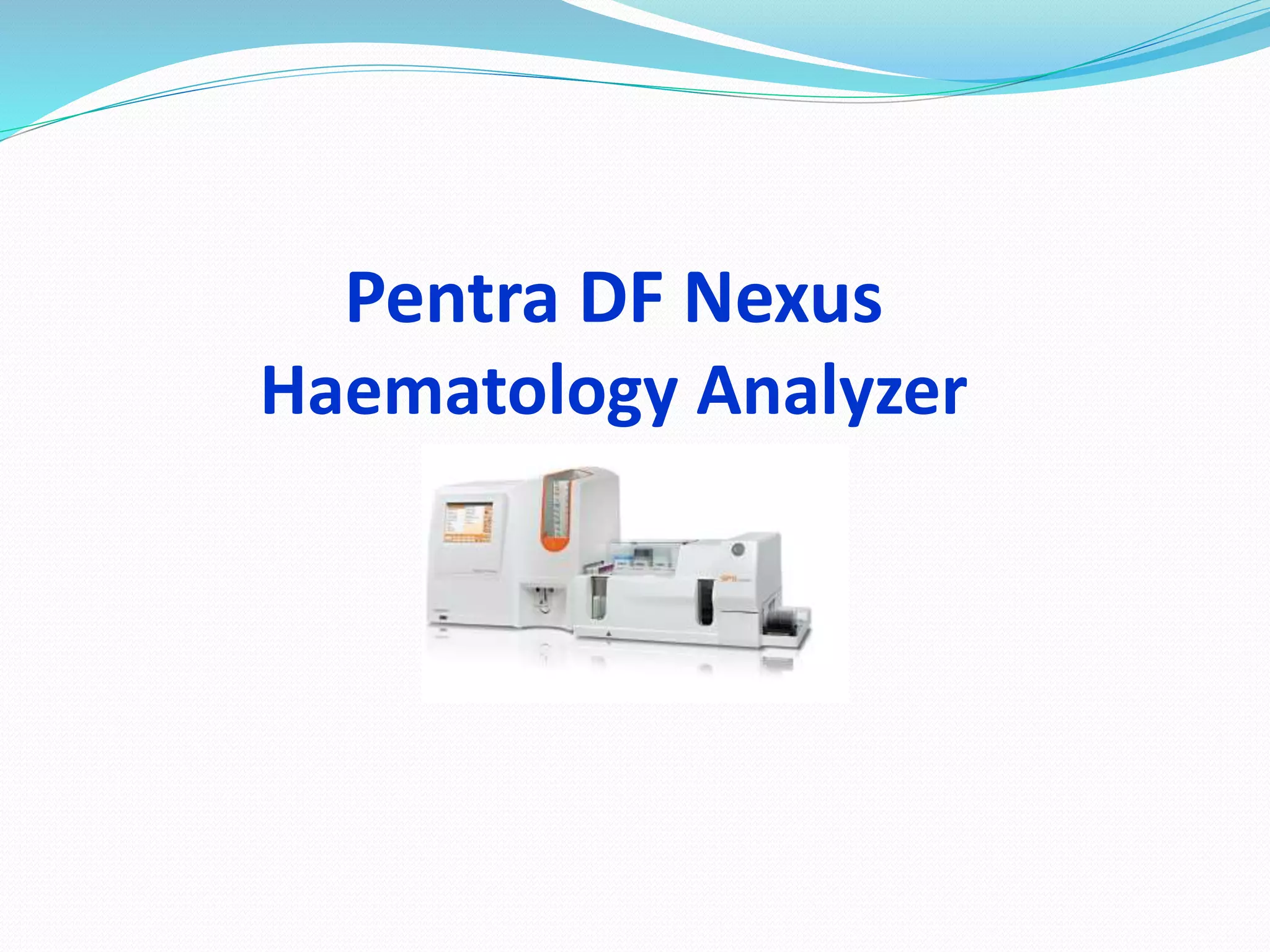
Pentra DF Nexus
Haematology Analyzer
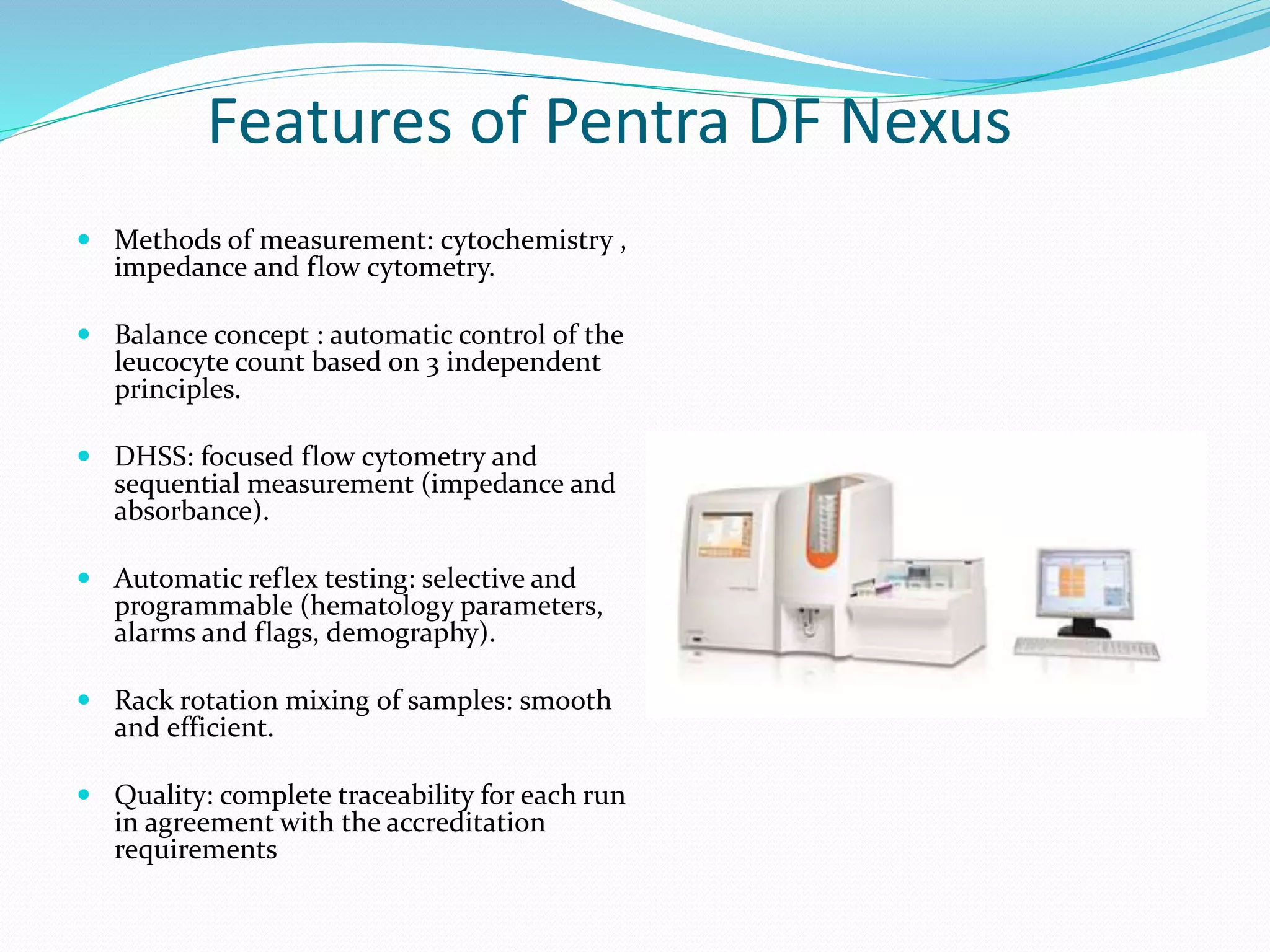
Features of Pentra DF Nexus
 Methods of measurement: cytochemistry ,
impedance and flow cytometry.
 Balance concept : automatic control of the
leucocyte count based on 3 independent
principles.
 DHSS: focused flow cytometry and
sequential measurement (impedance and
absorbance).
 Automatic reflex testing: selective and
programmable (hematology parameters,
alarms and flags, demography).
 Rack rotation mixing of samples: smooth
and efficient.
 Quality: complete traceability for each run
in agreement with the accreditation
requirements
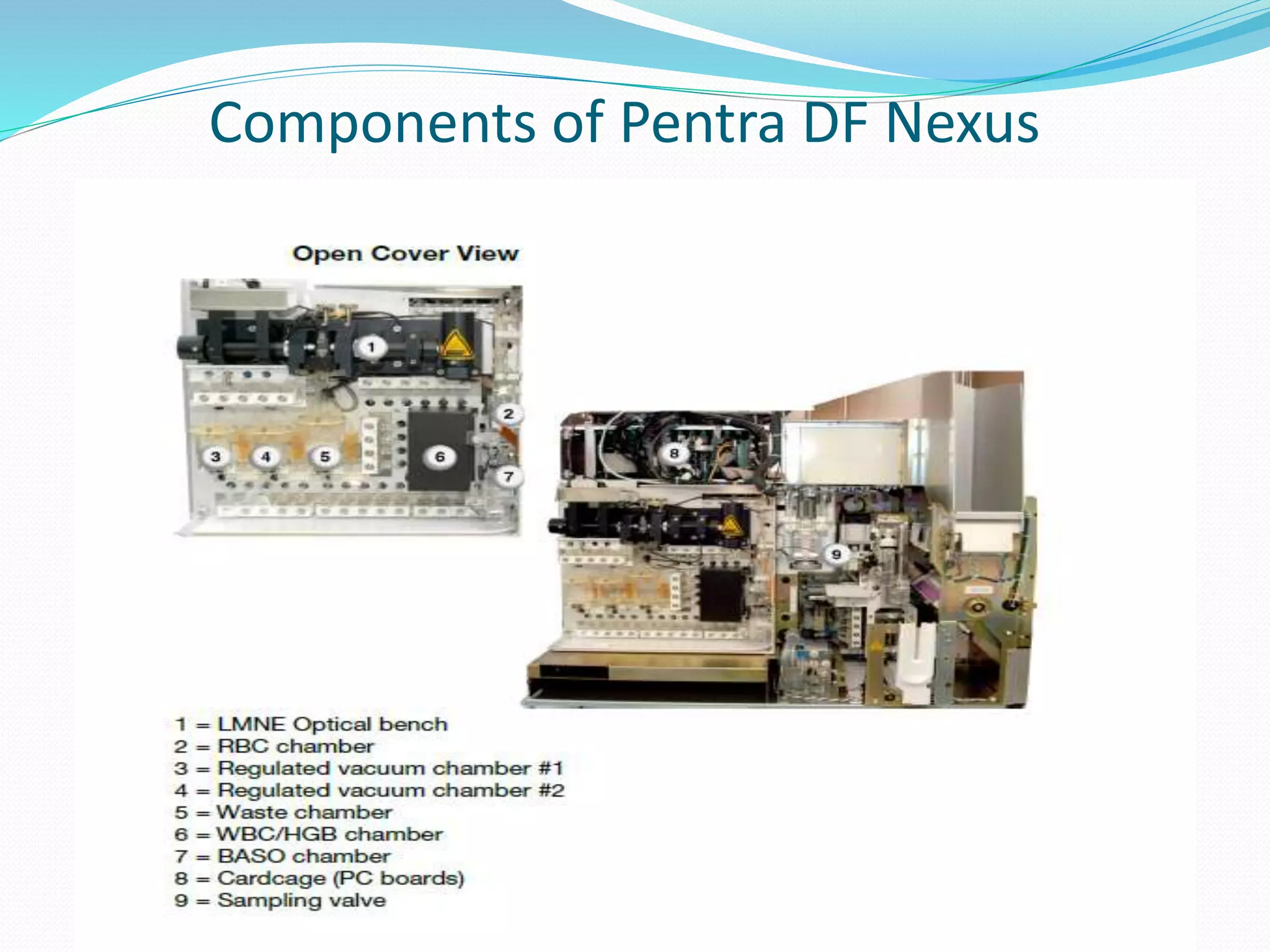
Components of Pentra DF Nexus
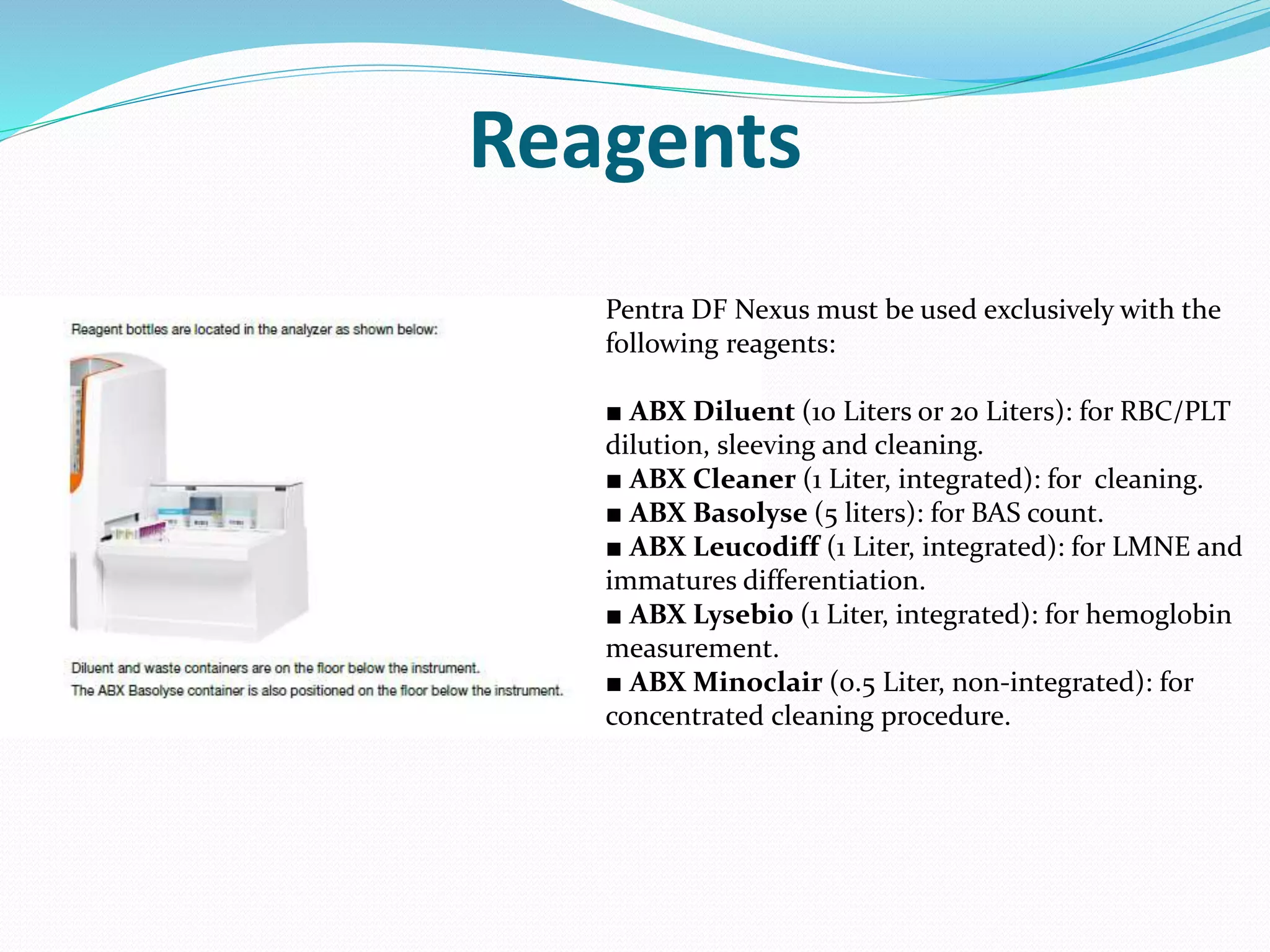
Reagents
Pentra DF Nexus must be used exclusively with the
following reagents:
■ ABX Diluent (10 Liters or 20 Liters): for RBC/PLT
dilution, sleeving and cleaning.
■ ABX Cleaner (1 Liter, integrated): for cleaning.
■ ABX Basolyse (5 liters): for BAS count.
■ ABX Leucodiff (1 Liter, integrated): for LMNE and
immatures differentiation.
■ ABX Lysebio (1 Liter, integrated): for hemoglobin
measurement.
■ ABX Minoclair (0.5 Liter, non-integrated): for
concentrated cleaning procedure.
Parameters
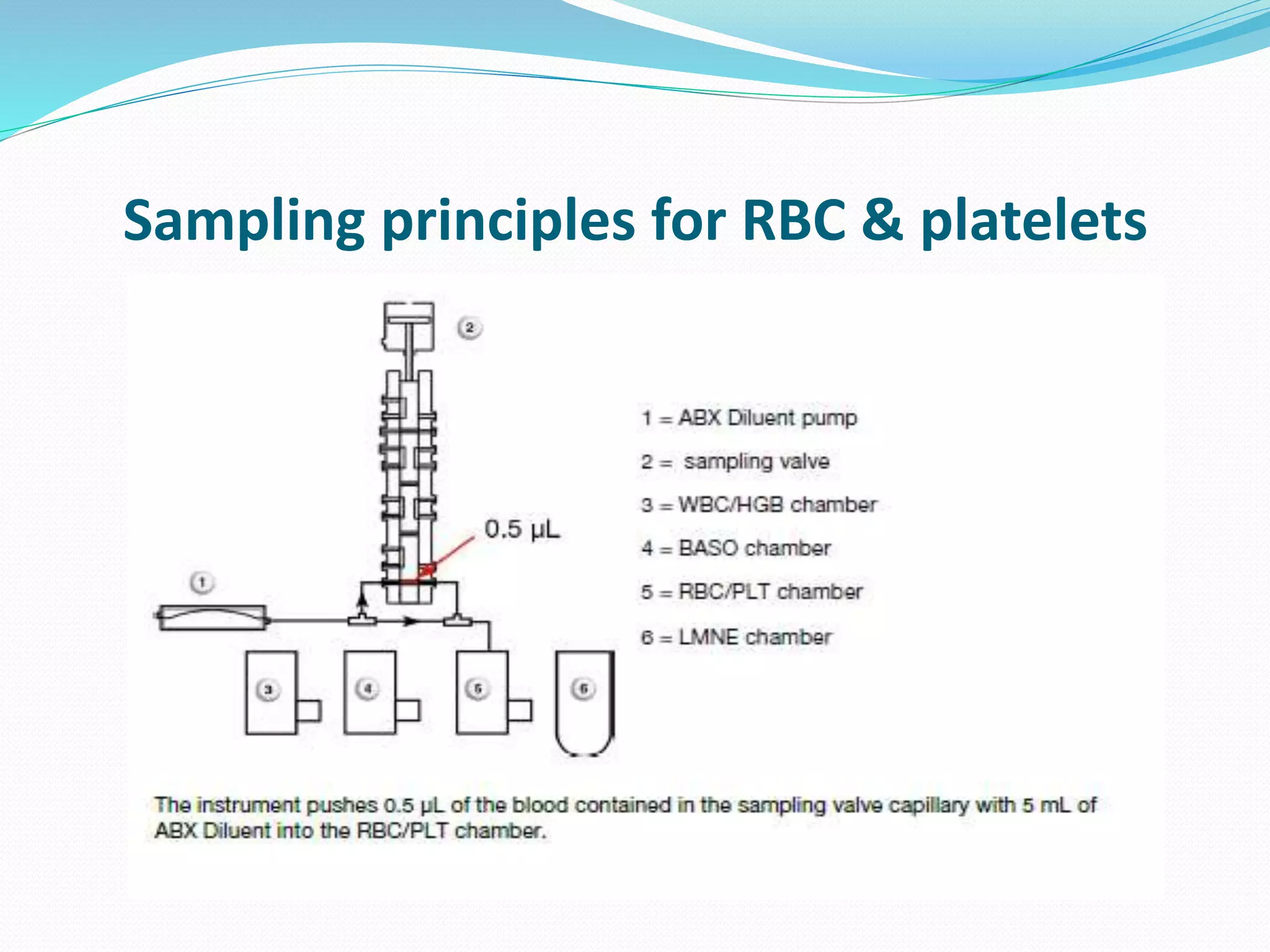
Sampling principles for RBC & platelets
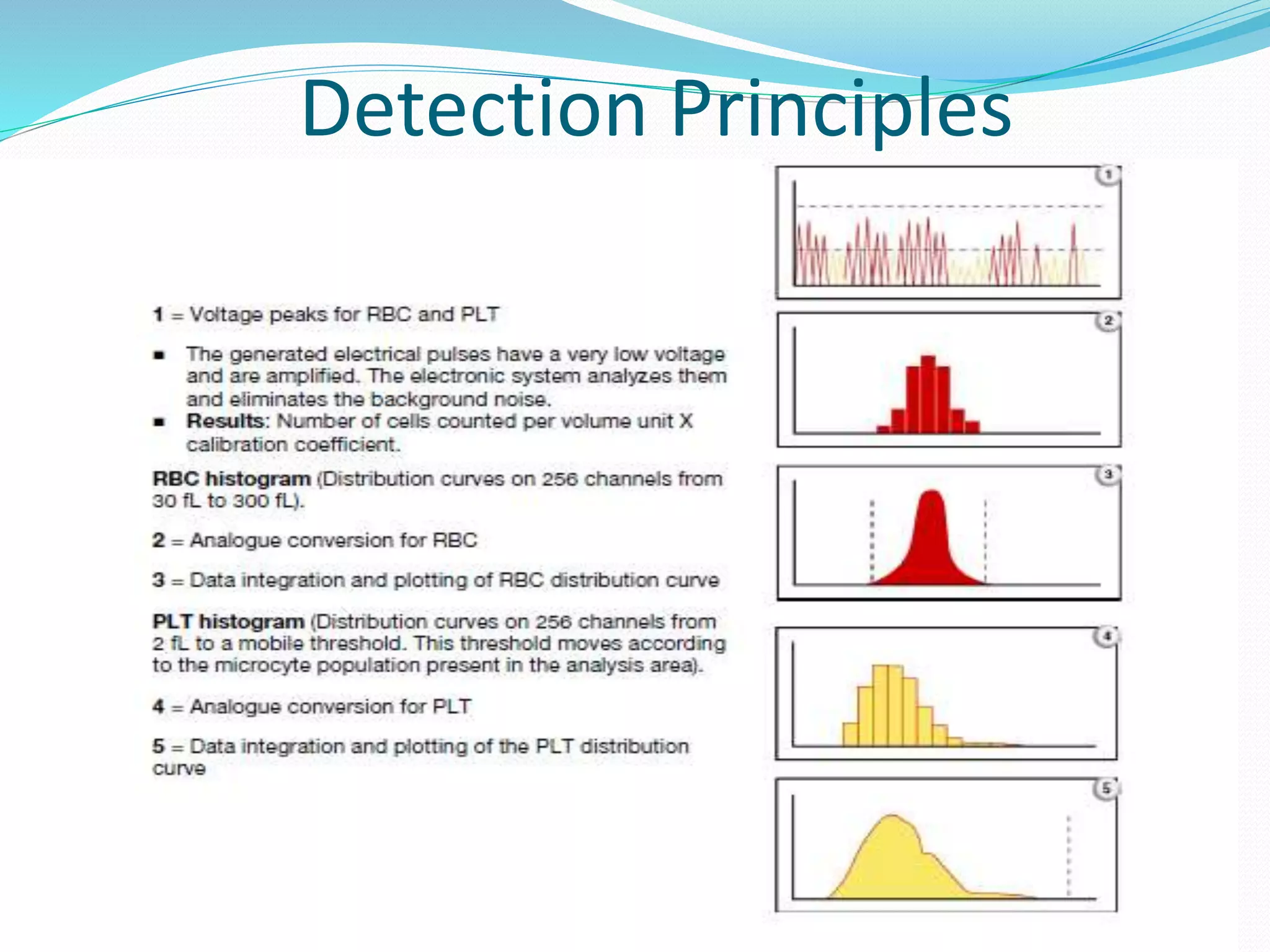
Detection Principles
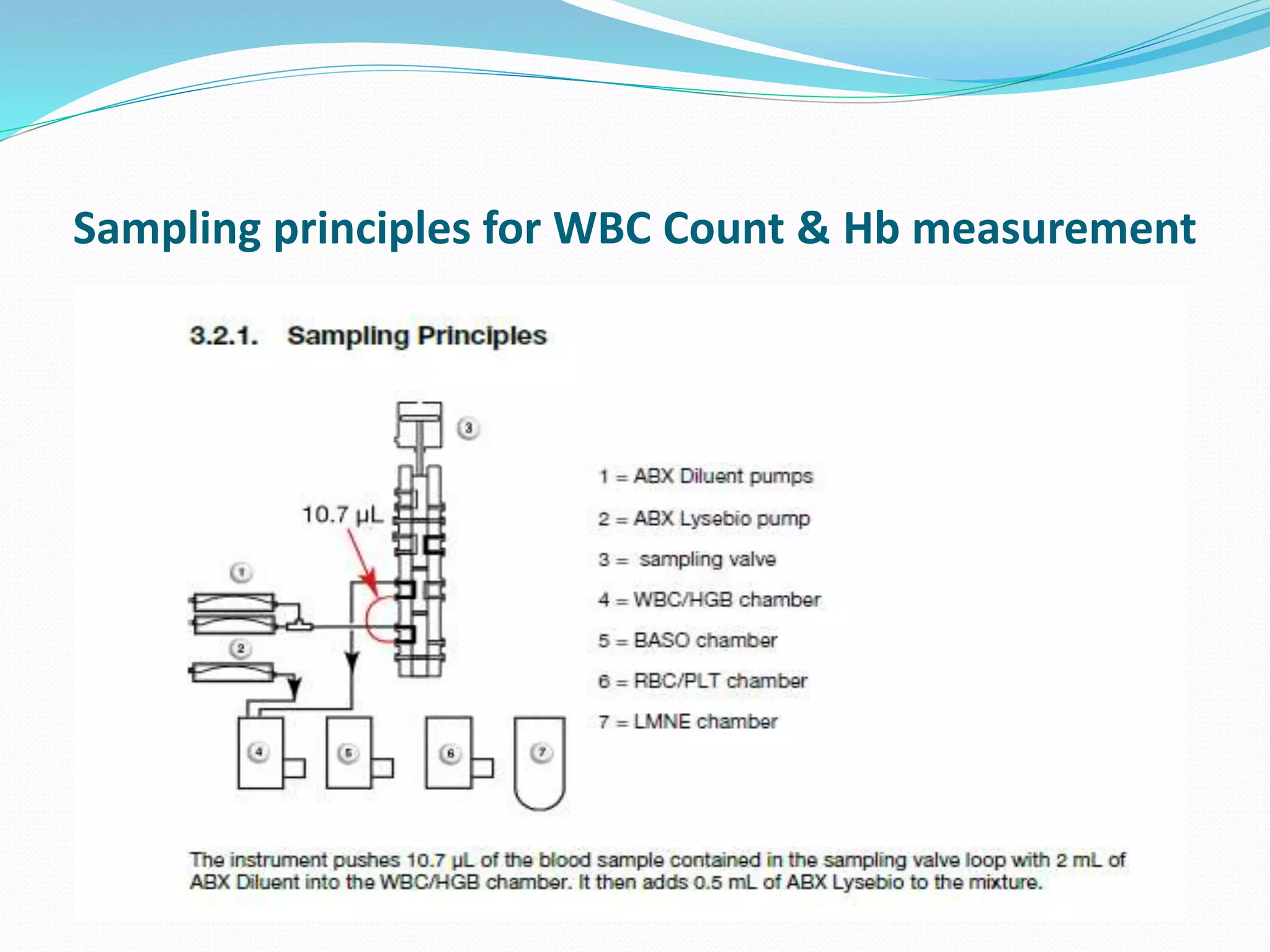
Sampling principles for WBC Count & Hb measurement
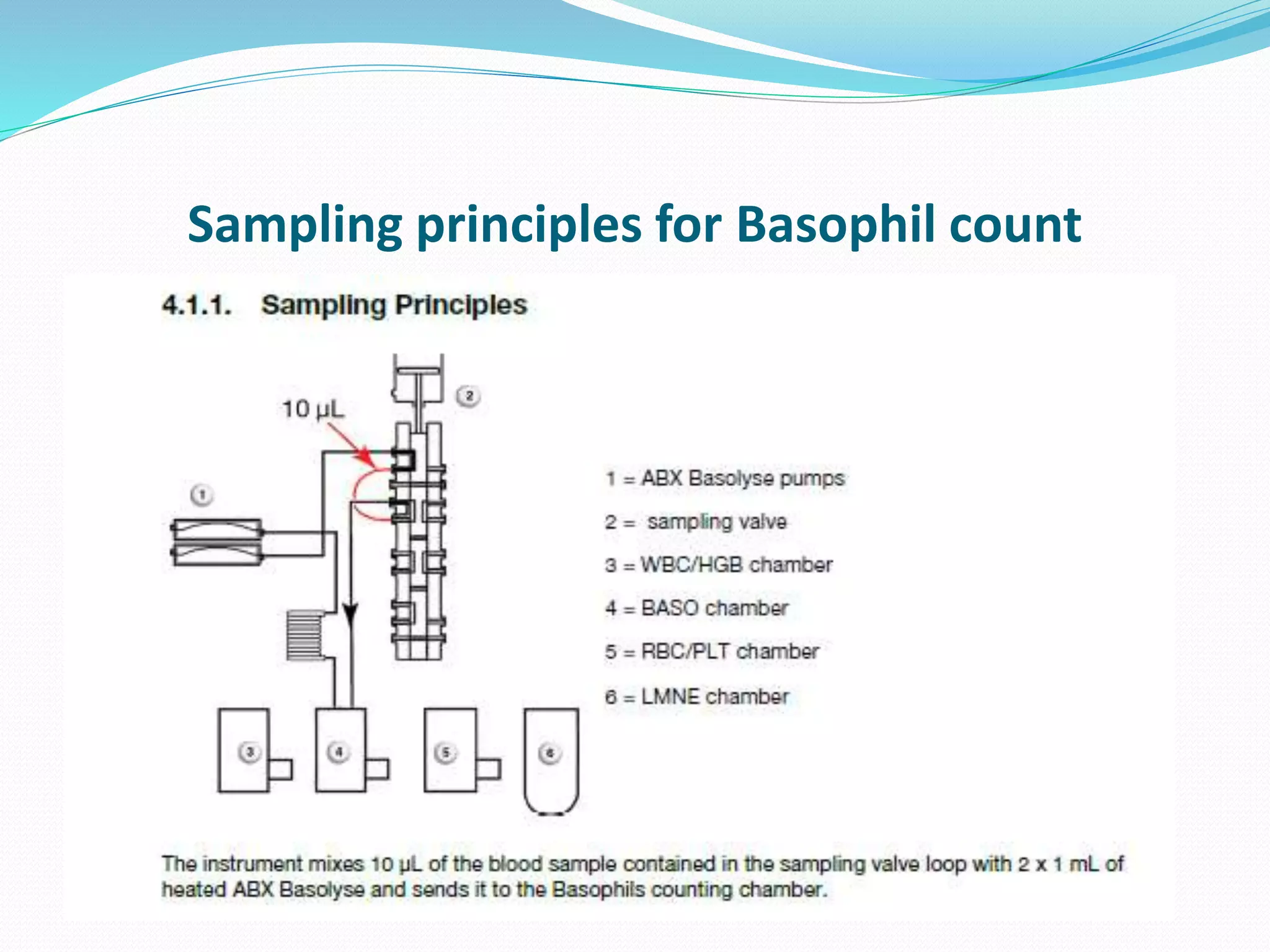
Sampling principles for Basophil count
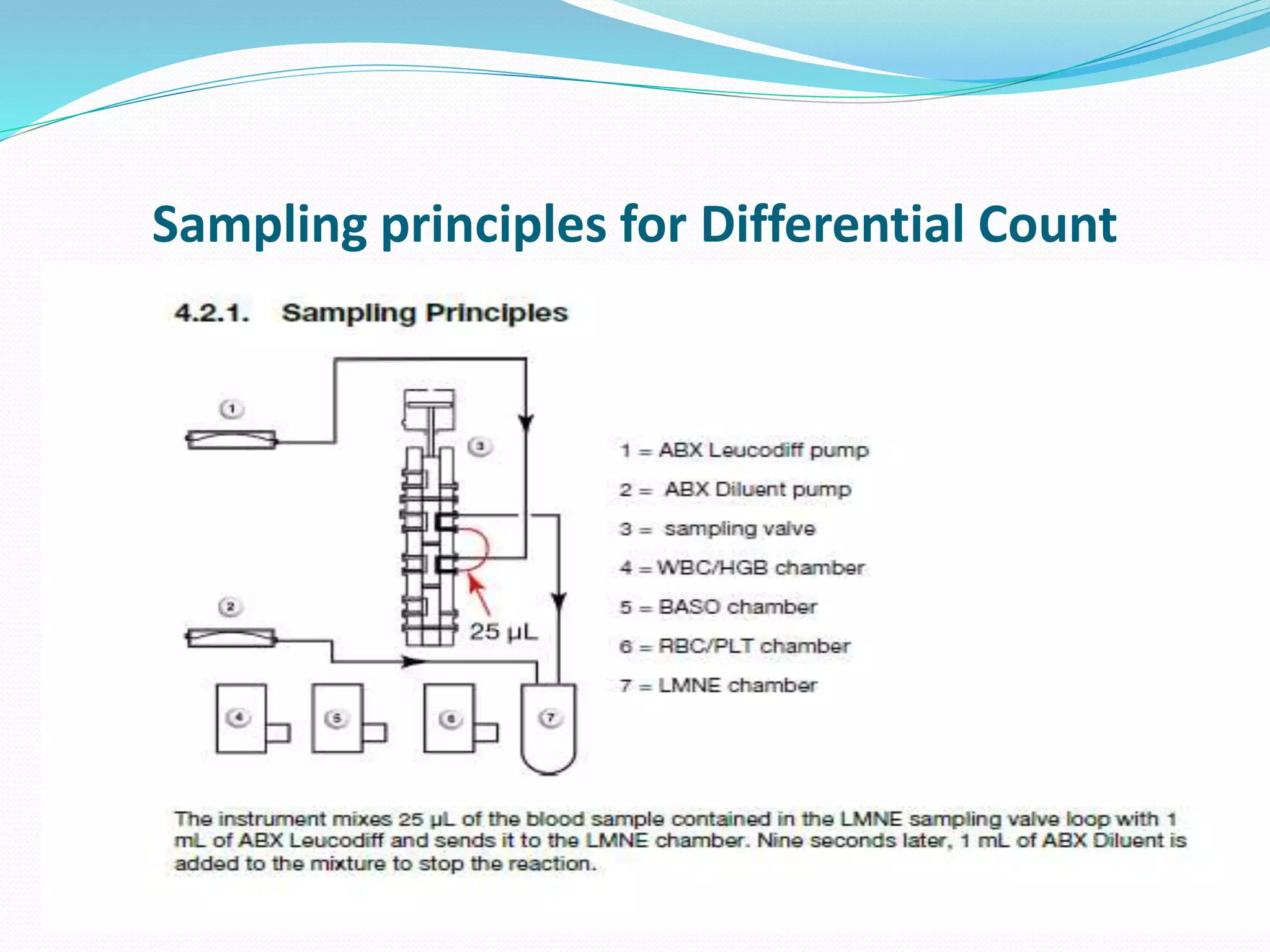
Sampling principles for Differential Count
LMNE Matrix Count
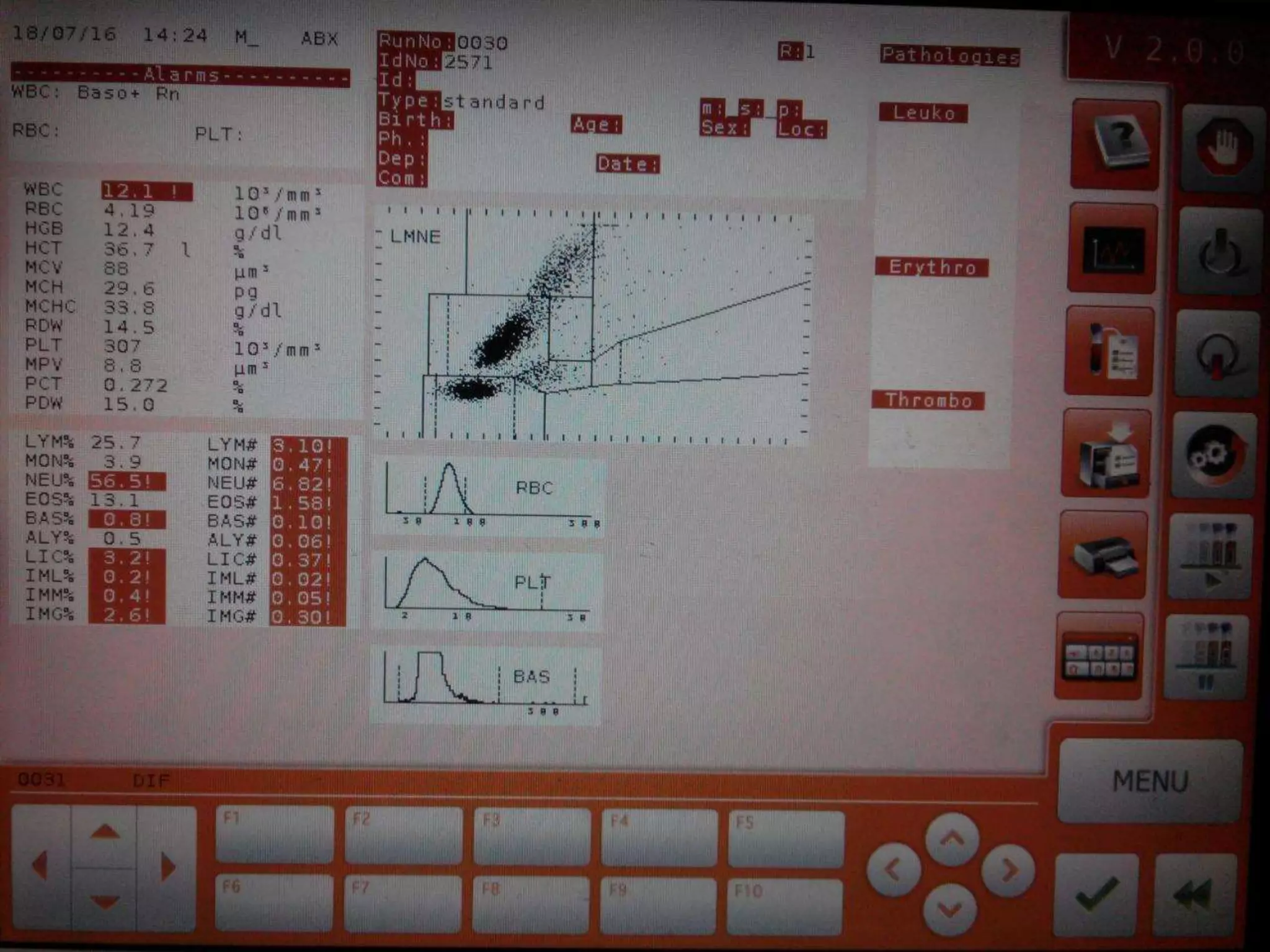
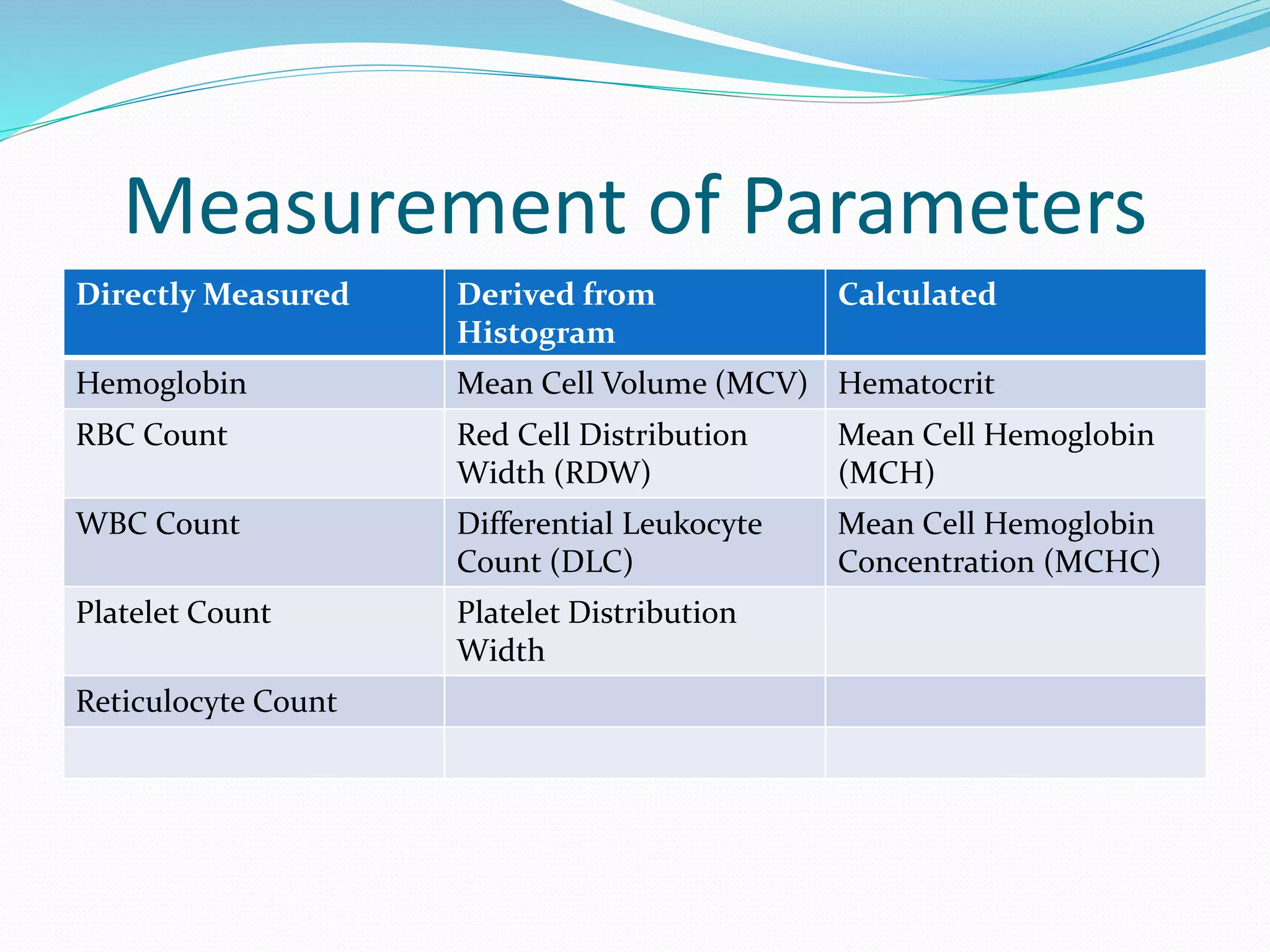
Measurement of Parameters
Directly Measured Derived from
Histogram
Calculated
Hemoglobin Mean Cell Volume (MCV) Hematocrit
RBC Count Red Cell Distribution
Width (RDW)
Mean Cell Hemoglobin
(MCH)
WBC Count Differential Leukocyte
Count (DLC)
Mean Cell Hemoglobin
Concentration (MCHC)
Platelet Count Platelet Distribution
Width
Reticulocyte Count
END OF
PART 1
Automation in hematology part 1

Automation in hematology part 1

  • 1.
  • 2.
  • 3.
    I N DE X PART 1 I. Necessity for Automation. II. Advantages & Disadvantages of Automation. III. Types of Automated Hematology Analyzers. IV. Principles involved in Automation. V. Pentra ES 60 Haematology Analyzer. VI. Pentra DF Nexus Haematology Analyzer. PART 2 I. Histograms. II. Flags III. Quality Control
  • 4.
    Necessity for Automation Cell counts  Dx of Hemoglobinopathies  Immunophenotyping  Dx of Leukemias & Lymphomas  Coagulation Abnormalities.
  • 5.
    Inventor of thefirst automated analyzer for counting and sizing cells based on his famous ‘Coulter Principle’ The man who started it all- Wallace H. Coulter (1913 –1998)
  • 6.
    I N DE X PART 1 I. Necessity for Automation. II. Advantages & Disadvantages of Automation. III. Types of Automated Hematology Analyzers. IV. Principles involved in Automation. V. Pentra ES 60 Haematology Analyzer. VI. Pentra DF Nexus Haematology Analyzer. PART 2 I. Histograms. II. Flags III. Quality Control
  • 7.
    Automation Advantages Disadvantages  Speed& Efficient Handling  Accuracy & Precision  Multiple Tests on Single Platform  Significant Reduction of labor.  Flagging  RBC Morphology  Erroneous results  Expensive
  • 8.
    I N DE X PART 1 I. Necessity for Automation. II. Advantages & Disadvantages of Automation. III. Types of Automated Hematology Analyzers. IV. Principles involved in Automation. V. Pentra ES 60 Haematology Analyzer. VI. Pentra DF Nexus Haematology Analyzer. PART 2 I. Histograms. II. Flags III. Quality Control
  • 9.
    Types of AutomatedHematology Analyzers Semi-automated analyzers Fully automated analyzers Measures only few parameters Some steps like dilution of blood is carried out manually Measures multiple parameters. Requires only anticoagulated blood samples.
  • 10.
    Components of acell counter HYDRAULICS  Aspirating unit.  Dispensers.  Diluters.  Mixing chambers.  Aperture bath.  Hemoglobinometer. PNEUMATICS  Vacuums & Pressures for operating valves. ELECTRICALS  Analyzers & Computing circuitary.
  • 11.
    I N DE X PART 1 I. Necessity for Automation. II. Advantages & Disadvantages of Automation. III. Types of Automated Hematology Analyzers. IV. Principles involved in Automation. V. Pentra ES 60 Haematology Analyzer. VI. Pentra DF Nexus Haematology Analyzer. PART 2 I. Histograms. II. Flags III. Quality Control
  • 12.
    Principles of workingof an automated blood analyzer  Electrical Impedance.  Light Scatter.  Fluorescence.  Light Absorption.  Electrical Conductivity.
  • 13.
    Electrical impedance  Cellcounting & sizing is based on the Coulter principle - detection & measurement of changes in electrical impedance (resistance) produced by a blood cell as it passes through an electrical field.  Blood cells are poor conductors of electricity but are suspended in an electrically conductive diluent.  2 chambers filled with a conductive buffered electrolyte solution separated by a glass tube having a small aperture.  A DC current is generated between two electrolytes.
  • 14.
    Electrical impedance  Asa cell passes through the aperture, flow of current is impeded and a voltage pulse is generated.  The no: of pulses indicate the no: of the blood cells.  The amplitude (height) of each pulse is proportional to the cell volume.  The requisite condition for cell counting by this method is high dilution of sample
  • 15.
    Variables measured byusing electrical impedance RBC ‱RBC Count ‱MCV ‱Size distribution histogram ‱RDW ‱Hematocrit ‱MCH ‱MCHC WBC ‱Total Count ‱3 part differential  Lymphocyte  Mononuclear cells  Granulocyte Platelets ‱Platelet count ‱Platelet histograms giving  MPV PDW
  • 16.
    Optical light scatter Eachcell flows in a single line through a flow cell. A LASER device is focused on the flow cell. As LASER light beam strikes a cell, it is scattered in various directions. Photodetectors capture the light. Forward Scatter Light (FALS) ∝ to cell size. Side Scatter Light (SS) (90°) corresponds to nuclear complexity & granularity of cytoplasm. Used to distinguish between granulocytes, lymphocytes & monocytes.
  • 17.
    Variables measured byusing OPTICAL LIGHT SCATTER ‱ RBC Count ‱ The 5 part differential  Neutrophils  Eosinophils  Basophils  Lymphocytes  Monocytes ‱ Mean Cell Volume
  • 18.
    Flow Cytometry Measures multiplecellular & fluorescent properties of cells when they flow as a single cell suspension through a laser beam. Provides the following information about a cell: ‱ Cell size (forward scatter) ‱ Internal complexity or granularity (side scatter) ‱ Relative fluorescence intensity.
  • 19.
    Components of FlowCytometry  Fluidics (The Flow System)  The sample is injected into a stream of sheath fluid within the flow chamber.  They are forced into the center of the stream forming a single file by the principle of HYDRODYNAMIC FOCUSING. ‘Only 1 cell or particle can pass through the LASER Beam@ a given moment.’  The sample pressure is always > than the sheath pressure ensuring a high flow rate, thus allowing more cells to enter the stream@a given moment.  High Flow rate used for immunophenotyping analysis of cells.  Low Flow rate used for DNA Analysis.
  • 20.
    Components of FlowCytometry  Optics  Following cell delivery, a light source like the Argon- ion LASER is required to excite the cells.  When light from a Laser Beam intersects a cell at the ‘interrogation point’, 2 events occur -  Light Scattering  Fluorescence (Emission of Light )  Light Scattered in the forward direction is detected in Forward Scatter Channel ∝ to cell size and that scattered@90° to axis of Laser path is detected in Side Scatter Channel ∝ to granularity of cell.  The cells tagged with fluorescence emit a momentary pulse of fluorescence.  A system of optical mirrors and filters then direct the specified wavelengths of light to the designated photodetectors.
  • 21.
    Components of FlowCytometry  Electronics  The photodetectors - photodiodes and  photomultiplier tubes convert the optical signals (photons) to corresponding electronic signals(electrons).  The electronic signal produced is proportional to the amount of light striking a cell.  The electric current travels to the amplifier and is converted to a voltage pulse  The voltage pulse is assigned a digital value representing a channel by the Analog-to Digital Converter (ADC) .  The channel no: is transferred to the computer which displays it to the appropriate position on the data plot.
  • 22.
    Data Analysis  Datais collected and stored in the computer – can be displayed in various formats.  Parameters – Forward Scatter, Side scatter, emitted fluorescence.  Data plots – Single Parameter – Histogram Two Parameters – Dot Plot
  • 23.
    Gating A boundary thatcan be set to restrict the analysis to a specific population within the sample. Could be Inclusive – Selection of events that fall within the boundary. Exclusive - Selection of events that fall outside the boundary. Data selected by the gate is then displayed in subsequent plots.
  • 24.
    Sorting Consists of collectingcells of interest (defined through criteria of size and fluorescence) for further analysis (microscopy /functional/ chemical analysis)
  • 25.
    Common Applications ofFlow Cytometry 1. Leukemias and lympomas Immunophenotyping (evaluation of cell surface markers),diagnosis, detection of minimal residual disease, and to identify prognostically important subgroups. 2. Paroxysmal nocturnal hemoglobinuria Deficiency of CD 55 and CD 59. 3. Hematopoietic stem cell transplantation Enumeration of CD34+ stem cells. 4. Feto-maternal hemorrhage Detection and quantitation of foetal hemoglobin in maternal blood sample. 5. Anemias Reticulocyte count. 6. Human immunodeficiency virus infection For enumeration of CD4+ lymphocytes 7. . Histocompatibility cross matching
  • 26.
    Estimation of ReticulocyteCount  Estimation based upon uptake of various dyes and fluorochromes by the RNA of reticulocytes.  The flourescent cells are enumerated using a flow cytometer.  Various dyes used are –  Auramine O  Thiazole Orange  CD4K 530  Oxazine 750  New Methylene Blue.  Flow cytometry allows classification of reticulocytes into 3 maturation stages –  Low Fluorescence Reticulocytes (LFR).  Middle Fluorescence Reticulocytes (MFR).  High Fluorescence Reticulocytes (HFR).
  • 27.
    Estimation of reticulocytecount – Reticulocyte parameters  Immature Reticulocyte Fraction ( IRF) / Reticulocyte Maturation Index.  The immature reticulocyte fraction (IRF) is calculated as  Sum of immature reticulocytes (MFR & HFR)  Early sensitive marker of erythropoiesis.  Early identification of marrow regeneration in patients undergoing BMT/chemotherapy.  Reticulocyte Hemoglobin Equivalent (RET-He) / Reticulocyte Hemoglobin Concentration (CHr)  Gives the Hb content of freshly produced RBCs.  Early detection of Fe deficiency anemia.  Monitoring of erythropoietin & Fe therapy.  Mean reticulocyte Volume (MCVr)  ↑ rapidly following Fe therapy in subjects with depleted Fe stores.  ↓ rapidly with development of iron deficient erythropoiesis.
  • 28.
    Other Methods  PEROXIDASEbased cell counts.  Myeloperoxidase is used to count neutrophils.  Lymphocytes are not stained.  FLUORESCENCE based cell counts.  For reticulocyte and platelet count.  Best for detecting immature platelets.  IMMUNOLOGICAL based cell counts.  Accurate platelet count using CD41/CD61 Abs
  • 29.
    I N DE X PART 1 I. Necessity for Automation. II. Advantages & Disadvantages of Automation. III. Types of Automated Hematology Analyzers. IV. Principles involved in Automation. V. Pentra ES 60 Haematology Analyzer. VI. Pentra DF Nexus Haematology Analyzer. PART 2 I. Histograms. II. Flags III. Quality Control
  • 30.
  • 31.
    Features of PentraES 60  Throughput: Upto 60 samples/hour  Reagents: Only 4 onboard reagents and 1 diluent  Perfect differentiation of the 5 WBC subpopulations with DHSS* Technology  3 histograms for RBC, BAS/WBC and PLT together with the 5 DIFF Matrix.  Basophils counted through specific channel  High resolution matrix includes the determination of 2 additional subpopulations (% and #):  Atypical Lymphocytes (ALY***) and Large Immature Cells (LIC***)
  • 33.
    Reagents ABX CLEANER (1L) ABXEOSINOFIX (1L) ABX BASOLYSE II (1L) ABX LYSEBIO (0.4 L) ABX DILUENT (20L)
  • 34.
    Parameters 26 Parameters inCBC mode + 5 DIFF mode 12 parameters in CBC mode 26 parameters in 5 DIFF mode = 12 parameters (CBC mode) + 14 parameters (5 WBC sub-populations & ALY, LIC) WBC (White Blood Cell) RBC (Red Blood Cell) HGB (Hemoglobin Concentration) HCT (Hematocrit) MCV (Mean Corpuscular Volume) MCH (Mean Corpuscular Hemoglobin) MCHC (Mean Corpuscular Hemoglobin Concentration) RDW (Red Distribution Width) PLT (Platelets) PCT (Plateletcrit) MPV (Mean Platelet Volume) PDW (Platelets Distribution Width) WBC (White Blood Cell) RBC (Red Blood Cell) HGB (Hemoglobin Concentration) HCT (Hematocrit) MCV (Mean Corpuscular Volume) MCH (Mean Corpuscular Hemoglobin) MCHC (Mean Corpuscular Hemoglobin Concentration) RDW (Red Distribution Width) PLT (Platelets) PCT (Plateletcrit) MPV (Mean Platelet Volume) PDW (Platelets Distribution Width) LYM (Lymphocytes) in % and ï€Ł MON (Monocytes) in % and ï€Ł NEU (Neutrophils) in % and ï€Ł EOS (Eosinophils) in % and ï€Ł BAS (Basophils) in % and ï€Ł ALY (Atypical Lymphocytes) in % and ï€Ł LIC (Large Immature Cells) in % and ï€Ł 5 WBC sub-populations CBC
  • 35.
    Micro-sampling MDSS (Multi-DistributionSampling System) Micro-sampling: 30 ÎŒL in CBC mode and 53 ÎŒL in CBC+DIFF mode are aspired Ideal for pediatric, oncology or geriatric sample types or whenever a small sample volume is required The remaining volume may be used for additional analysis such as sedimentation rate, smear
It will avoid to puncture again the patient Blood split into precise aliquots Aliquots distributed directly into pre-heated analysis chambers with a synchronized tangential flow of diluent for appropriate dilutions without viscosity problem Perfect mixing and homogenization of blood with reagents. No sampling shear-valve to distribute blood sample in all appropriate chambers: No maintenance, no clogging Immediate CBC+DIFF test selection without a cleaning cycle in between.
  • 36.
    Estimation of Hemoglobin Sample is diluted with Drabkin’s reagent.  Potassium ferricyanide in the reagent converts Hb Fe from ferrous (Fe2+) to Ferric (Fe3+) to form methemoglobin.  This methemoglobin combines with potassium cyanide to form the stable cyanmethemoglobin.  Hb concentration is measured by a photodetector which reads absorbance of cyanmethemoglobin at 540 nm.  Cyanide free reagents like sodium lauryl sulphate are also used
  • 37.
    HGB measurement Spectrophotometry The newestdeveloped reagent for RBC lysis and determination of HGB. ABX Lysebio : cyanide-free ! How does it work ? By action of lysis agent, contained in the reagent, hemoglobin is released. All the heme iron is oxidized and stabilized. Oxidation resulting complexes are measured through the optical part of the first dilution chamber by spectrophotometry at a wavelength of 550nm. Result = Absorbency value x coef. of calibration. Advantage It does not contain cyanide. It could be thrown with the regular wastes (depending of the national regulations).
  • 38.
    WBC and DIFFERENTIALcount WBC/BAS count Electronic Impedance Variation Principle   Differentiation between the BAS and the other WBC is obtained by the use of the ABX BASOLYSE II reagent with it specific lysing action. Nucleus of WBC populations are counted between the electronic thresholds from 0 to <BA2>. BAS are counted between the electronic thresholds <BA2> and <BA3>. Results WBC = Number of cells counted within a specified amount of time per volume x WBC calibration coefficient. BAS = Number of cells counted within a specified amount of time per volume x WBC calibration coefficient in a percentage as the total number of leukocytes (BAS and WBC nuclei).
  • 39.
    WBC and DIFFERENTIALcount LMNE count - It stabilizes WBC in their original state : 48 hour post-draw stability Step 1: Cytochemistry 25 ÎŒL of whole blood is delivered into the LMNE chamber in a tangential flow of the reagent ABX Eosinofix. The blood sample is incubated at a regulated temperature with ABX Eosinofix during 12 seconds. - It lyses RBC - It stains EOS cytoplasm, granules and nuclei with a specific dye agent : Chlorazol Black Then, the sample is diluted in a current conductor diluent.
  • 40.
    WBC and DIFFERENTIALcount LMNE count Step 2: Flow cytometry The prepared sample is injected through the flow cytometer: DHSS : Double Hydrodynamic Sequential System 1 - Focused flow for impedance measurement Cell volume measurement: The dilution is aspirated through a calibrated aperture. Two electrodes are placed on each side of the aperture. Electric current passes through the electrodes continuously. When a cell passes through the aperture, electric resistance (or impedance) between the 2 electrodes increases proportionately with cell volume. 2- Focused flow for optical detection Analysis of the internal cellular structure by measuring light absorbency of cells.
  • 41.
    WBC and DIFFERENTIALcount LMNE count Step 3: Results are obtained and displayed in LMNE matrix LMNE matrix is obtained from: ‱ Monocytes ‱ Lymphocytes ‱ Neutrophils ‱ Eosinophils - IMPEDANCE measurement - OPTICAL detection 4 sub-populations are perfectly separated because of the high definition system: The quality of the resolution allows the counting of 2 additional sub-populations: ‱ Large Immature Cells (LIC) : myelocytes, promyelocytes, large blasts. ‱ Atypical Lymphocytes (ALY) : large lymphocytes, activated lymphocytes, blasts. BAS are removed in proportion to LMN populations.
  • 43.
    I N DE X PART 1 I. Necessity for Automation. II. Advantages & Disadvantages of Automation. III. Types of Automated Hematology Analyzers. IV. Principles involved in Automation. V. Pentra ES 60 Haematology Analyzer. VI. Pentra DF Nexus Haematology Analyzer. PART 2 I. Histograms. II. Flags III. Quality Control
  • 44.
  • 45.
    Features of PentraDF Nexus  Methods of measurement: cytochemistry , impedance and flow cytometry.  Balance concept : automatic control of the leucocyte count based on 3 independent principles.  DHSS: focused flow cytometry and sequential measurement (impedance and absorbance).  Automatic reflex testing: selective and programmable (hematology parameters, alarms and flags, demography).  Rack rotation mixing of samples: smooth and efficient.  Quality: complete traceability for each run in agreement with the accreditation requirements
  • 46.
  • 47.
    Reagents Pentra DF Nexusmust be used exclusively with the following reagents: ■ ABX Diluent (10 Liters or 20 Liters): for RBC/PLT dilution, sleeving and cleaning. ■ ABX Cleaner (1 Liter, integrated): for cleaning. ■ ABX Basolyse (5 liters): for BAS count. ■ ABX Leucodiff (1 Liter, integrated): for LMNE and immatures differentiation. ■ ABX Lysebio (1 Liter, integrated): for hemoglobin measurement. ■ ABX Minoclair (0.5 Liter, non-integrated): for concentrated cleaning procedure.
  • 52.
  • 53.
    Sampling principles forRBC & platelets
  • 54.
  • 55.
  • 56.
    Sampling principles forWBC Count & Hb measurement
  • 57.
  • 58.
    Sampling principles forDifferential Count
  • 59.
  • 61.
    Measurement of Parameters DirectlyMeasured Derived from Histogram Calculated Hemoglobin Mean Cell Volume (MCV) Hematocrit RBC Count Red Cell Distribution Width (RDW) Mean Cell Hemoglobin (MCH) WBC Count Differential Leukocyte Count (DLC) Mean Cell Hemoglobin Concentration (MCHC) Platelet Count Platelet Distribution Width Reticulocyte Count
  • 63.