


Histogram
TWO SIDES OF INSTRUMENTS
(THREE PART INSTRUMENTS)
RBC SIDE (Dilu-
1:50,000)
WBC SIDE
(Dilu-1:500)
>30 fl size2-30 fl size
RBCPLATELET
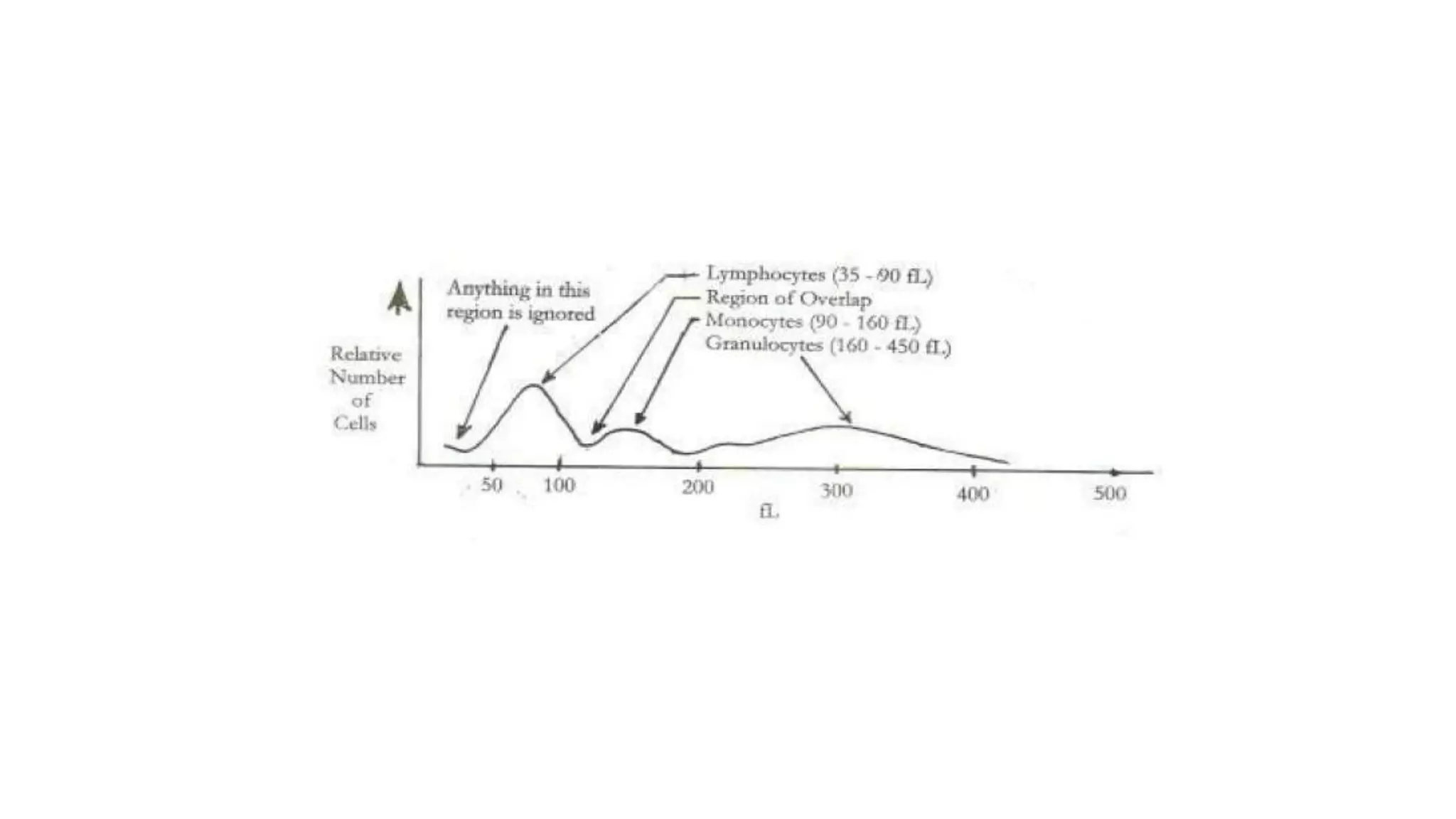
35-90 fl 90-160 fl 160-450 fl
Lymphocytes Mononuclear cells
Monocytes
Eosinophils
Basophils
Granulocytes
Neutrophils
HISTOGRAMS
• These are the graphical representation of numerical data of different
cell population on cell counter
• Y axis represents the number of cells and X axis represents the cell
size
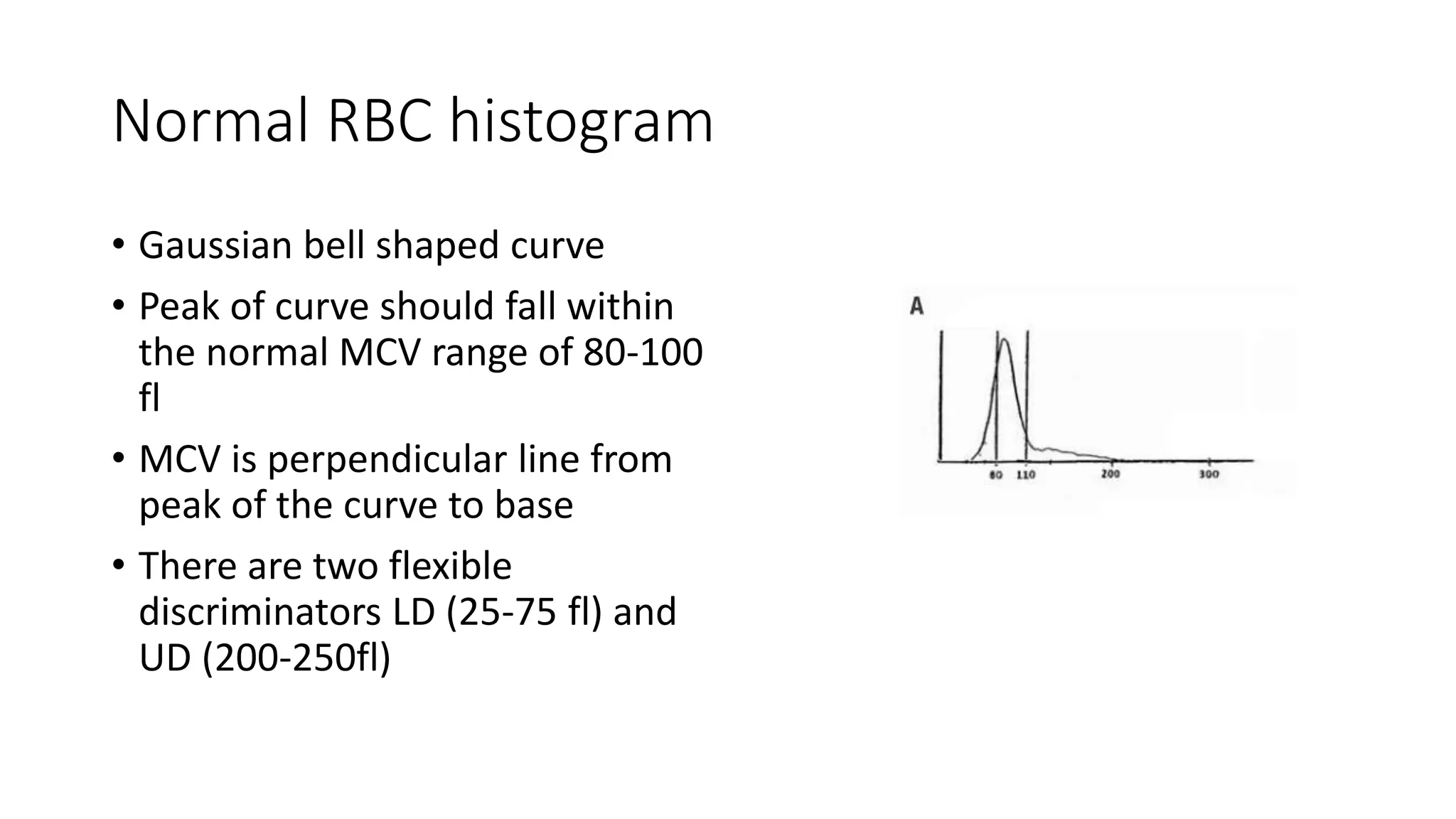
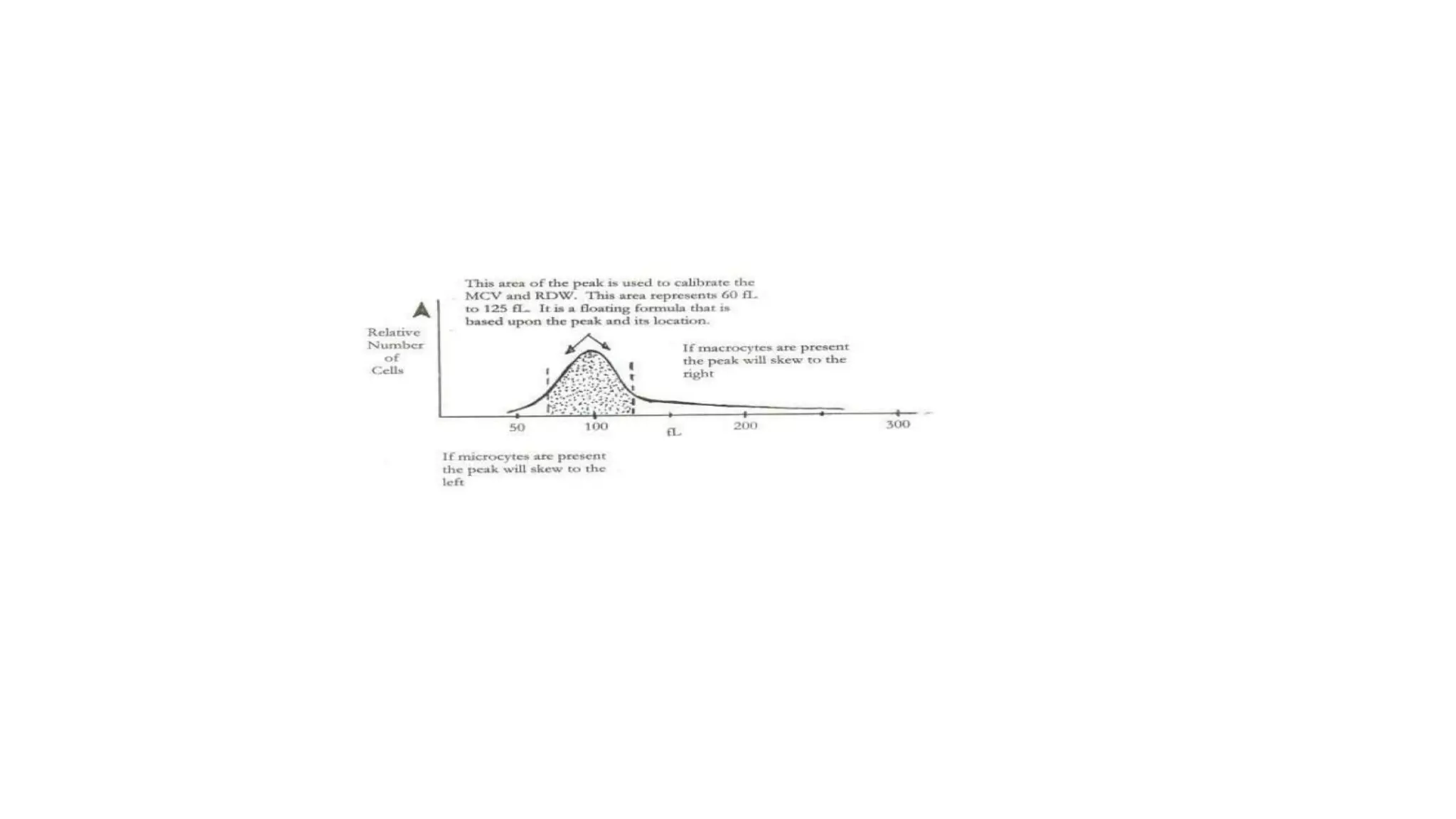
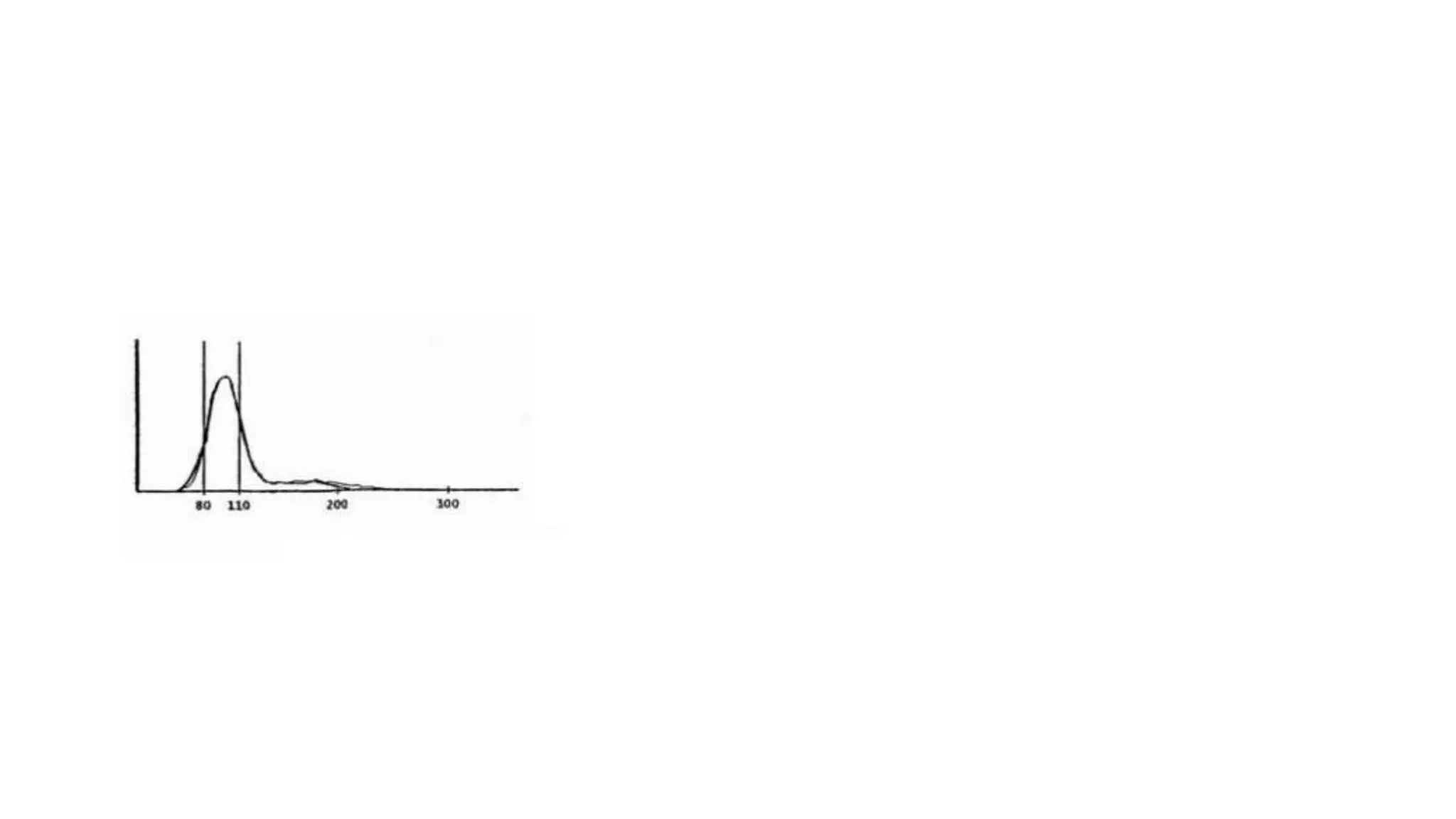
Normal RBC histogram
• Gaussian bell shaped curve
• Peak of curve should fall within
the normal MCV range of 80-100
fl
• MCV is perpendicular line from
peak of the curve to base
• There are two flexible
discriminators LD (25-75 fl) and
UD (200-250fl)
• If RBCs are larger than normal  shift to right
• If RBCs are smaller than normal  shift to left
• Although the size ranges for RBC histograms are between 24 fL and
360 fL, the instrument counts only those cells with volume sizes
between 36 fL and 360 fL as red cells.
• Those cells counted in the 24 fL to 36 fL range are rejected and not
included in the RBC count.
• They are enumerated and displayed in the histogram area between
the 24 fL and 36 fL
RDW
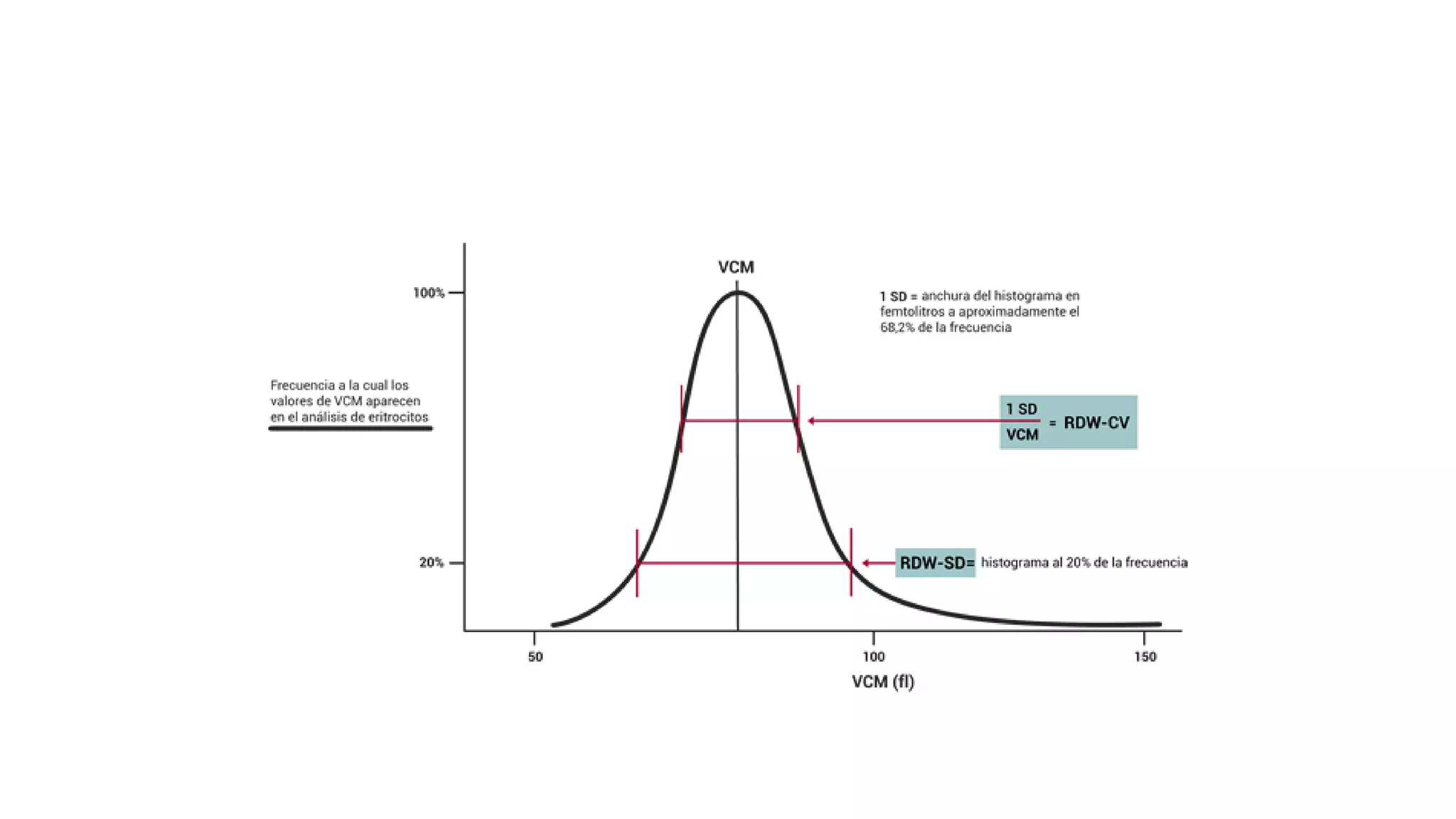
RDW- SD
RDW SD
• The RDW-SD is the arithmetic width of the distribution curve
measured at the 20% frequency curve.
• The normal RDW-SD is 39 to 47 fL
RDW CV
• ratio of 1 standard deviation (SD) to the MCV.
• Since it is a ratio, changes in either the SD or MCV will influence the
results.
• Microcytosis will tend to elevate the RDW-CV simply by decreasing
the denominator (MCV) of the ratio.
• As a result, the RDW is probably a more sensitive parameter in
microcytic than in macrocytic red cell disorders.
• Conversely, macrocytosis, by increasing the denominator, may offset
the change in the SD and reduce the RDW-CV.
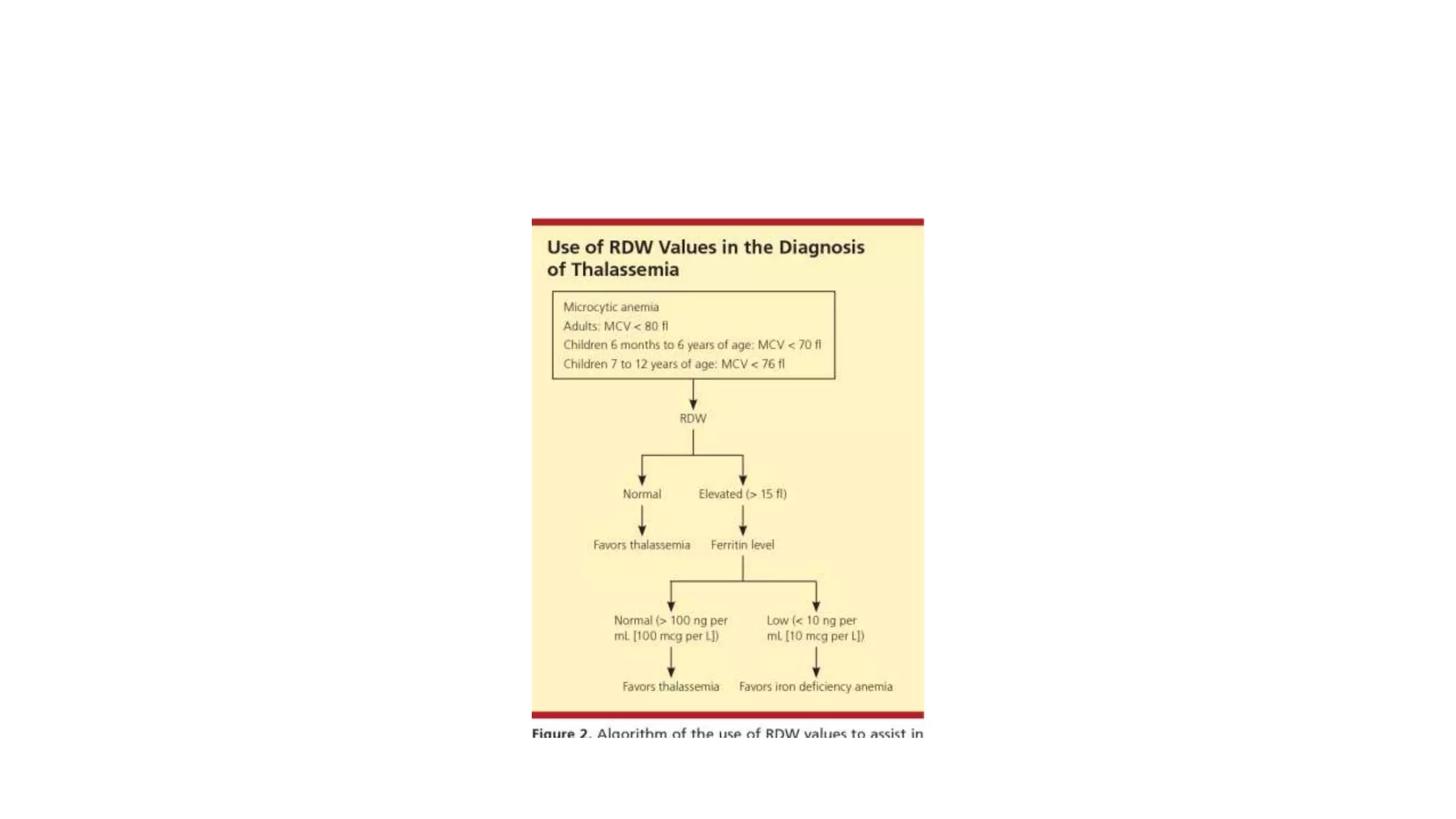
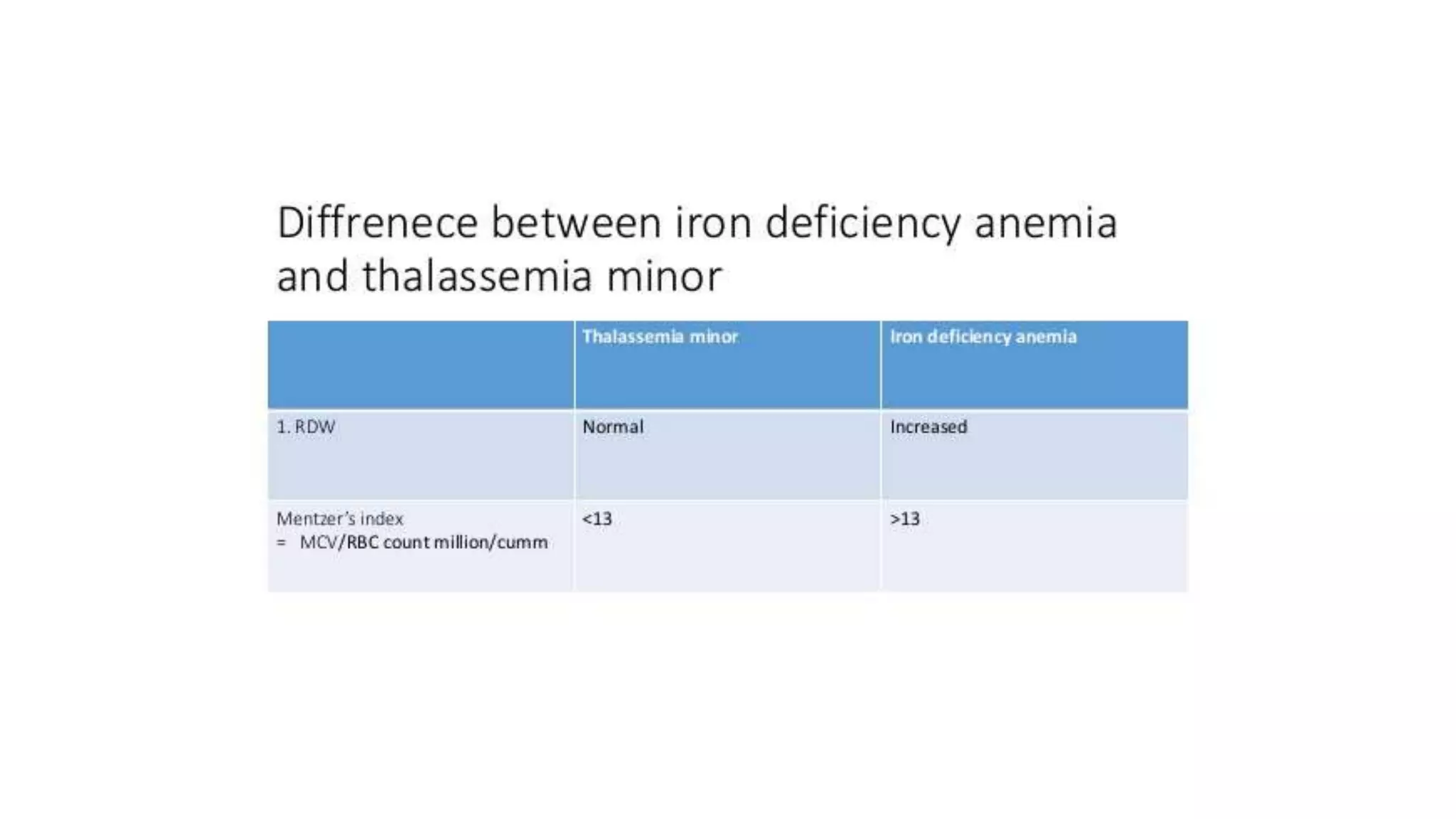
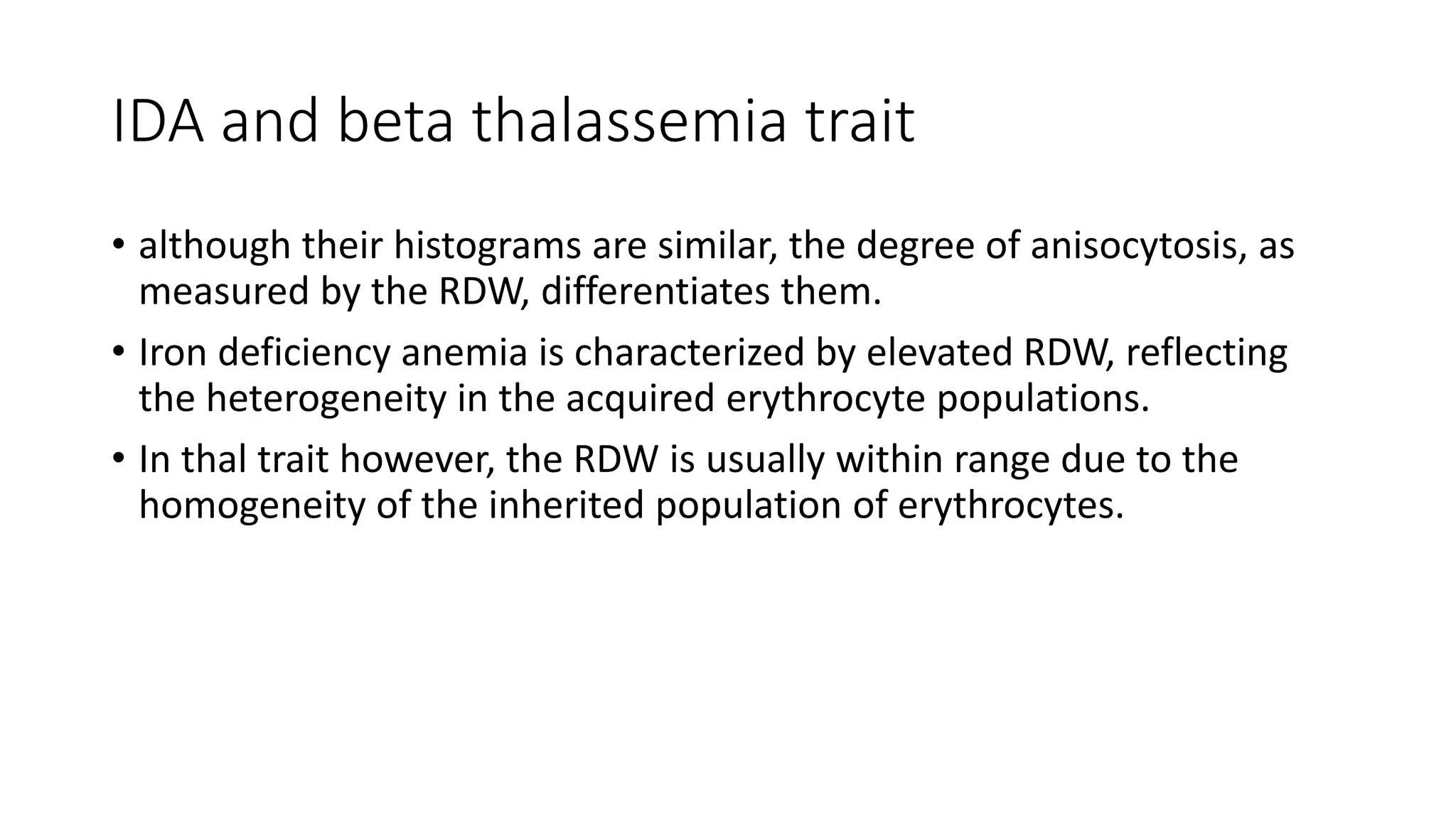
IDA and beta thalassemia trait
• although their histograms are similar, the degree of anisocytosis, as
measured by the RDW, differentiates them.
• Iron deficiency anemia is characterized by elevated RDW, reflecting
the heterogeneity in the acquired erythrocyte populations.
• In thal trait however, the RDW is usually within range due to the
homogeneity of the inherited population of erythrocytes.
RED CELL FLAGS
• RL flag
• When lower discriminator exceeds the preset height by 10 %
• RBC count, HCT, MCV, MCH and MCHC show RL flag.
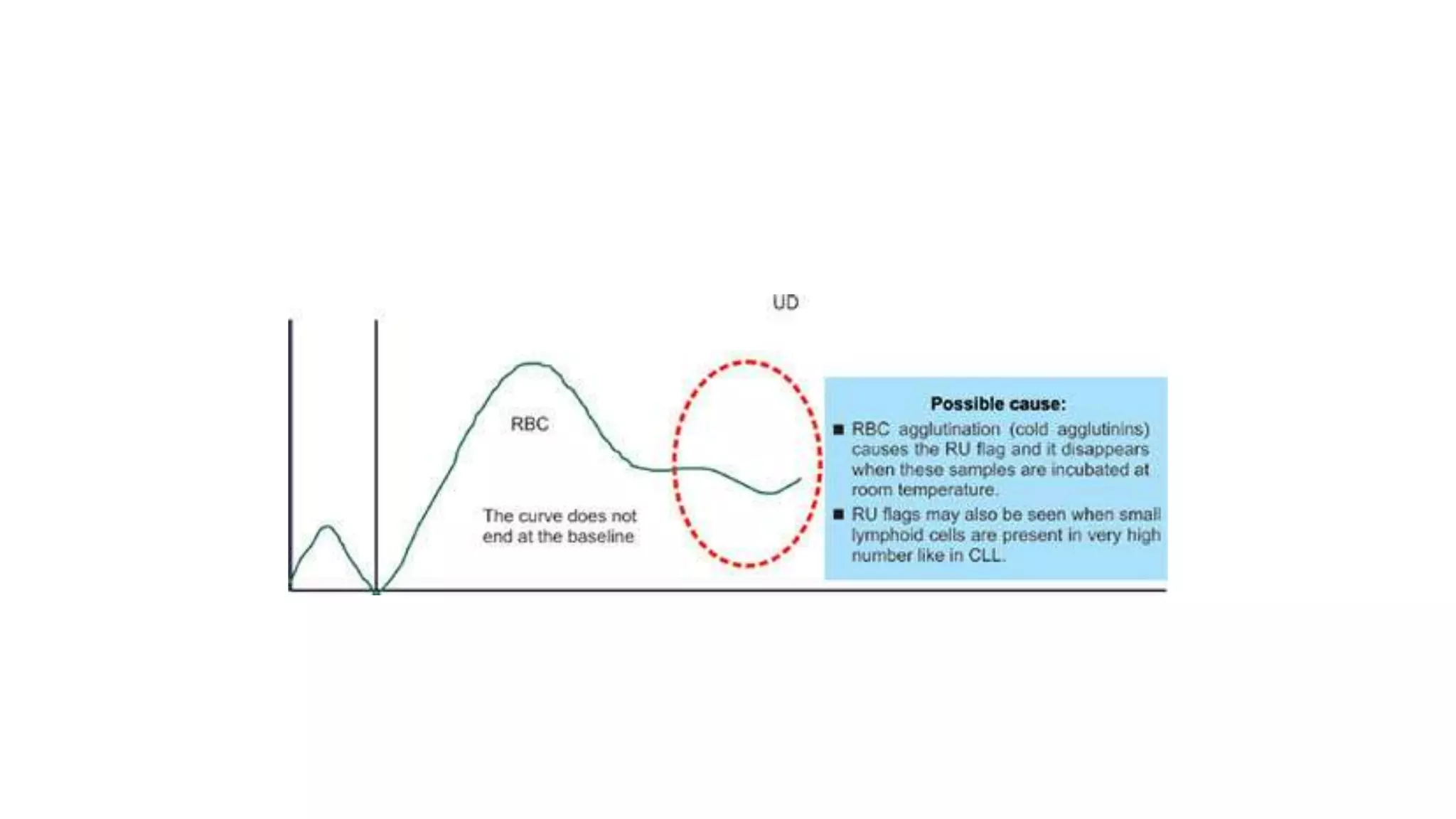
• RU flag
• Flag is seen when UD exceeds the preset height by greater than 5 %.
• Normally, the space below 36 fL remains clear, but in certain conditions the
histogram may begin above the baseline or show a high takeoff on the far
left of the curve which generally indicates the presence of small particles.
• red cell fragments,
• microspherocytes,
• nucleated RBCs,
• nonlyzed RBCs,
• elliptocytosis,
• macrothrombocytes,
• platelet clumps,
• bacteria, parasitic organisms
• interfering substances such as cryoglobulin, cold agglutinin, and macroglobinemia
Erythrocyte histogram Flagging
• Possible causes:
• Cold agglutination
• RBC agglutination
• Rouleux formation
• Incase of cold agglutinates warm the sample up to 37°C (room
temperature)
• (MCHC should drop back to normal value if the problem issolved)
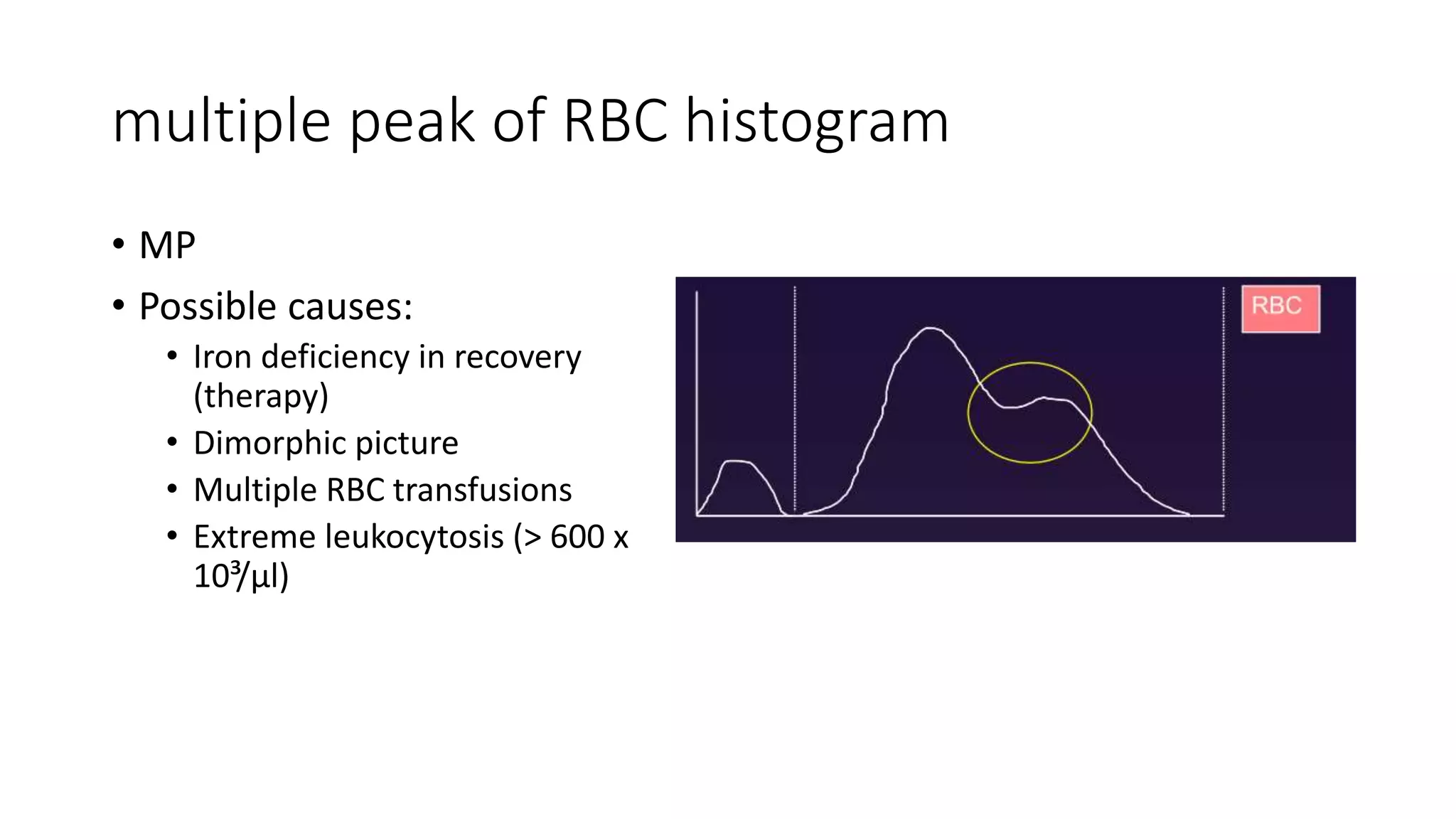
multiple peak of RBC histogram
• MP
• Possible causes:
• Iron deficiency in recovery
(therapy)
• Dimorphic picture
• Multiple RBC transfusions
• Extreme leukocytosis (> 600 x
10³/µl)
Shift to left
• In IDA and beta thalassemia (thal) trait, the
red cell distribution curves are shifted to
the left, and the percentage of microcytosis
is increased
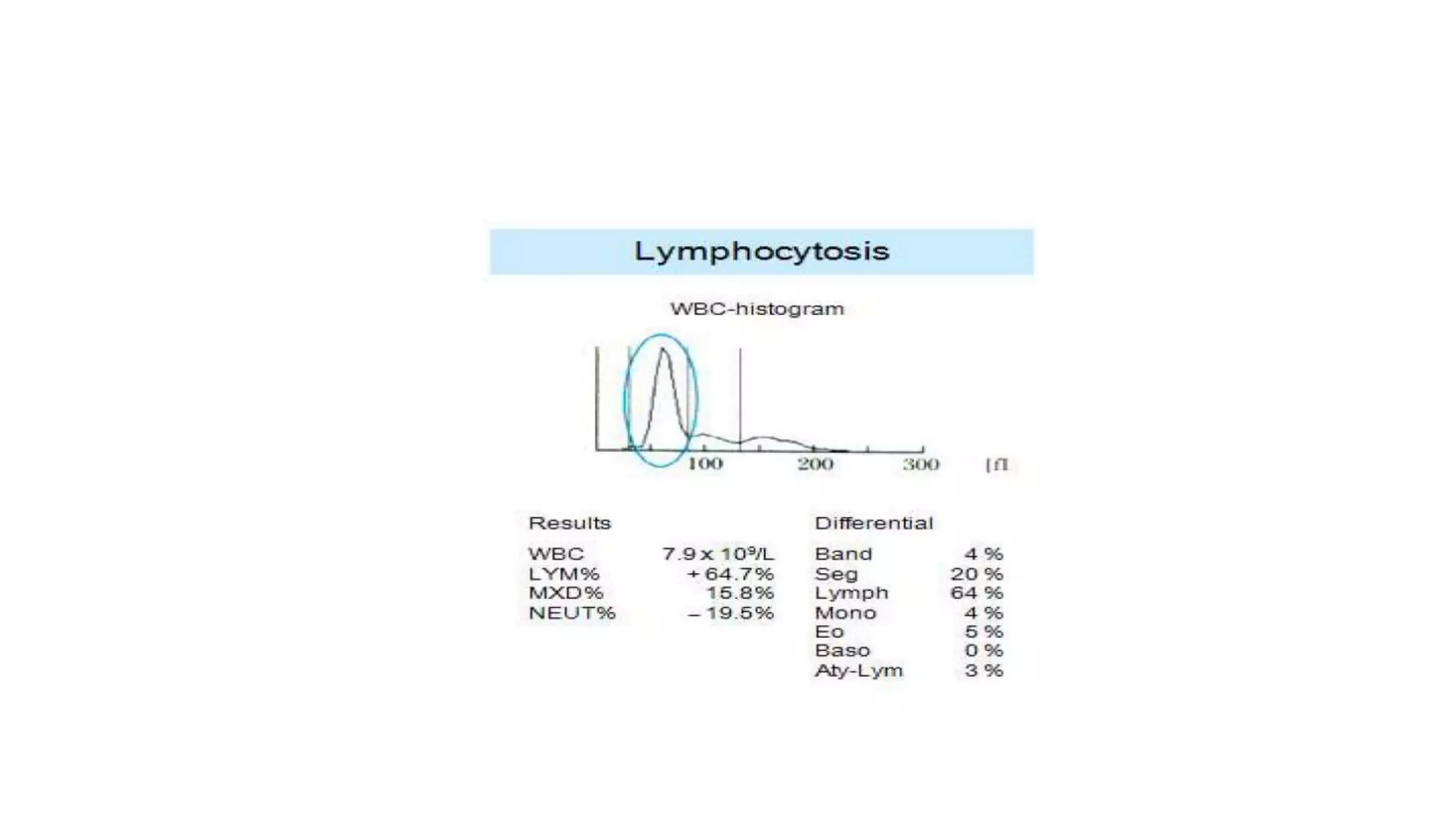
WB histogram
• Lower discriminator in this fluctuates between 30 -60 fl
• Upper discrminator is fixed at 300 fl
• The number of cells between LD and UD is WBC count
In the WBC histogram the dotted curve before the lymphocyte
peak indicates nucleated RBC. Nucleated RBCs (normoblasts) will
be counted as WBC in the haemanalyser
there are two peaks. The second peak in the RBC distribution (with higher
corpuscular volume) curve indicates reticulocytes. Presence of significant
number of nucleated RBCs and reticulocytes are highly suggestive of
haemolytic anaemia.
Detection of malarial parasites
• A spurious increase in the mixed
cell population can be an
indicator of the presence of
malaria parasites in the red blood
cells .
• This occurs because the parasite
infected RBCs cannot be lysed by
the stromatolyser solution and
will enter the WBC counting
block.
• In a study, using Sysmex XS-800i
analyser, a spurious increase in
the mixed cell population was
moderately sensitive and highly
specific in diagnosing malaria
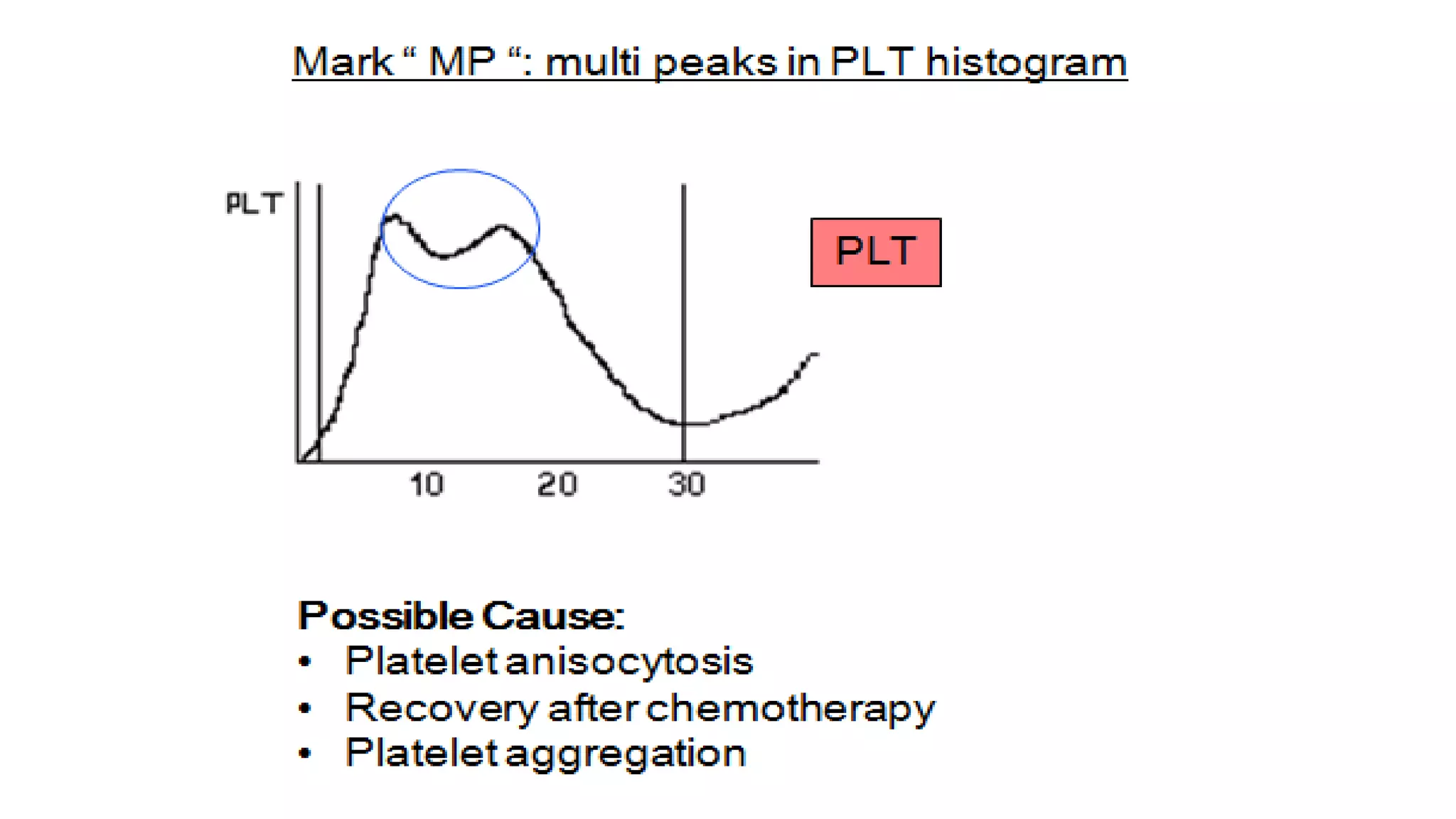
Flag “ WL “, curve does not start at the base
line
Possible causes:
• PLT Clumps
EDTA-Incombatibility
Coagulated Sample
• high osmotic resistance (Erythrocytes not lysed)
• Erythroblasts
• Cold agglutinins
Flag WU
• curve does not end at the base line.
Platelet histogram
• Platelet histogram starts and ends on base line
• Platelet are counted between 2 t 20 fL
• Particles interfering at 2 fL
• EDTA
• Dust
• Particles interfering at 20 fL
• RBC and WBC fragments
• Platelet discriminator
• Lower discriminator (LD)
• 2-6fL
• Upper discriminator (UD)
• 12 – 30 fL
• Fixed discriminator at 12 fL
Mean platelet volume
(MPV )
• calculated measure of platelet volume expressed in femtoliter (fL).
• Normal range of MPV is reported to be between 7.2 and 11.7 fL.
• MPV is inversely related to platelet counts. When marrow depression is the
cause of thrombocytopenia, a rising trend in MPV heralds platelet recovery,
and platelet transfusions may be put on hold
• increased MPV
• hypoproduction of platelets, immature platelets are activated and increase in size by
pseudopod formation
• increased MPV can be used as a marker of production rate and platelet activation.
• High MPV with ongoing thrombocytopenia represents peripheral destruction.
• Low MPV indicates underproduction/bone marrow suppression.
• MPV is calculated by the formula,
• MPV (fL) = ([PCT (%)/platelet count (×10^9/l)]) × 10^5 .
Plateletcrit
• volume of platelets expressed as a percentage of total blood volume
• The normal range for PCT is 0.22%–0.24%.
• PCT parallels the platelet count.
• PCT = platelet count × MPV/10,000.
Platelet larger cell ratio
• indicator of circulating larger platelets (>12 fL), expressed as percentage.
• The normal percentage range is 15%–35%.
• It has also been used to monitor platelet activity.
• Platelet larger cell ratio (P-LCR)
• inversely related to platelet count
• directly related to PDW and MPV.
• decreased in patients with thrombocytosis
• increased in thrombocytopenia.
• Further, studies have shown that P-LCR was significantly decreased in
reactive thrombocytosis compared to neoplastic thrombocytosis. A greater
increase in P-LCR is seen in destructive thrombocytopenia than those with
hypoproliferative thrombocytopenia
Immature platelet fraction
• IPF indicates the percentage of immature platelets containing higher
concentration of RNA released into the circulation
• normal 1.1% and 6.1% in healthy individuals
• An increased IPF is seen as production of platelets increases and low
IPF indicate suppressed thrombopoiesis
Platelet distribution width
• measures variability in platelet size, changes with platelet activation,
and reflects the heterogeneity in platelet morphology.
• indicator of platelet anisocytosis.
• PDW is increased in the presence of platelet anisocytosis.
• The PDW reported varies markedly, with reference intervals ranging
from 8.3% to 56.6%.
• There is a direct relation between MPV and PDW, that is, a high PDW
is associated with a high MPV
PU flag
• This occurs when UD exceeds the preset height by more than 40%
• In case of platelet aggregation, the PLT count is incorrect low.
• Check EDTA incombatibility –e.g. re-collect the sample and use citrate
as anticoagulance to avoid clocking caused by EDTA.
• In case of extreme microerythrocytes or fragmented RBC the PLT
count might be incorrect high. PLT results should be confirmed with
alternative methods
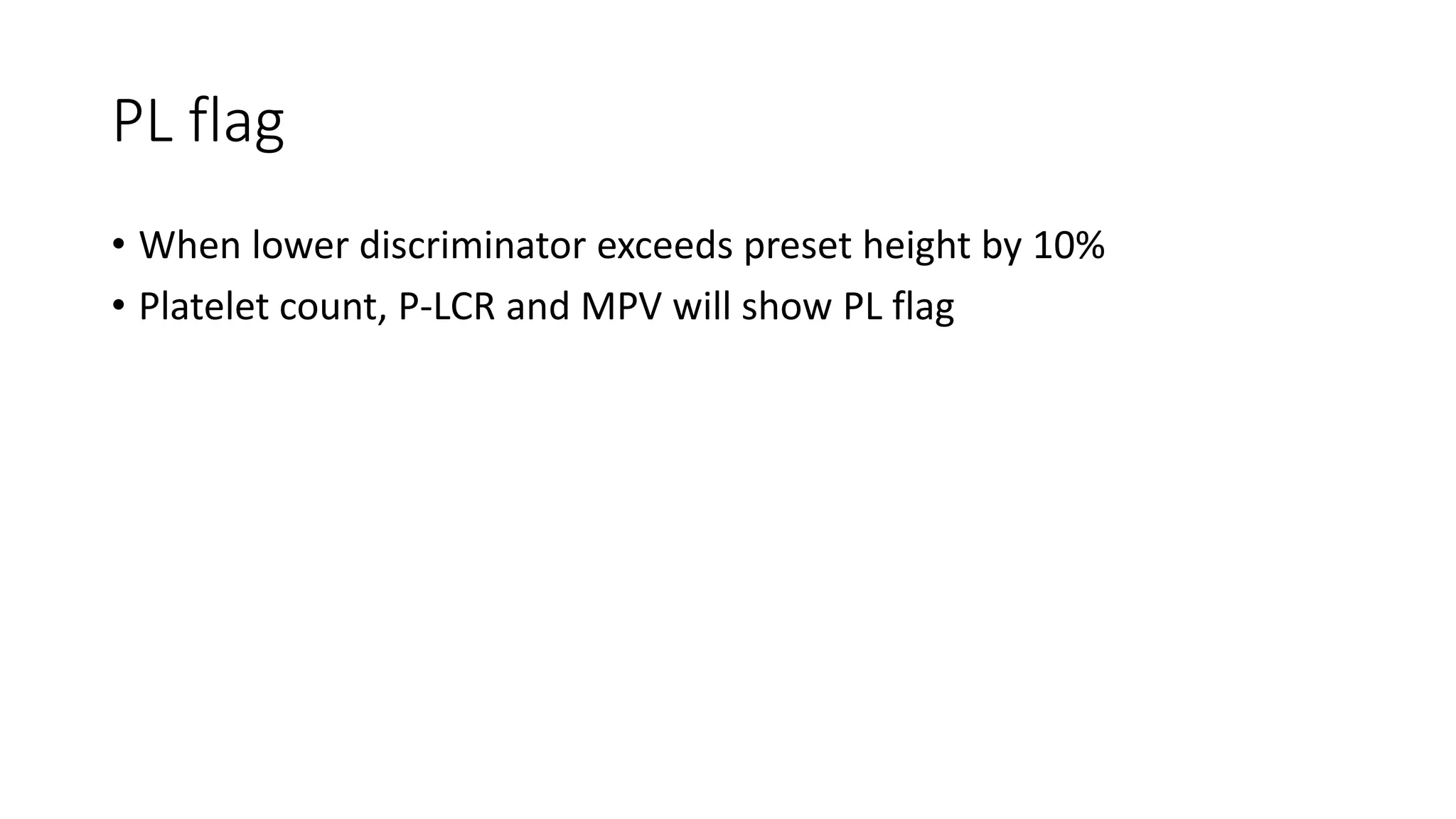
PL flag
• When lower discriminator exceeds preset height by 10%
• Platelet count, P-LCR and MPV will show PL flag
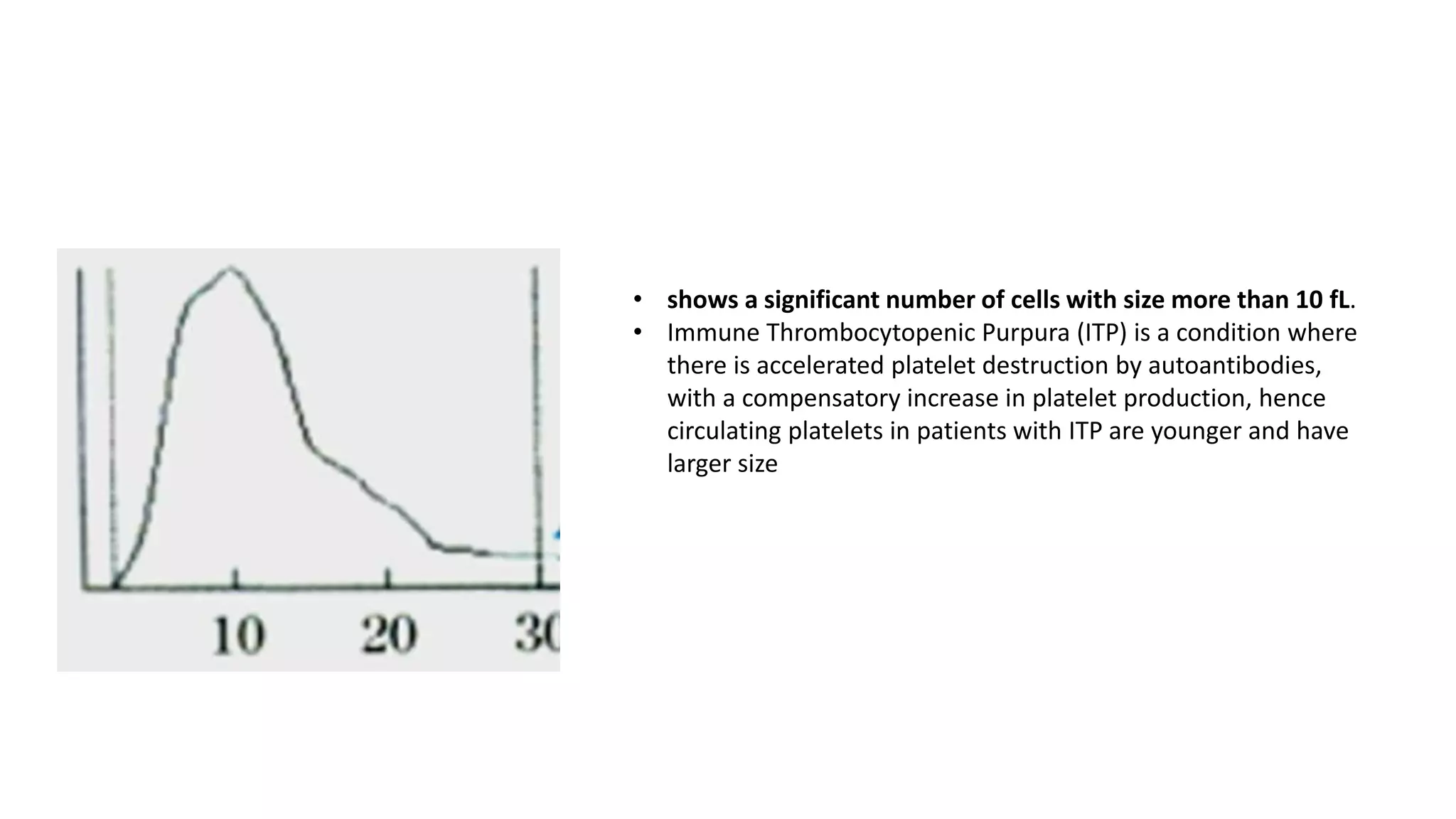
• shows a significant number of cells with size more than 10 fL.
• Immune Thrombocytopenic Purpura (ITP) is a condition where
there is accelerated platelet destruction by autoantibodies,
with a compensatory increase in platelet production, hence
circulating platelets in patients with ITP are younger and have
larger size
Mechanism of thrombocytosis in iron
deficiency anaemia:
• In iron deficiency anaemia
• microcytes with size less than 30 fL will be counted as platelets. Even a small
percentage of RBCs when falsely counted as platelets can significantly affect
the platelet count as RBC count is in millions and platelet count is in lacs
• EPO increases platelet counts by stimulating of thrombopoesis
Interference caused by fragments
cbc Histogram

cbc Histogram

  • 1.
  • 2.
    TWO SIDES OFINSTRUMENTS (THREE PART INSTRUMENTS) RBC SIDE (Dilu- 1:50,000) WBC SIDE (Dilu-1:500) >30 fl size2-30 fl size RBCPLATELET 35-90 fl 90-160 fl 160-450 fl Lymphocytes Mononuclear cells Monocytes Eosinophils Basophils Granulocytes Neutrophils
  • 5.
    HISTOGRAMS • These arethe graphical representation of numerical data of different cell population on cell counter • Y axis represents the number of cells and X axis represents the cell size
  • 6.
    Normal RBC histogram •Gaussian bell shaped curve • Peak of curve should fall within the normal MCV range of 80-100 fl • MCV is perpendicular line from peak of the curve to base • There are two flexible discriminators LD (25-75 fl) and UD (200-250fl)
  • 7.
    • If RBCsare larger than normal  shift to right • If RBCs are smaller than normal  shift to left
  • 9.
    • Although thesize ranges for RBC histograms are between 24 fL and 360 fL, the instrument counts only those cells with volume sizes between 36 fL and 360 fL as red cells. • Those cells counted in the 24 fL to 36 fL range are rejected and not included in the RBC count. • They are enumerated and displayed in the histogram area between the 24 fL and 36 fL
  • 11.
  • 13.
  • 16.
    RDW SD • TheRDW-SD is the arithmetic width of the distribution curve measured at the 20% frequency curve. • The normal RDW-SD is 39 to 47 fL
  • 17.
    RDW CV • ratioof 1 standard deviation (SD) to the MCV. • Since it is a ratio, changes in either the SD or MCV will influence the results. • Microcytosis will tend to elevate the RDW-CV simply by decreasing the denominator (MCV) of the ratio. • As a result, the RDW is probably a more sensitive parameter in microcytic than in macrocytic red cell disorders. • Conversely, macrocytosis, by increasing the denominator, may offset the change in the SD and reduce the RDW-CV.
  • 20.
    IDA and betathalassemia trait • although their histograms are similar, the degree of anisocytosis, as measured by the RDW, differentiates them. • Iron deficiency anemia is characterized by elevated RDW, reflecting the heterogeneity in the acquired erythrocyte populations. • In thal trait however, the RDW is usually within range due to the homogeneity of the inherited population of erythrocytes.
  • 21.
    RED CELL FLAGS •RL flag • When lower discriminator exceeds the preset height by 10 % • RBC count, HCT, MCV, MCH and MCHC show RL flag. • RU flag • Flag is seen when UD exceeds the preset height by greater than 5 %.
  • 22.
    • Normally, thespace below 36 fL remains clear, but in certain conditions the histogram may begin above the baseline or show a high takeoff on the far left of the curve which generally indicates the presence of small particles. • red cell fragments, • microspherocytes, • nucleated RBCs, • nonlyzed RBCs, • elliptocytosis, • macrothrombocytes, • platelet clumps, • bacteria, parasitic organisms • interfering substances such as cryoglobulin, cold agglutinin, and macroglobinemia
  • 24.
    Erythrocyte histogram Flagging •Possible causes: • Cold agglutination • RBC agglutination • Rouleux formation
  • 25.
    • Incase ofcold agglutinates warm the sample up to 37°C (room temperature) • (MCHC should drop back to normal value if the problem issolved)
  • 27.
    multiple peak ofRBC histogram • MP • Possible causes: • Iron deficiency in recovery (therapy) • Dimorphic picture • Multiple RBC transfusions • Extreme leukocytosis (> 600 x 10³/µl)
  • 29.
    Shift to left •In IDA and beta thalassemia (thal) trait, the red cell distribution curves are shifted to the left, and the percentage of microcytosis is increased
  • 31.
  • 34.
    • Lower discriminatorin this fluctuates between 30 -60 fl • Upper discrminator is fixed at 300 fl • The number of cells between LD and UD is WBC count
  • 38.
    In the WBChistogram the dotted curve before the lymphocyte peak indicates nucleated RBC. Nucleated RBCs (normoblasts) will be counted as WBC in the haemanalyser
  • 39.
    there are twopeaks. The second peak in the RBC distribution (with higher corpuscular volume) curve indicates reticulocytes. Presence of significant number of nucleated RBCs and reticulocytes are highly suggestive of haemolytic anaemia.
  • 40.
    Detection of malarialparasites • A spurious increase in the mixed cell population can be an indicator of the presence of malaria parasites in the red blood cells . • This occurs because the parasite infected RBCs cannot be lysed by the stromatolyser solution and will enter the WBC counting block. • In a study, using Sysmex XS-800i analyser, a spurious increase in the mixed cell population was moderately sensitive and highly specific in diagnosing malaria
  • 41.
    Flag “ WL“, curve does not start at the base line Possible causes: • PLT Clumps EDTA-Incombatibility Coagulated Sample • high osmotic resistance (Erythrocytes not lysed) • Erythroblasts • Cold agglutinins
  • 42.
    Flag WU • curvedoes not end at the base line.
  • 43.
  • 44.
    • Platelet histogramstarts and ends on base line
  • 45.
    • Platelet arecounted between 2 t 20 fL • Particles interfering at 2 fL • EDTA • Dust • Particles interfering at 20 fL • RBC and WBC fragments
  • 46.
    • Platelet discriminator •Lower discriminator (LD) • 2-6fL • Upper discriminator (UD) • 12 – 30 fL • Fixed discriminator at 12 fL
  • 49.
    Mean platelet volume (MPV) • calculated measure of platelet volume expressed in femtoliter (fL). • Normal range of MPV is reported to be between 7.2 and 11.7 fL. • MPV is inversely related to platelet counts. When marrow depression is the cause of thrombocytopenia, a rising trend in MPV heralds platelet recovery, and platelet transfusions may be put on hold • increased MPV • hypoproduction of platelets, immature platelets are activated and increase in size by pseudopod formation • increased MPV can be used as a marker of production rate and platelet activation. • High MPV with ongoing thrombocytopenia represents peripheral destruction. • Low MPV indicates underproduction/bone marrow suppression.
  • 50.
    • MPV iscalculated by the formula, • MPV (fL) = ([PCT (%)/platelet count (×10^9/l)]) × 10^5 .
  • 52.
    Plateletcrit • volume ofplatelets expressed as a percentage of total blood volume • The normal range for PCT is 0.22%–0.24%. • PCT parallels the platelet count. • PCT = platelet count × MPV/10,000.
  • 53.
    Platelet larger cellratio • indicator of circulating larger platelets (>12 fL), expressed as percentage. • The normal percentage range is 15%–35%. • It has also been used to monitor platelet activity. • Platelet larger cell ratio (P-LCR) • inversely related to platelet count • directly related to PDW and MPV. • decreased in patients with thrombocytosis • increased in thrombocytopenia. • Further, studies have shown that P-LCR was significantly decreased in reactive thrombocytosis compared to neoplastic thrombocytosis. A greater increase in P-LCR is seen in destructive thrombocytopenia than those with hypoproliferative thrombocytopenia
  • 54.
    Immature platelet fraction •IPF indicates the percentage of immature platelets containing higher concentration of RNA released into the circulation • normal 1.1% and 6.1% in healthy individuals • An increased IPF is seen as production of platelets increases and low IPF indicate suppressed thrombopoiesis
  • 55.
    Platelet distribution width •measures variability in platelet size, changes with platelet activation, and reflects the heterogeneity in platelet morphology. • indicator of platelet anisocytosis. • PDW is increased in the presence of platelet anisocytosis. • The PDW reported varies markedly, with reference intervals ranging from 8.3% to 56.6%. • There is a direct relation between MPV and PDW, that is, a high PDW is associated with a high MPV
  • 57.
    PU flag • Thisoccurs when UD exceeds the preset height by more than 40%
  • 59.
    • In caseof platelet aggregation, the PLT count is incorrect low. • Check EDTA incombatibility –e.g. re-collect the sample and use citrate as anticoagulance to avoid clocking caused by EDTA. • In case of extreme microerythrocytes or fragmented RBC the PLT count might be incorrect high. PLT results should be confirmed with alternative methods
  • 60.
    PL flag • Whenlower discriminator exceeds preset height by 10% • Platelet count, P-LCR and MPV will show PL flag
  • 63.
    • shows asignificant number of cells with size more than 10 fL. • Immune Thrombocytopenic Purpura (ITP) is a condition where there is accelerated platelet destruction by autoantibodies, with a compensatory increase in platelet production, hence circulating platelets in patients with ITP are younger and have larger size
  • 64.
    Mechanism of thrombocytosisin iron deficiency anaemia: • In iron deficiency anaemia • microcytes with size less than 30 fL will be counted as platelets. Even a small percentage of RBCs when falsely counted as platelets can significantly affect the platelet count as RBC count is in millions and platelet count is in lacs • EPO increases platelet counts by stimulating of thrombopoesis
  • 65.