Download as PPSX, PPTX
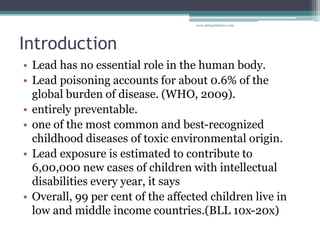
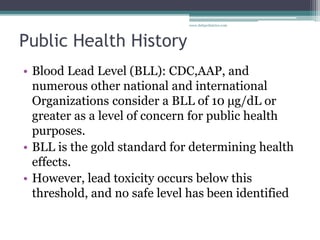
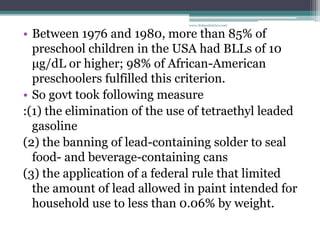
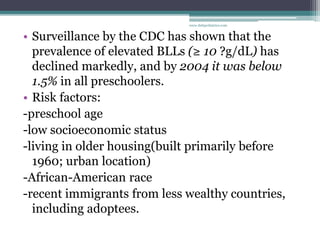
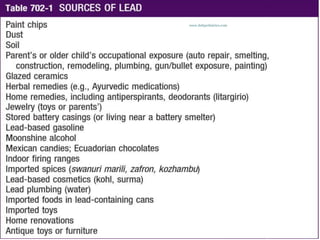
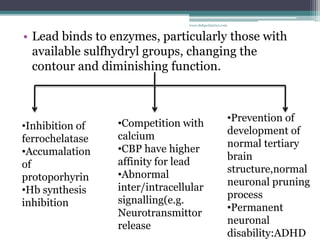
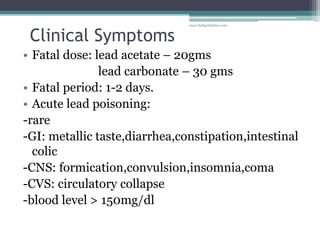
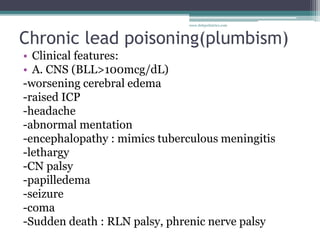
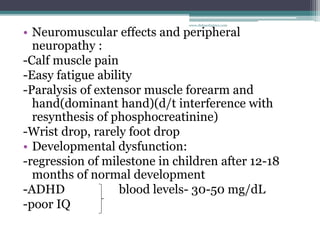
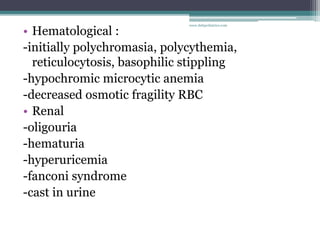
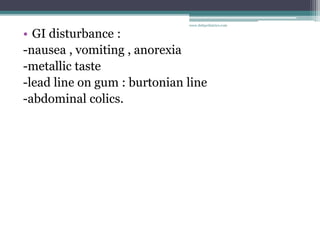
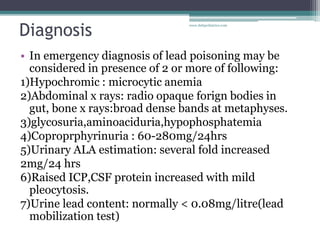
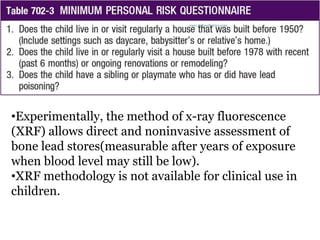
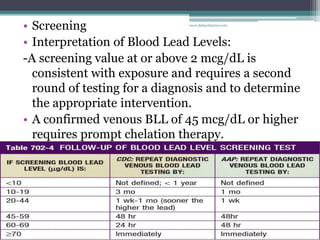
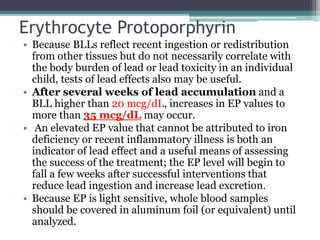
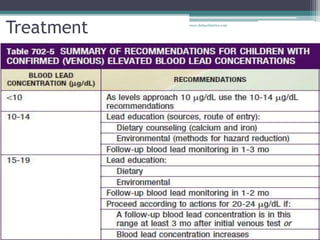
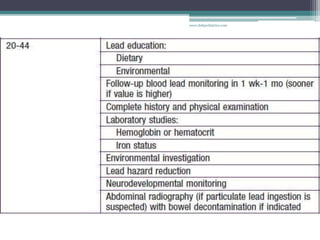
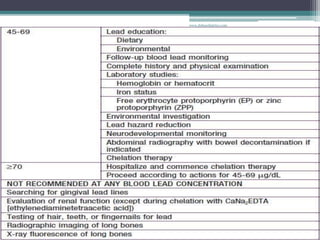
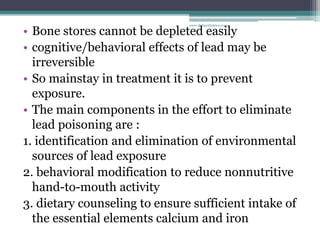
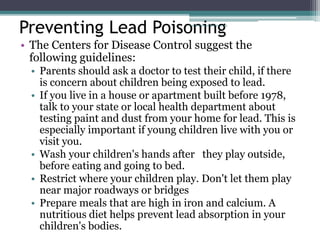
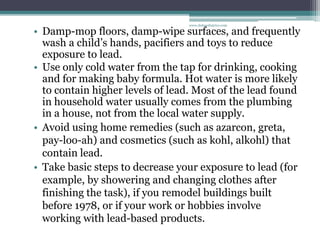
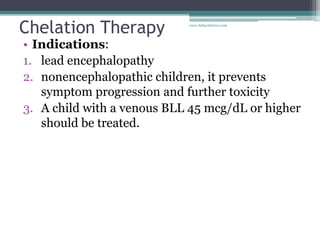
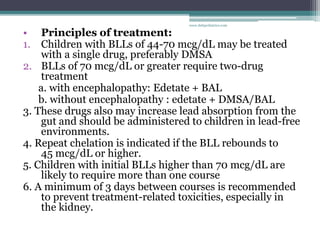
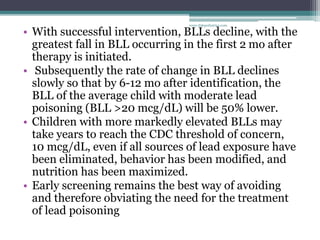
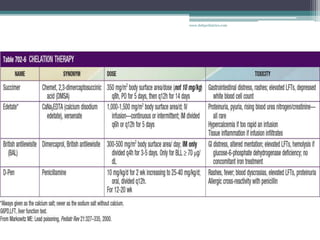
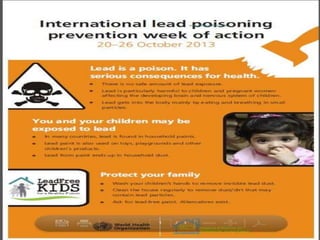

Lead poisoning is entirely preventable but still accounts for 0.6% of the global burden of disease. It is one of the most common childhood diseases of toxic environmental origin, with an estimated 600,000 new cases of intellectual disabilities in children each year due to lead exposure. In the 1970s and 1980s, over 85% of US preschoolers had blood lead levels of 10 μg/dL or higher. Government regulations successfully reduced lead exposure through eliminating leaded gasoline and limiting lead in paint and food cans. Chelation therapy is used to treat children with blood lead levels over 45 μg/dL to prevent further toxicity, though the main approach is preventing exposure through identifying sources, hygiene practices, and nutrition.


