


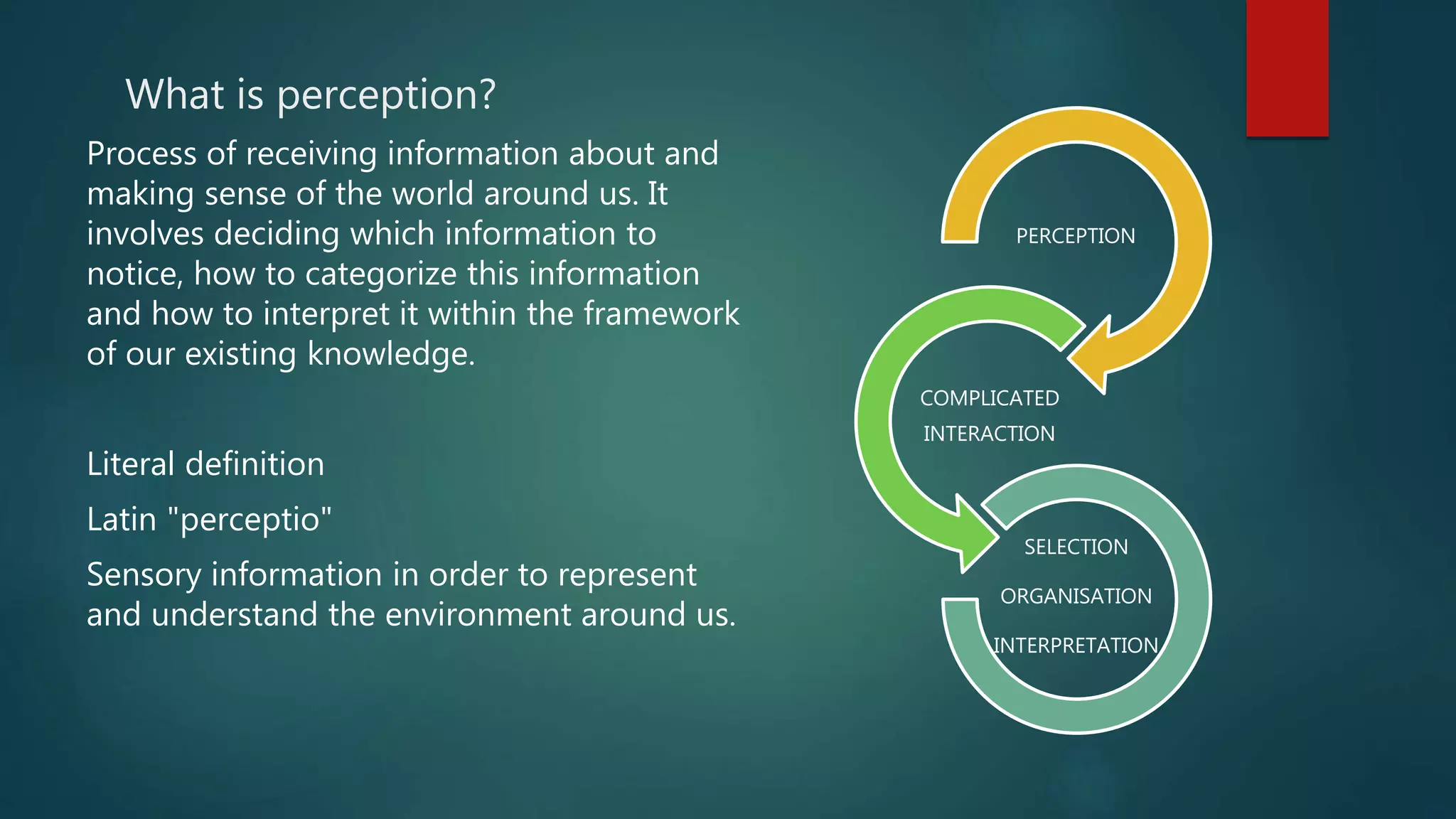










This document discusses perception and the perception process. It defines perception as the process of receiving information about and making sense of the world around us. This involves selecting information to notice, categorizing it, and interpreting it based on existing knowledge. The document outlines the key elements in perception like sensation versus perception. It also discusses the various subprocesses involved in perception like receiving stimuli, selective attention, perceptual organization, interpretation, and response. Finally, it examines factors that influence perception like characteristics of the perceiver, target, and situation as well as barriers to accurate perception.
Presentation by Sakshi Tiwari; MPBO Assignment on Perception.
Topics include definition, sensation vs perception, elements, factors, and barriers affecting perception.
Discussion on key processes: inputs, selection, organization, interpretation, output, and barriers.
Difference between sensation (raw data via senses) and perception (cognition altering data).
Involvement of individuals in receiving, selecting, and organizing stimuli to form an environmental picture.
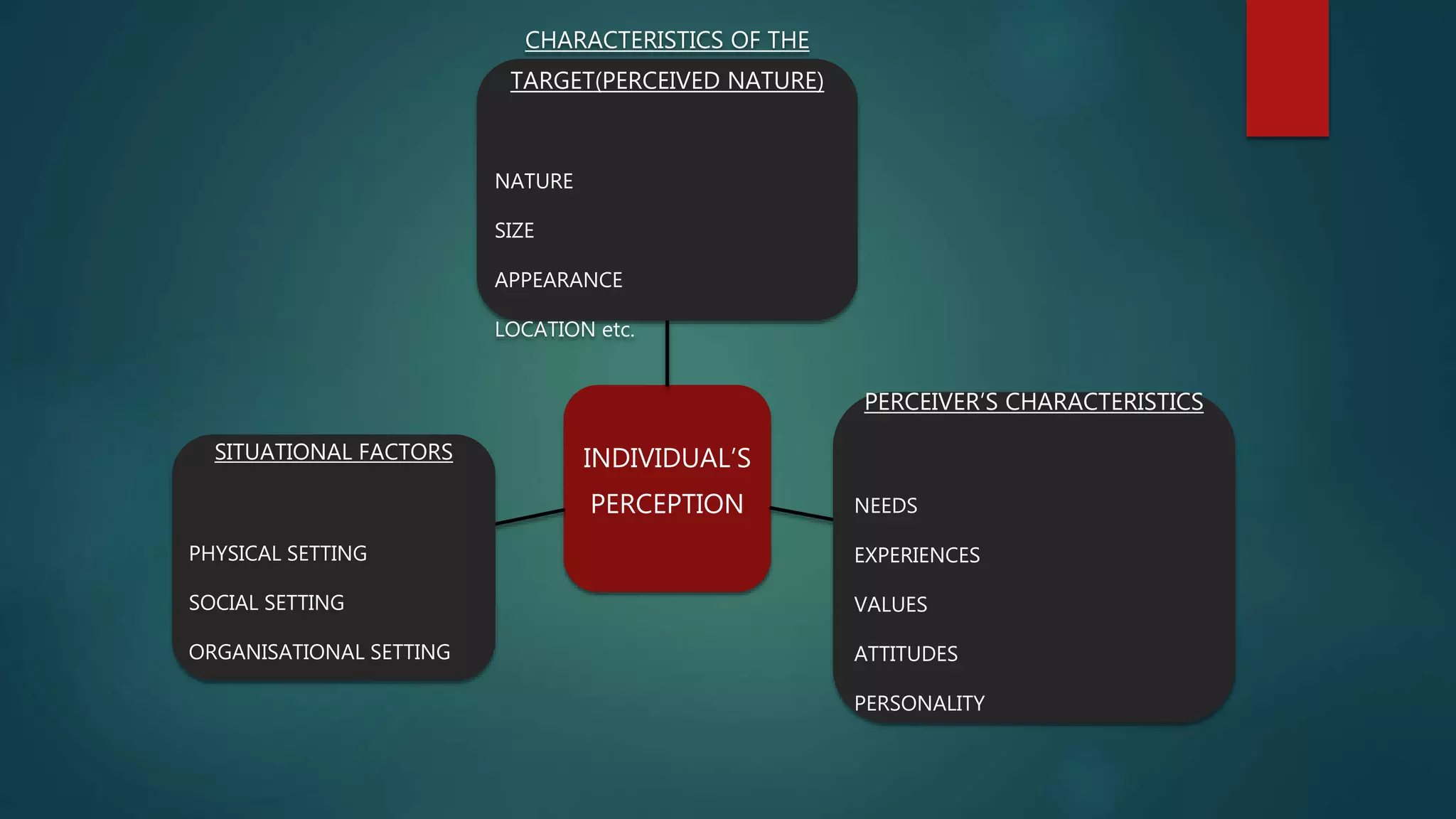
Factors affecting individual perception: characteristics of the target, perceiver’s traits, and situational factors.
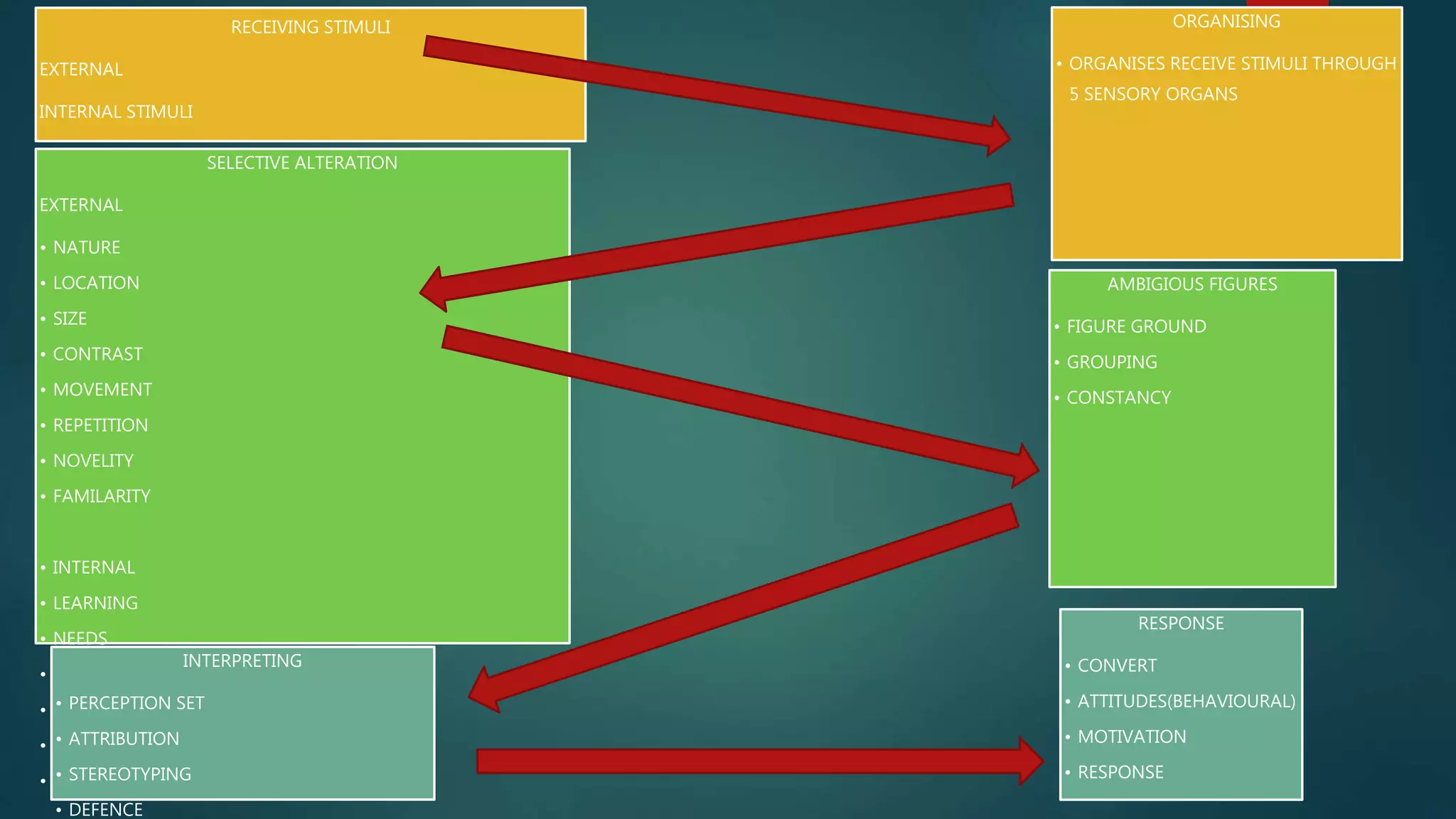
Details of stimuli types (internal and external), selective alteration, interpretation, and responses in perception.
Analysis of subprocesses and various internal/external factors affecting perception.
Components affecting perception: perceiver, target, and situational characteristics (needs, experiences, etc.).
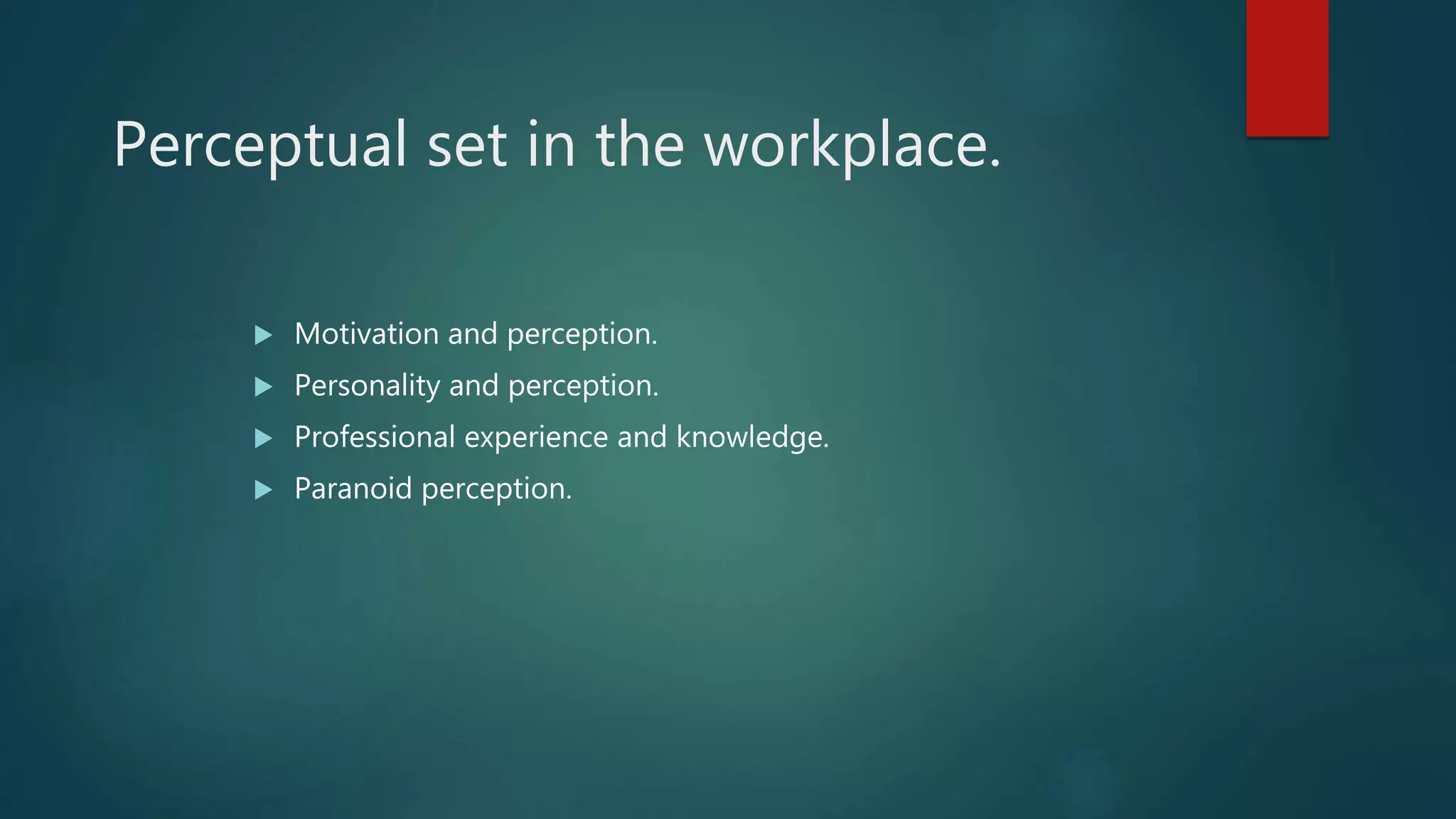
Impact of motivation, personality, and experience on perception in workplace settings.
Role of perception in management, including expectancy and performance relationships.
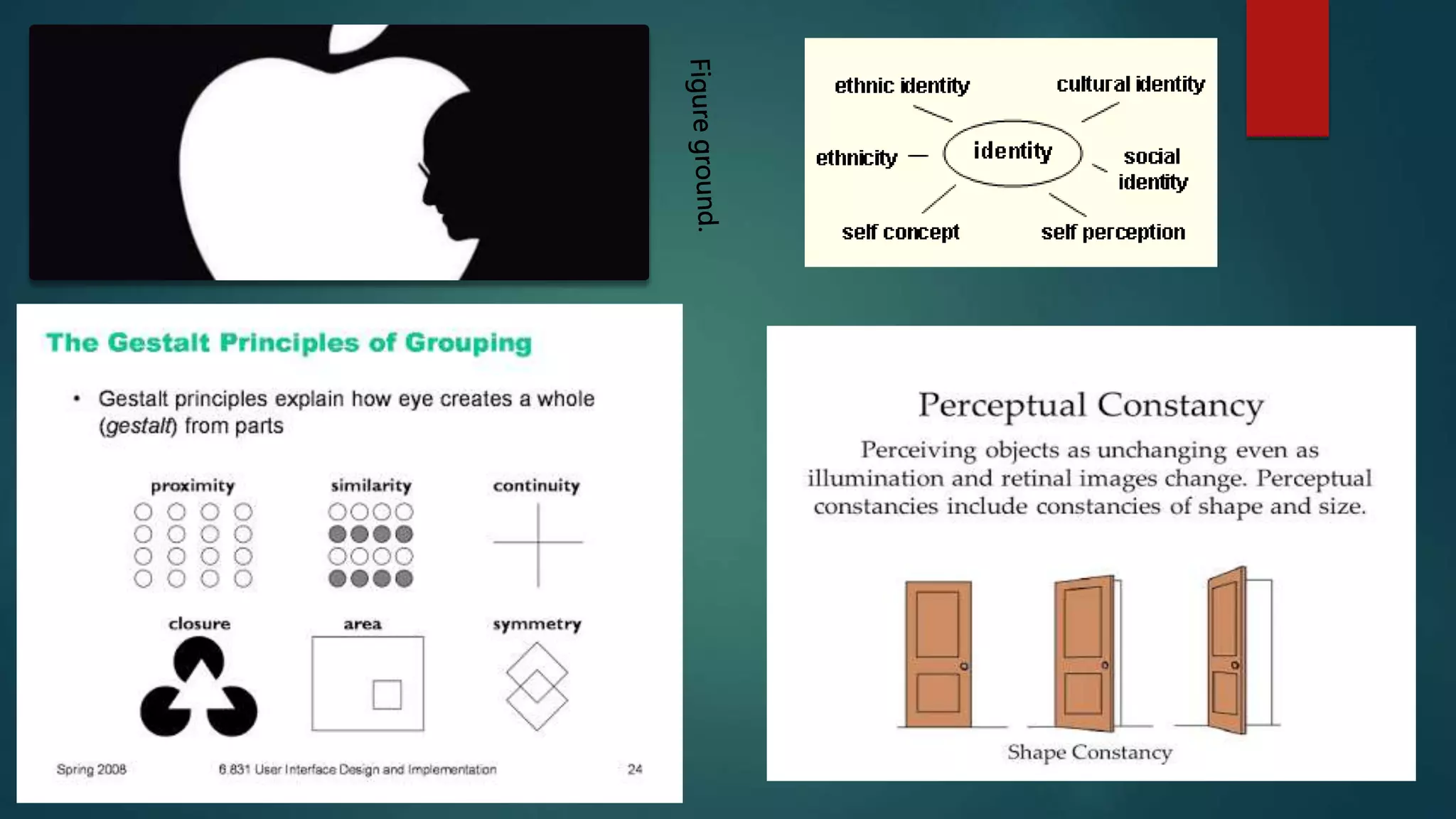
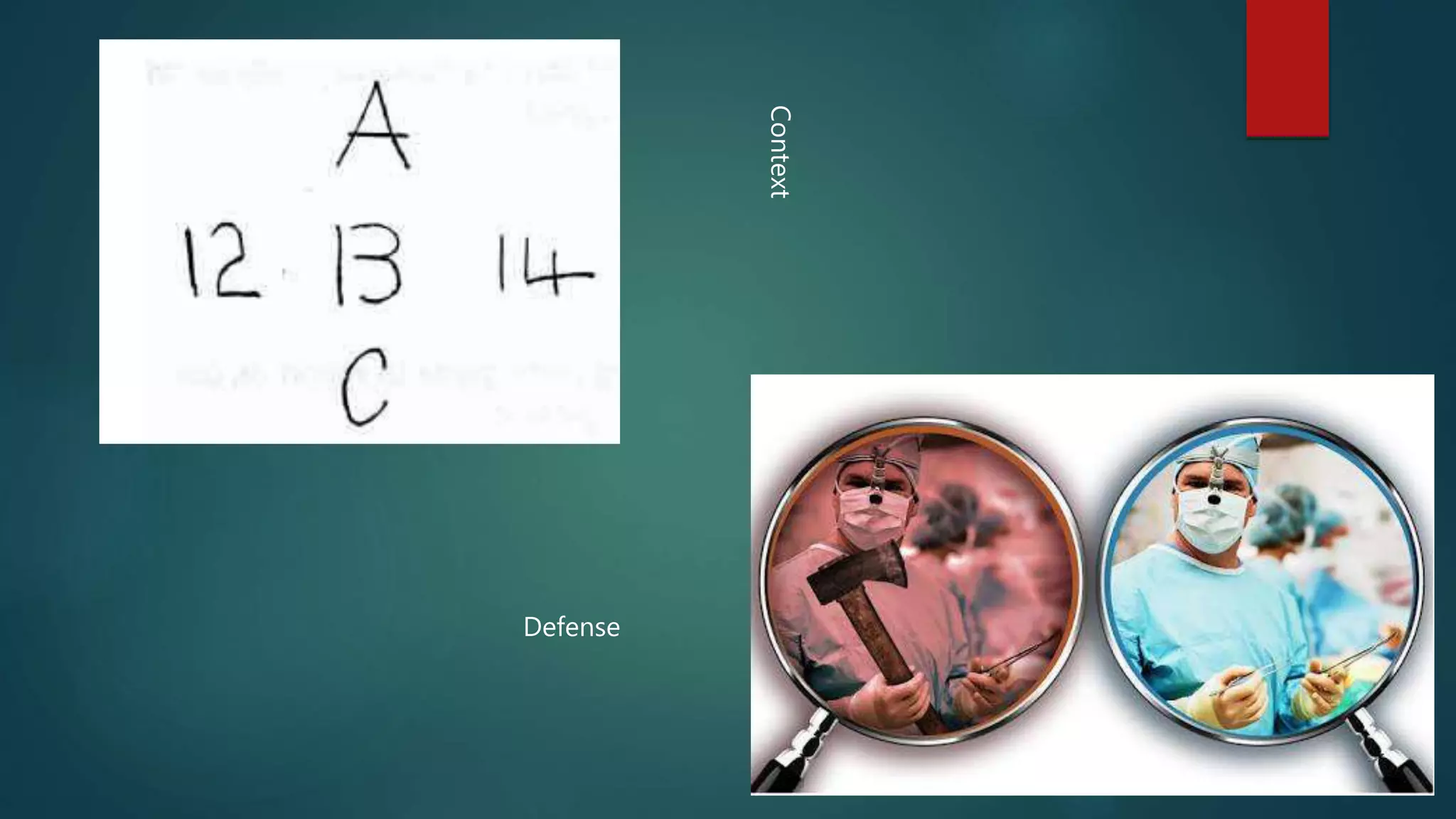
Elements of perceptual organization: figure-ground, grouping, social identity, and context.
Identification of common barriers to accurate perception, including selective perception.
Impact of perception failures including self-fulfilling prophecies and illusions; checking and reacting processes.
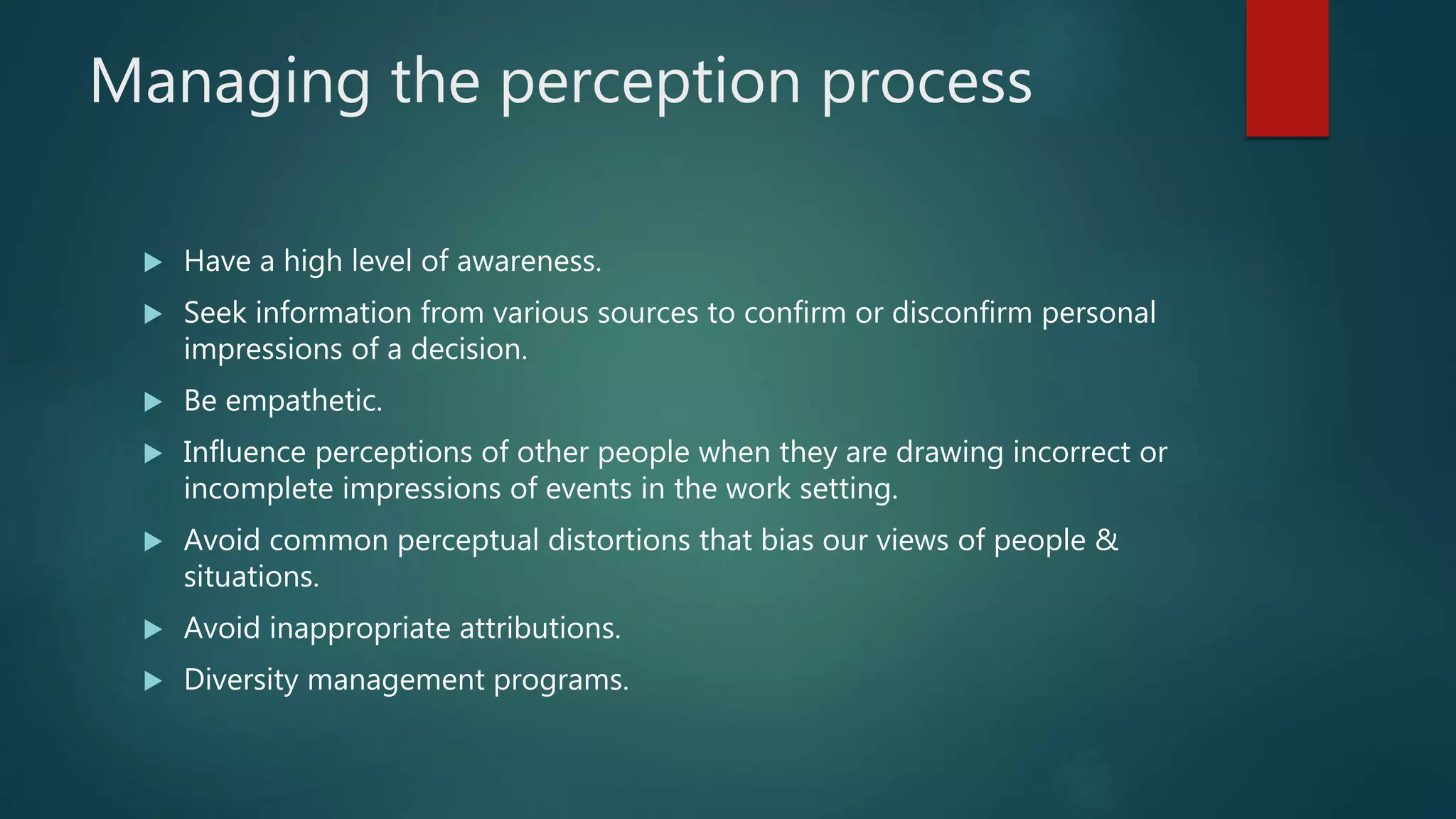
Strategies for managing perception processes: awareness, empathy, avoiding distortions, and diversity management.
Social perception defined as the integration and interpretation of information about others.
Thank you message at the end of the presentation.


