
MARKETING MANAGEMENT
PROJECT ASSIGNMENT
TITLED BRANDING DECISIONS
AMITY BUSINESS
SCHOOL
ALLPPT.com _ Free PowerPoint Templates, Diagrams and Charts
WE WILL LEARN:
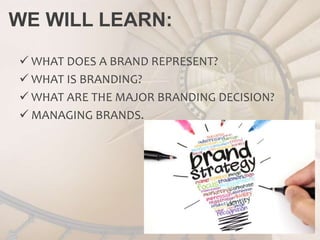
 WHAT DOES A BRAND REPRESENT?
 WHAT IS BRANDING?
 WHAT ARE THE MAJOR BRANDING DECISION?
 MANAGING BRANDS.
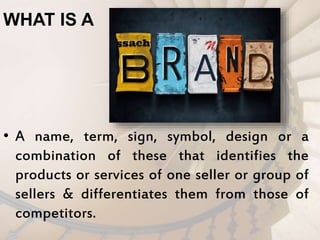
WHAT IS A
• A name, term, sign, symbol, design or a
combination of these that identifies the
products or services of one seller or group of
sellers & differentiates them from those of
competitors.
• A brand represents everything that a product or service means to consumers
• As such, brands are valuable assets to a company.
• Marketing is all about building brands that connect deeply with customers.
• Brand becoming synonymous with generic product category.
e.g. what comes into your mind when you think Google?
Or “coca- cola”?
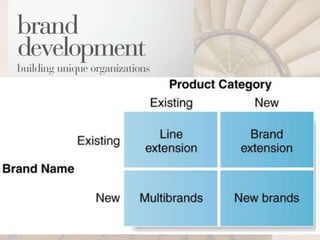
• Branding consists of a set of complex branding decisions.
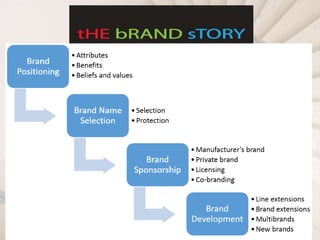
Major brand strategy decisions involve brand positioning,
brand name selection, brand sponsorship and brand
development.
• Brands are powerful assets that must be carefully developed &
managed.
Identity.
Legal protection.
A brand is a company’s promise to deliver a specific set of
features, benefits, services and experiences consistently to
buyers. However, a brand should rather be understood as a
set of perceptions a consumer has about the products of a
particular firm. Therefore, all branding decisions focus on
the consumer.
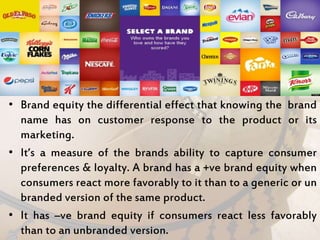
• Brand equity the differential effect that knowing the brand
name has on customer response to the product or its
marketing.
• It’s a measure of the brands ability to capture consumer
preferences & loyalty. A brand has a +ve brand equity when
consumers react more favorably to it than to a generic or un
branded version of the same product.
• It has –ve brand equity if consumers react less favorably
than to an unbranded version.
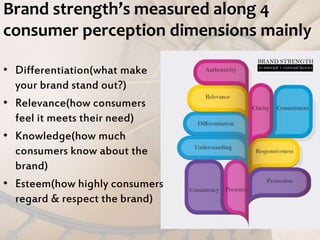
Brand strength’s measured along 4
consumer perception dimensions mainly
• Differentiation(what make
your brand stand out?)
• Relevance(how consumers
feel it meets their need)
• Knowledge(how much
consumers know about the
brand)
• Esteem(how highly consumers
regard & respect the brand)
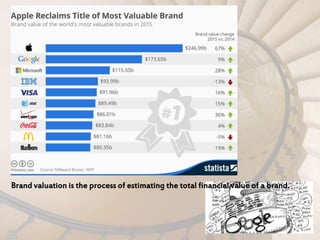
Brand valuation is the process of estimating the total financial value of a brand.
Abrand must be positioned clearly in target
customers’ minds. Brand positioning can be
done at any of three levels:
• on product attributes
• on benefits
• on beliefs and values.
At the lowest level, marketers can position a brand on product attributes. Marketing
for a car brand may focus on attributes such as large engines, fancy colors and
sportive design. However, attributes are generally the least desirable level for
brand positioning. The reason is that competitors can easily copy these attributes,
taking away the uniqueness of the brand. Also, customers are not interested in
attributes as such. Rather, they are interested in what these attributes will do for
them. That leads us to the next level: Benefits.
A brand can be better positioned on basis of a desirable benefit. The car brand could
go beyond the technical product attributes and promote the resulting benefits for
the customer: quick transportation, lifestyle and so further.
Yet, the strongest brands go beyond product attributes and benefits. They are
positioned on beliefs and values. Successful brands engage customers on a deep,
emotional level. Examples include brands such as Mini and Aston Martin. These
brands rely less on products’ tangible attributes, but more on creating passion,
surprise and excitement surrounding the brand. They have become “cool” brands.
• Brand positioning lays the foundation for the three other branding decisions. There
fore, brand positioning should also involve establishing a mission for the brand
and a vision of what the brand should be and do. The brand’s promise must be simp
le and honest.
Brand name selection
• It should suggest something about a product’s benefits and qualities. Think of the
wadding polish “Never Dull”. The brand name indicates the benefit of using this product:
the treated metal will never be dull.
• It should be easy to pronounce, recognize, and remember. iPod and Nike are certainly
better than “Troglodyte Homunculus” – a clothing brand.
• The brand name should be distinctive, so that consumers don’t confuse it with other
brands. Rolex and Bugatti are good examples.
• It should also be extendable. Think of Amazon.com, which began as an online bookseller
but chose a name that would allow expansion into other categories. If Amazon.com had
chosen a different name, such as books.com, it could not have extended its business that
easily.
• The brand name should translate easily into foreign languages. The Ford Pinto line had so
me struggles in Brazil, seeing as it translated into “tiny male genitals”. Or the Mitsubishi
Pajero, which means in Spanish “man who plays with himself and enjoys it a bit too much”.
More famous: Coca-Cola reads in Chinese as “female horse stuffed with wax”.
It should be capable of registration and legal protection. In other words, it must not
infringe on existing brand names.
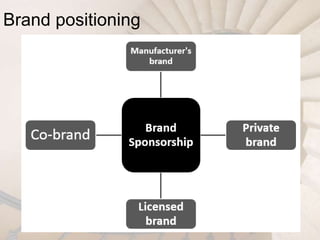
Brand positioning
• References:
 Philip Kotler & Gary Armstrong’s Principles of Marketing:
An Asian perspective
 http://marketing-insider.eu/branding-decisions/
 AMERICAN MARKETING ASSOCIATION; BRANDING

Branding decisions

  • 1.
    MARKETING MANAGEMENT PROJECT ASSIGNMENT TITLEDBRANDING DECISIONS AMITY BUSINESS SCHOOL ALLPPT.com _ Free PowerPoint Templates, Diagrams and Charts
  • 2.
    WE WILL LEARN: WHAT DOES A BRAND REPRESENT?  WHAT IS BRANDING?  WHAT ARE THE MAJOR BRANDING DECISION?  MANAGING BRANDS.
  • 3.
    WHAT IS A •A name, term, sign, symbol, design or a combination of these that identifies the products or services of one seller or group of sellers & differentiates them from those of competitors.
  • 4.
    • A brandrepresents everything that a product or service means to consumers • As such, brands are valuable assets to a company. • Marketing is all about building brands that connect deeply with customers. • Brand becoming synonymous with generic product category. e.g. what comes into your mind when you think Google? Or “coca- cola”?
  • 5.
    • Branding consistsof a set of complex branding decisions. Major brand strategy decisions involve brand positioning, brand name selection, brand sponsorship and brand development. • Brands are powerful assets that must be carefully developed & managed. Identity. Legal protection. A brand is a company’s promise to deliver a specific set of features, benefits, services and experiences consistently to buyers. However, a brand should rather be understood as a set of perceptions a consumer has about the products of a particular firm. Therefore, all branding decisions focus on the consumer.
  • 6.
    • Brand equitythe differential effect that knowing the brand name has on customer response to the product or its marketing. • It’s a measure of the brands ability to capture consumer preferences & loyalty. A brand has a +ve brand equity when consumers react more favorably to it than to a generic or un branded version of the same product. • It has –ve brand equity if consumers react less favorably than to an unbranded version.
  • 7.
    Brand strength’s measuredalong 4 consumer perception dimensions mainly • Differentiation(what make your brand stand out?) • Relevance(how consumers feel it meets their need) • Knowledge(how much consumers know about the brand) • Esteem(how highly consumers regard & respect the brand)
  • 8.
    Brand valuation isthe process of estimating the total financial value of a brand.
  • 10.
    Abrand must bepositioned clearly in target customers’ minds. Brand positioning can be done at any of three levels: • on product attributes • on benefits • on beliefs and values. At the lowest level, marketers can position a brand on product attributes. Marketing for a car brand may focus on attributes such as large engines, fancy colors and sportive design. However, attributes are generally the least desirable level for brand positioning. The reason is that competitors can easily copy these attributes, taking away the uniqueness of the brand. Also, customers are not interested in attributes as such. Rather, they are interested in what these attributes will do for them. That leads us to the next level: Benefits. A brand can be better positioned on basis of a desirable benefit. The car brand could go beyond the technical product attributes and promote the resulting benefits for the customer: quick transportation, lifestyle and so further.
  • 11.
    Yet, the strongestbrands go beyond product attributes and benefits. They are positioned on beliefs and values. Successful brands engage customers on a deep, emotional level. Examples include brands such as Mini and Aston Martin. These brands rely less on products’ tangible attributes, but more on creating passion, surprise and excitement surrounding the brand. They have become “cool” brands. • Brand positioning lays the foundation for the three other branding decisions. There fore, brand positioning should also involve establishing a mission for the brand and a vision of what the brand should be and do. The brand’s promise must be simp le and honest.
  • 12.
    Brand name selection •It should suggest something about a product’s benefits and qualities. Think of the wadding polish “Never Dull”. The brand name indicates the benefit of using this product: the treated metal will never be dull. • It should be easy to pronounce, recognize, and remember. iPod and Nike are certainly better than “Troglodyte Homunculus” – a clothing brand. • The brand name should be distinctive, so that consumers don’t confuse it with other brands. Rolex and Bugatti are good examples. • It should also be extendable. Think of Amazon.com, which began as an online bookseller but chose a name that would allow expansion into other categories. If Amazon.com had chosen a different name, such as books.com, it could not have extended its business that easily. • The brand name should translate easily into foreign languages. The Ford Pinto line had so me struggles in Brazil, seeing as it translated into “tiny male genitals”. Or the Mitsubishi Pajero, which means in Spanish “man who plays with himself and enjoys it a bit too much”. More famous: Coca-Cola reads in Chinese as “female horse stuffed with wax”. It should be capable of registration and legal protection. In other words, it must not infringe on existing brand names.
  • 13.
  • 15.
    • References:  PhilipKotler & Gary Armstrong’s Principles of Marketing: An Asian perspective  http://marketing-insider.eu/branding-decisions/  AMERICAN MARKETING ASSOCIATION; BRANDING