“ATTITUDE, PRECEPTION & APTITUDE”
PRESENTED BY :
Mubashir Hassan
Prekshya Panth
Priyanka Rajbhandari
Neelam Kr. Patel
Neeraj Singhal
 ATITUDE
 ATTITUDE COMPONETNS
 TYPES OF ATTITUDE
 FUNCTIONS OF ATTITUDE
 PERCEPTION
 IMPORTANCE OF PERCEPTION
 FACTORS INFLUENCING PERCEPTION
 APTTITUDE
 ROLE OF APTITUDE
 CHALLENGES OF APTITUDE
 Meaning of Attitude
 Component of Attitude
 Types of Attitude
 Function of Attitude
Attitude define as “a learned to
predisposition to respond in a consistently
favourable and unfavourable manner with
respect to a given object.” that’s attitude to
affect the behaviour at a different level.
 Cognitive component-:
The opinion or belief segment of an attitude.
 Affective Component-:
The emotional or feeling segment of an attitude.
 Behavioral Component:-
An intention to behave in a certain way toward
someone or something
Employees attitude
Job related attitude
Organisation attitude
 Employees attitude: Employee attitude can
be defined in the workplace as how the
employee presents themselves.
 Job related attitude:is a set of evaluations
of one’s job that constitute one’s feelings
toward, beliefs about, and attachment to one’s
job
 Organisation attitude: is a behaviour of an
organisation by which they select a right
employee at the right work to fullfill the needs
of the organisation.
Knowledge Function
Adjustment Function
Value expressive function
Ego defensive function
 Knowledge Function:provides a frame of
reference for understanding and adapting to the
world.
 Adjustment Function: attitude serves as a
means to reach a goal or avoid what undesirable.
 Value expressive function: means of making
concrete expressions about certain values.
 Ego defensive function:attitude used to
protect centrality, or ego.
 Meaning of Perception
 Importance of Perception
 Factors influencing Perception
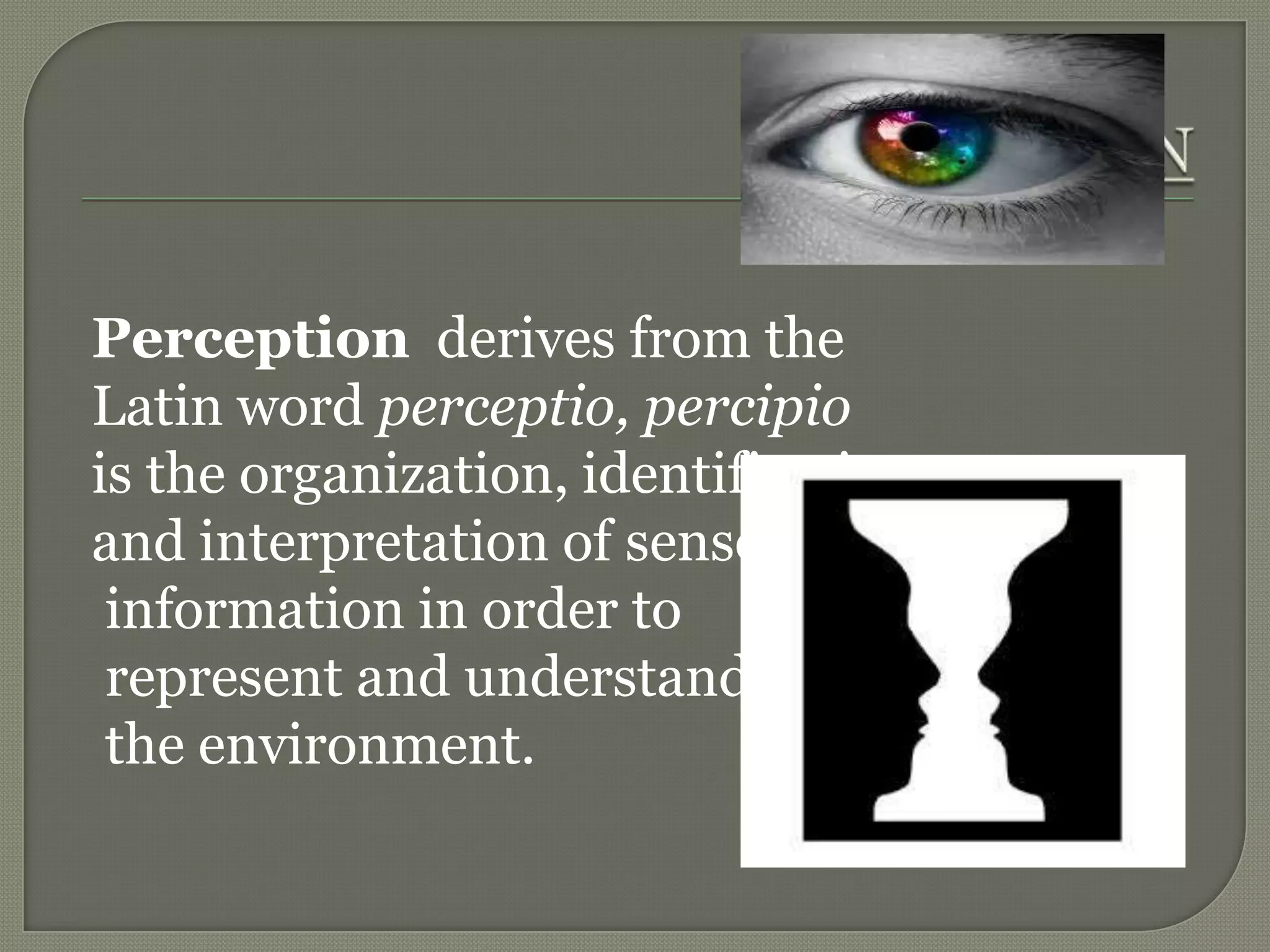
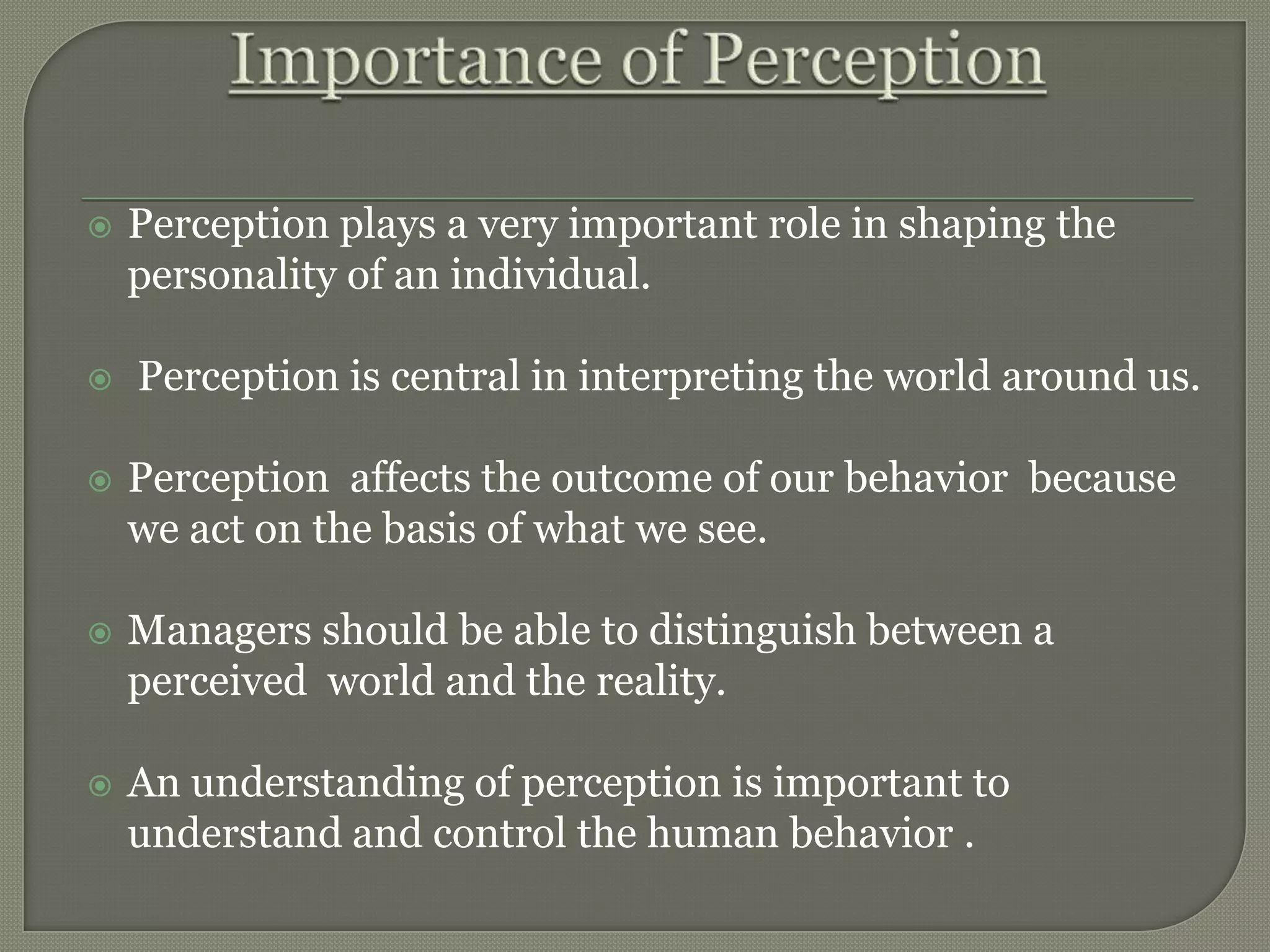
Perception derives from the
Latin word perceptio, percipio
is the organization, identification
and interpretation of sensory
information in order to
represent and understand
the environment.
 Perception plays a very important role in shaping the
personality of an individual.
 Perception is central in interpreting the world around us.
 Perception affects the outcome of our behavior because
we act on the basis of what we see.
 Managers should be able to distinguish between a
perceived world and the reality.
 An understanding of perception is important to
understand and control the human behavior .
 Perception is influenced by a variety of
individuals and situational factors.
 Any perceptual event has three components
i. a perceiver
ii. the person perceived and
iii. the situational
Factor in the
situation
.Time
.Work setting
.Social setting
Factors in the
perceiver
• Attitude
• Motives
• Interests
• Experience
• Expectations
• Self concept
Factors in the target
.Novelty
.motion
.sound
.Size
.Background.
 The definition of aptitude is an
innate, learned or acquired ability. It is
part of the psychometric tests at the
assessment centre (the other part being
personality tests, personal
abilities, attitude and more).
 Educational Purpose-:Aptitude designed for
educational purposes include the American College
Testing Exam--ACT.
 Occupational Purposes-:such tests to determine
which job candidate is most suitable for a position or
promotion. A career aptitude test.
1.Accepting that we are not all equally
talented in every task put before us.
2. Differentiating the ability to learn from
the satisfaction one derives from
performing different tasks.
3.Understanding that in assessing aptitudes
there are no shortcuts.
www.google.com
www.wikipedia.com
“ATTITUDE, PRECEPTION & APTITUDE”

“ATTITUDE, PRECEPTION & APTITUDE”

  • 1.
    “ATTITUDE, PRECEPTION &APTITUDE” PRESENTED BY : Mubashir Hassan Prekshya Panth Priyanka Rajbhandari Neelam Kr. Patel Neeraj Singhal
  • 2.
     ATITUDE  ATTITUDECOMPONETNS  TYPES OF ATTITUDE  FUNCTIONS OF ATTITUDE  PERCEPTION  IMPORTANCE OF PERCEPTION  FACTORS INFLUENCING PERCEPTION  APTTITUDE  ROLE OF APTITUDE  CHALLENGES OF APTITUDE
  • 3.
     Meaning ofAttitude  Component of Attitude  Types of Attitude  Function of Attitude
  • 4.
    Attitude define as“a learned to predisposition to respond in a consistently favourable and unfavourable manner with respect to a given object.” that’s attitude to affect the behaviour at a different level.
  • 5.
     Cognitive component-: Theopinion or belief segment of an attitude.  Affective Component-: The emotional or feeling segment of an attitude.  Behavioral Component:- An intention to behave in a certain way toward someone or something
  • 6.
    Employees attitude Job relatedattitude Organisation attitude
  • 7.
     Employees attitude:Employee attitude can be defined in the workplace as how the employee presents themselves.  Job related attitude:is a set of evaluations of one’s job that constitute one’s feelings toward, beliefs about, and attachment to one’s job  Organisation attitude: is a behaviour of an organisation by which they select a right employee at the right work to fullfill the needs of the organisation.
  • 8.
    Knowledge Function Adjustment Function Valueexpressive function Ego defensive function
  • 9.
     Knowledge Function:providesa frame of reference for understanding and adapting to the world.  Adjustment Function: attitude serves as a means to reach a goal or avoid what undesirable.  Value expressive function: means of making concrete expressions about certain values.  Ego defensive function:attitude used to protect centrality, or ego.
  • 10.
     Meaning ofPerception  Importance of Perception  Factors influencing Perception
  • 11.
    Perception derives fromthe Latin word perceptio, percipio is the organization, identification and interpretation of sensory information in order to represent and understand the environment.
  • 12.
     Perception playsa very important role in shaping the personality of an individual.  Perception is central in interpreting the world around us.  Perception affects the outcome of our behavior because we act on the basis of what we see.  Managers should be able to distinguish between a perceived world and the reality.  An understanding of perception is important to understand and control the human behavior .
  • 13.
     Perception isinfluenced by a variety of individuals and situational factors.  Any perceptual event has three components i. a perceiver ii. the person perceived and iii. the situational
  • 14.
    Factor in the situation .Time .Worksetting .Social setting Factors in the perceiver • Attitude • Motives • Interests • Experience • Expectations • Self concept Factors in the target .Novelty .motion .sound .Size .Background.
  • 15.
     The definitionof aptitude is an innate, learned or acquired ability. It is part of the psychometric tests at the assessment centre (the other part being personality tests, personal abilities, attitude and more).
  • 16.
     Educational Purpose-:Aptitudedesigned for educational purposes include the American College Testing Exam--ACT.  Occupational Purposes-:such tests to determine which job candidate is most suitable for a position or promotion. A career aptitude test.
  • 17.
    1.Accepting that weare not all equally talented in every task put before us. 2. Differentiating the ability to learn from the satisfaction one derives from performing different tasks. 3.Understanding that in assessing aptitudes there are no shortcuts.
  • 18.