Lecture 28
LC and RLC circuits.
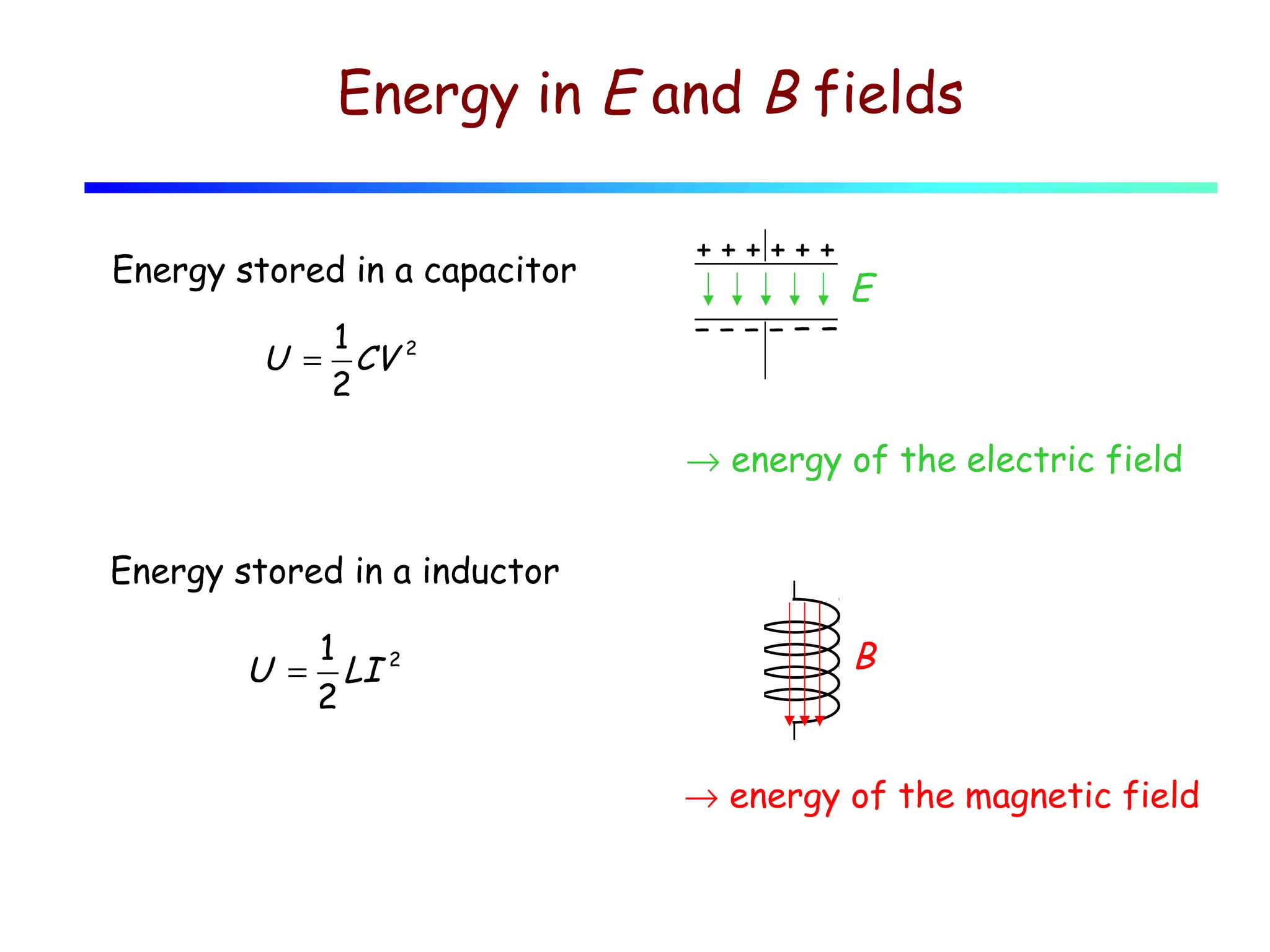
Energy in E and B fields
Energy stored in a capacitor
1
U = CV 2
2

++++++
−−−−−−

E

→ energy of the electric field
Energy stored in a inductor

U =

1
LI 2
2

B
→ energy of the magnetic field
RC circuits (review)
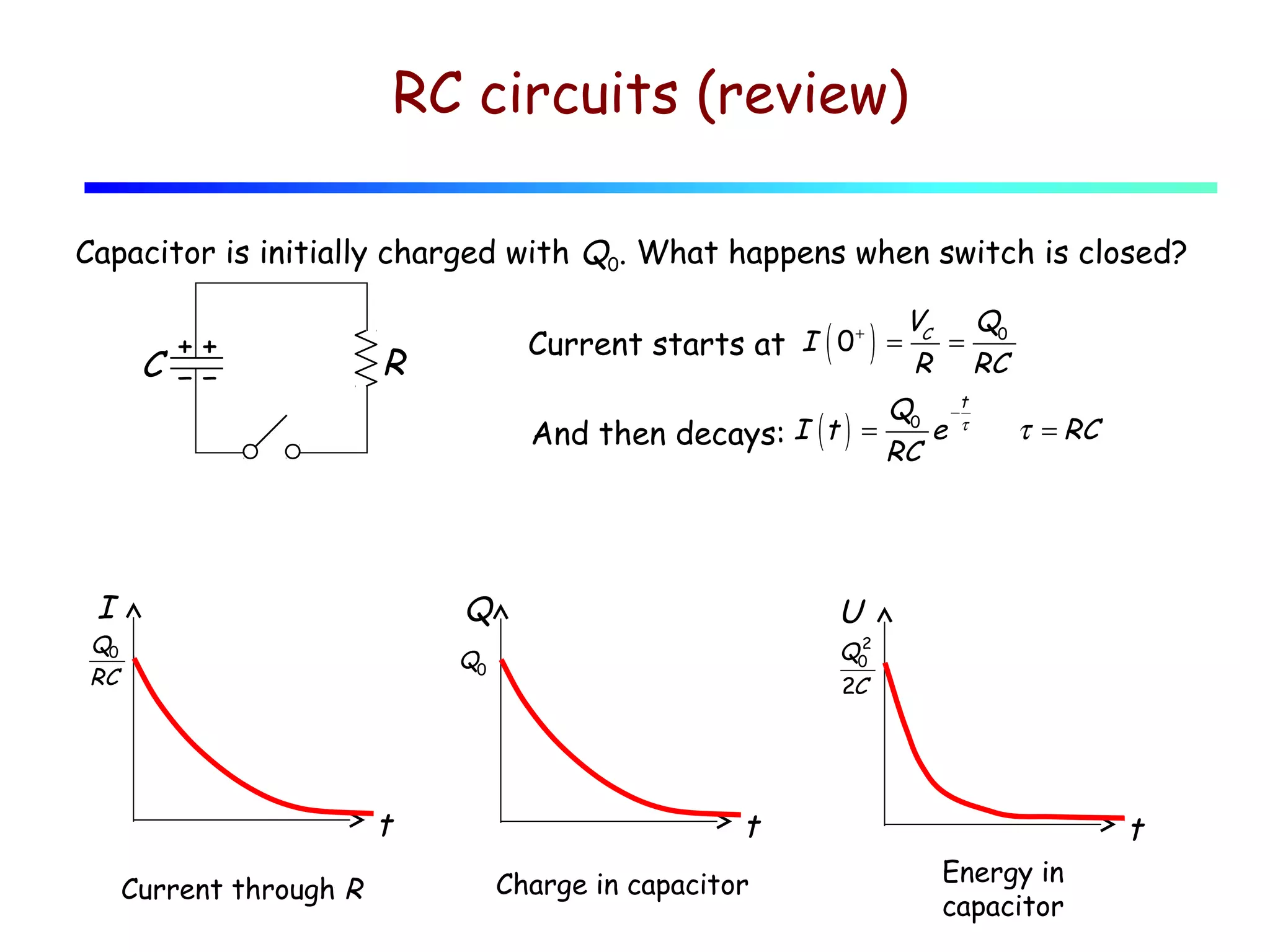
Capacitor is initially charged with Q0. What happens when switch is closed?
++

C −−

( )

+
Current starts at I 0 =

R

Q0 −t
e τ
And then decays: I ( t ) =
RC

I

Q

Q0
RC

t

τ = RC

U

2
Q0
2C

Q0

Current through R

VC
Q
= 0
R RC

t
Charge in capacitor

t
Energy in
capacitor
RL circuit
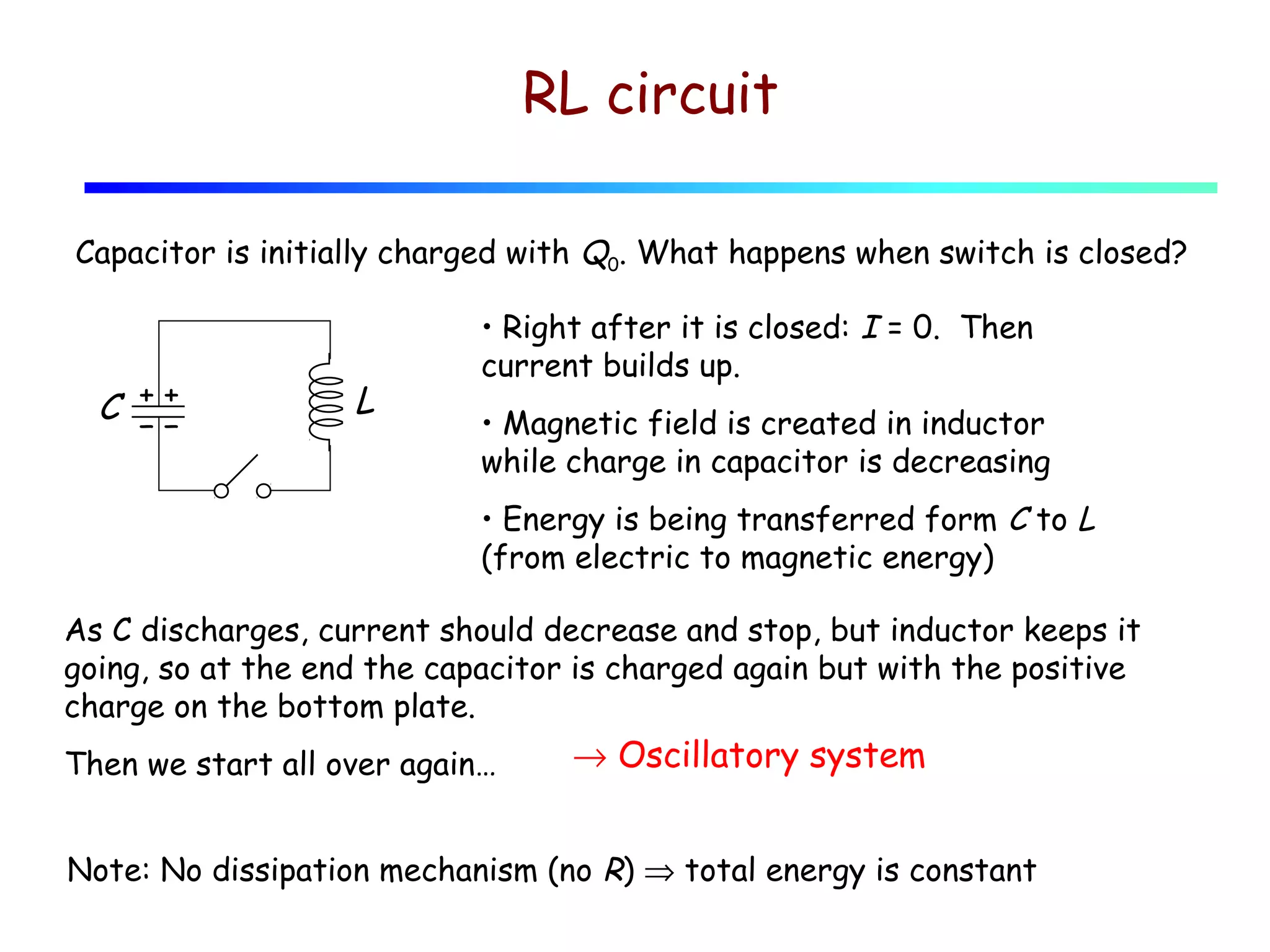
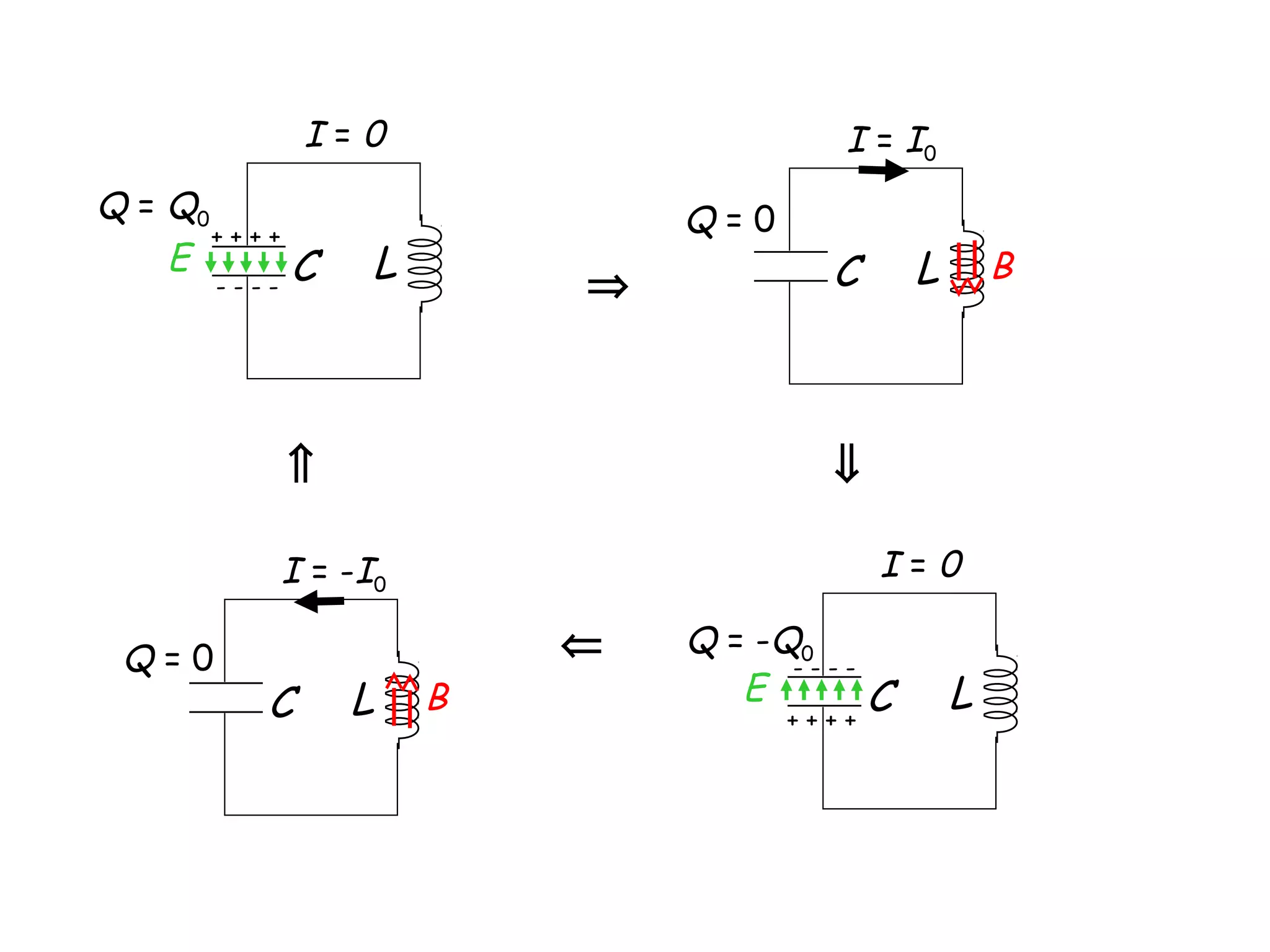
Capacitor is initially charged with Q0. What happens when switch is closed?

++
C −−

L

• Right after it is closed: I = 0. Then
current builds up.
• Magnetic field is created in inductor
while charge in capacitor is decreasing
• Energy is being transferred form C to L
(from electric to magnetic energy)

As C discharges, current should decrease and stop, but inductor keeps it
going, so at the end the capacitor is charged again but with the positive
charge on the bottom plate.
Then we start all over again…

→ Oscillatory system

Note: No dissipation mechanism (no R) ⇒ total energy is constant
I=0
Q = Q0
++++
E
C
----

I = I0
Q=0

L

⇒

I=0

I = -I0

C

B

⇓

⇑

Q=0

L

C

L

⇐
B

Q = -Q0
---E
C
++++

L
ACT: LC circuit
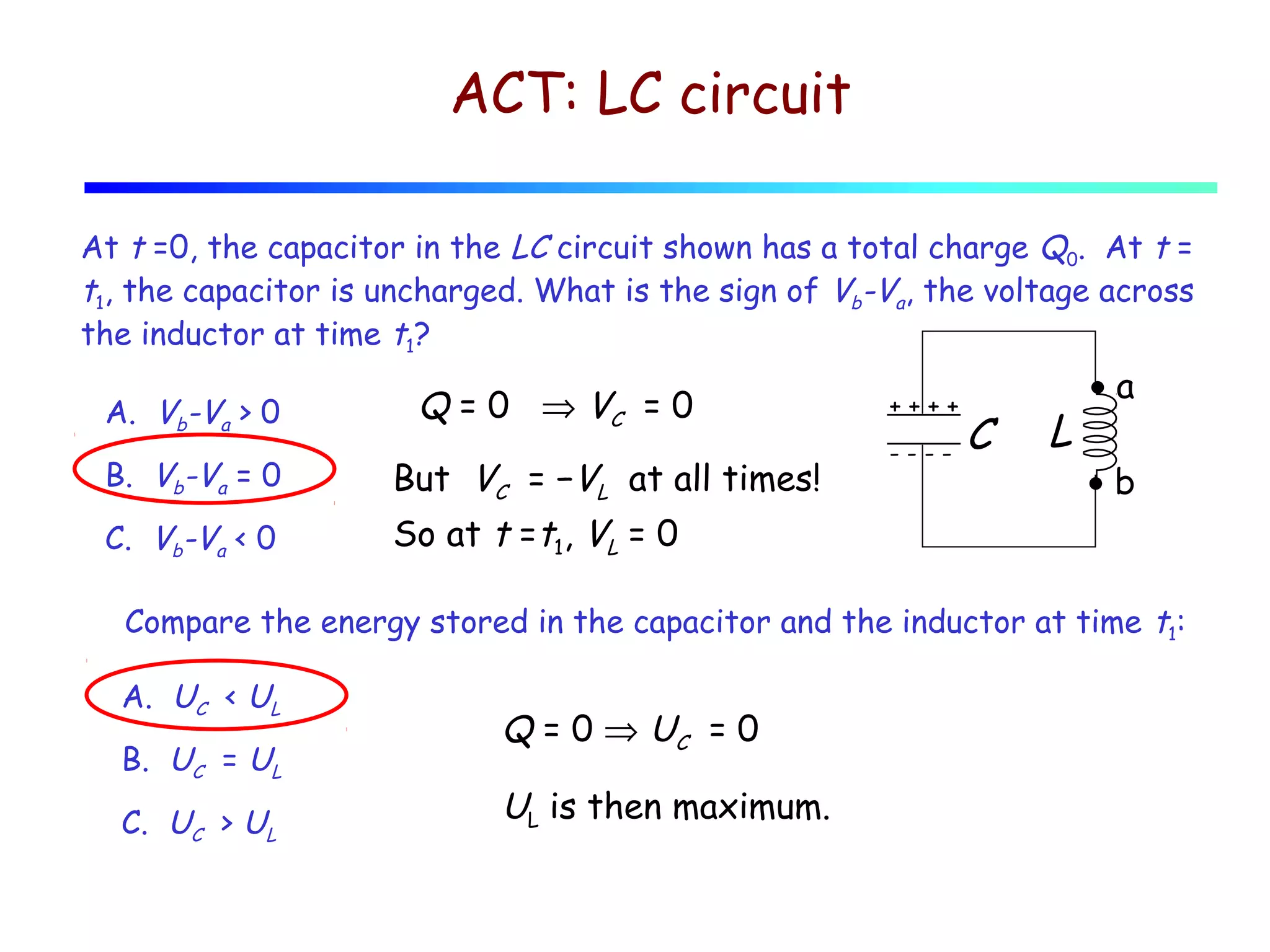
At t =0, the capacitor in the LC circuit shown has a total charge Q0. At t =
t1, the capacitor is uncharged. What is the sign of Vb-Va, the voltage across
the inductor at time t1?
A. Vb-Va > 0
B. Vb-Va = 0
C. Vb-Va < 0

Q = 0 ⇒ VC = 0
But VC = −VL at all times!

++++
----

C

L

•a
•b

So at t =t1, VL = 0

Compare the energy stored in the capacitor and the inductor at time t1:
A. UC < UL
B. UC = UL
C. UC > UL

Q = 0 ⇒ UC = 0
UL is then maximum.
LC circuit: math
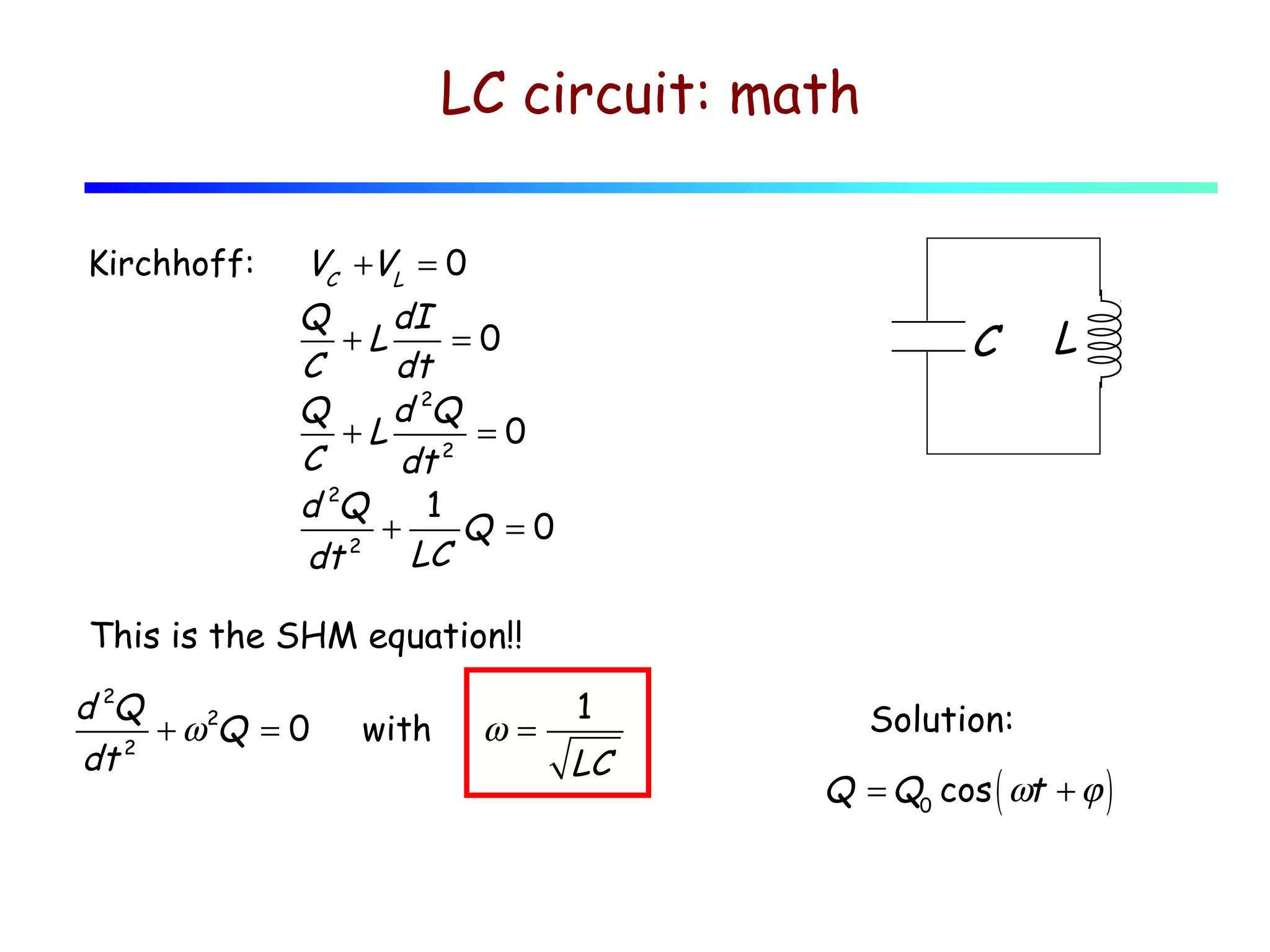
Kirchhoff:

VC +VL = 0

Q
dI
+L
=0
C
dt
Q
d 2Q
+L
=0
2
C
dt
d 2Q
1
+
Q =0
2
LC
dt

C

L

This is the SHM equation!!

d 2Q
+ ω 2Q = 0
dt 2

with

ω=

1

LC

Solution:

Q = Q0 cos ( ωt + ϕ )
VC =

I = −Q0ω sin ( ωt + ϕ )

Q Q0
=
cos ( ωt + ϕ )
C
C

VL = L

2
Q 2 Q0
UC =
=
cos2 ( ωt + ϕ )
2C
2C

VC

VL

UL =

dI
= −LQ0ω 2 cos ( ωt + ϕ )
dt

1
1
LI 2 = LQ02ω 2 sin2 ( ωt + ϕ )
2
2
Q02
=
sin2 ( ωt + ϕ )
2C
Q

2
LQ02ω 2 LQ02 1
=
= 0
2
2 LC 2C

0

UL

0

UC
t

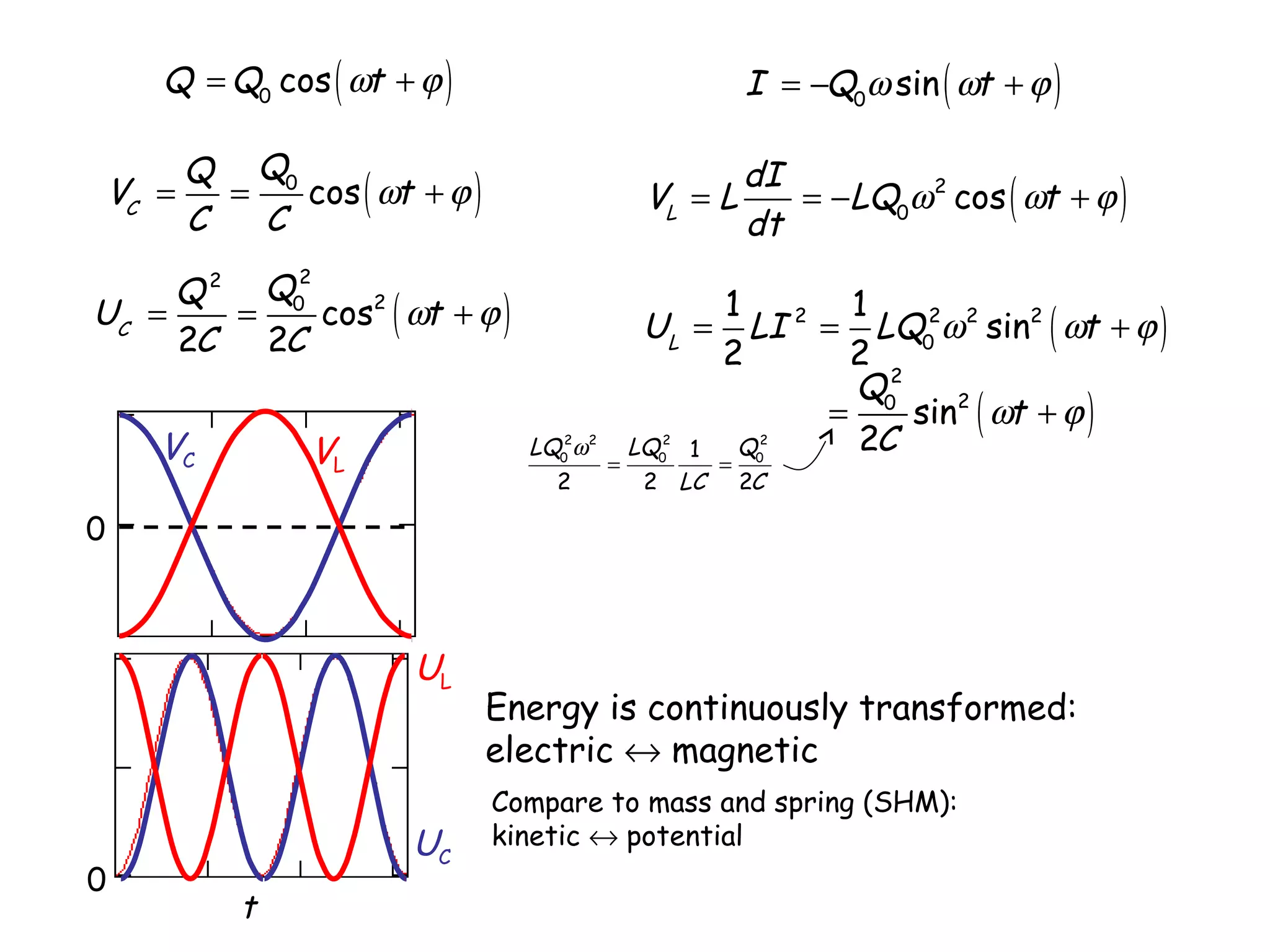
Energy is continuously transformed:
electric ↔ magnetic
Compare to mass and spring (SHM):
kinetic ↔ potential
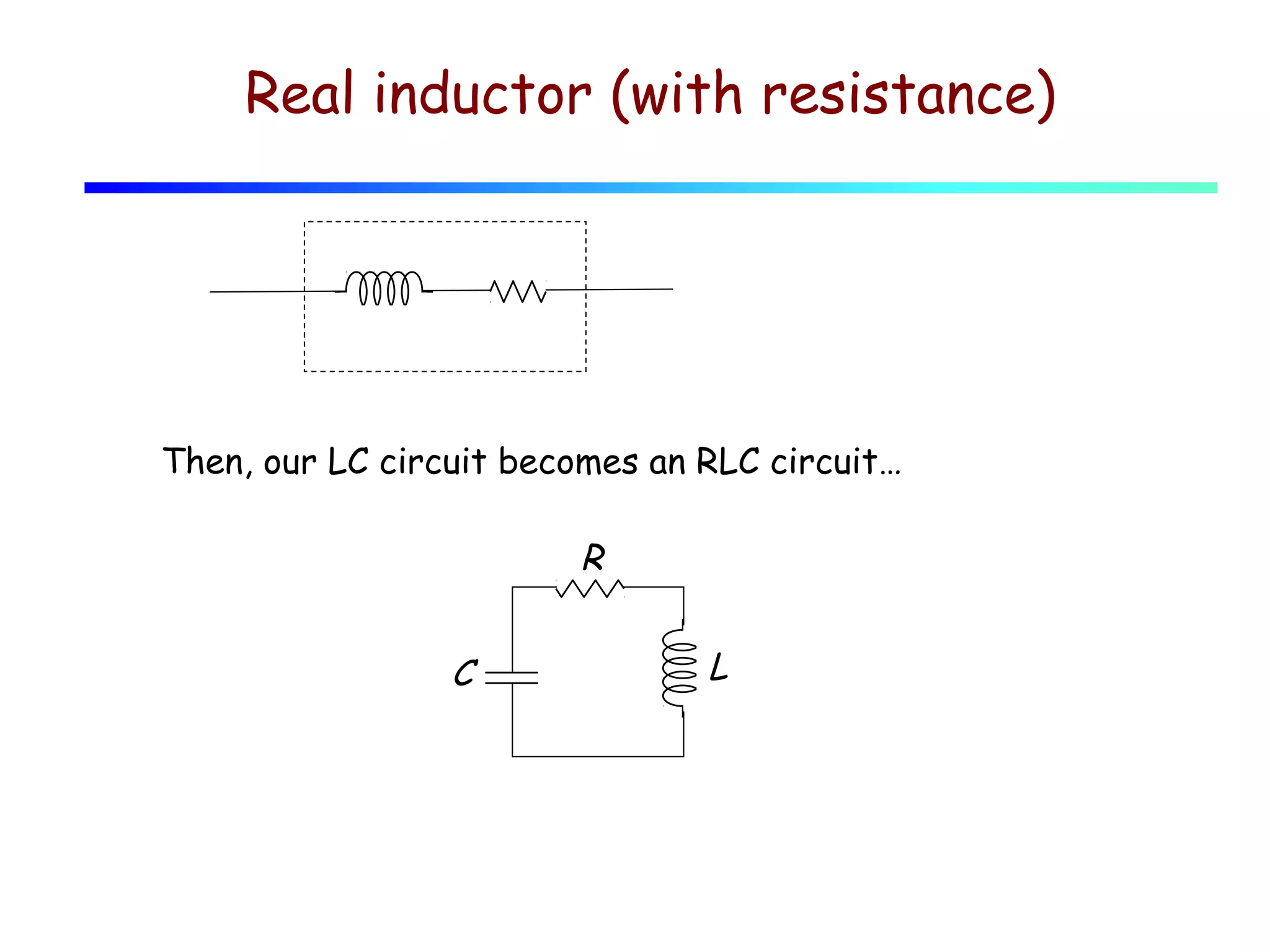
Real inductor (with resistance)

Then, our LC circuit becomes an RLC circuit…

R
C

L
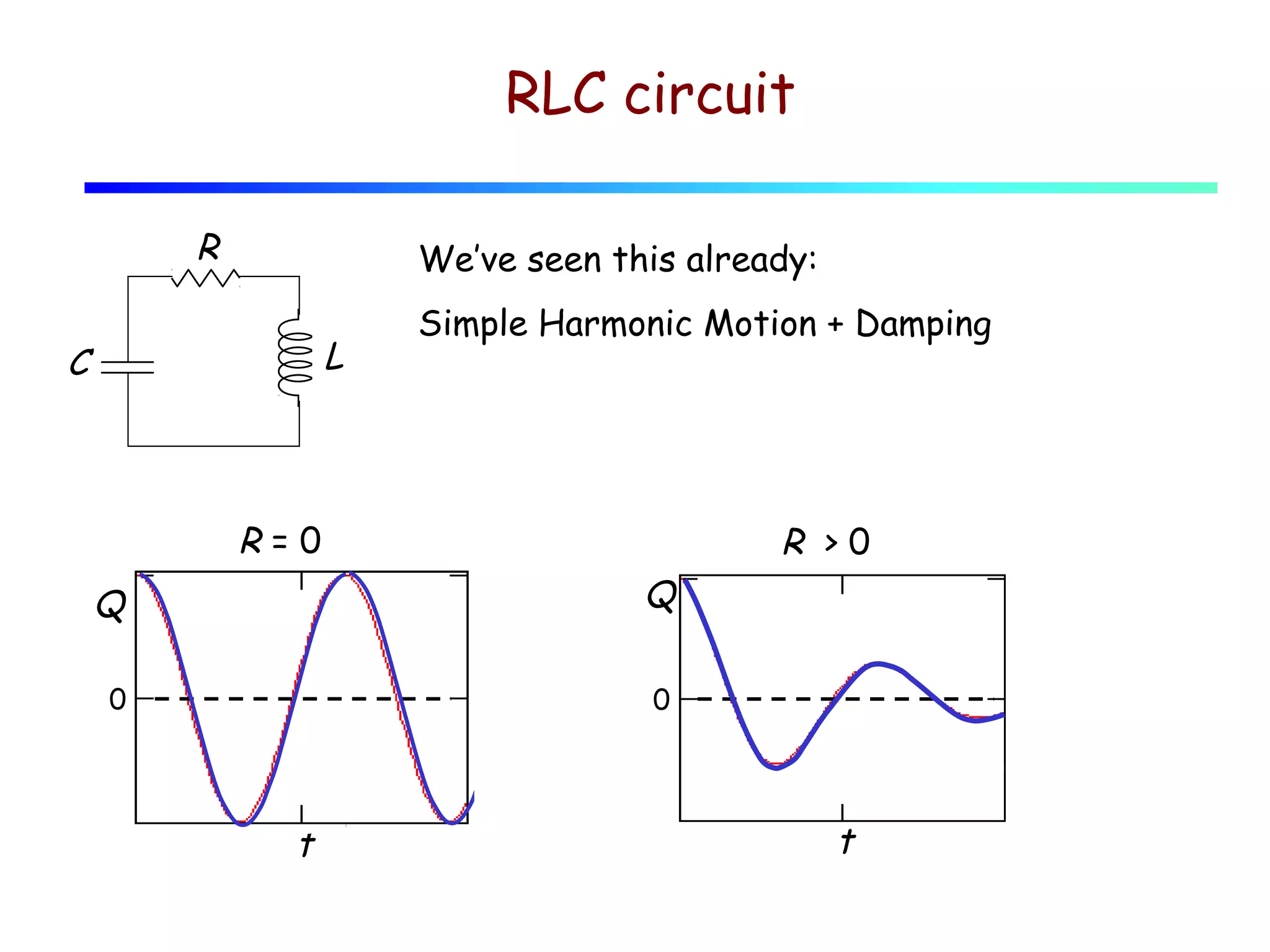
RLC circuit
R

We’ve seen this already:

L

C

Simple Harmonic Motion + Damping

R=0

R >0

Q

Q

0

0

t

t
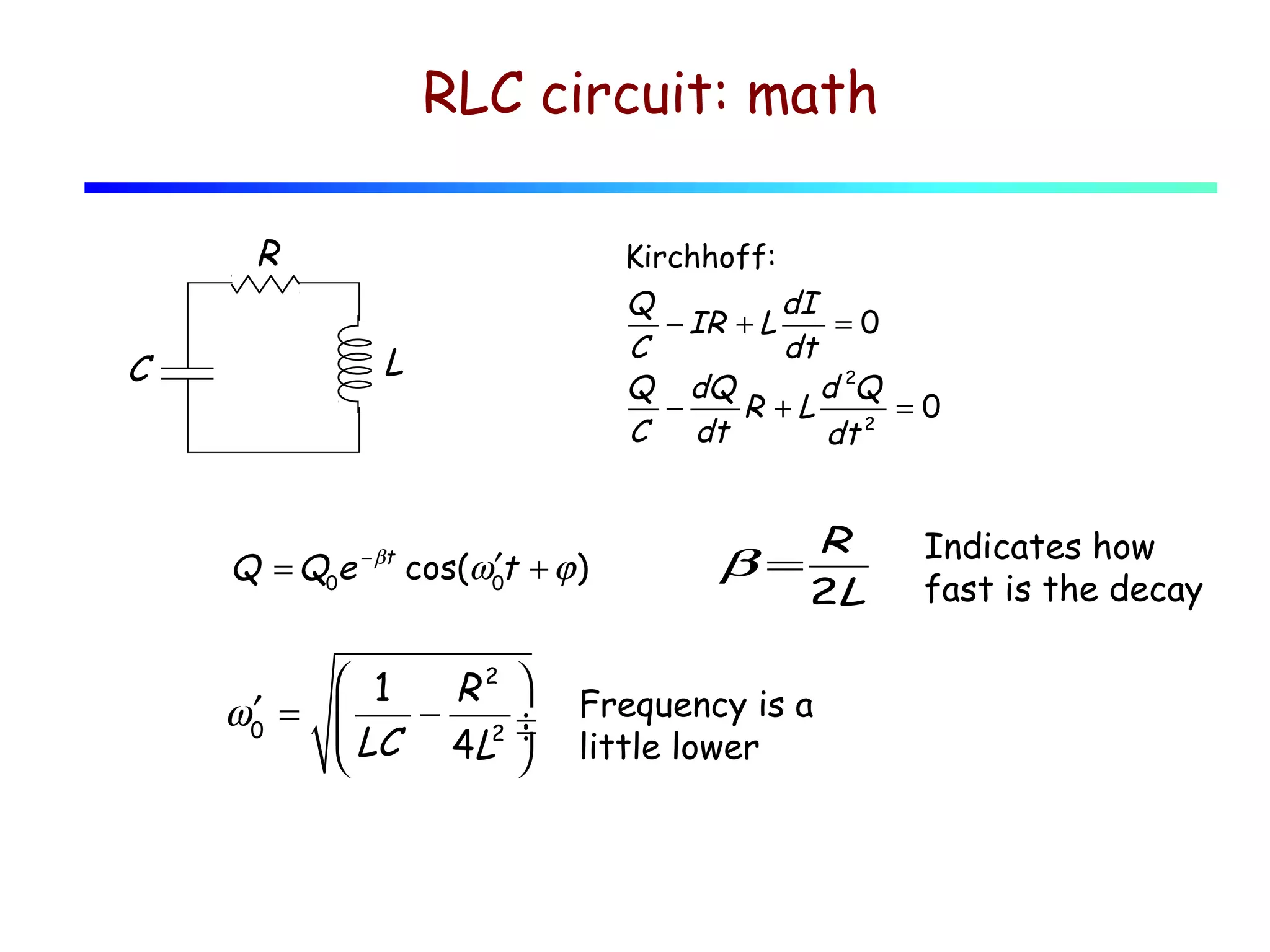
RLC circuit: math
R

Kirchhoff:

Q
dI
− IR + L
=0
C
dt
Q dQ
d 2Q
−
R +L
=0
C dt
dt 2

L

C

Q = Q0e

− βt

′
cos(ω0t + ϕ )

 1
R2 
′
ω0 = 
 LC − 4L2 ÷
÷



β=

R
2L

Frequency is a
little lower

Indicates how
fast is the decay

Lecture 28 lc, rlc circuits.

  • 1.
    Lecture 28 LC andRLC circuits.
  • 2.
    Energy in Eand B fields Energy stored in a capacitor 1 U = CV 2 2 ++++++ −−−−−− E → energy of the electric field Energy stored in a inductor U = 1 LI 2 2 B → energy of the magnetic field
  • 3.
    RC circuits (review) Capacitoris initially charged with Q0. What happens when switch is closed? ++ C −− ( ) + Current starts at I 0 = R Q0 −t e τ And then decays: I ( t ) = RC I Q Q0 RC t τ = RC U 2 Q0 2C Q0 Current through R VC Q = 0 R RC t Charge in capacitor t Energy in capacitor
  • 4.
    RL circuit Capacitor isinitially charged with Q0. What happens when switch is closed? ++ C −− L • Right after it is closed: I = 0. Then current builds up. • Magnetic field is created in inductor while charge in capacitor is decreasing • Energy is being transferred form C to L (from electric to magnetic energy) As C discharges, current should decrease and stop, but inductor keeps it going, so at the end the capacitor is charged again but with the positive charge on the bottom plate. Then we start all over again… → Oscillatory system Note: No dissipation mechanism (no R) ⇒ total energy is constant
  • 5.
    I=0 Q = Q0 ++++ E C ---- I= I0 Q=0 L ⇒ I=0 I = -I0 C B ⇓ ⇑ Q=0 L C L ⇐ B Q = -Q0 ---E C ++++ L
  • 6.
    ACT: LC circuit Att =0, the capacitor in the LC circuit shown has a total charge Q0. At t = t1, the capacitor is uncharged. What is the sign of Vb-Va, the voltage across the inductor at time t1? A. Vb-Va > 0 B. Vb-Va = 0 C. Vb-Va < 0 Q = 0 ⇒ VC = 0 But VC = −VL at all times! ++++ ---- C L •a •b So at t =t1, VL = 0 Compare the energy stored in the capacitor and the inductor at time t1: A. UC < UL B. UC = UL C. UC > UL Q = 0 ⇒ UC = 0 UL is then maximum.
  • 7.
    LC circuit: math Kirchhoff: VC+VL = 0 Q dI +L =0 C dt Q d 2Q +L =0 2 C dt d 2Q 1 + Q =0 2 LC dt C L This is the SHM equation!! d 2Q + ω 2Q = 0 dt 2 with ω= 1 LC Solution: Q = Q0 cos ( ωt + ϕ )
  • 8.
    Q = Q0cos ( ωt + ϕ ) VC = I = −Q0ω sin ( ωt + ϕ ) Q Q0 = cos ( ωt + ϕ ) C C VL = L 2 Q 2 Q0 UC = = cos2 ( ωt + ϕ ) 2C 2C VC VL UL = dI = −LQ0ω 2 cos ( ωt + ϕ ) dt 1 1 LI 2 = LQ02ω 2 sin2 ( ωt + ϕ ) 2 2 Q02 = sin2 ( ωt + ϕ ) 2C Q 2 LQ02ω 2 LQ02 1 = = 0 2 2 LC 2C 0 UL 0 UC t Energy is continuously transformed: electric ↔ magnetic Compare to mass and spring (SHM): kinetic ↔ potential
  • 9.
    Real inductor (withresistance) Then, our LC circuit becomes an RLC circuit… R C L
  • 10.
    RLC circuit R We’ve seenthis already: L C Simple Harmonic Motion + Damping R=0 R >0 Q Q 0 0 t t
  • 11.
    RLC circuit: math R Kirchhoff: Q dI −IR + L =0 C dt Q dQ d 2Q − R +L =0 C dt dt 2 L C Q = Q0e − βt ′ cos(ω0t + ϕ )  1 R2  ′ ω0 =   LC − 4L2 ÷ ÷   β= R 2L Frequency is a little lower Indicates how fast is the decay