RC Circuits
                 Charging Capacitor


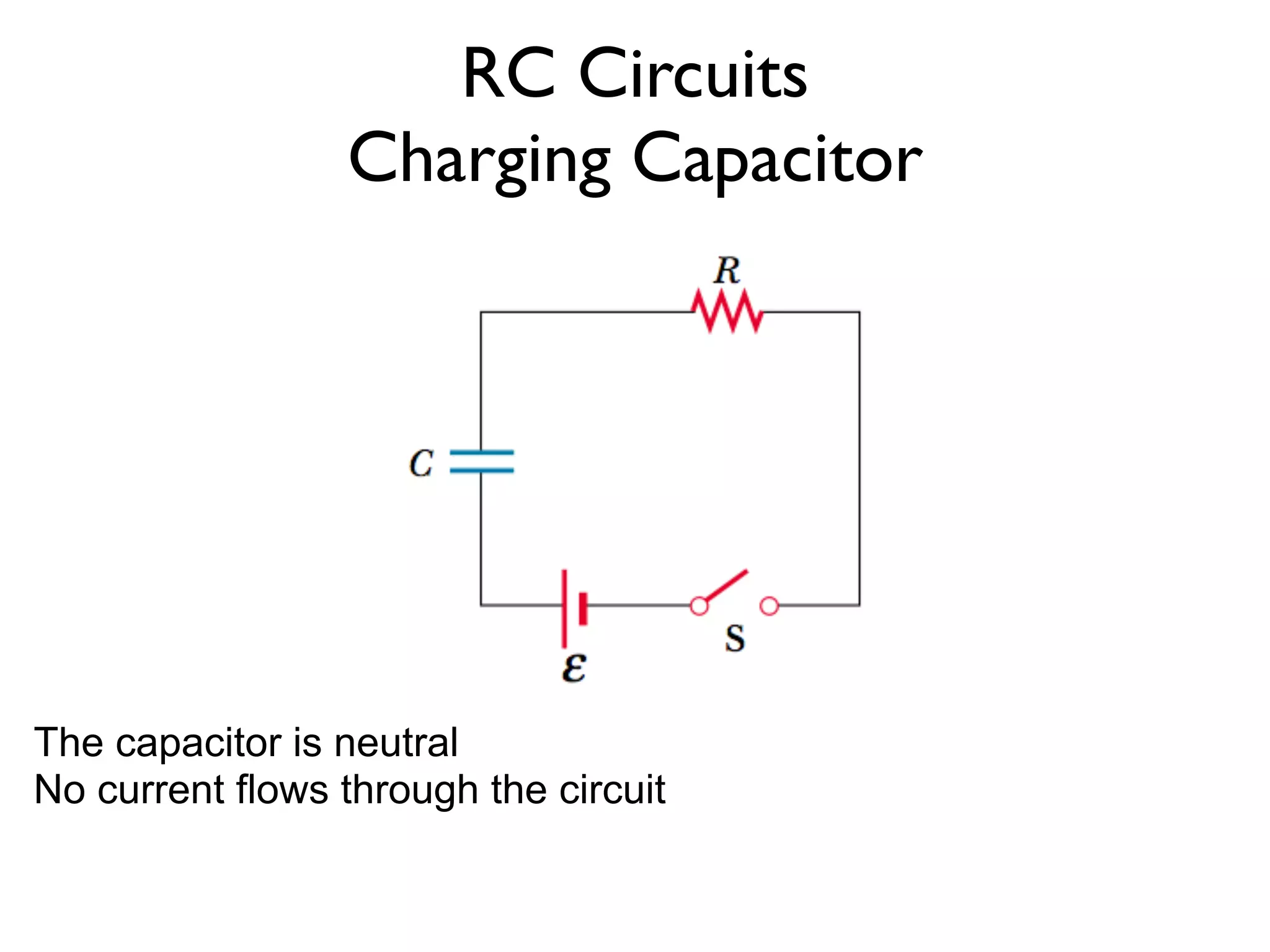
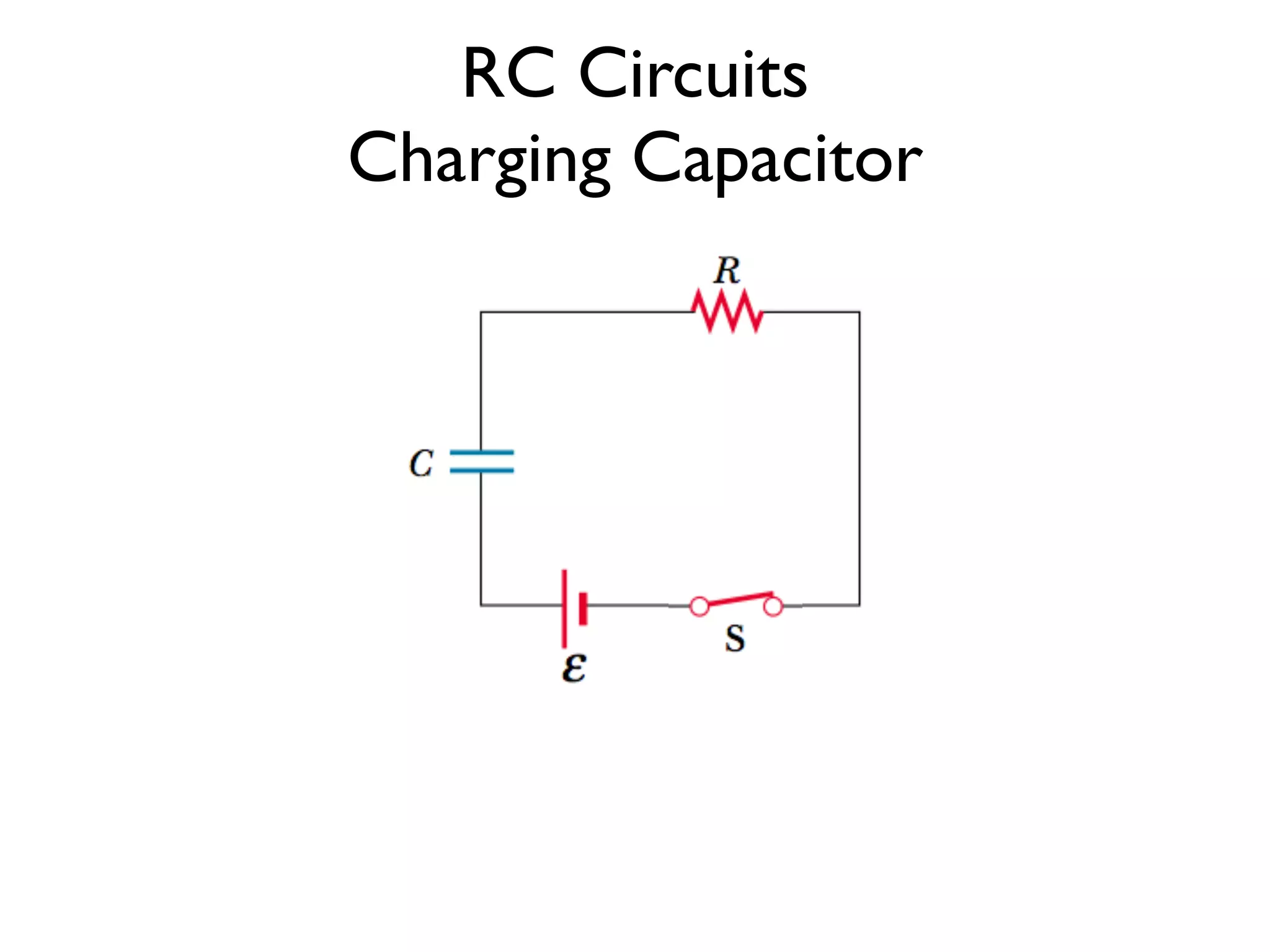
The capacitor is neutral
No current flows through the circuit
RC Circuits
               Charging Capacitor


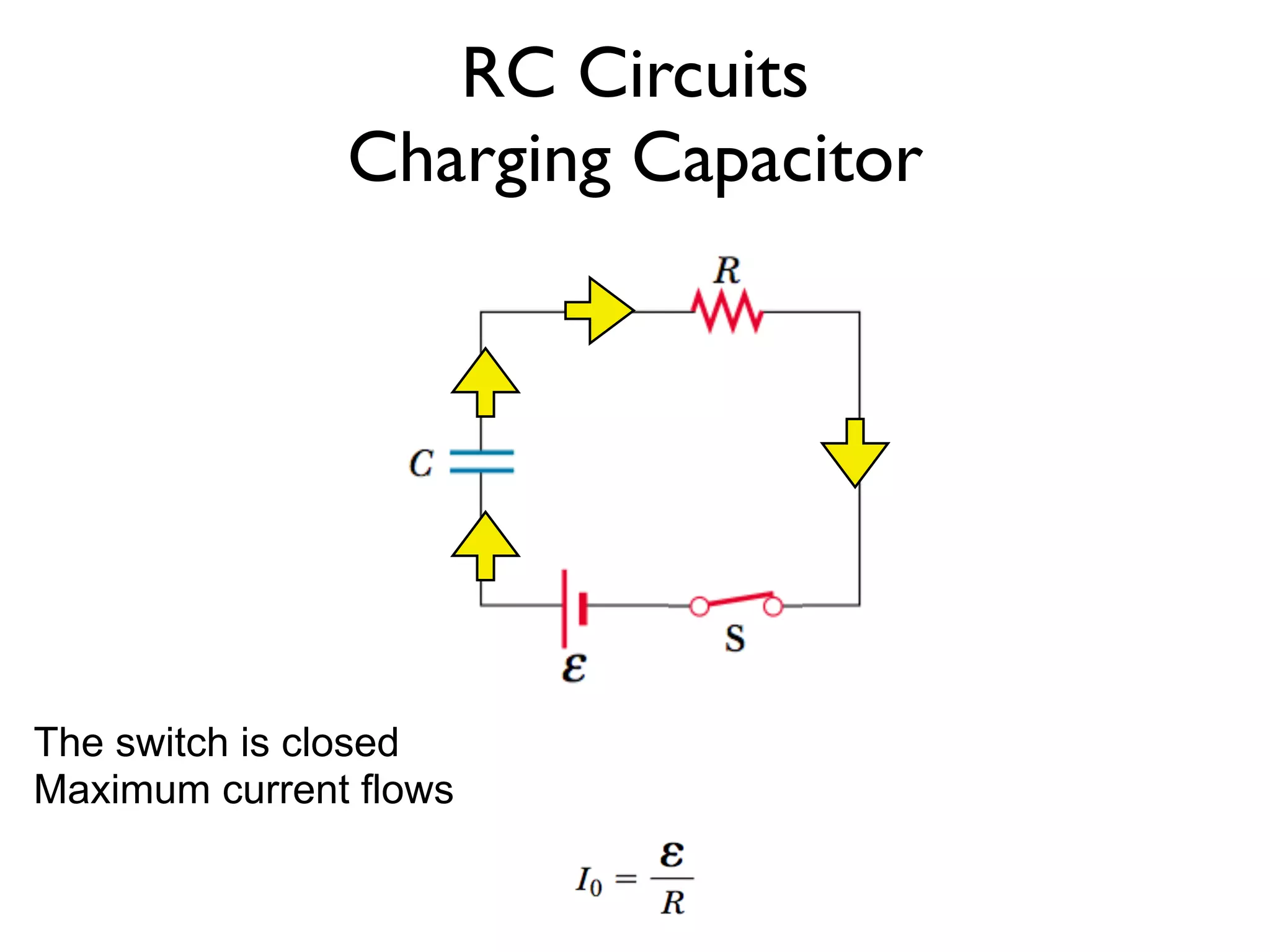
The switch is closed
Maximum current flows
RC Circuits
                 Charging Capacitor

                  +q
                  -q


                         +q

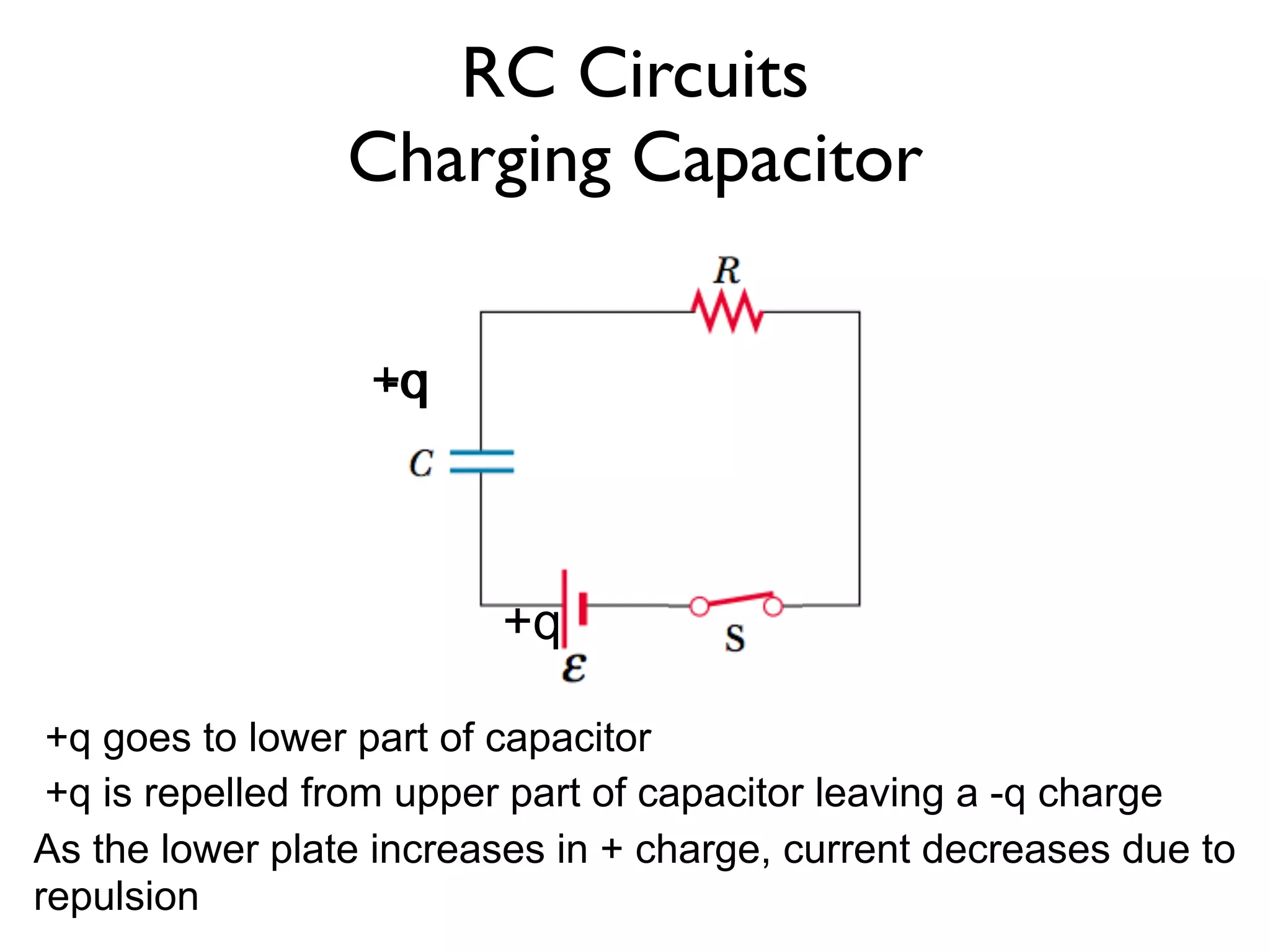
 +q goes to lower part of capacitor
 +q is repelled from upper part of capacitor leaving a -q charge
As the lower plate increases in + charge, current decreases due to
repulsion
RC Circuits
                 Charging Capacitor

                  +q
                  -Q

                  +Q
                  +q

                         +q

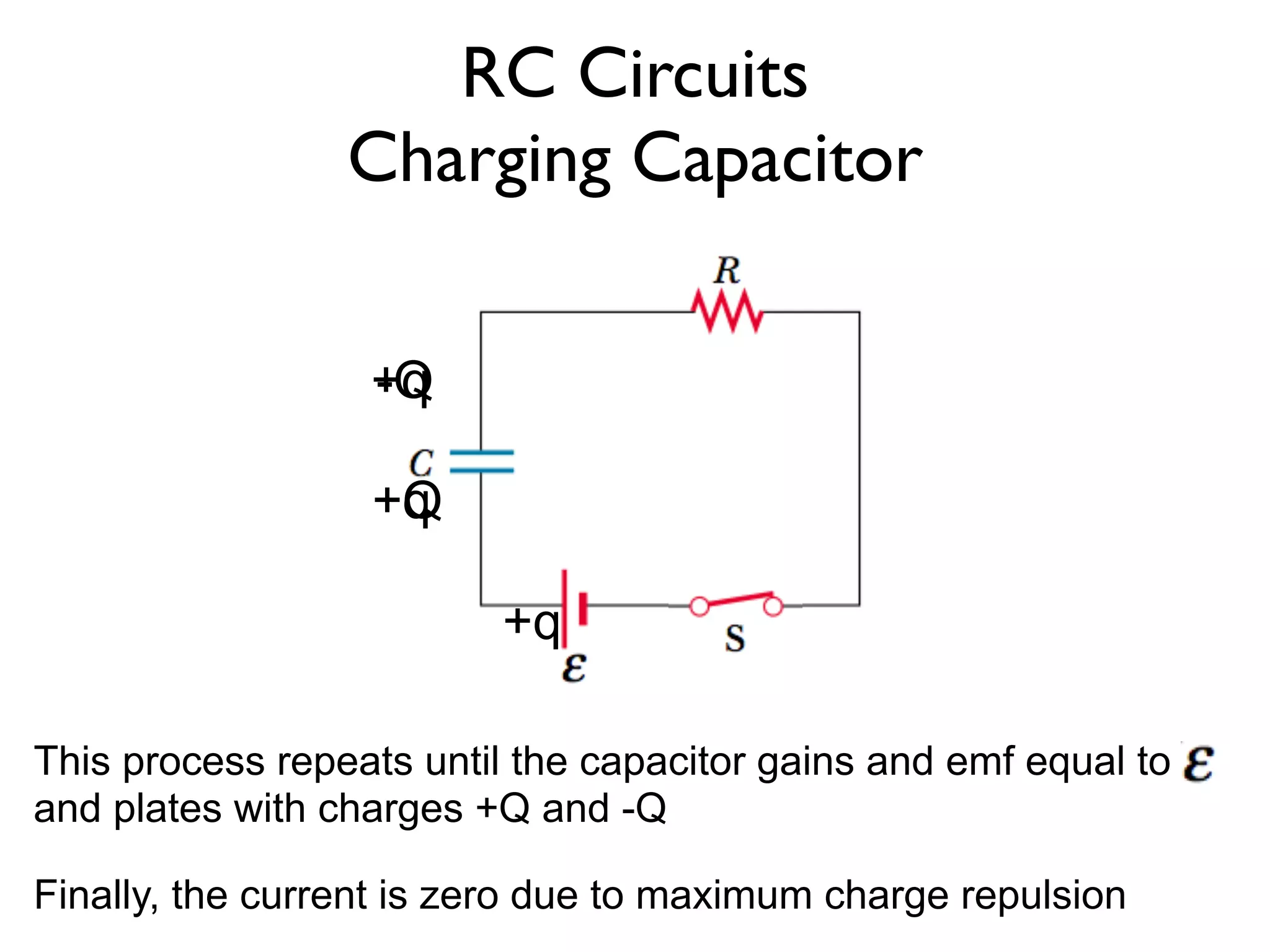
This process repeats until the capacitor gains and emf equal to
and plates with charges +Q and -Q

Finally, the current is zero due to maximum charge repulsion
RC Circuits
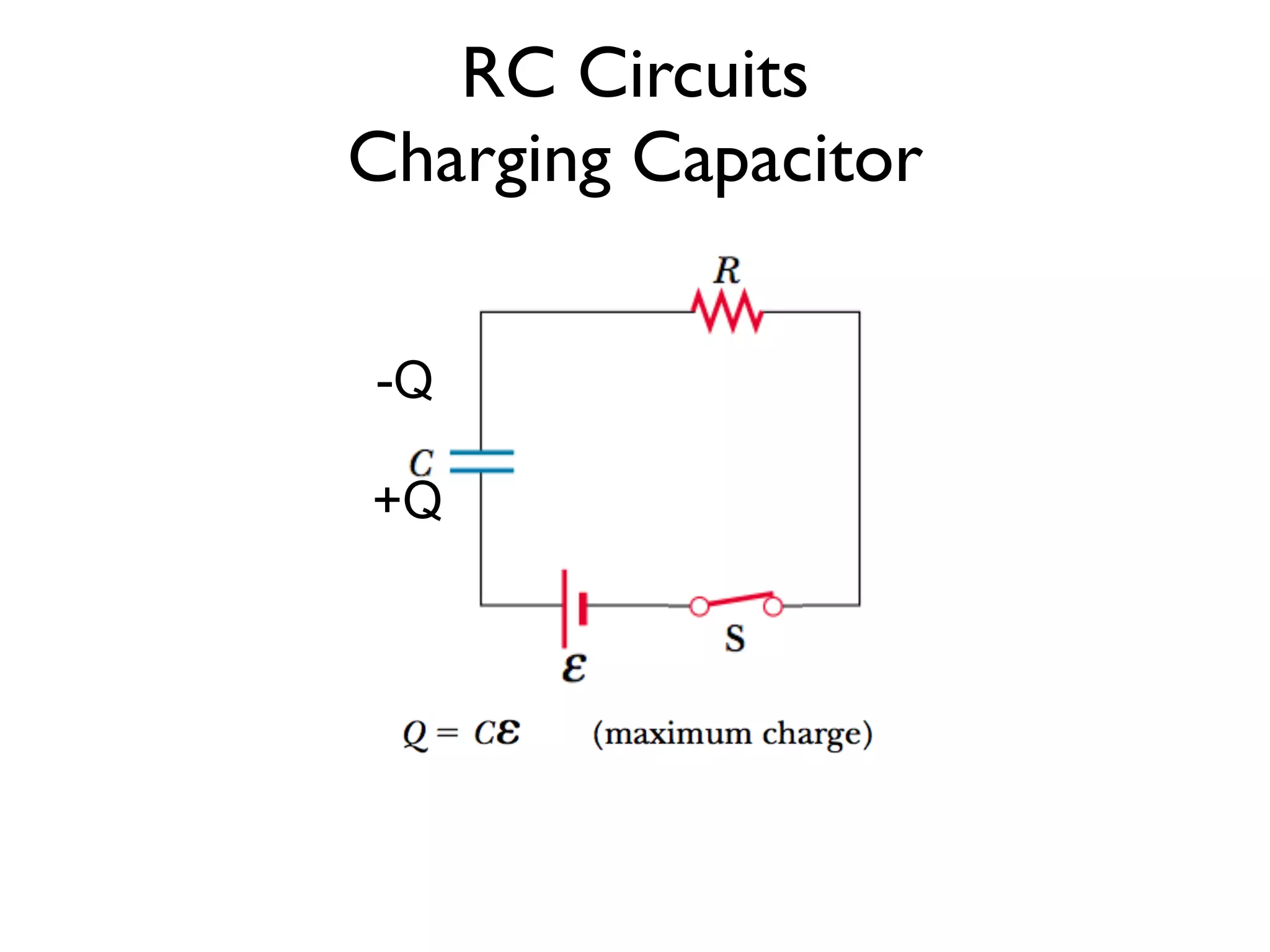
Charging Capacitor

-Q

+Q
RC Circuits
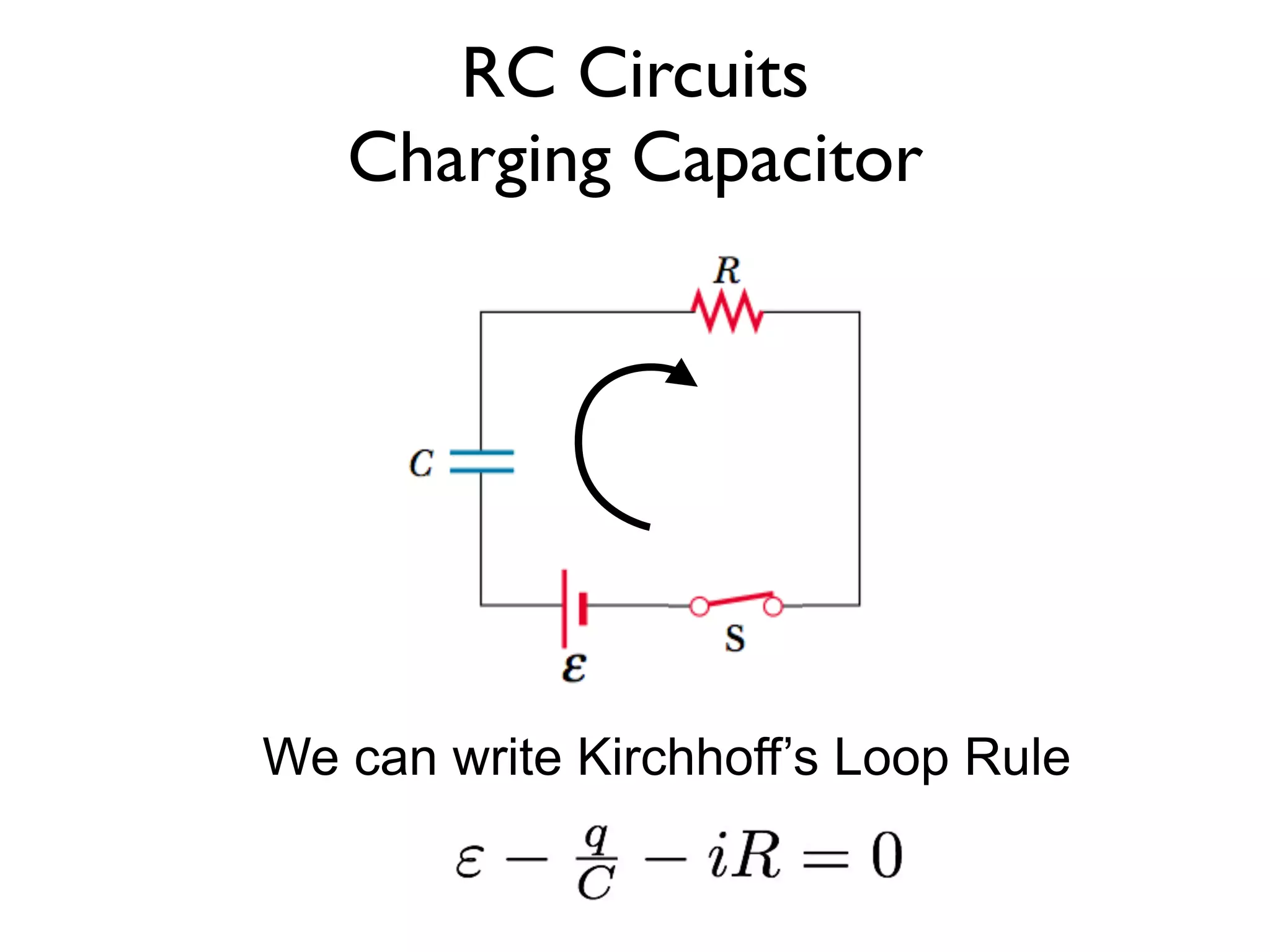
   Charging Capacitor


We can write Kirchhoff’s Loop Rule
RC Circuits
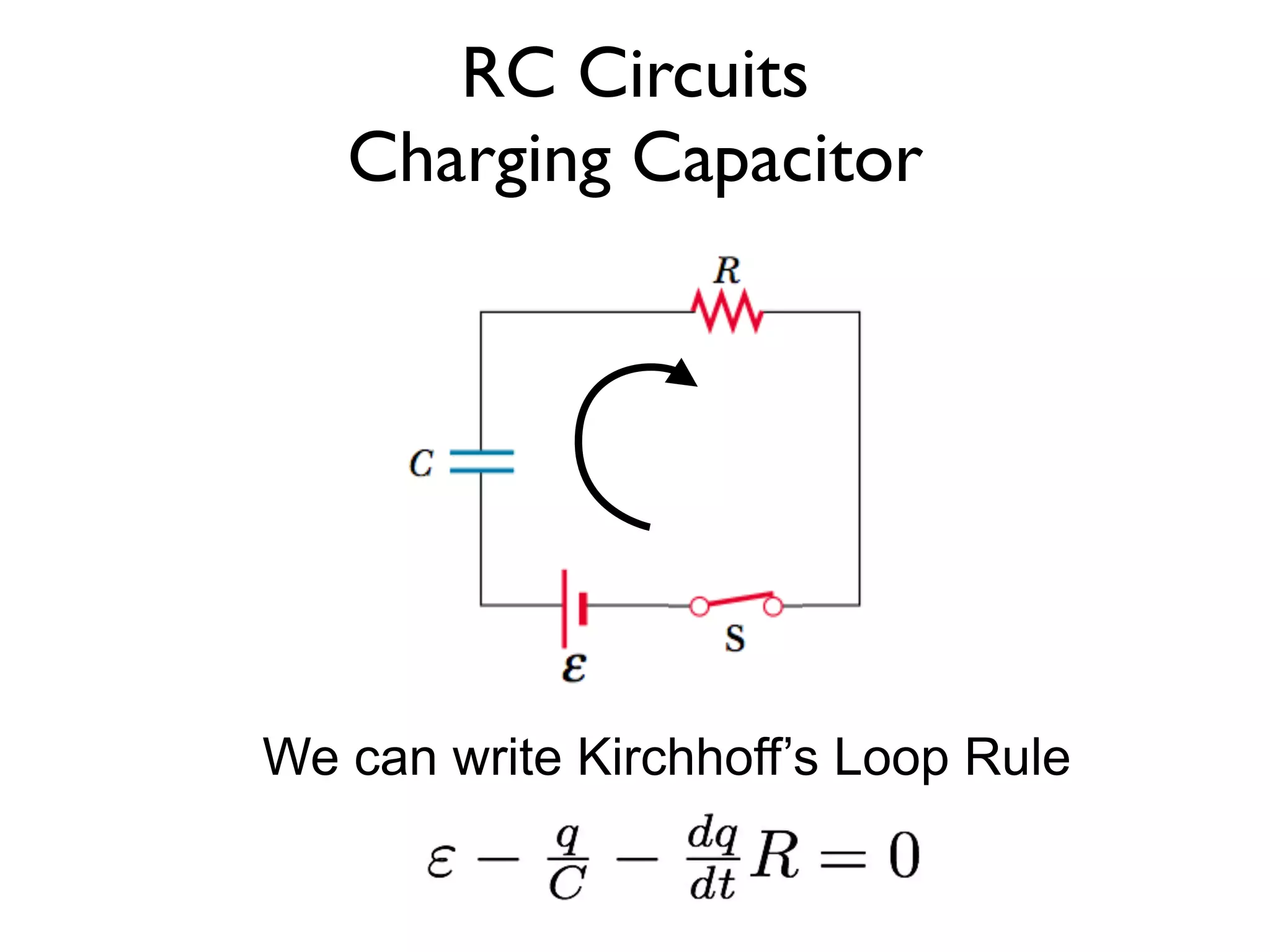
   Charging Capacitor


We can write Kirchhoff’s Loop Rule
RC Circuits
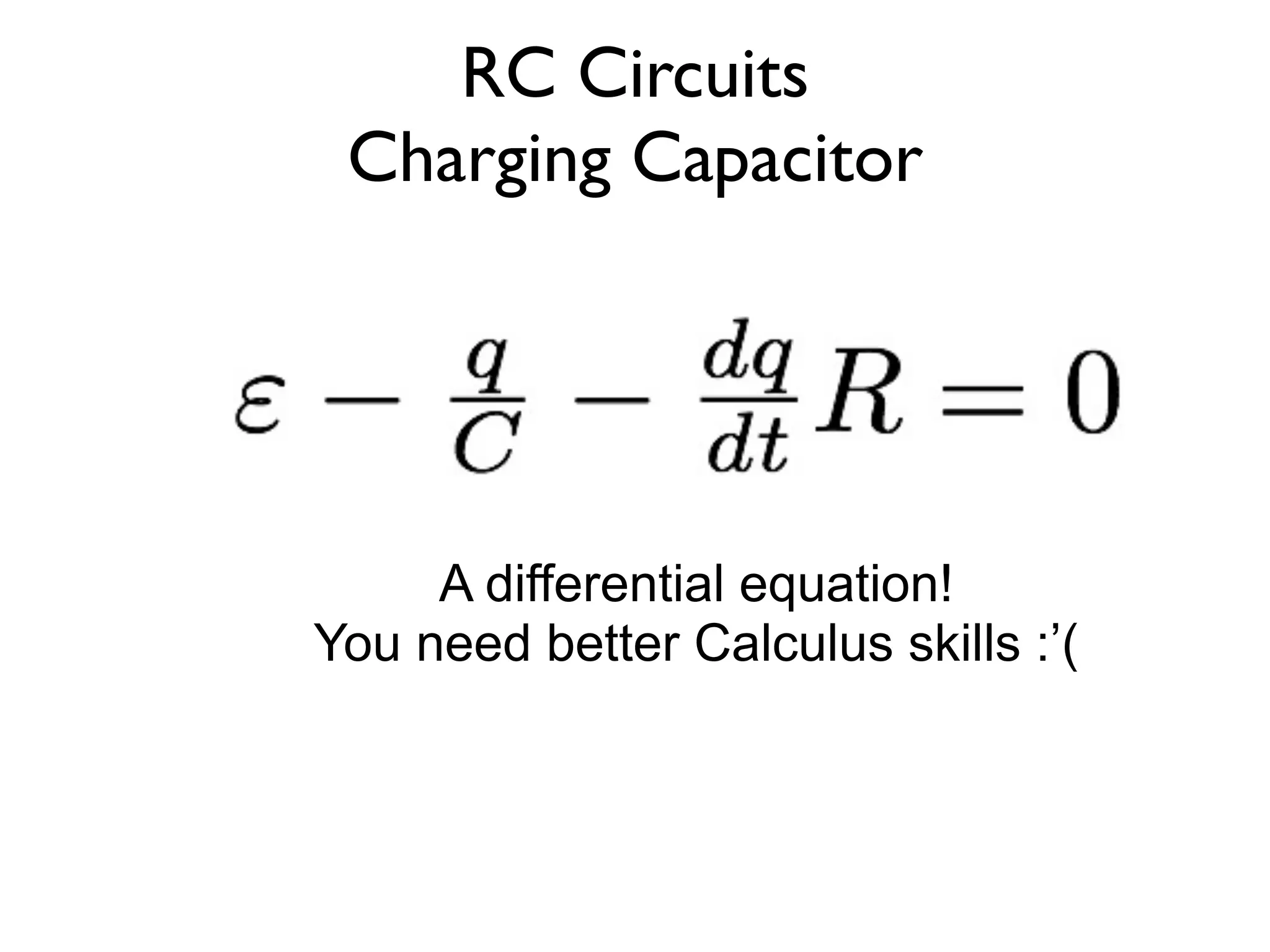
 Charging Capacitor


     A differential equation!
You need better Calculus skills :’(
RC Circuits
             Charging Capacitor


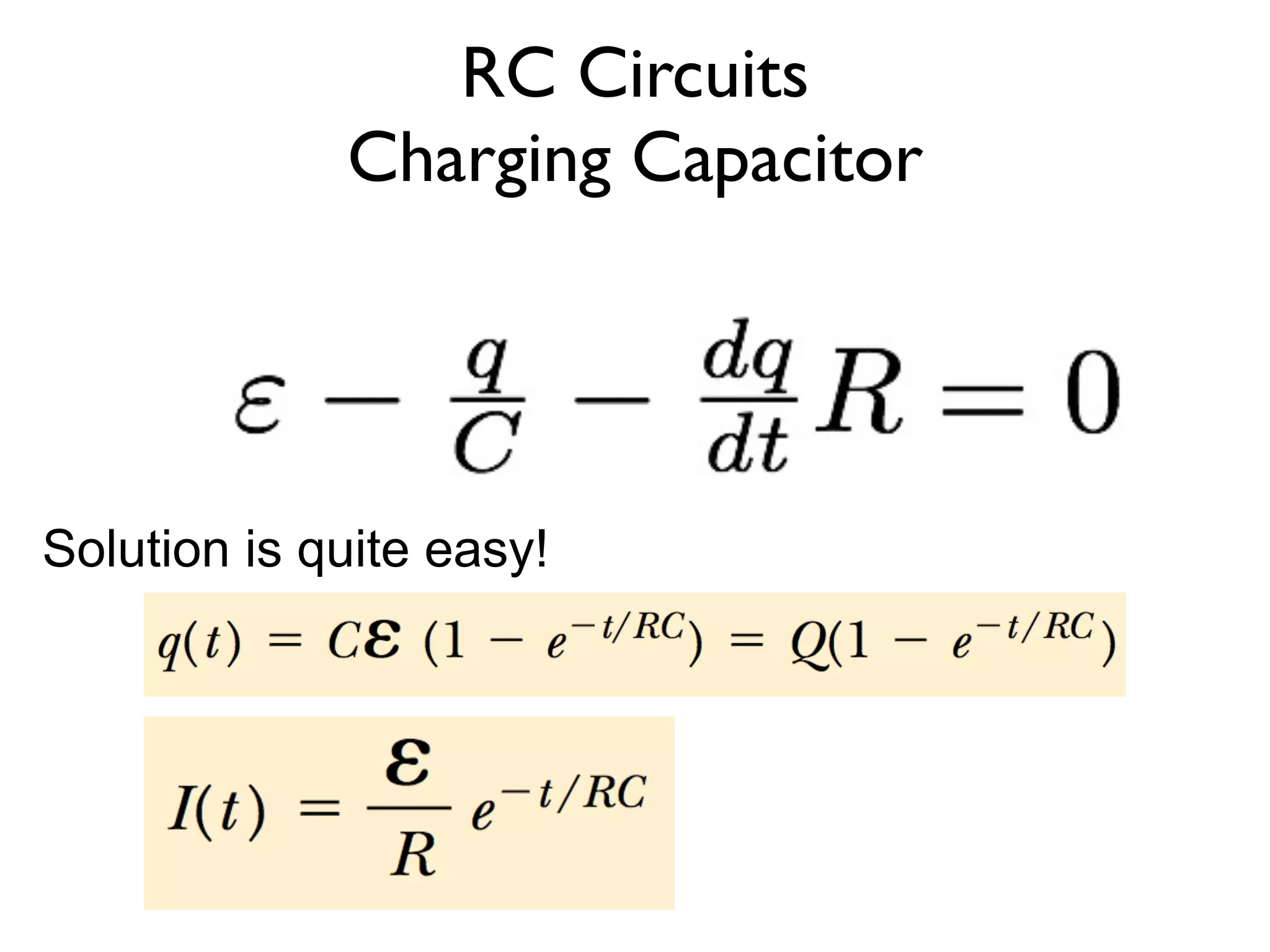
Solution is quite easy!
RC Circuits
        Charging Capacitor


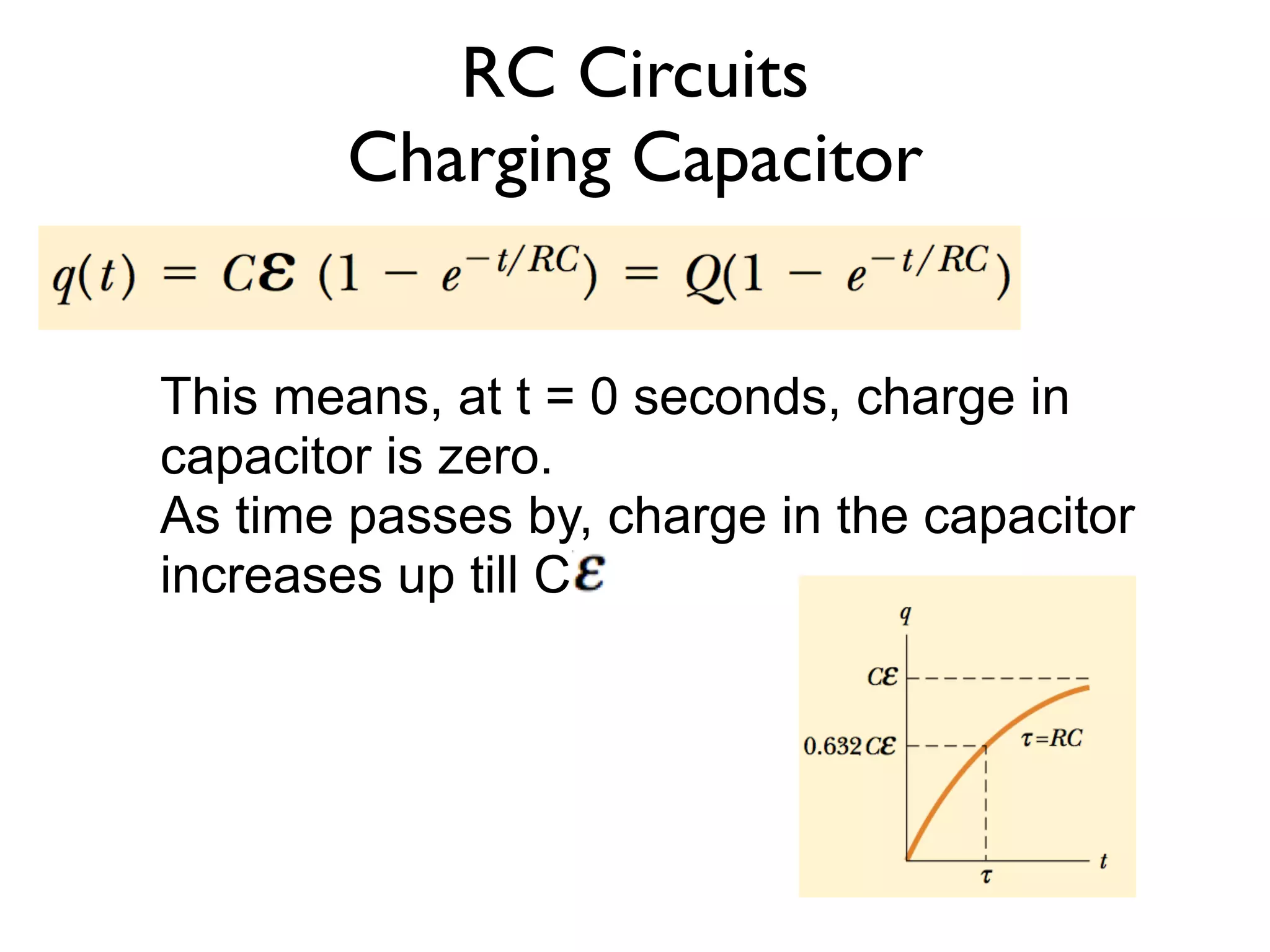
This means, at t = 0 seconds, charge in
capacitor is zero.
As time passes by, charge in the capacitor
increases up till C
RC Circuits
       Charging Capacitor


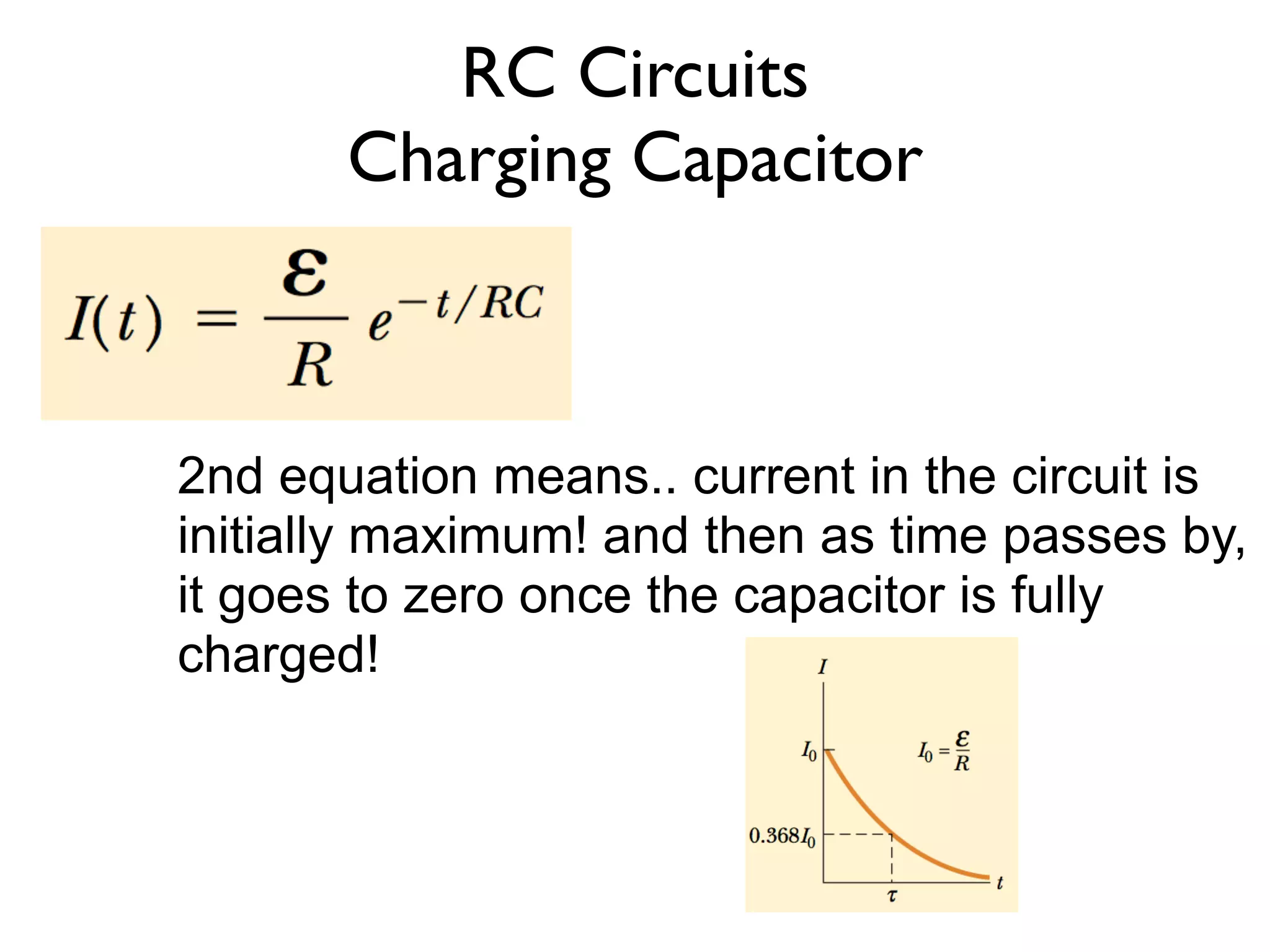
2nd equation means.. current in the circuit is
initially maximum! and then as time passes by,
it goes to zero once the capacitor is fully
charged!
RC Circuits
Charging Capacitor
RC Circuits
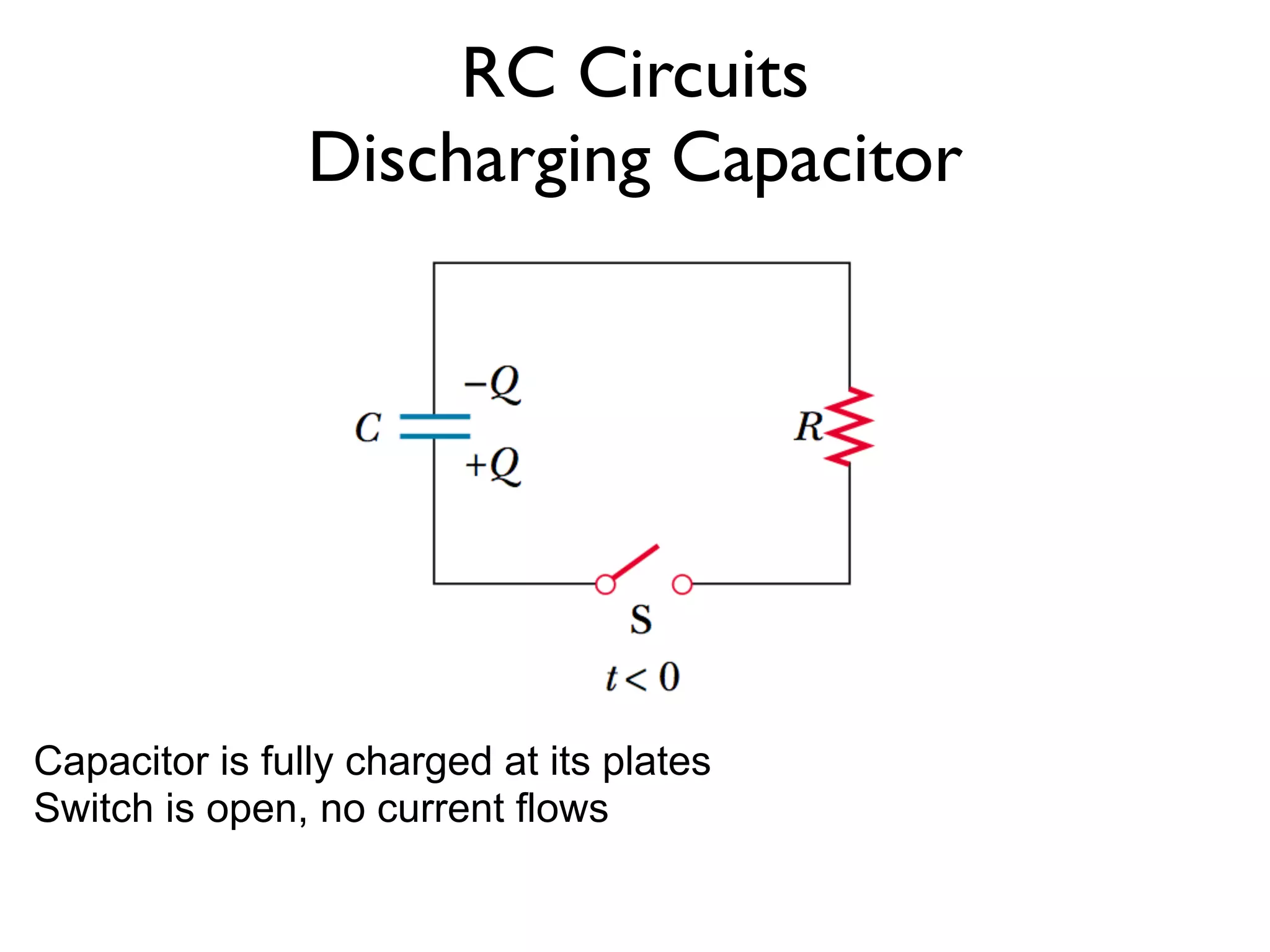
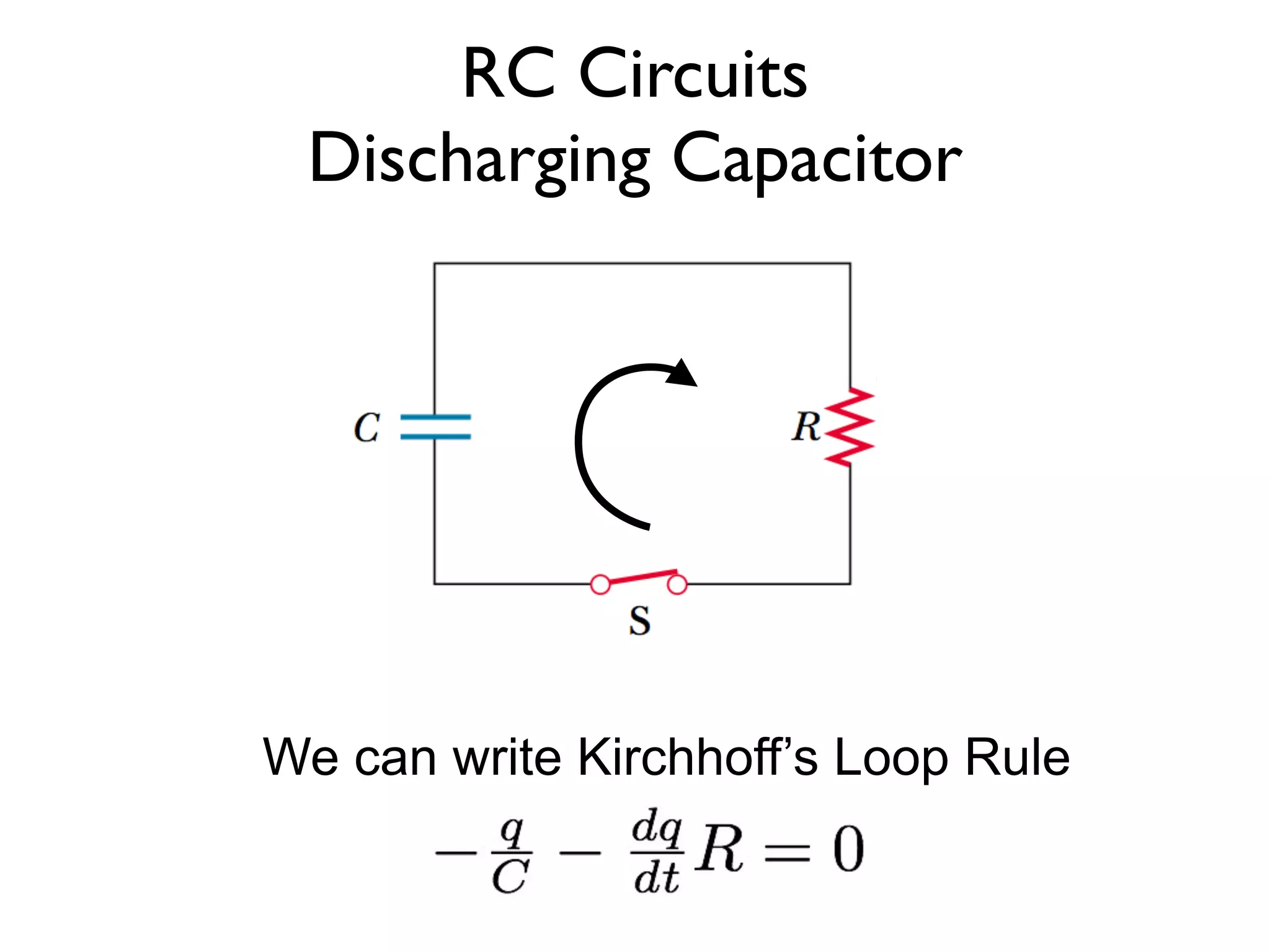
                Discharging Capacitor


Capacitor is fully charged at its plates
Switch is open, no current flows
RC Circuits
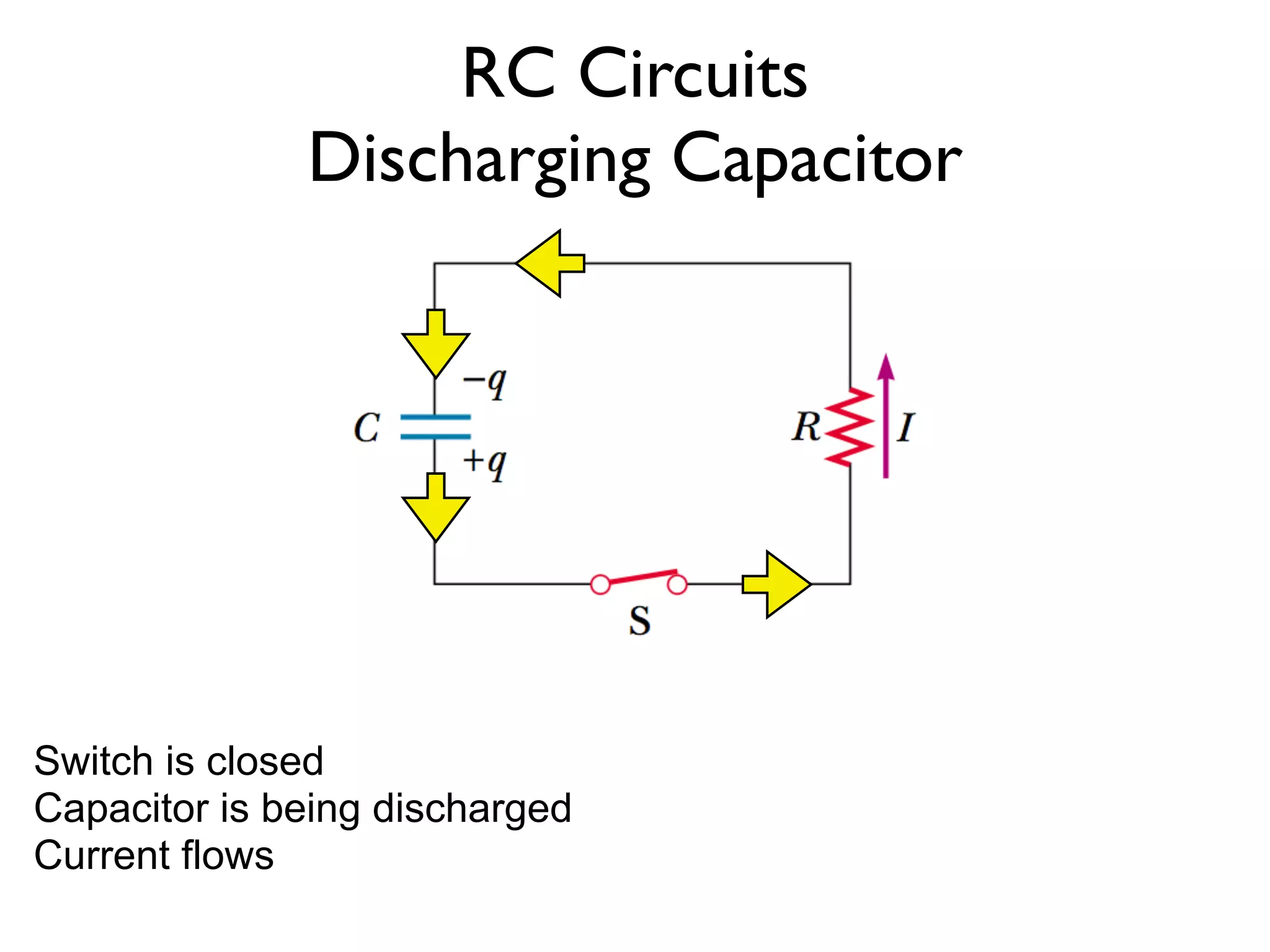
              Discharging Capacitor


Switch is closed
Capacitor is being discharged
Current flows
RC Circuits
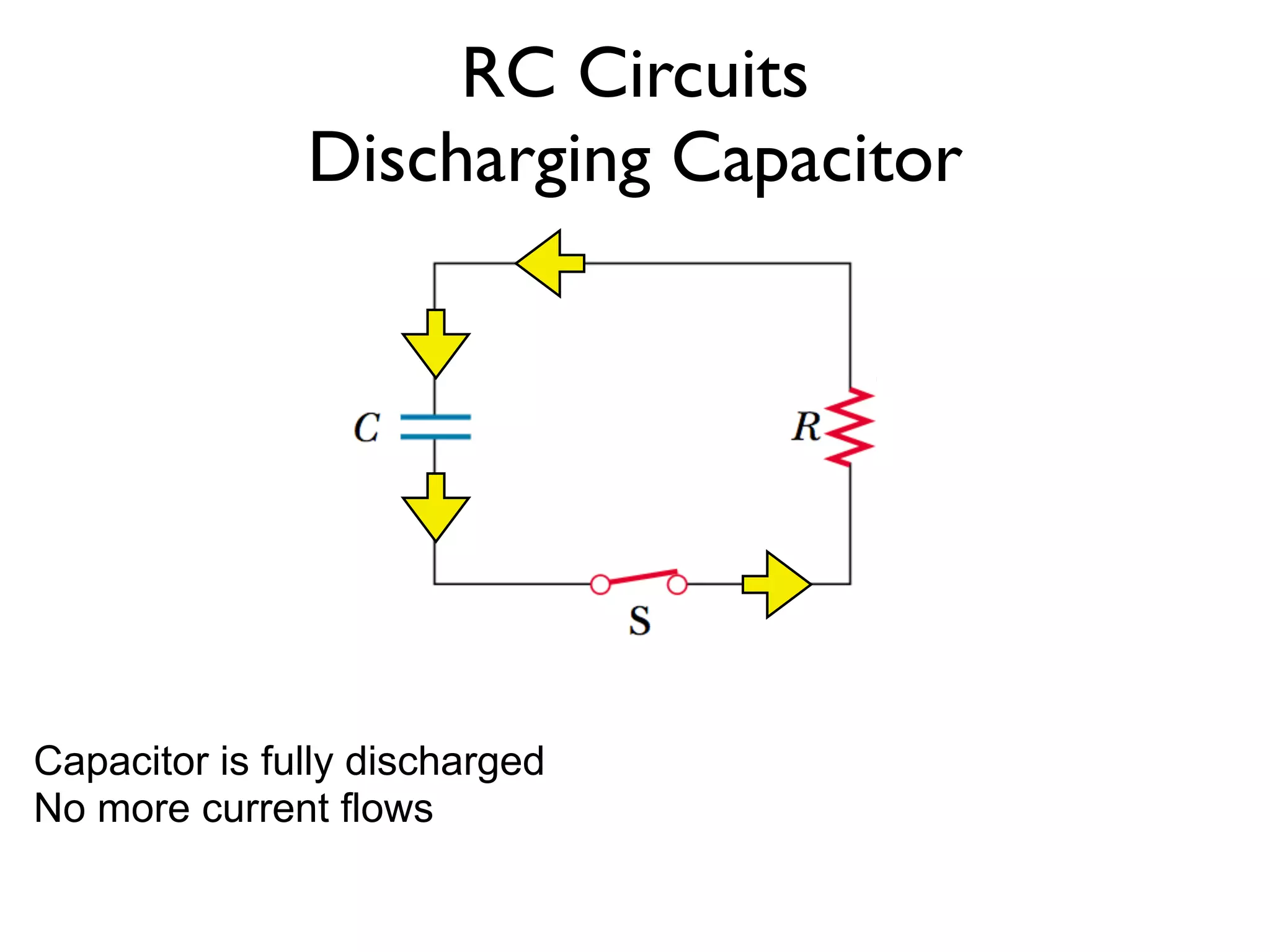
               Discharging Capacitor


Capacitor is fully discharged
No more current flows
RC Circuits
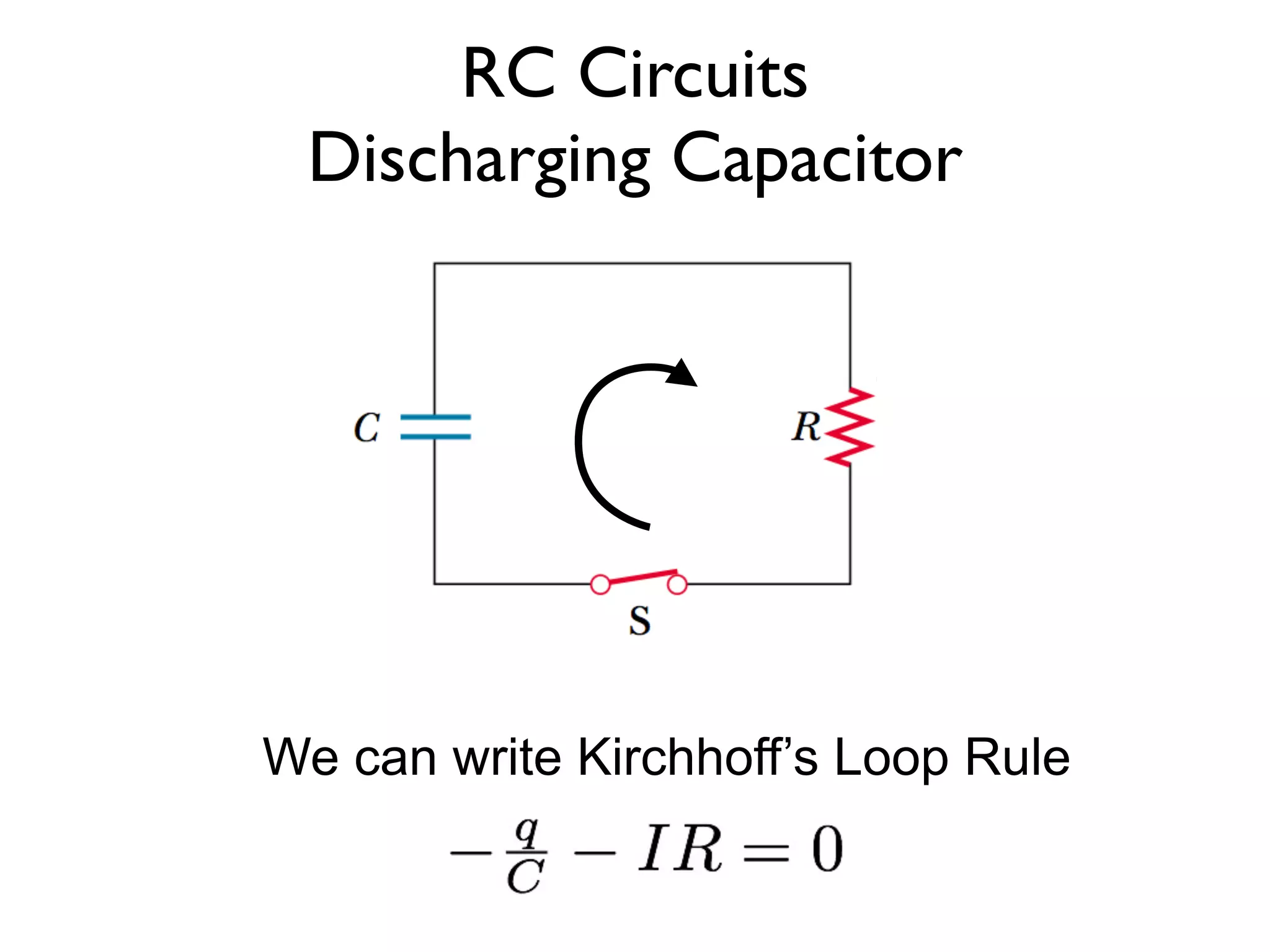
 Discharging Capacitor


We can write Kirchhoff’s Loop Rule
RC Circuits
 Discharging Capacitor


We can write Kirchhoff’s Loop Rule
RC Circuits
  Discharging Capacitor


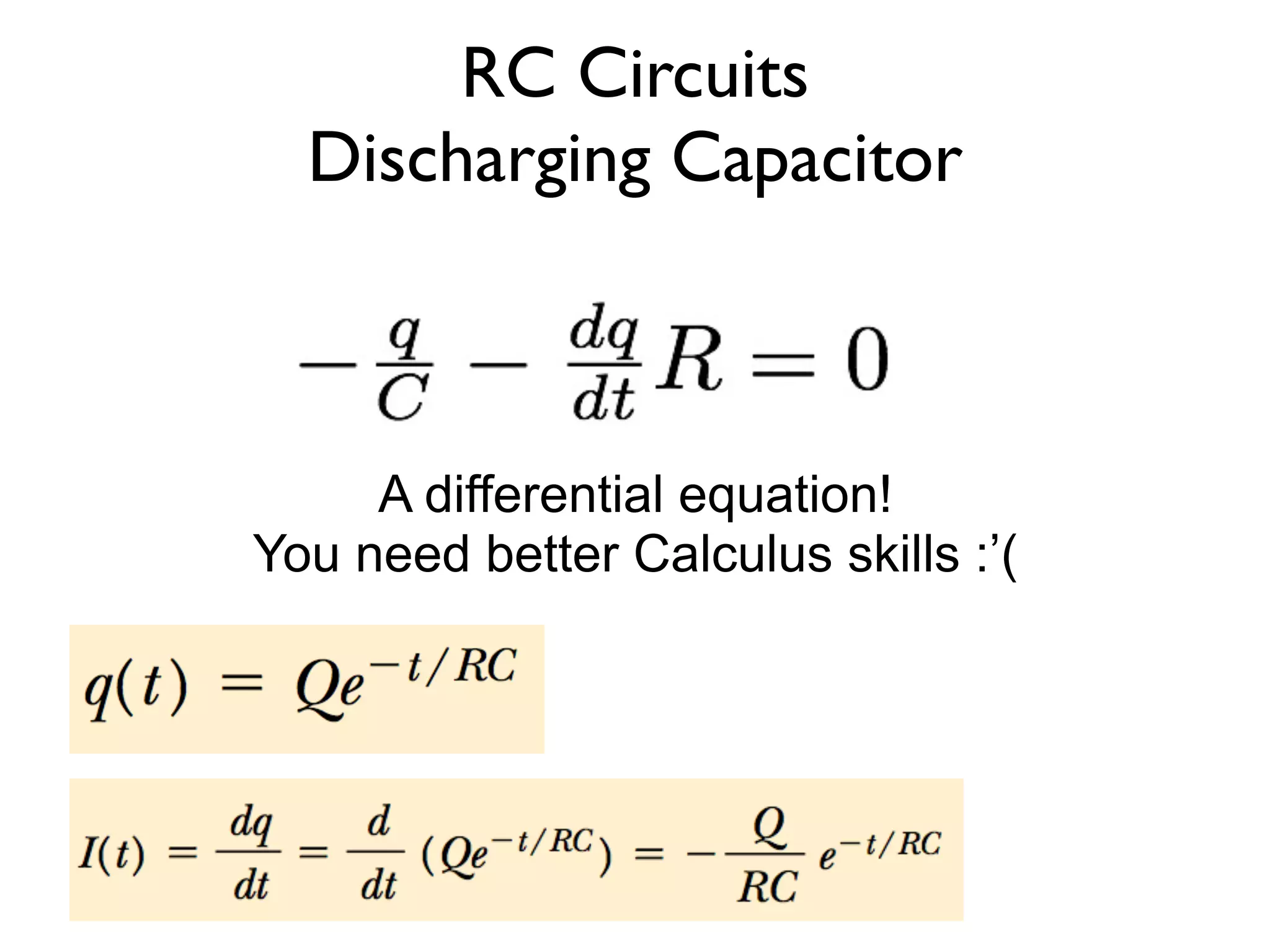
     A differential equation!
You need better Calculus skills :’(
RC Circuits
    Discharging Capacitor
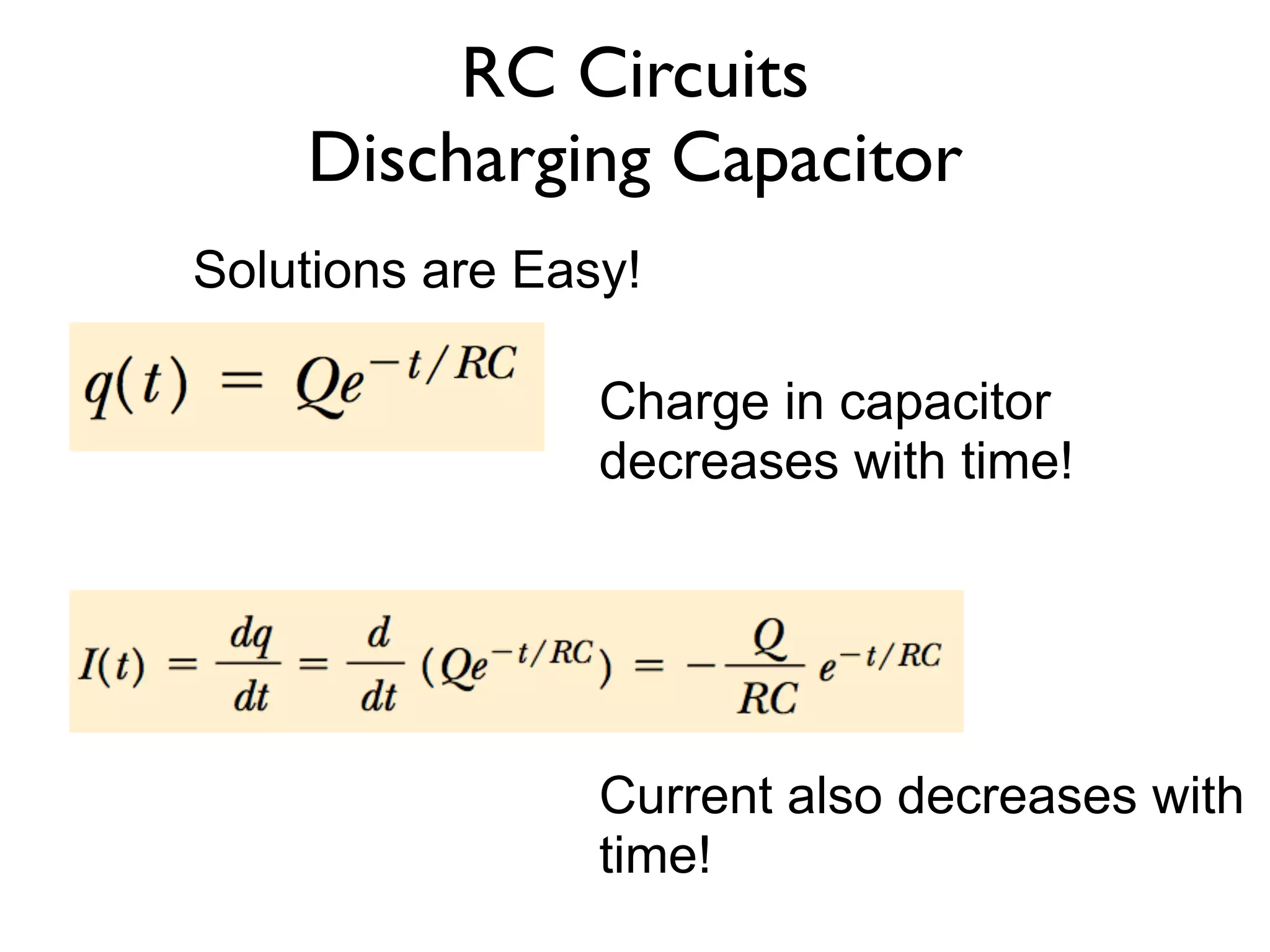
Solutions are Easy!

                 Charge in capacitor
                 decreases with time!


                 Current also decreases with
                 time!
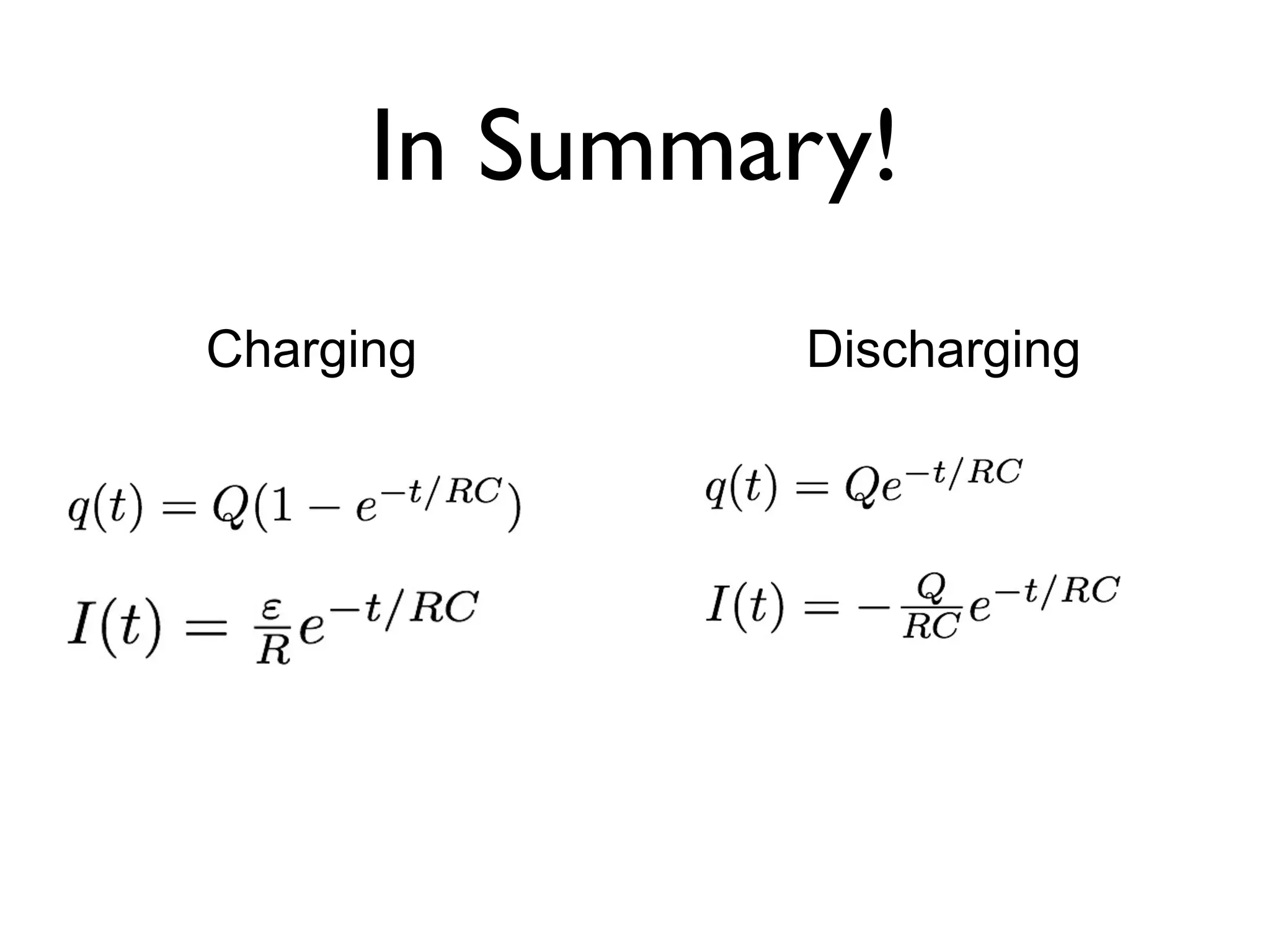
In Summary!
Charging       Discharging
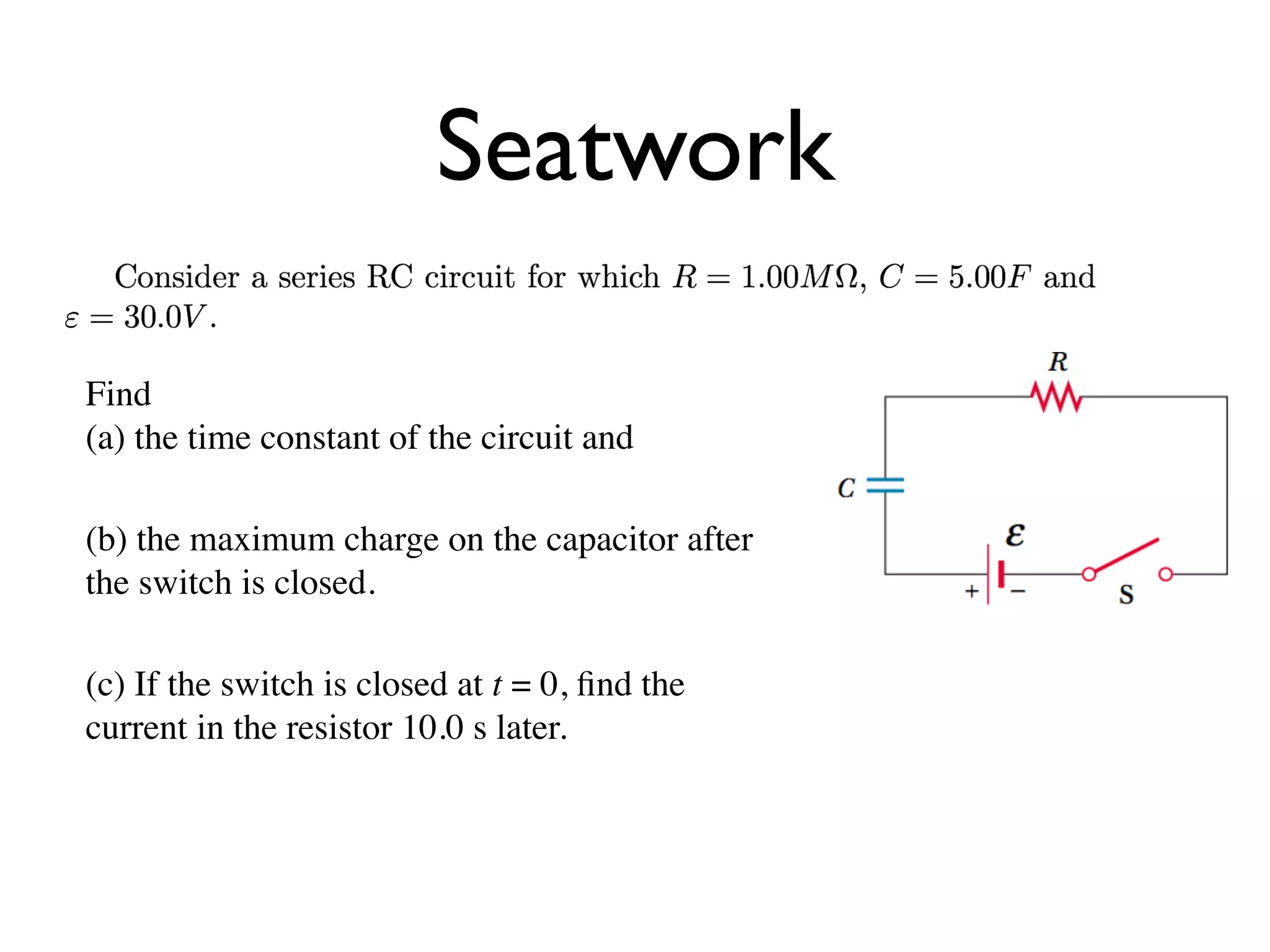
Seatwork

Find
(a) the time constant of the circuit and

(b) the maximum charge on the capacitor after
the switch is closed.

(c) If the switch is closed at t = 0, find the
current in the resistor 10.0 s later.
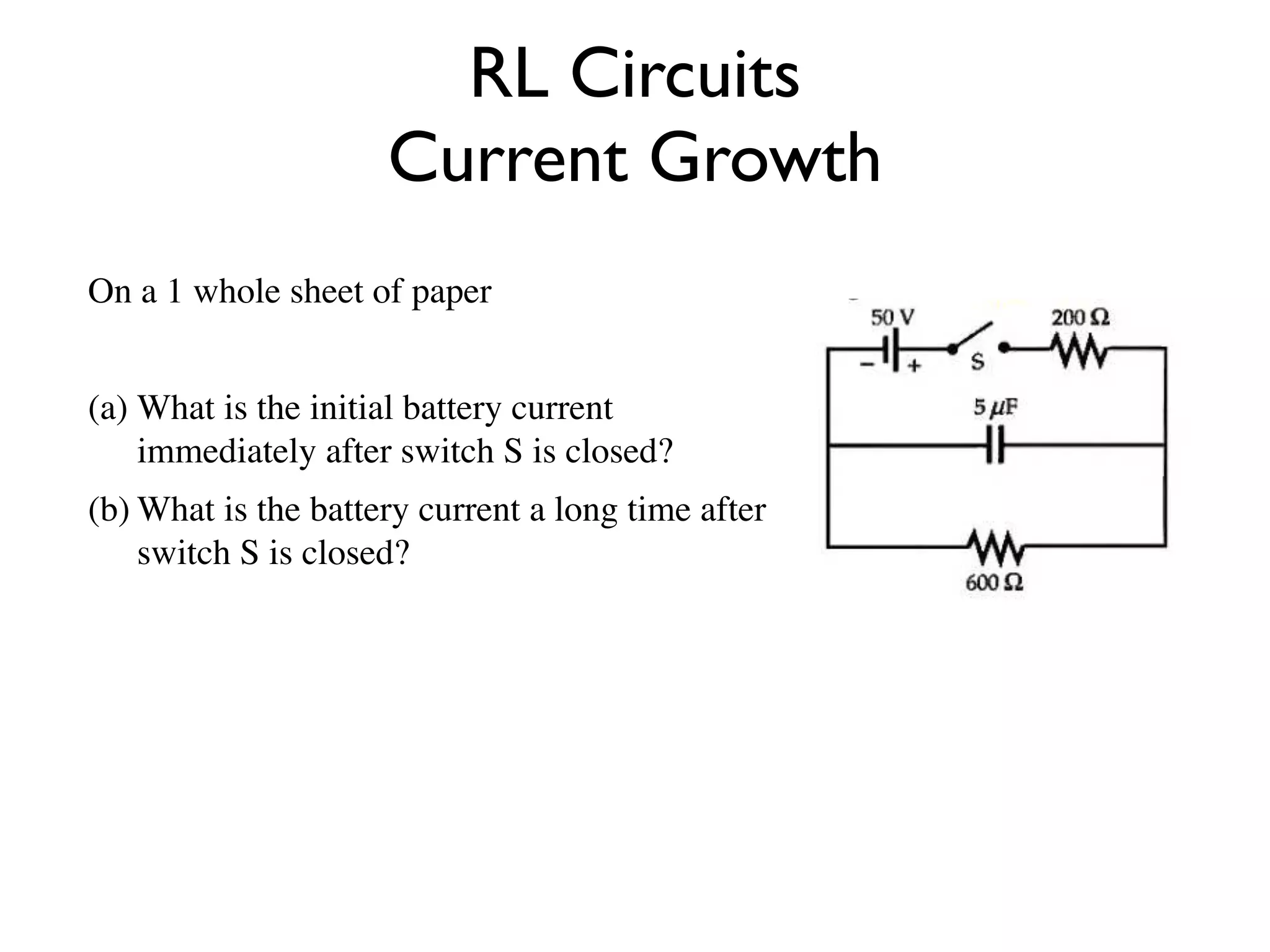
RL Circuits
                     Current Growth
On a 1 whole sheet of paper


(a) What is the initial battery current
    immediately after switch S is closed?
(b) What is the battery current a long time after
    switch S is closed?
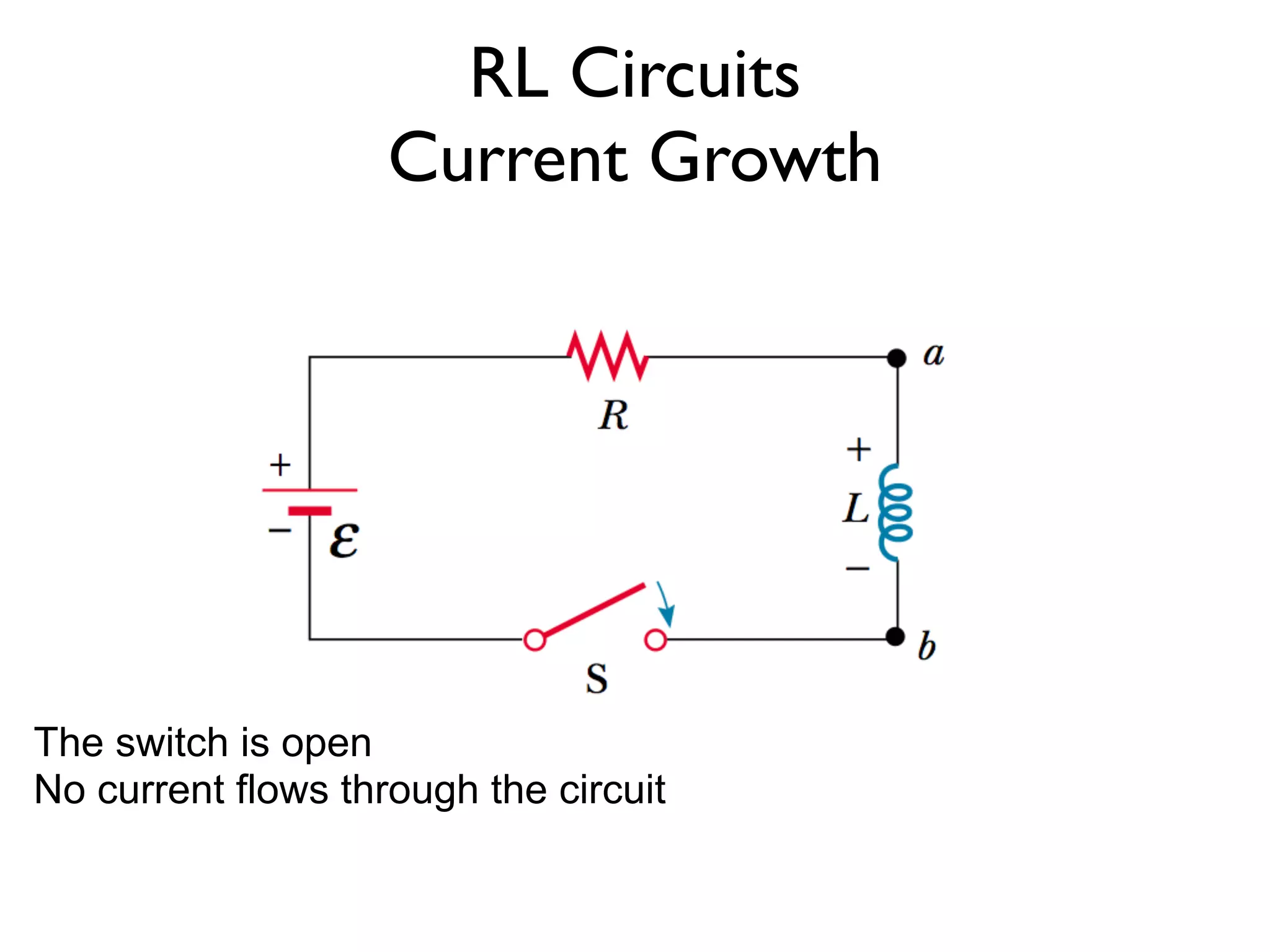
RL Circuits
                    Current Growth


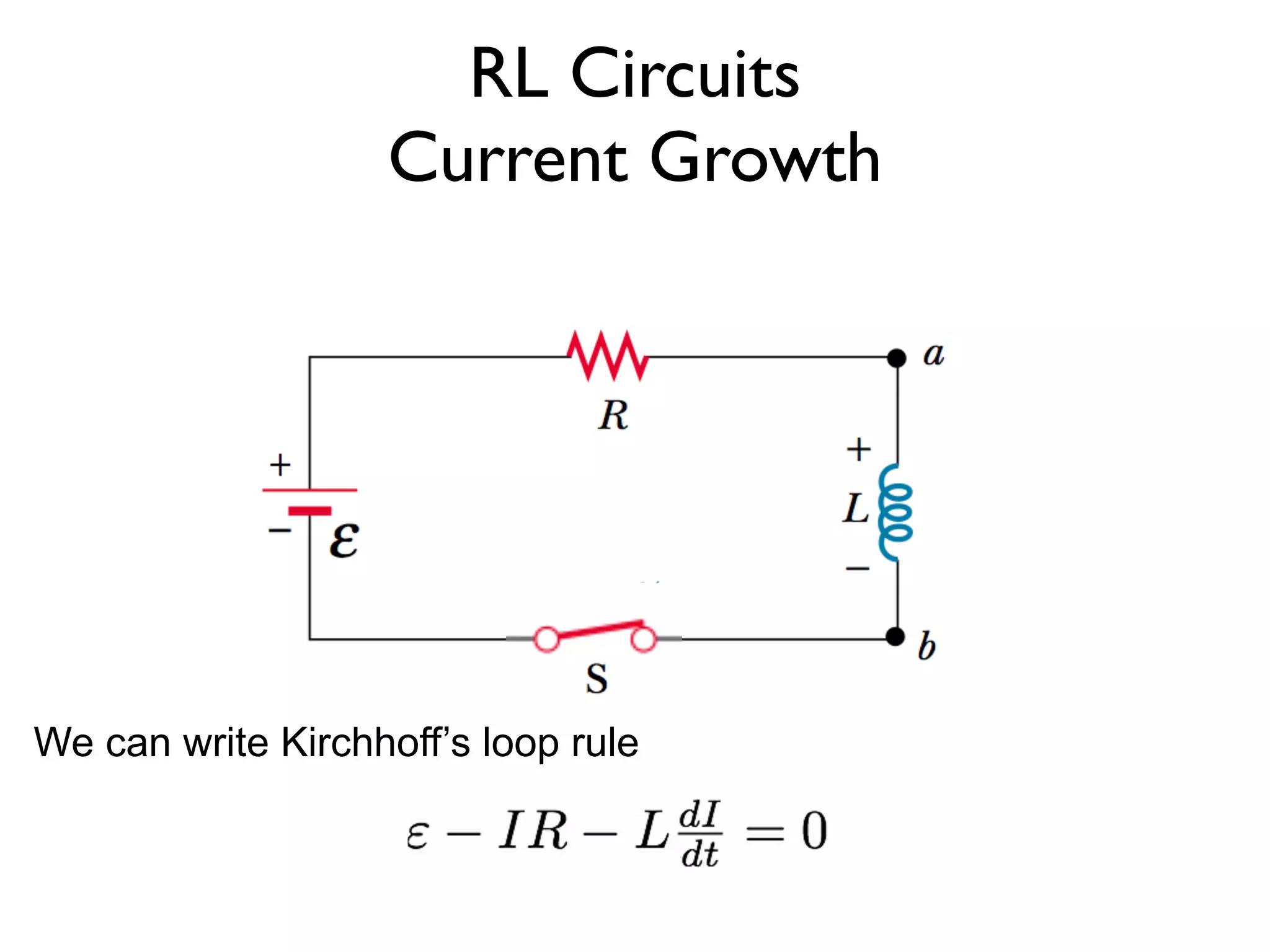
The switch is open
No current flows through the circuit
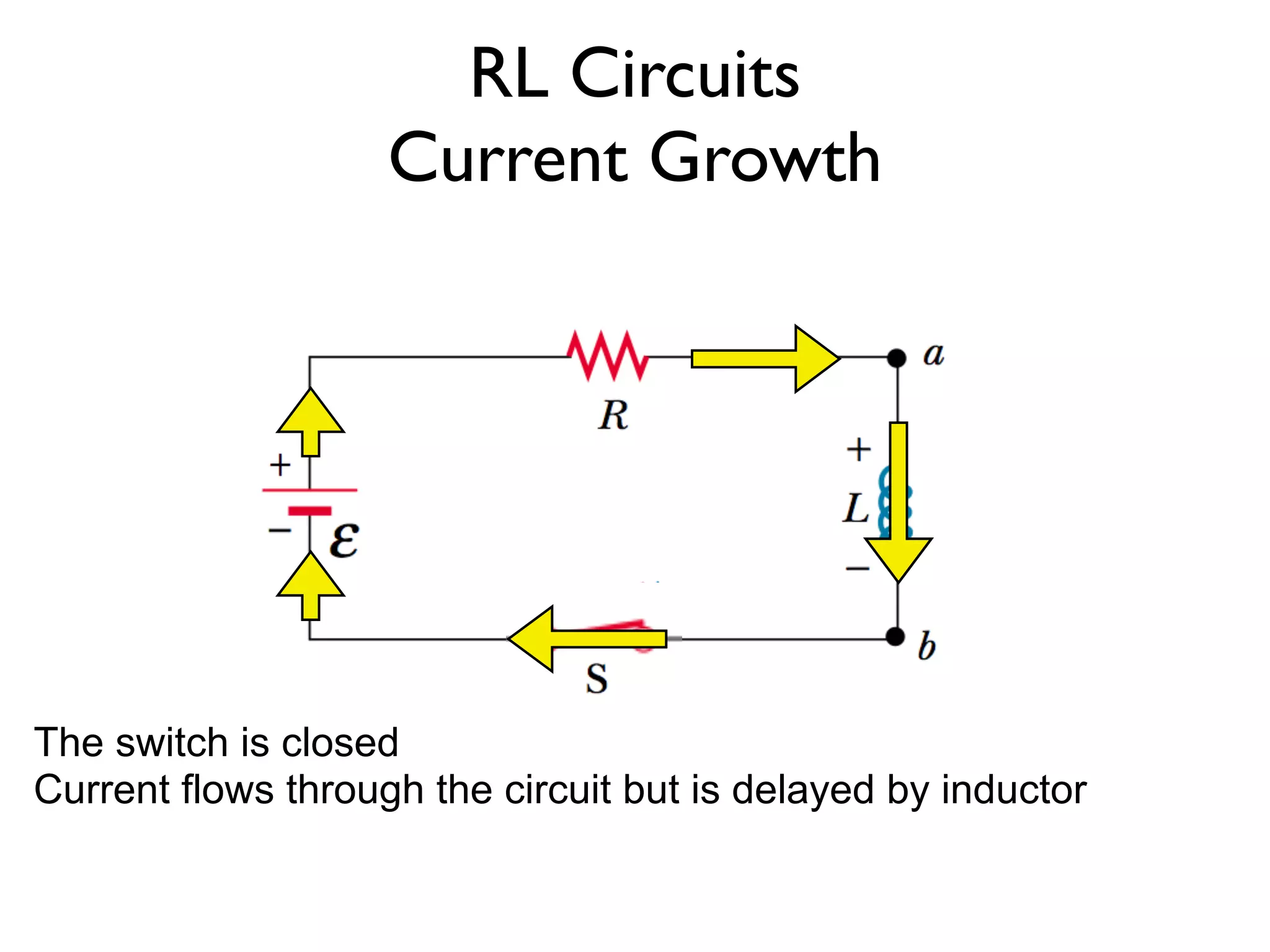
RL Circuits
                    Current Growth


The switch is closed
Current flows through the circuit but is delayed by inductor
RL Circuits
                   Current Growth


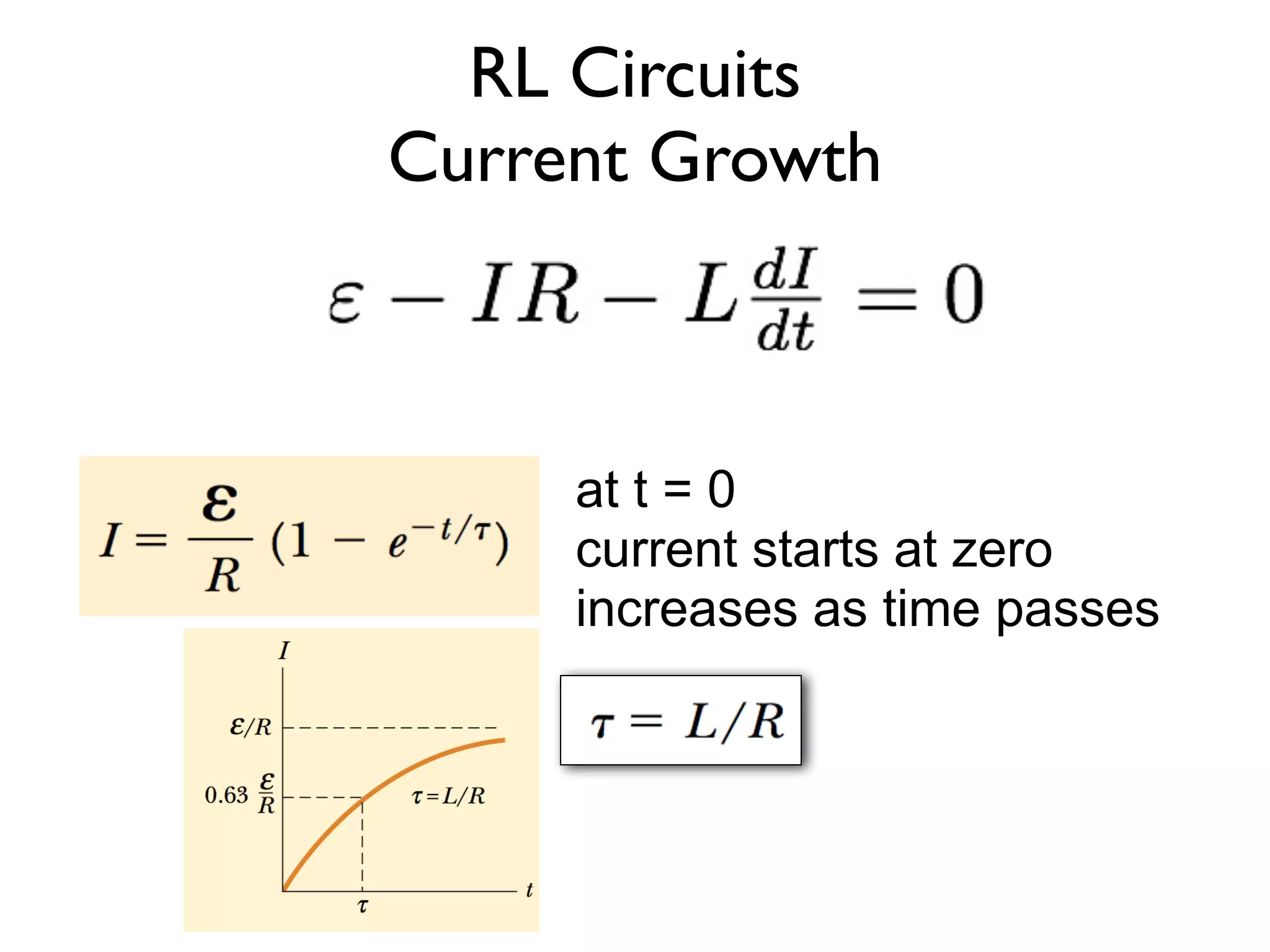
We can write Kirchhoff’s loop rule
RL Circuits
Current Growth


     at t = 0
     current starts at zero
     increases as time passes
RL Circuits
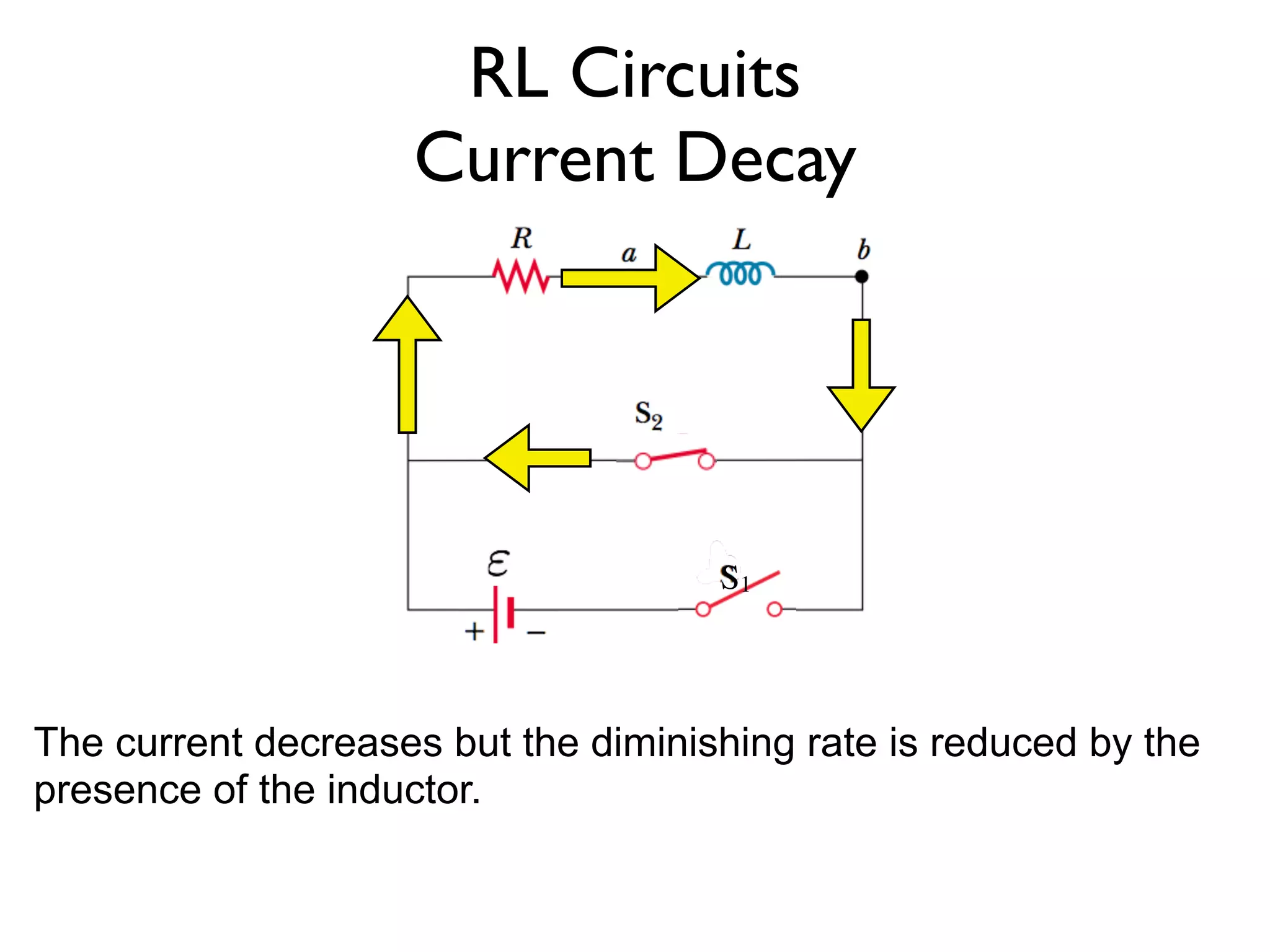
                   Current Decay


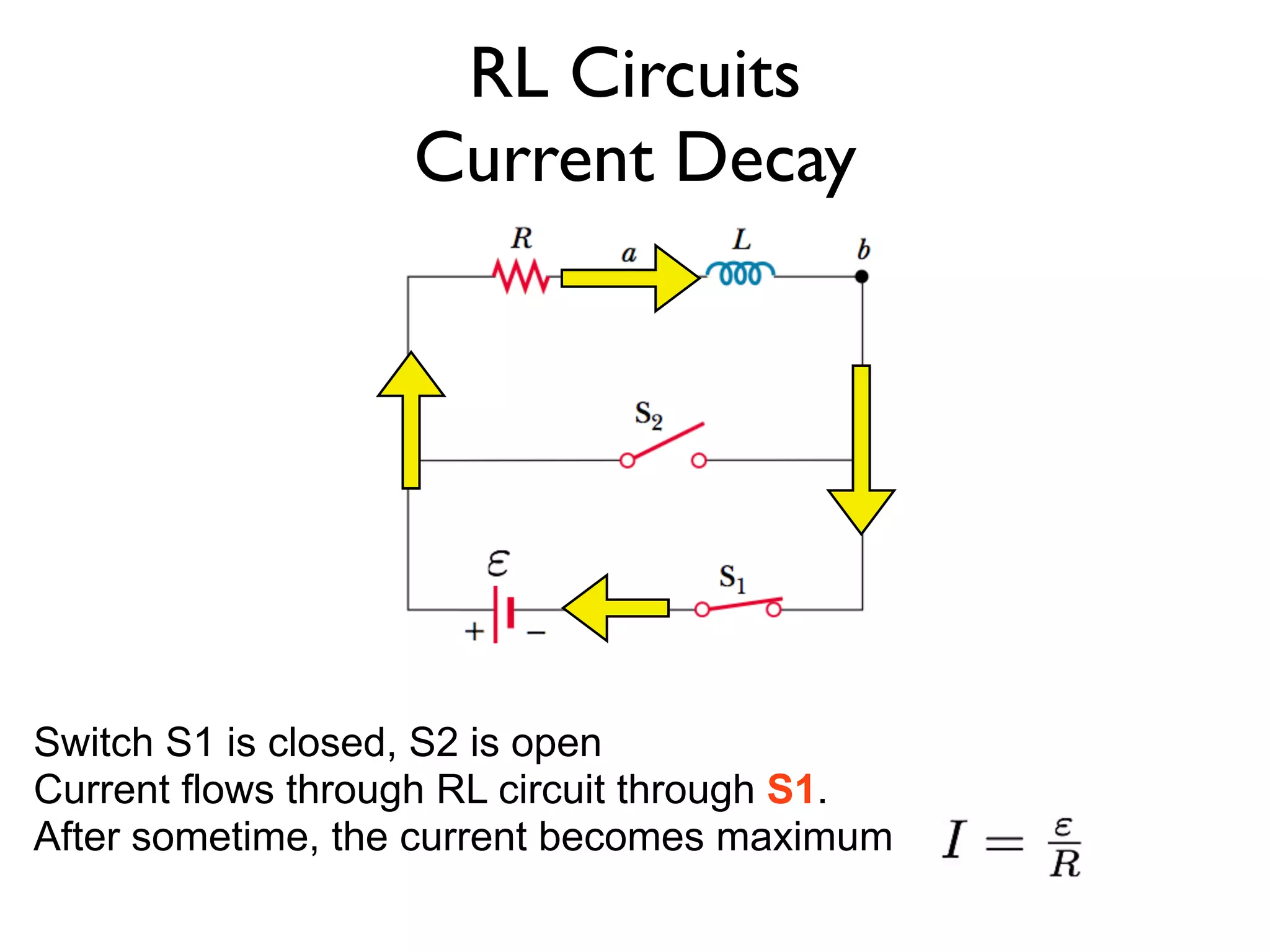
Switch S1 is closed, S2 is open
Current flows through RL circuit through S1.
After sometime, the current becomes maximum
RL Circuits
                     Current Decay


                                      S1


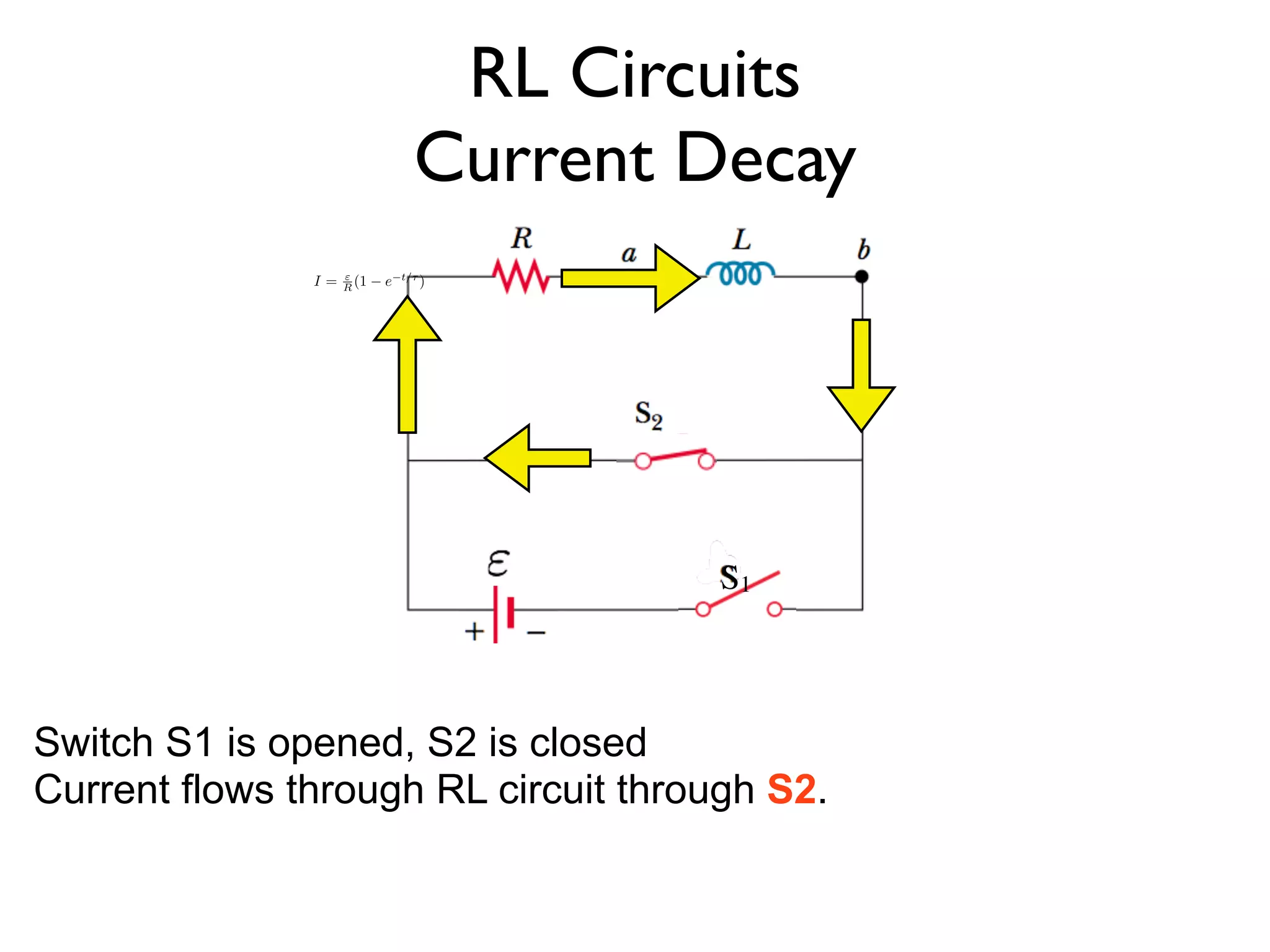
Switch S1 is opened, S2 is closed
Current flows through RL circuit through S2.
RL Circuits
                    Current Decay


                                     S1


The current decreases but the diminishing rate is reduced by the
presence of the inductor.
RL Circuits
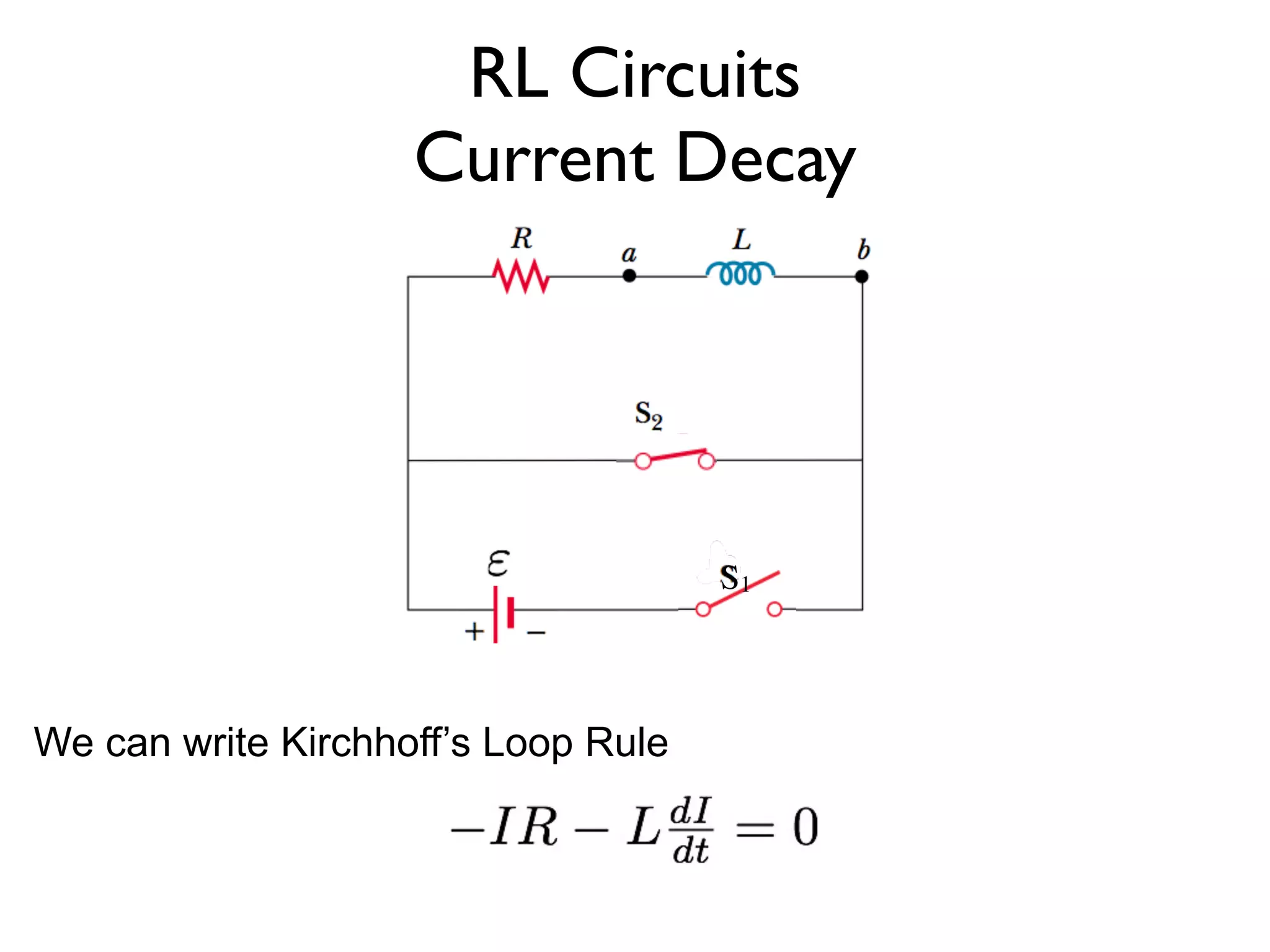
                    Current Decay


                                     S1


We can write Kirchhoff’s Loop Rule
RL Circuits
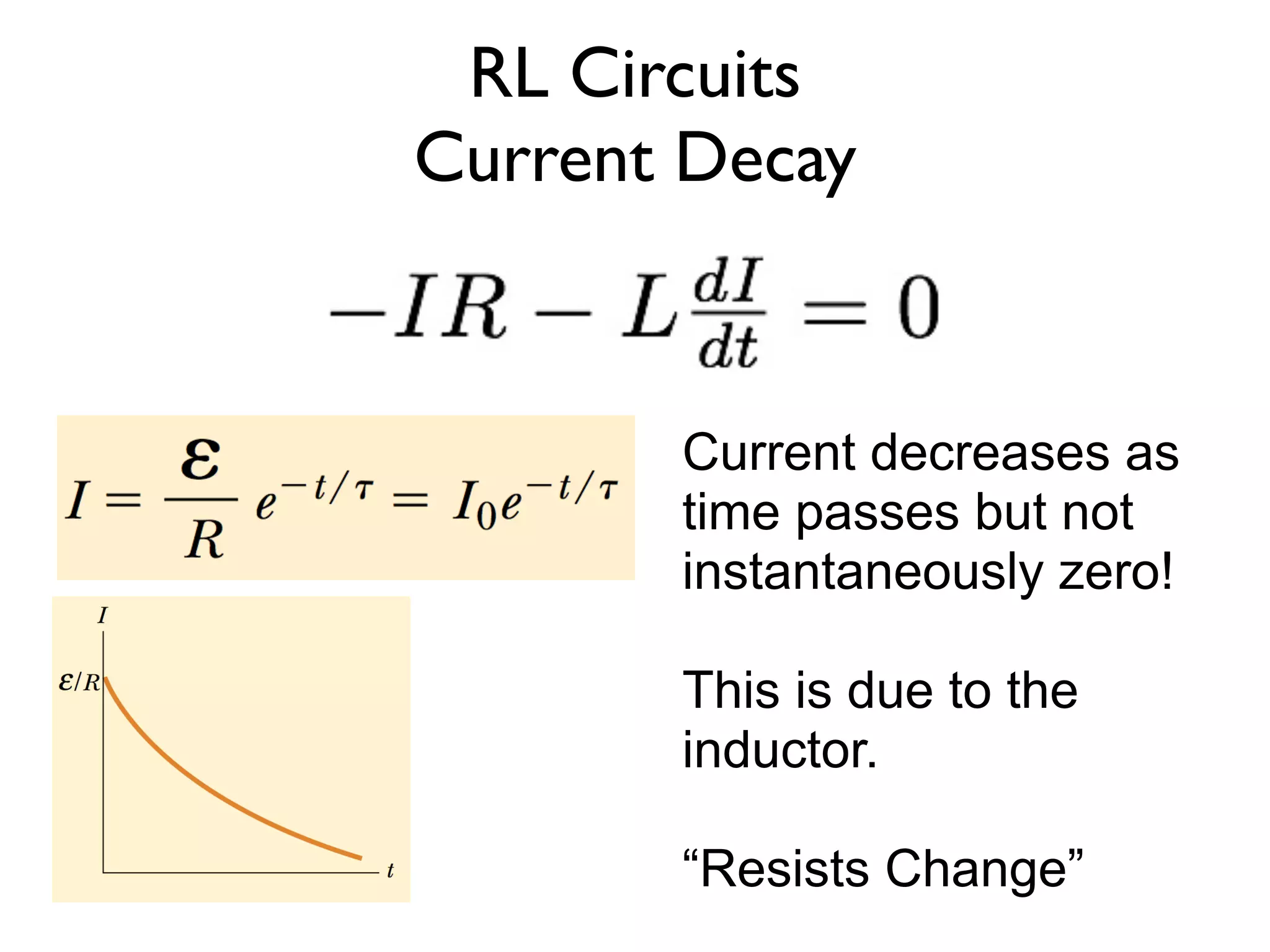
Current Decay


       Current decreases as
       time passes but not
       instantaneously zero!

       This is due to the
       inductor.

       “Resists Change”
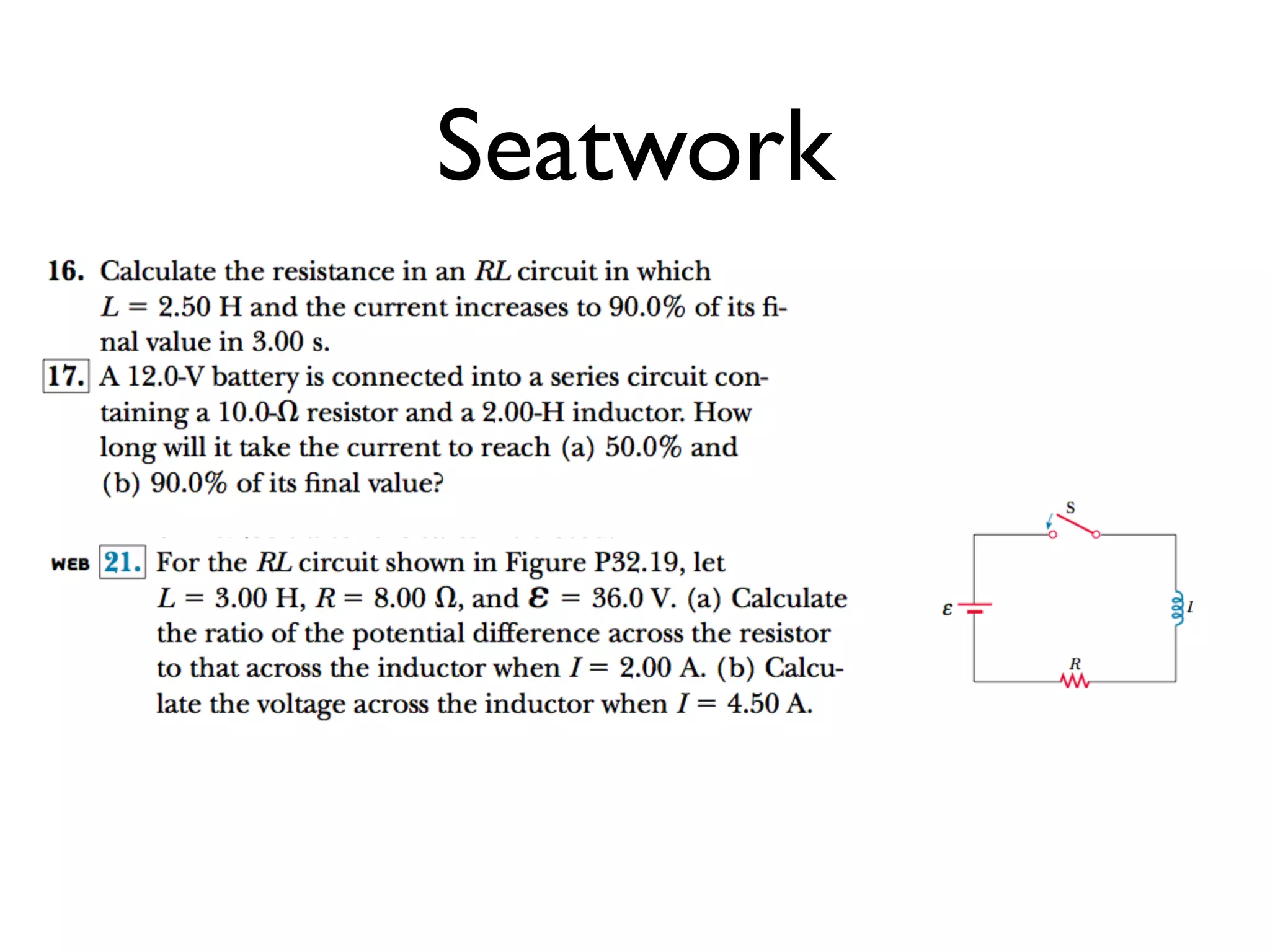
Seatwork
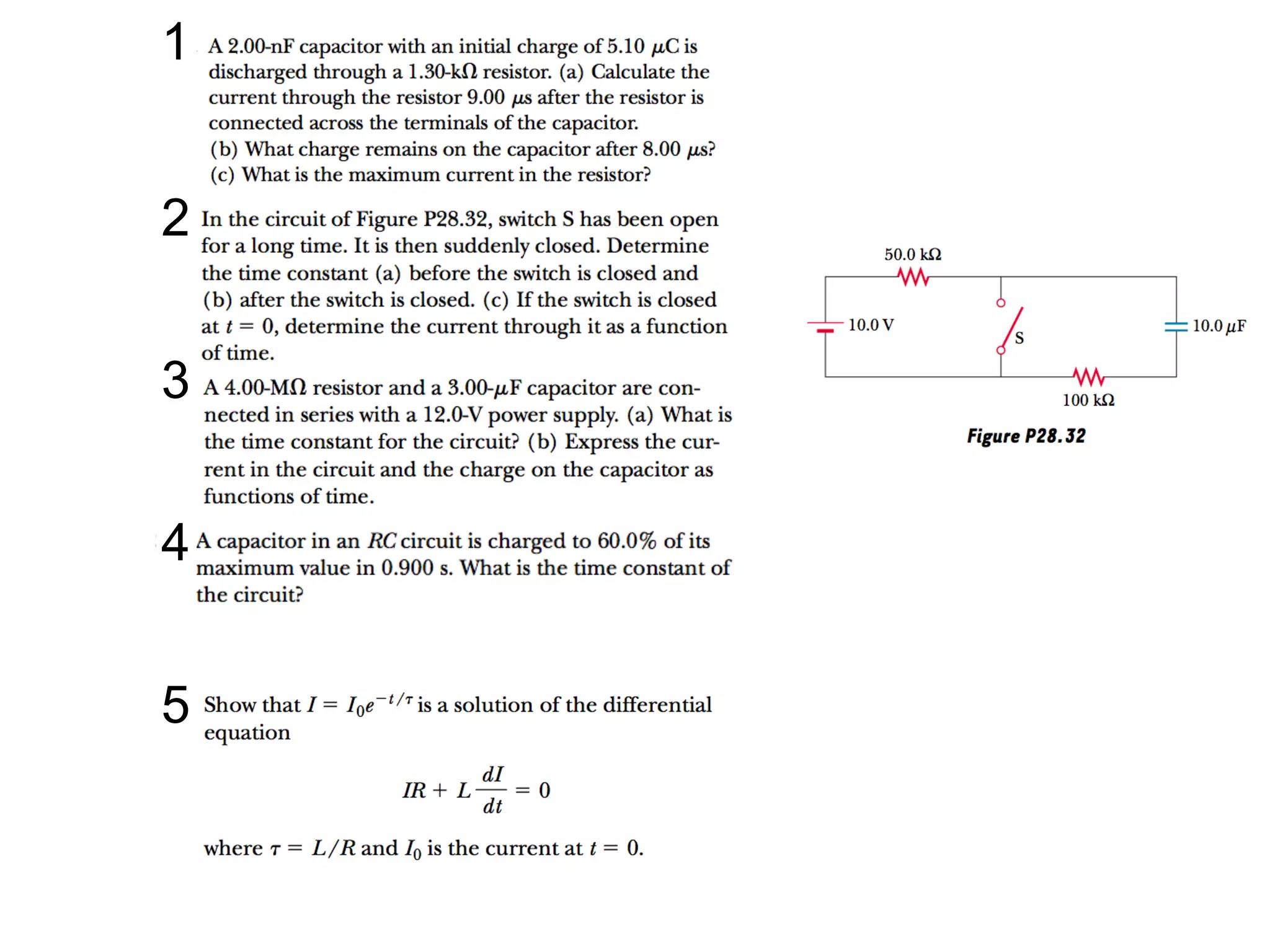
1


2


3


4


5
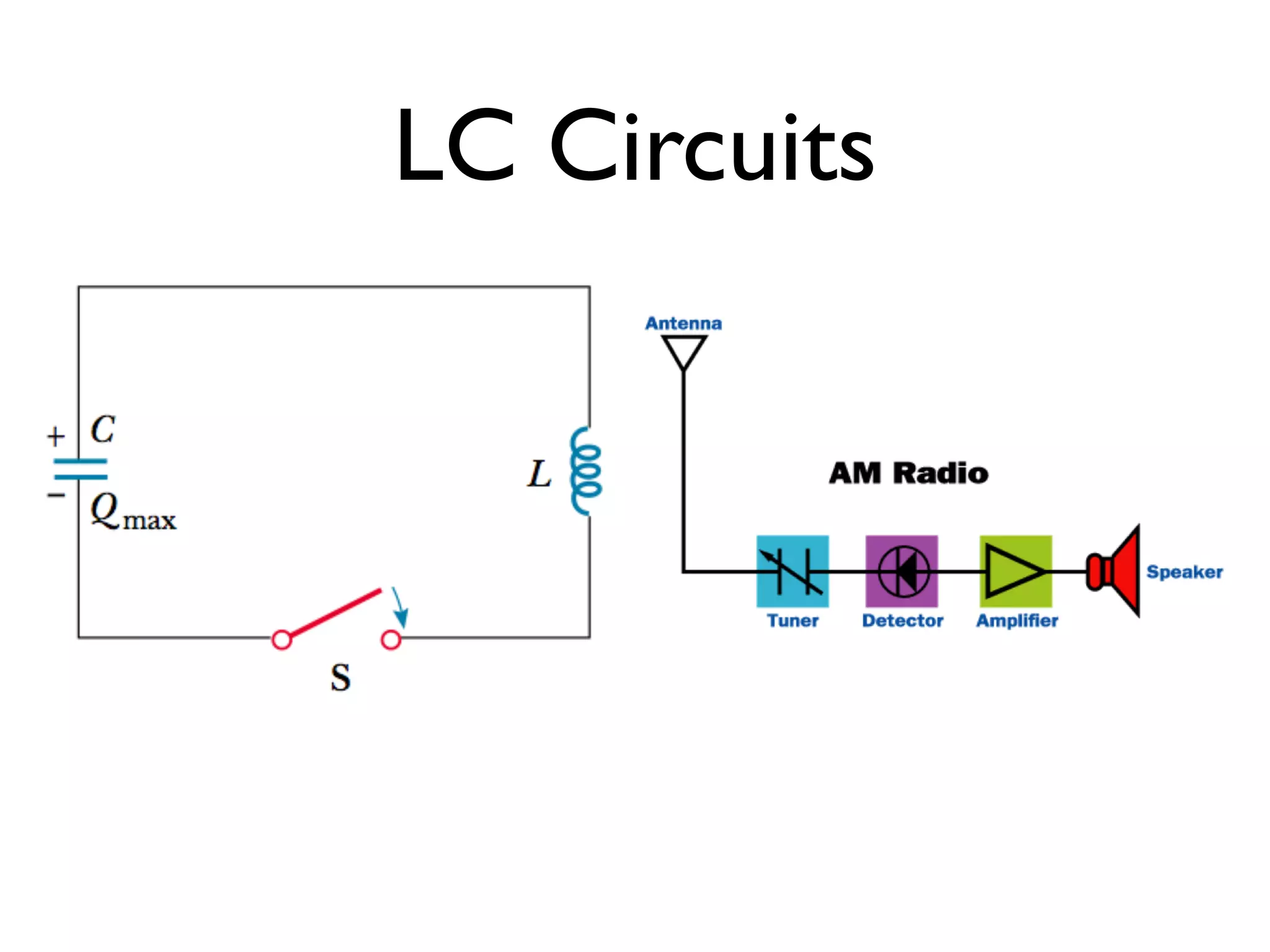
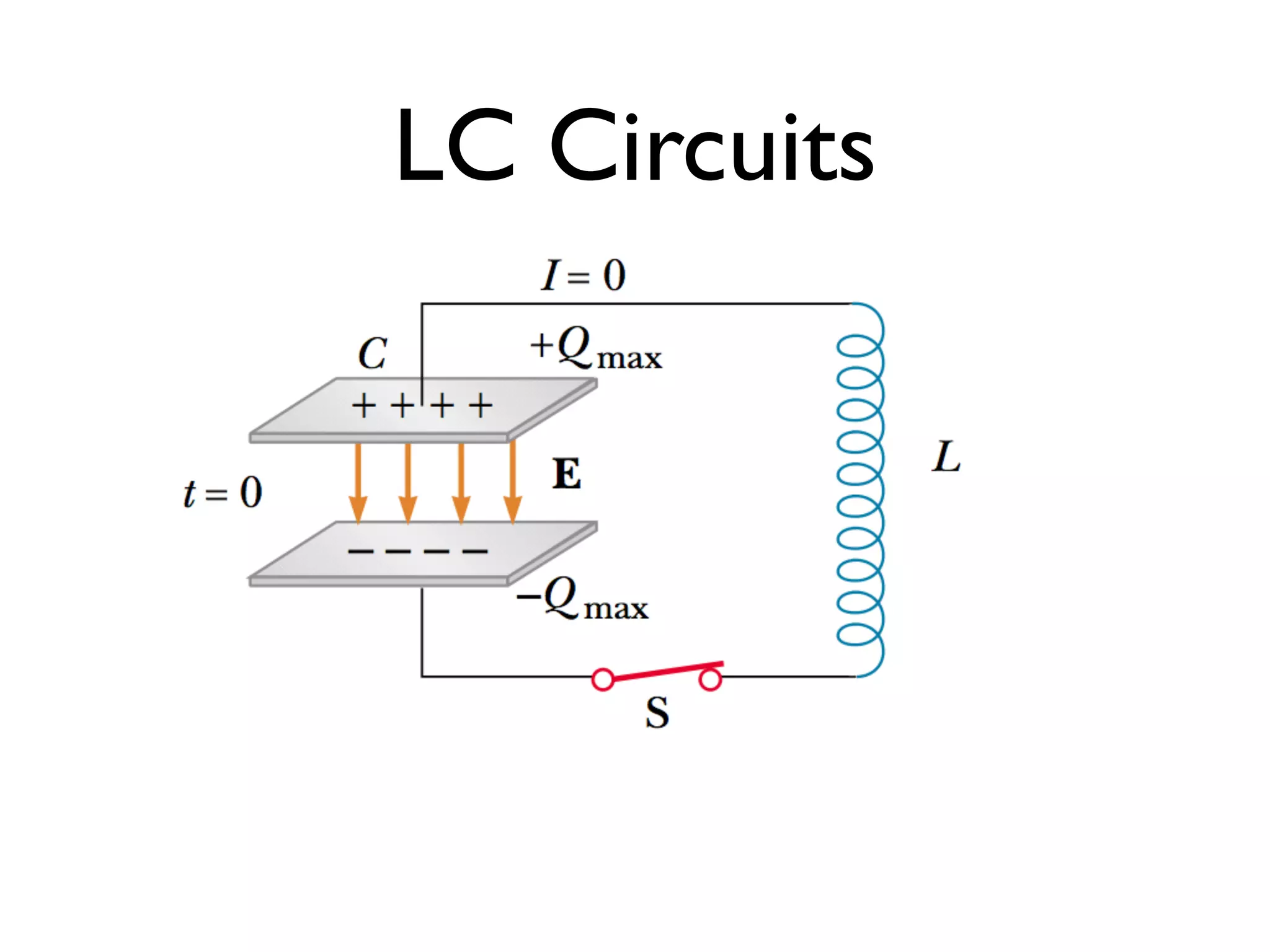
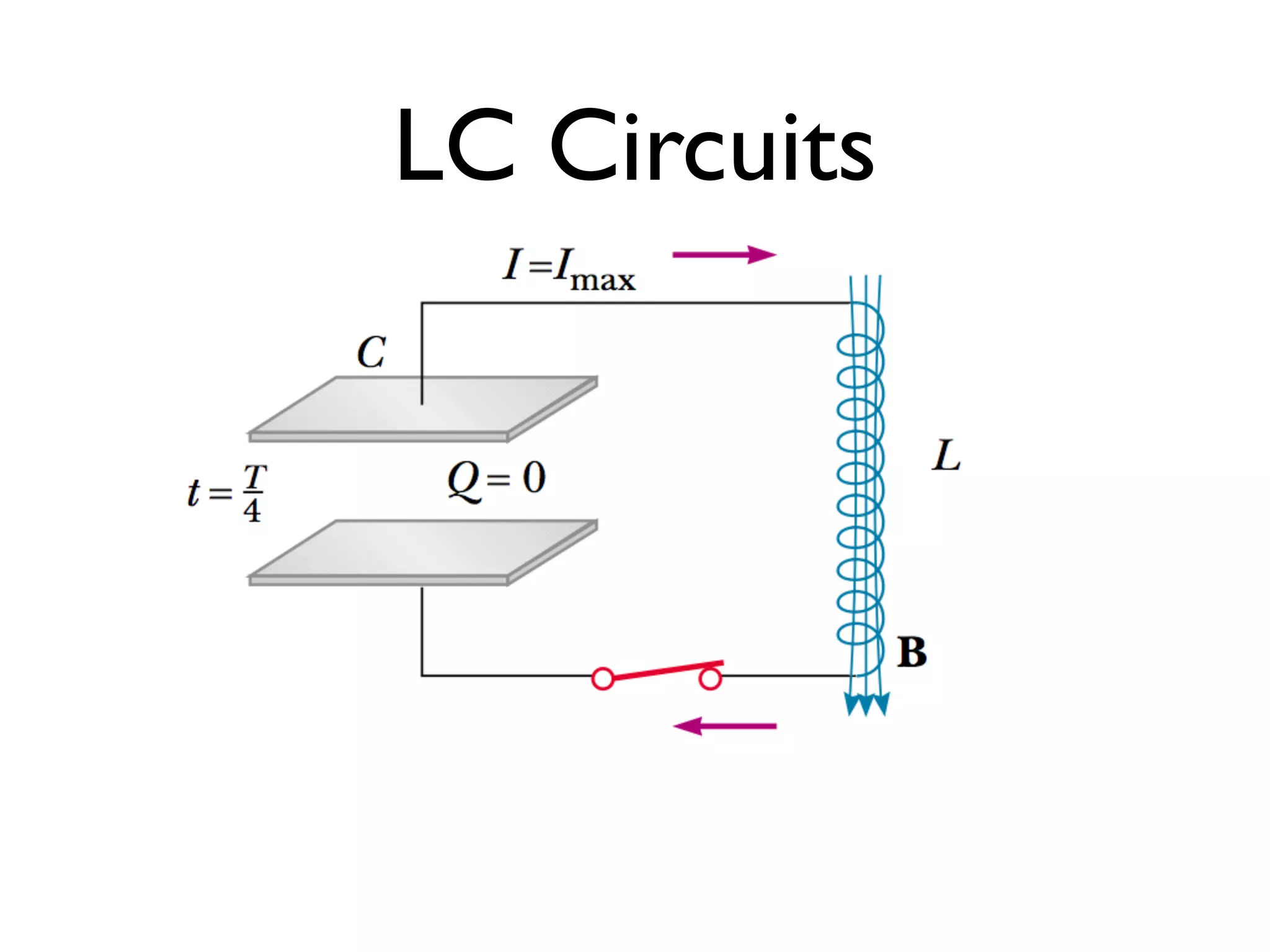
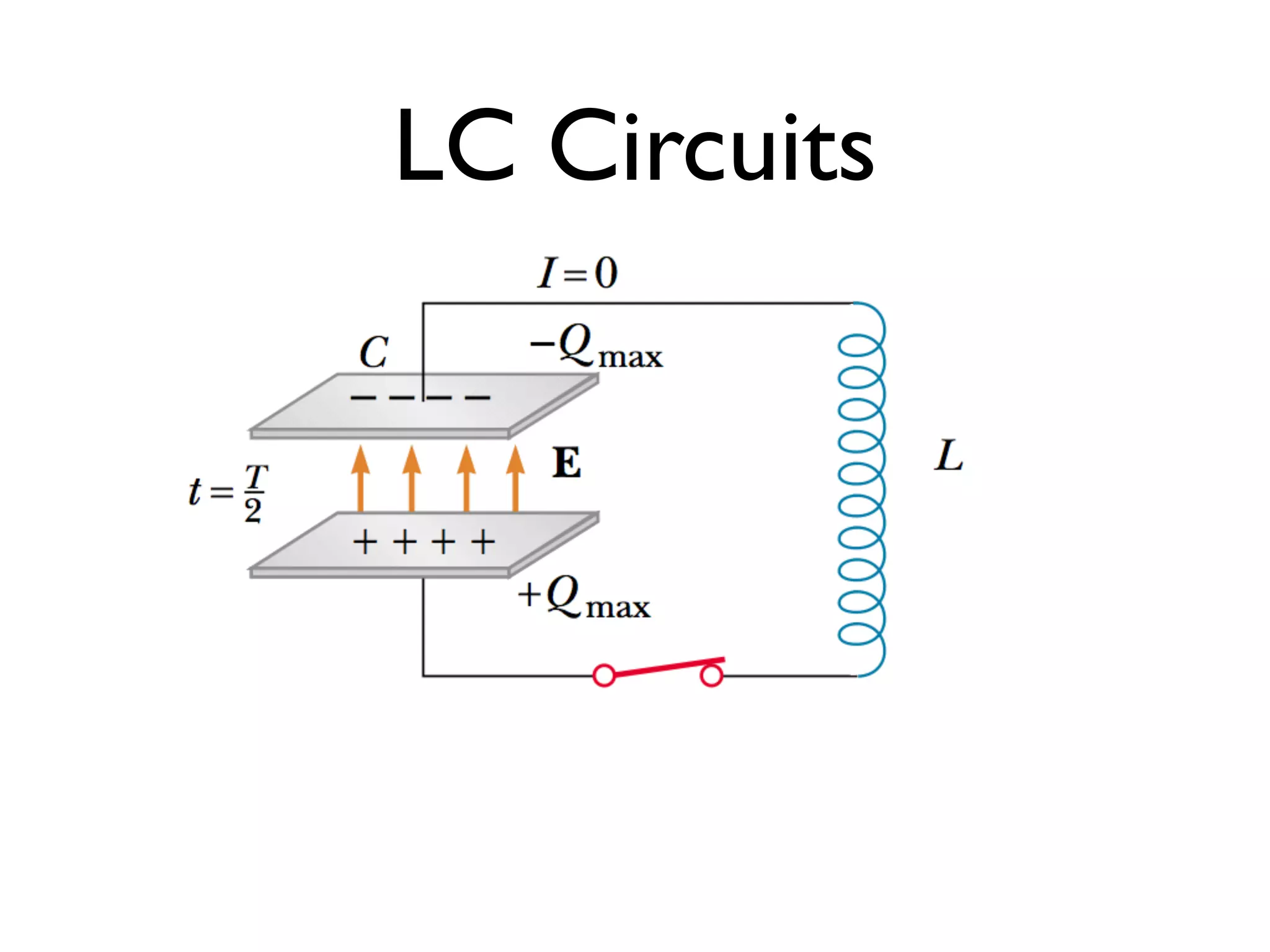
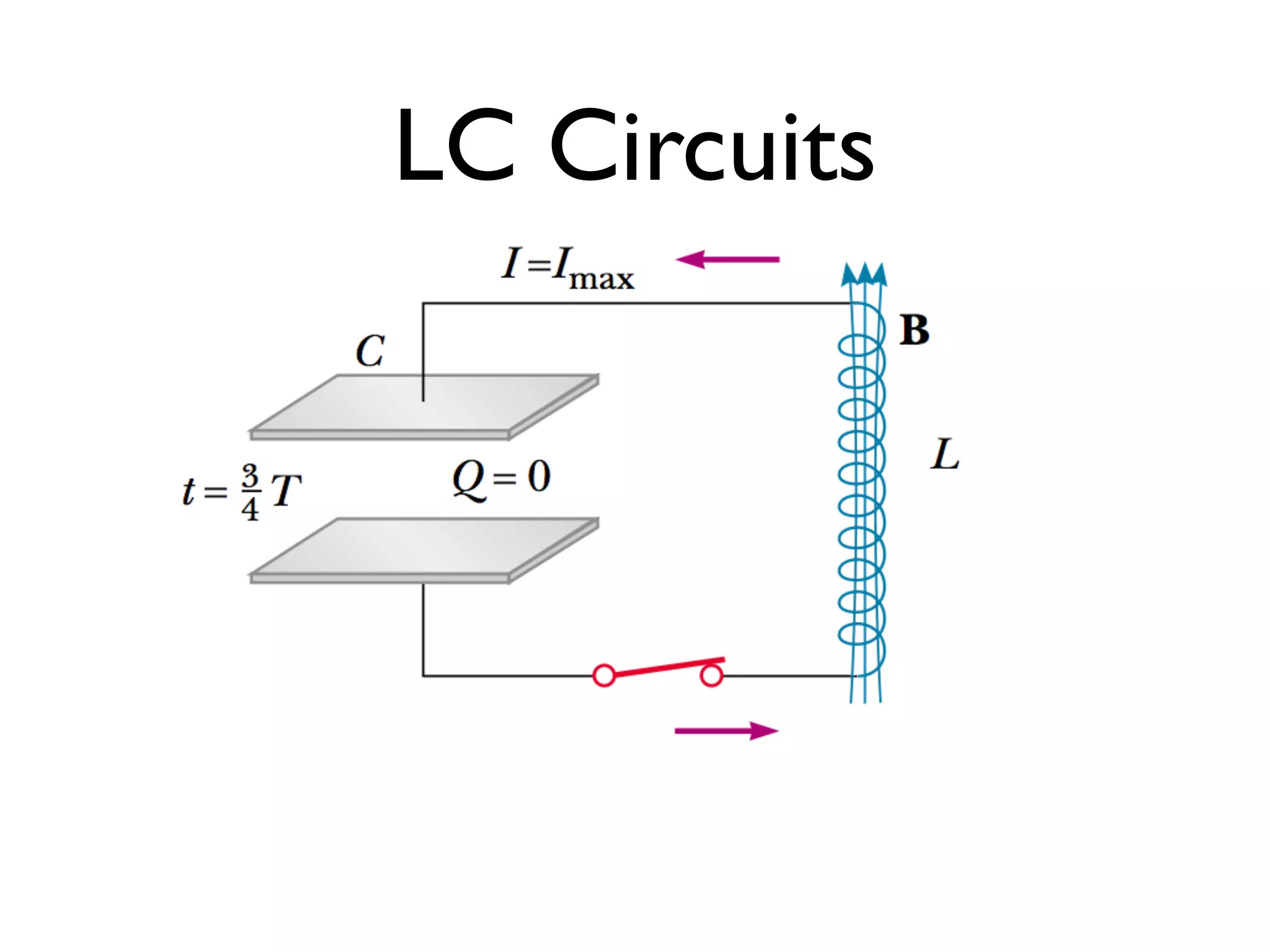
LC Circuits
LC Circuits
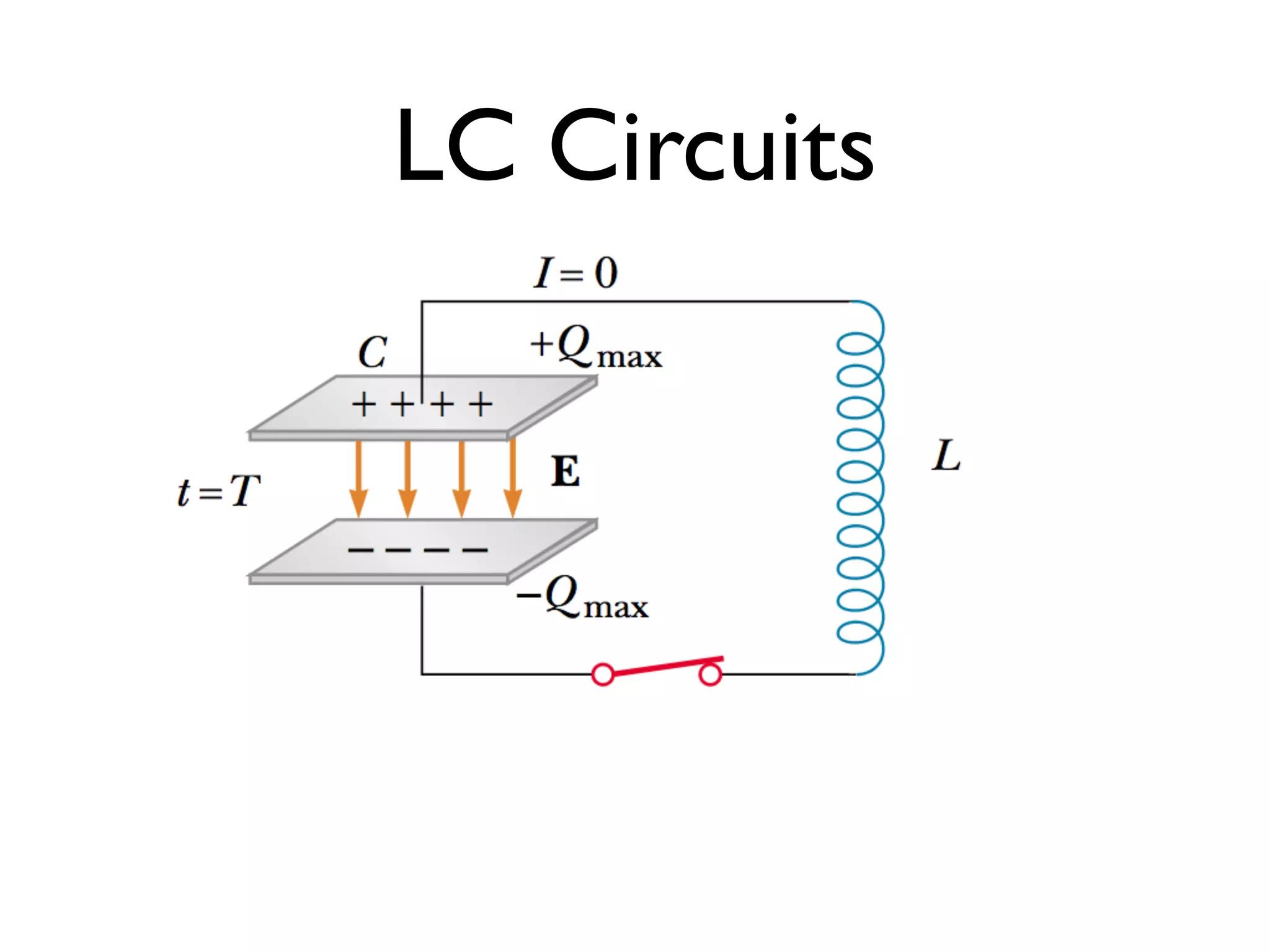
LC Circuits
LC Circuits
LC Circuits
LC Circuits
LC Circuits
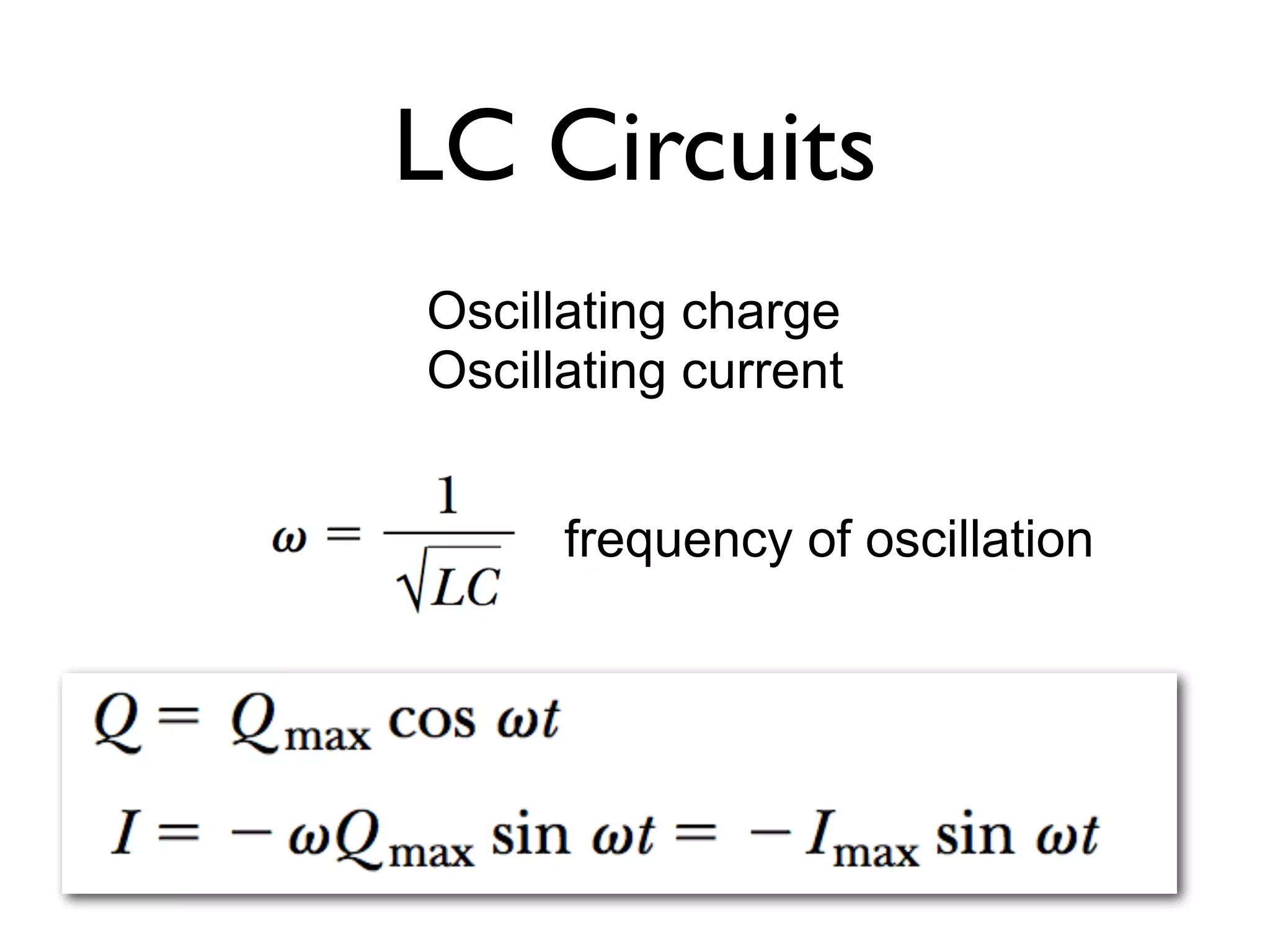
Oscillating charge
Oscillating current


      frequency of oscillation
LC Circuits
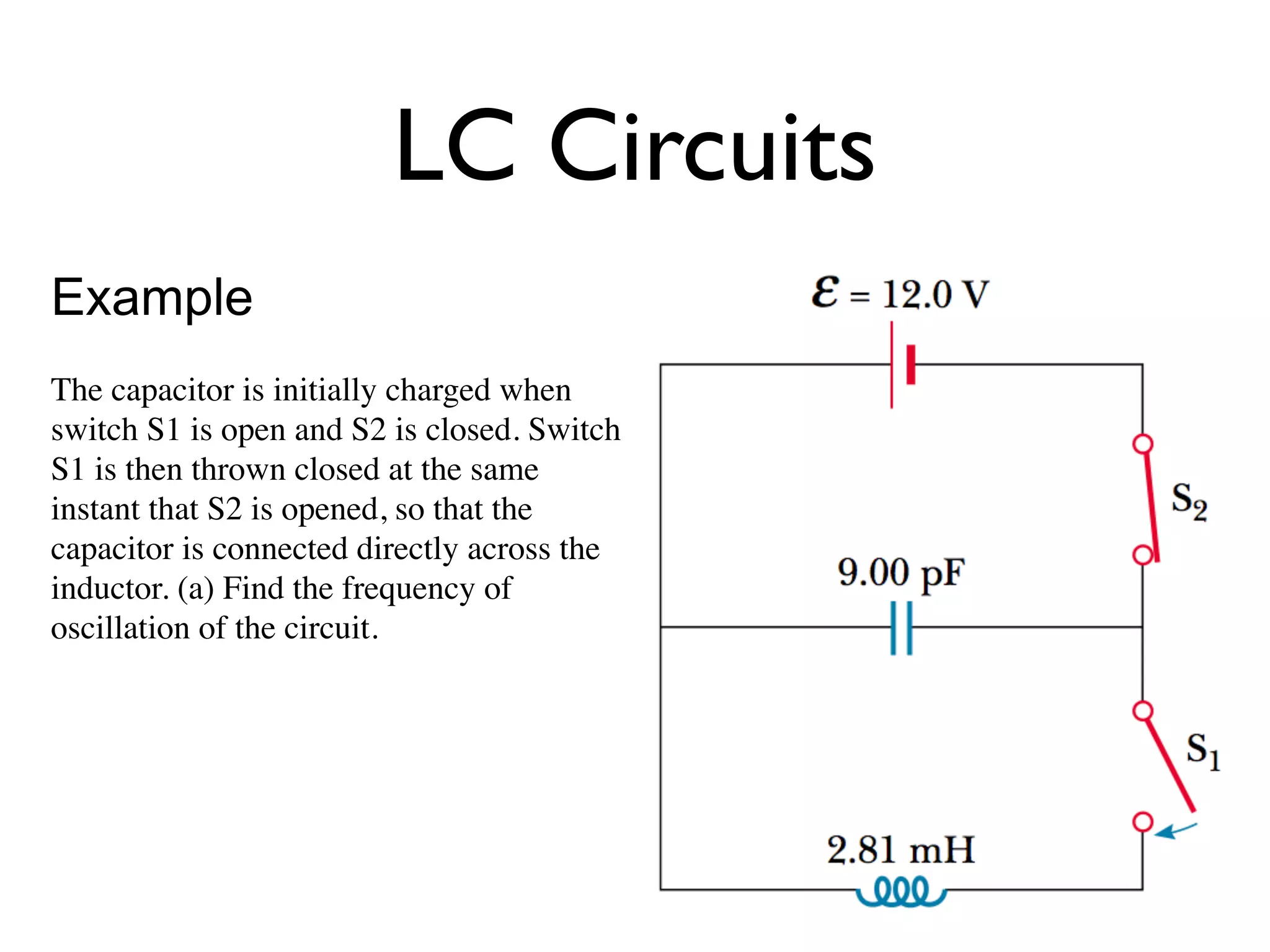
Example
The capacitor is initially charged when
switch S1 is open and S2 is closed. Switch
S1 is then thrown closed at the same
instant that S2 is opened, so that the
capacitor is connected directly across the
inductor. (a) Find the frequency of
oscillation of the circuit.
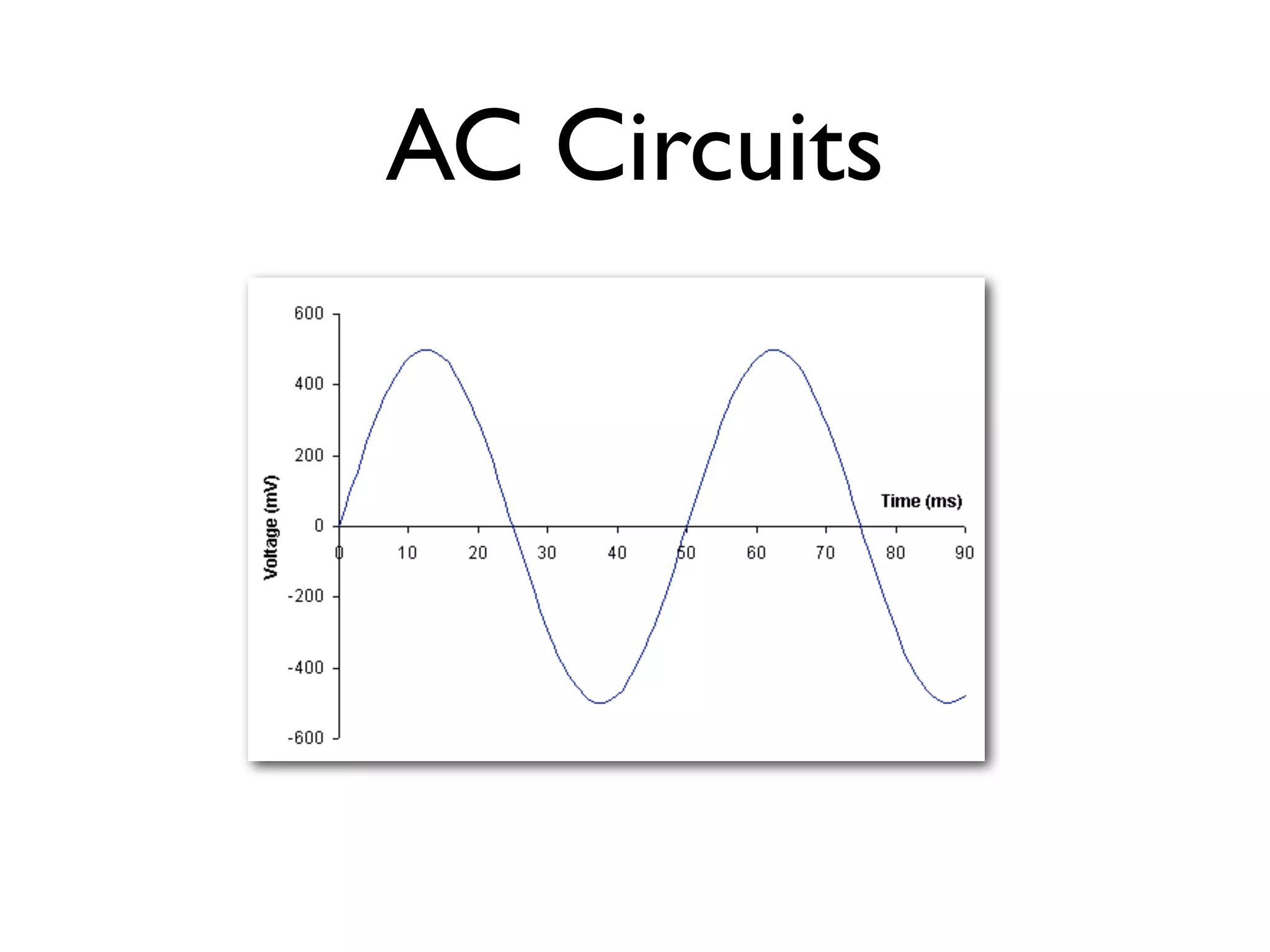
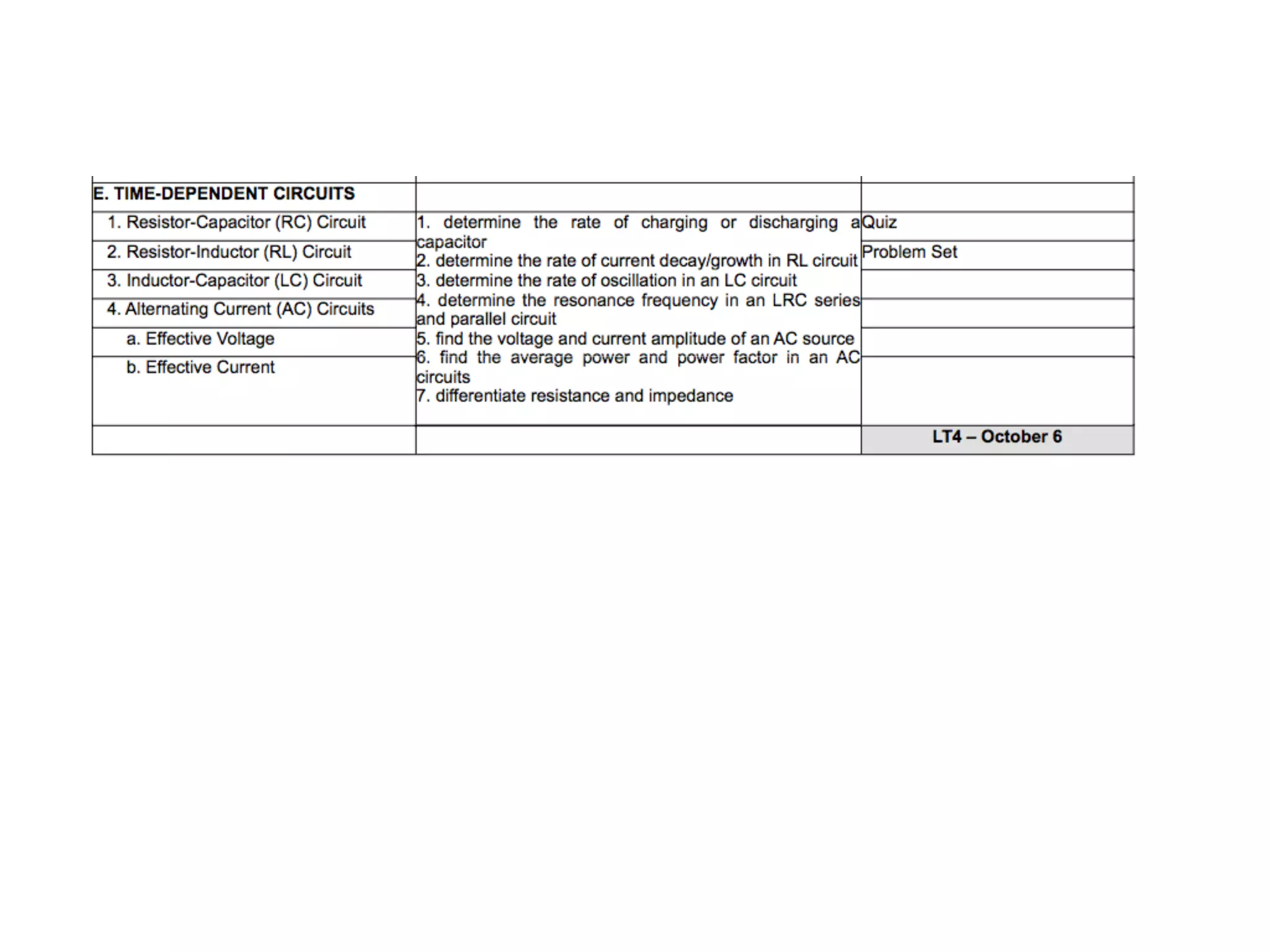
AC Circuits
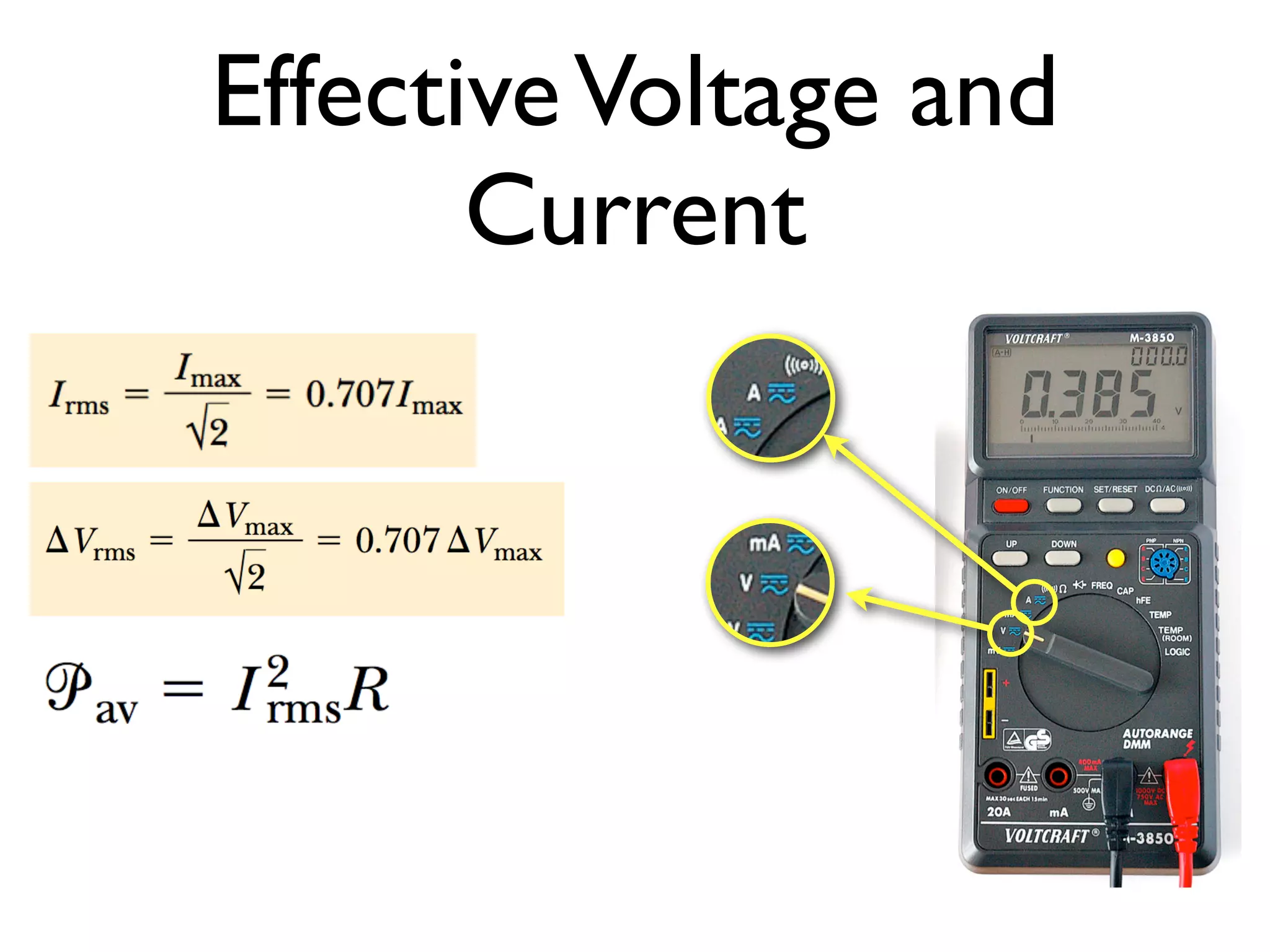
Effective Voltage and
       Current
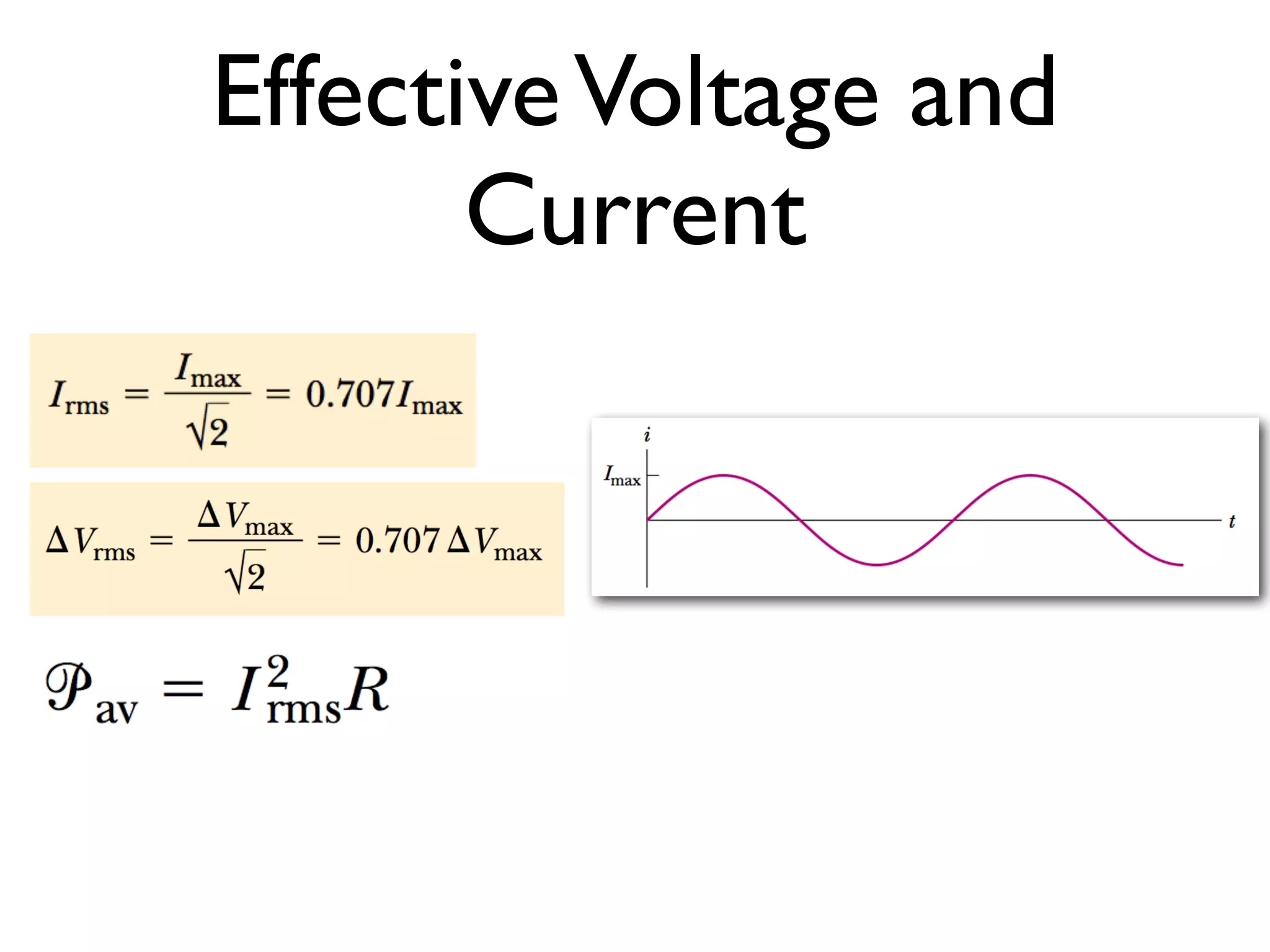
Effective Voltage and
       Current
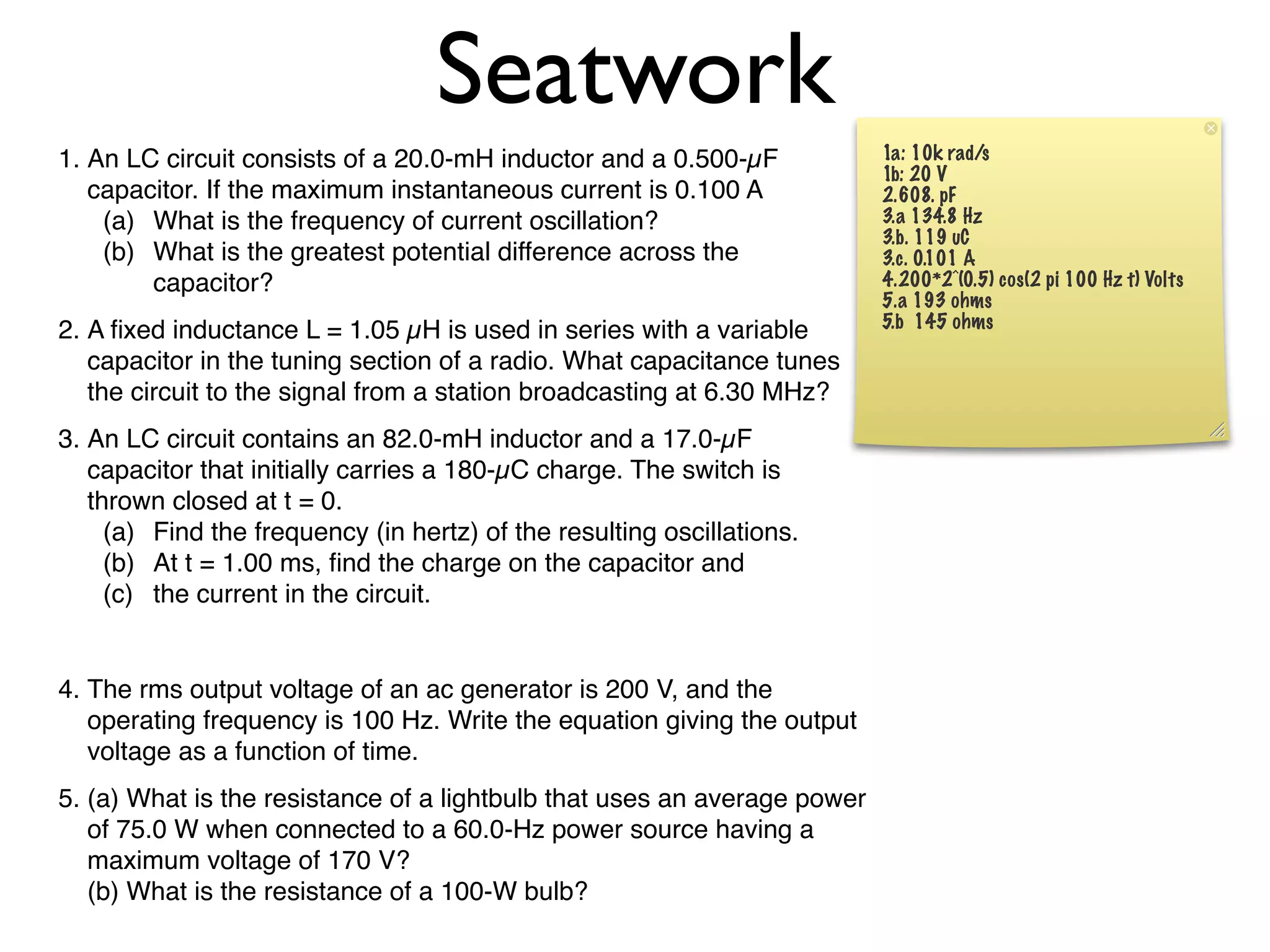
Seatwork
1. An LC circuit consists of a 20.0-mH inductor and a 0.500-µF            1a: 10k rad/s
                                                                          1b: 20 V
   capacitor. If the maximum instantaneous current is 0.100 A             2.608. pF
    (a) What is the frequency of current oscillation?                     3.a 134.8 Hz
                                                                          3.b. 119 uC
    (b) What is the greatest potential difference across the              3.c. 0.101 A
        capacitor?                                                        4.200*2^(0.5) cos(2 pi 100 Hz t) Volts
                                                                          5.a 193 ohms
                                                                          5.b 145 ohms
2. A fixed inductance L = 1.05 µH is used in series with a variable
   capacitor in the tuning section of a radio. What capacitance tunes
   the circuit to the signal from a station broadcasting at 6.30 MHz?
3. An LC circuit contains an 82.0-mH inductor and a 17.0-µF
   capacitor that initially carries a 180-µC charge. The switch is
   thrown closed at t = 0.
     (a) Find the frequency (in hertz) of the resulting oscillations.
     (b) At t = 1.00 ms, find the charge on the capacitor and
     (c) the current in the circuit.


4. The rms output voltage of an ac generator is 200 V, and the
   operating frequency is 100 Hz. Write the equation giving the output
   voltage as a function of time.
5. (a) What is the resistance of a lightbulb that uses an average power
   of 75.0 W when connected to a 60.0-Hz power source having a
   maximum voltage of 170 V?
   (b) What is the resistance of a 100-W bulb?
Rc and rl circuits

  • 2.
    RC Circuits Charging Capacitor The capacitor is neutral No current flows through the circuit
  • 3.
    RC Circuits Charging Capacitor The switch is closed Maximum current flows
  • 4.
    RC Circuits Charging Capacitor +q -q +q +q goes to lower part of capacitor +q is repelled from upper part of capacitor leaving a -q charge As the lower plate increases in + charge, current decreases due to repulsion
  • 5.
    RC Circuits Charging Capacitor +q -Q +Q +q +q This process repeats until the capacitor gains and emf equal to and plates with charges +Q and -Q Finally, the current is zero due to maximum charge repulsion
  • 6.
  • 7.
    RC Circuits Charging Capacitor We can write Kirchhoff’s Loop Rule
  • 8.
    RC Circuits Charging Capacitor We can write Kirchhoff’s Loop Rule
  • 9.
    RC Circuits ChargingCapacitor A differential equation! You need better Calculus skills :’(
  • 10.
    RC Circuits Charging Capacitor Solution is quite easy!
  • 11.
    RC Circuits Charging Capacitor This means, at t = 0 seconds, charge in capacitor is zero. As time passes by, charge in the capacitor increases up till C
  • 12.
    RC Circuits Charging Capacitor 2nd equation means.. current in the circuit is initially maximum! and then as time passes by, it goes to zero once the capacitor is fully charged!
  • 13.
  • 14.
    RC Circuits Discharging Capacitor Capacitor is fully charged at its plates Switch is open, no current flows
  • 15.
    RC Circuits Discharging Capacitor Switch is closed Capacitor is being discharged Current flows
  • 16.
    RC Circuits Discharging Capacitor Capacitor is fully discharged No more current flows
  • 17.
    RC Circuits DischargingCapacitor We can write Kirchhoff’s Loop Rule
  • 18.
    RC Circuits DischargingCapacitor We can write Kirchhoff’s Loop Rule
  • 19.
    RC Circuits Discharging Capacitor A differential equation! You need better Calculus skills :’(
  • 20.
    RC Circuits Discharging Capacitor Solutions are Easy! Charge in capacitor decreases with time! Current also decreases with time!
  • 21.
  • 22.
    Seatwork Find (a) the timeconstant of the circuit and (b) the maximum charge on the capacitor after the switch is closed. (c) If the switch is closed at t = 0, find the current in the resistor 10.0 s later.
  • 23.
    RL Circuits Current Growth On a 1 whole sheet of paper (a) What is the initial battery current immediately after switch S is closed? (b) What is the battery current a long time after switch S is closed?
  • 24.
    RL Circuits Current Growth The switch is open No current flows through the circuit
  • 25.
    RL Circuits Current Growth The switch is closed Current flows through the circuit but is delayed by inductor
  • 26.
    RL Circuits Current Growth We can write Kirchhoff’s loop rule
  • 27.
    RL Circuits Current Growth at t = 0 current starts at zero increases as time passes
  • 28.
    RL Circuits Current Decay Switch S1 is closed, S2 is open Current flows through RL circuit through S1. After sometime, the current becomes maximum
  • 29.
    RL Circuits Current Decay S1 Switch S1 is opened, S2 is closed Current flows through RL circuit through S2.
  • 30.
    RL Circuits Current Decay S1 The current decreases but the diminishing rate is reduced by the presence of the inductor.
  • 31.
    RL Circuits Current Decay S1 We can write Kirchhoff’s Loop Rule
  • 32.
    RL Circuits Current Decay Current decreases as time passes but not instantaneously zero! This is due to the inductor. “Resists Change”
  • 33.
  • 34.
  • 35.
  • 36.
  • 37.
  • 38.
  • 39.
  • 40.
  • 41.
    LC Circuits Oscillating charge Oscillatingcurrent frequency of oscillation
  • 42.
    LC Circuits Example The capacitoris initially charged when switch S1 is open and S2 is closed. Switch S1 is then thrown closed at the same instant that S2 is opened, so that the capacitor is connected directly across the inductor. (a) Find the frequency of oscillation of the circuit.
  • 43.
  • 44.
  • 45.
  • 46.
    Seatwork 1. An LCcircuit consists of a 20.0-mH inductor and a 0.500-µF 1a: 10k rad/s 1b: 20 V capacitor. If the maximum instantaneous current is 0.100 A 2.608. pF (a) What is the frequency of current oscillation? 3.a 134.8 Hz 3.b. 119 uC (b) What is the greatest potential difference across the 3.c. 0.101 A capacitor? 4.200*2^(0.5) cos(2 pi 100 Hz t) Volts 5.a 193 ohms 5.b 145 ohms 2. A fixed inductance L = 1.05 µH is used in series with a variable capacitor in the tuning section of a radio. What capacitance tunes the circuit to the signal from a station broadcasting at 6.30 MHz? 3. An LC circuit contains an 82.0-mH inductor and a 17.0-µF capacitor that initially carries a 180-µC charge. The switch is thrown closed at t = 0. (a) Find the frequency (in hertz) of the resulting oscillations. (b) At t = 1.00 ms, find the charge on the capacitor and (c) the current in the circuit. 4. The rms output voltage of an ac generator is 200 V, and the operating frequency is 100 Hz. Write the equation giving the output voltage as a function of time. 5. (a) What is the resistance of a lightbulb that uses an average power of 75.0 W when connected to a 60.0-Hz power source having a maximum voltage of 170 V? (b) What is the resistance of a 100-W bulb?