Barilla SpAGroup No : 8Himadri, Rishi, Tarun, Manish, Vikas
IntroductionStarted in 1875 as a small shop in Parma, Italy
By 1990, Barilla SPA - World’s largest pasta producer
Pasta Share - 35% in Italy and 22% in Europe
2 Product Categories – 75% Dry and 25% Fresh
Fresh Products had 21 day Shelf Lives
Dry Products had Long ( 18 to 24 Months) or Medium(10 to 12 weeks) Shelf Lives
800 SKUs of Dry Products
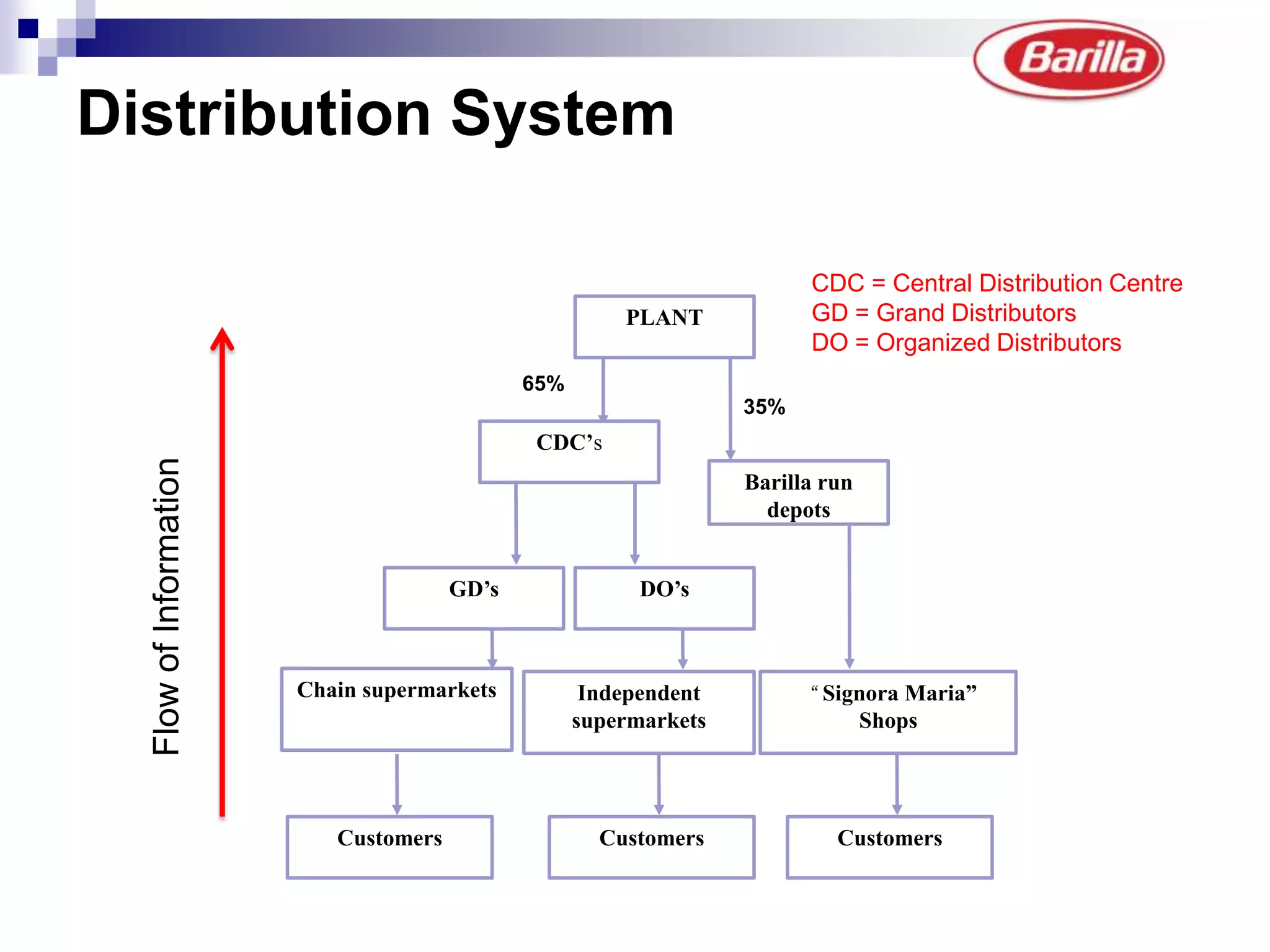
Retail Outlets – Small independent shops and Supermarkets (Chain and Independent)PLANTCDC’sGD’sDO’sChain supermarkets“Signora Maria” ShopsIndependent supermarketsCustomersCustomersCustomersDistribution SystemCDC = Central Distribution CentreGD = Grand DistributorsDO = Organized Distributors65%35%Barilla run depotsFlow of Information
Sales & MarketingHeavy Advertising, Brand positioning
Steffi Graf, Stefan Edberg promoted the “Barilla” brand
Frequent Trade Promotion to push product into distribution network
Volume Discount
Use of Sales Representative
Merchandise Barilla Product
Set up In-Store promotion
Took note of Competitor’s price, stockouts, new product introductions
Worked out ordering strategies for retailerIssues FacedExtreme demand fluctuations (Since 1980)- week to week variation in distributors’ order patternsPressures to manufacturing in terms of production lead-time and perishability of productHigh Inventory Carrying Cost & manufacturing cost due operational inefficienciesUnacceptable Cycle Service Levels (CSL) – inadequate product availabilityDistributors’ inability to carry large number of SKUs
Demand FluctuationReasonsExcessive Promotional activitiesVolume DiscountNo limit in order quantities from distributorsProduct proliferationsLack of sophisticated forecasting techniques.
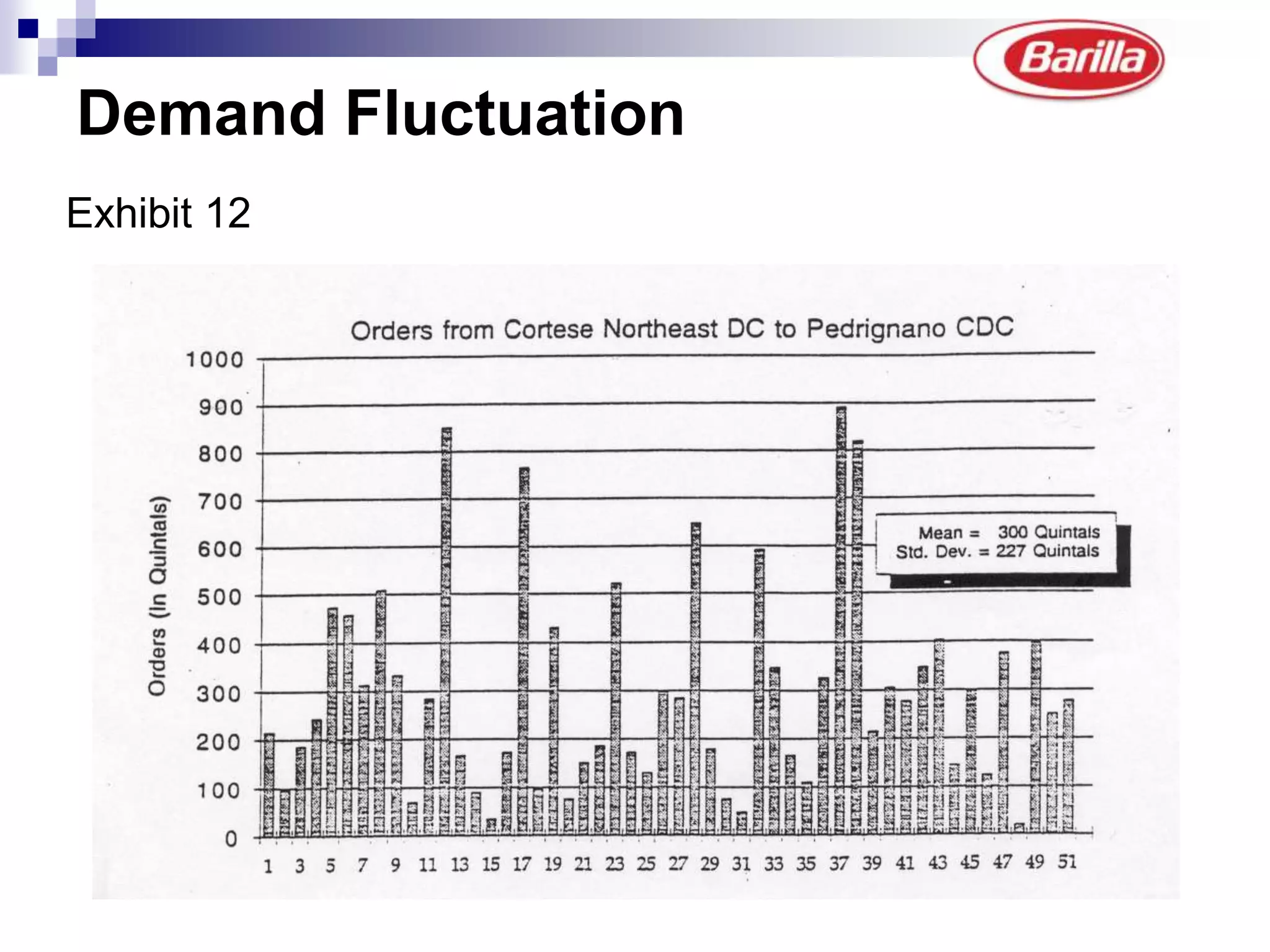
Demand FluctuationExhibit 12
Demand FluctuationMethods adopted to curb fluctuationExcess FG inventory to meet Distributors’ demandAdditional inventory at Distributors warehousesImpact Overburdened Manufacturing and Logistic operationPoor product deliveryThinning of retailers/distributors marginIncreased inventory carrying costUnanticipated demand Bullwhip effect
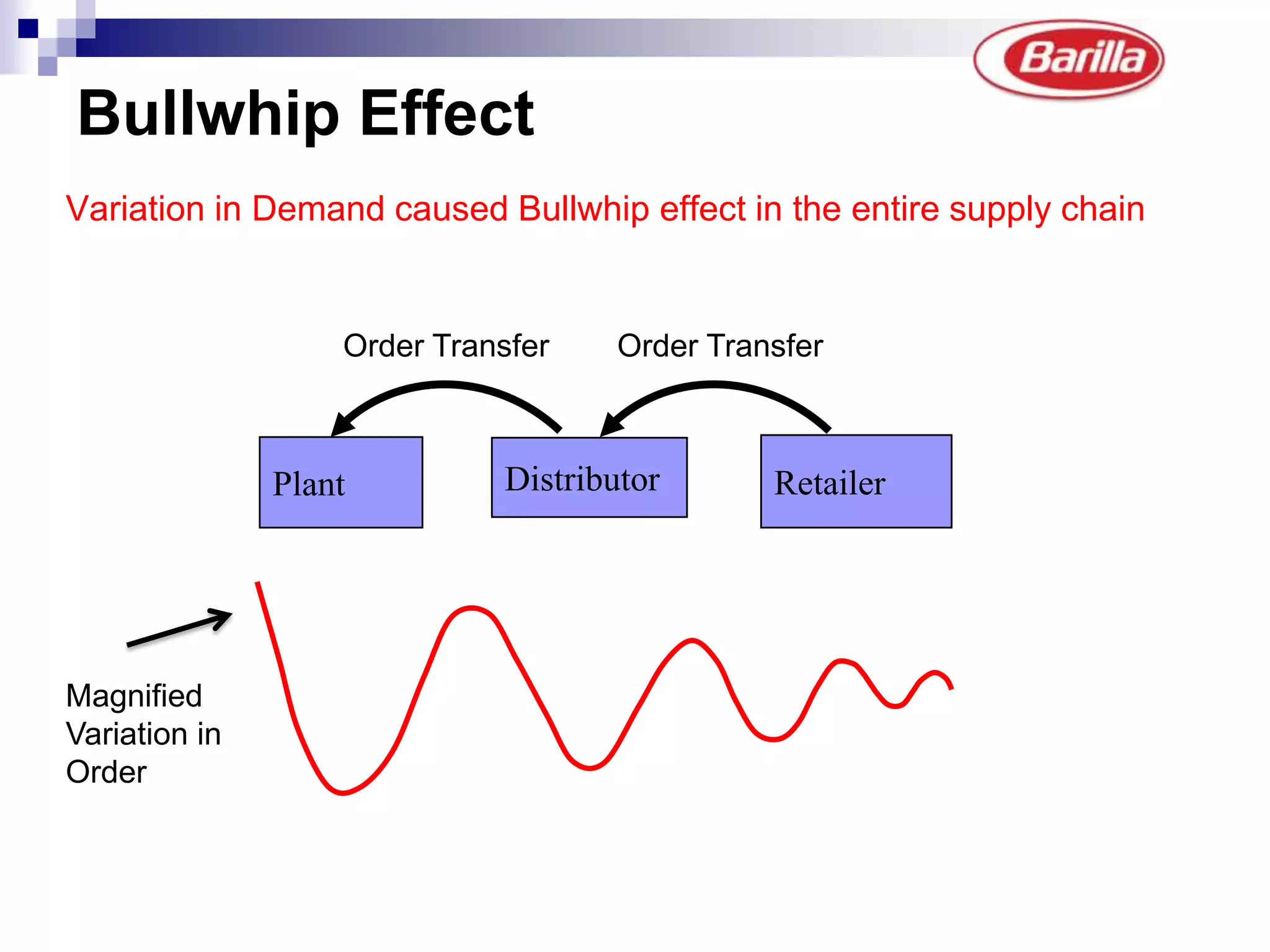
Bullwhip EffectVariation in Demand caused Bullwhip effect in the entire supply chainOrder TransferOrder TransferRetailerPlantDistributorMagnified Variation in Order
Bullwhip EffectCauses of Bullwhip EffectInaccuracies in Demand ForecastingLong Lead TimesPrice fluctuation due to Promotional activitiesOrder batchingTo reduce ordering CostTo take advantage of Transportation economics such as full truck loadSales incentiveForward buying due to promotional activities to get benefit from lower price
Just-In-Time-Distribution (JITD)Vendor Managed Inventory ConceptTreats end customer data as the inputFinal authority to determine shipments is Barilla SpABarilla would decide what to ship to distributors and when to ship itDistributors will provide POS data of different SKUs.

Barilla Spa: A case on Supply Chain Integration

  • 1.
    Barilla SpAGroup No: 8Himadri, Rishi, Tarun, Manish, Vikas
  • 2.
    IntroductionStarted in 1875as a small shop in Parma, Italy
  • 3.
    By 1990, BarillaSPA - World’s largest pasta producer
  • 4.
    Pasta Share -35% in Italy and 22% in Europe
  • 5.
    2 Product Categories– 75% Dry and 25% Fresh
  • 6.
    Fresh Products had21 day Shelf Lives
  • 7.
    Dry Products hadLong ( 18 to 24 Months) or Medium(10 to 12 weeks) Shelf Lives
  • 8.
    800 SKUs ofDry Products
  • 9.
    Retail Outlets –Small independent shops and Supermarkets (Chain and Independent)PLANTCDC’sGD’sDO’sChain supermarkets“Signora Maria” ShopsIndependent supermarketsCustomersCustomersCustomersDistribution SystemCDC = Central Distribution CentreGD = Grand DistributorsDO = Organized Distributors65%35%Barilla run depotsFlow of Information
  • 10.
    Sales & MarketingHeavyAdvertising, Brand positioning
  • 11.
    Steffi Graf, StefanEdberg promoted the “Barilla” brand
  • 12.
    Frequent Trade Promotionto push product into distribution network
  • 13.
  • 14.
    Use of SalesRepresentative
  • 15.
  • 16.
  • 17.
    Took note ofCompetitor’s price, stockouts, new product introductions
  • 18.
    Worked out orderingstrategies for retailerIssues FacedExtreme demand fluctuations (Since 1980)- week to week variation in distributors’ order patternsPressures to manufacturing in terms of production lead-time and perishability of productHigh Inventory Carrying Cost & manufacturing cost due operational inefficienciesUnacceptable Cycle Service Levels (CSL) – inadequate product availabilityDistributors’ inability to carry large number of SKUs
  • 19.
    Demand FluctuationReasonsExcessive PromotionalactivitiesVolume DiscountNo limit in order quantities from distributorsProduct proliferationsLack of sophisticated forecasting techniques.
  • 20.
  • 21.
    Demand FluctuationMethods adoptedto curb fluctuationExcess FG inventory to meet Distributors’ demandAdditional inventory at Distributors warehousesImpact Overburdened Manufacturing and Logistic operationPoor product deliveryThinning of retailers/distributors marginIncreased inventory carrying costUnanticipated demand Bullwhip effect
  • 22.
    Bullwhip EffectVariation inDemand caused Bullwhip effect in the entire supply chainOrder TransferOrder TransferRetailerPlantDistributorMagnified Variation in Order
  • 23.
    Bullwhip EffectCauses ofBullwhip EffectInaccuracies in Demand ForecastingLong Lead TimesPrice fluctuation due to Promotional activitiesOrder batchingTo reduce ordering CostTo take advantage of Transportation economics such as full truck loadSales incentiveForward buying due to promotional activities to get benefit from lower price
  • 24.
    Just-In-Time-Distribution (JITD)Vendor ManagedInventory ConceptTreats end customer data as the inputFinal authority to determine shipments is Barilla SpABarilla would decide what to ship to distributors and when to ship itDistributors will provide POS data of different SKUs.
  • 25.
    Why JITD ?Expectedbenefits for ManufacturerReduced Manufacturing CostIncreased Supply Chain visibilityHigh bargaining power over DistributorsReduced inventory cycleA planned production planning is possibleExpected benefits for DistributorsImproved fill rates to Retail store- Quick responseHigh service level – additional services to retailers without extra costReduced inventory carrying cost
  • 26.
    JITD- ResistanceInternalSales representativefeared reduction in responsibilitiesInability to quick shipment may lead to Stock-outInability to run Trade PromotionLack of sophisticated infrastructure to handle JITDSkepticism about cost reduction ExternalUnconvinced distributorsPerceived power transfer to BarillaDistributors were skeptical about the effectiveness of the system
  • 27.
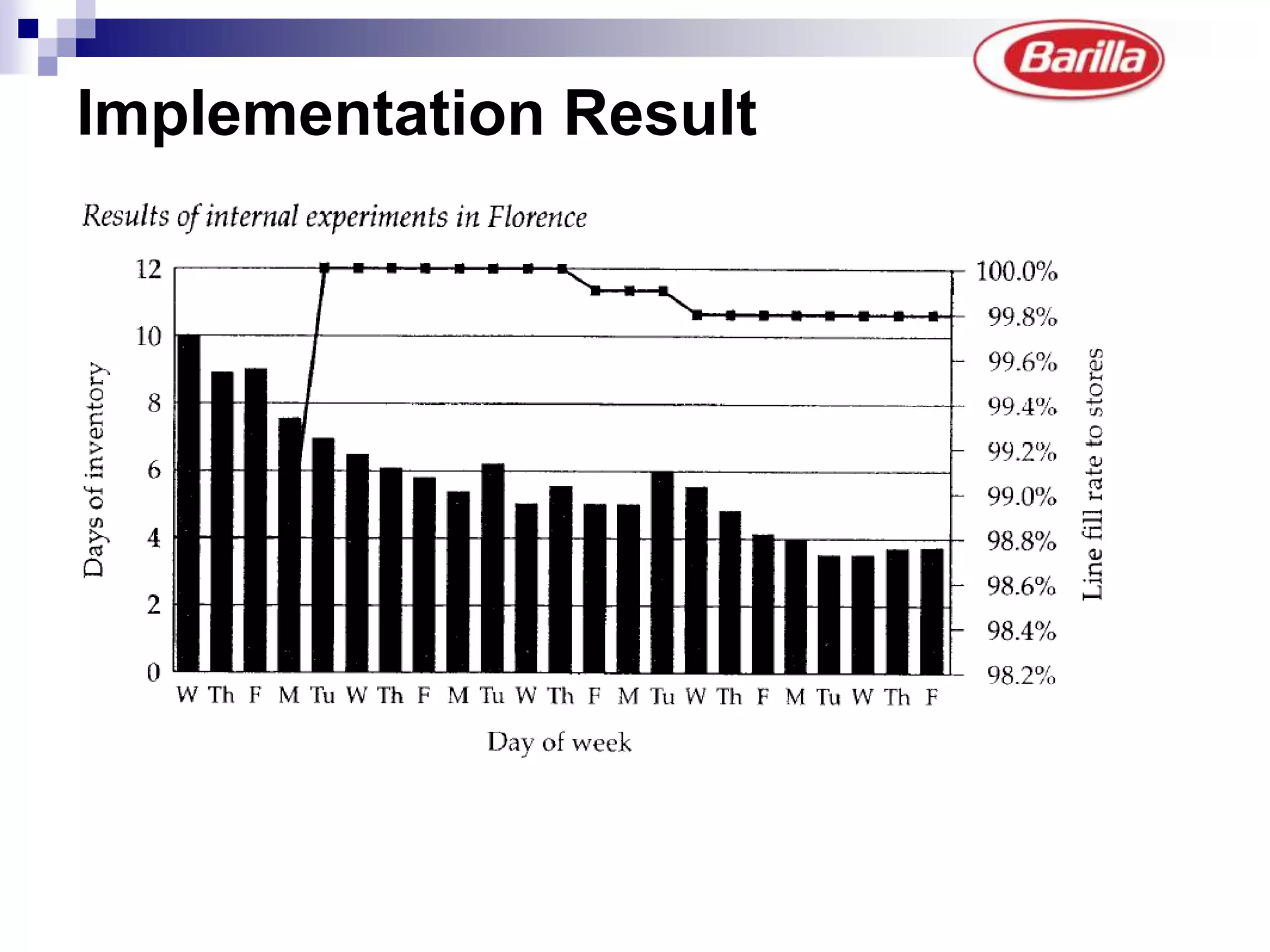
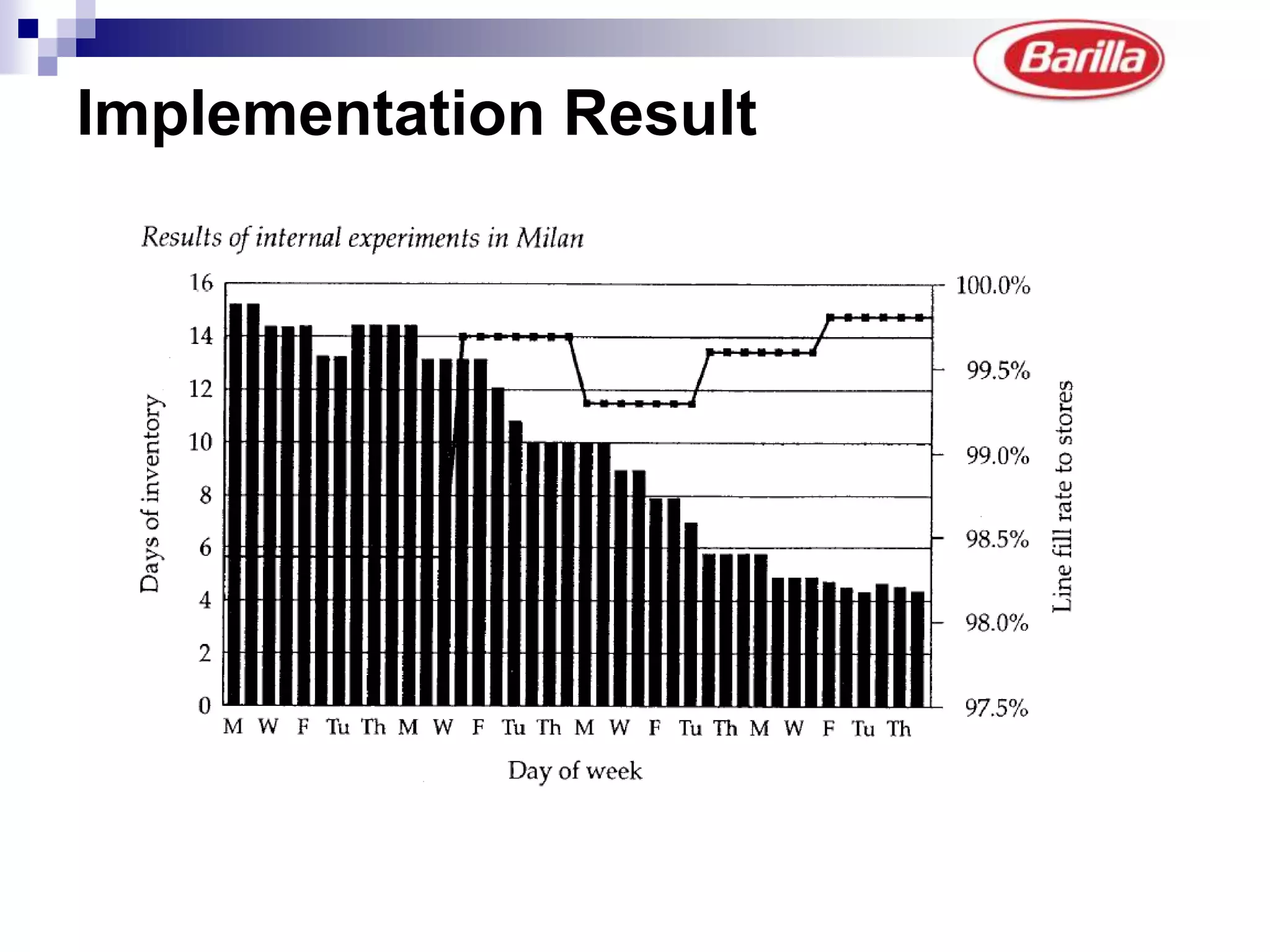
    Experiments at DryProduct depotsBarilla spa ran first JITD experiment at its Florence depotTop management was actively involvedDuring the very first month of the programInventory dropped from 10.1 days to 3.6 daysService level to retail stores increased from 98.9% to 99.8%Depot’s staff was not comfortable working with such low inventory levels Inventory levels finally allowed to increase to 5 daysJITD next tried at Milan DepotSimilar performance improvement as FlorenceThese experiments established the credibility of JITD system
  • 28.
  • 29.
  • 30.
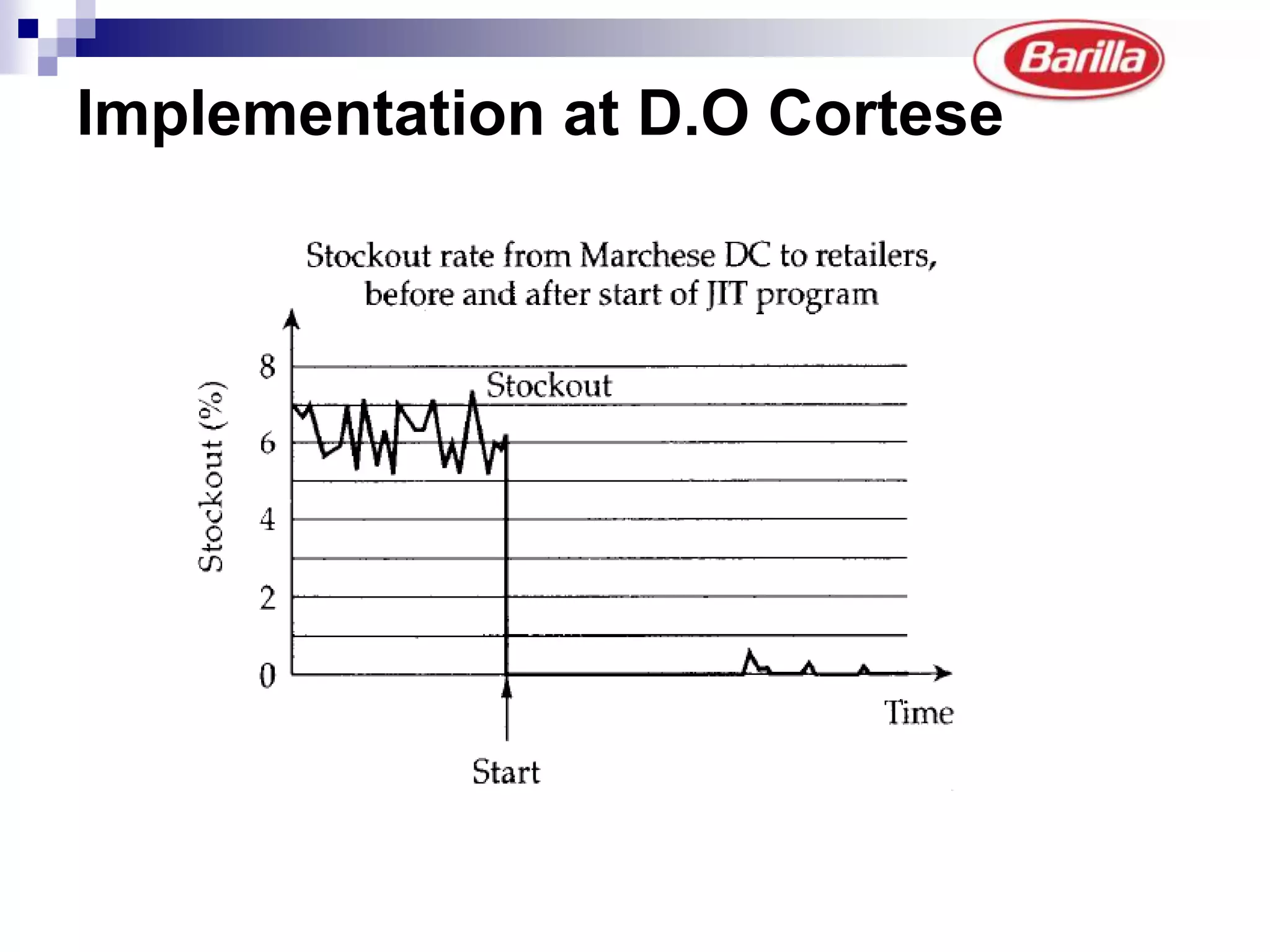
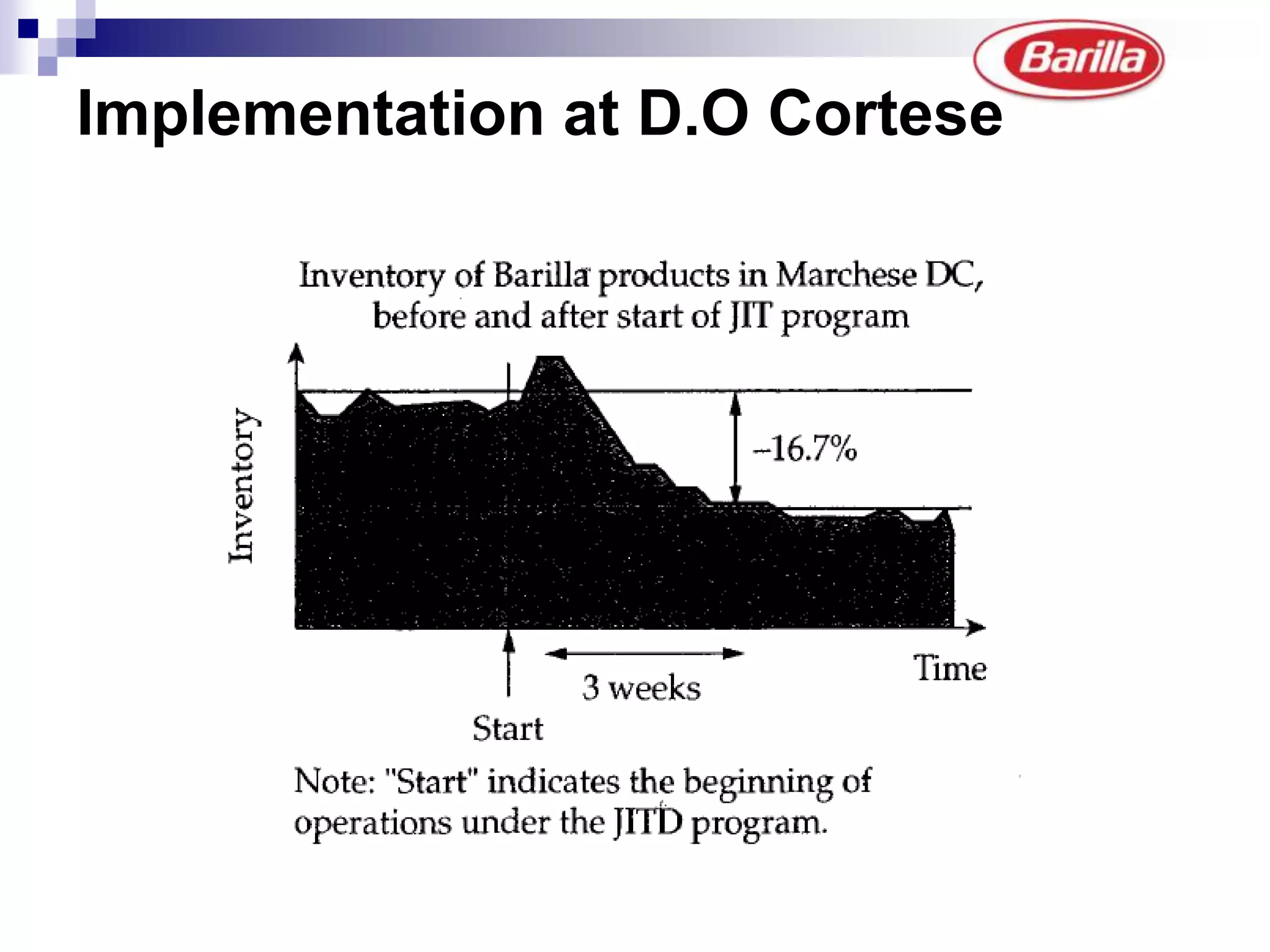
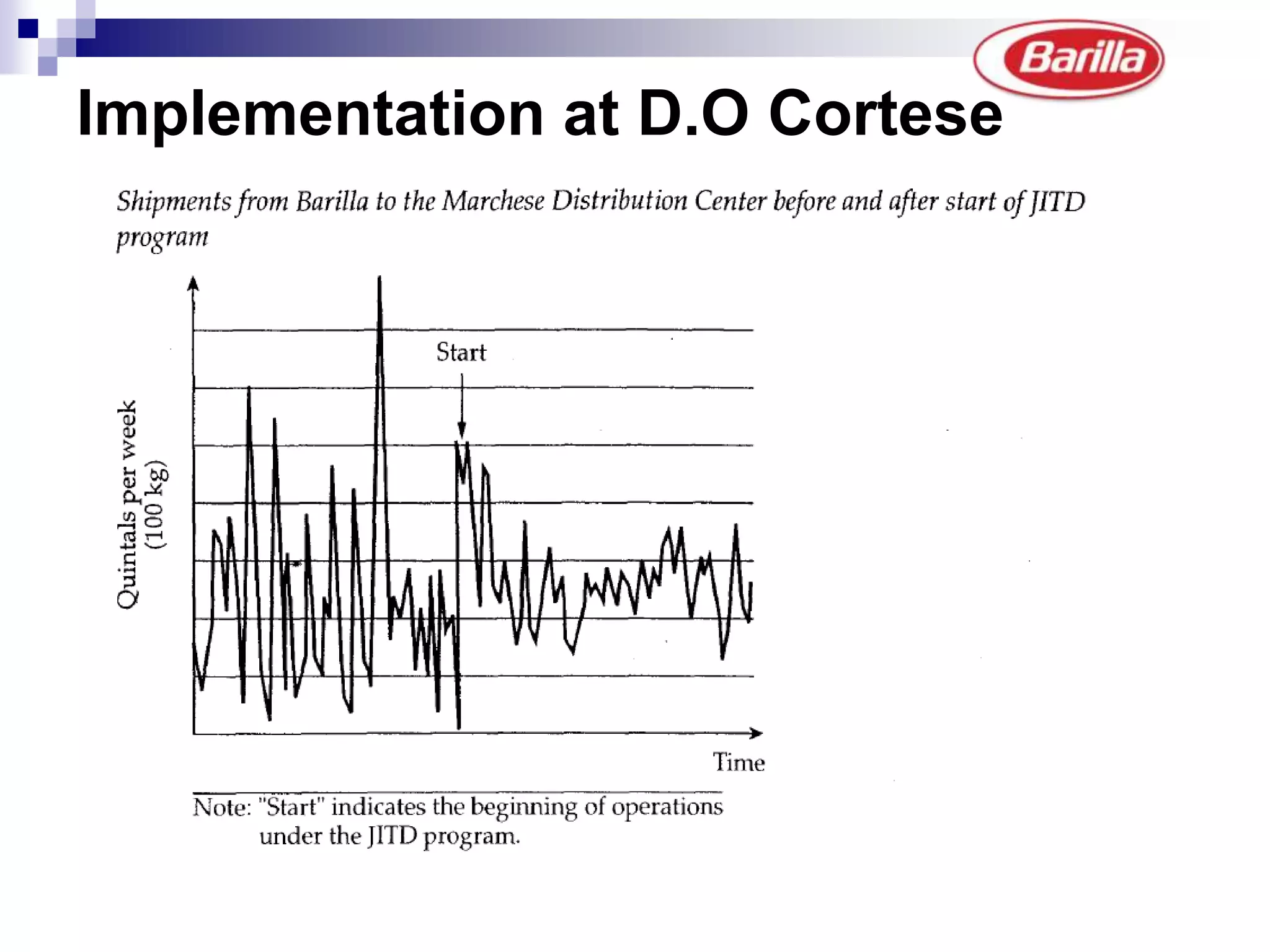
    Implementation at D.OCorteseBarilla decided to implement JITD in Marchese DC of CorteseIt involvedDirector of Logistics, EVP of Sales and Manager responsible for JITD implementation from BarillaNine managers including MD, Logistic manager for Marchese DC of Cortese. Consultant Ferozzi- a neutral party trusted by both groups For six months, Barilla team analyzed daily shipment data of the DCCreated the data base of DC’s historical demand patternFinally implementation brought phenomenal resultPrior to JITDStock out rate : 2 to 5% ( Occasionally as high as 10 to 13%)After JITDNegligible stock out rate of less than.25%(Never exceeded 1%)Average inventory level also dropped
  • 31.
  • 32.
  • 33.
  • 34.
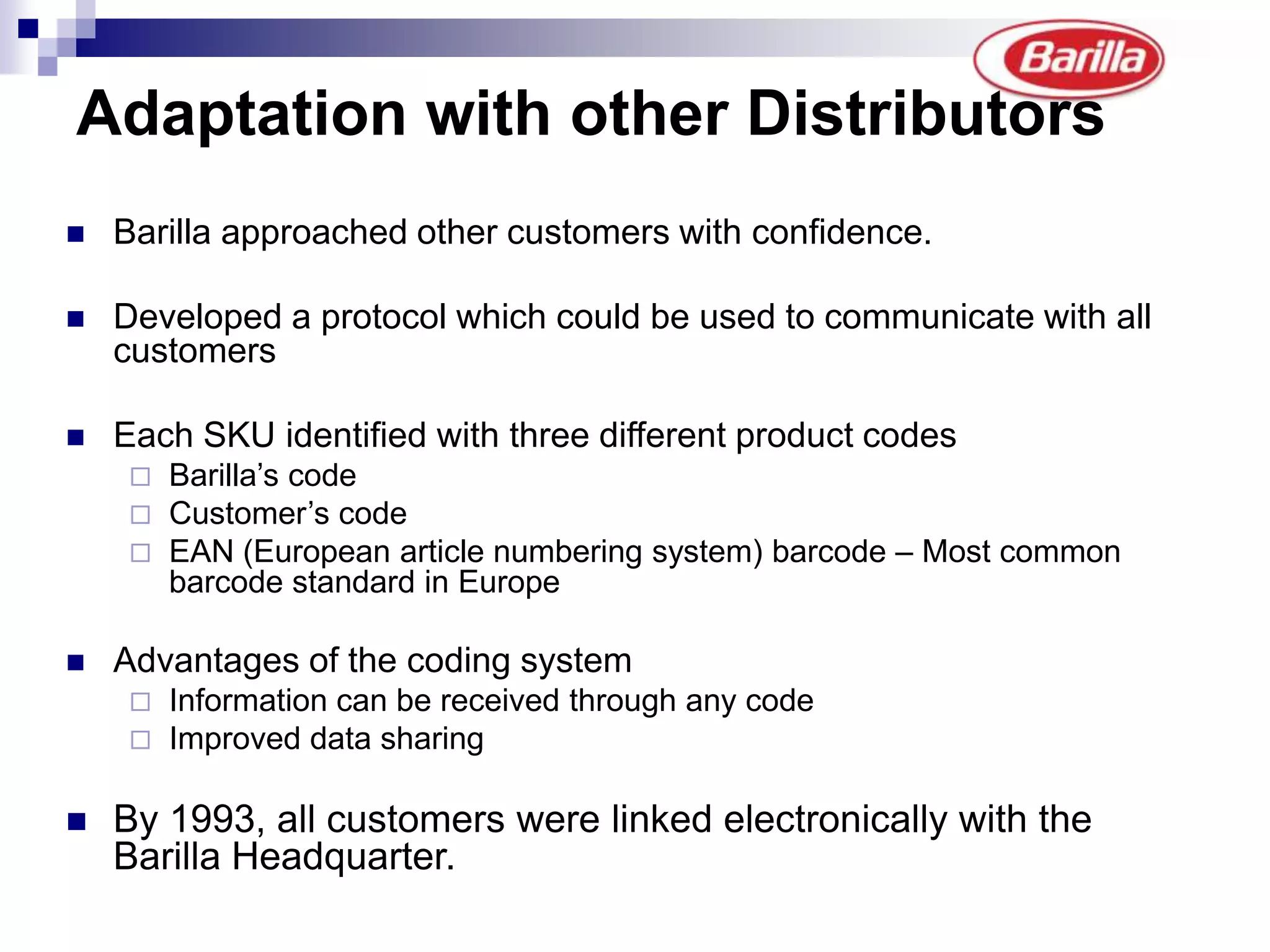
    Adaptation with otherDistributorsBarilla approached other customers with confidence.Developed a protocol which could be used to communicate with all customersEach SKU identified with three different product codesBarilla’s codeCustomer’s codeEAN (European article numbering system) barcode – Most common barcode standard in EuropeAdvantages of the coding systemInformation can be received through any codeImproved data sharingBy 1993, all customers were linked electronically with the Barilla Headquarter.
  • 35.
    Communication with CustomersDistributorseach day sent following information to Barilla ElectronicallyCustomer code number to identify customerInventory for each SKU carried by DCPrevious day’s “sell through”-All shipments of Barilla products out of DC to consumers on the previous dayStock outs on previous day for every Barilla SKU carried by DCAn advance order for any promotions that the customer planned to run in the futurePreferred delivery carton size
  • 36.
    Group reflections/TakeawayBetter demandforecasting using sophisticated tools ensures a robust supply chainExcessive fluctuation(SD) leads to increased Average Inventory Level, poor USL and frequent stock-out.Information centralization reduces Bullwhip Effect and enhances inventory management systemDecision needs to be taken amongst “Pull based” and “Push based” systems To succeed in a new initiative, involvement of Top management is importantCredibility needs to be gained before enforcing any idea to others Customers need to be convinced with the win-win concept
  • 37.
    Thank YouPasta is Delicious !