by
Abhijit Debnath
Asst. Professor
NIET Pharmacy Institute
Greater Noida
Controlled Drug Delivery systems
1
1
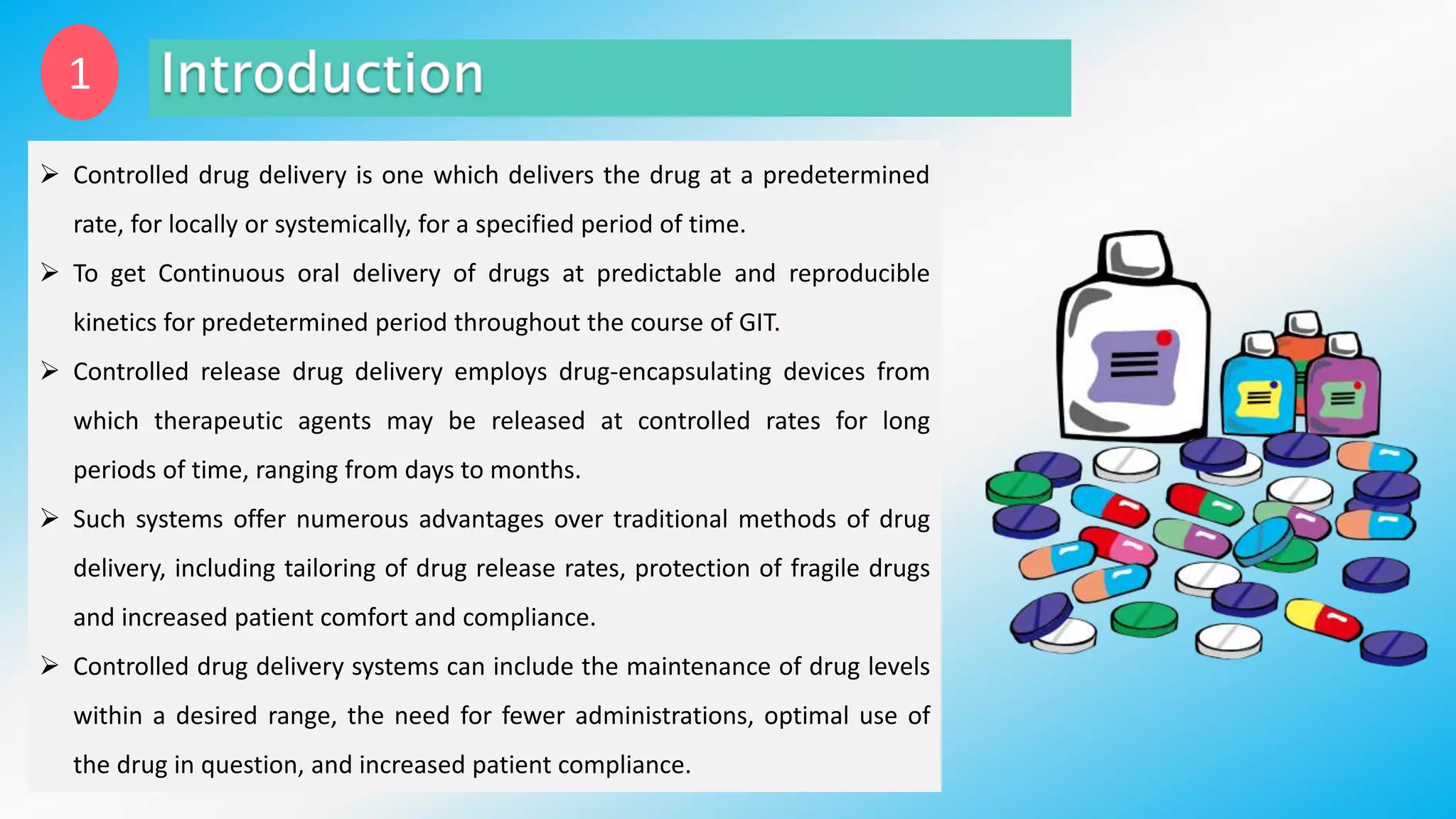
 Controlled drug delivery is one which delivers the drug at a predetermined
rate, for locally or systemically, for a specified period of time.
 To get Continuous oral delivery of drugs at predictable and reproducible
kinetics for predetermined period throughout the course of GIT.
 Controlled release drug delivery employs drug-encapsulating devices from
which therapeutic agents may be released at controlled rates for long
periods of time, ranging from days to months.
 Such systems offer numerous advantages over traditional methods of drug
delivery, including tailoring of drug release rates, protection of fragile drugs
and increased patient comfort and compliance.
 Controlled drug delivery systems can include the maintenance of drug levels
within a desired range, the need for fewer administrations, optimal use of
the drug in question, and increased patient compliance.
History of CRDD
 The science of controlled release was first originated from the development
of oral sustained release products in the 1940s and early 1950s.
 The first patent for oral sustained release preparation went in the favour of
Lipowski;
 His preparation contained small coated beads that were releasing the drug
slowly & constantly.
 This idea later developed by Blythe and launched the first marketed
sustained release product in 1952.
 Over the past 30 years as the complication involves in the marketing of new
drug increased and various advantages recognized of Controlled release drug
delivery system (CRDDS), the greater attention is being paid in this field.
1
The ideal Drug delivery system should be
 Inert
 Biocompatible
 Mechanically strong
 Comfortable for the patient
 Capable of achieving high drug loading
 Safe from accidental release
 Simple to administer and remove
 Easy to fabricate and sterilize
1
2
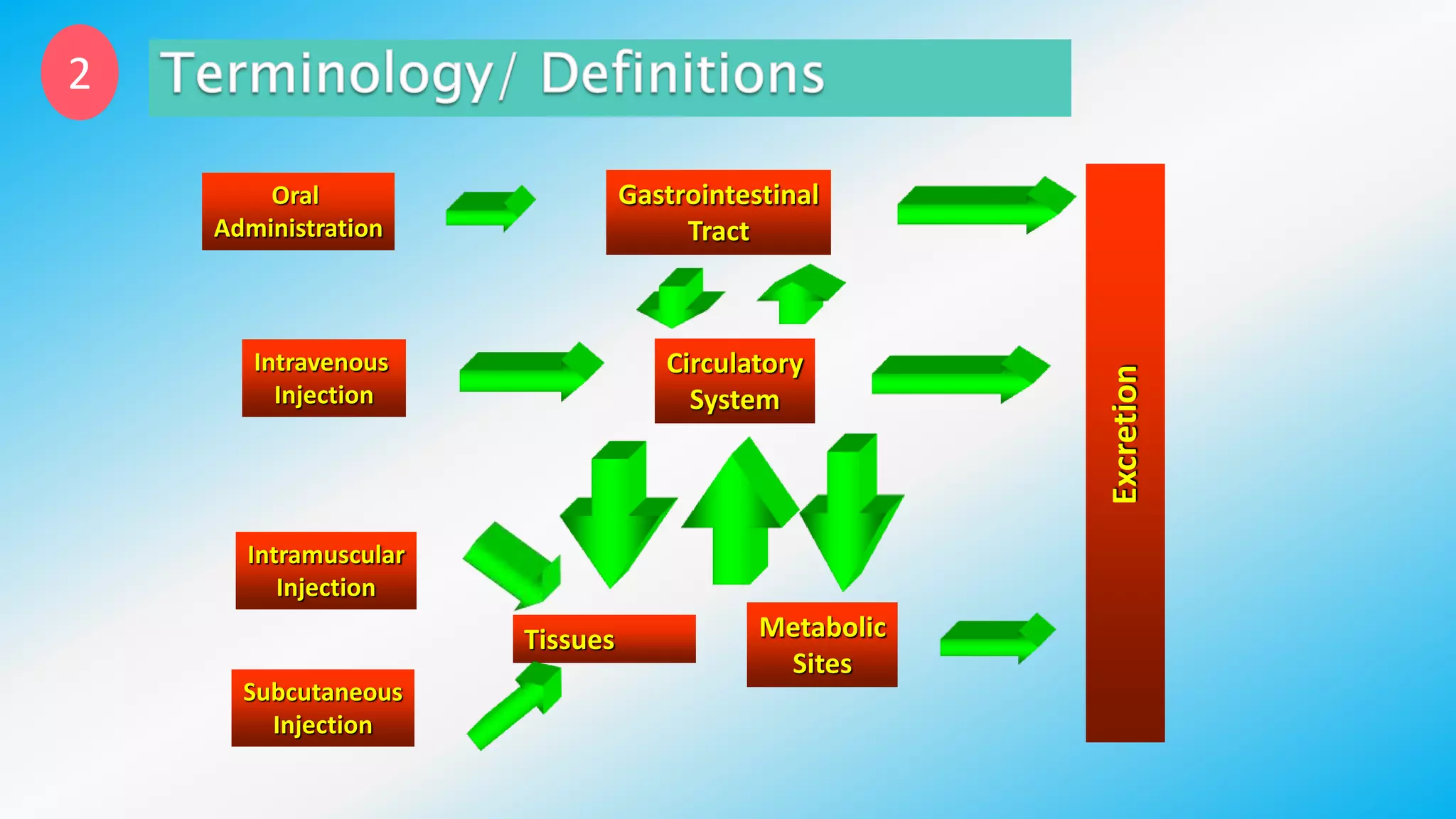
Oral
Administration
Intravenous
Injection
Intramuscular
Injection
Subcutaneous
Injection
Gastrointestinal
Tract
Circulatory
System
Tissues Metabolic
Sites
Excretion
2
Pharmacokinetics Pharmacodynamics
Design
of dosage regimen
•Where?
•How much?
•How often?
•How long?
Plasma
Concentration
Effects
Plasma refers to the clear
supernatant fluid that results
from blood after the cellular
components have been
removed
2
Pharmacokinetics and Pharmacodynamics
Plasma
concentration
(mg/mL)
Time (min)
Therapeutic window
Toxicity
No therapeutic effect
2
Plasma Concentration
Time (min)
Plasma
concentration
(mg/mL)
Unsuccessful
therapy
Successful
therapy
2
Plasma Concentration
2
 The United States Pharmacopoeia (USP) defines the modified-release (MR) dosage form as
“the one for which the drug release characteristics of time course and/or location are chosen to
accomplish therapeutic or convenience objectives not offered by conventional dosage forms such
as solutions, ointments, or promptly dissolving dosage forms”.
 One class of MR dosage form is an extended-release (ER) dosage form and is defined as the one
that allows at least a 2-fold reduction in dosing frequency or significant increase in patient
compliance or therapeutic performance when compared with that presented as a conventional
dosage form (a solution or a prompt drug-releasing dosage form).
 The terms “controlled release (CR)”, “prolonged release”, “sustained or slow release (SR)” and
“long-acting (LA)” have been used synonymously with “extended release”
2
 Controlled drug delivery is one which delivers the drug at a predetermined rate, for locally or
systemically, for a specified period of time.
 Sustained Drug Release allows delivery of a specific drug at a programmed rate that leads to
drug delivery for a prolonged period of time.
 Prolonged-release products release the active ingredients slowly and work for a longer time. It
is a dose of a medication over an extended period of time
1
The difference between controlled release and sustained release
 Controlled drug delivery- which delivers the drug at a
pre determined rate for a specified period of time.
Controlled release is perfectly zero order release that is
the drug release over time irrespective of
concentration.
 Sustain release dosage form- is defined as the type of
dosage form in which a portion i.e. (initial dose) of the
drug is released immediately, in order to achieve desired
therapeutic response more promptly, and the
remaining(maintenance dose) is then released slowly
there by achieving a therapeutic level which is prolonged,
but not maintained constant.
 Sustained release implies slow release of the drug over a
time period. It may or may not be controlled release.
3
The basic rationale of a controlled release drug delivery system is
 To optimize the biopharmaceutics, pharmacokinetics, and pharmacodynamics properties of a drug in such
a way so that
 Its utility is maximized through reduction in side effects
 Cure or control of disease condition in the shortest possible time by using smallest quantity of drug,
 Administered by most suitable route.
 The immediate release drug delivery system lacks some features like dose maintenance, controlled
release rate and site targeting.
 achieve prolong therapeutic effect.
 predictability in drug release kinetics.
 Deliver the drug at pre determined rate, locally or systematically.
3
4
4
 Improve patient convenience.
 Reduction in fluctuation in steady state level.
 Increase the safety margin of high potency drug.
 Reduction in total health care cost.
 Reduction in frequency of drug administration
 Improved patient compliance
 Reduction in total drug usage when compared with conventional therapy
 Reduction in drug accumulation with chronic therapy
 Reduction in drug toxicity (local/systemic)
 Stabilization of medical condition (because of more uniform drug levels)
 Improvement in bioavailability of some drugs because of spatial control
 Economical to the health care providers and the patient
Commercial / Industrial Advantages
 Illustration of innovative/technologicalleadership
 Product life-cycle extension
 Product differentiation
 Market expansion
 Patent extension
4
5
5
 Decrease systemic availability.
 Poor invitro – invivo correlation.
 Increased risk of toxicity.
 Retrieval of drug is difficult in case of toxicity , poisoning or hyper sensitivity
reaction.
 The possible toxicity or non-biocompatibility of the materials used,
 Undesirable by-products of degradation,
 Any surgery required to implant or remove the system,
 The chance of patient discomfort from the delivery device,
 The higher cost of controlled-release systems compared with traditional
pharmaceutical formulations
5
 Delay in onset of drug action
 Possibility of dose dumping in the case of a poor formulation strategy
 Increased potential for first pass metabolism
 Greater dependence on GI residence time of dosage form
 Possibility of less accurate dose adjustment in some cases
 Cost per unit dose is higher when compared with conventional doses
 Not all drugs are suitable for formulating into ER dosage form
6
6
BIOPHARMACEUTIC CHARACTERISTICS OF DRUG TO QUALIFY FOR CDDS
 Molecular weight/ size: < 1000
 Solubility: > 0.1 µg/ml for pH 1 to pH 7.8
 Pka Non ionized moiety: > 0.1% at pH 1 to pH 7.8
 Apparent partition coefficient: High
 Absorption mechanism: Diffusion
 General absorbability: From all GI segments
 Release: Should not be influenced by pH and enzymes
6
Pharmacokinetic parameters
6
Characteristics that make A Drug Unsuitable For CRDD
Following candidates are generally not suitable for ER dosage forms
 Short elimination half-life
 Long elimination half-life
 Narrow therapeutic index
 Poor absorption
 Active absorption
 Low or slow absorption
 Extensive first pass effect
7
7
Approaches to design-controlled release formulations based on
 Diffusion
 Reservoir type devices
 Matrix type devices
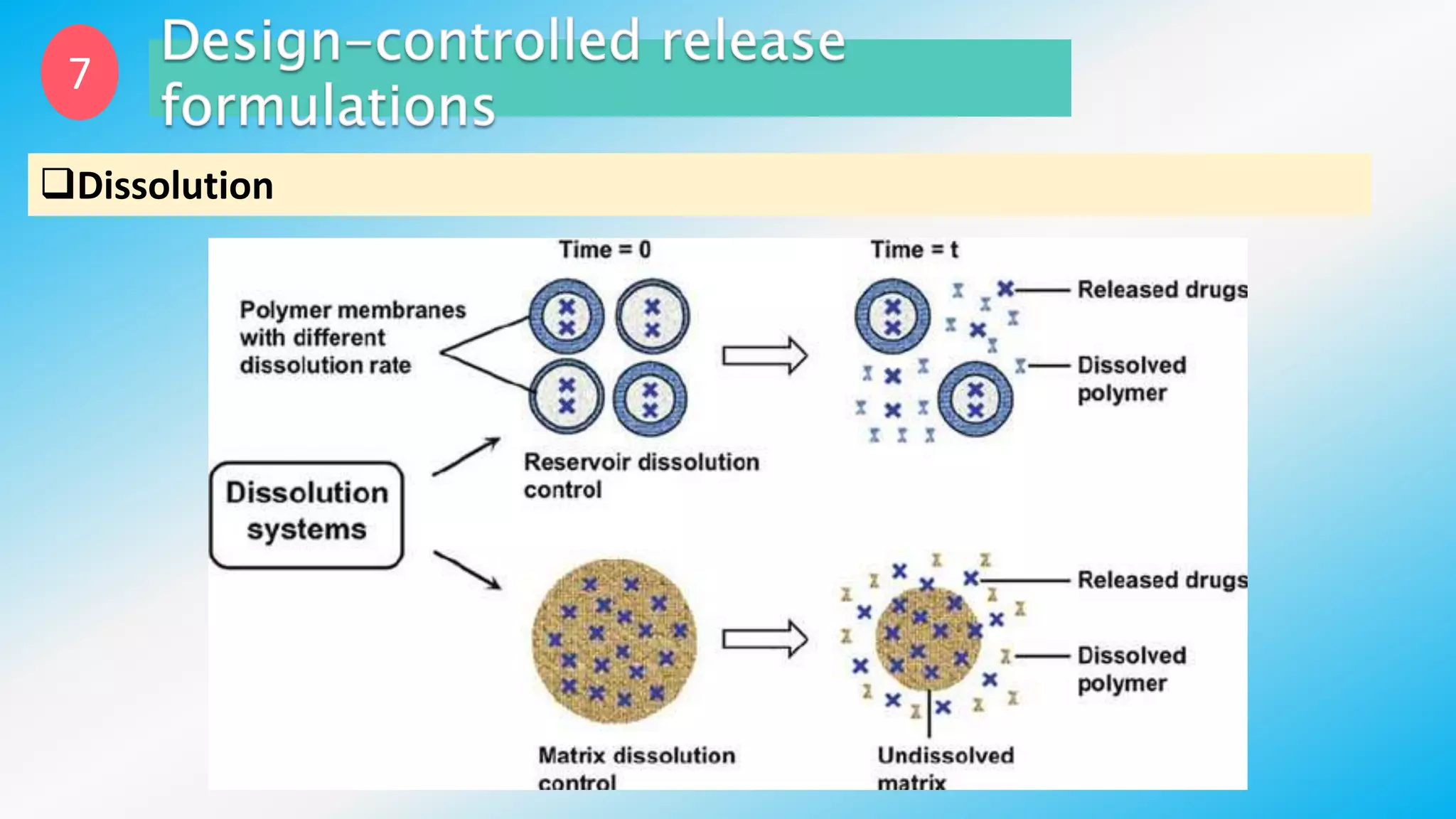
 Dissolution
 Encapsulation Dissolution control
 Seed or granule coated
 Micro encapsulation
 Matrix Dissolution control
 Ion exchange principles
7
Diffusion
 Diffusion is the movement of
molecules from a region of
higher concentration to a region
of lower concentration down the
concentration gradient.
 Drug diffusion is an essential
mechanism for drug dispersion
throughout biological systems.
7
Diffusion
7
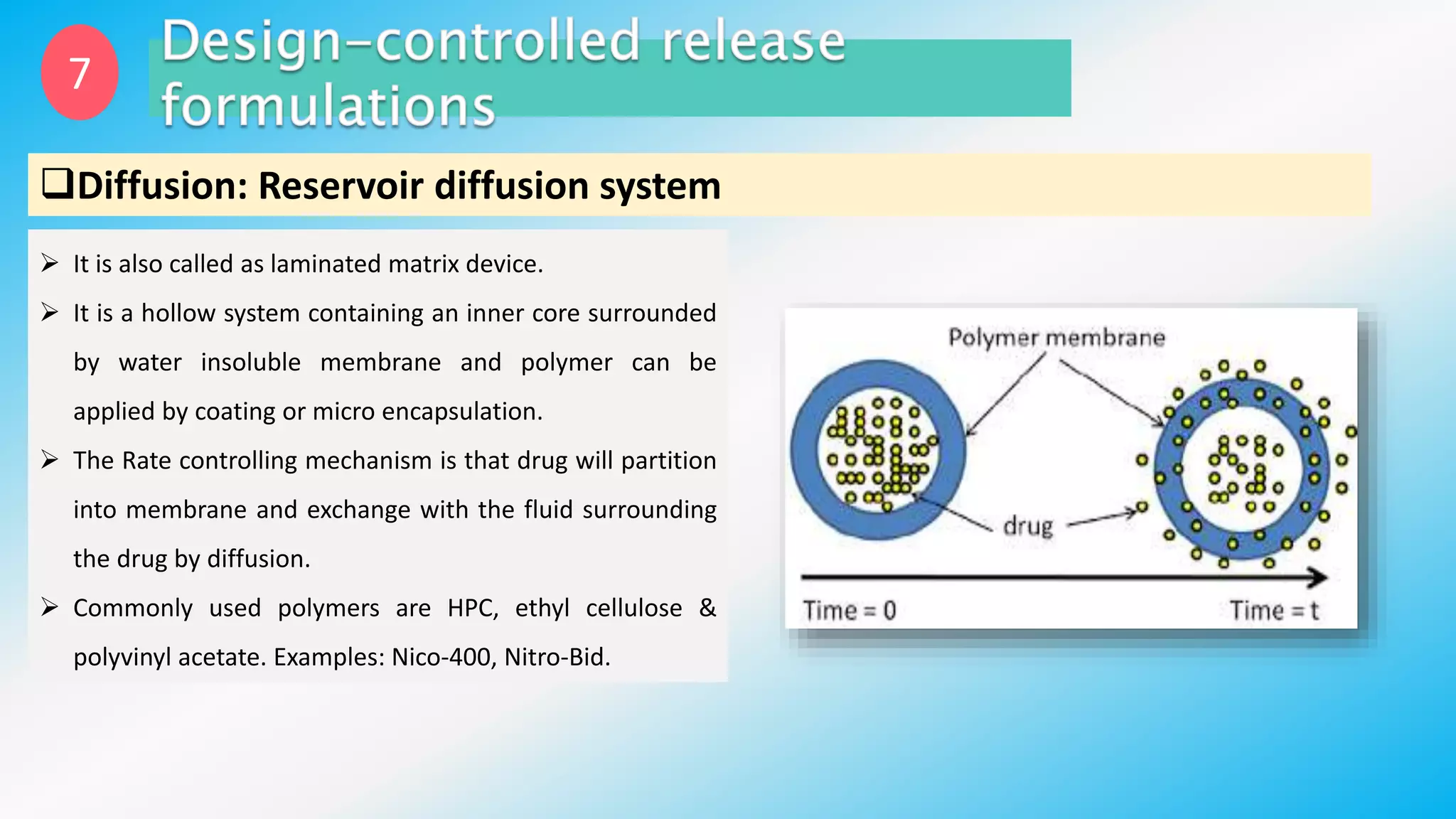
Diffusion: Reservoir diffusion system
 It is also called as laminated matrix device.
 It is a hollow system containing an inner core surrounded
by water insoluble membrane and polymer can be
applied by coating or micro encapsulation.
 The Rate controlling mechanism is that drug will partition
into membrane and exchange with the fluid surrounding
the drug by diffusion.
 Commonly used polymers are HPC, ethyl cellulose &
polyvinyl acetate. Examples: Nico-400, Nitro-Bid.
7
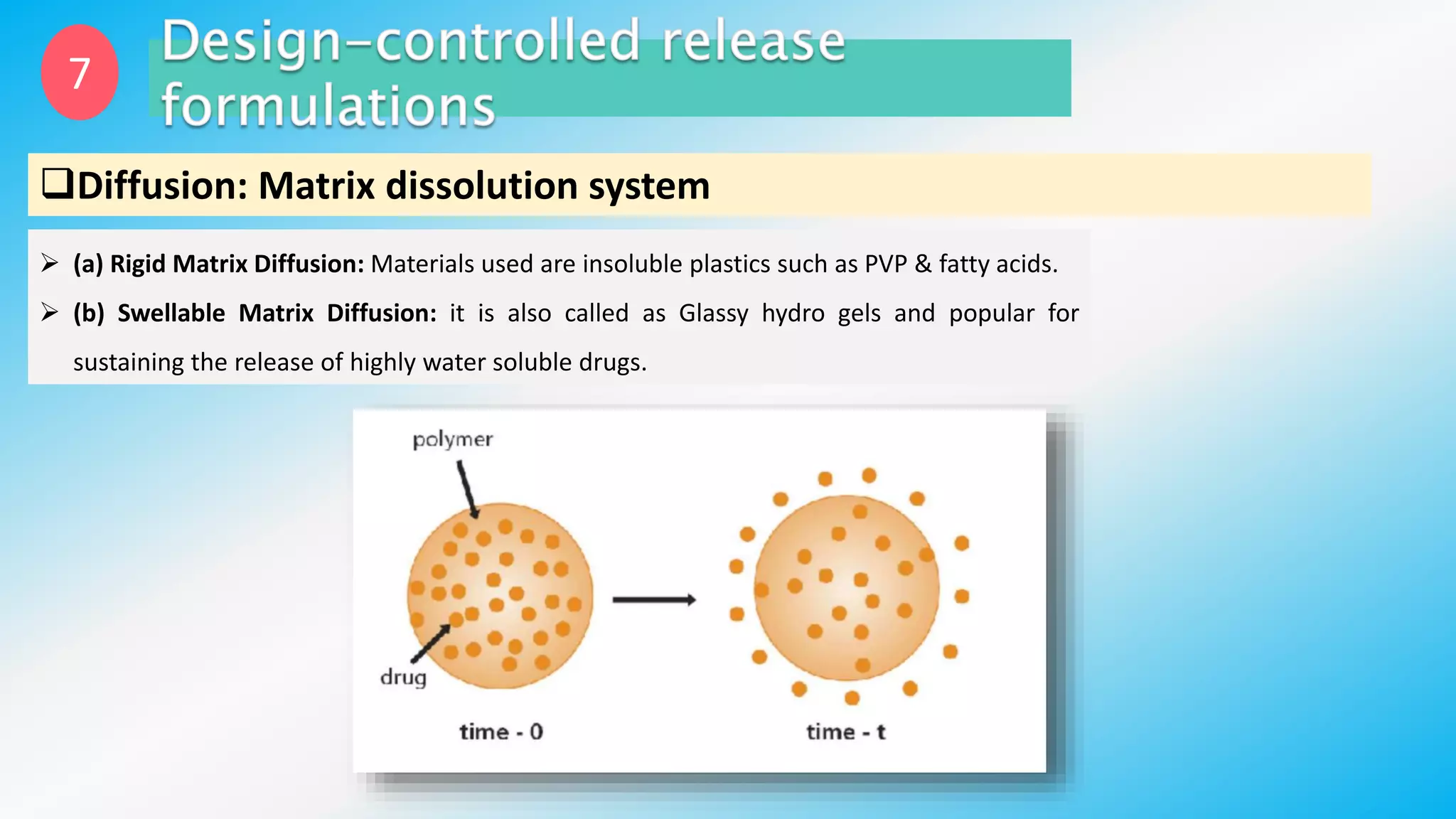
Diffusion: Matrix dissolution system
 (a) Rigid Matrix Diffusion: Materials used are insoluble plastics such as PVP & fatty acids.
 (b) Swellable Matrix Diffusion: it is also called as Glassy hydro gels and popular for
sustaining the release of highly water soluble drugs.
7
Dissolution
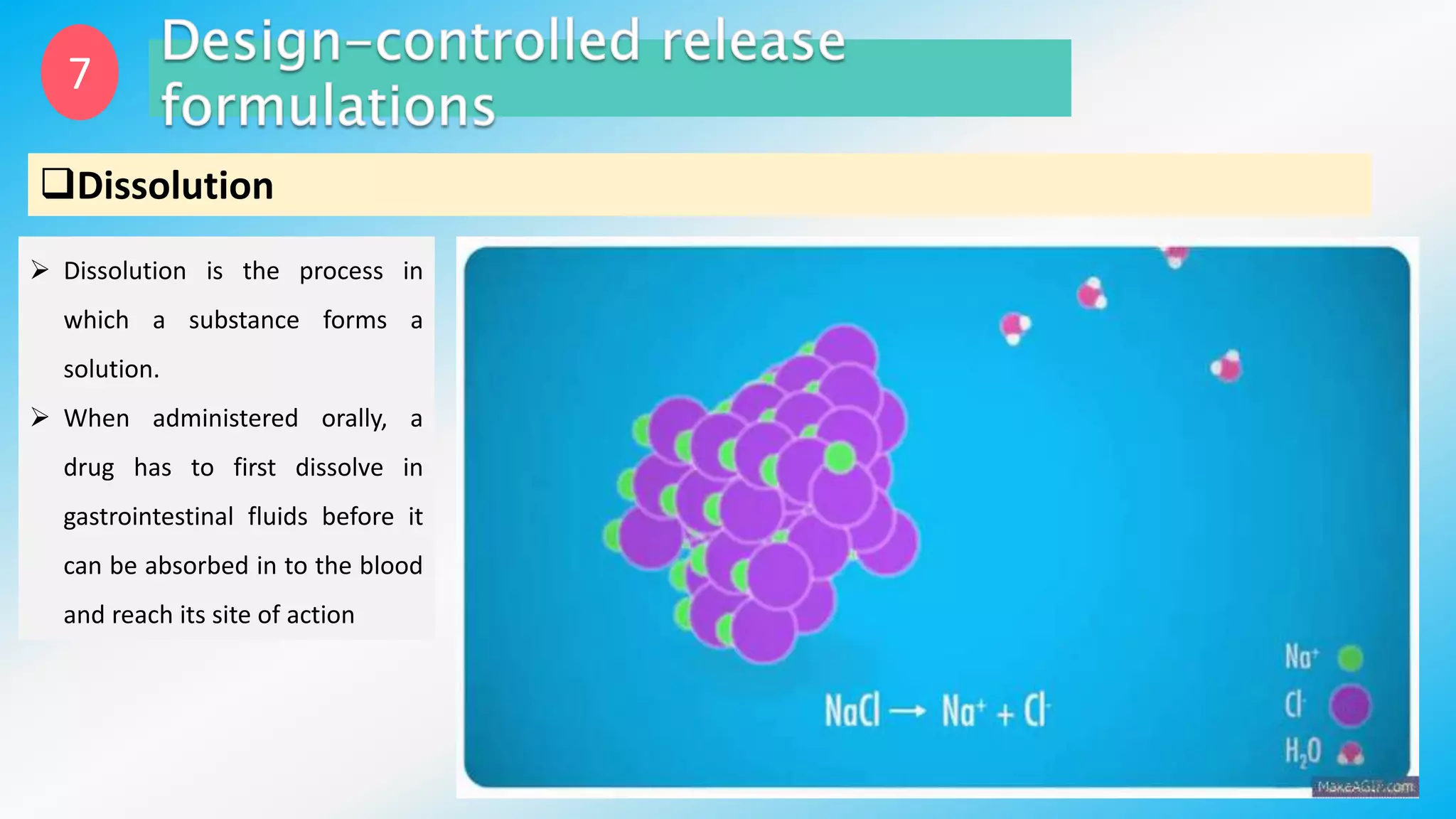
 Dissolution is the process in
which a substance forms a
solution.
 When administered orally, a
drug has to first dissolve in
gastrointestinal fluids before it
can be absorbed in to the blood
and reach its site of action
7
Dissolution
7
Dissolution: Encapsulated dissolution system
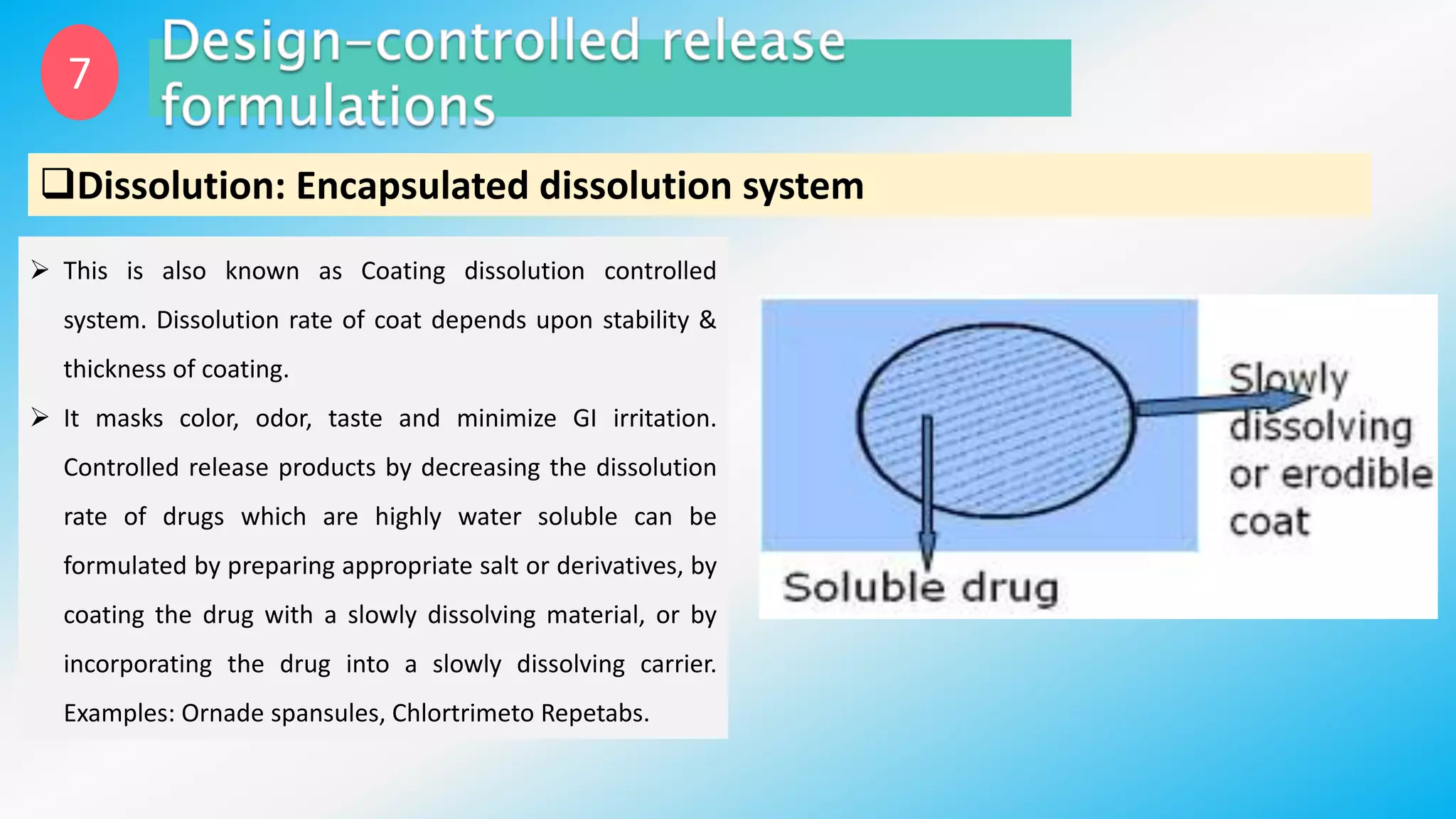
 This is also known as Coating dissolution controlled
system. Dissolution rate of coat depends upon stability &
thickness of coating.
 It masks color, odor, taste and minimize GI irritation.
Controlled release products by decreasing the dissolution
rate of drugs which are highly water soluble can be
formulated by preparing appropriate salt or derivatives, by
coating the drug with a slowly dissolving material, or by
incorporating the drug into a slowly dissolving carrier.
Examples: Ornade spansules, Chlortrimeto Repetabs.
7
Dissolution: Matrix dissolution system
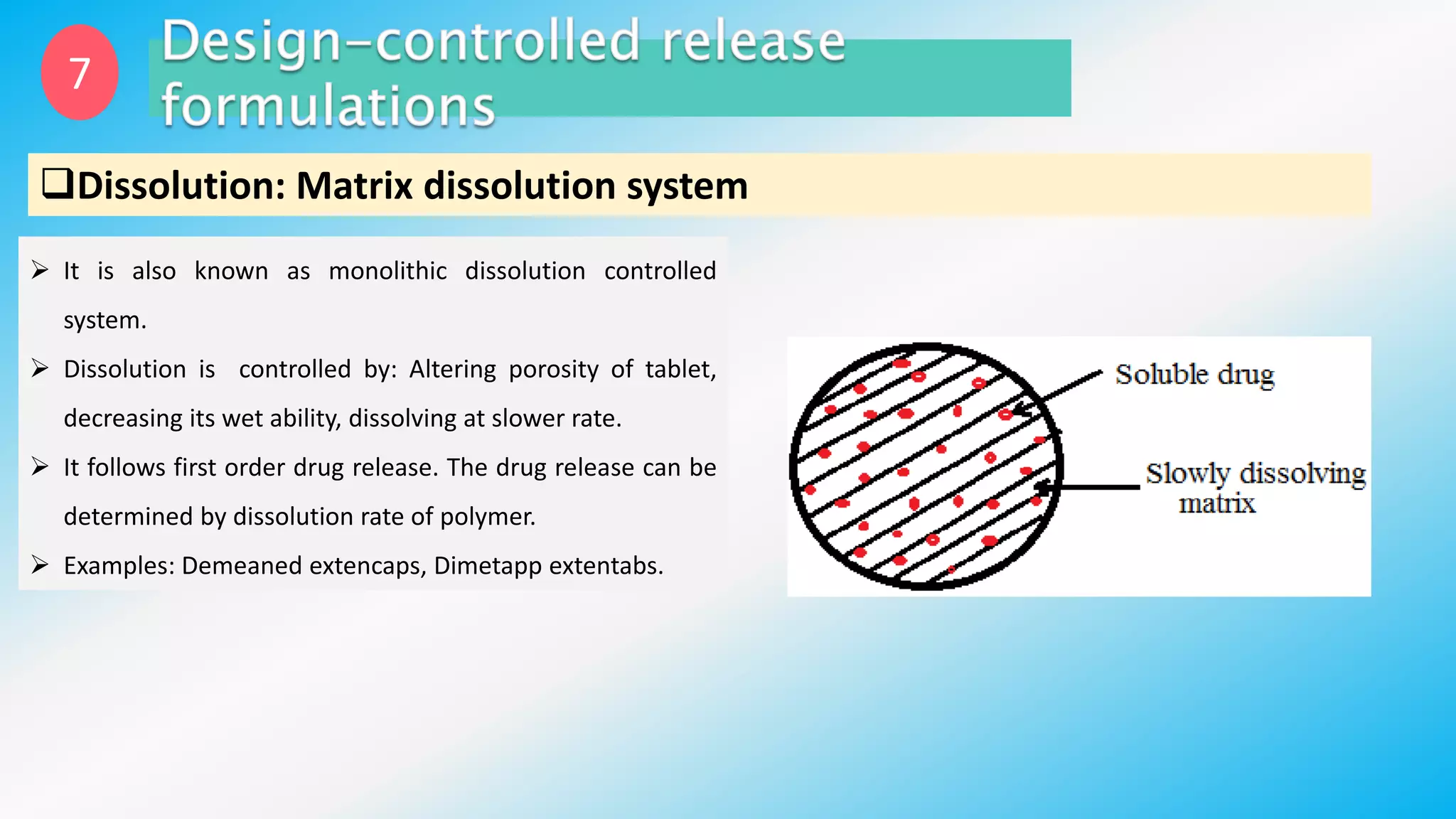
 It is also known as monolithic dissolution controlled
system.
 Dissolution is controlled by: Altering porosity of tablet,
decreasing its wet ability, dissolving at slower rate.
 It follows first order drug release. The drug release can be
determined by dissolution rate of polymer.
 Examples: Demeaned extencaps, Dimetapp extentabs.
7
Ion exchange
 Ion exchange is a reversible interchange of one kind of ion
present on an insoluble solid with another of like charge
present in a solution surrounding the solid with the reaction
being used especially for softening or making water
demineralised, the purification of chemicals and separation of
substances.
7
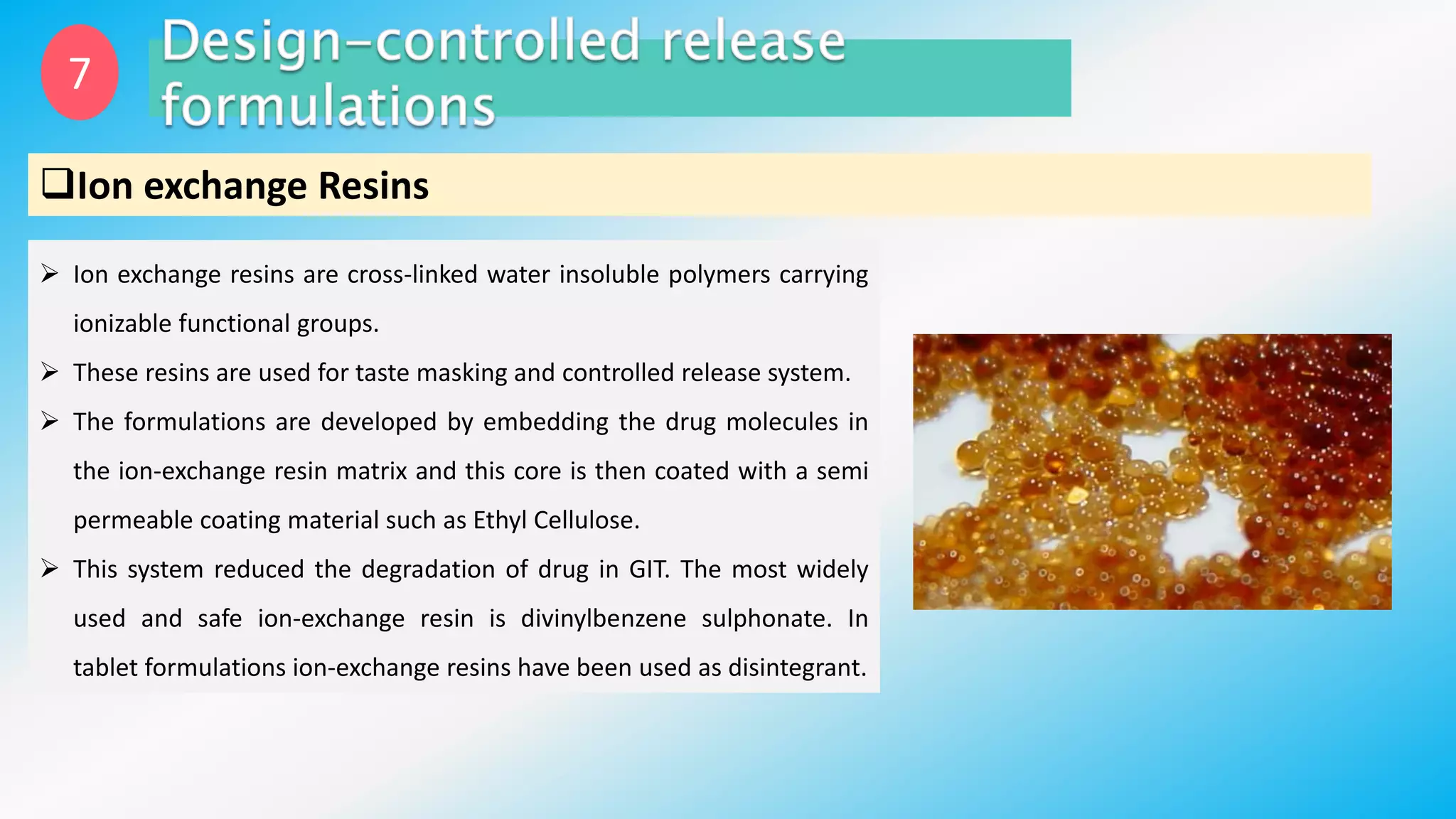
Ion exchange Resins
 Ion exchange resins are cross-linked water insoluble polymers carrying
ionizable functional groups.
 These resins are used for taste masking and controlled release system.
 The formulations are developed by embedding the drug molecules in
the ion-exchange resin matrix and this core is then coated with a semi
permeable coating material such as Ethyl Cellulose.
 This system reduced the degradation of drug in GIT. The most widely
used and safe ion-exchange resin is divinylbenzene sulphonate. In
tablet formulations ion-exchange resins have been used as disintegrant.
7
Ion exchange Resins
 Ion-exchange resins are used in the manufacturing of pharmaceuticals, not only for catalyzing certain reactions, but
also for isolating and purifying pharmaceutical active ingredients.
 Three ion-exchange resins,
 sodium polystyrene sulfonate,
 colestipol, and
 cholestyramine, are used as active ingredients.
 Sodium polystyrene sulfonate is a strongly acidic ion-exchange resin and is used to treat hyperkalemia.
 Colestipol is a weakly basic ion-exchange resin and is used to treat hypercholesterolemia.
 Cholestyramine is a strongly basic ion-exchange resin and is also used to treat hypercholesterolemia. Colestipol and
cholestyramine are known as bile acid sequestrants.
7
Ion exchange Resins
 Also used as excipients in pharmaceutical formulations such as tablets, capsules, gums, and suspensions.
 In these uses the ion-exchange resin can have several different functions, including taste-masking, extended release,
tablet disintegration, increased bioavailability, and improving the chemical stability of the active ingredients.
 Selective polymeric chelators have been proposed for maintenance therapy of some pathologies, where chronic ion
accumulation occurs, such as Wilson disease (where copper accumulation occurs) or hereditary hemochromatosis (iron
overload, where iron accumulation occurs)
 These polymers or particles have a negligible or null systemic biological availability and they are designed to form
stable complexes with Fe2+ and Fe3+ in the GIT and thus limiting the uptake of these ions and their long-term
accumulation.
 Although this method has only a limited efficacy, unlike small-molecular chelators (deferasirox, deferiprone, or
deferoxamine), such an approach may have only minor side effects in sub-chronic studies.
8
8
Physiological properties
 Aqueous Solubility
 Partition coefficient (P-value)
 Drug pKa
 Drug stability
 Molecular size & molecular weight
 Protein binding
8
Biological factors
 Absorption
 Biological half-life (t1/2)
 Dose size
 Therapeutic window
 Absorption window
 Patient physiology

Controlled drug delivery systems

  • 1.
    by Abhijit Debnath Asst. Professor NIETPharmacy Institute Greater Noida
  • 4.
  • 5.
  • 6.
    1  Controlled drugdelivery is one which delivers the drug at a predetermined rate, for locally or systemically, for a specified period of time.  To get Continuous oral delivery of drugs at predictable and reproducible kinetics for predetermined period throughout the course of GIT.  Controlled release drug delivery employs drug-encapsulating devices from which therapeutic agents may be released at controlled rates for long periods of time, ranging from days to months.  Such systems offer numerous advantages over traditional methods of drug delivery, including tailoring of drug release rates, protection of fragile drugs and increased patient comfort and compliance.  Controlled drug delivery systems can include the maintenance of drug levels within a desired range, the need for fewer administrations, optimal use of the drug in question, and increased patient compliance.
  • 7.
    History of CRDD The science of controlled release was first originated from the development of oral sustained release products in the 1940s and early 1950s.  The first patent for oral sustained release preparation went in the favour of Lipowski;  His preparation contained small coated beads that were releasing the drug slowly & constantly.  This idea later developed by Blythe and launched the first marketed sustained release product in 1952.  Over the past 30 years as the complication involves in the marketing of new drug increased and various advantages recognized of Controlled release drug delivery system (CRDDS), the greater attention is being paid in this field. 1
  • 8.
    The ideal Drugdelivery system should be  Inert  Biocompatible  Mechanically strong  Comfortable for the patient  Capable of achieving high drug loading  Safe from accidental release  Simple to administer and remove  Easy to fabricate and sterilize 1
  • 9.
  • 10.
  • 11.
    Pharmacokinetics Pharmacodynamics Design of dosageregimen •Where? •How much? •How often? •How long? Plasma Concentration Effects Plasma refers to the clear supernatant fluid that results from blood after the cellular components have been removed 2 Pharmacokinetics and Pharmacodynamics
  • 12.
  • 13.
  • 14.
    2  The UnitedStates Pharmacopoeia (USP) defines the modified-release (MR) dosage form as “the one for which the drug release characteristics of time course and/or location are chosen to accomplish therapeutic or convenience objectives not offered by conventional dosage forms such as solutions, ointments, or promptly dissolving dosage forms”.  One class of MR dosage form is an extended-release (ER) dosage form and is defined as the one that allows at least a 2-fold reduction in dosing frequency or significant increase in patient compliance or therapeutic performance when compared with that presented as a conventional dosage form (a solution or a prompt drug-releasing dosage form).  The terms “controlled release (CR)”, “prolonged release”, “sustained or slow release (SR)” and “long-acting (LA)” have been used synonymously with “extended release”
  • 15.
    2  Controlled drugdelivery is one which delivers the drug at a predetermined rate, for locally or systemically, for a specified period of time.  Sustained Drug Release allows delivery of a specific drug at a programmed rate that leads to drug delivery for a prolonged period of time.  Prolonged-release products release the active ingredients slowly and work for a longer time. It is a dose of a medication over an extended period of time
  • 16.
    1 The difference betweencontrolled release and sustained release  Controlled drug delivery- which delivers the drug at a pre determined rate for a specified period of time. Controlled release is perfectly zero order release that is the drug release over time irrespective of concentration.  Sustain release dosage form- is defined as the type of dosage form in which a portion i.e. (initial dose) of the drug is released immediately, in order to achieve desired therapeutic response more promptly, and the remaining(maintenance dose) is then released slowly there by achieving a therapeutic level which is prolonged, but not maintained constant.  Sustained release implies slow release of the drug over a time period. It may or may not be controlled release.
  • 17.
  • 18.
    The basic rationaleof a controlled release drug delivery system is  To optimize the biopharmaceutics, pharmacokinetics, and pharmacodynamics properties of a drug in such a way so that  Its utility is maximized through reduction in side effects  Cure or control of disease condition in the shortest possible time by using smallest quantity of drug,  Administered by most suitable route.  The immediate release drug delivery system lacks some features like dose maintenance, controlled release rate and site targeting.  achieve prolong therapeutic effect.  predictability in drug release kinetics.  Deliver the drug at pre determined rate, locally or systematically. 3
  • 19.
  • 20.
    4  Improve patientconvenience.  Reduction in fluctuation in steady state level.  Increase the safety margin of high potency drug.  Reduction in total health care cost.  Reduction in frequency of drug administration  Improved patient compliance  Reduction in total drug usage when compared with conventional therapy  Reduction in drug accumulation with chronic therapy  Reduction in drug toxicity (local/systemic)  Stabilization of medical condition (because of more uniform drug levels)  Improvement in bioavailability of some drugs because of spatial control  Economical to the health care providers and the patient
  • 21.
    Commercial / IndustrialAdvantages  Illustration of innovative/technologicalleadership  Product life-cycle extension  Product differentiation  Market expansion  Patent extension 4
  • 22.
  • 23.
    5  Decrease systemicavailability.  Poor invitro – invivo correlation.  Increased risk of toxicity.  Retrieval of drug is difficult in case of toxicity , poisoning or hyper sensitivity reaction.  The possible toxicity or non-biocompatibility of the materials used,  Undesirable by-products of degradation,  Any surgery required to implant or remove the system,  The chance of patient discomfort from the delivery device,  The higher cost of controlled-release systems compared with traditional pharmaceutical formulations
  • 24.
    5  Delay inonset of drug action  Possibility of dose dumping in the case of a poor formulation strategy  Increased potential for first pass metabolism  Greater dependence on GI residence time of dosage form  Possibility of less accurate dose adjustment in some cases  Cost per unit dose is higher when compared with conventional doses  Not all drugs are suitable for formulating into ER dosage form
  • 25.
  • 26.
    6 BIOPHARMACEUTIC CHARACTERISTICS OFDRUG TO QUALIFY FOR CDDS  Molecular weight/ size: < 1000  Solubility: > 0.1 µg/ml for pH 1 to pH 7.8  Pka Non ionized moiety: > 0.1% at pH 1 to pH 7.8  Apparent partition coefficient: High  Absorption mechanism: Diffusion  General absorbability: From all GI segments  Release: Should not be influenced by pH and enzymes
  • 27.
  • 28.
    6 Characteristics that makeA Drug Unsuitable For CRDD Following candidates are generally not suitable for ER dosage forms  Short elimination half-life  Long elimination half-life  Narrow therapeutic index  Poor absorption  Active absorption  Low or slow absorption  Extensive first pass effect
  • 29.
  • 30.
    7 Approaches to design-controlledrelease formulations based on  Diffusion  Reservoir type devices  Matrix type devices  Dissolution  Encapsulation Dissolution control  Seed or granule coated  Micro encapsulation  Matrix Dissolution control  Ion exchange principles
  • 31.
    7 Diffusion  Diffusion isthe movement of molecules from a region of higher concentration to a region of lower concentration down the concentration gradient.  Drug diffusion is an essential mechanism for drug dispersion throughout biological systems.
  • 32.
  • 33.
    7 Diffusion: Reservoir diffusionsystem  It is also called as laminated matrix device.  It is a hollow system containing an inner core surrounded by water insoluble membrane and polymer can be applied by coating or micro encapsulation.  The Rate controlling mechanism is that drug will partition into membrane and exchange with the fluid surrounding the drug by diffusion.  Commonly used polymers are HPC, ethyl cellulose & polyvinyl acetate. Examples: Nico-400, Nitro-Bid.
  • 34.
    7 Diffusion: Matrix dissolutionsystem  (a) Rigid Matrix Diffusion: Materials used are insoluble plastics such as PVP & fatty acids.  (b) Swellable Matrix Diffusion: it is also called as Glassy hydro gels and popular for sustaining the release of highly water soluble drugs.
  • 35.
    7 Dissolution  Dissolution isthe process in which a substance forms a solution.  When administered orally, a drug has to first dissolve in gastrointestinal fluids before it can be absorbed in to the blood and reach its site of action
  • 36.
  • 37.
    7 Dissolution: Encapsulated dissolutionsystem  This is also known as Coating dissolution controlled system. Dissolution rate of coat depends upon stability & thickness of coating.  It masks color, odor, taste and minimize GI irritation. Controlled release products by decreasing the dissolution rate of drugs which are highly water soluble can be formulated by preparing appropriate salt or derivatives, by coating the drug with a slowly dissolving material, or by incorporating the drug into a slowly dissolving carrier. Examples: Ornade spansules, Chlortrimeto Repetabs.
  • 38.
    7 Dissolution: Matrix dissolutionsystem  It is also known as monolithic dissolution controlled system.  Dissolution is controlled by: Altering porosity of tablet, decreasing its wet ability, dissolving at slower rate.  It follows first order drug release. The drug release can be determined by dissolution rate of polymer.  Examples: Demeaned extencaps, Dimetapp extentabs.
  • 39.
    7 Ion exchange  Ionexchange is a reversible interchange of one kind of ion present on an insoluble solid with another of like charge present in a solution surrounding the solid with the reaction being used especially for softening or making water demineralised, the purification of chemicals and separation of substances.
  • 40.
    7 Ion exchange Resins Ion exchange resins are cross-linked water insoluble polymers carrying ionizable functional groups.  These resins are used for taste masking and controlled release system.  The formulations are developed by embedding the drug molecules in the ion-exchange resin matrix and this core is then coated with a semi permeable coating material such as Ethyl Cellulose.  This system reduced the degradation of drug in GIT. The most widely used and safe ion-exchange resin is divinylbenzene sulphonate. In tablet formulations ion-exchange resins have been used as disintegrant.
  • 41.
    7 Ion exchange Resins Ion-exchange resins are used in the manufacturing of pharmaceuticals, not only for catalyzing certain reactions, but also for isolating and purifying pharmaceutical active ingredients.  Three ion-exchange resins,  sodium polystyrene sulfonate,  colestipol, and  cholestyramine, are used as active ingredients.  Sodium polystyrene sulfonate is a strongly acidic ion-exchange resin and is used to treat hyperkalemia.  Colestipol is a weakly basic ion-exchange resin and is used to treat hypercholesterolemia.  Cholestyramine is a strongly basic ion-exchange resin and is also used to treat hypercholesterolemia. Colestipol and cholestyramine are known as bile acid sequestrants.
  • 42.
    7 Ion exchange Resins Also used as excipients in pharmaceutical formulations such as tablets, capsules, gums, and suspensions.  In these uses the ion-exchange resin can have several different functions, including taste-masking, extended release, tablet disintegration, increased bioavailability, and improving the chemical stability of the active ingredients.  Selective polymeric chelators have been proposed for maintenance therapy of some pathologies, where chronic ion accumulation occurs, such as Wilson disease (where copper accumulation occurs) or hereditary hemochromatosis (iron overload, where iron accumulation occurs)  These polymers or particles have a negligible or null systemic biological availability and they are designed to form stable complexes with Fe2+ and Fe3+ in the GIT and thus limiting the uptake of these ions and their long-term accumulation.  Although this method has only a limited efficacy, unlike small-molecular chelators (deferasirox, deferiprone, or deferoxamine), such an approach may have only minor side effects in sub-chronic studies.
  • 43.
  • 44.
    8 Physiological properties  AqueousSolubility  Partition coefficient (P-value)  Drug pKa  Drug stability  Molecular size & molecular weight  Protein binding
  • 45.
    8 Biological factors  Absorption Biological half-life (t1/2)  Dose size  Therapeutic window  Absorption window  Patient physiology