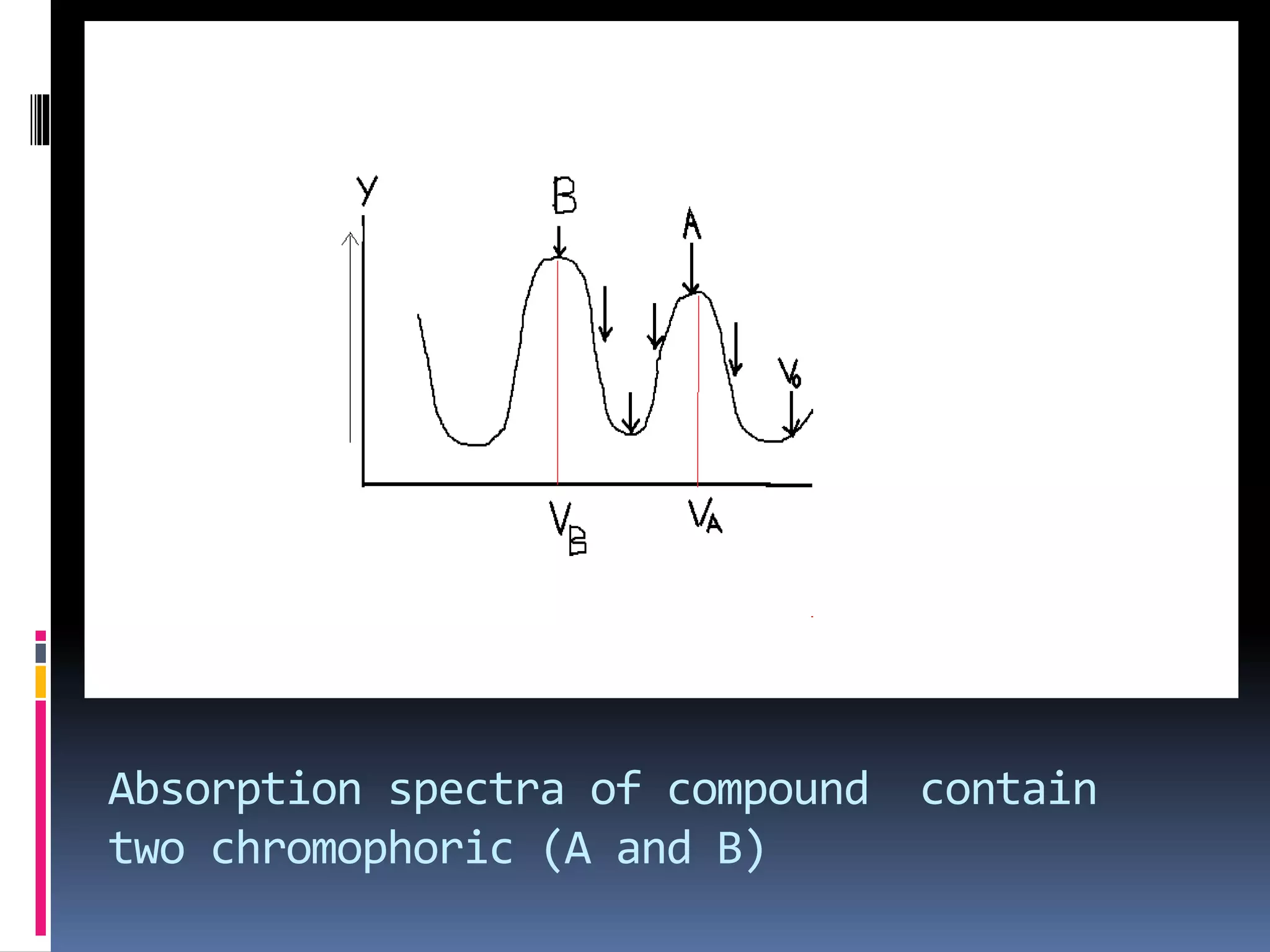
Resonance Raman spectroscopy is a technique that enhances Raman scattering intensity when the laser excitation frequency matches an electronic transition of the compound being examined. This resonance effect can greatly increase the intensity of Raman bands, facilitating the study of compounds present at low concentrations. The intensity is directly proportional to the energy difference between the laser and electronic transition. The theory of resonance Raman is complex as the normal polarizability theory fails under resonance conditions. It allows selective study of specific parts of molecules and is useful for problems in biology and complexes materials.