Downloaded 1,321 times
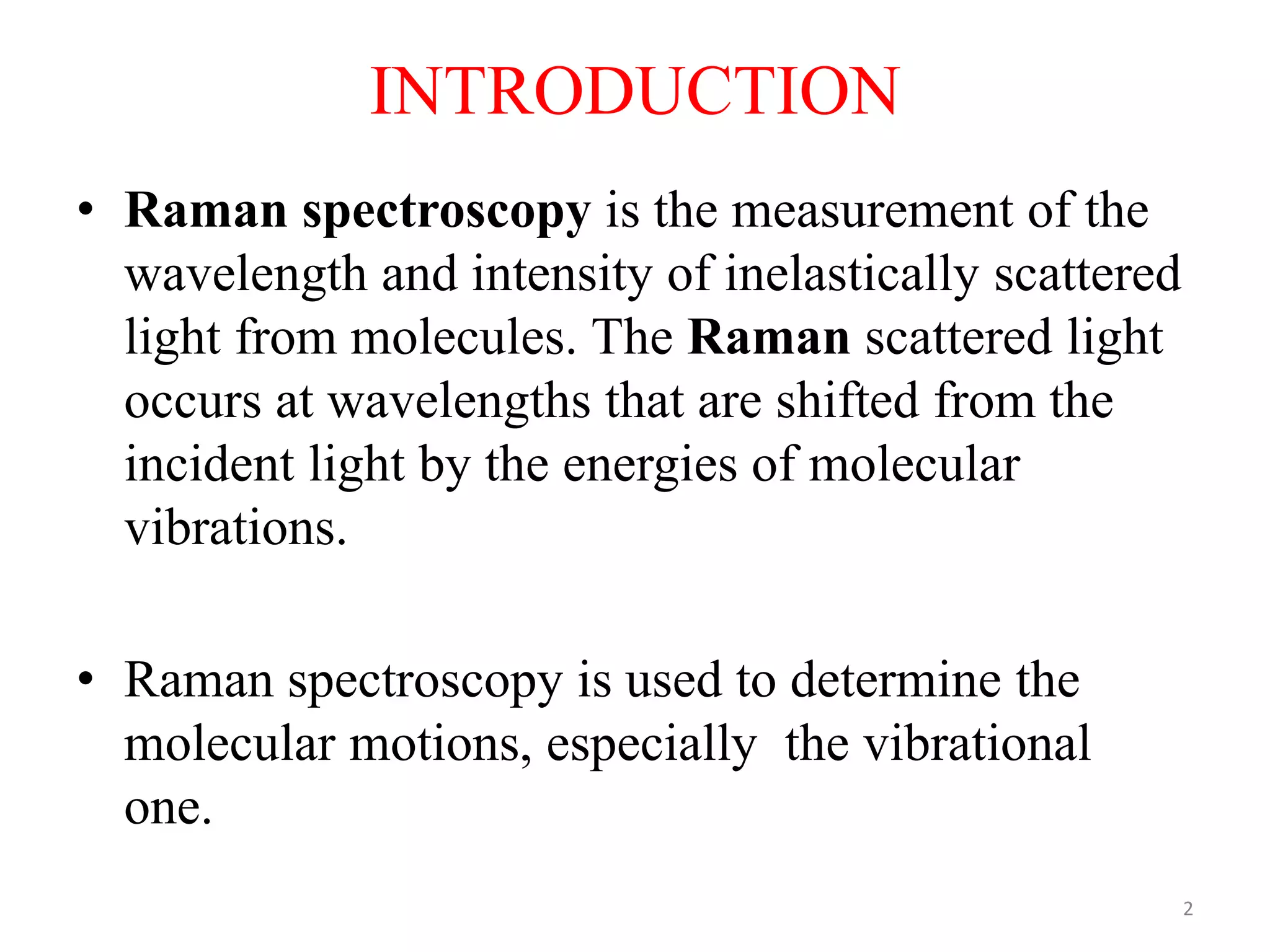
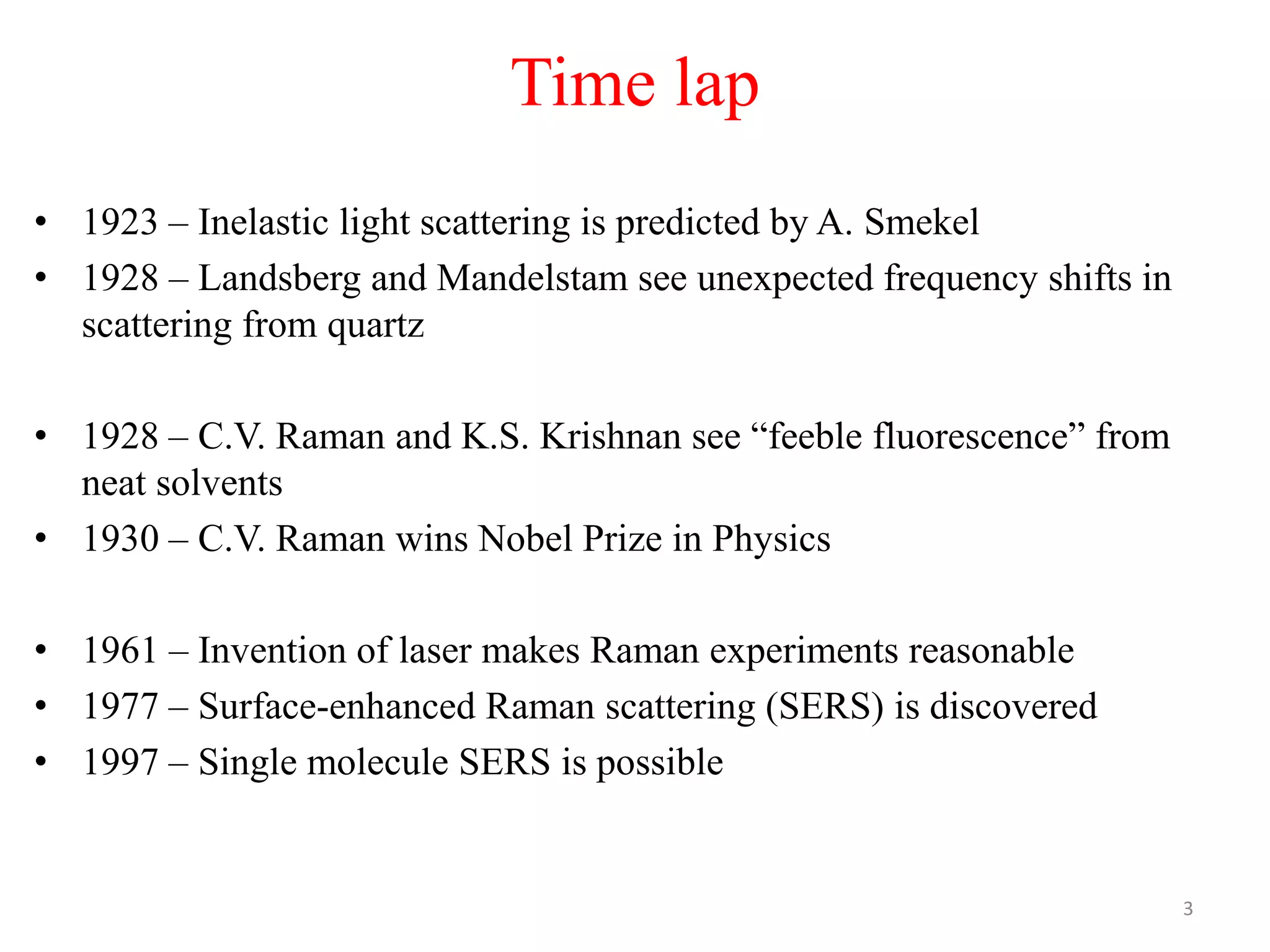
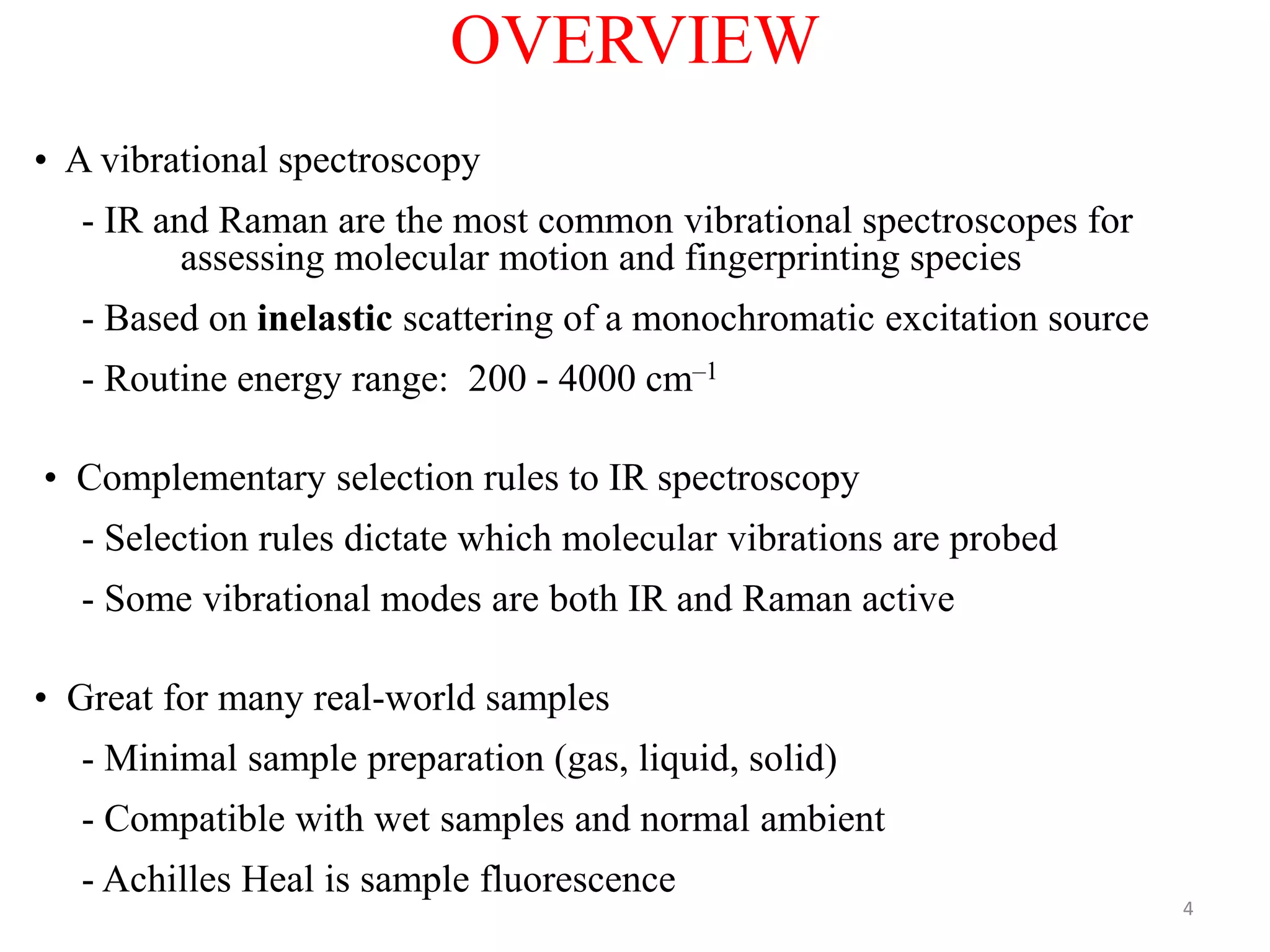
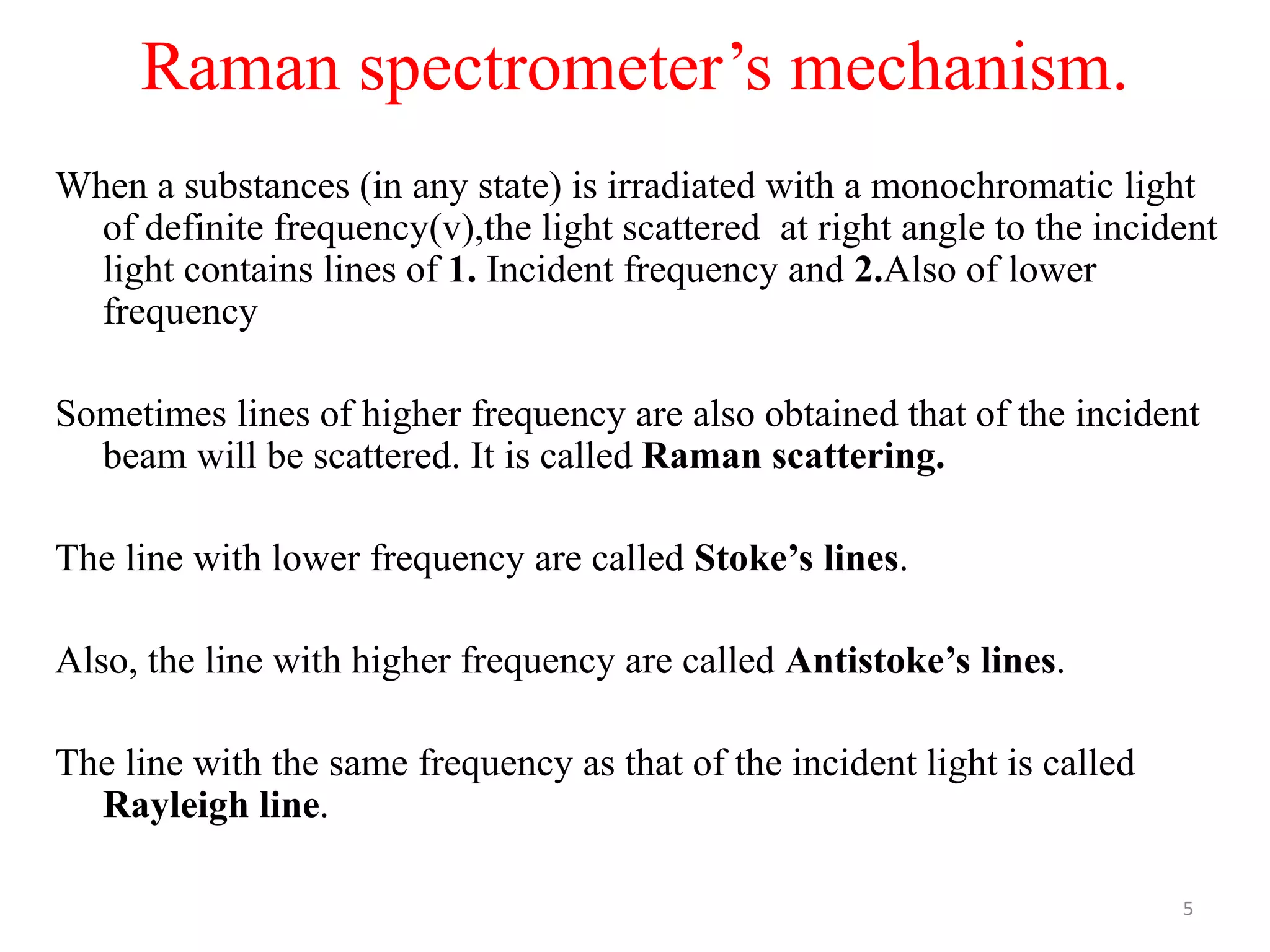
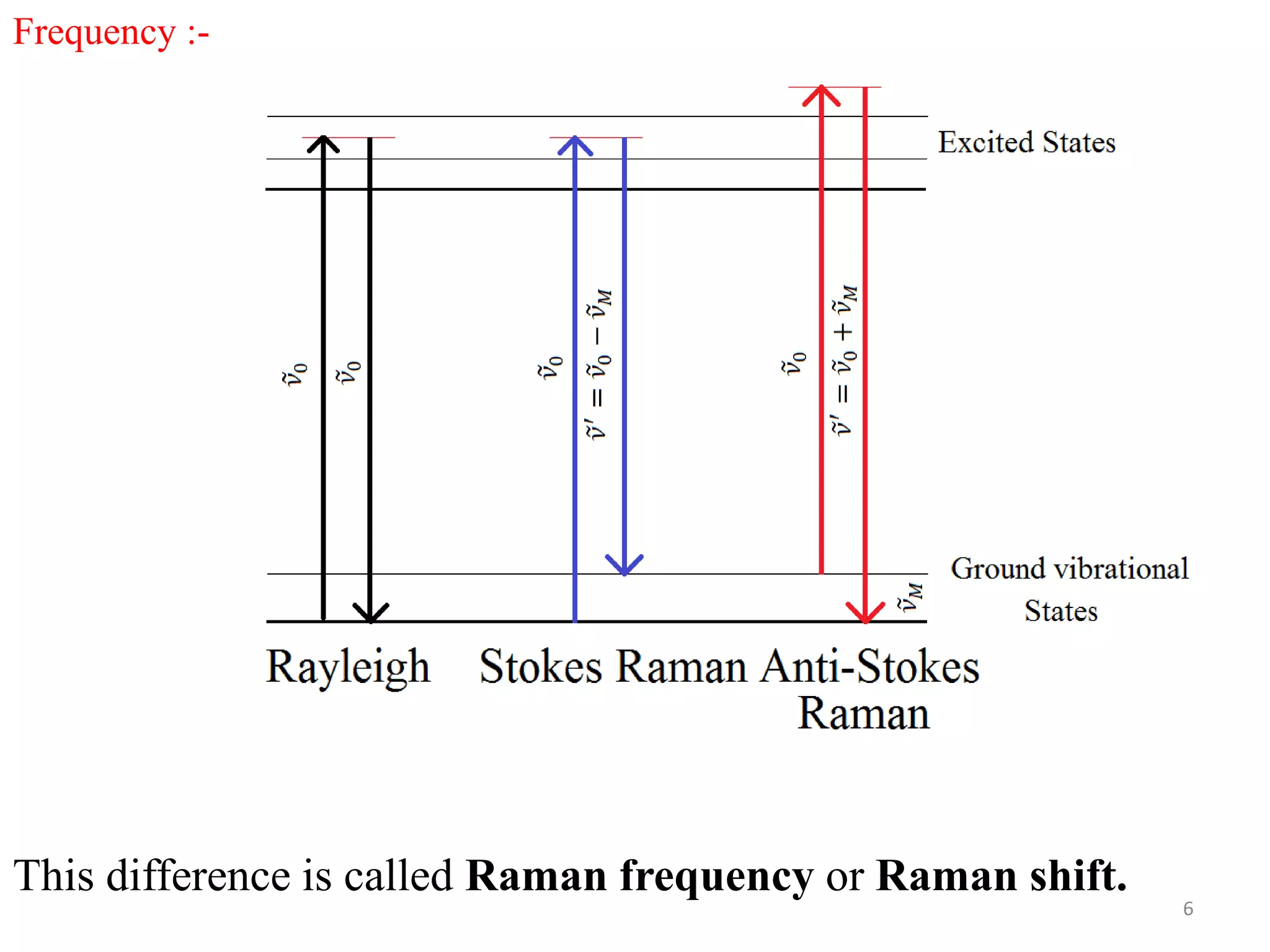
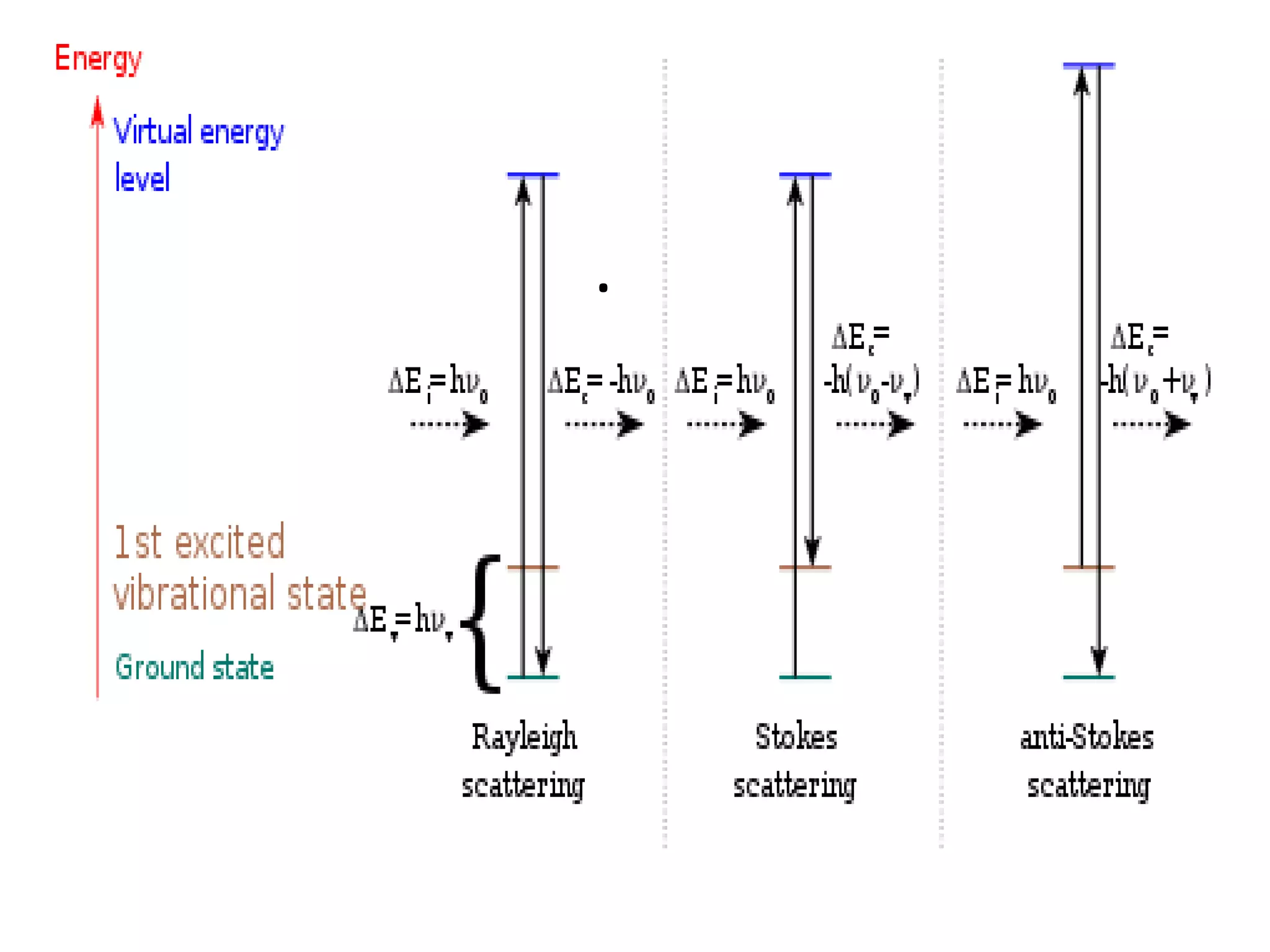
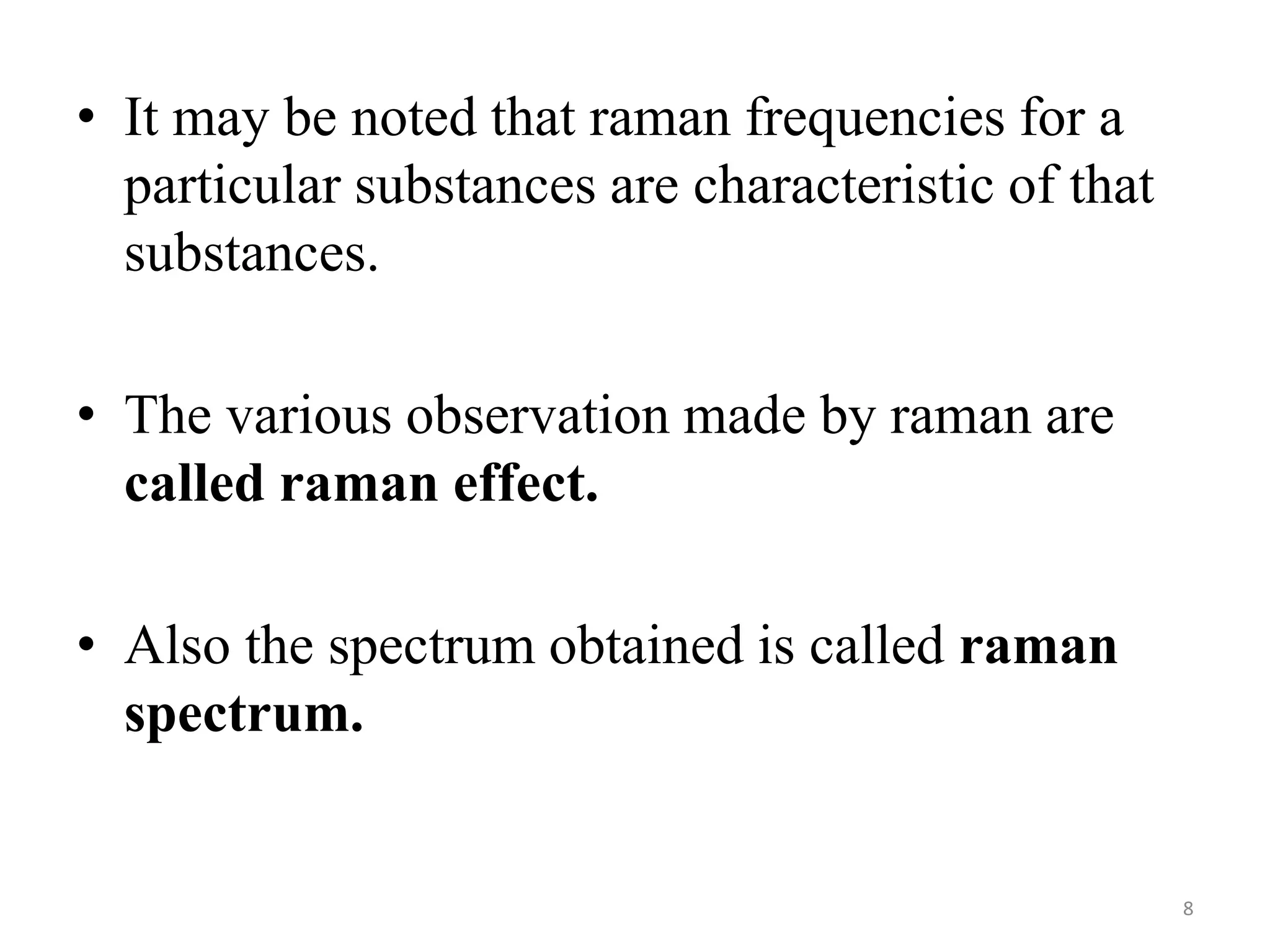
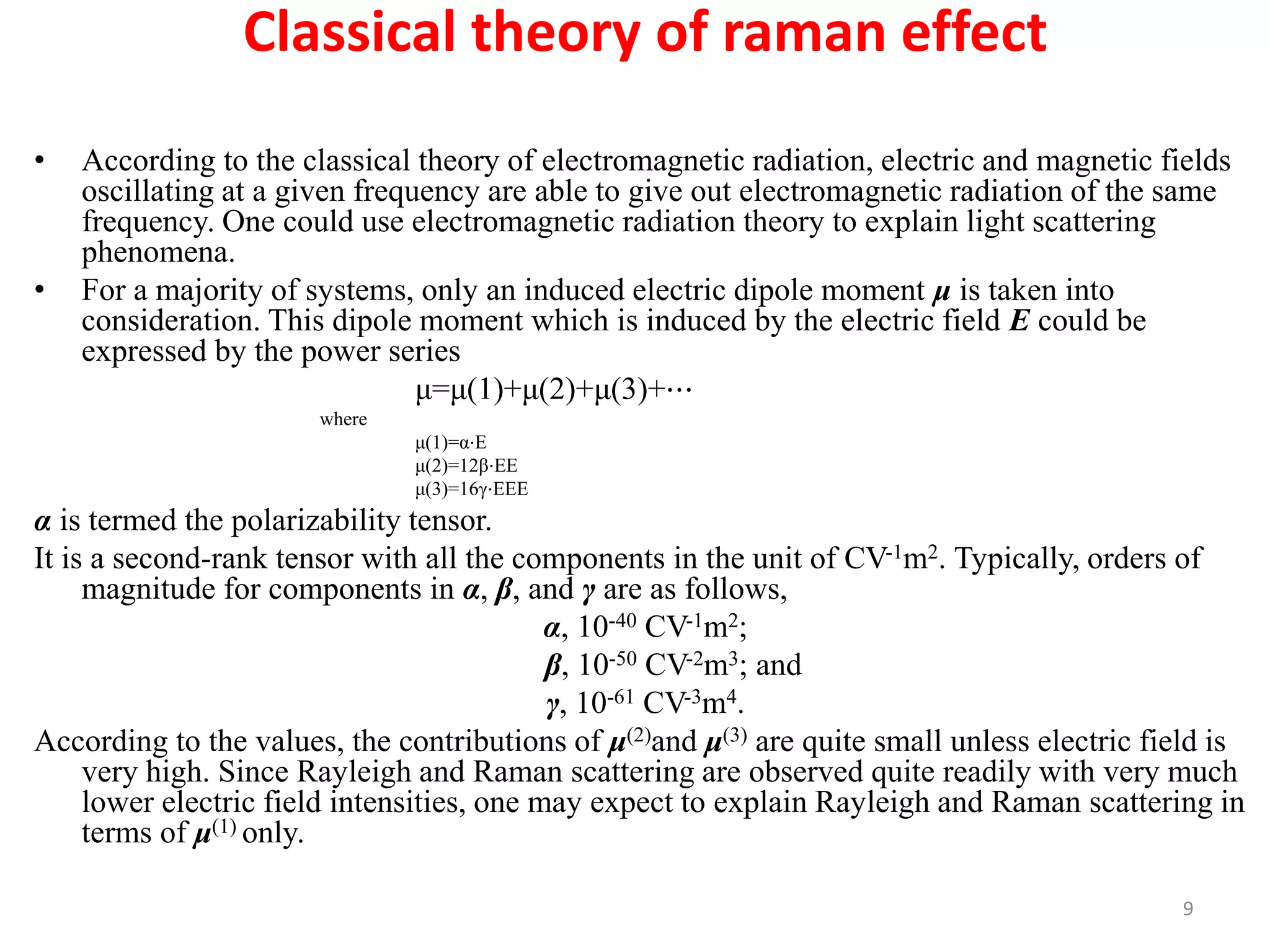
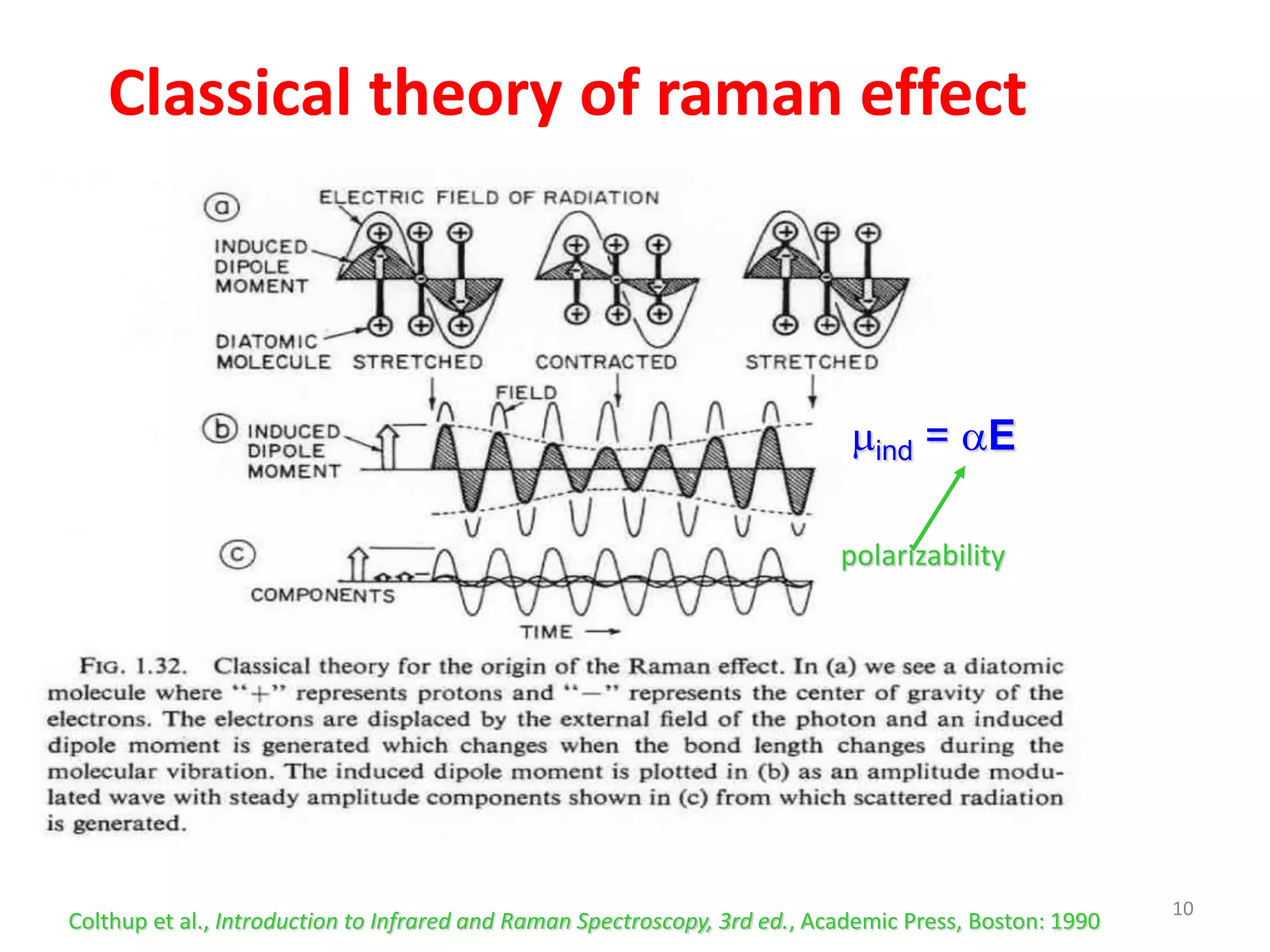
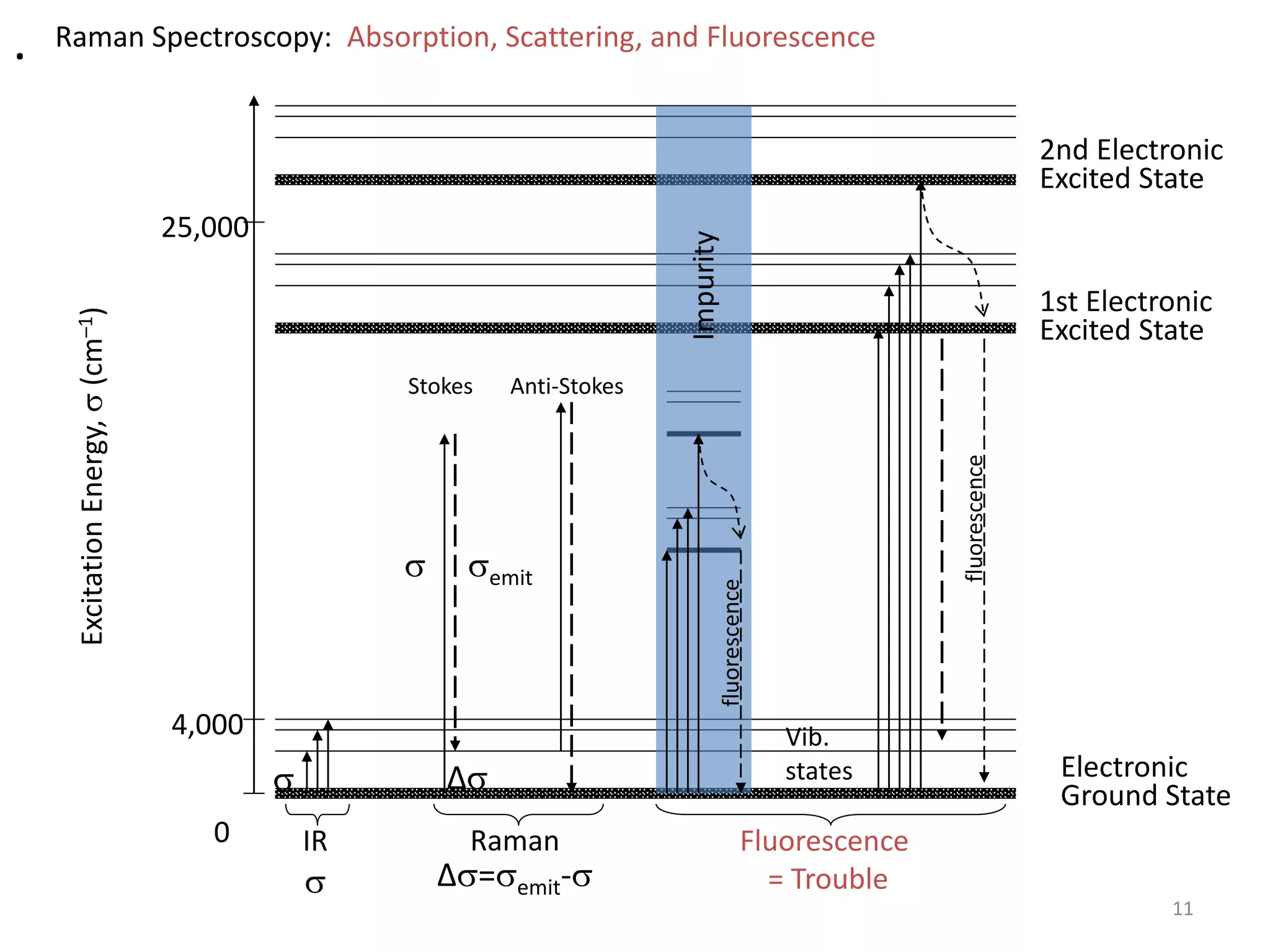
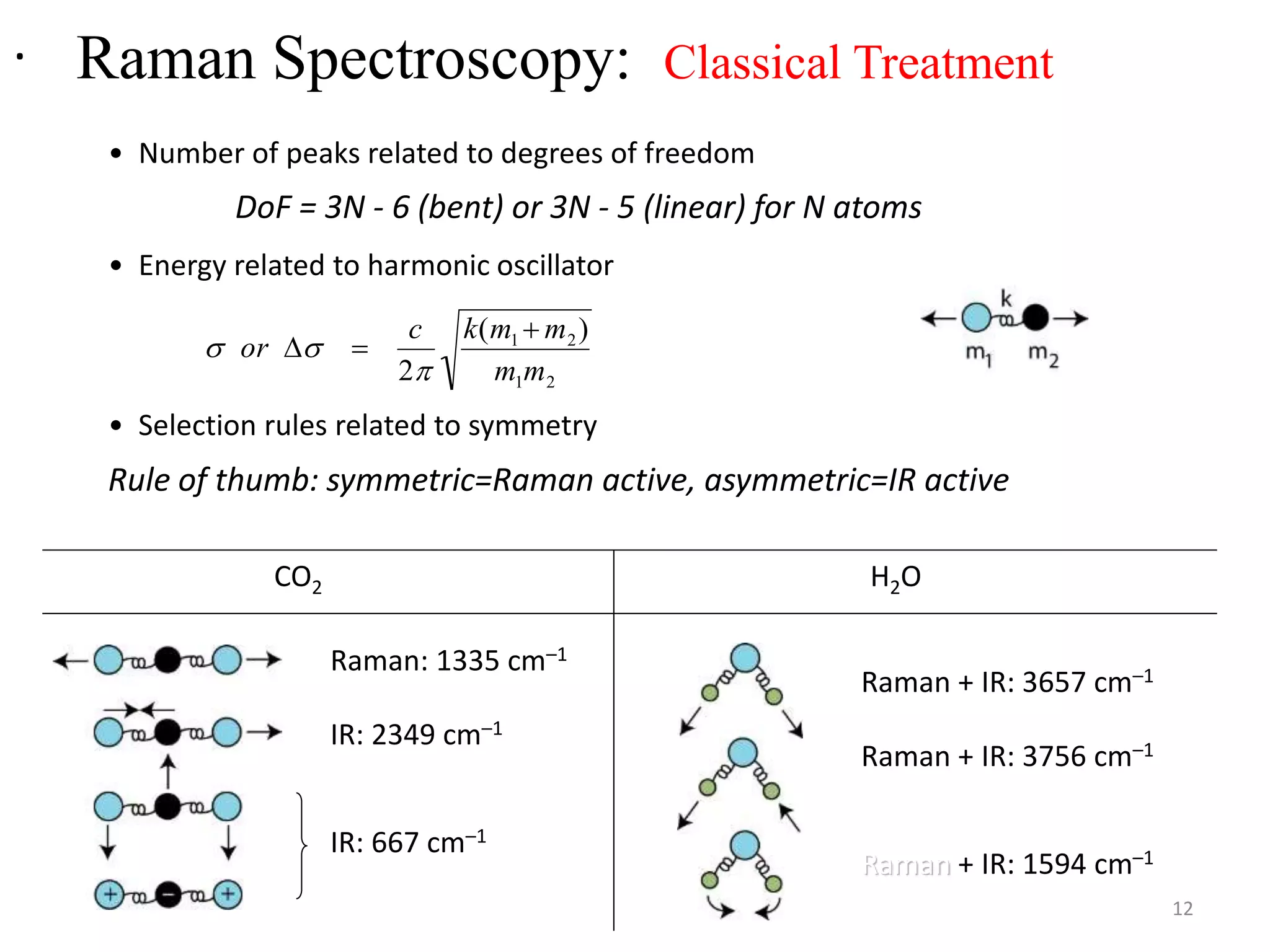
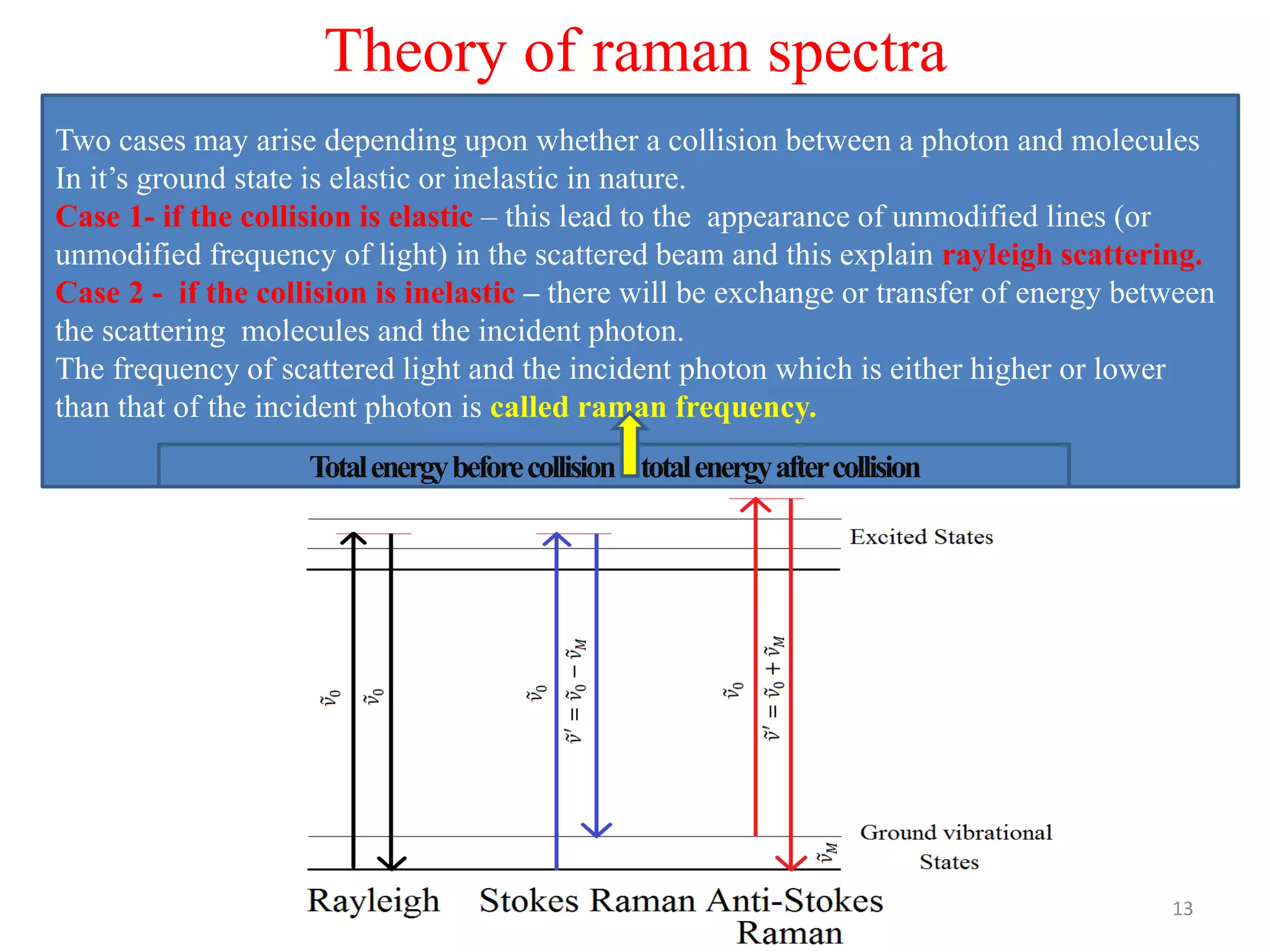
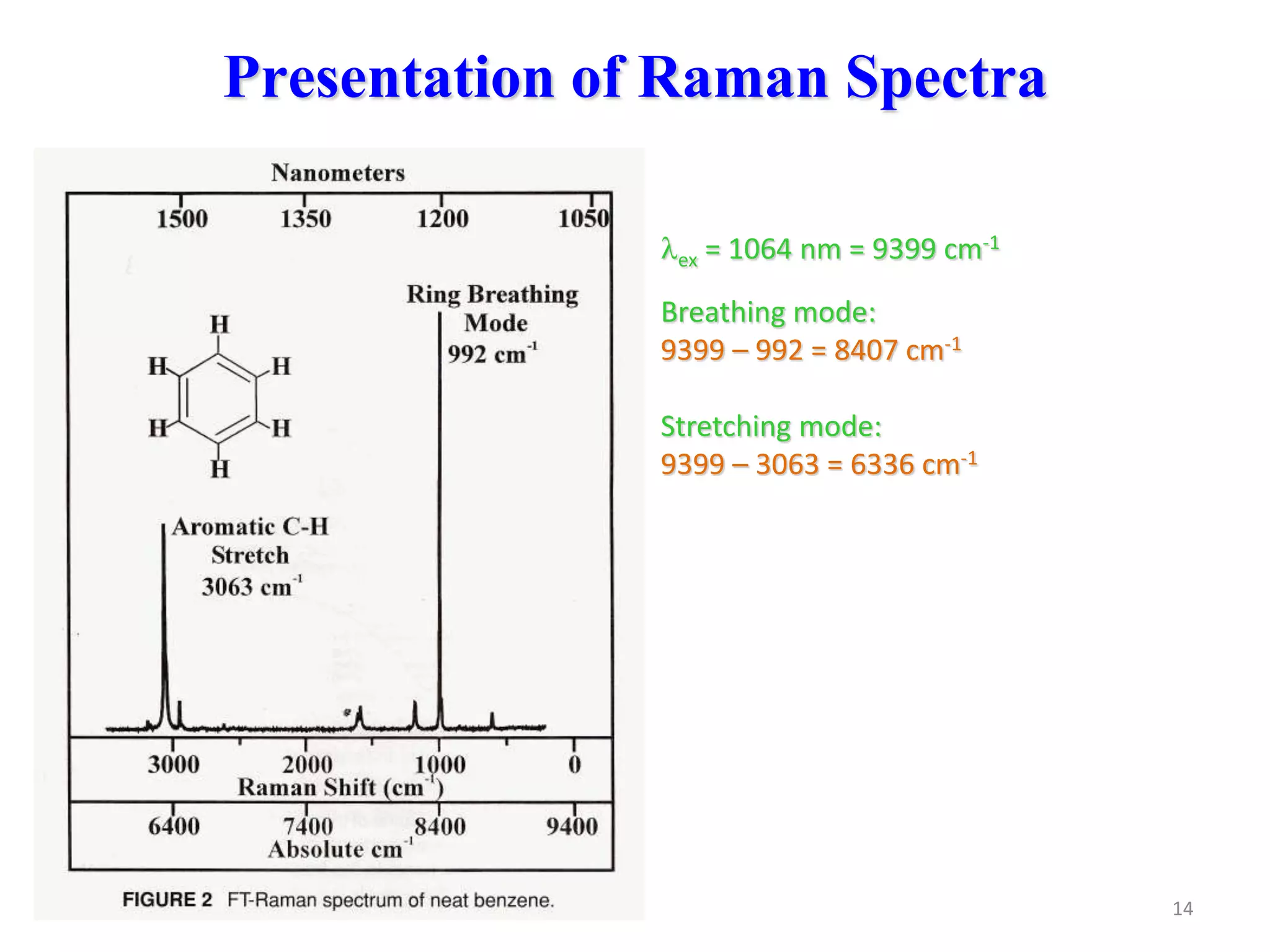
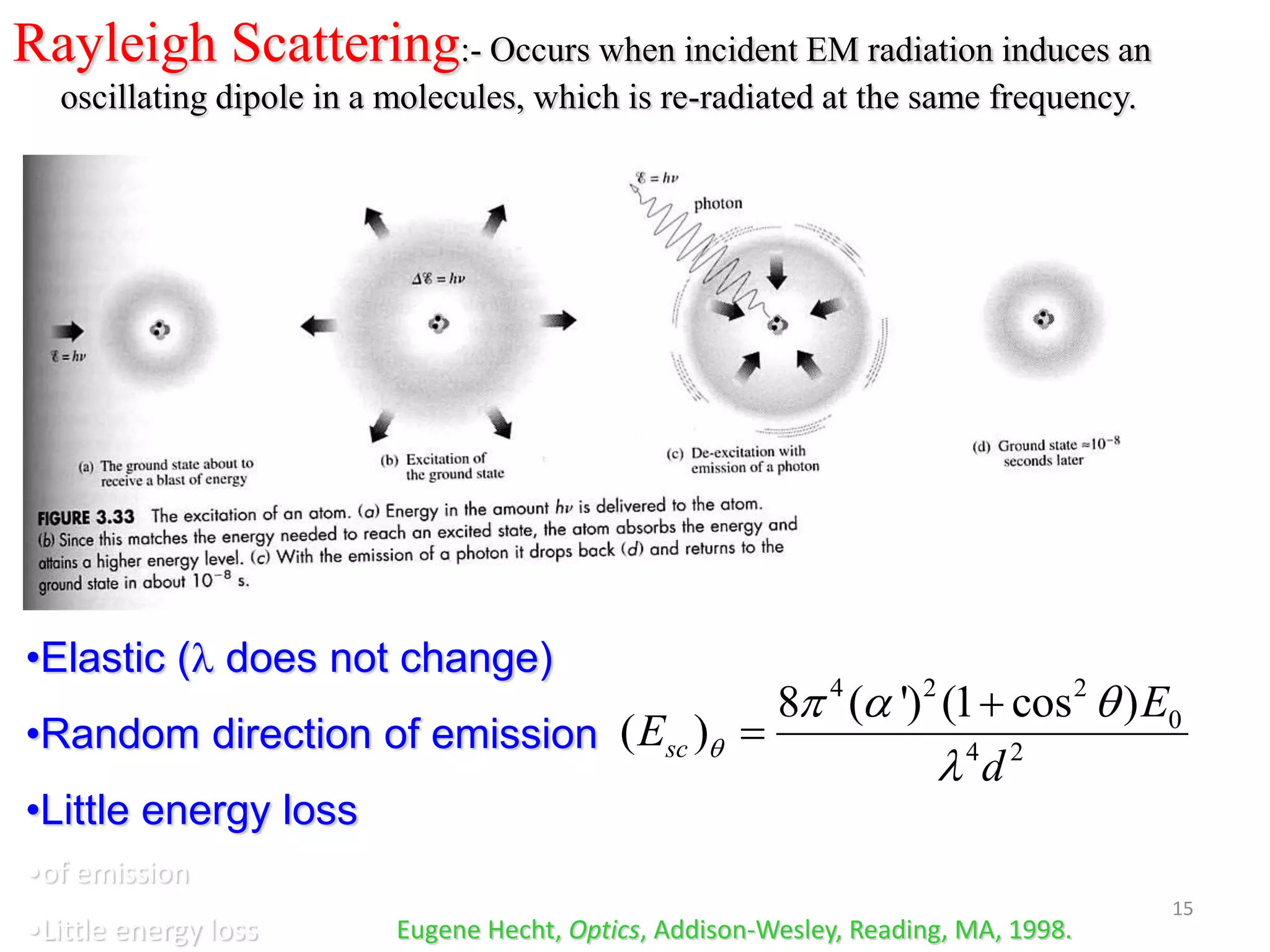
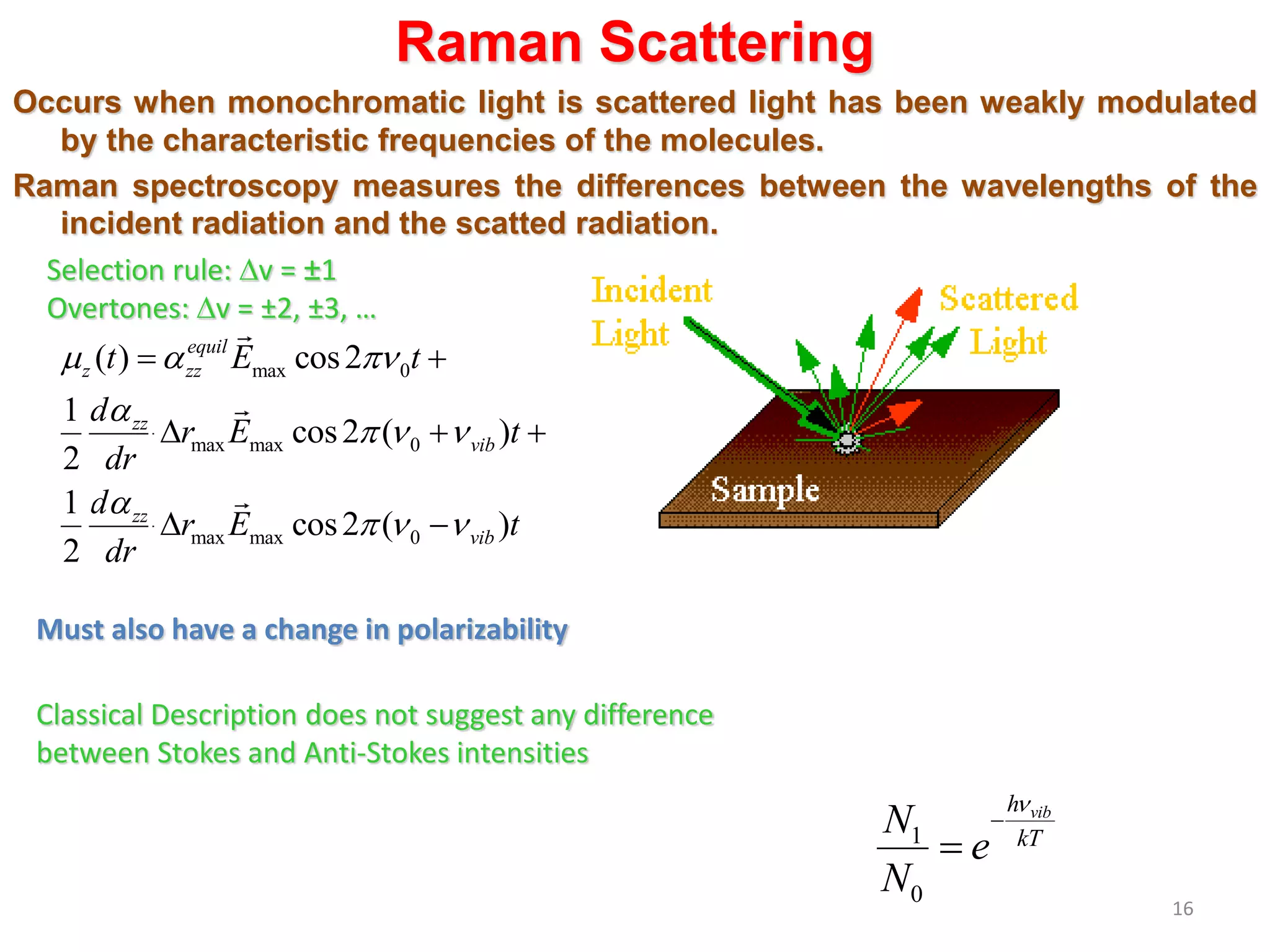
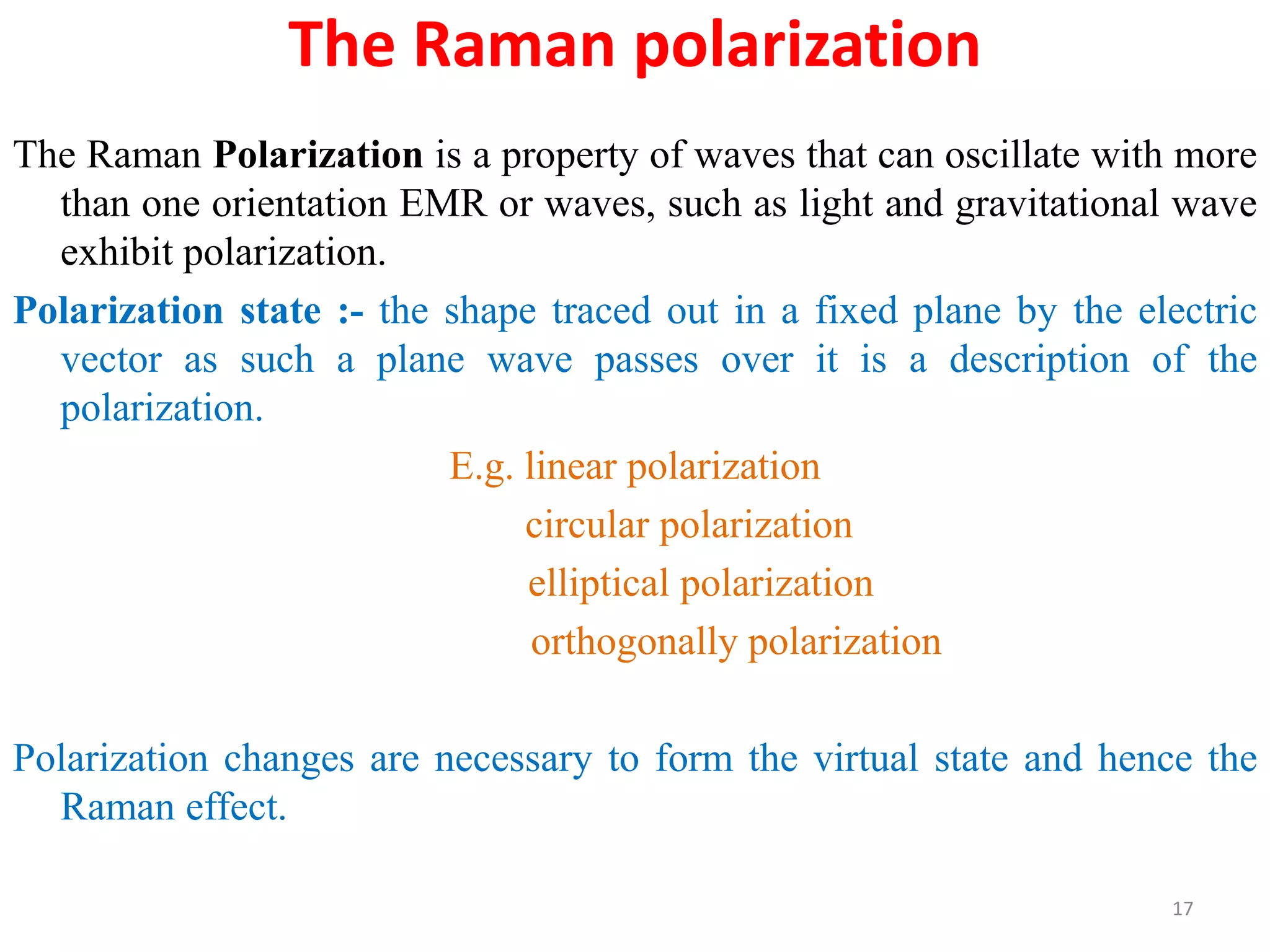
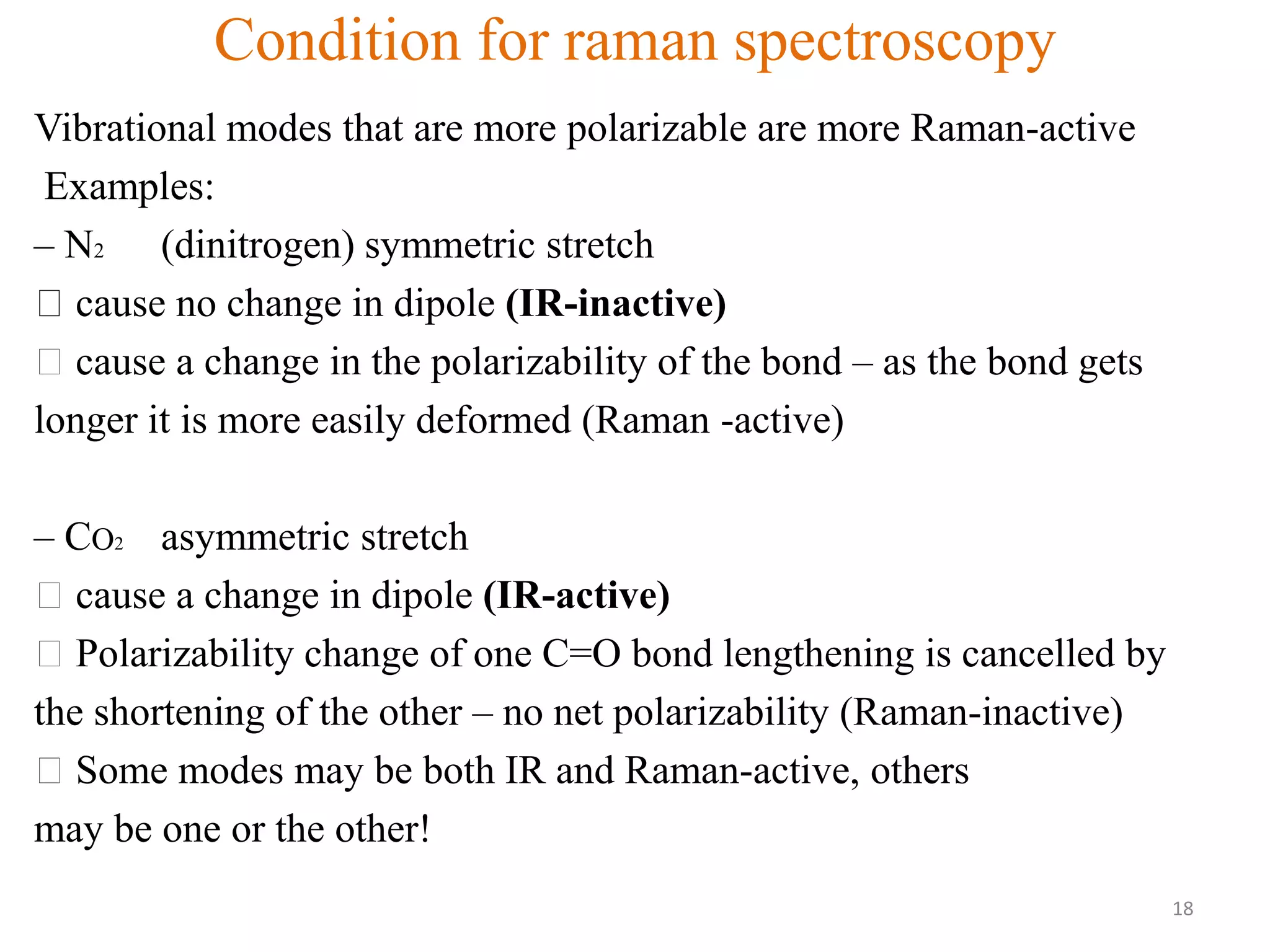
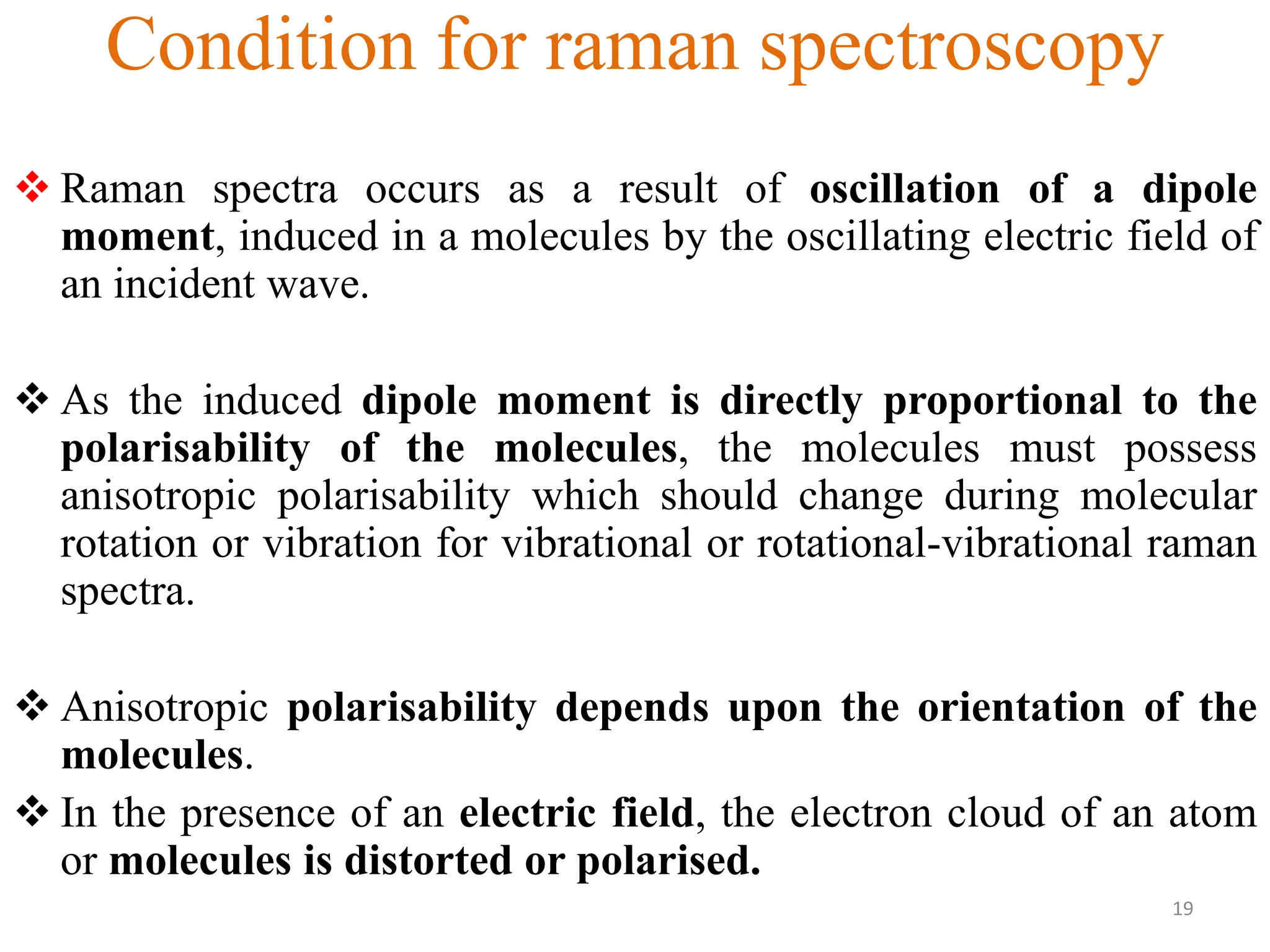
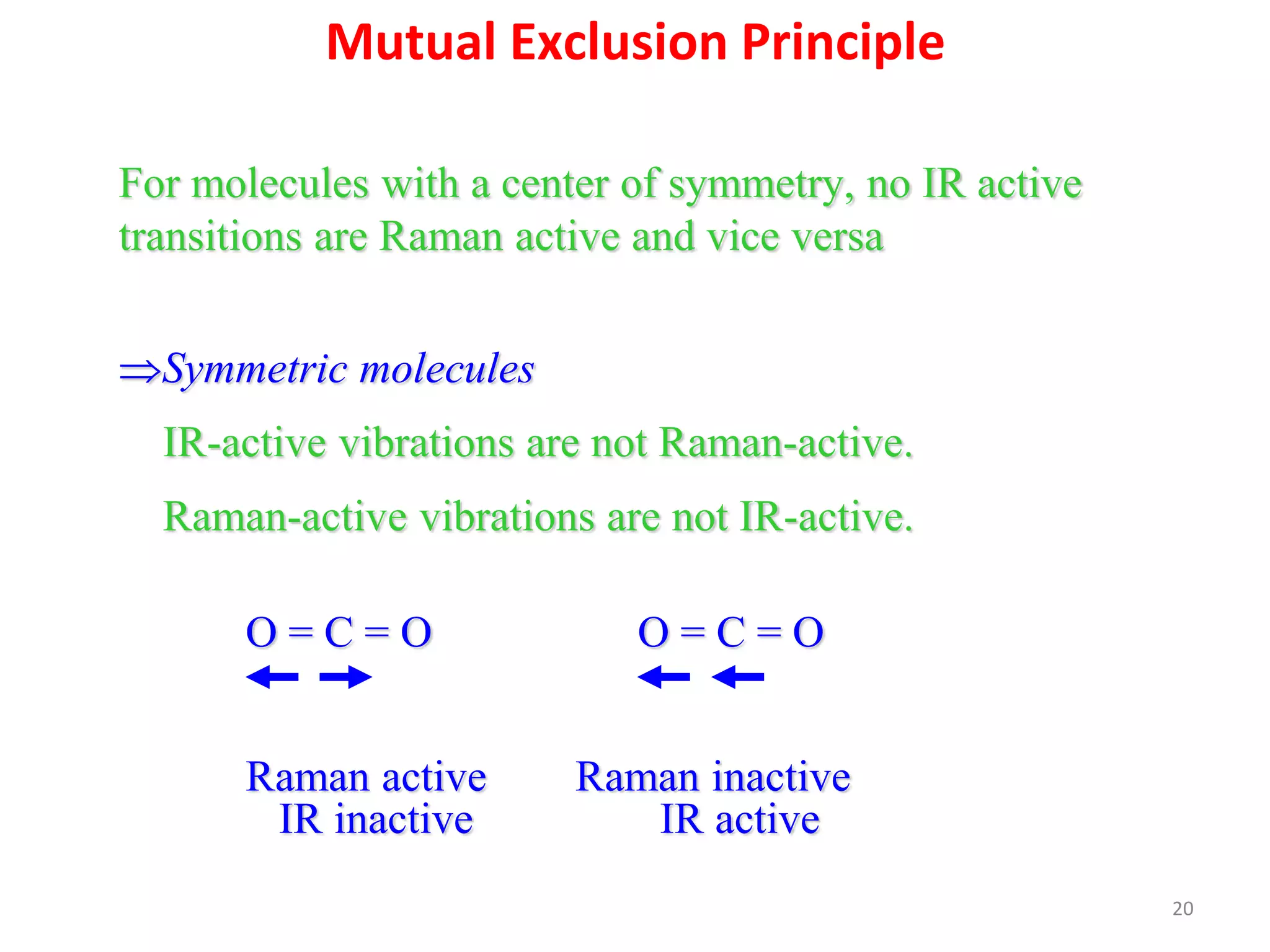
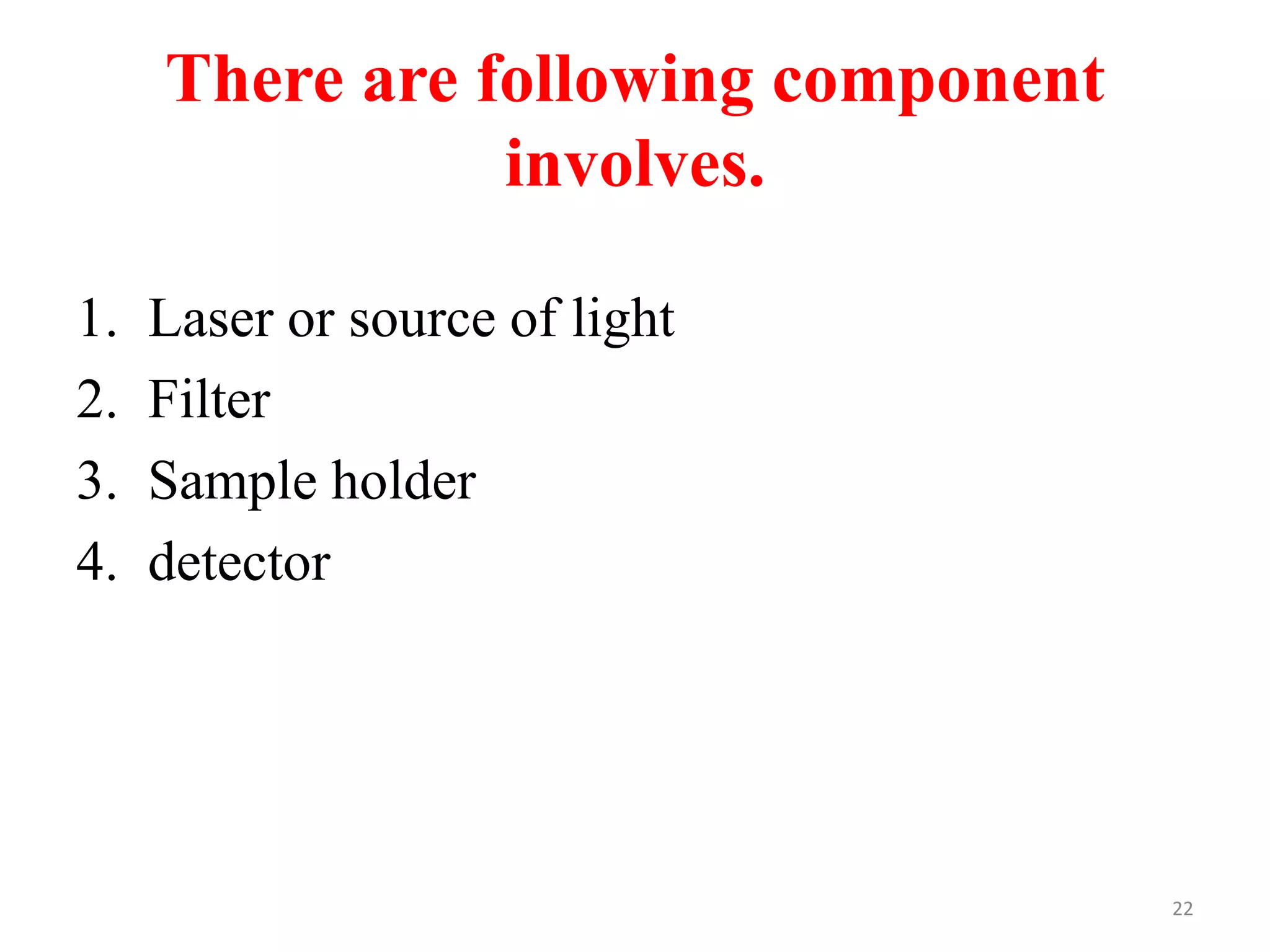
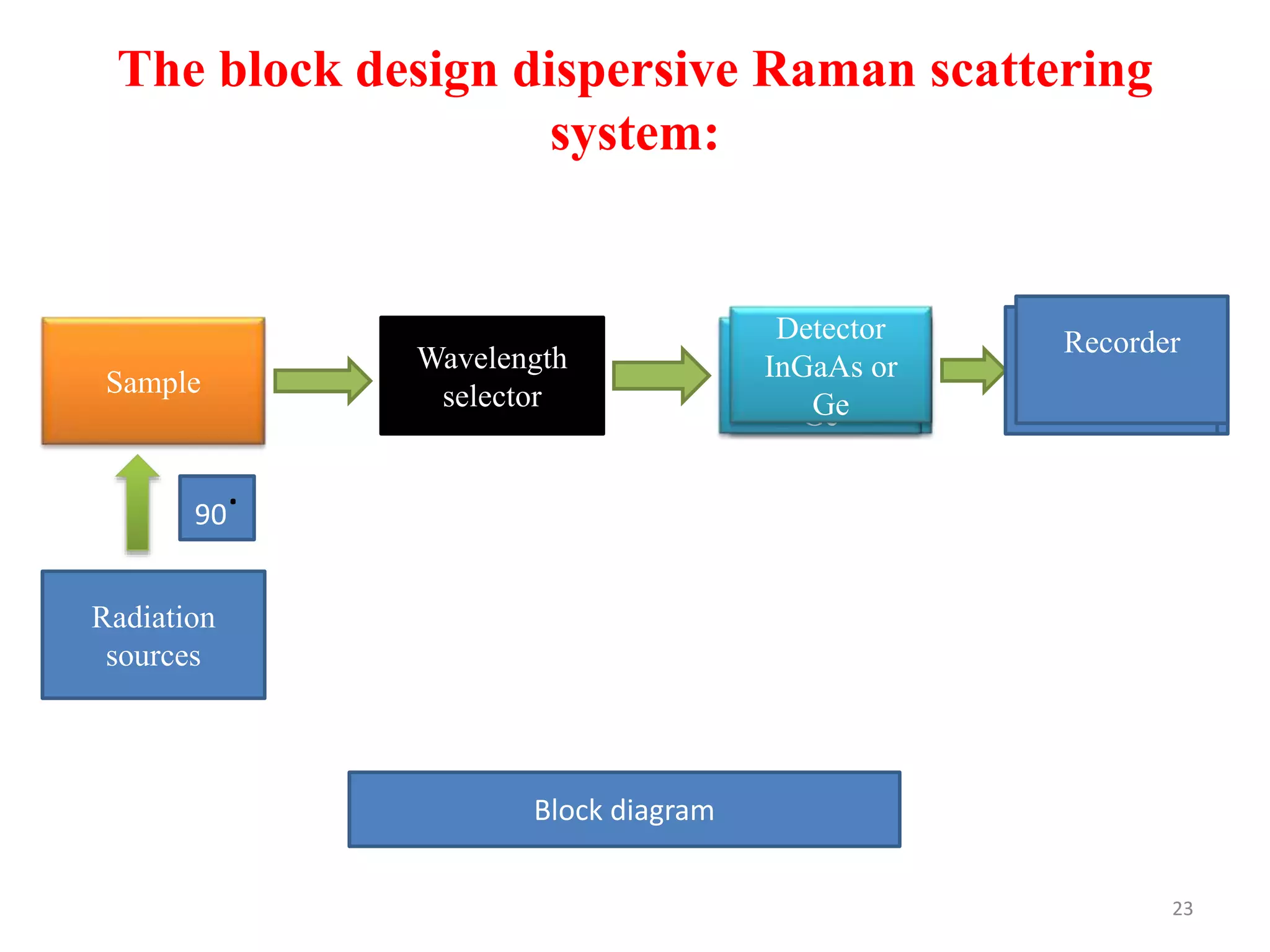
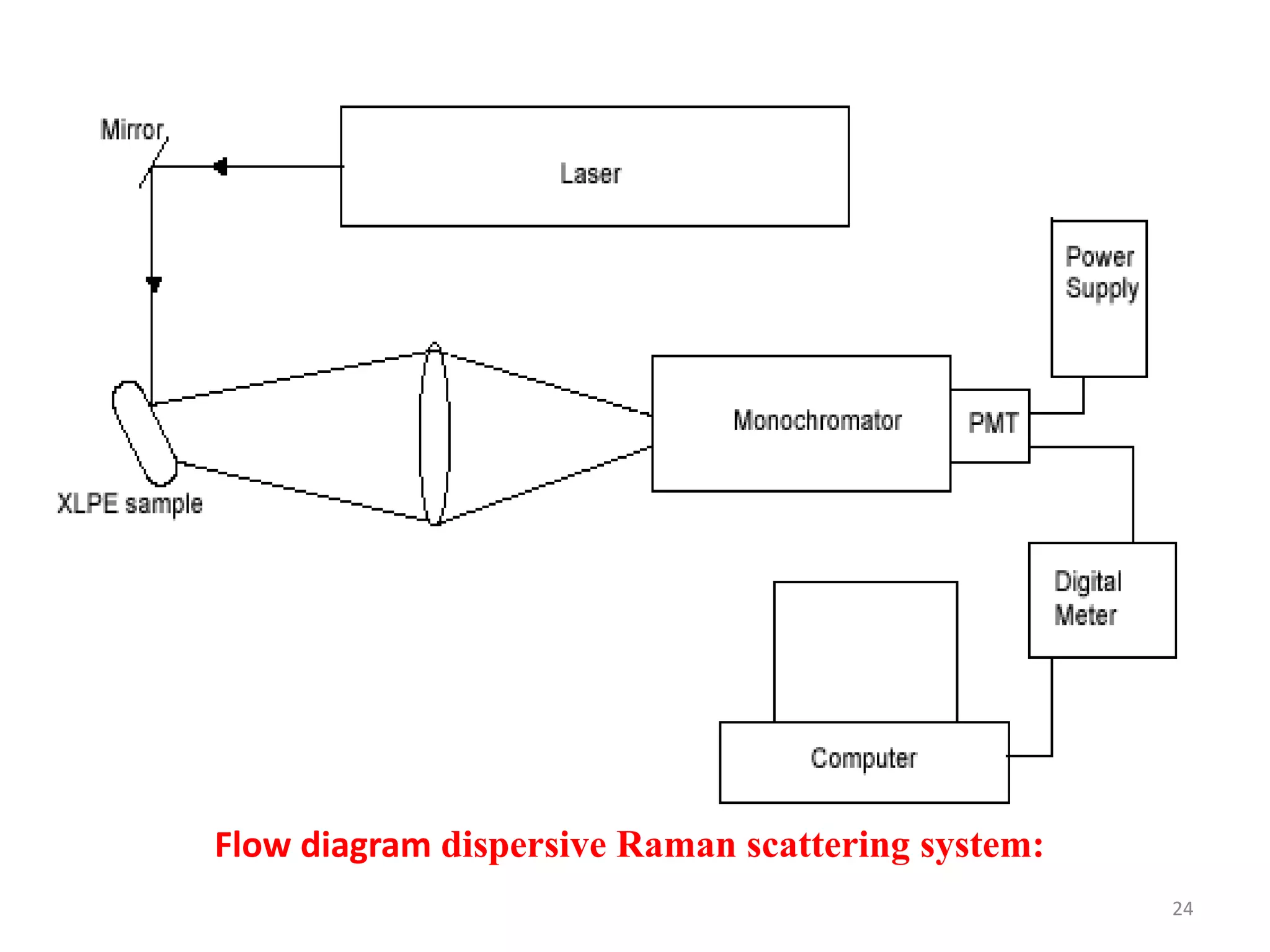
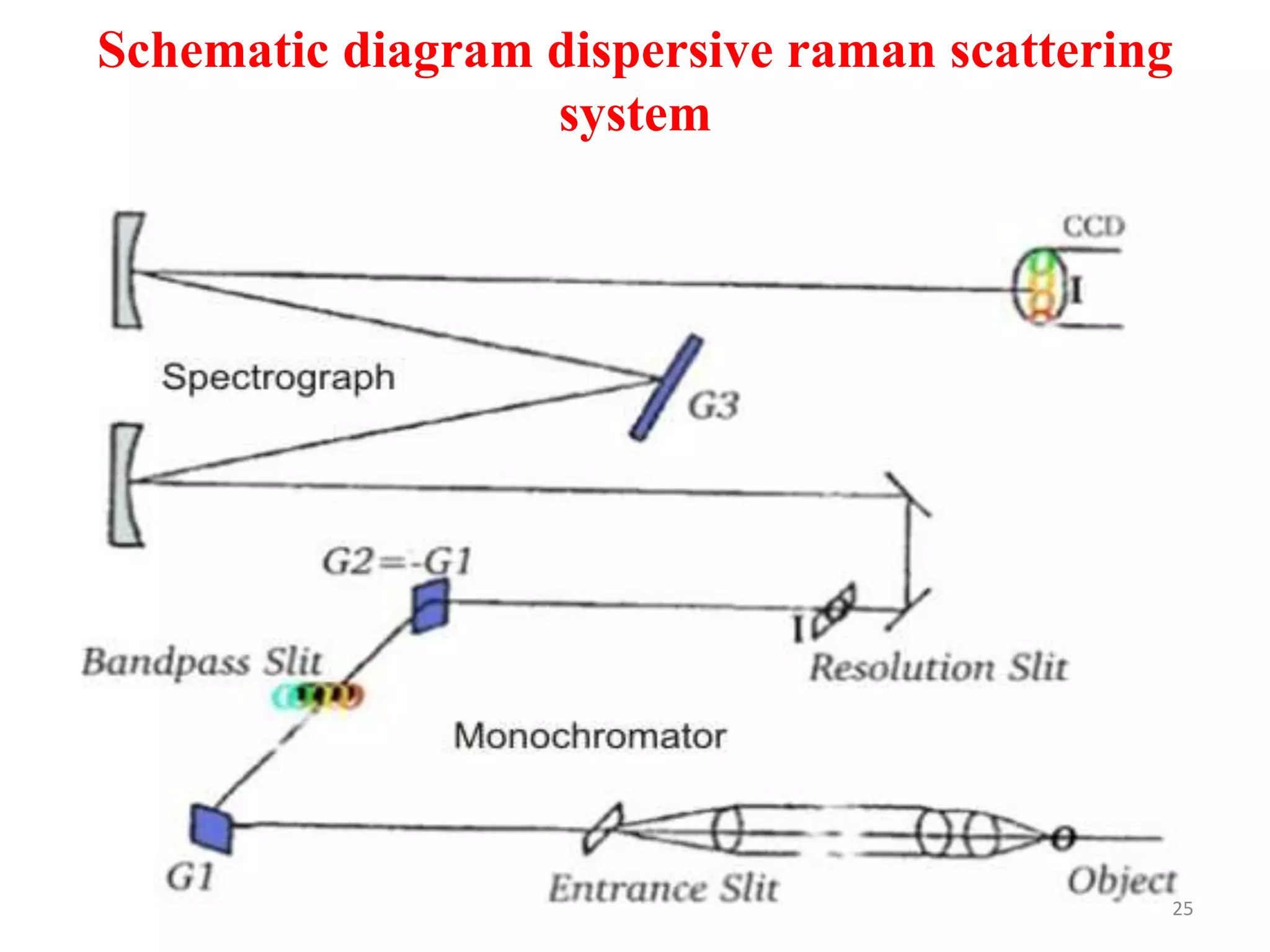
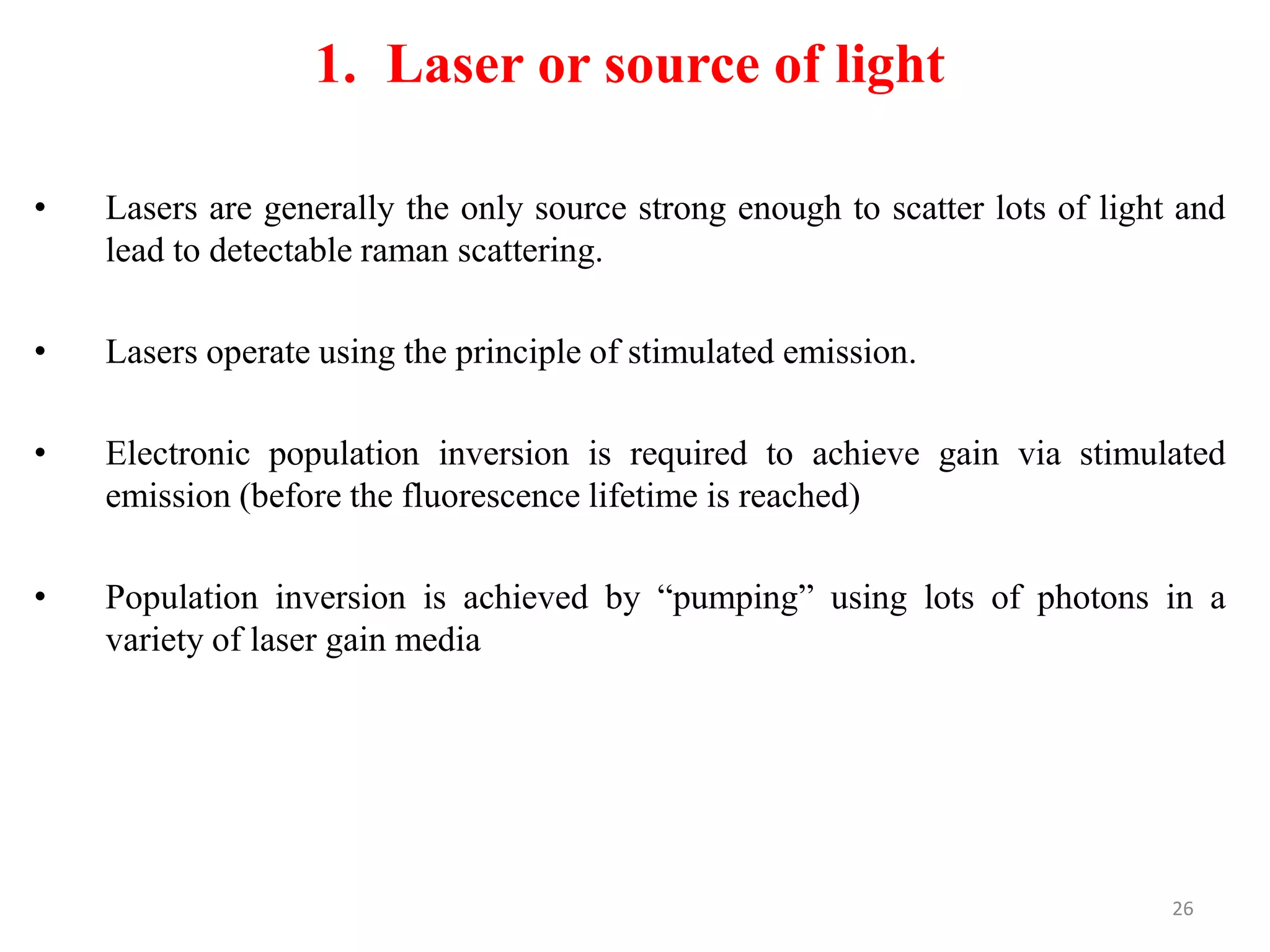
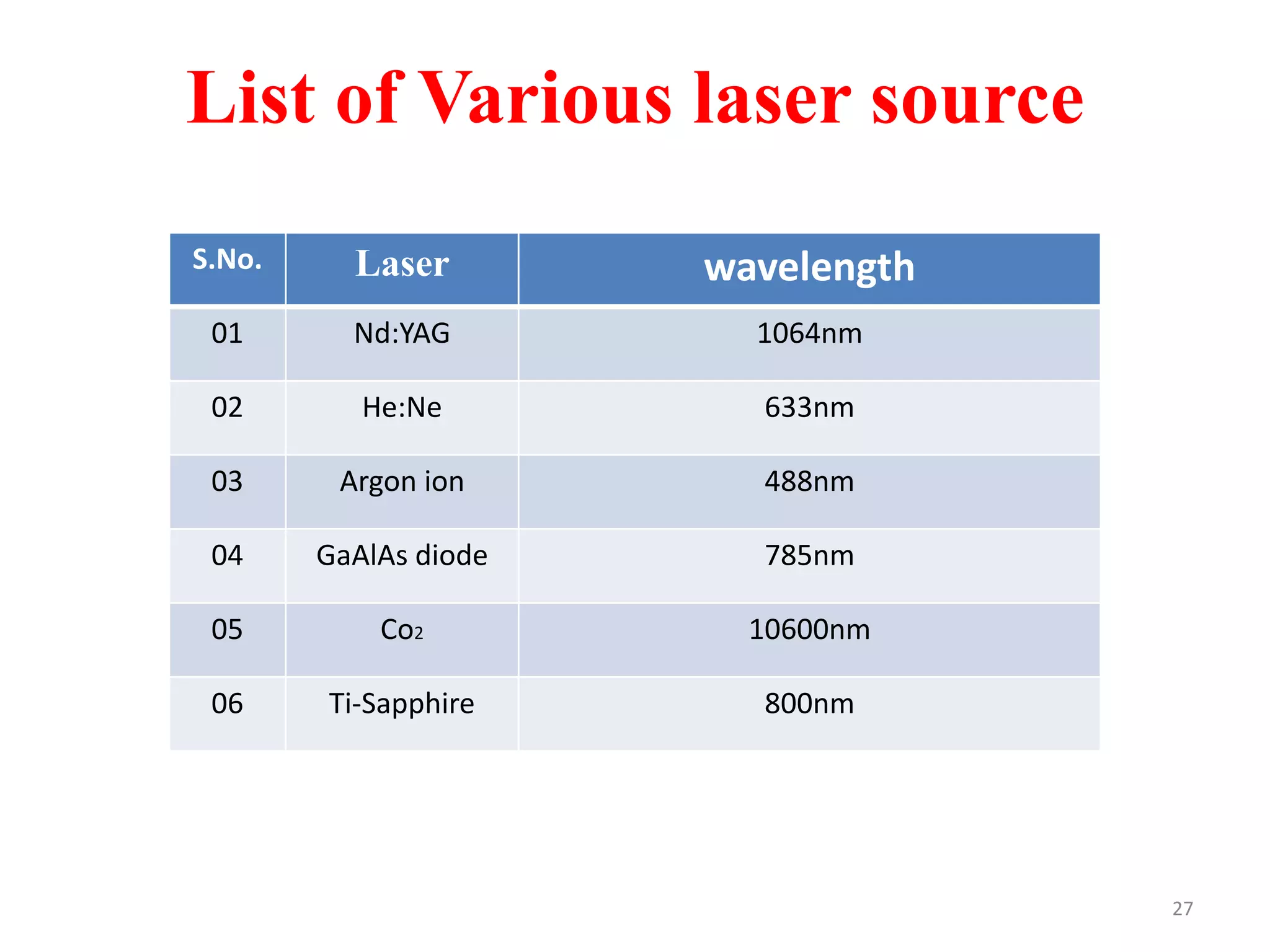
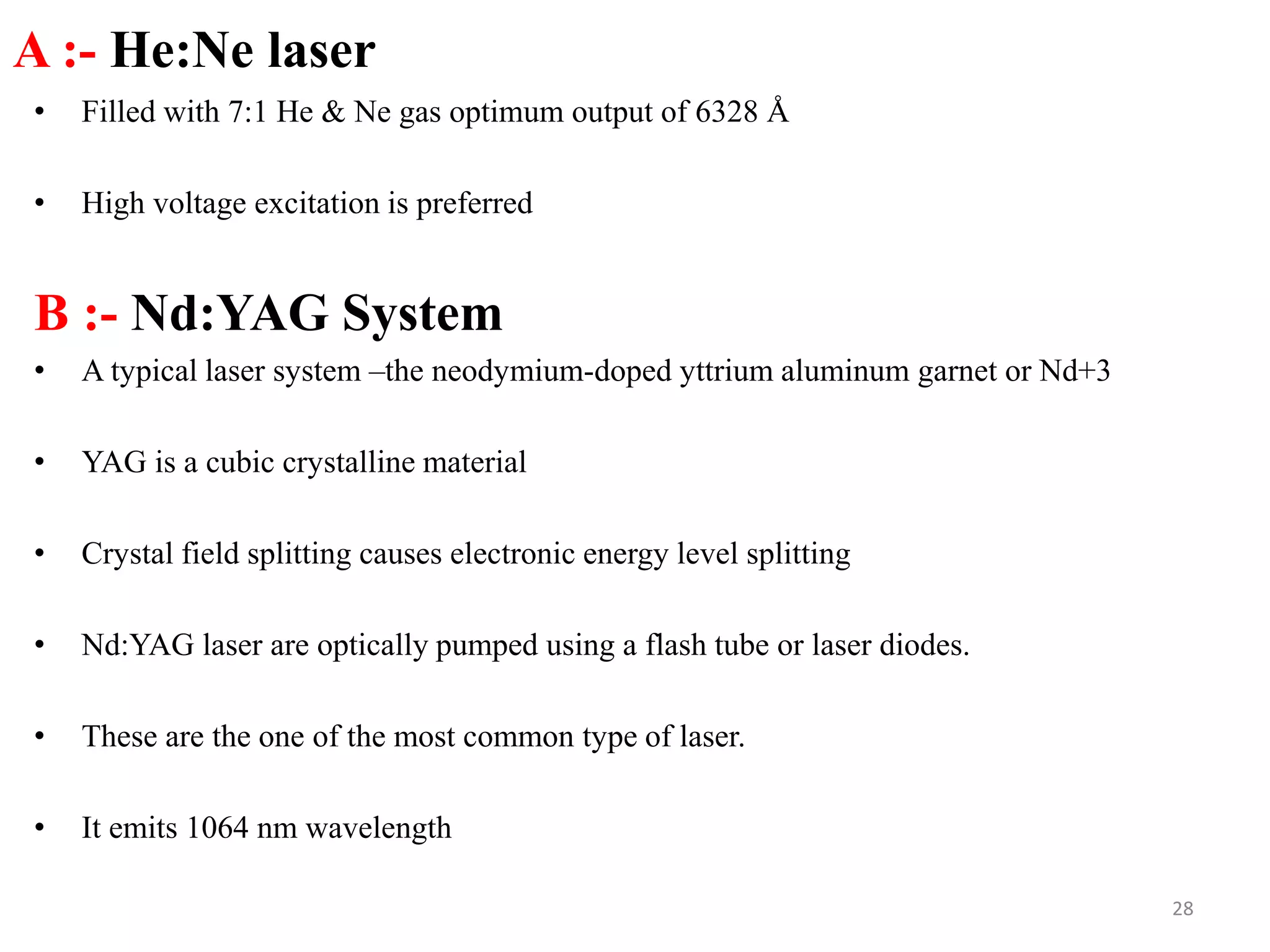
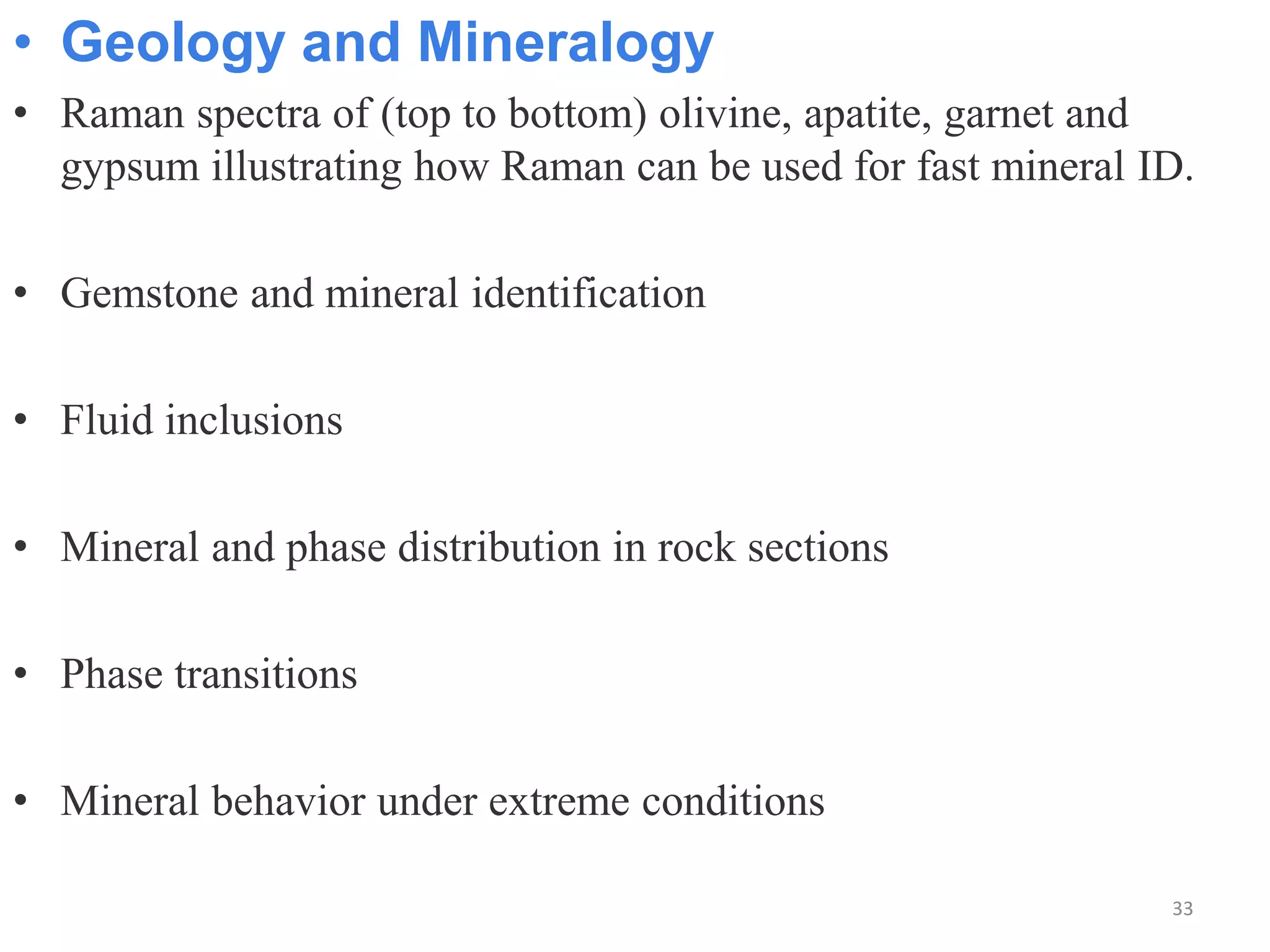
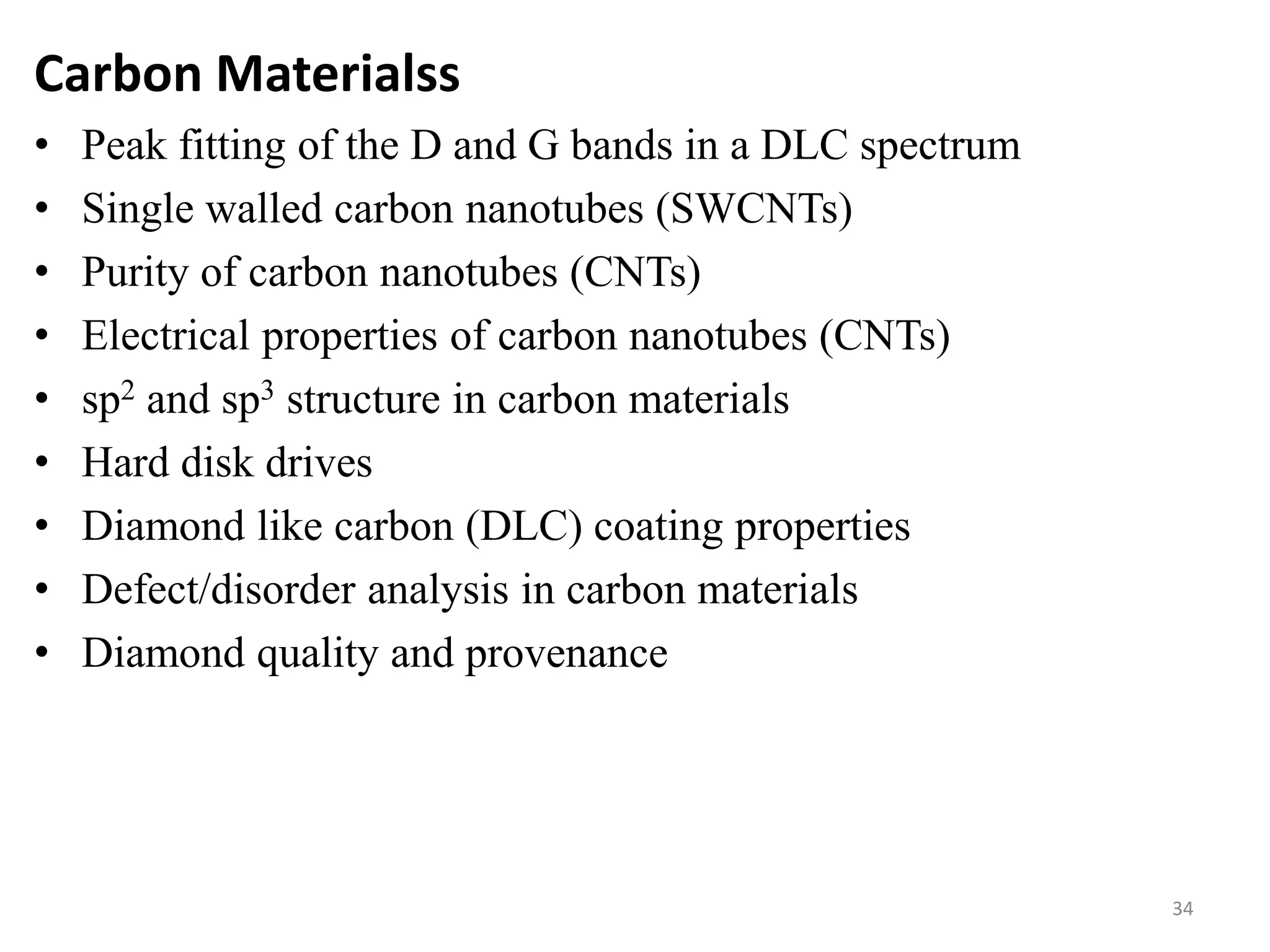
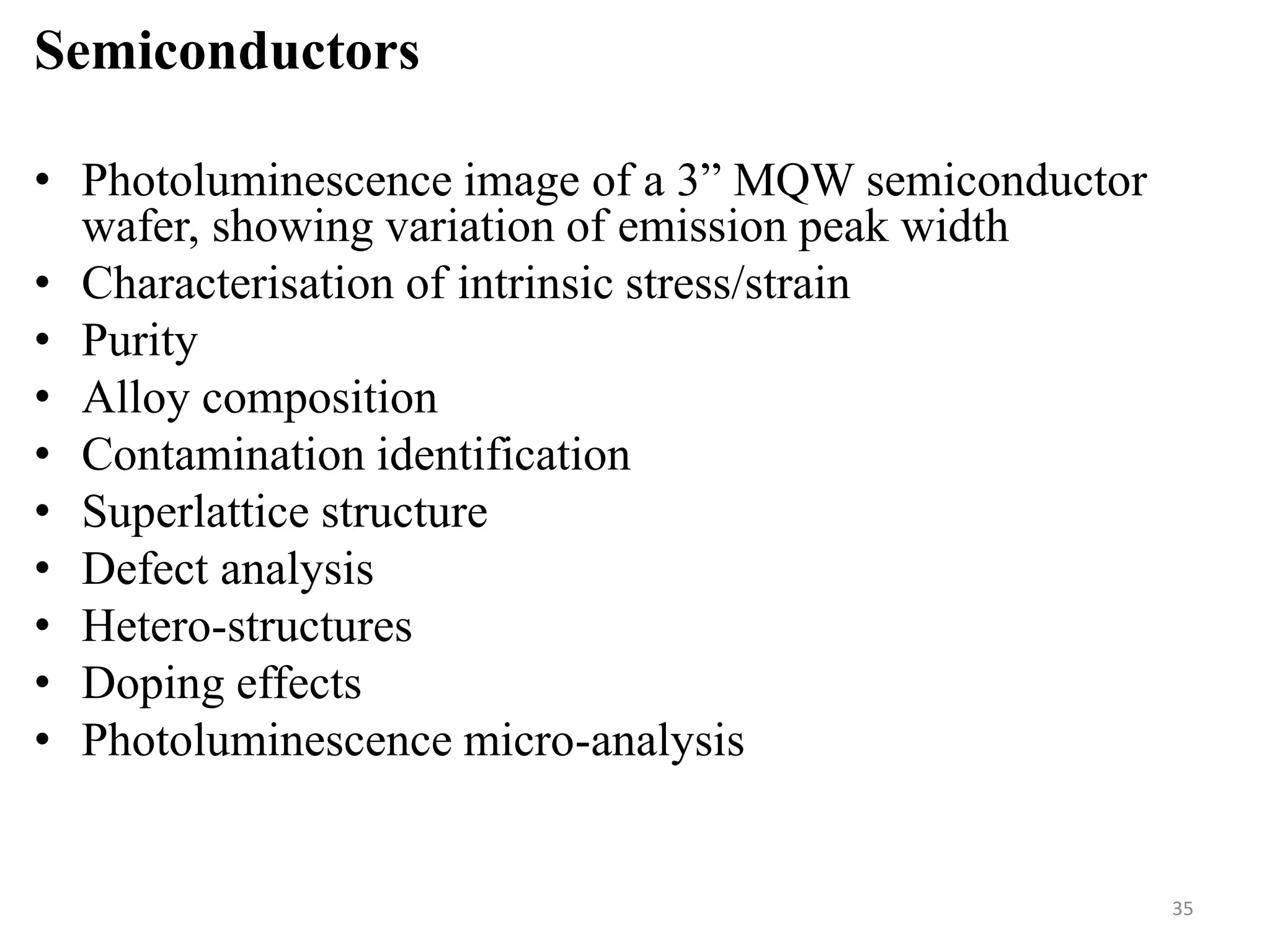
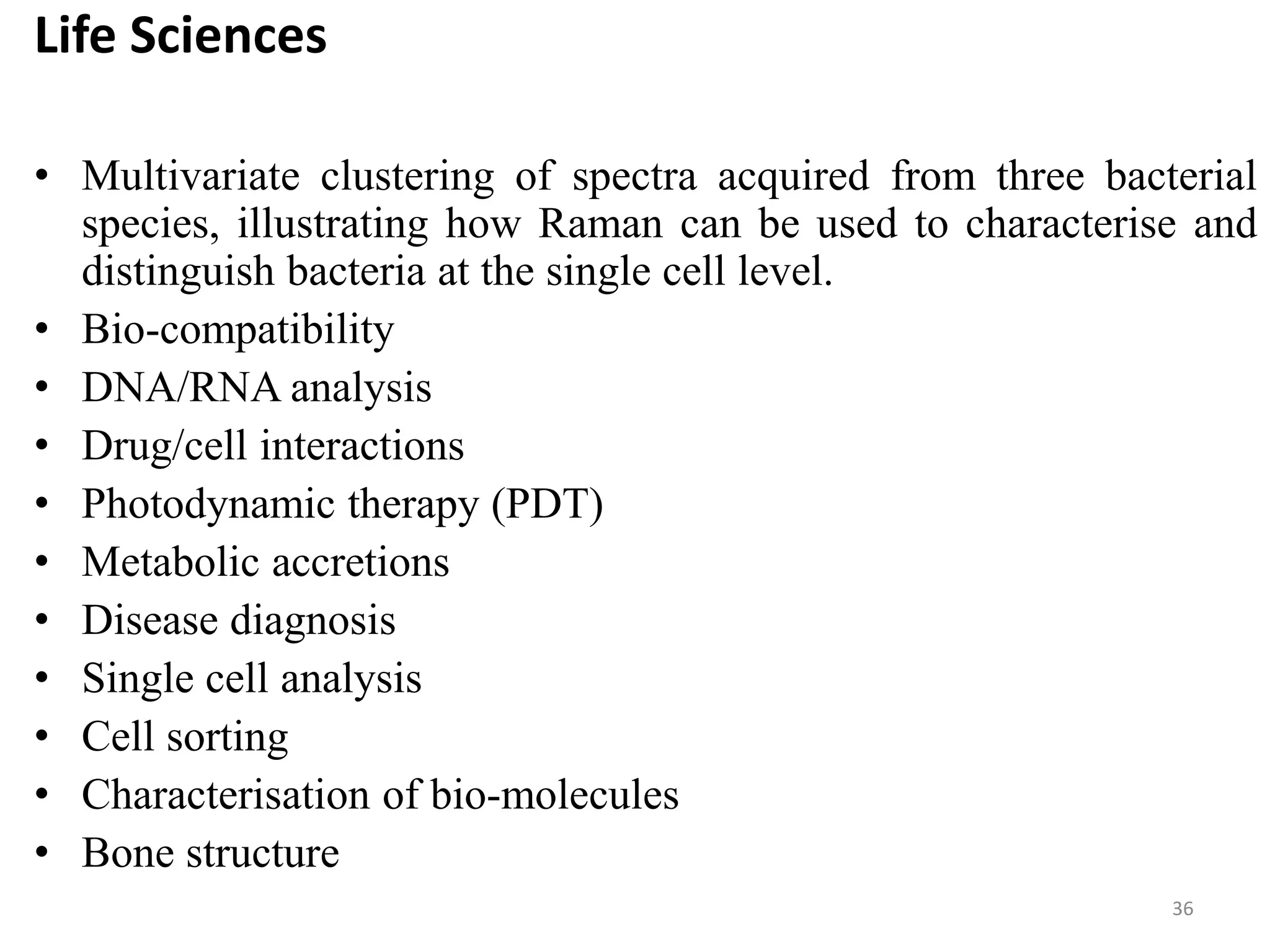
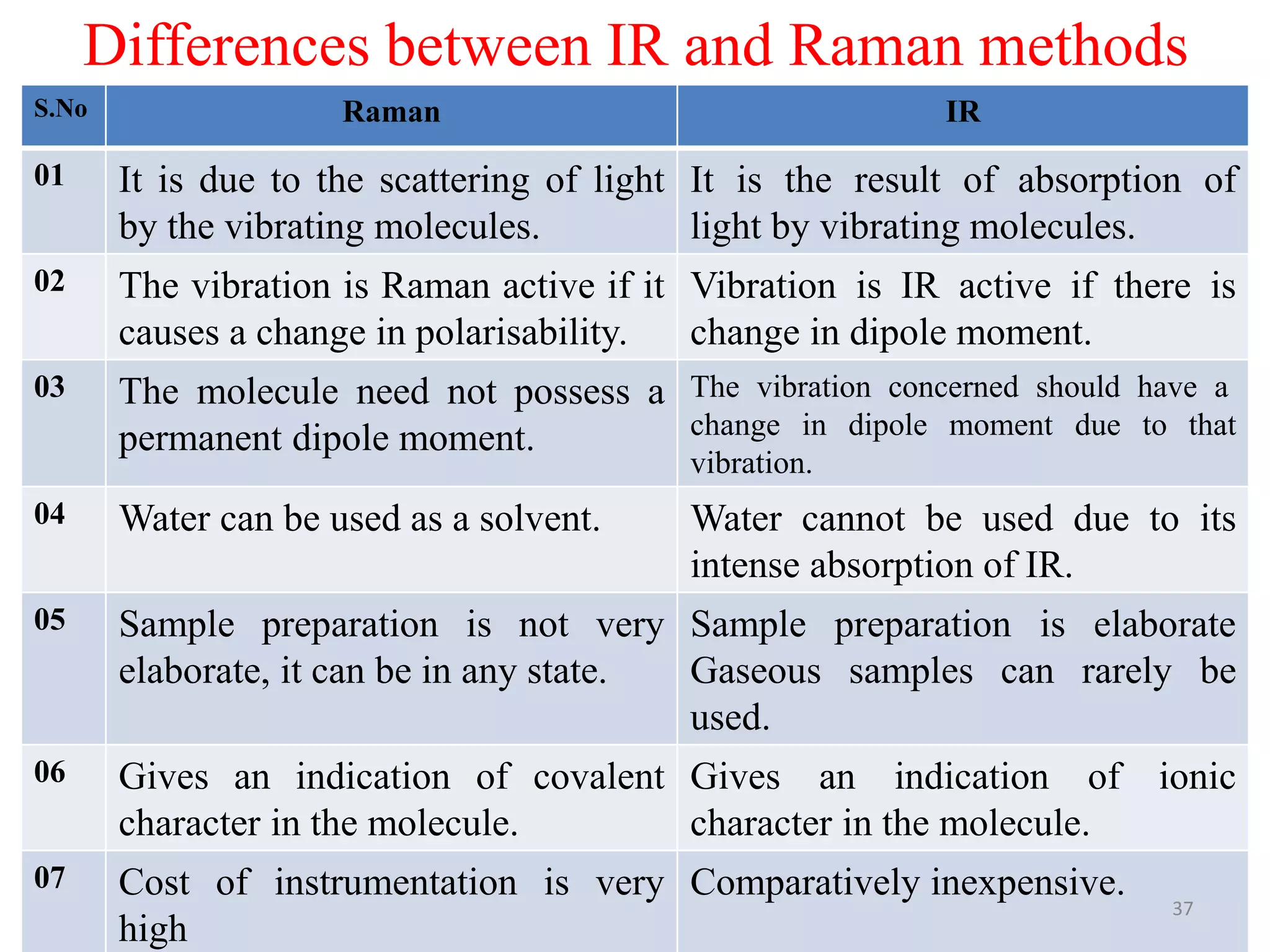
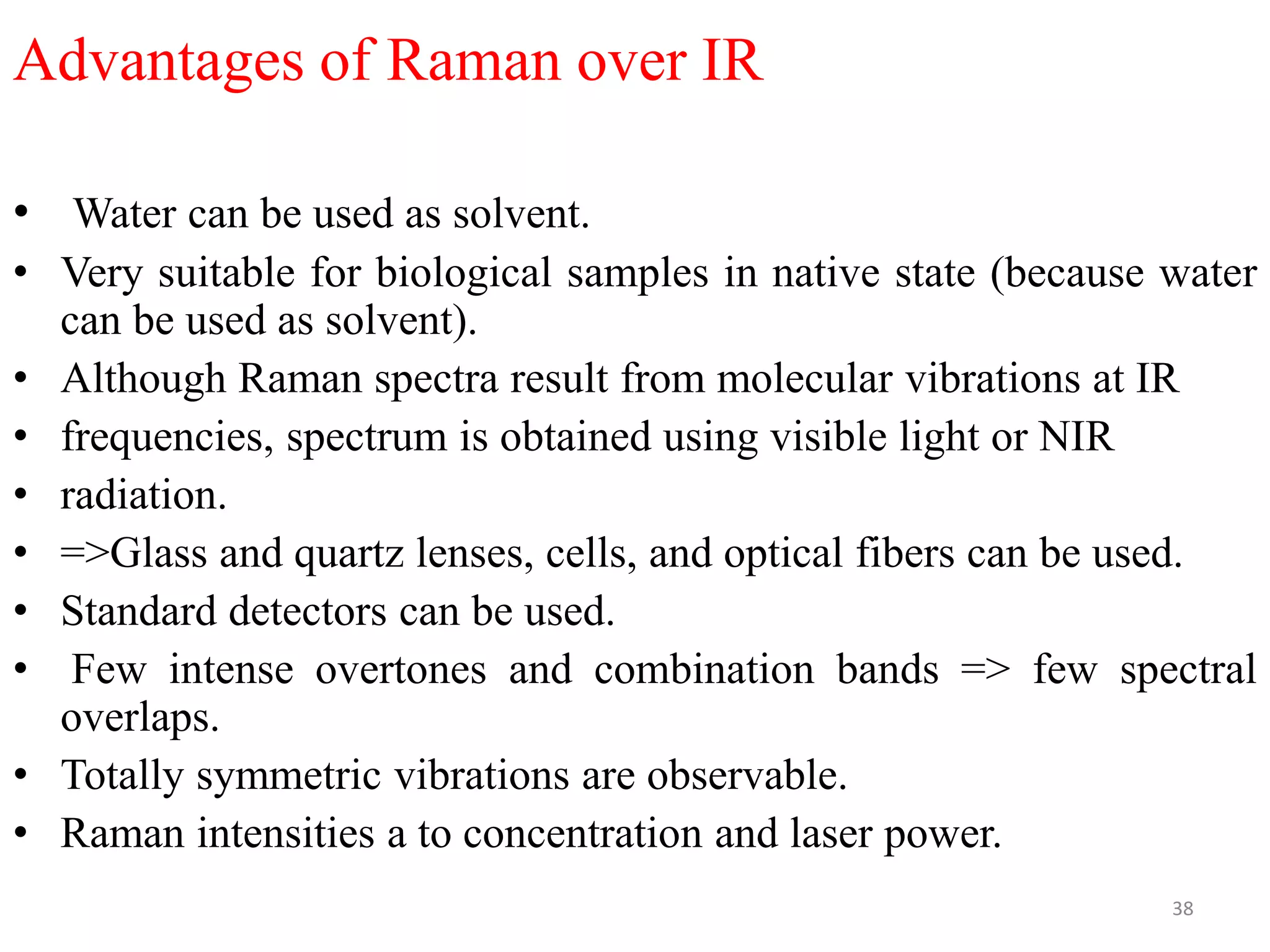
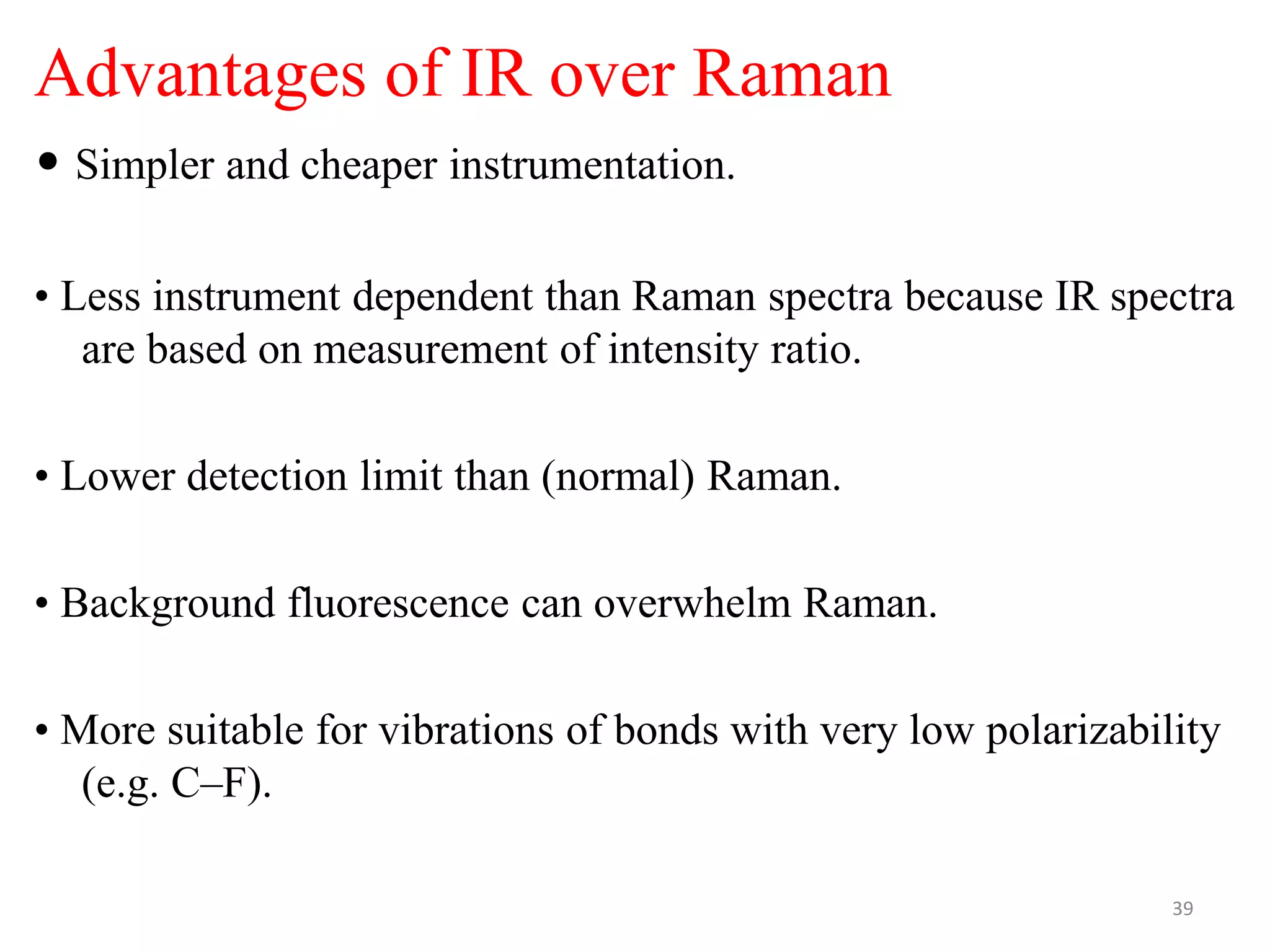

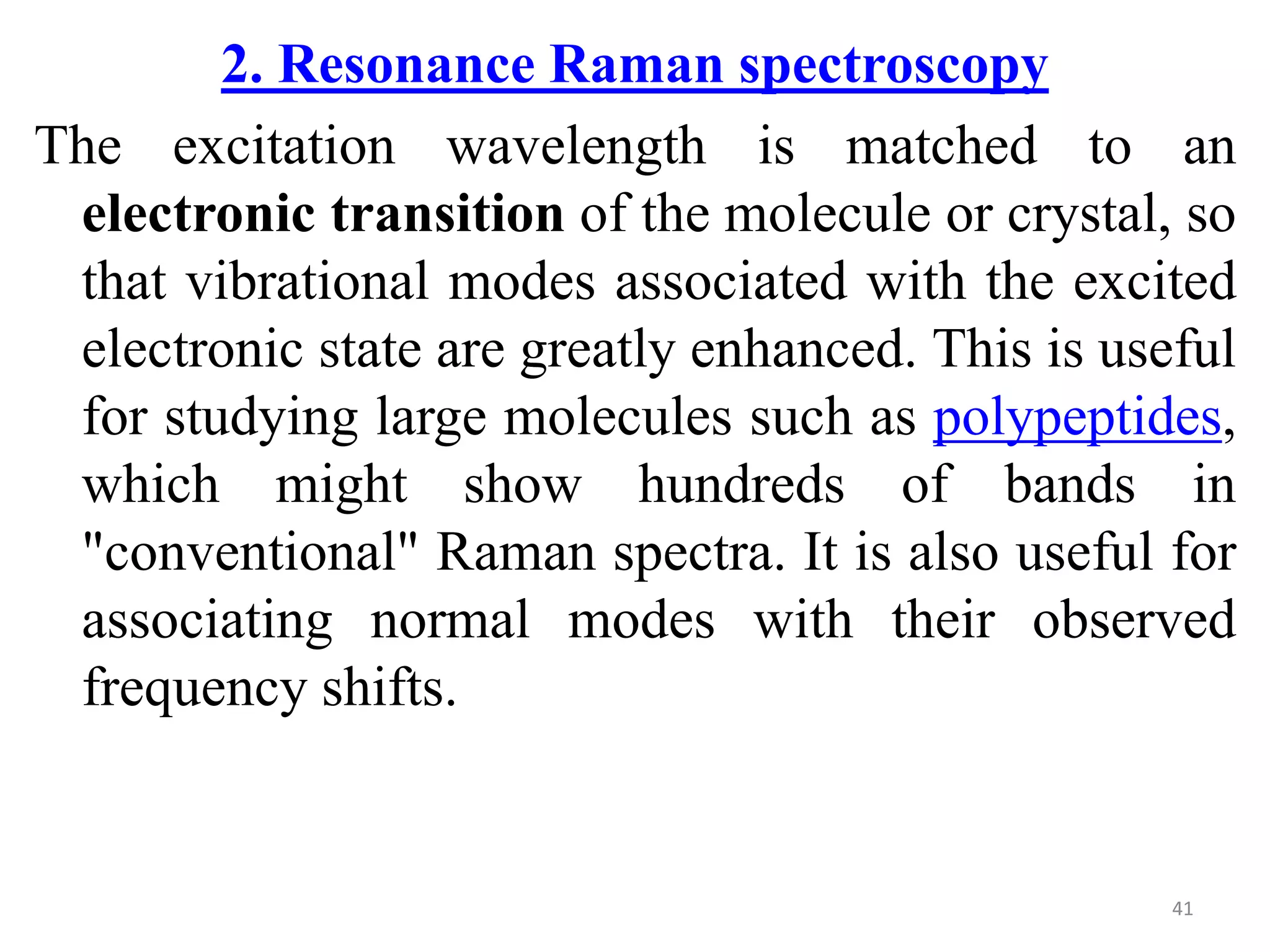
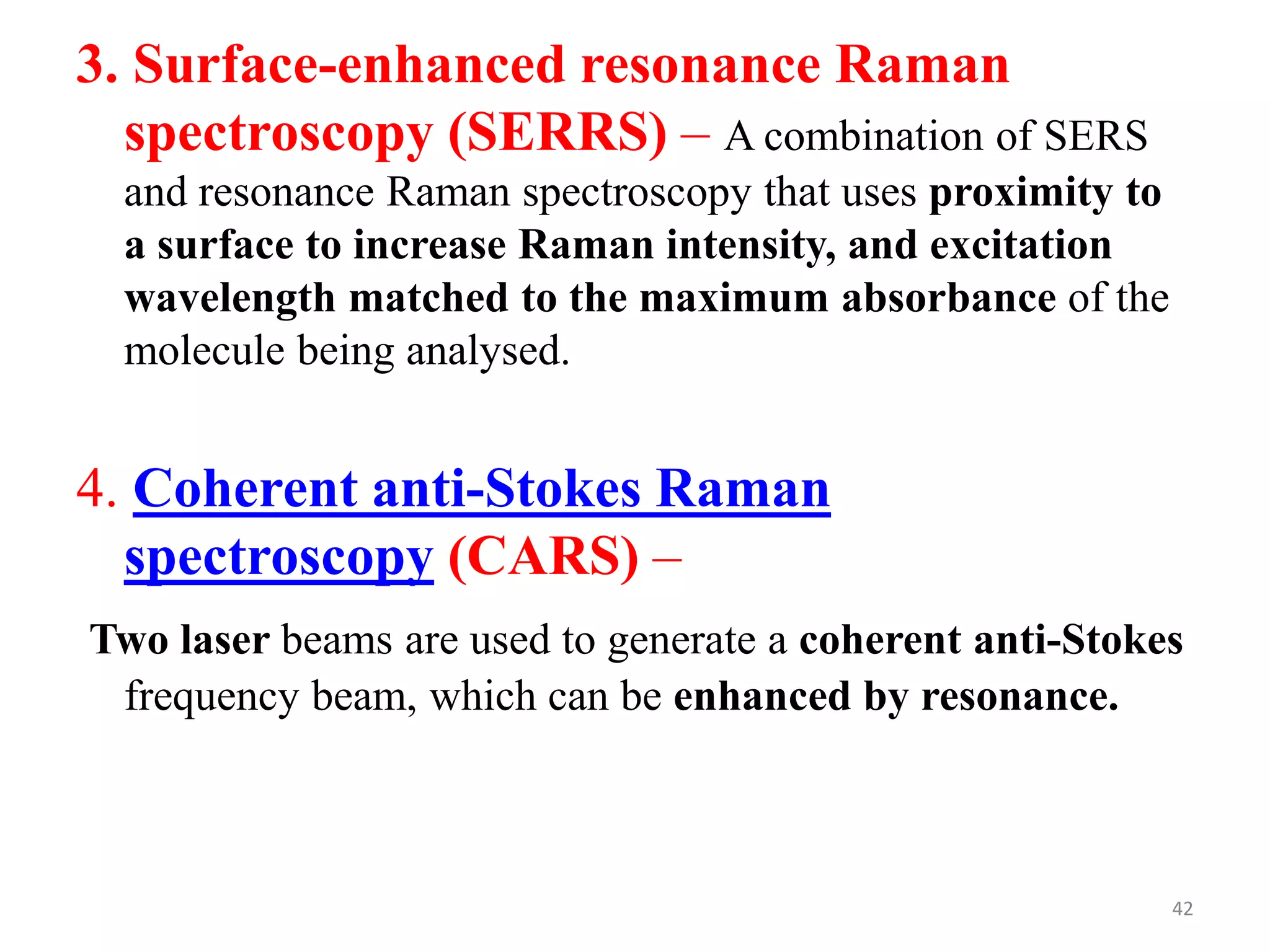
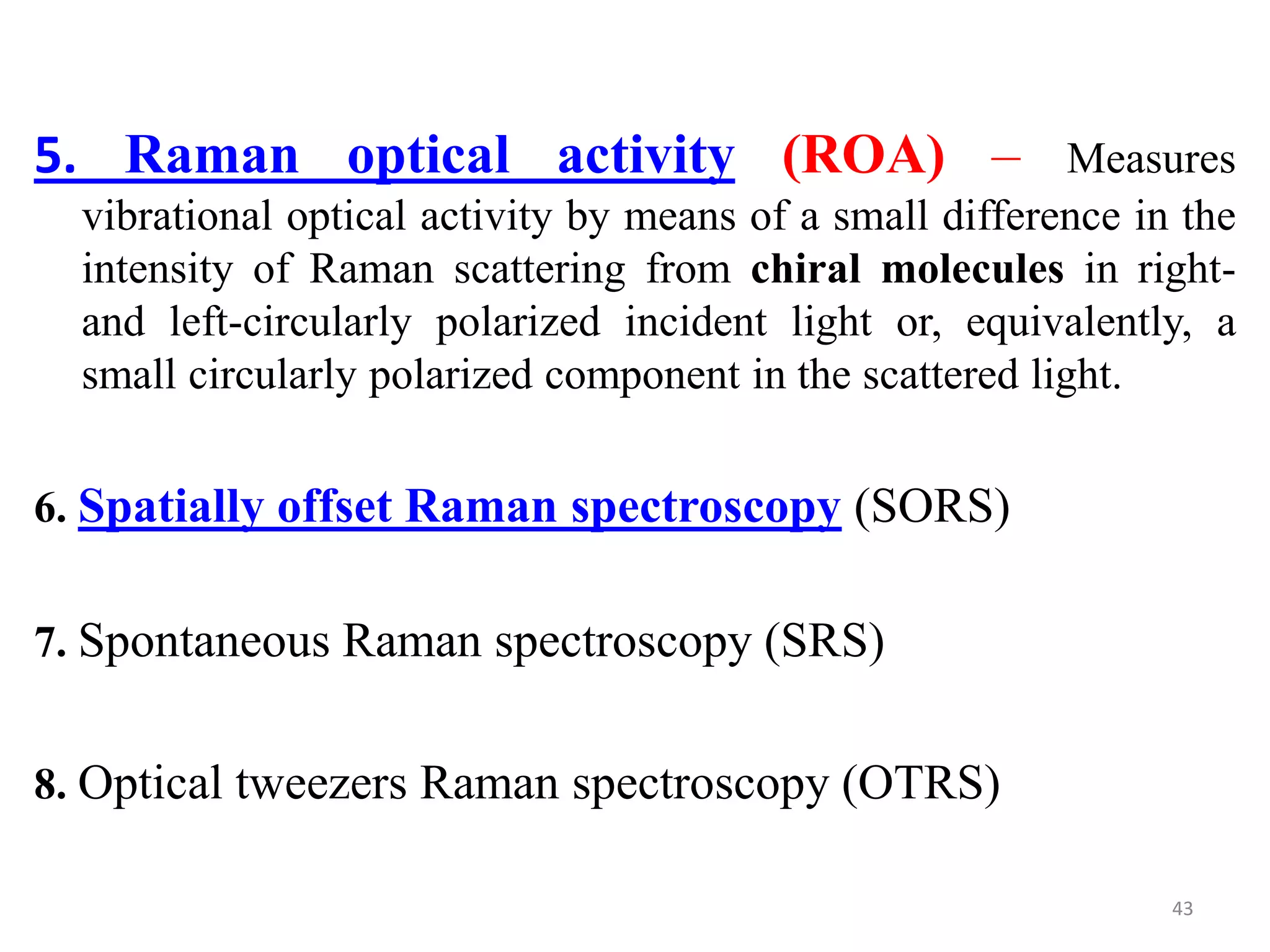
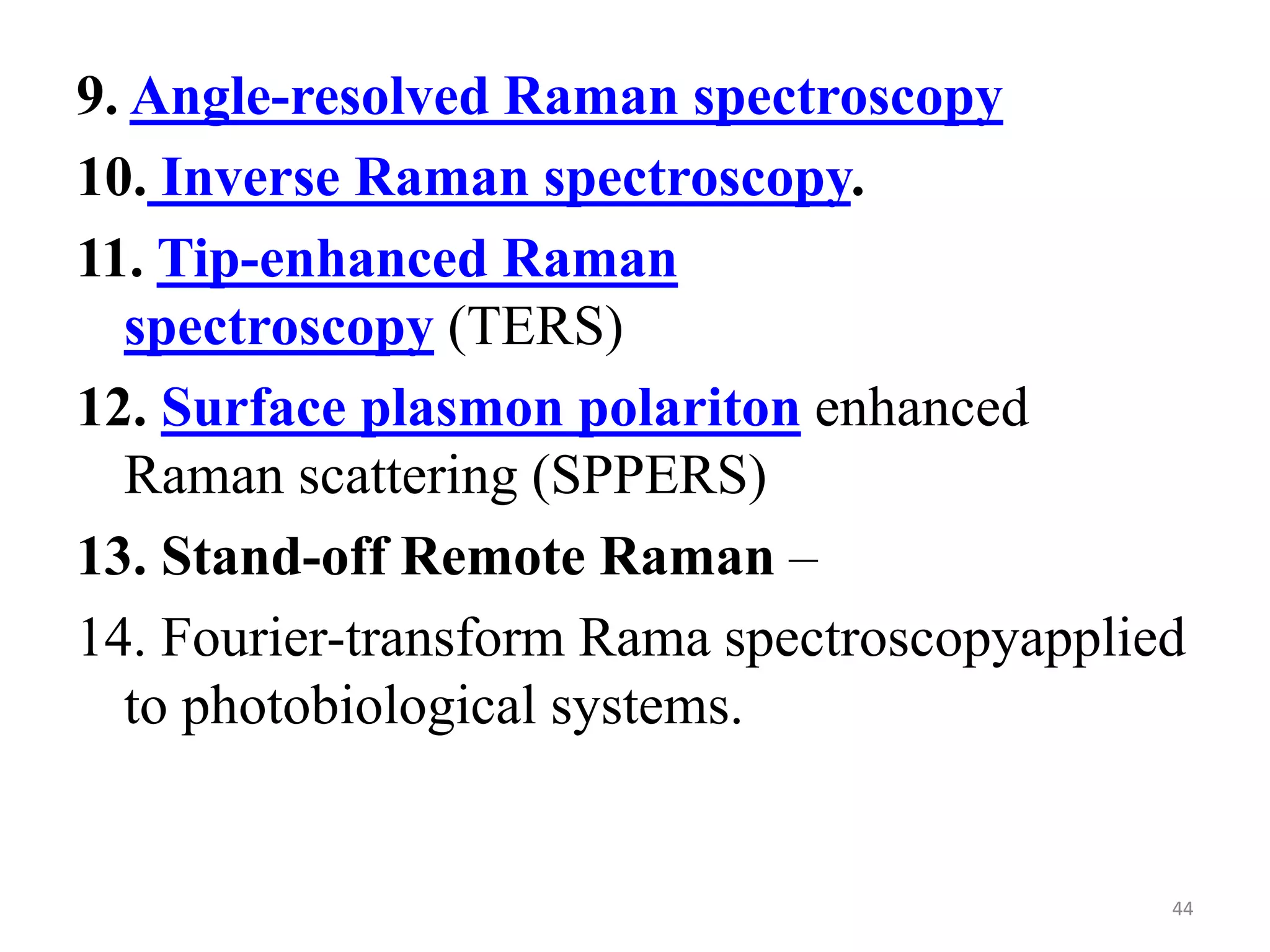

This document provides an overview of Raman spectroscopy. It begins with an introduction, explaining that Raman spectroscopy involves measuring the wavelength and intensity of inelastically scattered light from molecules. This scattered light occurs at shifted wavelengths corresponding to molecular vibrations. It then provides a brief history of Raman spectroscopy and its development. The document outlines some key aspects of Raman spectroscopy, including that it is a vibrational spectroscopy that is complementary to infrared spectroscopy. Raman spectroscopy can be used to study samples with minimal preparation across various physical states. The remainder of the document discusses various technical aspects of Raman spectroscopy in more detail, including classical theories, instrumentation components like lasers and filters, and conditions required for Raman scattering to occur. It provides examples


![Vibe Coding vs. Spec-Driven Development [Free Meetup]](https://cdn.slidesharecdn.com/ss_thumbnails/vibecodingvsspecdrivendevelopment-251209105622-43f455e7-thumbnail.jpg?width=640&height=640&fit=bounds)


