Oxidation 
Reduction 
Jinan Karameh Shayya
Engage 
What does the word oxidation mean? 
a. reaction with oxygen 
b. losing electron during reaction 
c. gaining electron during reaction
Explore 
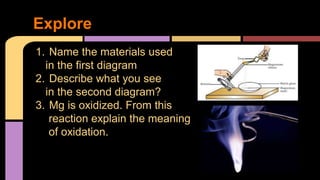
1. Name the materials used 
in the first diagram 
2. Describe what you see 
in the second diagram? 
3. Mg is oxidized. From this 
reaction explain the meaning 
of oxidation.
Explain 
What does the word oxidation mean? 
In ancient times, the word oxidation is related 
to the reaction with oxygen. When an atom 
reacts with oxygen it tends to lose electrons 
and it is said to be oxidized. Now, all atoms 
that lose electrons in a chemical reaction are 
said to be oxidized or making oxidation.
Oxidation Number 
It indicates if electrons are lost or gained by 
an atom during a chemical reaction. 
2Mg0 + O0 
2 2 [ Mg+2 O-2] 
Mg lost 2 electrons while Oxygen gained 2 
electrons. The number above each atom/ion 
is its oxidation number.
Oxidation number Rules 
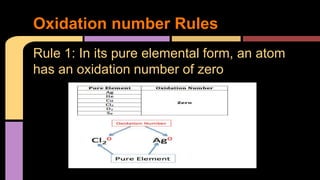
Rule 1: In its pure elemental form, an atom 
has an oxidation number of zero
Oxidation number Rules 
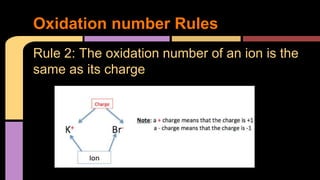
Rule 2: The oxidation number of an ion is the 
same as its charge
Oxidation number Rules 
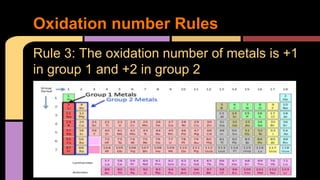
Rule 3: The oxidation number of metals is +1 
in group 1 and +2 in group 2
Oxidation number Rules 
Rule 4: Hydrogen has two possible oxidation 
numbers: +1 (if bonded with nonmetals) and 
-1 (if bonded with metals)
Oxidation number Rules 
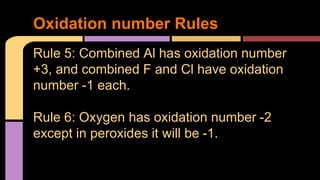
Rule 5: Combined Al has oxidation number 
+3, and combined F and Cl have oxidation 
number -1 each. 
Rule 6: Oxygen has oxidation number -2 
except in peroxides it will be -1.
Oxidation number Rules 
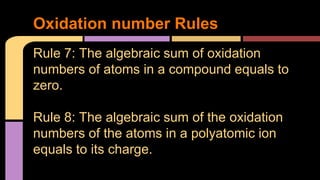
Rule 7: The algebraic sum of oxidation 
numbers of atoms in a compound equals to 
zero. 
Rule 8: The algebraic sum of the oxidation 
numbers of the atoms in a polyatomic ion 
equals to its charge.
Apply 
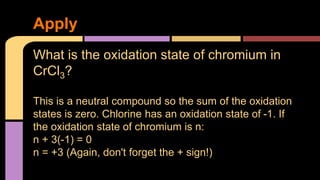
What is the oxidation state of chromium in 
CrCl3? 
This is a neutral compound so the sum of the oxidation 
states is zero. Chlorine has an oxidation state of -1. If 
the oxidation state of chromium is n: 
n + 3(-1) = 0 
n = +3 (Again, don't forget the + sign!)
Apply 
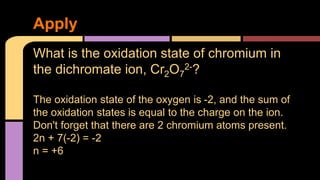
What is the oxidation state of chromium in 
the dichromate ion, CrO2-? 
27 
The oxidation state of the oxygen is -2, and the sum of 
the oxidation states is equal to the charge on the ion. 
Don't forget that there are 2 chromium atoms present. 
2n + 7(-2) = -2 
n = +6
Oxidation number 
If an atom loses electrons, its oxidation number 
increases, so we can say that this atom undergoes 
oxidation. 
If an atom gains electrons, its oxidation number 
decreases, so we can say that the atom undergoes 
reduction. 
OIL RIG: Oxidation Is Loss; Reduction Is Gain (of 
electrons).
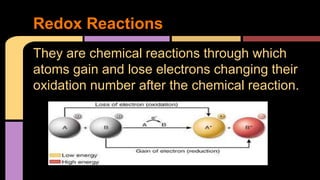
Redox Reactions 
They are chemical reactions through which 
atoms gain and lose electrons changing their 
oxidation number after the chemical reaction.
Apply 
Is the following reaction Redox reaction? 
Mg + 2HCl MgCl2 + H2 
0 +1 -1 +2 -1 0 
Mg + 2HCl MgCl2 + H2 
Mg loses 2 e 
H gains 1 e 
Then this reaction is redox reaction
Extend 
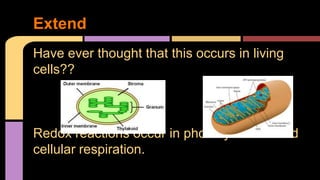
Have ever thought that this occurs in living 
cells?? 
Redox reactions occur in photosynthesis and 
cellular respiration.
Evaluate 
Consider the following reaction: 
Fe2O3 + 3CO 2Fe + 3CO2 
1. Determine the oxidation number of each of 
Fe, O and C before and after the reaction. 
2. Deduce if this reaction is a redox reaction.
Thank you

Oxidation reduction lesson grade 9

  • 1.
  • 2.
    Engage What doesthe word oxidation mean? a. reaction with oxygen b. losing electron during reaction c. gaining electron during reaction
  • 3.
    Explore 1. Namethe materials used in the first diagram 2. Describe what you see in the second diagram? 3. Mg is oxidized. From this reaction explain the meaning of oxidation.
  • 4.
    Explain What doesthe word oxidation mean? In ancient times, the word oxidation is related to the reaction with oxygen. When an atom reacts with oxygen it tends to lose electrons and it is said to be oxidized. Now, all atoms that lose electrons in a chemical reaction are said to be oxidized or making oxidation.
  • 5.
    Oxidation Number Itindicates if electrons are lost or gained by an atom during a chemical reaction. 2Mg0 + O0 2 2 [ Mg+2 O-2] Mg lost 2 electrons while Oxygen gained 2 electrons. The number above each atom/ion is its oxidation number.
  • 6.
    Oxidation number Rules Rule 1: In its pure elemental form, an atom has an oxidation number of zero
  • 7.
    Oxidation number Rules Rule 2: The oxidation number of an ion is the same as its charge
  • 8.
    Oxidation number Rules Rule 3: The oxidation number of metals is +1 in group 1 and +2 in group 2
  • 9.
    Oxidation number Rules Rule 4: Hydrogen has two possible oxidation numbers: +1 (if bonded with nonmetals) and -1 (if bonded with metals)
  • 10.
    Oxidation number Rules Rule 5: Combined Al has oxidation number +3, and combined F and Cl have oxidation number -1 each. Rule 6: Oxygen has oxidation number -2 except in peroxides it will be -1.
  • 11.
    Oxidation number Rules Rule 7: The algebraic sum of oxidation numbers of atoms in a compound equals to zero. Rule 8: The algebraic sum of the oxidation numbers of the atoms in a polyatomic ion equals to its charge.
  • 12.
    Apply What isthe oxidation state of chromium in CrCl3? This is a neutral compound so the sum of the oxidation states is zero. Chlorine has an oxidation state of -1. If the oxidation state of chromium is n: n + 3(-1) = 0 n = +3 (Again, don't forget the + sign!)
  • 13.
    Apply What isthe oxidation state of chromium in the dichromate ion, CrO2-? 27 The oxidation state of the oxygen is -2, and the sum of the oxidation states is equal to the charge on the ion. Don't forget that there are 2 chromium atoms present. 2n + 7(-2) = -2 n = +6
  • 14.
    Oxidation number Ifan atom loses electrons, its oxidation number increases, so we can say that this atom undergoes oxidation. If an atom gains electrons, its oxidation number decreases, so we can say that the atom undergoes reduction. OIL RIG: Oxidation Is Loss; Reduction Is Gain (of electrons).
  • 15.
    Redox Reactions Theyare chemical reactions through which atoms gain and lose electrons changing their oxidation number after the chemical reaction.
  • 16.
    Apply Is thefollowing reaction Redox reaction? Mg + 2HCl MgCl2 + H2 0 +1 -1 +2 -1 0 Mg + 2HCl MgCl2 + H2 Mg loses 2 e H gains 1 e Then this reaction is redox reaction
  • 17.
    Extend Have everthought that this occurs in living cells?? Redox reactions occur in photosynthesis and cellular respiration.
  • 18.
    Evaluate Consider thefollowing reaction: Fe2O3 + 3CO 2Fe + 3CO2 1. Determine the oxidation number of each of Fe, O and C before and after the reaction. 2. Deduce if this reaction is a redox reaction.
  • 19.