3/9/2014
Introduction
 Oxidation is Loss of Electrons
 Reduction is Gain of Electrons
 OIL RIG
 Substances that cause oxidation are

called oxidising agents
 E.g. O2, Cl2 [halogens], MnO41-, Cr2O72 Substances that cause reduction are
called reducing agents
 E.g. C, CO, H2
The number of electrons
an atom appears to
have gained or lost.
Man made system so anomalous
results can be obtained.
Rule 1
In free elements the oxidation
number is 0
e.g. Na = 0,
Cu = 0,
P = 0,
H2 = 0,
S8 = 0
Cl2 = 0
 A free element is an element on its own
 It is neutral so it will have neither lost nor
gained electrons
Rule 2
The sum of all the oxidation
numbers in a molecule is 0.
E.g

CaCO3 = 0
(NH4)2SO4 = 0
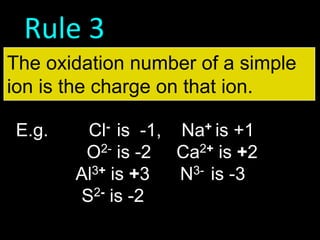
Rule 3
The oxidation number of a simple
ion is the charge on that ion.
E.g.

Cl- is -1, Na+ is +1
O2- is -2 Ca2+ is +2
Al3+ is +3
N3- is -3
S2- is -2
Rule 4
The sum of oxidation numbers in a
complex ion is the charge on the ion
2-

SO4 = -2 [total]
PO43- = -3
NH4+ = +1
NO3- = -1
Rule 5
In compounds containing H the Oxidation
Number of H is +1

e.g. H2O, HCl, NH4+, CH3COOH

Except in metal hydrides where it is -1
e.g. NaH, KH, CaH2 where it is -1
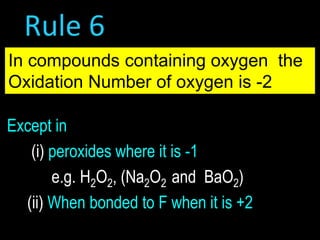
Rule 6
In compounds containing oxygen the
Oxidation Number of oxygen is -2
Except in
(i) peroxides where it is -1
e.g. H2O2, (Na2O2 and BaO2)
(ii) When bonded to F when it is +2
Rule 7
The Alkali Metals [Group I]
are always +1 in a compound

i.e Na, K, Li, Rb, Cs, Fr
Rule 8
The Alkaline Earth Metals [Group II]
are all +2 in compounds

Group II

Be, Mg, Ca, Sr, Ba, Ra
Rule 9

The Halogens [Group VII]
are all -1

F, Cl, Br, I
Except
when bonded to a more electronegative
element
e.g in Cl2O the Cl is +1
and in ClO2 the Cl is +4
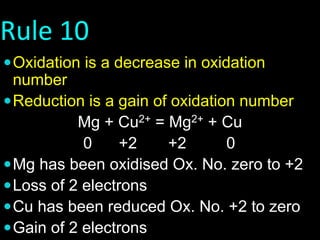
Rule 10
 Oxidation is a decrease in oxidation

number
 Reduction is a gain of oxidation number
Mg + Cu2+ = Mg2+ + Cu
0
+2
+2
0
 Mg has been oxidised Ox. No. zero to +2
 Loss of 2 electrons
 Cu has been reduced Ox. No. +2 to zero
 Gain of 2 electrons
Examples
Sodium Oxide
Na2 O Overall

=0

+1 -2 individual
+2 -2 combined

K MnO4 Overall= 0
K Mn O4
+1 +7 -2 individual
+1 +7 -8 combined
Examples #2
Na2 S2 O4
?
+1 +3 -2
+2 +6 -8

Na2 S2 O3
+1 +2 -2
?
+2 +4 -6

C12 H22 O11
0 +1 -2
?
0 +22 -22
 Work out the oxidation number of Mn in

each of the following compounds
MnCl2
= +2 Manganese (II) chloride
MnO2

= +4

Manganese (IV) oxide

MnO4-

= +7

Manganate (VII)

Mn can have different oxidation numbers depending
on the elements it is combined with.
These are called Oxidation States
When naming transition metal compounds it is normal
to include the oxidation state in the name
Transition Elements
 Have variable valency
 Variable oxidation numbers [oxidation states]
 Definite colours associated with oxidation

states
 Fe2+ iron (II)
= Green [+2]
FeCl2
 Fe3+ iron (III)
= Yellow [+3]
FeCl3
 Manganese (VII) = Pink [+7]
MnO4 Manganese(IV) = Brown [+4]
MnO2
 Manganese(II) = Colourless [+2] MnCl2
 Catalytic properties [as do their compounds.]
Anomalies
C6 H12 O6
+1 -2
+12 -12

C appears to have
gained or lost no
electrons

Calculate the oxidation number of S in Na2S4O6
S is + 2.5
Clearly it can’t lose half an electron so this is an
anomaly.
Oxidation Numbers and Nomenclature
 Compounds containing two elements

end in ide
 if in a compound an element has more
than one oxidation state then the
oxidation state of the least
electronegative element is stated.
 e.g. Cu2O is copper(I) oxide
 CuO is copper (II) oxide
 PbO is Lead(II) oxide
 PbO is lead(IV) oxide
Oxidation numbers and Nomenclature

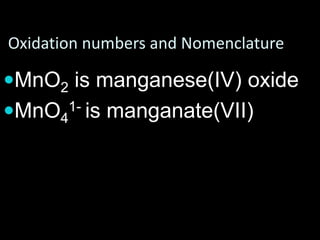
MnO2 is manganese(IV) oxide
1- is
MnO4

manganate(VII)

2.6.1 oxidation numbers

  • 1.
  • 2.
    Introduction  Oxidation isLoss of Electrons  Reduction is Gain of Electrons  OIL RIG  Substances that cause oxidation are called oxidising agents  E.g. O2, Cl2 [halogens], MnO41-, Cr2O72 Substances that cause reduction are called reducing agents  E.g. C, CO, H2
  • 3.
    The number ofelectrons an atom appears to have gained or lost. Man made system so anomalous results can be obtained.
  • 4.
    Rule 1 In freeelements the oxidation number is 0 e.g. Na = 0, Cu = 0, P = 0, H2 = 0, S8 = 0 Cl2 = 0  A free element is an element on its own  It is neutral so it will have neither lost nor gained electrons
  • 5.
    Rule 2 The sumof all the oxidation numbers in a molecule is 0. E.g CaCO3 = 0 (NH4)2SO4 = 0
  • 6.
    Rule 3 The oxidationnumber of a simple ion is the charge on that ion. E.g. Cl- is -1, Na+ is +1 O2- is -2 Ca2+ is +2 Al3+ is +3 N3- is -3 S2- is -2
  • 7.
    Rule 4 The sumof oxidation numbers in a complex ion is the charge on the ion 2- SO4 = -2 [total] PO43- = -3 NH4+ = +1 NO3- = -1
  • 8.
    Rule 5 In compoundscontaining H the Oxidation Number of H is +1 e.g. H2O, HCl, NH4+, CH3COOH Except in metal hydrides where it is -1 e.g. NaH, KH, CaH2 where it is -1
  • 9.
    Rule 6 In compoundscontaining oxygen the Oxidation Number of oxygen is -2 Except in (i) peroxides where it is -1 e.g. H2O2, (Na2O2 and BaO2) (ii) When bonded to F when it is +2
  • 10.
    Rule 7 The AlkaliMetals [Group I] are always +1 in a compound i.e Na, K, Li, Rb, Cs, Fr
  • 11.
    Rule 8 The AlkalineEarth Metals [Group II] are all +2 in compounds Group II Be, Mg, Ca, Sr, Ba, Ra
  • 12.
    Rule 9 The Halogens[Group VII] are all -1 F, Cl, Br, I Except when bonded to a more electronegative element e.g in Cl2O the Cl is +1 and in ClO2 the Cl is +4
  • 13.
    Rule 10  Oxidationis a decrease in oxidation number  Reduction is a gain of oxidation number Mg + Cu2+ = Mg2+ + Cu 0 +2 +2 0  Mg has been oxidised Ox. No. zero to +2  Loss of 2 electrons  Cu has been reduced Ox. No. +2 to zero  Gain of 2 electrons
  • 14.
    Examples Sodium Oxide Na2 OOverall =0 +1 -2 individual +2 -2 combined K MnO4 Overall= 0 K Mn O4 +1 +7 -2 individual +1 +7 -8 combined
  • 15.
    Examples #2 Na2 S2O4 ? +1 +3 -2 +2 +6 -8 Na2 S2 O3 +1 +2 -2 ? +2 +4 -6 C12 H22 O11 0 +1 -2 ? 0 +22 -22
  • 16.
     Work outthe oxidation number of Mn in each of the following compounds MnCl2 = +2 Manganese (II) chloride MnO2 = +4 Manganese (IV) oxide MnO4- = +7 Manganate (VII) Mn can have different oxidation numbers depending on the elements it is combined with. These are called Oxidation States When naming transition metal compounds it is normal to include the oxidation state in the name
  • 17.
    Transition Elements  Havevariable valency  Variable oxidation numbers [oxidation states]  Definite colours associated with oxidation states  Fe2+ iron (II) = Green [+2] FeCl2  Fe3+ iron (III) = Yellow [+3] FeCl3  Manganese (VII) = Pink [+7] MnO4 Manganese(IV) = Brown [+4] MnO2  Manganese(II) = Colourless [+2] MnCl2  Catalytic properties [as do their compounds.]
  • 18.
    Anomalies C6 H12 O6 +1-2 +12 -12 C appears to have gained or lost no electrons Calculate the oxidation number of S in Na2S4O6 S is + 2.5 Clearly it can’t lose half an electron so this is an anomaly.
  • 19.
    Oxidation Numbers andNomenclature  Compounds containing two elements end in ide  if in a compound an element has more than one oxidation state then the oxidation state of the least electronegative element is stated.  e.g. Cu2O is copper(I) oxide  CuO is copper (II) oxide  PbO is Lead(II) oxide  PbO is lead(IV) oxide
  • 20.
    Oxidation numbers andNomenclature MnO2 is manganese(IV) oxide 1- is MnO4 manganate(VII)