C6b                               Redox Reactions


         Rusting is an example of a redox reaction. You studied Rusting in C2 but here is a
         reminder.

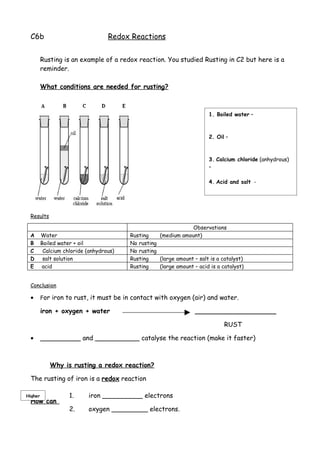
         What conditions are needed for rusting?


                                                                        1. Boiled water –


                                                                        2. Oil –


                                                                        3. Calcium chloride (anhydrous)
                                                                        –

                                                                        4. Acid and salt -


 Results

                                                                Observations
 A       Water                           Rusting     (medium amount)
 B       Boiled water + oil              No rusting
 C        Calcium chloride (anhydrous)   No rusting
 D        salt solution                  Rusting    (large amount – salt is a catalyst)
 E       acid                            Rusting    (large amount – acid is a catalyst)


 Conclusion

 •       For iron to rust, it must be in contact with oxygen (air) and water.

         iron + oxygen + water                                     ____________________

                                                                               RUST

 •       __________ and ___________ catalyse the reaction (make it faster)


            Why is rusting a redox reaction?

 The rusting of iron is a redox reaction

Higher      1.    iron __________ electrons
 How can rusting be prevented (stopped) ?
            2.    oxygen _________ electrons.
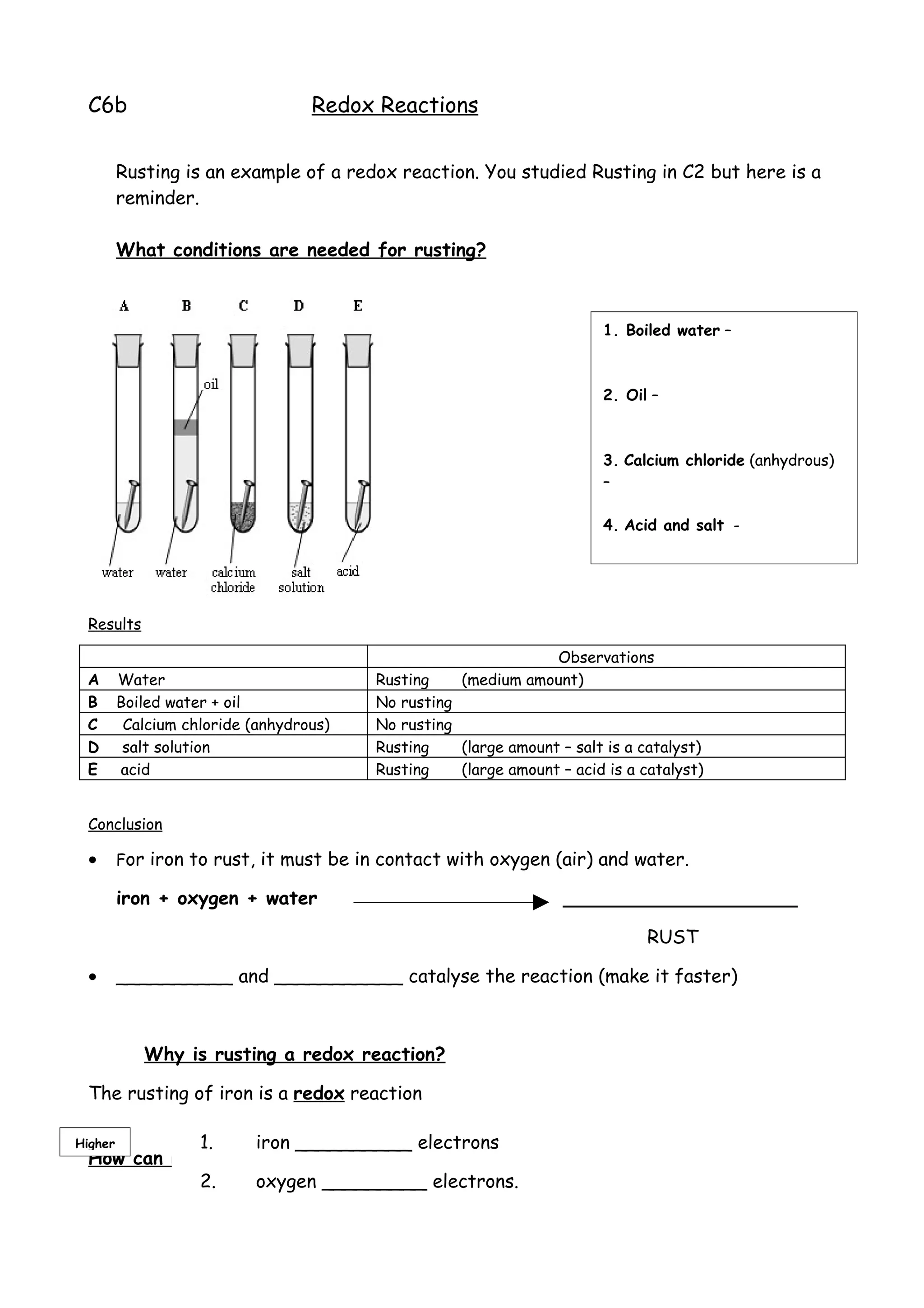
corrosion
                                                indicator


         iron   iron and      tinned iron painted nail
                magnesium
                            galvanised nail


The main way to stop rusting is to prevent water and/or oxygen from getting to the iron
(or steel). There are 6 methods you need to know about:


           Method                              How does this method prevent rusting?
1   oil and grease


                                 (particularly useful for moving parts e.g. wheels, engines, bicycle chains)

2   paint


3   galvanising


4   sacrificial
    protection

                                 i.e. the more reactive metal is sacrificed to stop the iron from rusting

5   alloying

    Topic C2
                                 e.g. stainless steel is an alloy of iron that does not rust

6   tin plate


                                 (so it will rust if scratched)
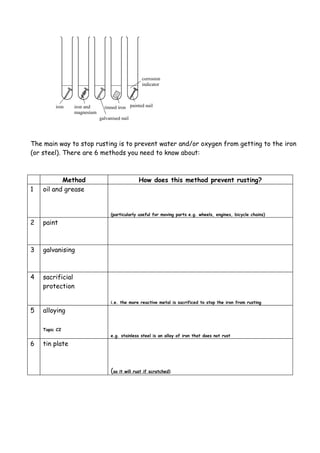
Displacement Reactions


                                                        copper
                                     zinc
                                                                 lead
                                            magnesium

           zinc nitrate
           solution


           magnesium nitrate
           solution


           copper
           nitrate solution


           lead nitrate
           solution


1. Set up the apparatus as shown above
2. Put a tick in the table below if you can see a change or a cross if there’s no change.


                              Zinc          Magnesium            Copper        Lead

  Zinc nitrate
    solution
   Magnesium
nitrate solution
Copper nitrate
    solution
  Lead nitrate
    solution

Order of Reactivity:


Most reactive metal:


Least reactive metal:


You should find there are 6 ticks (reactions). On the next page, write a word equation
(foundation level) or a symbol equation (higher level) for each one.
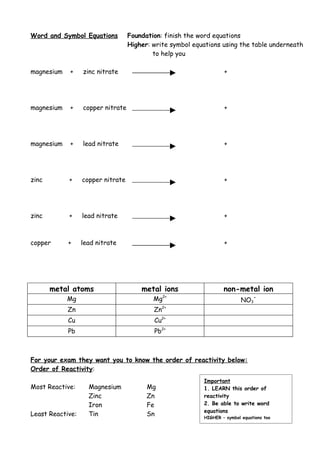
Word and Symbol Equations          Foundation: finish the word equations
                                   Higher: write symbol equations using the table underneath
                                           to help you

magnesium   +     zinc nitrate                                     +


magnesium   +     copper nitrate                                   +


magnesium   +     lead nitrate                                     +


zinc        +     copper nitrate                                   +


zinc        +     lead nitrate                                     +


copper      +     lead nitrate                                     +


       metal atoms                     metal ions                  non-metal ion
            Mg                             Mg   2+
                                                                           NO3
                                                                                -

            Zn                             Zn2+
            Cu                             Cu2+
            Pb                             Pb2+


For your exam they want you to know the order of reactivity below:
Order of Reactivity:
                                                           Important
Most Reactive:      Magnesium            Mg                1. LEARN this order of
                    Zinc                 Zn                reactivity
                    Iron                 Fe                2. Be able to write word
                                                           equations
Least Reactive:     Tin                  Sn                HIGHER – symbol equations too
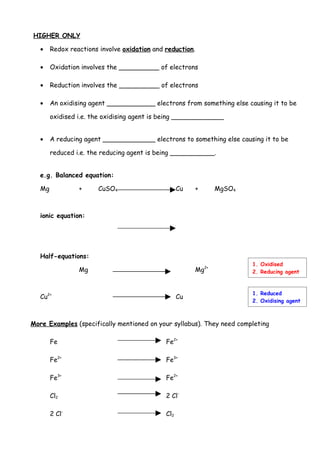
HIGHER ONLY

   •    Redox reactions involve oxidation and reduction.

   •    Oxidation involves the __________ of electrons

   •    Reduction involves the __________ of electrons

   •    An oxidising agent ____________ electrons from something else causing it to be

        oxidised i.e. the oxidising agent is being _____________


   •    A reducing agent _____________ electrons to something else causing it to be

        reduced i.e. the reducing agent is being ___________.


   e.g. Balanced equation:

   Mg            +     CuSO4                        Cu   +      MgSO4


   ionic equation:


   Half-equations:
                                                                        1. Oxidised
                 Mg                                      Mg2+           2. Reducing agent


                                                                        1. Reduced
   Cu2+                                             Cu
                                                                        2. Oxidising agent


More Examples (specifically mentioned on your syllabus). They need completing

        Fe                                    Fe2+

        Fe2+                                  Fe3+

        Fe3+                                  Fe2+

        Cl2                                   2 Cl-

        2 Cl-                                 Cl2

C6b Redox Reactions

  • 1.
    C6b Redox Reactions Rusting is an example of a redox reaction. You studied Rusting in C2 but here is a reminder. What conditions are needed for rusting? 1. Boiled water – 2. Oil – 3. Calcium chloride (anhydrous) – 4. Acid and salt - Results Observations A Water Rusting (medium amount) B Boiled water + oil No rusting C Calcium chloride (anhydrous) No rusting D salt solution Rusting (large amount – salt is a catalyst) E acid Rusting (large amount – acid is a catalyst) Conclusion • For iron to rust, it must be in contact with oxygen (air) and water. iron + oxygen + water ____________________ RUST • __________ and ___________ catalyse the reaction (make it faster) Why is rusting a redox reaction? The rusting of iron is a redox reaction Higher 1. iron __________ electrons How can rusting be prevented (stopped) ? 2. oxygen _________ electrons.
  • 2.
    corrosion indicator iron iron and tinned iron painted nail magnesium galvanised nail The main way to stop rusting is to prevent water and/or oxygen from getting to the iron (or steel). There are 6 methods you need to know about: Method How does this method prevent rusting? 1 oil and grease (particularly useful for moving parts e.g. wheels, engines, bicycle chains) 2 paint 3 galvanising 4 sacrificial protection i.e. the more reactive metal is sacrificed to stop the iron from rusting 5 alloying Topic C2 e.g. stainless steel is an alloy of iron that does not rust 6 tin plate (so it will rust if scratched)
  • 3.
    Displacement Reactions copper zinc lead magnesium zinc nitrate solution magnesium nitrate solution copper nitrate solution lead nitrate solution 1. Set up the apparatus as shown above 2. Put a tick in the table below if you can see a change or a cross if there’s no change. Zinc Magnesium Copper Lead Zinc nitrate solution Magnesium nitrate solution Copper nitrate solution Lead nitrate solution Order of Reactivity: Most reactive metal: Least reactive metal: You should find there are 6 ticks (reactions). On the next page, write a word equation (foundation level) or a symbol equation (higher level) for each one.
  • 4.
    Word and SymbolEquations Foundation: finish the word equations Higher: write symbol equations using the table underneath to help you magnesium + zinc nitrate + magnesium + copper nitrate + magnesium + lead nitrate + zinc + copper nitrate + zinc + lead nitrate + copper + lead nitrate + metal atoms metal ions non-metal ion Mg Mg 2+ NO3 - Zn Zn2+ Cu Cu2+ Pb Pb2+ For your exam they want you to know the order of reactivity below: Order of Reactivity: Important Most Reactive: Magnesium Mg 1. LEARN this order of Zinc Zn reactivity Iron Fe 2. Be able to write word equations Least Reactive: Tin Sn HIGHER – symbol equations too
  • 5.
    HIGHER ONLY • Redox reactions involve oxidation and reduction. • Oxidation involves the __________ of electrons • Reduction involves the __________ of electrons • An oxidising agent ____________ electrons from something else causing it to be oxidised i.e. the oxidising agent is being _____________ • A reducing agent _____________ electrons to something else causing it to be reduced i.e. the reducing agent is being ___________. e.g. Balanced equation: Mg + CuSO4 Cu + MgSO4 ionic equation: Half-equations: 1. Oxidised Mg Mg2+ 2. Reducing agent 1. Reduced Cu2+ Cu 2. Oxidising agent More Examples (specifically mentioned on your syllabus). They need completing Fe Fe2+ Fe2+ Fe3+ Fe3+ Fe2+ Cl2 2 Cl- 2 Cl- Cl2