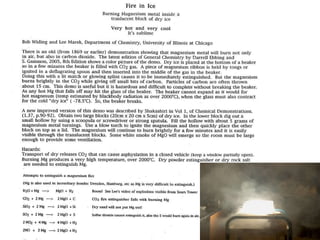
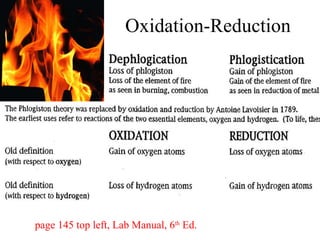
Oxidation-Reduction page 145 top left, Lab Manual, 6 th  Ed.
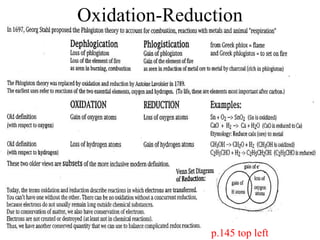
Oxidation-Reduction p.145 top left
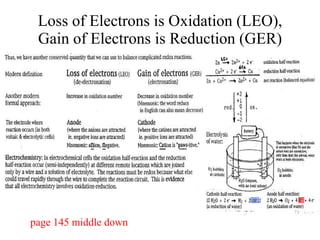
Loss of Electrons is Oxidation (LEO), Gain of Electrons is Reduction (GER) page 145 middle down
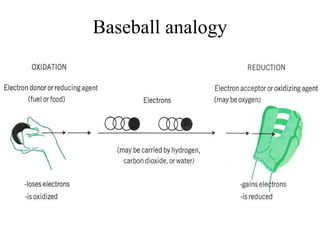
Baseball analogy
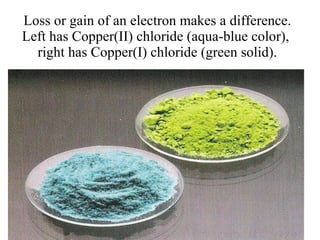
Loss or gain of an electron makes a difference. Left has Copper(II) chloride (aqua-blue color),  right has Copper(I) chloride (green solid).
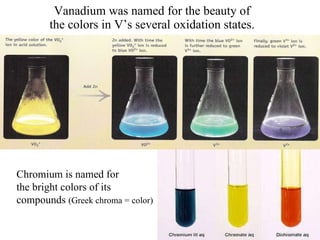
Vanadium was named for the beauty of the colors in V’s several oxidation states. Chromium is named for the bright colors of its  compounds  (Greek chroma = color)
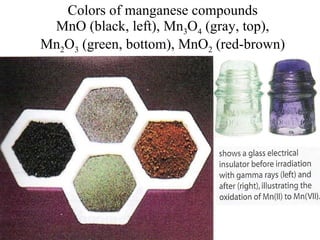
Colors of manganese compounds MnO (black, left), Mn 3 O 4  (gray, top), Mn 2 O 3  (green, bottom), MnO 2  (red-brown)
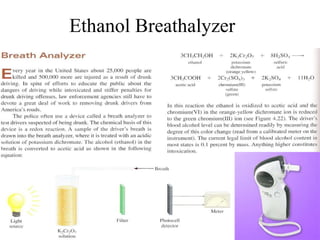
Ethanol Breathalyzer
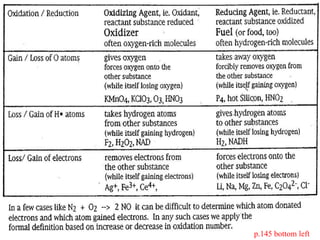
Oxidizing Agent & Reducing Agent p.145 bottom left
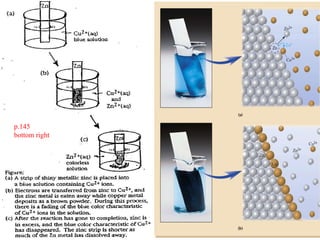
Zinc in Copper sulfate solution p.145 bottom right
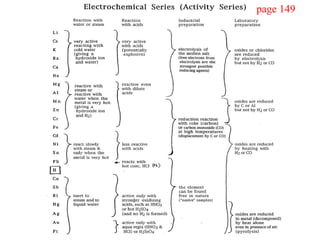
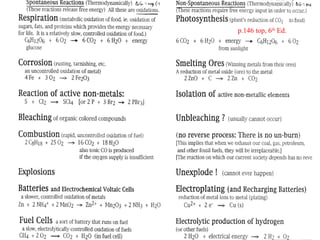
Activity series page 149
p.146 top, 6 th  Ed.
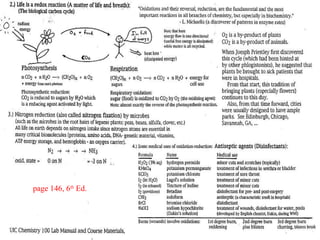
Life, Nitrogenase, & Antiseptics page 146, 6 th  Ed.
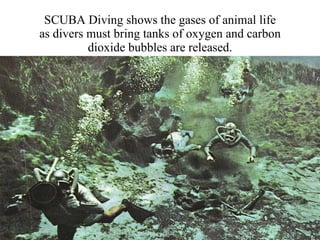
SCUBA Diving shows the gases of animal life as divers must bring tanks of oxygen and carbon dioxide bubbles are released.
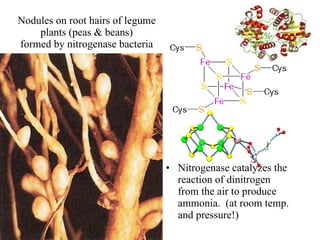
Nodules on root hairs of legume plants (peas & beans) formed by nitrogenase bacteria Nitrogenase catalyzes the reaction of dinitrogen from the air to produce ammonia.  (at room temp. and pressure!)
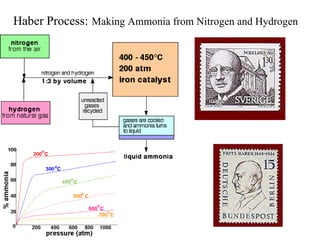
Haber Process:   Making Ammonia from Nitrogen and Hydrogen
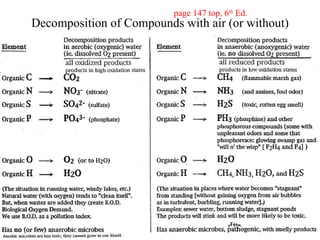
Decomposition of Compounds with air (or without) page 147 top, 6 th  Ed.
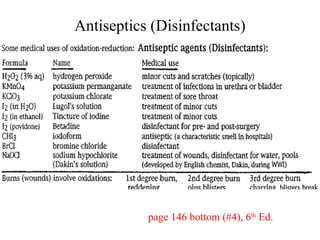
Antiseptics (Disinfectants) page 146 bottom (#4), 6 th  Ed.
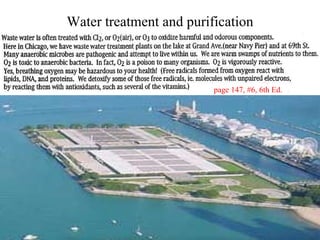
Water treatment and purification page 147, #6, 6th Ed.
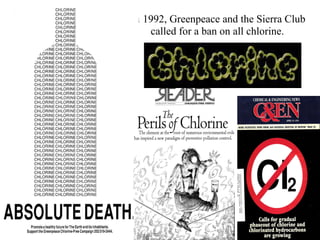
In  1992, Greenpeace and the Sierra Club called for a ban on all chlorine.
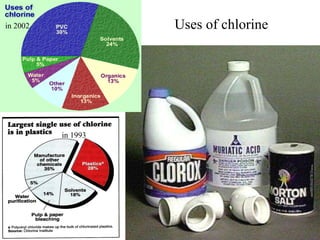
Uses of chlorine in 2002  in 1993
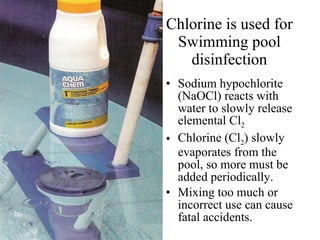
Chlorine is used for Swimming pool disinfection Sodium hypochlorite (NaOCl) reacts with water to slowly release elemental Cl 2 Chlorine (Cl 2 ) slowly evaporates from the pool, so more must be added periodically. Mixing too much or incorrect use can cause fatal accidents.
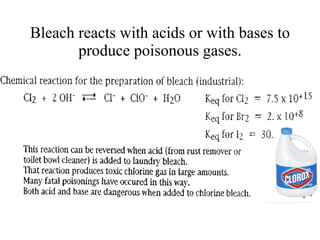
Bleach reacts with acids or with bases to produce poisonous gases.
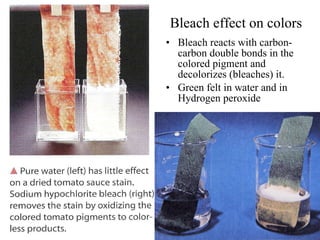
Bleach effect on colors Bleach reacts with carbon-carbon double bonds in the colored pigment and decolorizes (bleaches) it. Green felt in water and in Hydrogen peroxide
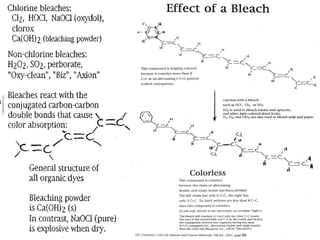
Bleach effect on chemical structure
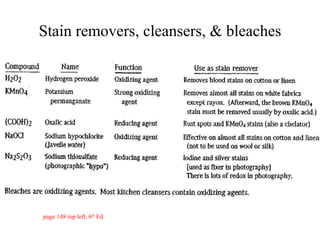
Stain removers, cleansers, & bleaches page 148 top left, 6 th  Ed.
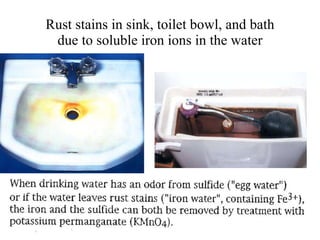
Rust stains in sink, toilet bowl, and bath due to soluble iron ions in the water
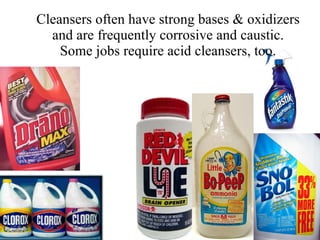
Cleansers often have strong bases & oxidizers and are frequently corrosive and caustic. Some jobs require acid cleansers, too.
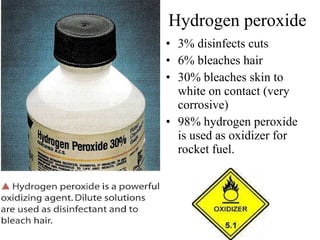
Hydrogen peroxide 3% disinfects cuts 6% bleaches hair 30% bleaches skin to white on contact (very corrosive) 98% hydrogen peroxide is used as oxidizer for rocket fuel.
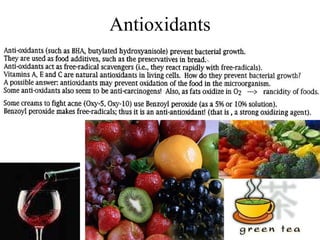
Antioxidants
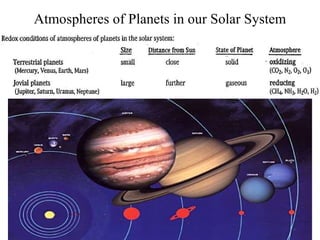
Atmospheres of Planets in our Solar System
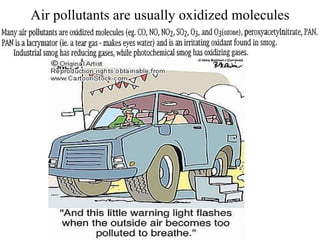
Air pollutants are usually oxidized molecules
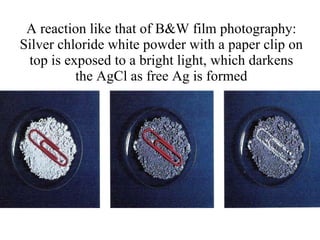
A reaction like that of B&W film photography: Silver chloride white powder with a paper clip on top is exposed to a bright light, which darkens the AgCl as free Ag is formed
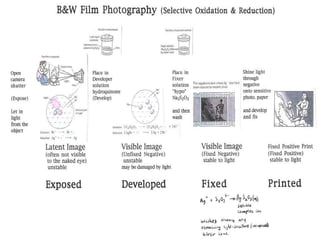
B&W Film Photography
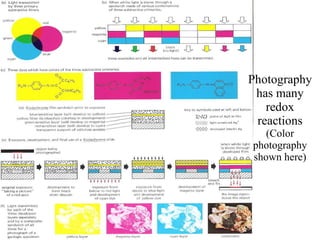
Photography has many redox reactions (Color photography shown here)
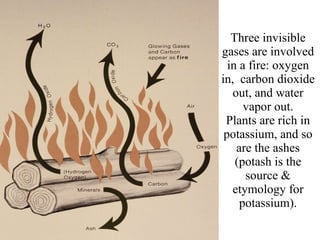
Three invisible gases are involved in a fire: oxygen in,  carbon dioxide out, and water vapor out. Plants are rich in potassium, and so are the ashes (potash is the source & etymology for potassium).
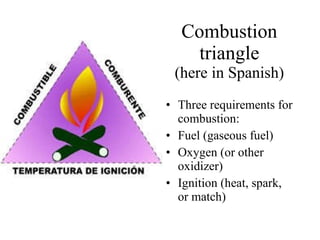
Combustion triangle (here in Spanish) Three requirements for combustion: Fuel (gaseous fuel) Oxygen (or other oxidizer) Ignition (heat, spark, or match)
To extinguish a fire, one must remove one (or more) of the three requirements Remove the fuel (spread it out, cover it). Remove the oxygen (cover the fire with a solid lid, smother it with carbon dioxide or water). Remove the heat (soak it with water, spread it out) Remove free radicals  (radicals are needed for flames) [4th requirement would use a flame tetrahedron]
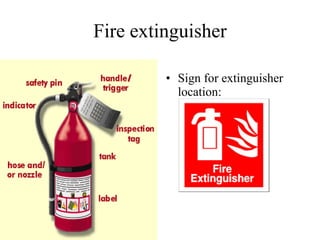
Fire extinguisher Sign for extinguisher location:
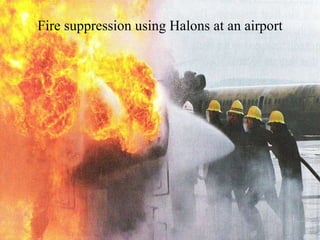
Fire suppression using Halons at an airport
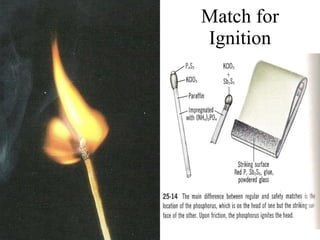
Match for Ignition
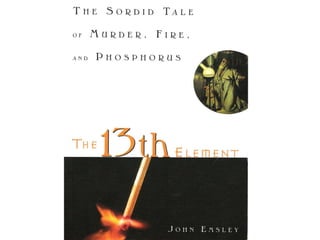
Phosphorus, Matches
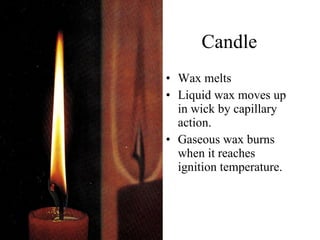
Candle Wax melts Liquid wax moves up in wick by capillary action. Gaseous wax burns when it reaches ignition temperature.
Oxygen
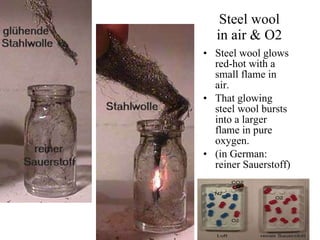
Steel wool in air & O2 Steel wool glows red-hot with a small flame in air. That glowing steel wool bursts into a larger flame in pure oxygen. (in German: reiner Sauerstoff)
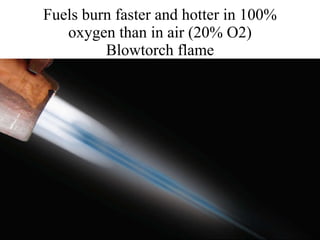
Fuels burn faster and hotter in 100% oxygen than in air (20% O2) Blowtorch flame
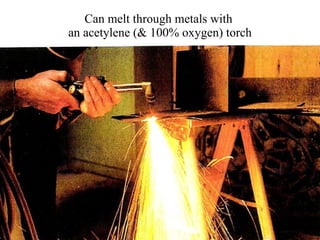
Can melt through metals with  an acetylene (& 100% oxygen) torch
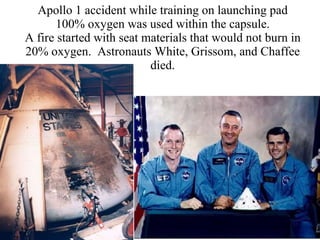
Apollo 1 accident while training on launching pad 100% oxygen was used within the capsule. A fire started with seat materials that would not burn in 20% oxygen.  Astronauts White, Grissom, and Chaffee died.
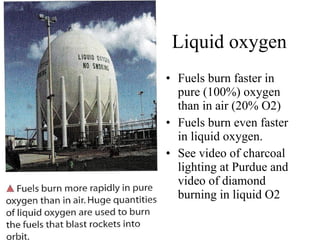
Liquid oxygen Fuels burn faster in pure (100%) oxygen than in air (20% O2) Fuels burn even faster in liquid oxygen. See video of charcoal lighting at Purdue and video of diamond burning in liquid O2
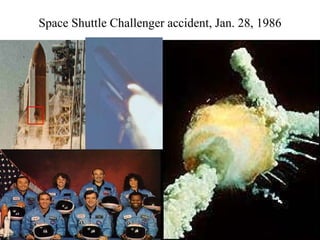
Space Shuttle Challenger accident, Jan. 28, 1986
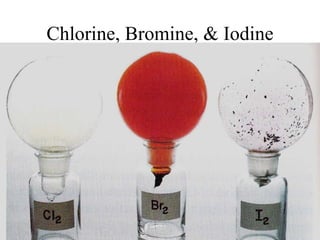
Chlorine, Bromine, & Iodine
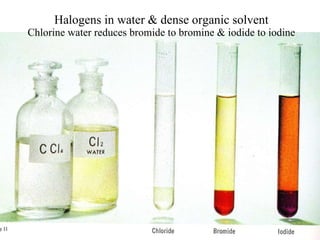
Halogens in water & dense organic solvent Chlorine water reduces bromide to bromine & iodide to iodine
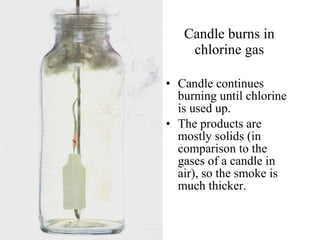
Candle burns in chlorine gas Candle continues burning until chlorine is used up. The products are mostly solids (in comparison to the gases of a candle in air), so the smoke is much thicker.
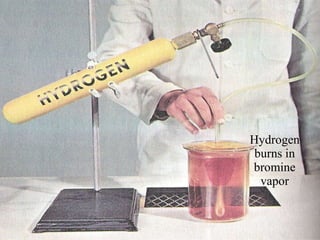
Hydrogen burns in bromine vapor
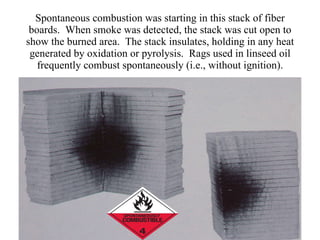
Spontaneous combustion was starting in this stack of fiber boards.  When smoke was detected, the stack was cut open to show the burned area.  The stack insulates, holding in any heat generated by oxidation or pyrolysis.  Rags used in linseed oil frequently combust spontaneously (i.e., without ignition).
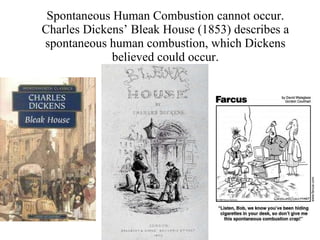
Spontaneous Human Combustion cannot occur. Charles Dickens’ Bleak House (1853) describes a spontaneous human combustion, which Dickens believed could occur.
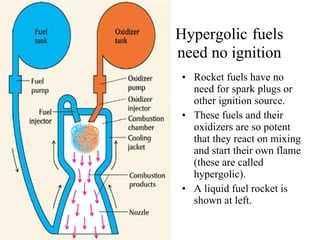
Hypergolic   fuels need no ignition Rocket fuels have no need for spark plugs or other ignition source. These fuels and their oxidizers are so potent that they react on mixing and start their own flame (these are called hypergolic). A liquid fuel rocket is shown at left.
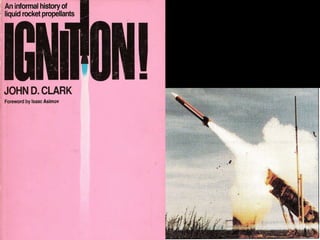
Ignition
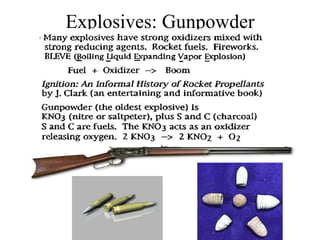
Explosives: Gunpowder
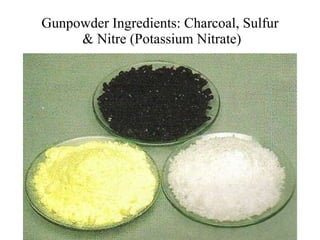
Gunpowder Ingredients: Charcoal, Sulfur  & Nitre (Potassium Nitrate)
Fireworks
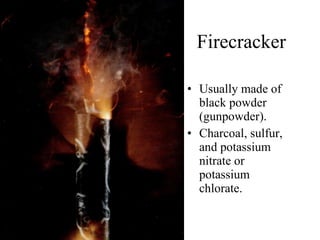
Firecracker Usually made of black powder (gunpowder). Charcoal, sulfur, and potassium nitrate or potassium chlorate.
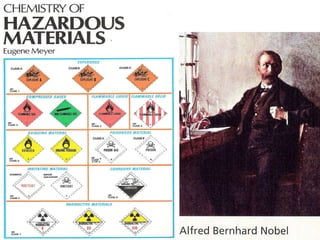
Hazard diamond placards
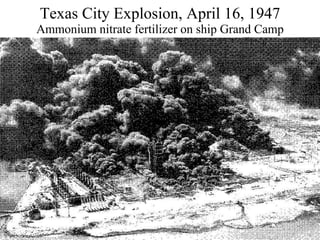
Texas City Explosion, April 16, 1947 Ammonium nitrate fertilizer on ship Grand Camp
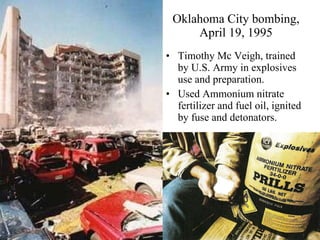
Oklahoma City bombing, April 19, 1995 Timothy Mc Veigh, trained by U.S. Army in explosives use and preparation. Used Ammonium nitrate fertilizer and fuel oil, ignited by fuse and detonators.
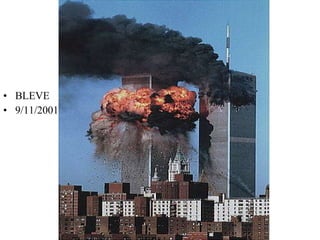
September 11, 2001 BLEVE 9/11/2001
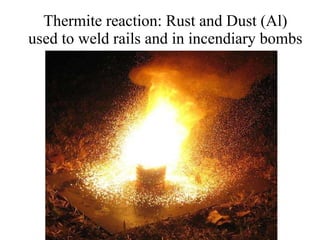
Thermite reaction: Rust and Dust (Al) used to weld rails and in incendiary bombs
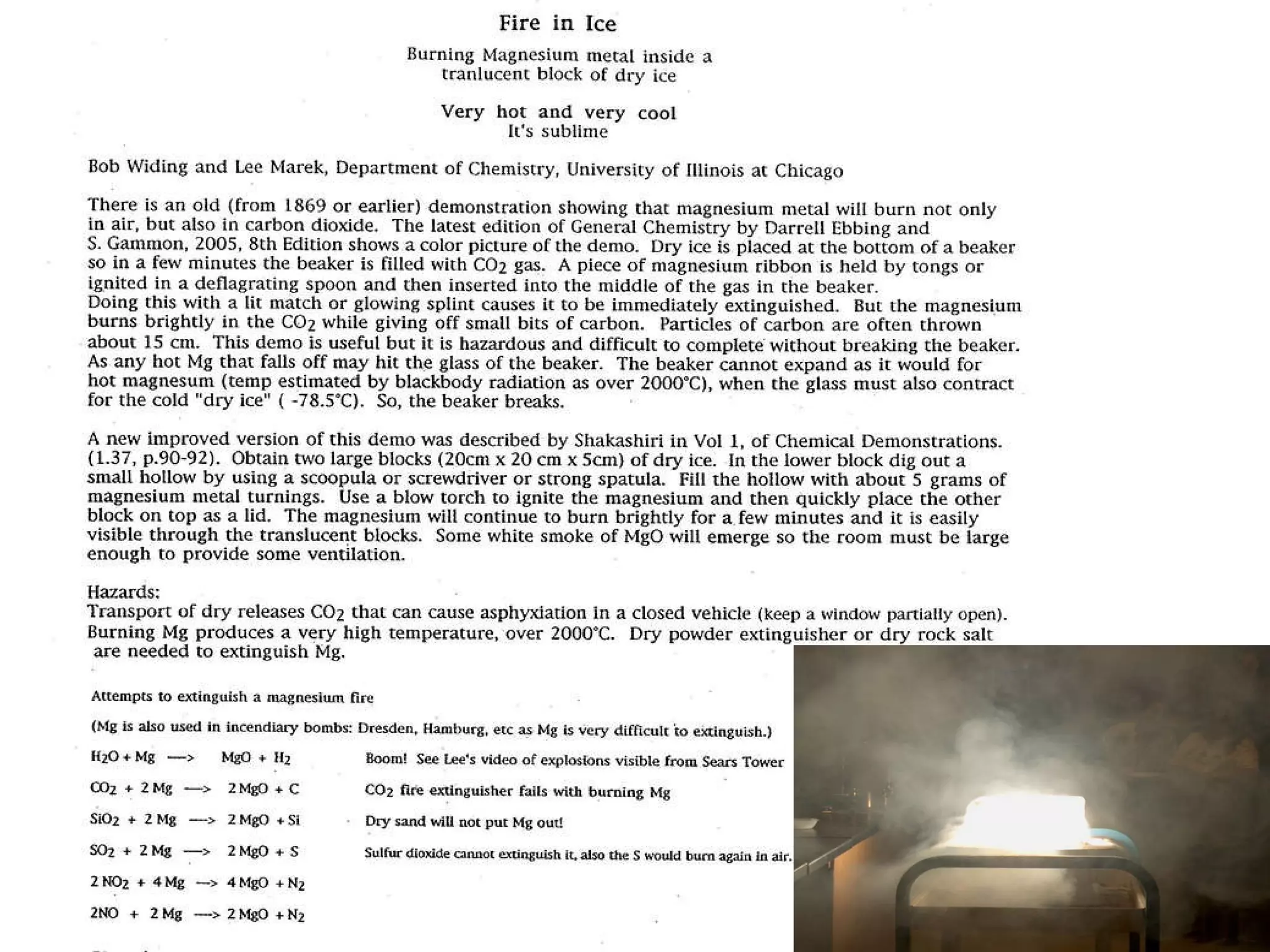
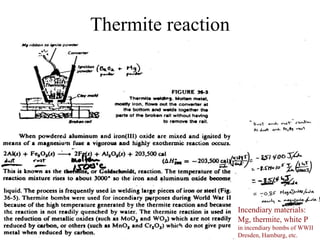
Thermite reaction Incendiary materials: Mg, thermite, white P in incendiary bombs of WWII Dresden, Hamburg, etc.

Redox

  • 1.
  • 2.
    Oxidation-Reduction page 145top left, Lab Manual, 6 th Ed.
  • 3.
  • 4.
    Loss of Electronsis Oxidation (LEO), Gain of Electrons is Reduction (GER) page 145 middle down
  • 5.
  • 6.
    Loss or gainof an electron makes a difference. Left has Copper(II) chloride (aqua-blue color), right has Copper(I) chloride (green solid).
  • 7.
    Vanadium was namedfor the beauty of the colors in V’s several oxidation states. Chromium is named for the bright colors of its compounds (Greek chroma = color)
  • 8.
    Colors of manganesecompounds MnO (black, left), Mn 3 O 4 (gray, top), Mn 2 O 3 (green, bottom), MnO 2 (red-brown)
  • 9.
  • 10.
    Oxidizing Agent &Reducing Agent p.145 bottom left
  • 11.
    Zinc in Coppersulfate solution p.145 bottom right
  • 12.
  • 13.
  • 14.
    Life, Nitrogenase, &Antiseptics page 146, 6 th Ed.
  • 15.
    SCUBA Diving showsthe gases of animal life as divers must bring tanks of oxygen and carbon dioxide bubbles are released.
  • 16.
    Nodules on roothairs of legume plants (peas & beans) formed by nitrogenase bacteria Nitrogenase catalyzes the reaction of dinitrogen from the air to produce ammonia. (at room temp. and pressure!)
  • 17.
    Haber Process: Making Ammonia from Nitrogen and Hydrogen
  • 18.
    Decomposition of Compoundswith air (or without) page 147 top, 6 th Ed.
  • 19.
    Antiseptics (Disinfectants) page146 bottom (#4), 6 th Ed.
  • 20.
    Water treatment andpurification page 147, #6, 6th Ed.
  • 21.
    In 1992,Greenpeace and the Sierra Club called for a ban on all chlorine.
  • 22.
    Uses of chlorinein 2002 in 1993
  • 23.
    Chlorine is usedfor Swimming pool disinfection Sodium hypochlorite (NaOCl) reacts with water to slowly release elemental Cl 2 Chlorine (Cl 2 ) slowly evaporates from the pool, so more must be added periodically. Mixing too much or incorrect use can cause fatal accidents.
  • 24.
    Bleach reacts withacids or with bases to produce poisonous gases.
  • 25.
    Bleach effect oncolors Bleach reacts with carbon-carbon double bonds in the colored pigment and decolorizes (bleaches) it. Green felt in water and in Hydrogen peroxide
  • 26.
    Bleach effect onchemical structure
  • 27.
    Stain removers, cleansers,& bleaches page 148 top left, 6 th Ed.
  • 28.
    Rust stains insink, toilet bowl, and bath due to soluble iron ions in the water
  • 29.
    Cleansers often havestrong bases & oxidizers and are frequently corrosive and caustic. Some jobs require acid cleansers, too.
  • 30.
    Hydrogen peroxide 3%disinfects cuts 6% bleaches hair 30% bleaches skin to white on contact (very corrosive) 98% hydrogen peroxide is used as oxidizer for rocket fuel.
  • 31.
  • 32.
    Atmospheres of Planetsin our Solar System
  • 33.
    Air pollutants areusually oxidized molecules
  • 34.
    A reaction likethat of B&W film photography: Silver chloride white powder with a paper clip on top is exposed to a bright light, which darkens the AgCl as free Ag is formed
  • 35.
  • 36.
    Photography has manyredox reactions (Color photography shown here)
  • 37.
    Three invisible gasesare involved in a fire: oxygen in, carbon dioxide out, and water vapor out. Plants are rich in potassium, and so are the ashes (potash is the source & etymology for potassium).
  • 38.
    Combustion triangle (herein Spanish) Three requirements for combustion: Fuel (gaseous fuel) Oxygen (or other oxidizer) Ignition (heat, spark, or match)
  • 39.
    To extinguish afire, one must remove one (or more) of the three requirements Remove the fuel (spread it out, cover it). Remove the oxygen (cover the fire with a solid lid, smother it with carbon dioxide or water). Remove the heat (soak it with water, spread it out) Remove free radicals (radicals are needed for flames) [4th requirement would use a flame tetrahedron]
  • 40.
    Fire extinguisher Signfor extinguisher location:
  • 41.
    Fire suppression usingHalons at an airport
  • 42.
  • 43.
  • 44.
    Candle Wax meltsLiquid wax moves up in wick by capillary action. Gaseous wax burns when it reaches ignition temperature.
  • 45.
  • 46.
    Steel wool inair & O2 Steel wool glows red-hot with a small flame in air. That glowing steel wool bursts into a larger flame in pure oxygen. (in German: reiner Sauerstoff)
  • 47.
    Fuels burn fasterand hotter in 100% oxygen than in air (20% O2) Blowtorch flame
  • 48.
    Can melt throughmetals with an acetylene (& 100% oxygen) torch
  • 49.
    Apollo 1 accidentwhile training on launching pad 100% oxygen was used within the capsule. A fire started with seat materials that would not burn in 20% oxygen. Astronauts White, Grissom, and Chaffee died.
  • 50.
    Liquid oxygen Fuelsburn faster in pure (100%) oxygen than in air (20% O2) Fuels burn even faster in liquid oxygen. See video of charcoal lighting at Purdue and video of diamond burning in liquid O2
  • 51.
    Space Shuttle Challengeraccident, Jan. 28, 1986
  • 52.
  • 53.
    Halogens in water& dense organic solvent Chlorine water reduces bromide to bromine & iodide to iodine
  • 54.
    Candle burns inchlorine gas Candle continues burning until chlorine is used up. The products are mostly solids (in comparison to the gases of a candle in air), so the smoke is much thicker.
  • 55.
    Hydrogen burns inbromine vapor
  • 56.
    Spontaneous combustion wasstarting in this stack of fiber boards. When smoke was detected, the stack was cut open to show the burned area. The stack insulates, holding in any heat generated by oxidation or pyrolysis. Rags used in linseed oil frequently combust spontaneously (i.e., without ignition).
  • 57.
    Spontaneous Human Combustioncannot occur. Charles Dickens’ Bleak House (1853) describes a spontaneous human combustion, which Dickens believed could occur.
  • 58.
    Hypergolic fuels need no ignition Rocket fuels have no need for spark plugs or other ignition source. These fuels and their oxidizers are so potent that they react on mixing and start their own flame (these are called hypergolic). A liquid fuel rocket is shown at left.
  • 59.
  • 60.
  • 61.
    Gunpowder Ingredients: Charcoal,Sulfur & Nitre (Potassium Nitrate)
  • 62.
  • 63.
    Firecracker Usually madeof black powder (gunpowder). Charcoal, sulfur, and potassium nitrate or potassium chlorate.
  • 64.
  • 65.
    Texas City Explosion,April 16, 1947 Ammonium nitrate fertilizer on ship Grand Camp
  • 66.
    Oklahoma City bombing,April 19, 1995 Timothy Mc Veigh, trained by U.S. Army in explosives use and preparation. Used Ammonium nitrate fertilizer and fuel oil, ignited by fuse and detonators.
  • 67.
    September 11, 2001BLEVE 9/11/2001
  • 68.
    Thermite reaction: Rustand Dust (Al) used to weld rails and in incendiary bombs
  • 69.
    Thermite reaction Incendiarymaterials: Mg, thermite, white P in incendiary bombs of WWII Dresden, Hamburg, etc.

Editor's Notes

  • #4 p.145 top
  • #5 p.145 middle, 6 th Ed.
  • #9 Add a slide of chromium’s colors.
  • #11 p.145 bottom left
  • #12 p.145 bottom right
  • #13 p.149, 6 th Ed.
  • #14 page 146 top
  • #15 p.148 bottom
  • #17 Nitrogenase catalyzes the reaction N2 + 3H2 --> 2 NH3, Thus forming ammonia and organic amines from unreactive dinitrogen from the air. See page 146 bottom (#3), 6 th Ed.,
  • #18 As you heat the nitrogen and oxygen mixture to higher temperatures, the percent of ammonia product decreases. So, it is essential to find a catalyst that will allow the reaction to occur rapidly at a lower temperature. Fritz Haber and Carl Bosch found such a catalyst in iron metal.
  • #19 p.147 top, 6 th Ed.
  • #20 Page 146 bottom right Lab Manual 6th Ed.
  • #21 Page 147 (#6) Lab Manual 6th Ed.
  • #25 p.148 top left
  • #27 p.150 top right and page 56 Lab Manual 5th Ed.
  • #28 Page 148 top left of Lab Manual 6th Ed.
  • #32 Page 148 (#11) Lab Manual 6th Ed.
  • #33 Page 147 (#7) Lab Manual 6th Ed
  • #34 Page 147 (#8) Lab Manual 6th Ed.
  • #36 Pictures from conceptual Chemistry by John Suchocki
  • #37 Divide into two or three slides.
  • #52 The big explosion was when the solid rocket booster ignited the hydrogen fuel with the liquid oxygen.
  • #56 Water burns with a flame in fluorine gas!
  • #60 The author spent his life testing rocket fuels and had blown up several lab buildings!
  • #68 BLEVE (Boiling Liquid Expanding Vapor Explosion)