PRIMARY SURVEY atmnrh
• A: can talk, not tender at c-spine, full ROM of neck
• B: spontaneous breathing, equal breath sound, CCT-neg
• C: BP 109/55 mmHg PR 70 bpm no external bleeding,
PCT-neg
• D: E4V5M6, pupil 3 mm RTLBE
• E: tender and swelling at lt knee with limit ROM of lt knee
5.
adjunct to primarysurvey
• CXR
• film pelvis AP
• FAST neg at 10:00 20/2/61
• on posterior long leg slab
6.
SECONDARY SURVEY
• A:allergy to piraxicam
• M: MFM(500) 1x1 PO pc, Glipizide 1x1 PO ac
• P: DM type2
• L: 17:00 19/2/61
• E: ปีนต้นมะขาม พลัดตกลงมา ขาด้านซ้ายเกี่ยวกับกิ่งไม้บริเวณ
ข้อพับ หลังจากนั้นตกลงพื้นก้นกระแทกพื้น มีปวดที่ล่างเข่าด้าน
ซ้าย บวม ขยับเข่าไม่ได้ มีบาดแผลรอยเกี่ยวกิ่งไม้ที่ขาด้านขวา
7.
head-toe examination
• head&maxillofacial
•no wound, no facial deformities, no ecchymosis
• c-spine&neck
• no wound, can move neck, c-spine not tender
• chest
• clear, equal breath sound both lung, CCT-neg
• abdomen&pelvis
• not distended, no wound, soft, not tender, bowel sound present, PCT-
neg
8.
head-toe examination
• musculoskeletal
•tender and swelling at lt knee with ecchymosis at ant knee with limit
ROM of lt knee
• DPA 2+, PTA 2+, CR<2sec, normal pinprick sensation
• neurologic
• E4V5M6 pupil 2 mm RTLBE
• motor gr V all except lt lower extremities can’t evaluated
• perineum&rectum
• no ecchymosis
tibial plateau fracture
•1% of fracture in adult
• men: younger age -> high-energy trauma
• woman: advancing age -> osteopenia bone
• PE:
• inspection -> R/O open fracture
• palpitation -> R/O compartment syndrome
• varus/valgus stress test -> any laxity > 10 degree indicated instability
• neurovascular exam
23.
mechanism
• location: dependson age and sex
• commonly: lateral > bicondylar > medial
• young man: involve both condyle fracture and
associated with other injury such as neuromuscular
injuries, compartment syndrome
• elders woman: split depression fracture of lateral
plateau is most common
24.
mechanism
• varus/valgus loadwith or without axial load
• high energy
• frequently associated with soft tissue injuries
• low energy
• usually insufficientcy fracture
associated injuries
• kneedislocation
• collateral ligament injuries
• vascular injuries
• compartment syndrome
• intra-articular soft tissue injury to both cruciate ligament
and meniscus
31.
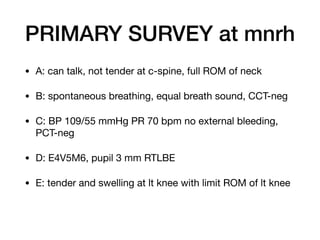
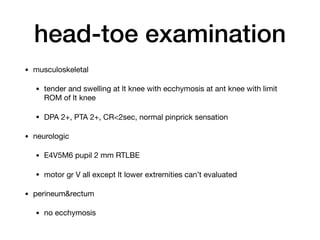
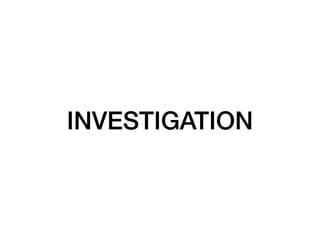
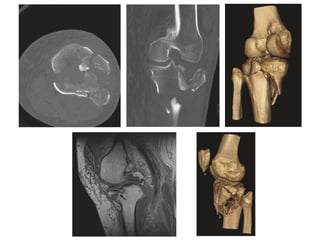
investigation
• plain film
• AP
• lateral view
• AP in the plane of the plateau(10-15 degree caudal view): the
standard view
• CT scan: help surgical planning, more reliability of classifying the
fracture and deciding on a treatment plan
• MRI: additional information about injuries to the soft tissue
structures
non-operative
• indication
• nonor minimally displaced
fracture
• small depression of the lateral
plateau without deformity
• patients with significant
medical commodities
• elderly patients or those with
low functional demands
where small deformities are
well tolerated
• relative contraindication
• greater displacement where
deformity is predicted
• knee instability
• displaced medial side pattern
36.
non-operative
• cast brace-> unloaded injured site of fracture
• then ambulated with non-weight baring for 4-8 weeks
indication for surgery
•displaced unstable tibial plateau where near normal limb alignment
can’t be predicted
• bicondylar and shaft dissociated pattern
• medial plateau fracture
• lateral plateau fracture
• split fragment
• depression affect over half of the lateral articular surface
• valgus alignment on radiograph
• clinical valgus alignment on exam
39.
complication
1. loss ofreduction
2. wound infection and
breakdown
3. septic arthritis after EF
4. knee stiffness
5. painful prominent
hardware
6. nonunion
7. post traumatic arthritis
increased rate with
• meniscectomy during
surgery
• axial malalignment
• intra-articular infection
• joint instability