Extern orthopedic
conference
Ext. Prima Boonveerabut
23rd Jan, 2017
Patient profile
• ผู้ป่ วยชายไทย อายุ 22 ปี
• สถานภาพ โสด
• ภูมิลาเนา อาเภอคง จังหวัดนครราชสีมา
• มาโรงพยาบาลมหาราชนครราชสีมา วันที่ 21
มกราคม 2560 เวลา 10.00 น
Chief complaint
• ปวดไหล่ซ้าย 3 ชั่วโมงก่อนมาโรงพยาบาล
Present illness
• 3 ชั่วโมงก่อนมาโรงพยาบาล ผู้ป่ วยล้มจากเตียง
แล้วเอามือซ้ายยันพื้นไว้ จากนั้นมีอาการปวดไหล่
ซ้าย รู ้สึกไหล่ซ้ายหลุด ยกแขนซ้ายไม่ได้ ขยับมือได้
ปวดไหล่ซ้ายมากจึงมาโรงพยาบาล
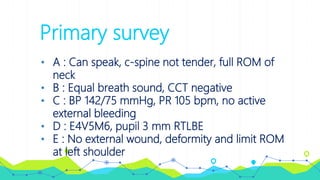
Primary survey
• A : Can speak, c-spine not tender, full ROM of
neck
• B : Equal breath sound, CCT negative
• C : BP 142/75 mmHg, PR 105 bpm, no active
external bleeding
• D : E4V5M6, pupil 3 mm RTLBE
• E : No external wound, deformity and limit ROM
at left shoulder
Secondary survey
• A : ปฏิเสธประวัติแพ้ยาหรือแพ้อาหาร
• M : ปฏิเสธยาที่ใช้ประจา
• P : ปฏิเสธประวัติโรคประจาตัว
• L : NPO 7.00 น. 21 มกราคม 2560
• E : ผู้ป่ วยล้มจากเตียงแล้วเอามือซ้ายยันพื้นไว้ จากนั้นมี
อาการปวดไหล่ซ้าย รู ้สึกไหล่ซ้ายหลุด ยกแขนซ้ายไม่ได้
ขยับมือได้ เคยไหล่ซ้ายหลุด 2 ครั้งในช่วง 2 เดือนที่ผ่าน
มา
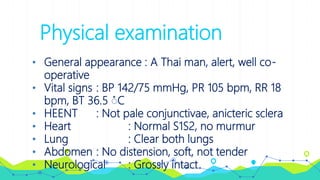
Physical examination
• General appearance : A Thai man, alert, well co-
operative
• Vital signs : BP 142/75 mmHg, PR 105 bpm, RR 18
bpm, BT 36.5 ํC
• HEENT : Not pale conjunctivae, anicteric sclera
• Heart : Normal S1S2, no murmur
• Lung : Clear both lungs
• Abdomen : No distension, soft, not tender
• Neurological : Grossly intact
Physical examination
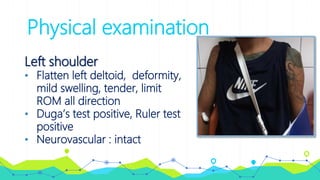
Left shoulder
• Flatten left deltoid, deformity,
mild swelling, tender, limit
ROM all direction
• Duga’s test positive, Ruler test
positive
• Neurovascular : intact
Investigation
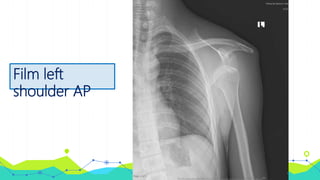
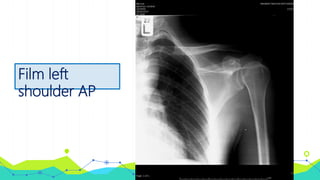
• Film left shoulder AP
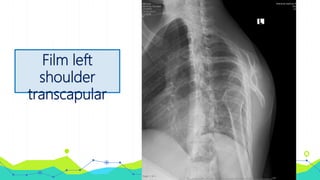
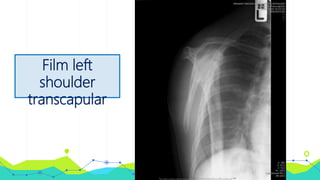
• Film left shoulder transcapular
Film left
shoulder AP
Film left
shoulder
transcapular
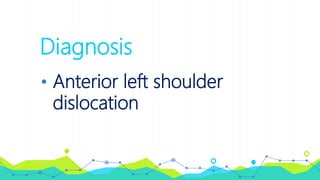
Diagnosis
• Anterior left shoulder
dislocation
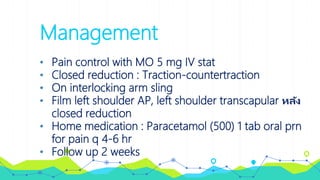
Management
• Pain control with MO 5 mg IV stat
• Closed reduction : Traction-countertraction
• On interlocking arm sling
• Film left shoulder AP, left shoulder transcapular หลัง
closed reduction
• Home medication : Paracetamol (500) 1 tab oral prn
for pain q 4-6 hr
• Follow up 2 weeks
Film left
shoulder AP
Film left
shoulder
transcapular
Shoulder
dislocation
Shoulder (Glenohumeral)
dislocation
• Most commonly dislocated joint in the body
• Can occur anteriorly (95-97%), posteriorly (2-
4%), inferiorly, or anterior-superiorly
• Previous shoulder dislocation are more prone
to redislocation
 Tissue does not heal properly and/or tissue
stretches out and becomes more lax
Shoulder (Glenohumeral)
dislocation
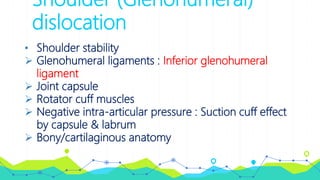
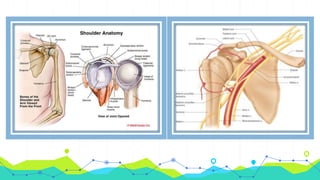
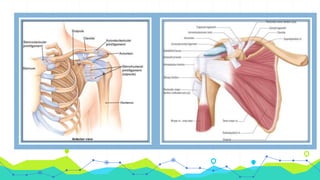
• Shoulder stability
 Glenohumeral ligaments : Inferior glenohumeral
ligament
 Joint capsule
 Rotator cuff muscles
 Negative intra-articular pressure : Suction cuff effect
by capsule & labrum
 Bony/cartilaginous anatomy
Shoulder (Glenohumeral)
dislocation
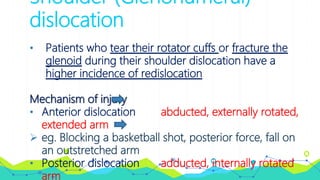
• Patients who tear their rotator cuffs or fracture the
glenoid during their shoulder dislocation have a
higher incidence of redislocation
Mechanism of injury
• Anterior dislocation abducted, externally rotated,
extended arm
 eg. Blocking a basketball shot, posterior force, fall on
an outstretched arm
• Posterior dislocation adducted, internally rotated
arm
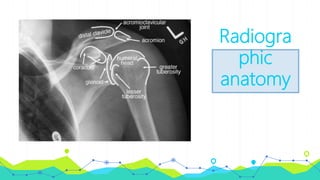
Radiogra
phic
anatomy
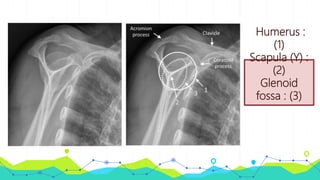
Humerus :
(1)
Scapula (Y) :
(2)
Glenoid
fossa : (3)
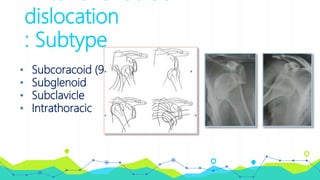
dislocation
: Subtype
• Subcoracoid (90%)
• Subglenoid
• Subclavicle
• Intrathoracic
Physical
examination
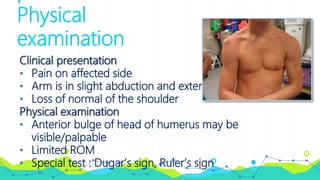
Clinical presentation
• Pain on affected side
• Arm is in slight abduction and external rotation
• Loss of normal of the shoulder
Physical examination
• Anterior bulge of head of humerus may be
visible/palpable
• Limited ROM
• Special test : Dugar’s sign, Ruler’s sign
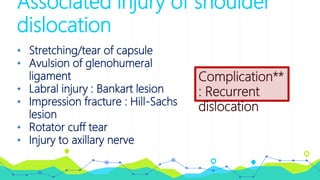
Associated injury of shoulder
dislocation
• Stretching/tear of capsule
• Avulsion of glenohumeral
ligament
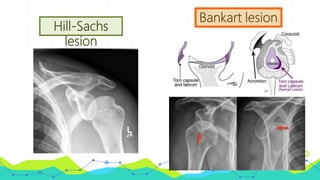
• Labral injury : Bankart lesion
• Impression fracture : Hill-Sachs
lesion
• Rotator cuff tear
• Injury to axillary nerve
Complication**
: Recurrent
dislocation
Hill-Sachs
lesion
Bankart lesion
Management
Non-operative
• Closed reduction
• Film X-ray confirmed after reduction
• Immobilization : Interlocking sling
• Pain control
• Rehabilitation
Operative
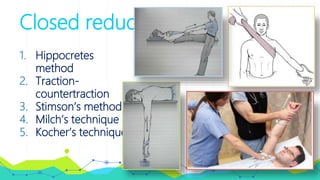
Closed reduction
1. Hippocretes
method
2. Traction-
countertraction
3. Stimson’s method
4. Milch’s technique
5. Kocher’s technique
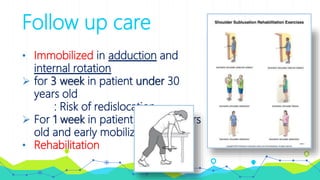
Follow up care
• Immobilized in adduction and
internal rotation
 for 3 week in patient under 30
years old
: Risk of redislocation
 For 1 week in patient over 30 years
old and early mobilization
• Rehabilitation
Operative treatment
Indication
• Failed non-operative treatment
• Irreducible dislocation
• Open dislocation
• Recurrent dislocation in young age
THANK YOU

Extern orthopedic-conference-prima

  • 1.
    Extern orthopedic conference Ext. PrimaBoonveerabut 23rd Jan, 2017
  • 2.
    Patient profile • ผู้ป่วยชายไทย อายุ 22 ปี • สถานภาพ โสด • ภูมิลาเนา อาเภอคง จังหวัดนครราชสีมา • มาโรงพยาบาลมหาราชนครราชสีมา วันที่ 21 มกราคม 2560 เวลา 10.00 น
  • 3.
    Chief complaint • ปวดไหล่ซ้าย3 ชั่วโมงก่อนมาโรงพยาบาล
  • 4.
    Present illness • 3ชั่วโมงก่อนมาโรงพยาบาล ผู้ป่ วยล้มจากเตียง แล้วเอามือซ้ายยันพื้นไว้ จากนั้นมีอาการปวดไหล่ ซ้าย รู ้สึกไหล่ซ้ายหลุด ยกแขนซ้ายไม่ได้ ขยับมือได้ ปวดไหล่ซ้ายมากจึงมาโรงพยาบาล
  • 5.
    Primary survey • A: Can speak, c-spine not tender, full ROM of neck • B : Equal breath sound, CCT negative • C : BP 142/75 mmHg, PR 105 bpm, no active external bleeding • D : E4V5M6, pupil 3 mm RTLBE • E : No external wound, deformity and limit ROM at left shoulder
  • 6.
    Secondary survey • A: ปฏิเสธประวัติแพ้ยาหรือแพ้อาหาร • M : ปฏิเสธยาที่ใช้ประจา • P : ปฏิเสธประวัติโรคประจาตัว • L : NPO 7.00 น. 21 มกราคม 2560 • E : ผู้ป่ วยล้มจากเตียงแล้วเอามือซ้ายยันพื้นไว้ จากนั้นมี อาการปวดไหล่ซ้าย รู ้สึกไหล่ซ้ายหลุด ยกแขนซ้ายไม่ได้ ขยับมือได้ เคยไหล่ซ้ายหลุด 2 ครั้งในช่วง 2 เดือนที่ผ่าน มา
  • 7.
    Physical examination • Generalappearance : A Thai man, alert, well co- operative • Vital signs : BP 142/75 mmHg, PR 105 bpm, RR 18 bpm, BT 36.5 ํC • HEENT : Not pale conjunctivae, anicteric sclera • Heart : Normal S1S2, no murmur • Lung : Clear both lungs • Abdomen : No distension, soft, not tender • Neurological : Grossly intact
  • 8.
    Physical examination Left shoulder •Flatten left deltoid, deformity, mild swelling, tender, limit ROM all direction • Duga’s test positive, Ruler test positive • Neurovascular : intact
  • 9.
    Investigation • Film leftshoulder AP • Film left shoulder transcapular
  • 10.
  • 11.
  • 12.
    Diagnosis • Anterior leftshoulder dislocation
  • 13.
    Management • Pain controlwith MO 5 mg IV stat • Closed reduction : Traction-countertraction • On interlocking arm sling • Film left shoulder AP, left shoulder transcapular หลัง closed reduction • Home medication : Paracetamol (500) 1 tab oral prn for pain q 4-6 hr • Follow up 2 weeks
  • 14.
  • 15.
  • 16.
  • 17.
    Shoulder (Glenohumeral) dislocation • Mostcommonly dislocated joint in the body • Can occur anteriorly (95-97%), posteriorly (2- 4%), inferiorly, or anterior-superiorly • Previous shoulder dislocation are more prone to redislocation  Tissue does not heal properly and/or tissue stretches out and becomes more lax
  • 18.
    Shoulder (Glenohumeral) dislocation • Shoulderstability  Glenohumeral ligaments : Inferior glenohumeral ligament  Joint capsule  Rotator cuff muscles  Negative intra-articular pressure : Suction cuff effect by capsule & labrum  Bony/cartilaginous anatomy
  • 19.
    Shoulder (Glenohumeral) dislocation • Patientswho tear their rotator cuffs or fracture the glenoid during their shoulder dislocation have a higher incidence of redislocation Mechanism of injury • Anterior dislocation abducted, externally rotated, extended arm  eg. Blocking a basketball shot, posterior force, fall on an outstretched arm • Posterior dislocation adducted, internally rotated arm
  • 22.
  • 23.
    Humerus : (1) Scapula (Y): (2) Glenoid fossa : (3)
  • 24.
    dislocation : Subtype • Subcoracoid(90%) • Subglenoid • Subclavicle • Intrathoracic
  • 25.
    Physical examination Clinical presentation • Painon affected side • Arm is in slight abduction and external rotation • Loss of normal of the shoulder Physical examination • Anterior bulge of head of humerus may be visible/palpable • Limited ROM • Special test : Dugar’s sign, Ruler’s sign
  • 26.
    Associated injury ofshoulder dislocation • Stretching/tear of capsule • Avulsion of glenohumeral ligament • Labral injury : Bankart lesion • Impression fracture : Hill-Sachs lesion • Rotator cuff tear • Injury to axillary nerve Complication** : Recurrent dislocation
  • 27.
  • 28.
    Management Non-operative • Closed reduction •Film X-ray confirmed after reduction • Immobilization : Interlocking sling • Pain control • Rehabilitation Operative
  • 29.
    Closed reduction 1. Hippocretes method 2.Traction- countertraction 3. Stimson’s method 4. Milch’s technique 5. Kocher’s technique
  • 30.
    Follow up care •Immobilized in adduction and internal rotation  for 3 week in patient under 30 years old : Risk of redislocation  For 1 week in patient over 30 years old and early mobilization • Rehabilitation

  • 31.
    Operative treatment Indication • Failednon-operative treatment • Irreducible dislocation • Open dislocation • Recurrent dislocation in young age
  • 32.