E x t C o n f e r e n c e
1
Ext Chaiwat Limthongsittikhun
Ext Nunchaya Roongsrisawad
Case
• Case: ผู้ป่วยเด็กหญิง 9ปี 5เดือน
• No known underlying disease
• Chief complaint: ปวดขาขวา 2 ชม. PTA
Primary Survey
• A: able to talk, no cervical tenderness, full ROM of neck
• B: clear, equal breath sound, CCT –ve
• C: PR 120/min, BP110/66mmHg, no external bleeding
• D: E4V5M6, pupil 2mm RTLBE
• E: no back wound, right ankle deformity, marked tenderness and
swelling
Secondary Survey
• A: no food/drug allergy
• B: no current medication
• P: no known underlying disease
• L: last meal 10:00 AM
• E: 2 ชม PTA ขณะกาลังหัดขับรถจักรยานยนต์ ขับรถล้มเอง ศรีษะไม่กระแทก ไม่สลบ จาเหตุการณ์ได้
ไม่คลื่นใส้อาเจียน รถทับขา ข้อเท้าขวาปวด บวม ลงน้าหนักไม่ได้ ไม่มีแผล
PE
• GA: alert, good consciousness
• HEENT: not pale conjunctivae, anictericsclerae
• Heart: normal s1s2, no murmur
• Lungs: clear, equal breath sound
• Abdomen: soft, not tender, no rebound, no guarding
• Ext: deformity, swelling, tenderness right ankle, limited ROM
due to pain, DPA 2+, cap refill <2 sec, normal sensation,
no external wound
Investigation
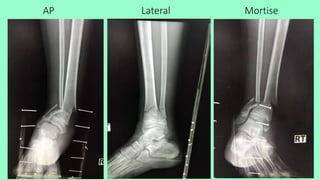
• Film right ankle AP, lateral, Mortise
AP Lateral Mortise
Radiologic Finding
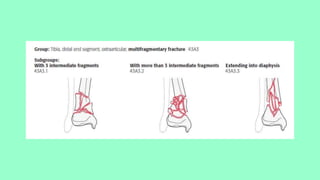
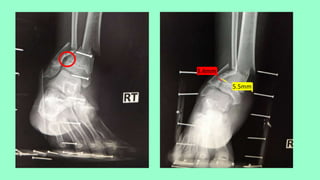
• Close transverse fracture right distal tibia with minimal displacement
• Close multifragmentary fracture right distal fibula with displacement
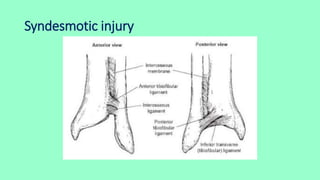
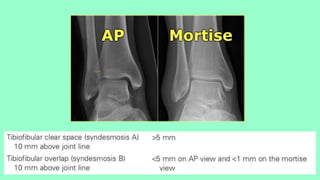
Syndesmotic injury
5.5mm
3.4mm
Diagnosis
• Close fracture both bone right leg
Management
Ortho
-Pain control
-close reduction
-long leg posterior slab
-observe sign of compartment syndrome
T i b i a a n d F i b u l a f r a c t u r e
G E N E R A L K N O W L E D G E
17
Ext Chaiwat Limthongsittikhun
Ext Nunchaya Roongsrisawad
Tibia and Fibula shaft fracture
• Low energy
• Common > 50 years old
• Mechanism - Fall from height, sporting injury
• High energy
• Common <30 years old
• Mechanism – vehicular trauma
• 70% : isolated pediatric tibial fracture
• <11 years old : torsional force , location - distal 3rd of tibial diaphysis
• Isolated transverse or comminuted fracture : direct trauma
• Intact fibula prevent shortening of tibia
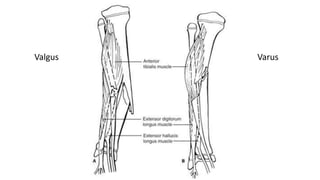
• 60 % develop varus angulation within 1st 2 weeks of injury
Tibia and Fibula shaft fracture
• 30% : associated with fibula fracture
• Valgus malalignment
• Isolated fibula shaft fracture : rare in children
• Resulted from direct blow to lateral aspect of leg
• None displace fracture : supportive care
Valgus Varus
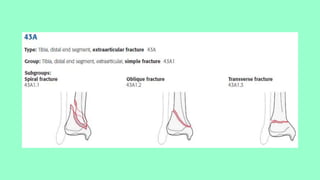
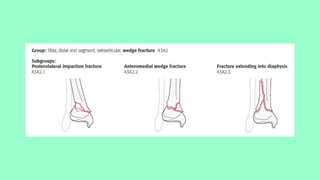
Distal tibia metaphysis fracture
• Often greenstick injury : “Robert Gillespie fracture”
• Mechanism : Increase compressive force along anterior tibial cortex
(axial load on dorsiflex foot)
• Posterior cortex is usually displaced, Periosteum is usually torn
• Common : valgus and recurvatum deformity
Sign and Symptoms
• Pain
• Swelling
• Tenderness
• Deformity
• Refuse to ambulate
• Palpable bony prominent
• Rare neurovascular impairment (except in fibula neck fracture)
Radiology
• Knee AP, Lateral
• Ankle AP, Lateral, Mortise
• Technetium radionuclide scans
Treatment
• Cast immobilization
• Metaphysis (non displaced)
• Long or short leg cast with moderate plantar flexion
-> return to neutral position after 3-4 weeks with short leg walking cast
• Operative treatment
• Metaphysis (unstable displaced)
• Close reduction with percutaneous pinning
• ORIF if associated with fibula fracture
Treatment
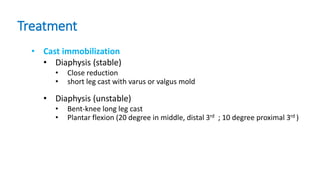
• Cast immobilization
• Diaphysis (stable)
• Close reduction
• short leg cast with varus or valgus mold
• Diaphysis (unstable)
• Bent-knee long leg cast
• Plantar flexion (20 degree in middle, distal 3rd ; 10 degree proximal 3rd )
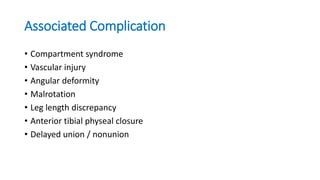
Associated Complication
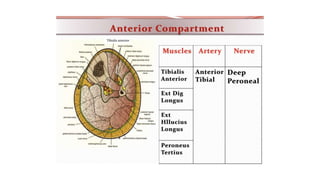
• Compartment syndrome
• Vascular injury
• Angular deformity
• Malrotation
• Leg length discrepancy
• Anterior tibial physeal closure
• Delayed union / nonunion
HEADING
33
HEADING
33
THANK YOU Tibiatext text text text
Fibulatext text text
Casttext text
Surger
ytext text

Ortho

  • 1.
    E x tC o n f e r e n c e 1 Ext Chaiwat Limthongsittikhun Ext Nunchaya Roongsrisawad
  • 2.
    Case • Case: ผู้ป่วยเด็กหญิง9ปี 5เดือน • No known underlying disease • Chief complaint: ปวดขาขวา 2 ชม. PTA
  • 3.
    Primary Survey • A:able to talk, no cervical tenderness, full ROM of neck • B: clear, equal breath sound, CCT –ve • C: PR 120/min, BP110/66mmHg, no external bleeding • D: E4V5M6, pupil 2mm RTLBE • E: no back wound, right ankle deformity, marked tenderness and swelling
  • 4.
    Secondary Survey • A:no food/drug allergy • B: no current medication • P: no known underlying disease • L: last meal 10:00 AM • E: 2 ชม PTA ขณะกาลังหัดขับรถจักรยานยนต์ ขับรถล้มเอง ศรีษะไม่กระแทก ไม่สลบ จาเหตุการณ์ได้ ไม่คลื่นใส้อาเจียน รถทับขา ข้อเท้าขวาปวด บวม ลงน้าหนักไม่ได้ ไม่มีแผล
  • 5.
    PE • GA: alert,good consciousness • HEENT: not pale conjunctivae, anictericsclerae • Heart: normal s1s2, no murmur • Lungs: clear, equal breath sound • Abdomen: soft, not tender, no rebound, no guarding • Ext: deformity, swelling, tenderness right ankle, limited ROM due to pain, DPA 2+, cap refill <2 sec, normal sensation, no external wound
  • 6.
    Investigation • Film rightankle AP, lateral, Mortise
  • 7.
  • 11.
    Radiologic Finding • Closetransverse fracture right distal tibia with minimal displacement • Close multifragmentary fracture right distal fibula with displacement
  • 12.
  • 14.
  • 15.
    Diagnosis • Close fractureboth bone right leg
  • 16.
    Management Ortho -Pain control -close reduction -longleg posterior slab -observe sign of compartment syndrome
  • 17.
    T i bi a a n d F i b u l a f r a c t u r e G E N E R A L K N O W L E D G E 17 Ext Chaiwat Limthongsittikhun Ext Nunchaya Roongsrisawad
  • 18.
    Tibia and Fibulashaft fracture • Low energy • Common > 50 years old • Mechanism - Fall from height, sporting injury • High energy • Common <30 years old • Mechanism – vehicular trauma
  • 19.
    • 70% :isolated pediatric tibial fracture • <11 years old : torsional force , location - distal 3rd of tibial diaphysis • Isolated transverse or comminuted fracture : direct trauma • Intact fibula prevent shortening of tibia • 60 % develop varus angulation within 1st 2 weeks of injury Tibia and Fibula shaft fracture • 30% : associated with fibula fracture • Valgus malalignment • Isolated fibula shaft fracture : rare in children • Resulted from direct blow to lateral aspect of leg • None displace fracture : supportive care
  • 20.
  • 26.
    Distal tibia metaphysisfracture • Often greenstick injury : “Robert Gillespie fracture” • Mechanism : Increase compressive force along anterior tibial cortex (axial load on dorsiflex foot) • Posterior cortex is usually displaced, Periosteum is usually torn • Common : valgus and recurvatum deformity
  • 27.
    Sign and Symptoms •Pain • Swelling • Tenderness • Deformity • Refuse to ambulate • Palpable bony prominent • Rare neurovascular impairment (except in fibula neck fracture)
  • 28.
    Radiology • Knee AP,Lateral • Ankle AP, Lateral, Mortise • Technetium radionuclide scans
  • 29.
    Treatment • Cast immobilization •Metaphysis (non displaced) • Long or short leg cast with moderate plantar flexion -> return to neutral position after 3-4 weeks with short leg walking cast • Operative treatment • Metaphysis (unstable displaced) • Close reduction with percutaneous pinning • ORIF if associated with fibula fracture
  • 30.
    Treatment • Cast immobilization •Diaphysis (stable) • Close reduction • short leg cast with varus or valgus mold • Diaphysis (unstable) • Bent-knee long leg cast • Plantar flexion (20 degree in middle, distal 3rd ; 10 degree proximal 3rd )
  • 32.
    Associated Complication • Compartmentsyndrome • Vascular injury • Angular deformity • Malrotation • Leg length discrepancy • Anterior tibial physeal closure • Delayed union / nonunion
  • 33.
    HEADING 33 HEADING 33 THANK YOU Tibiatexttext text text Fibulatext text text Casttext text Surger ytext text