The document discusses multiple processor organizations including:
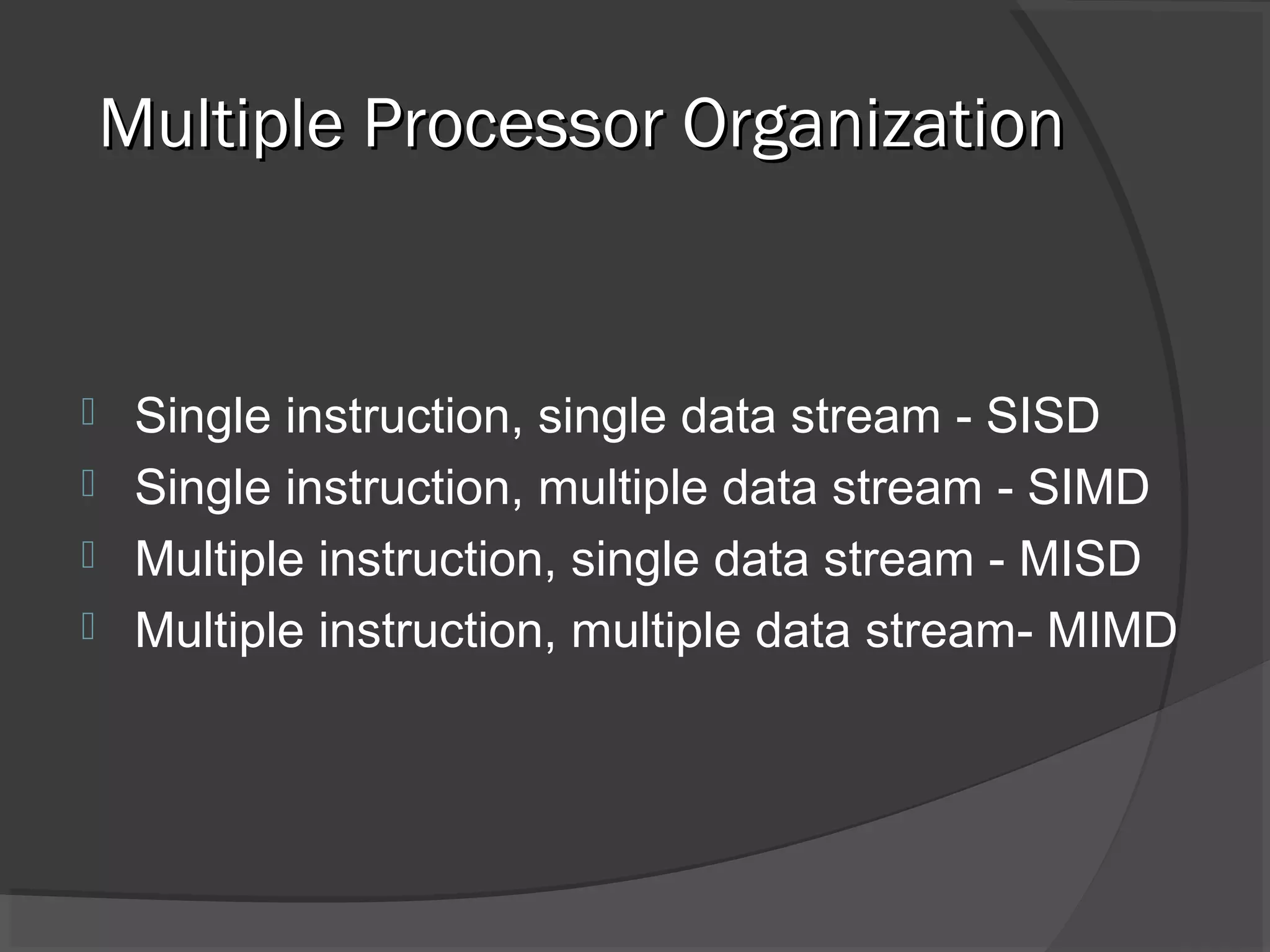
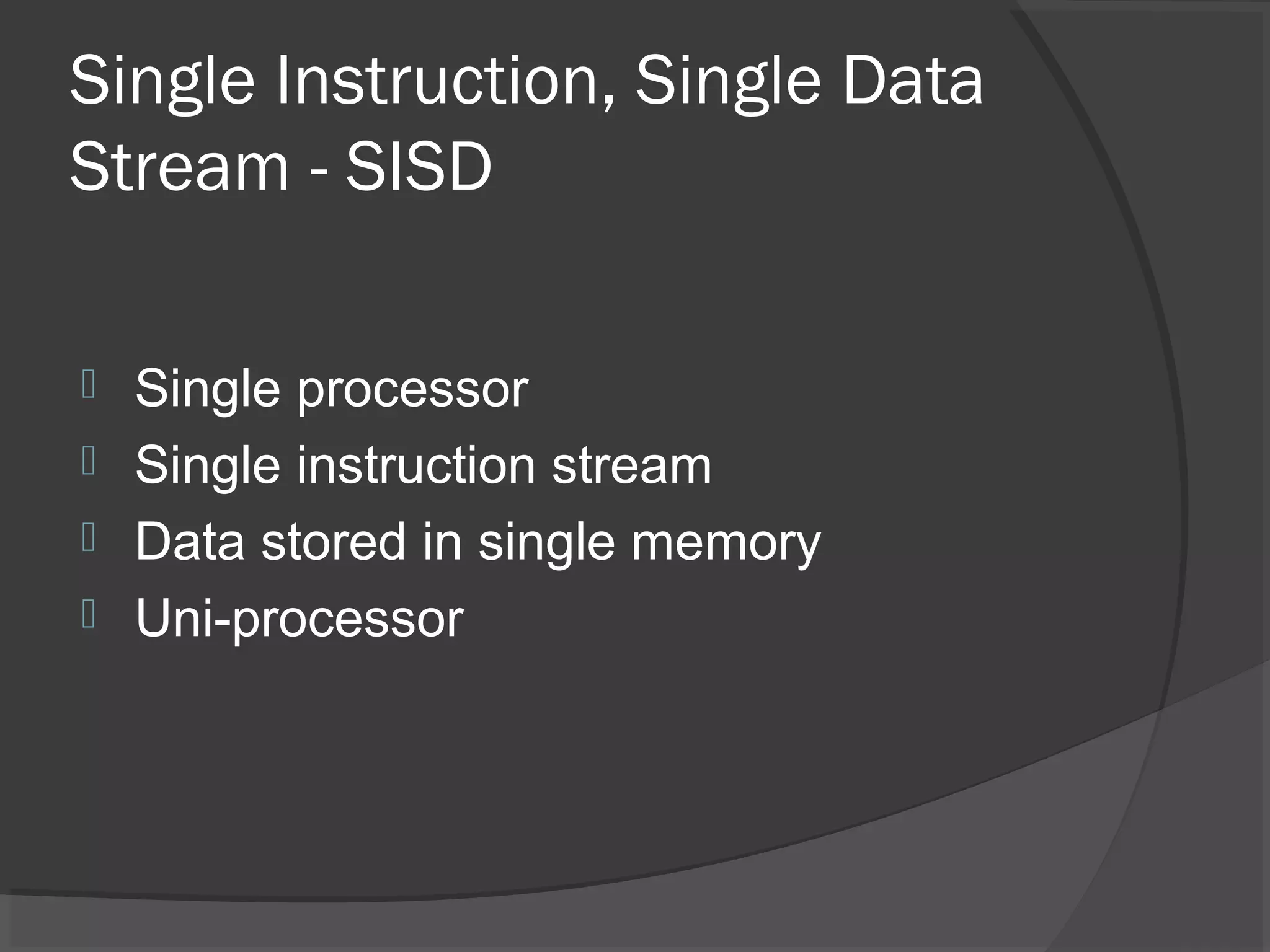
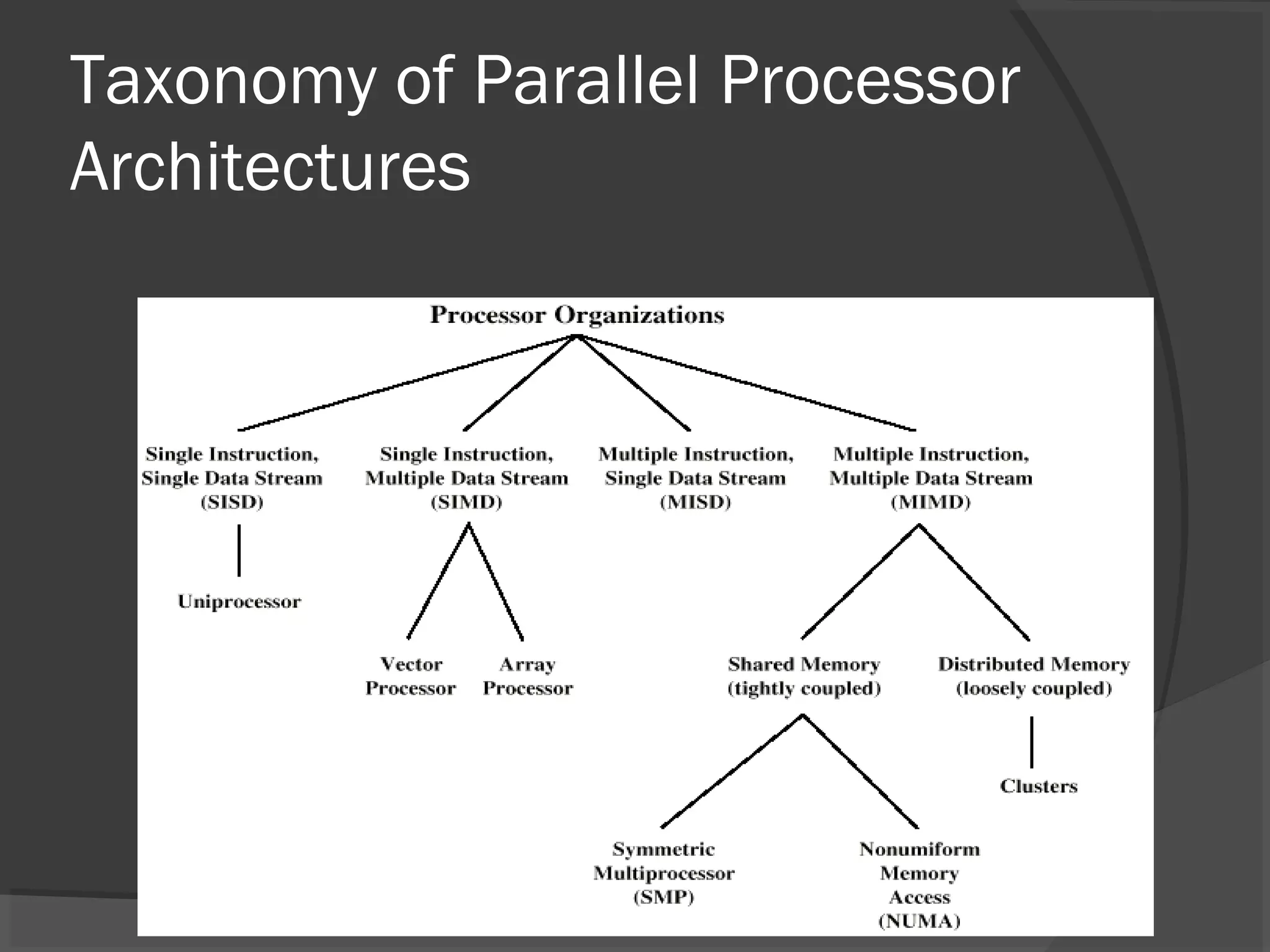
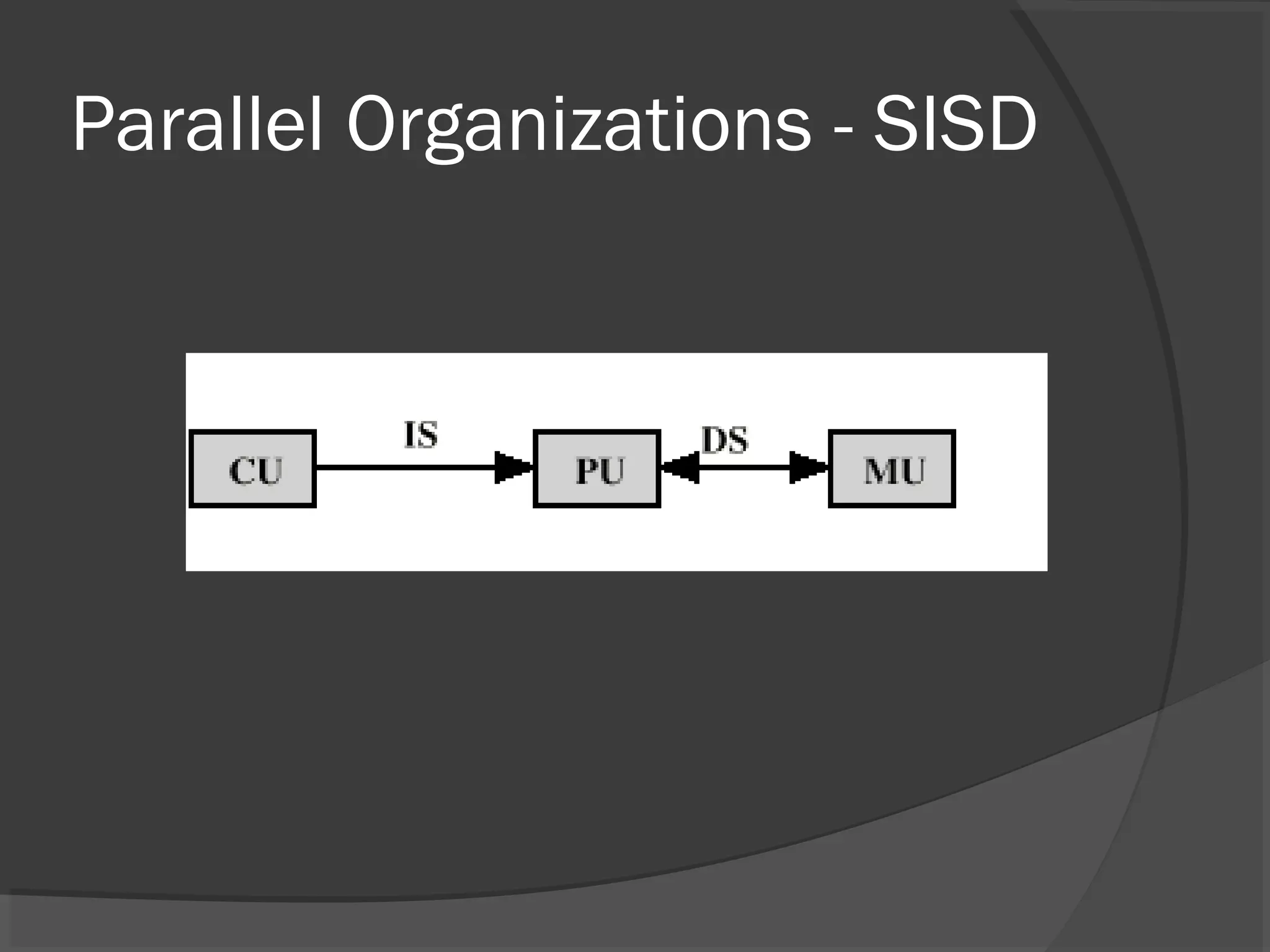
- SISD (single instruction, single data stream) using a single processor.
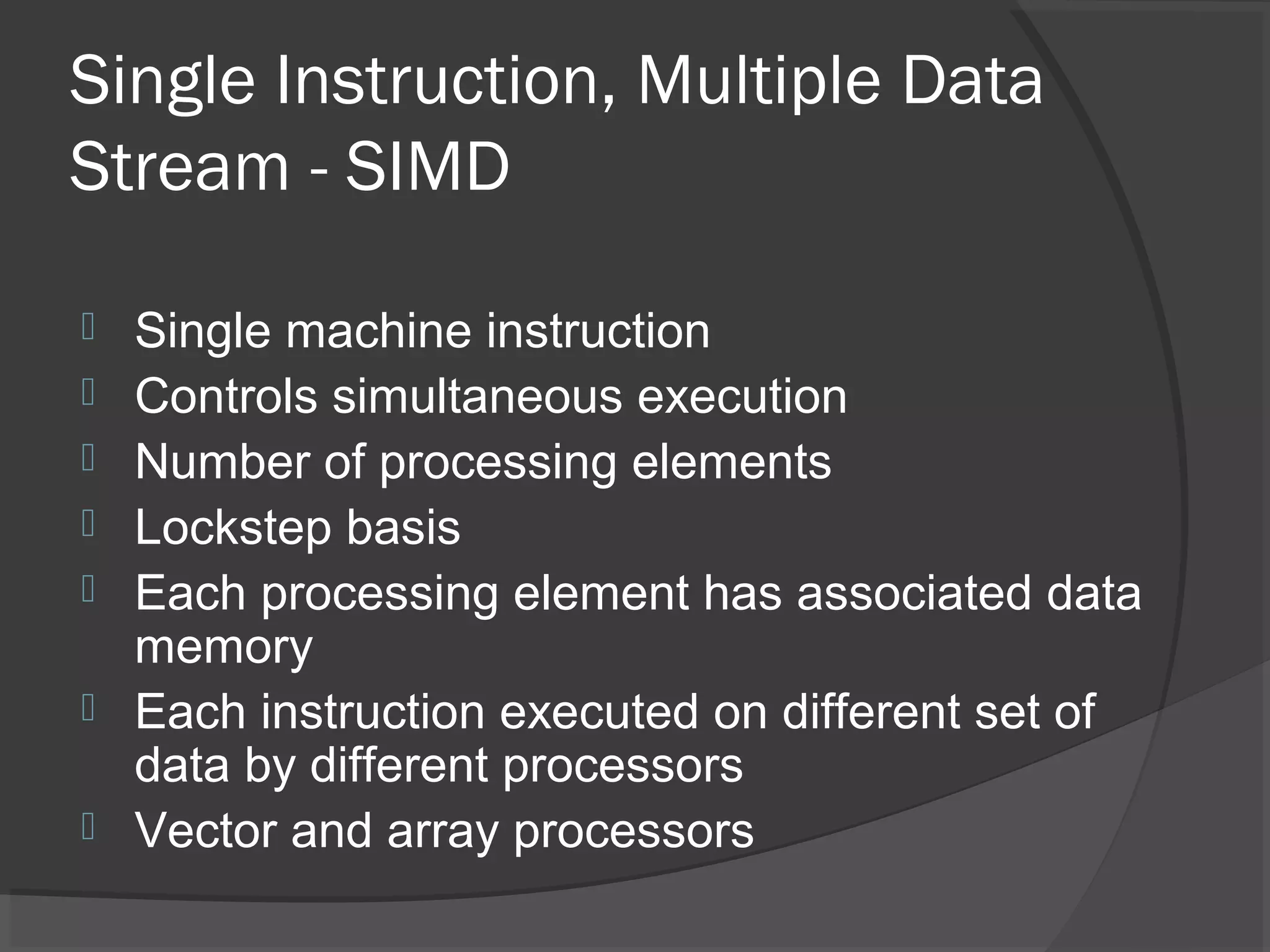
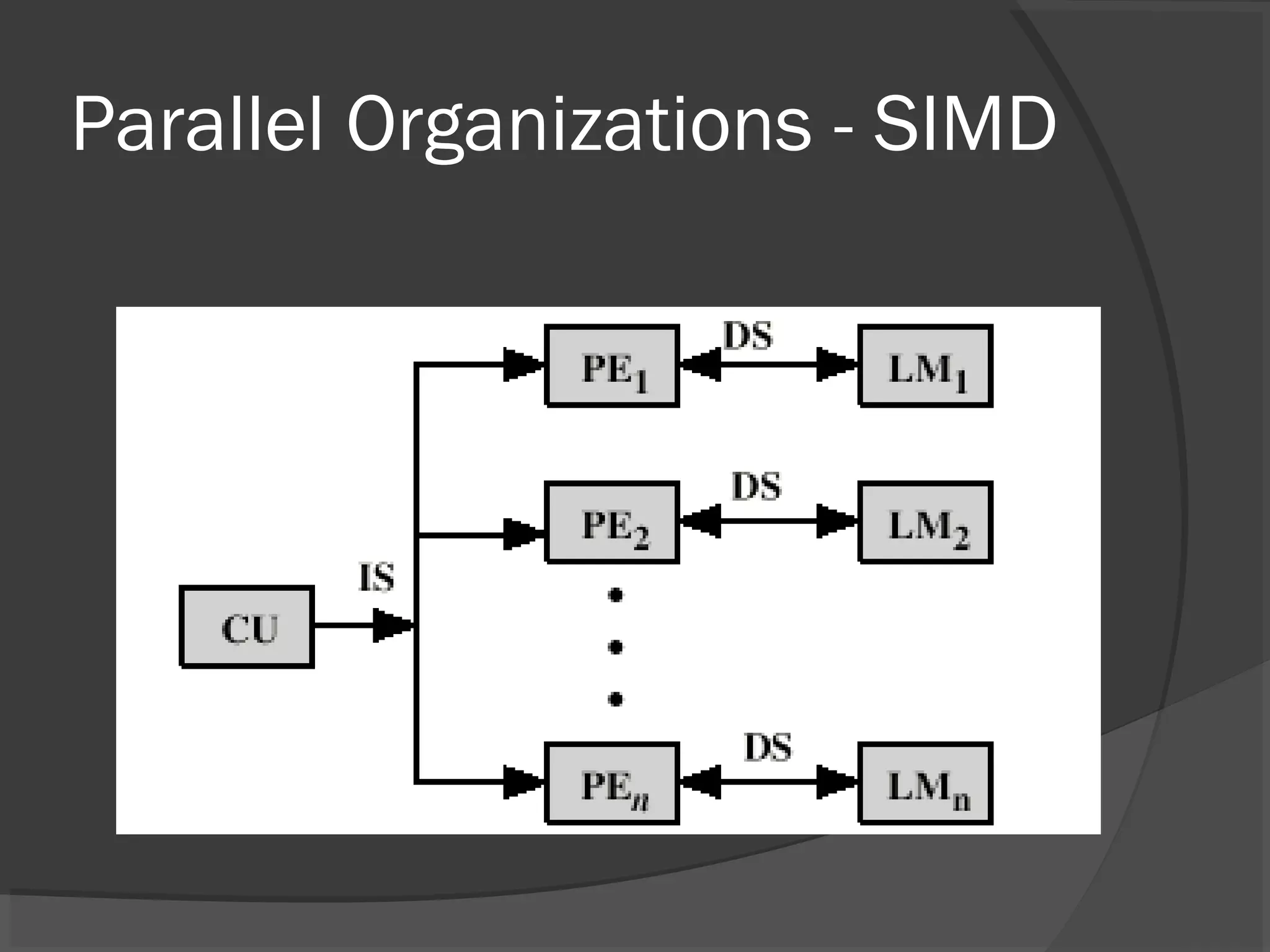
- SIMD (single instruction, multiple data stream) using multiple processors executing the same instruction on different data simultaneously.
- MISD (multiple instruction, single data stream) transmitting data to multiple processors each executing different instructions.
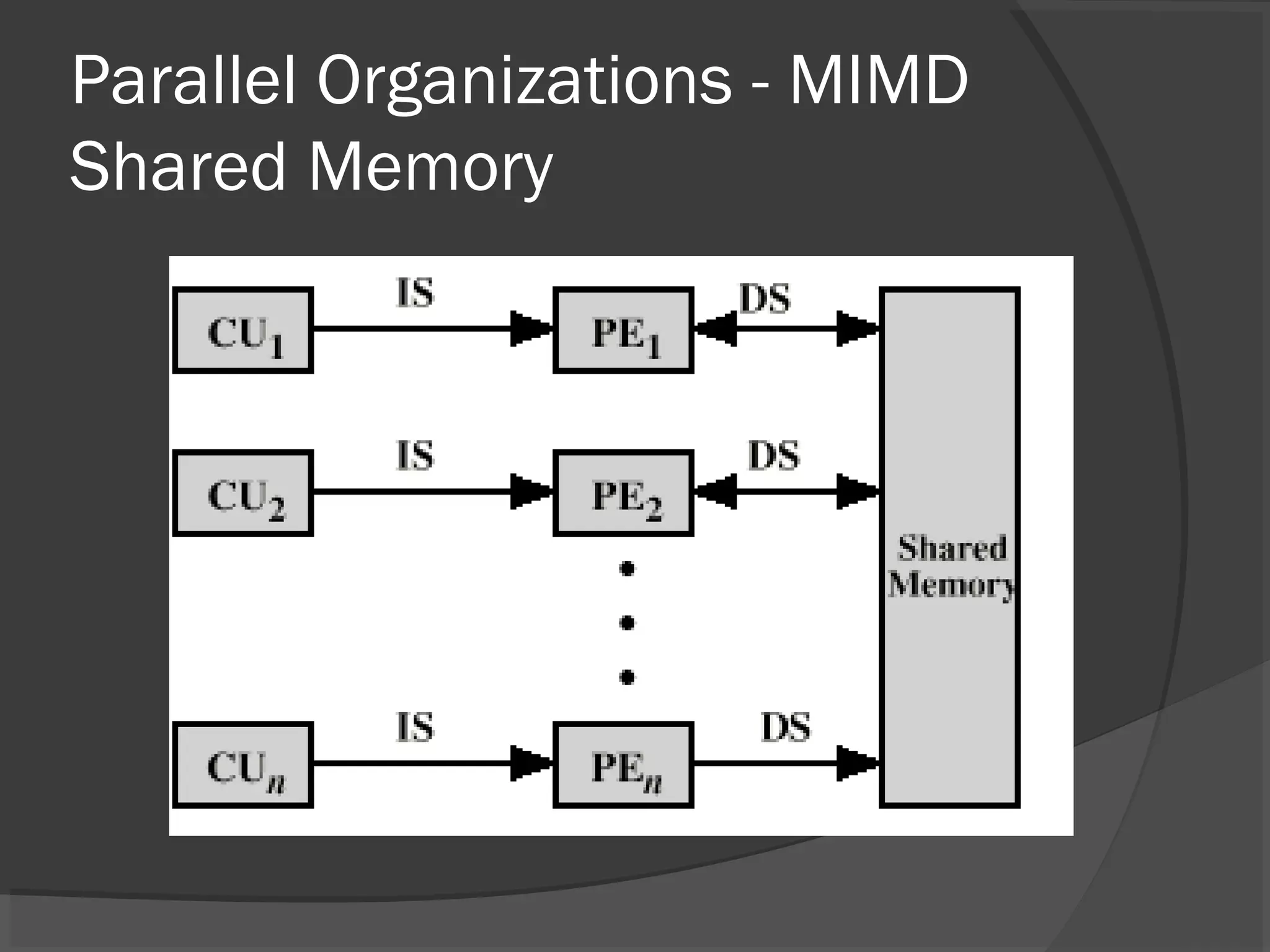
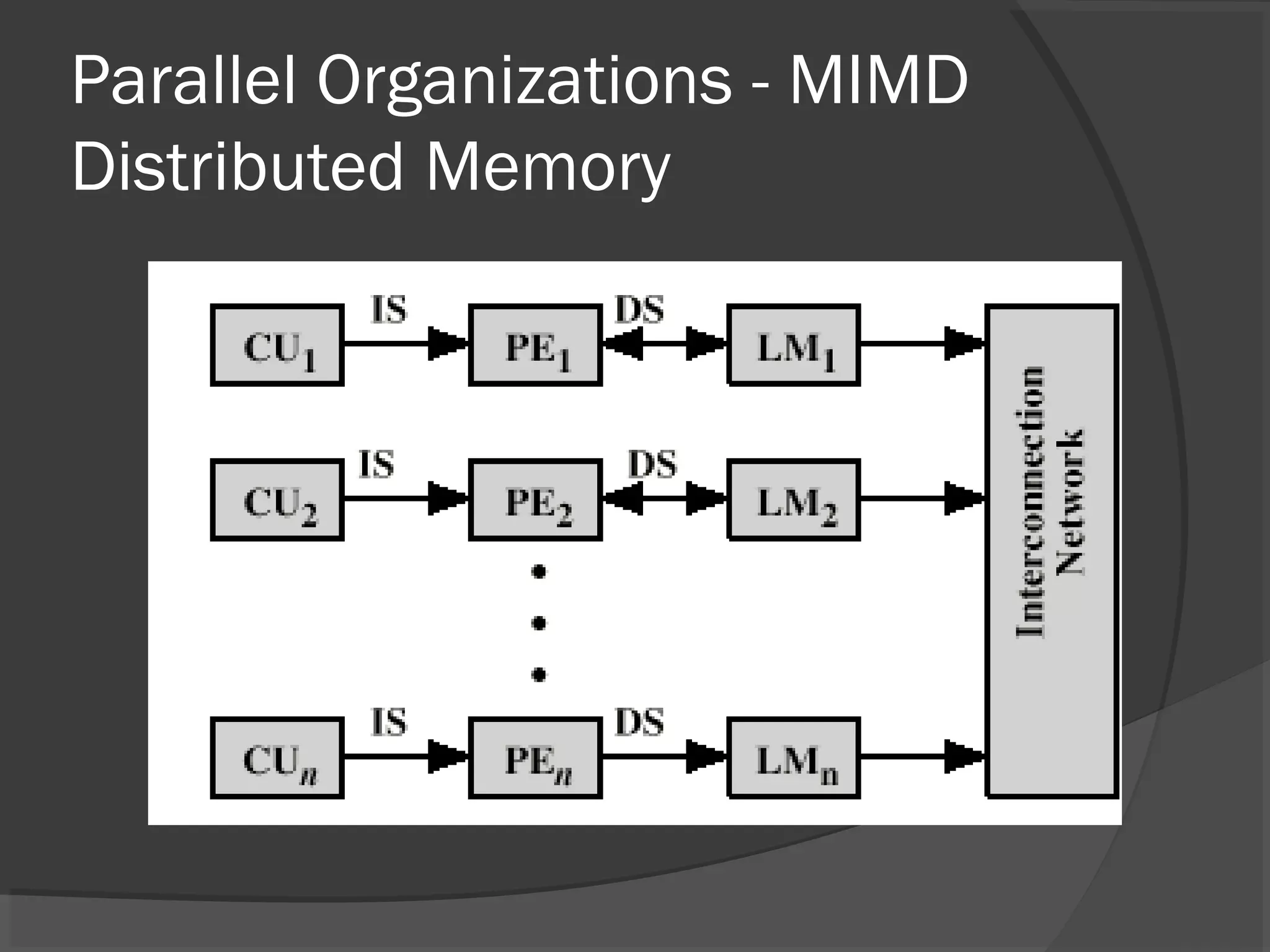
- MIMD (multiple instruction, multiple data stream) using a set of processors executing different instruction sequences on different data sets like SMPs, clusters and NUMA systems.
In this document
Powered by AI
Describes four types of processor organizations: SISD, SIMD, MISD, MIMD, each with distinct instruction and data stream characteristics.
Categorizes parallel processor architectures including SISD, SIMD, and MIMD with a focus on shared and distributed memory.
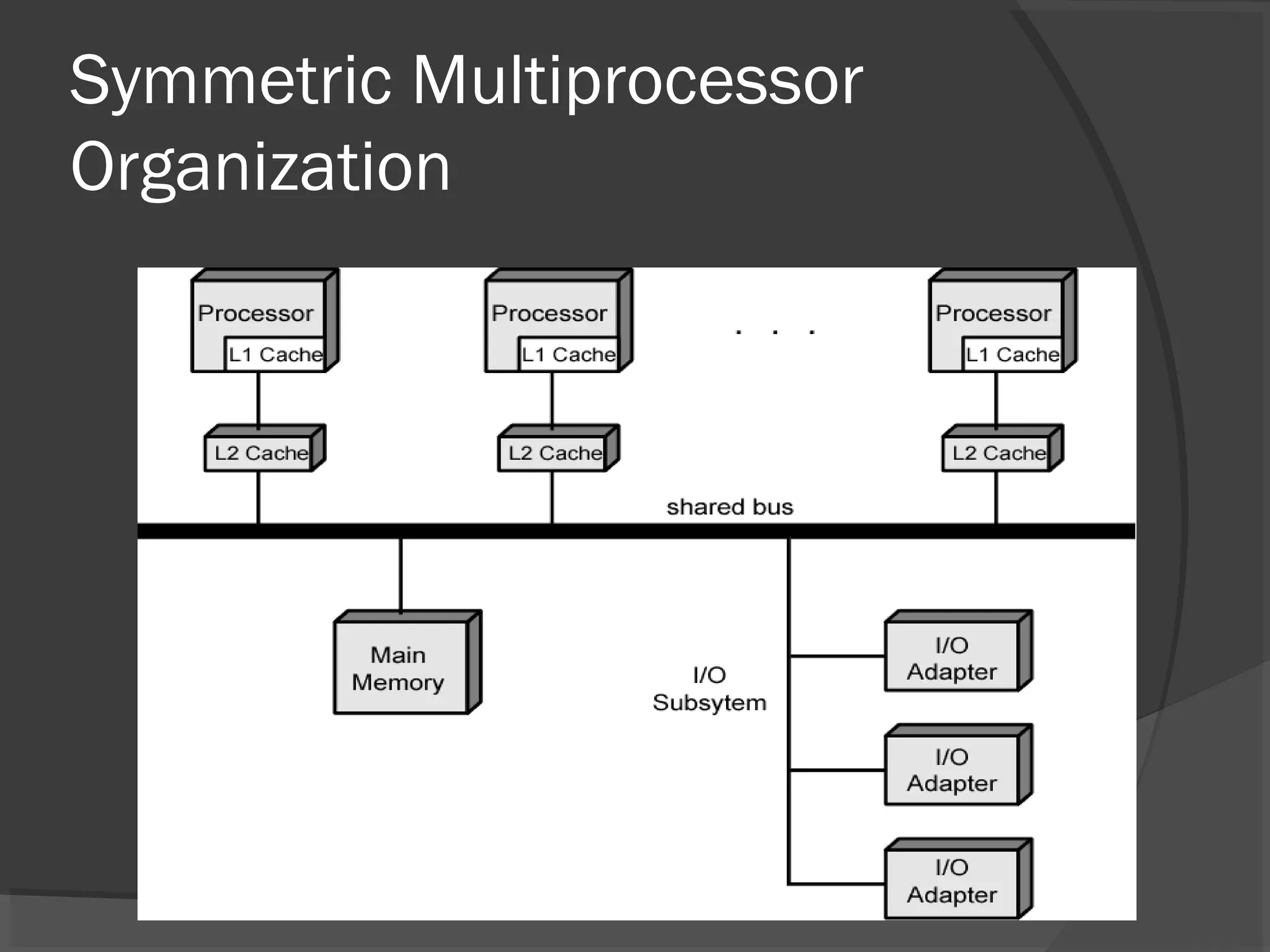
Outlines characteristics of symmetric multiprocessors, including shared memory, I/O access, and integrated OS for inter-processor communication.
Highlights performance benefits, availability, incremental growth and scaling capabilities of SMP systems, emphasizing parallel work.
Covers organization classification in multiprocessing, including bus time-sharing and central control mechanisms.
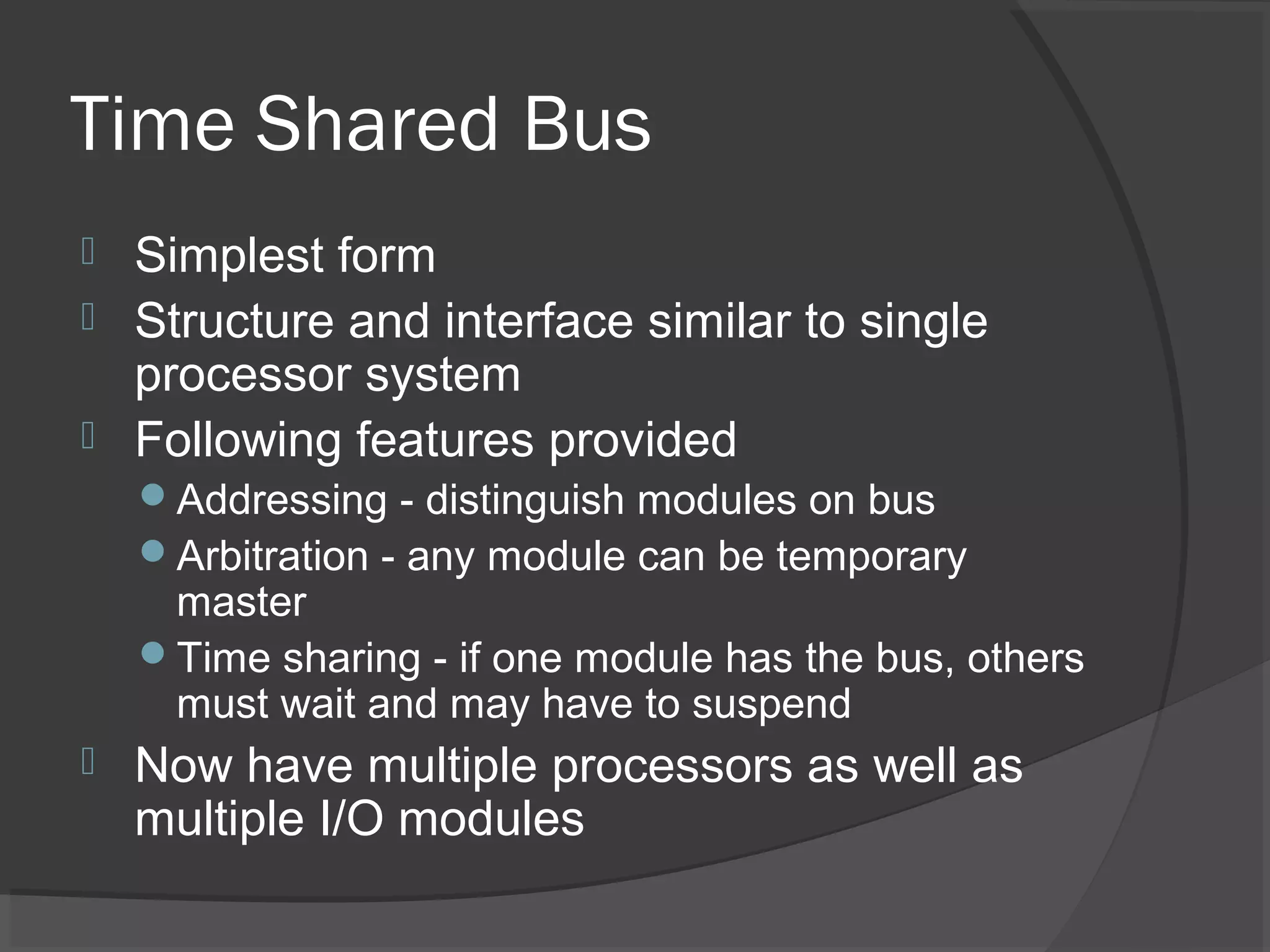
Explains time-shared bus system's structure, features, advantages of simplicity and reliability, and performance limitations.
Multiple Processor Organization
Singleinstruction, single data stream - SISD
Single instruction, multiple data stream - SIMD
Multiple instruction, single data stream - MISD
Multiple instruction, multiple data stream- MIMD
3.
Single Instruction, SingleData
Stream - SISD
Single processor
Single instruction stream
Data stored in single memory
Uni-processor
4.
Single Instruction, MultipleData
Stream - SIMD
Single machine instruction
Controls simultaneous execution
Number of processing elements
Lockstep basis
Each processing element has associated data
memory
Each instruction executed on different set of
data by different processors
Vector and array processors
5.
Multiple Instruction, SingleData
Stream - MISD
Sequence of data
Transmitted to set of processors
Each processor executes different instruction
sequence
Never been implemented
6.
Multiple Instruction, Multiple
DataStream- MIMD
Set of processors
Simultaneously execute different instruction
sequences
Different sets of data
SMPs, clusters and NUMA systems
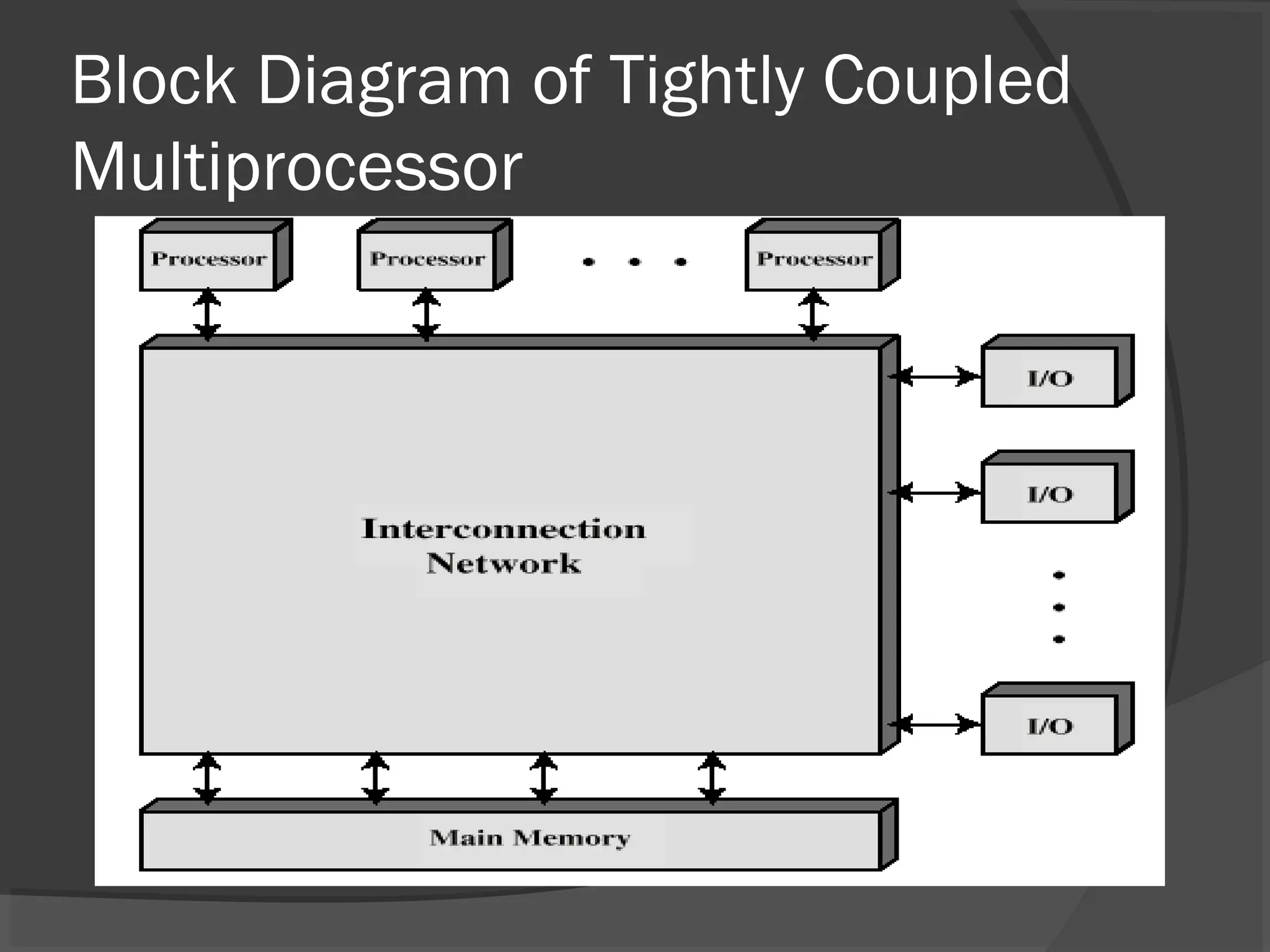
Symmetric Multiprocessors
A standalone computer with the following characteristics
Two or more similar processors of comparable capacity
Processors share same memory and I/O
Processors are connected by a bus or other internal connection
Memory access time is approximately the same for each processor
13.
Continue……
All processorsshare access to I/O
○ Either through same channels or different channels giving
paths to same devices
All processors can perform the same functions (hence
symmetric)
System controlled by integrated operating system
○ providing interaction between processors
○ Interaction at job, task, file and data element levels
SMP Advantages
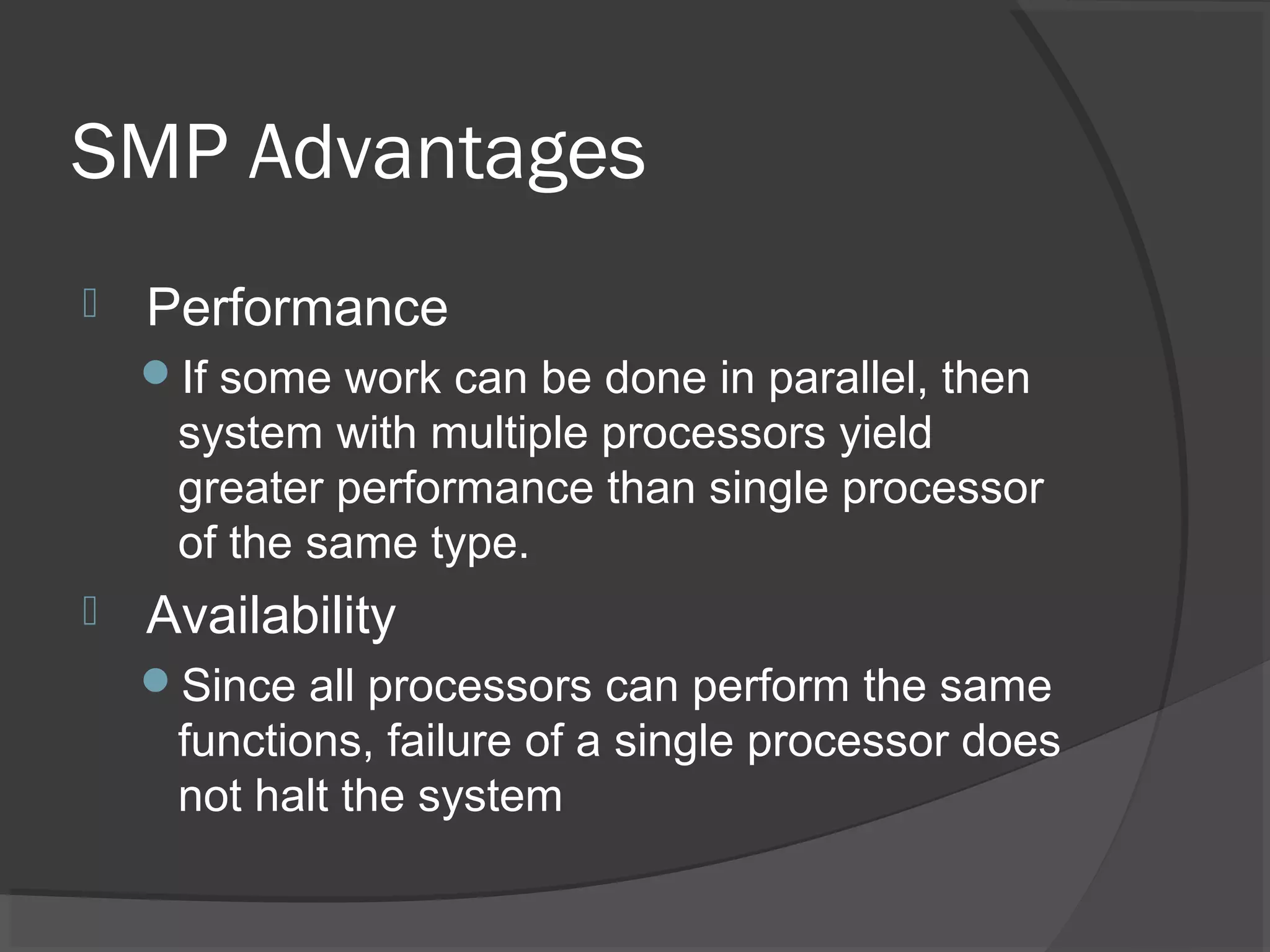
Performance
If somework can be done in parallel, then
system with multiple processors yield
greater performance than single processor
of the same type.
Availability
Since all processors can perform the same
functions, failure of a single processor does
not halt the system
16.
SMP Advantages
Incremental growth
Usercan enhance performance by adding
additional processors
Scaling
Vendors can offer range of products with
different price and performance which are
based on number of processors configured in
the system
Time Shared Bus
Simplestform
Structure and interface similar to single
processor system
Following features provided
Addressing - distinguish modules on bus
Arbitration - any module can be temporary
master
Time sharing - if one module has the bus, others
must wait and may have to suspend
Now have multiple processors as well as
multiple I/O modules
Time Share Bus- Advantages
Simplicity
Flexibility
Reliability
22.
Time Share Bus- Disadvantage
Performance limited by bus cycle time
Each processor should have local cache
Reduce number of bus accesses
Leads to problems with cache coherence
Solved in hardware - see later